
Articles | Volume 9, issue 4
https://doi.org/10.5194/gc-9-437-2026
© Author(s) 2026. This work is distributed under
the Creative Commons Attribution 4.0 License.
the Creative Commons Attribution 4.0 License.
https://doi.org/10.5194/gc-9-437-2026
© Author(s) 2026. This work is distributed under
the Creative Commons Attribution 4.0 License.
the Creative Commons Attribution 4.0 License.
Research article
| 
06 Oct 2026
Research article |
| 06 Oct 2026
| 06 Oct 2026
Field or virtual? Perceived impact of academic excursions through the eyes of (future) hydrologists
Roel Dijksma
CORRESPONDING AUTHOR

Hydrology and Environmental Hydraulics, Wageningen University, Wageningen, 6708PB, the Netherlands
Adriaan J. Teuling
Hydrology and Environmental Hydraulics, Wageningen University, Wageningen, 6708PB, the Netherlands
Lieke A. Melsen
Hydrology and Environmental Hydraulics, Wageningen University, Wageningen, 6708PB, the Netherlands
Victor F. Bense
Hydrology and Environmental Hydraulics, Wageningen University, Wageningen, 6708PB, the Netherlands
Martine J. van der Ploeg
Hydrology and Environmental Hydraulics, Wageningen University, Wageningen, 6708PB, the Netherlands
Related authors
No articles found.
Isabella Anglin, Adriaan J. Teuling, Marius G. Floriancic, Michael Lehning, and Harsh Beria
EGUsphere, https://doi.org/10.5194/egusphere-2026-4268, https://doi.org/10.5194/egusphere-2026-4268, 2026
Short summary
Short summary
Snow sublimation is the direct vapor loss of snow to the atmosphere, reducing spring snowmelt that recharges soils, groundwater, and rivers. Using eddy-covariance measurements over a full winter in the eastern Swiss Alps, we found that sublimation removed about 25 mm of water, or nearly 6 % of the season’s peak snow water storage. Sublimation losses were highest late in the season, showing that this hidden process can meaningfully reduce mountain water supplies.
Patricio Yeste, Lieke A. Melsen, João Paulo L. F. Brêda, Nicolás Tacoronte, Andrea Saltelli, Giulia Vannucci, Roberta Siciliano, and Axel Bronstert
EGUsphere, https://doi.org/10.5194/egusphere-2026-1787, https://doi.org/10.5194/egusphere-2026-1787, 2026
Short summary
Short summary
Understanding which factors most influence streamflow is key for accurate hydrologic modelling. This study shows that machine learning methods, like random forests and neural networks, can efficiently identify the most important model inputs, producing results similar to traditional sensitivity analysis but with far less computation. This approach helps scientists explore complex models faster and more reliably, improving insights into how catchments respond to changing conditions.
Janneke O. E. Remmers, Rozemarijn ter Horst, Ehsan Nabavi, Ulrike Proske, Adriaan J. Teuling, Jeroen Vos, and Lieke A. Melsen
Hydrol. Earth Syst. Sci., 29, 5371–5382, https://doi.org/10.5194/hess-29-5371-2025, https://doi.org/10.5194/hess-29-5371-2025, 2025
Short summary
Short summary
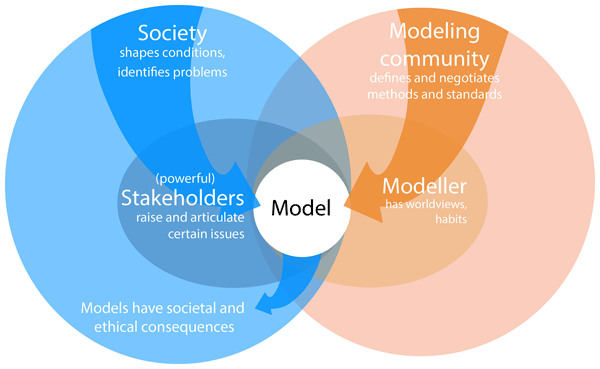
Hydrological models are generally seen as neutral, despite acknowledged uncertainties. This notion has several, possibly harmful, consequences. In critical social sciences, non-neutrality in methods and results is an established topic of debate. We propose that in order to deal with it in hydrological modelling, the hydrological modelling network can learn from, and with, critical social sciences. The main lesson, from our perspective, is that responsible modelling is a shared responsibility.
Mostafa Gomaa Daoud, Fakhereh Alidoost, Yijian Zeng, Bart Schilperoort, Christiaan Van der Tol, Maciek W. Lubczynski, Mhd Suhyb Salama, Eric D. Morway, Christian D. Langevin, Prajwal Khanal, Zengjing Song, Lianyu Yu, Hong Zhao, Gualbert Oude Essink, Victor F. Bense, Michiel van der Molen, and Zhongbo Su
EGUsphere, https://doi.org/10.5194/egusphere-2025-4179, https://doi.org/10.5194/egusphere-2025-4179, 2025
Short summary
Short summary
This study investigates the groundwater role in soil-plant-atmosphere continuum. An integrated ecohydrological modelling approach was developed by coupling STEMMUS-SCOPE to MODFLOW 6 and applied at three sites over 8 years. The coupled model improved simulations of soil moisture and temperature, evapotranspiration, carbon fluxes and fluorescence. The findings highlight the groundwater critical role in ecosystem dynamics and its contribution to advancing water, energy and carbon cycle modelling.
Devi Purnamasari, Adriaan J. Teuling, and Albrecht H. Weerts
Hydrol. Earth Syst. Sci., 29, 1483–1503, https://doi.org/10.5194/hess-29-1483-2025, https://doi.org/10.5194/hess-29-1483-2025, 2025
Short summary
Short summary
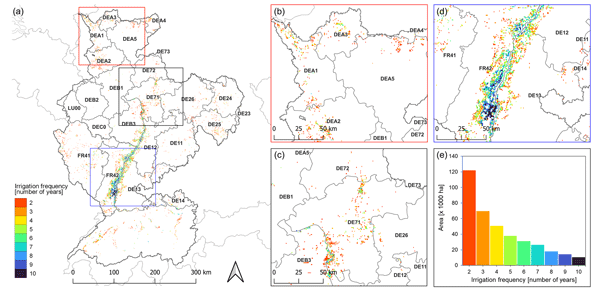
This paper introduces a method to identify irrigated areas by combining hydrology models with satellite temperature data. Our method was tested in the Rhine basin and aligns well with official statistics. It performs best in regions with large farms and less well in areas with small farms. Observed differences to existing data are influenced by data resolution and methods.
Sarra Kchouk, Louise Cavalcante, Lieke A. Melsen, David W. Walker, Germano Ribeiro Neto, Rubens Gondim, Wouter J. Smolenaars, and Pieter R. van Oel
Nat. Hazards Earth Syst. Sci., 25, 893–912, https://doi.org/10.5194/nhess-25-893-2025, https://doi.org/10.5194/nhess-25-893-2025, 2025
Short summary
Short summary
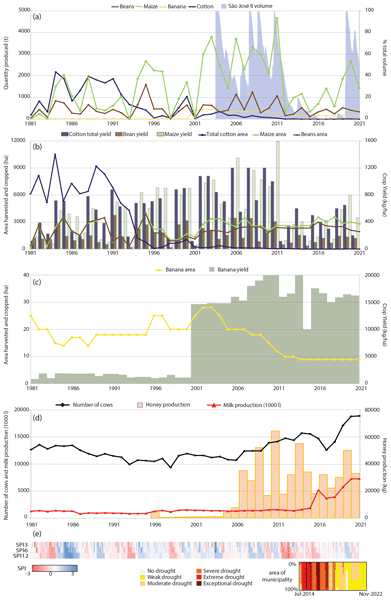
Droughts impact water and people, yet monitoring often overlooks impacts on people. In northeastern Brazil, we compare official data to local experiences, finding data mismatches and blind spots. Mismatches occur due to the data's broad scope missing finer details. Blind spots arise from ignoring diverse community responses and vulnerabilities to droughts. We suggest enhanced monitoring by technical extension officers for both severe and mild droughts.
Steven Reinaldo Rusli, Victor F. Bense, Syed M. T. Mustafa, and Albrecht H. Weerts
Hydrol. Earth Syst. Sci., 28, 5107–5131, https://doi.org/10.5194/hess-28-5107-2024, https://doi.org/10.5194/hess-28-5107-2024, 2024
Short summary
Short summary
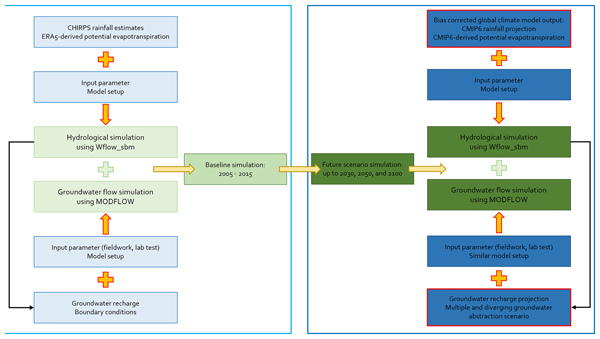
In this paper, we investigate the impact of climatic and anthropogenic factors on future groundwater availability. The changes are simulated using hydrological and groundwater flow models. We find that future groundwater status is influenced more by anthropogenic factors than climatic factors. The results are beneficial for informing responsible parties in operational water management about achieving future (ground)water governance.
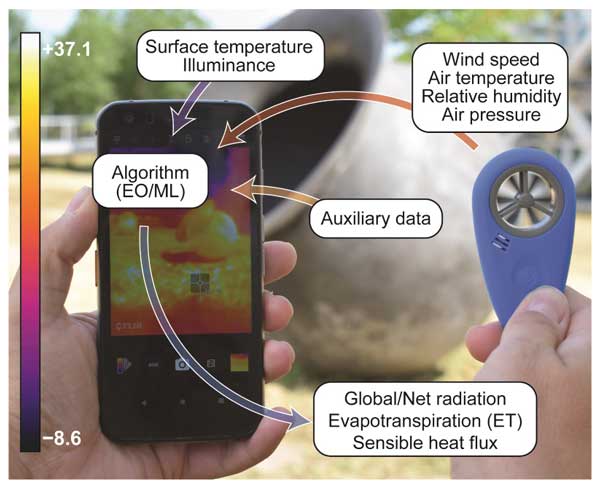
Adriaan J. Teuling, Belle Holthuis, and Jasper F. D. Lammers
Hydrol. Earth Syst. Sci., 28, 3799–3806, https://doi.org/10.5194/hess-28-3799-2024, https://doi.org/10.5194/hess-28-3799-2024, 2024
Short summary
Short summary
The understanding of spatio-temporal variability of evapotranspiration (ET) is currently limited by a lack of measurement techniques that are low cost and that can be applied anywhere at any time. Here we show that evapotranspiration can be estimated accurately using observations made by smartphone sensors, suggesting that smartphone-based ET monitoring could provide a realistic and low-cost alternative for real-time ET estimation in the field.
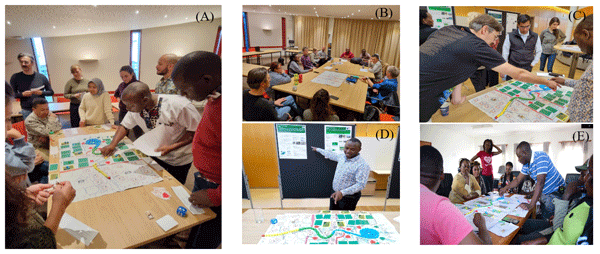
Charles Nduhiu Wamucii, Pieter R. van Oel, Adriaan J. Teuling, Arend Ligtenberg, John Mwangi Gathenya, Gert Jan Hofstede, Meine van Noordwijk, and Erika N. Speelman
Hydrol. Earth Syst. Sci., 28, 3495–3518, https://doi.org/10.5194/hess-28-3495-2024, https://doi.org/10.5194/hess-28-3495-2024, 2024
Short summary
Short summary
The study explored the role of serious gaming in strengthening stakeholder engagement in addressing human–water challenges. The gaming approach guided community discussions toward implementable decisions. The results showed increased active participation, knowledge gain, and use of plural pronouns. We observed decreased individual interests and conflicts among game participants. The study presents important implications for creating a collective basis for water resources management.
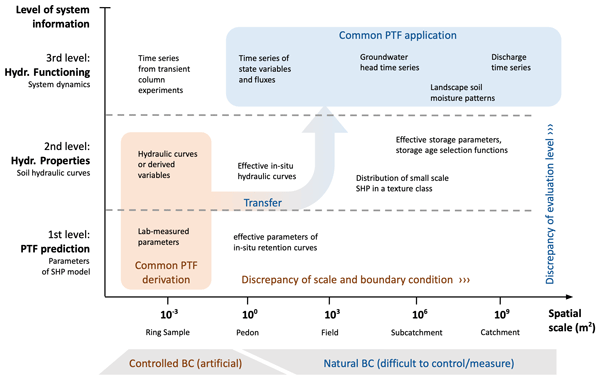
Tobias Karl David Weber, Lutz Weihermüller, Attila Nemes, Michel Bechtold, Aurore Degré, Efstathios Diamantopoulos, Simone Fatichi, Vilim Filipović, Surya Gupta, Tobias L. Hohenbrink, Daniel R. Hirmas, Conrad Jackisch, Quirijn de Jong van Lier, John Koestel, Peter Lehmann, Toby R. Marthews, Budiman Minasny, Holger Pagel, Martine van der Ploeg, Shahab Aldin Shojaeezadeh, Simon Fiil Svane, Brigitta Szabó, Harry Vereecken, Anne Verhoef, Michael Young, Yijian Zeng, Yonggen Zhang, and Sara Bonetti
Hydrol. Earth Syst. Sci., 28, 3391–3433, https://doi.org/10.5194/hess-28-3391-2024, https://doi.org/10.5194/hess-28-3391-2024, 2024
Short summary
Short summary
Pedotransfer functions (PTFs) are used to predict parameters of models describing the hydraulic properties of soils. The appropriateness of these predictions critically relies on the nature of the datasets for training the PTFs and the physical comprehensiveness of the models. This roadmap paper is addressed to PTF developers and users and critically reflects the utility and future of PTFs. To this end, we present a manifesto aiming at a paradigm shift in PTF research.
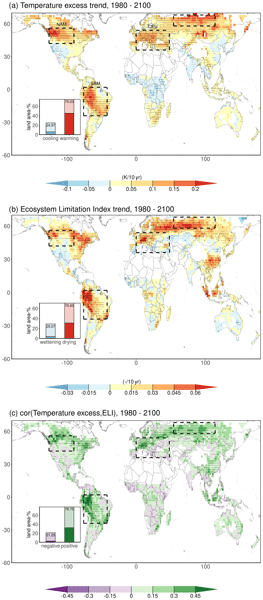
Jasper M. C. Denissen, Adriaan J. Teuling, Sujan Koirala, Markus Reichstein, Gianpaolo Balsamo, Martha M. Vogel, Xin Yu, and René Orth
Earth Syst. Dynam., 15, 717–734, https://doi.org/10.5194/esd-15-717-2024, https://doi.org/10.5194/esd-15-717-2024, 2024
Short summary
Short summary
Heat extremes have severe implications for human health and ecosystems. Heat extremes are mostly introduced by large-scale atmospheric circulation but can be modulated by vegetation. Vegetation with access to water uses solar energy to evaporate water into the atmosphere. Under dry conditions, water may not be available, suppressing evaporation and heating the atmosphere. Using climate projections, we show that regionally less water is available for vegetation, intensifying future heat extremes.
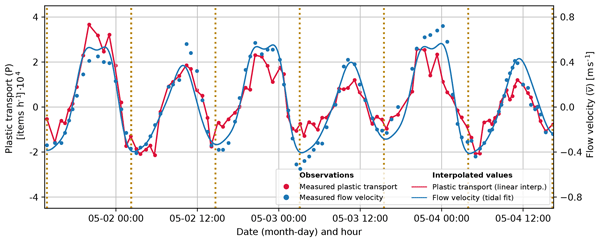
Louise J. Schreyers, Tim H. M. van Emmerik, Thanh-Khiet L. Bui, Khoa L. van Thi, Bart Vermeulen, Hong-Q. Nguyen, Nicholas Wallerstein, Remko Uijlenhoet, and Martine van der Ploeg
Hydrol. Earth Syst. Sci., 28, 589–610, https://doi.org/10.5194/hess-28-589-2024, https://doi.org/10.5194/hess-28-589-2024, 2024
Short summary
Short summary
River plastic emissions into the ocean are of global concern, but the transfer dynamics between fresh water and the marine environment remain poorly understood. We developed a simple Eulerian approach to estimate the net and total plastic transport in tidal rivers. Applied to the Saigon River, Vietnam, we found that net plastic transport amounted to less than one-third of total transport, highlighting the need to better integrate tidal dynamics in plastic transport and emission models.
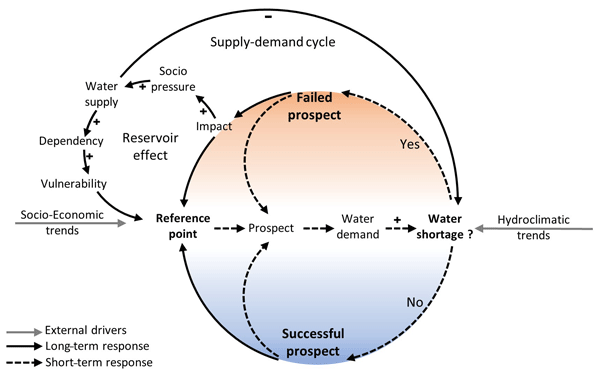
Germano G. Ribeiro Neto, Sarra Kchouk, Lieke A. Melsen, Louise Cavalcante, David W. Walker, Art Dewulf, Alexandre C. Costa, Eduardo S. P. R. Martins, and Pieter R. van Oel
Hydrol. Earth Syst. Sci., 27, 4217–4225, https://doi.org/10.5194/hess-27-4217-2023, https://doi.org/10.5194/hess-27-4217-2023, 2023
Short summary
Short summary
People induce and modify droughts. However, we do not know exactly how relevant human and natural processes interact nor how to evaluate the co-evolution of people and water. Prospect theory can help us to explain the emergence of drought impacts leading to failed welfare expectations (“prospects”) due to water shortage. Our approach helps to explain socio-hydrological phenomena, such as reservoir effects, and can contribute to integrated drought management considering the local context.
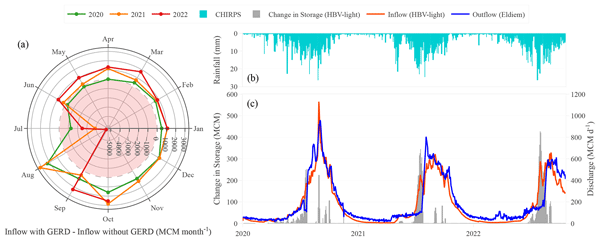
Awad M. Ali, Lieke A. Melsen, and Adriaan J. Teuling
Hydrol. Earth Syst. Sci., 27, 4057–4086, https://doi.org/10.5194/hess-27-4057-2023, https://doi.org/10.5194/hess-27-4057-2023, 2023
Short summary
Short summary
Using a new approach based on a combination of modeling and Earth observation, useful information about the filling of the Grand Ethiopian Renaissance Dam can be obtained with limited data and proper rainfall selection. While the monthly streamflow into Sudan has decreased significantly (1.2 × 10⁹–5 × 10⁹ m3) with respect to the non-dam scenario, the negative impact has been masked due to higher-than-average rainfall. We reveal that the dam will need 3–5 more years to complete filling.
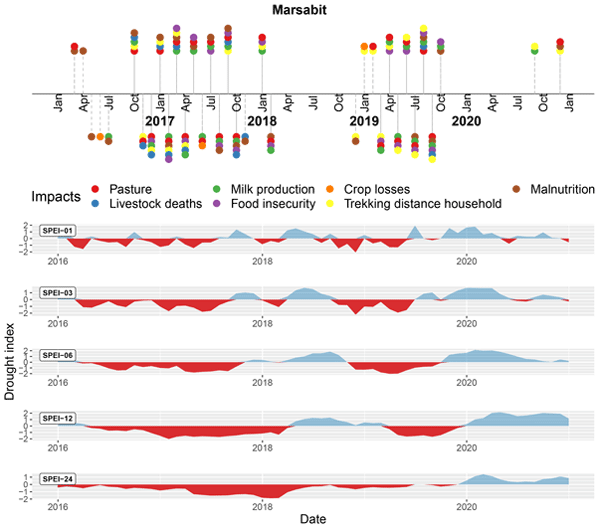
Marleen R. Lam, Alessia Matanó, Anne F. Van Loon, Rhoda A. Odongo, Aklilu D. Teklesadik, Charles N. Wamucii, Marc J. C. van den Homberg, Shamton Waruru, and Adriaan J. Teuling
Nat. Hazards Earth Syst. Sci., 23, 2915–2936, https://doi.org/10.5194/nhess-23-2915-2023, https://doi.org/10.5194/nhess-23-2915-2023, 2023
Short summary
Short summary
There is still no full understanding of the relation between drought impacts and drought indices in the Horn of Africa where water scarcity and arid regions are also present. This study assesses their relation in Kenya. A random forest model reveals that each region, aggregated by aridity, has its own set of predictors for every impact category. Water scarcity was not found to be related to aridity. Understanding these relations contributes to the development of drought early warning systems.
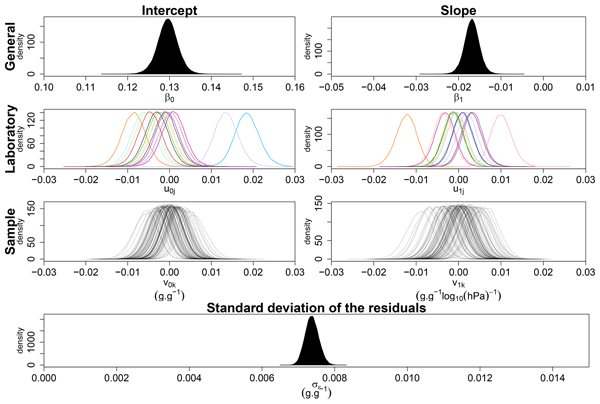
Benjamin Guillaume, Hanane Aroui Boukbida, Gerben Bakker, Andrzej Bieganowski, Yves Brostaux, Wim Cornelis, Wolfgang Durner, Christian Hartmann, Bo V. Iversen, Mathieu Javaux, Joachim Ingwersen, Krzysztof Lamorski, Axel Lamparter, András Makó, Ana María Mingot Soriano, Ingmar Messing, Attila Nemes, Alexandre Pomes-Bordedebat, Martine van der Ploeg, Tobias Karl David Weber, Lutz Weihermüller, Joost Wellens, and Aurore Degré
SOIL, 9, 365–379, https://doi.org/10.5194/soil-9-365-2023, https://doi.org/10.5194/soil-9-365-2023, 2023
Short summary
Short summary
Measurements of soil water retention properties play an important role in a variety of societal issues that depend on soil water conditions. However, there is little concern about the consistency of these measurements between laboratories. We conducted an interlaboratory comparison to assess the reproducibility of the measurement of the soil water retention curve. Results highlight the need to harmonize and standardize procedures to improve the description of unsaturated processes in soils.
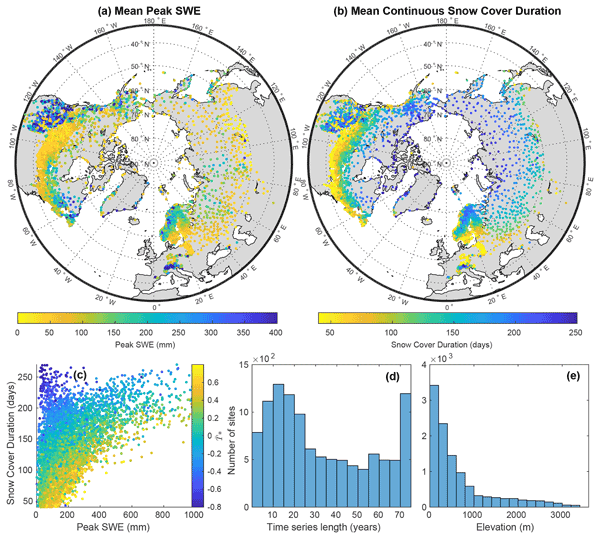
Adrià Fontrodona-Bach, Bettina Schaefli, Ross Woods, Adriaan J. Teuling, and Joshua R. Larsen
Earth Syst. Sci. Data, 15, 2577–2599, https://doi.org/10.5194/essd-15-2577-2023, https://doi.org/10.5194/essd-15-2577-2023, 2023
Short summary
Short summary
We provide a dataset of snow water equivalent, the depth of liquid water that results from melting a given depth of snow. The dataset contains 11 071 sites over the Northern Hemisphere, spans the period 1950–2022, and is based on daily observations of snow depth on the ground and a model. The dataset fills a lack of accessible historical ground snow data, and it can be used for a variety of applications such as the impact of climate change on global and regional snow and water resources.
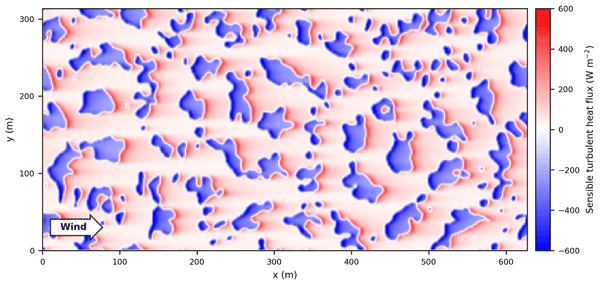
Luuk D. van der Valk, Adriaan J. Teuling, Luc Girod, Norbert Pirk, Robin Stoffer, and Chiel C. van Heerwaarden
The Cryosphere, 16, 4319–4341, https://doi.org/10.5194/tc-16-4319-2022, https://doi.org/10.5194/tc-16-4319-2022, 2022
Short summary
Short summary
Most large-scale hydrological and climate models struggle to capture the spatially highly variable wind-driven melt of patchy snow cover. In the field, we find that 60 %–80 % of the total melt is wind driven at the upwind edge of a snow patch, while it does not contribute at the downwind edge. Our idealized simulations show that the variation is due to a patch-size-independent air-temperature reduction over snow patches and also allow us to study the role of wind-driven snowmelt on larger scales.

Alessandro Montemagno, Christophe Hissler, Victor Bense, Adriaan J. Teuling, Johanna Ziebel, and Laurent Pfister
Biogeosciences, 19, 3111–3129, https://doi.org/10.5194/bg-19-3111-2022, https://doi.org/10.5194/bg-19-3111-2022, 2022
Short summary
Short summary
We investigated the biogeochemical processes that dominate the release and retention of elements (nutrients and potentially toxic elements) during litter degradation. Our results show that toxic elements are retained in the litter, while nutrients are released in solution during the first stages of degradation. This seems linked to the capability of trees to distribute the elements between degradation-resistant and non-degradation-resistant compounds of leaves according to their chemical nature.
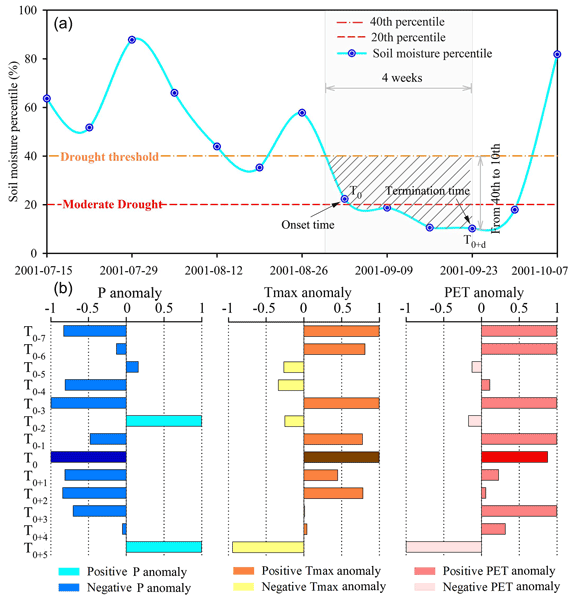
Linqi Zhang, Yi Liu, Liliang Ren, Adriaan J. Teuling, Ye Zhu, Linyong Wei, Linyan Zhang, Shanhu Jiang, Xiaoli Yang, Xiuqin Fang, and Hang Yin
Hydrol. Earth Syst. Sci., 26, 3241–3261, https://doi.org/10.5194/hess-26-3241-2022, https://doi.org/10.5194/hess-26-3241-2022, 2022
Short summary
Short summary
In this study, three machine learning methods displayed a good detection capacity of flash droughts. The RF model was recommended to estimate the depletion rate of soil moisture and simulate flash drought by considering the multiple meteorological variable anomalies in the adjacent time to drought onset. The anomalies of precipitation and potential evapotranspiration exhibited a stronger synergistic but asymmetrical effect on flash droughts compared to slowly developing droughts.
Femke A. Jansen, Remko Uijlenhoet, Cor M. J. Jacobs, and Adriaan J. Teuling
Hydrol. Earth Syst. Sci., 26, 2875–2898, https://doi.org/10.5194/hess-26-2875-2022, https://doi.org/10.5194/hess-26-2875-2022, 2022
Short summary
Short summary
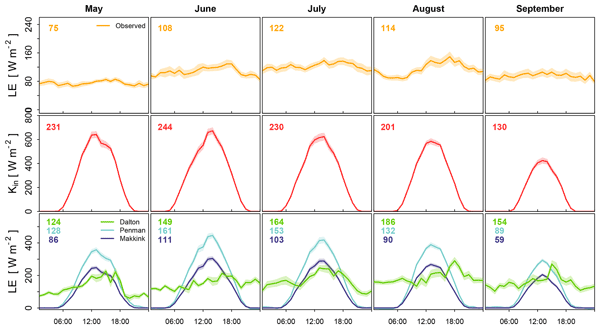
We studied the controls on open water evaporation with a focus on Lake IJssel, the Netherlands, by analysing eddy covariance observations over two summer periods at two locations at the borders of the lake. Wind speed and the vertical vapour pressure gradient can explain most of the variation in observed evaporation, which is in agreement with Dalton's model. We argue that the distinct characteristics of inland waterbodies need to be taken into account when parameterizing their evaporation.
Sarra Kchouk, Lieke A. Melsen, David W. Walker, and Pieter R. van Oel
Nat. Hazards Earth Syst. Sci., 22, 323–344, https://doi.org/10.5194/nhess-22-323-2022, https://doi.org/10.5194/nhess-22-323-2022, 2022
Short summary
Short summary
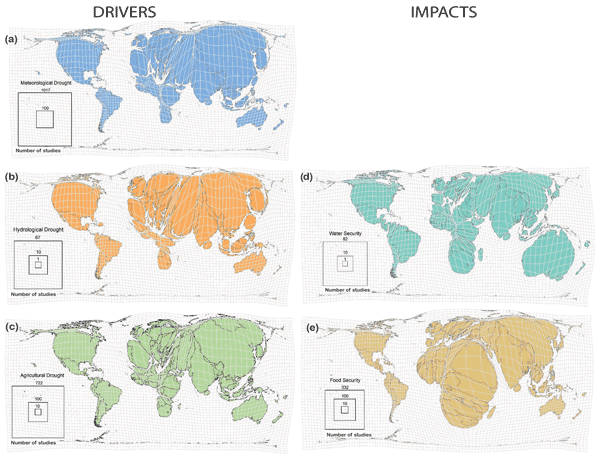
The aim of our study was to question the validity of the assumed direct linkage between drivers of drought and its impacts on water and food securities, mainly found in the frameworks of drought early warning systems (DEWSs). We analysed more than 5000 scientific studies leading us to the conclusion that the local context can contribute to drought drivers resulting in these drought impacts. Our research aims to increase the relevance and utility of the information provided by DEWSs.

Charles Nduhiu Wamucii, Pieter R. van Oel, Arend Ligtenberg, John Mwangi Gathenya, and Adriaan J. Teuling
Hydrol. Earth Syst. Sci., 25, 5641–5665, https://doi.org/10.5194/hess-25-5641-2021, https://doi.org/10.5194/hess-25-5641-2021, 2021
Short summary
Short summary
East African water towers (WTs) are under pressure from human influences within and without, but the water yield (WY) is more sensitive to climate changes from within. Land use changes have greater impacts on WY in the surrounding lowlands. The WTs have seen a strong shift towards wetter conditions while, at the same time, the potential evapotranspiration is gradually increasing. The WTs were identified as non-resilient, and future WY may experience more extreme variations.
Cited articles
Arthurs, L.: Bringing the field to students during COVID-19 and beyond, GSA Today, 31, 28–29, https://doi.org/10.1130/GSATG478GW.1, 2021
Barton, D. C.: Impacts of the COVID-19 pandemic on field instruction and remote teaching alternatives: Results from a survey of instructors, Ecol. Evol., 10, 12499–12507, https://doi.org/10.1002/ece3.6628, 2020
Bond, C. E., Pugsley, J. H., Kedar, L., Ledingham, S. R., Skupinska, M. Z., Gluzinski, T. K., and Boath, M. L.: Learning outcomes, learning support, and cohort cohesion on a virtual field trip: an analysis of student and staff perceptions, Geosci. Commun., 5, 307–323, https://doi.org/10.5194/gc-5-307-2022, 2022.
Boyle, A., Maguire, S., Martin, A., Milsom, C., Nash, R., Rawlinson, S., Turner, A., Wurthmann, S., and Conchie, S.: Fieldwork is good: The student perception and the affective domain, J. Geogr. Higher Educ., 31, 299–317, https://doi.org/10.1080/03098260601063628, 2007
Chitty, E. G. and Hesp, P. A.: The value of field studies in earth and environmental sciences: a review, Nat. Sci. Educ., 53, e70004, https://doi.org/10.1002/nse2.70004, 2024.
Coucledis, H.: Rethinking time geography in the information age, Environ. Plann., 41, 1556–1575, 2009.
Crochet, P., Jóhannesson, T., Jónsson, T., Sigurđsson, O., Björnsson, H., Pálsson, F., and Barstad, I.: Estimating the spatial distribution of precipitation in Iceland using a linear model of orographic precipitation, J. Hydrometeorol., 8, 1285–1306, https://doi.org/10.1175/2007JHM795.1, 2007.
Dickerson, D. L., Dawkins, K. R., and Annetta, L.: Scientific fieldwork: An opportunity for pedagogical-content knowledge development, J. Geosci. Educ., 55, 371–376, https://doi.org/10.5408/1089-9995-55.5.371, 2007.
Dijksma, R, Bense, V. F., Zweers, E., Avis, L., and Vander Ploeg, M. J.: Hydrological characteristics of columnar basalt aquifers: measuring and modeling Skaftafellsheidi, Iceland, Geosciences, 15, 160, https://doi.org/10.3390/geosciences15050160, 2025.
Dunphy, A. and Spellman, G.: Geography fieldwork, fieldwork value and learning styles, International Research in Geographical and Environmental Education, 18, 19–28, https://doi.org/10.1080/10382040802591522, 2009.
Fedesco, H. N., Cavin, D. and Henares, R.: Field-based learning in higher education, J. Scholarship of Teaching and Learning, 20, 65–84, https://doi.org/10.14434/josotl.v20i1.24877, 2020.
Fischer, B. M. C. and Tatomir, A.: A snapshot sample on how COVID-19 impacted and holds up a mirror to European water education, Geosci. Commun., 5, 261–274, https://doi.org/10.5194/gc-5-261-2022, 2022.
Flowers, G. E., Marshall, S. J., Björnsson, H., and Clarke, G. K. C.: Sensitivity of Vatnajökull ice cap hydrology and dynamics to climate warming over the next 2 centuries, J. Geophys. Res., 110, https://doi.org/10.1029/2004JF000200, 2005.
Fuller, I., Gaskin, S., and Scott, I.: Student perceptions of geography and environmental science fieldwork in the light of restricted access to the field, caused by foot and mouth disease in the UK in 2001, J. Geogr. Higher Educ., 27, 79–102, https://doi.org/10.1080/0309826032000062487, 2003.
Guđmundsson, S., Björnsson, H., Magnússon, E., Berthier, E., Pálsson, F., Guđmundsson, M. T., Högnadóttir, T., and Dall, J.: Response of Eyjafjallajökull, Torfajökull and Tindfjallajökull ice caps in Iceland to regional warming, deduced by remote sensing, Polar Res., 30, https://doi.org/10.3402/polar.v30i0.7282, 2011.
Halbertsma, J.: Predicting future retreat of the Breiđamerjökull glacier under influence of proglacial lake Jokülsárlón, Bachelor thesis, Wageningen University, 35 pp., 2025.
Hoyer, L. and Hastie, W. W.: Geoscience undergraduate students' perceptions of how field work and practical skills influence their conceptual understanding and subject interest, J. Geosci. Educ., 71, 158–176, https://doi.org/10.1080/10899995.2022.2110630, 2022.
Hydroshed.org: https://www.hydrosheds.org, last access: 16 January 2026.
Jóhannesson, T., Ađalgeirsdóttir, G., Björnsson, H., Crochet, P., Elíasson, E. B., Guđmudsson, S., Jónsdóttir, J. F., Ólafsson, H., Pálsson, F., Rögnvaldsson, Ó., Sigurđsson, O., Snorrasson, Á, Blöndal Sveinsson, Ó. G., and Thorsteinsson, T.: Effect of climate change on hydrology and hydro-resources in Iceland, National Energy Authority, report no. OS-2007/011, 91 pp., ISBN 978-9979-68-224-0, 2007.
Jones, J. B. and Washko, S.: More than fun in the sun: The pedagogy of field trips improves student learning in higher education, J. Geosci. Educ., 70, 3, 292–305, https://doi.org/10.1080/10899995.2021.1984176, 2022.
Jónsdóttir, J. F.: A runoff map based on numerically simulated precipitation and a projection of future runoff in Iceland, Hydrol. Sci. J., 53, 100–111, https://doi.org/10.1623/hysj.53.1.100, 2008.
Kern, E. L. and Carpenter, J. R.: Effect of field activities on student learning, J. Geol. Educ., 34, 180–183, https://doi.org/10.5408/0022-1368-34.3.180, 1986.
Kortagluggi: https://www.kortagluggi.is, last access: 1 October 2026.
Li, Y., Krause, S., McLendon, A. and Jo, I.: Teaching a geography field methods course amid the COVID-19 pandemic: Reflections and lessons learned, J. Geogr. Higher Educ., 47, 339–348, https://doi.org/10.1080/03098265.2022.2041571, 2022.
Madon, M.: Geoscience capacity development in the petroleum industry: challenges and opportunities, Warta Geologi, 45, 412–421, 2019.
Peace, A. L., Gabriel, J. J., and Eyles, C.: Geoscience fieldwork in the age of COVID-19 and beyond: Commentary on the development of a virtual geological field trip to whitefish falls, Ontario, Canada, Geosciences, 11, 489, https://doi.org/10.3390/geosciences11120489, 2021.
Pratt, S. and Tolkach, D.: Ethical-decision making of “Flights to Nowhere” passengers in the COVID-19 and climate change era, Curr. Issues Tour., 26, 735–751, https://doi.org/10.1080/13683500.2022.2038090, 2022.
Pugsley, J. H., Howell, J. A., Hartley, A., Buckley, S. J., Brackenridge, R., Schofield, N., Maxwell, G., Chmielewska, M., Ringdal, K., Naumann, N., and Vanbiervliet, J.: Virtual field trips utilizing virtual outcrop: construction, delivery and implications for the future, Geosci. Commun., 5, 227–249, https://doi.org/10.5194/gc-5-227-2022, 2022.
Pyle, E. J.: The evaluation of field course experiences: A framework for development, improvement and reporting, Field geology education: historical perspectives and modern approaches, Geol. Soc. Am., 341–356, https://doi.org/10.1130/2009.2461(26), 2009.
Rögnvaldsson, Ó., Jónsdóttir, J. F., and Ólafsson, H.: Numerical simulations of precipitation in the complex terrain of Iceland – Comparison with glaciological and hydrological data, Meteorol. Z., 16, 71–85, https://doi.org/10.1127/0941-2948/2007/0174, 2007.
Scott, I., Fuller, I., and Gaskin, S.: Life without fieldwork: some lecturers' perceptions of geography and environmental science fieldwork, J. Geogr. Higher Educ., 30, 161–171, https://doi.org/10.1080/03098260500499832, 2006.
Scott, I., Goulder, R., Wheeler, P., Scott, L., Tobin, M. L. and Marsham, S.: The value of fieldwork in life and environmental sciences in the context of higher education: A case study in learning about biodiversity, J. Sci. Educ. Technol., 21, 11–21, https://doi.org/10.1007/s10956-010-9276-x, 2012.
SDI Iceland: Maps of Iceland, https://kort.gis.is, last access: 14 April 2026.
Seibert, J., Uhlenbrook, S., and Wagener, T.: Preface “Hydrology education in a changing world”, Hydrol. Earth. Syst. Sci., 17, 1393–1399, https://doi.org/10.5194/hess-17-1393-2013, 2013.
Seifan, M., Dada, O. D., and Berenjian, A.: The effect of real and virtual construction field trips on students' perception and career aspiration, Sustainability, 12, 1200, https://doi.org/10.3390/su12031200, 2020.
Spicer, J. I. and Stratford, J.: Student perceptions of a virtual field trip to replace a real field trip, J. Comput. Assist. Learn., 17, 345–354, https://doi.org/10.1046/j.0266-4909.2001.00191.x, 2001.
Whitney, M. M.: Icelandic riverine freshwater distribution, offshore export, and along shelf connectivity, Estuar. Coast. Shelf S., 319, https://doi.org/10.1016/j.ecss.2025.109266, 2025.
Wolfe, C. J., Bjarnason, I. T., VanDecar, J. C., and Solomon, S. C.: Seismic structure of the Iceland mantle plume, Nature, 385, 245–247, https://doi.org/10.1038/385245a0, 1997.
Zelensky, W.: The geographer as voyeur, Geogr. Rev., 91, 1–9, https://doi.org/10.2307/3250798, 2001.
Short summary
Scientific field work is an expensive and time consuming teaching method is the scientific community. A survey among former participants of a hydrological Master excursion to Iceland, organized by Wageningen University (the Netherlands) showed that real excursions have a long lasting impact on the scientific development of students, in contrast to virtual excursions. As quoted by one of the participants: "You can learn a lot in a classroom, but an excursion makes you remember".
Scientific field work is an expensive and time consuming teaching method is the scientific...


Altmetrics
Final-revised paper
Preprint