
Articles | Volume 9, issue 3
https://doi.org/10.5194/gc-9-371-2026
© Author(s) 2026. This work is distributed under
the Creative Commons Attribution 4.0 License.
the Creative Commons Attribution 4.0 License.
https://doi.org/10.5194/gc-9-371-2026
© Author(s) 2026. This work is distributed under
the Creative Commons Attribution 4.0 License.
the Creative Commons Attribution 4.0 License.
Editorial
| Highlight paper
| 
21 Aug 2026
Editorial | Highlight paper |
| 21 Aug 2026
| 21 Aug 2026
Editorial: Introducing a new article type: Limitations, Errors, Surprises, Shortcomings and Opportunities for New Science (LESSONS)

Hydrology and Environmental Hydraulics Group, Wageningen University, Wageningen, the Netherlands
John Hillier
Dept. Geography and Environment, Loughborough University, Loughborough, LE11 3TU, UK
GC executive editor
Stefan Gaillard
Institute for Science in Society, Radboud University, 6500 HC Nijmegen, the Netherlands
Education Center, University Medical Center, Utrecht, the Netherlands
Center of Trial and Error, Utrecht, the Netherlands
Theresa Blume
GFZ Helmholtz Centre for Geosciences, Potsdam, Germany
HESS chief-executive editor
Eduardo Queiroz Alves
European Geosciences Union (EGU), Munich, Germany
Susanne Buiter
GFZ Helmholtz Centre for Geosciences, Potsdam, Germany
SE executive editor
Ken S. Carslaw
School of Earth and Environment, University of Leeds, Leeds, UK
ACP chief-executive editor
Kirsten von Elverfeldt
HeiGIT (Heidelberg Institute for Geoinformation Technology), Heidelberg, Germany
GC executive editor
Tim H. M. van Emmerik
Hydrology and Environmental Hydraulics Group, Wageningen University, Wageningen, the Netherlands
Barbara Ervens
Institute of Chemistry, University Clermont Auvergne, CNRS, 63000 Clermont-Ferrand, France
ACP chief-executive editor
Department of Water Resources, faculty of Civil Engineering and Geosciences, Delft University of Technology, Delft, the Netherlands
Sam Illingworth
Edinburgh Napier University, Edinburgh, UK
GC chief-executive editor
Daniel Klotz
Interdisciplinary Transformation University, Linz, Austria
Google Research, Vienna, Austria
Jonas Pyschik
Department of Near-Surface Geophysics, Albert‐Ludwigs‐University of Freiburg, Freiburg im Breisgau, Germany
Related authors
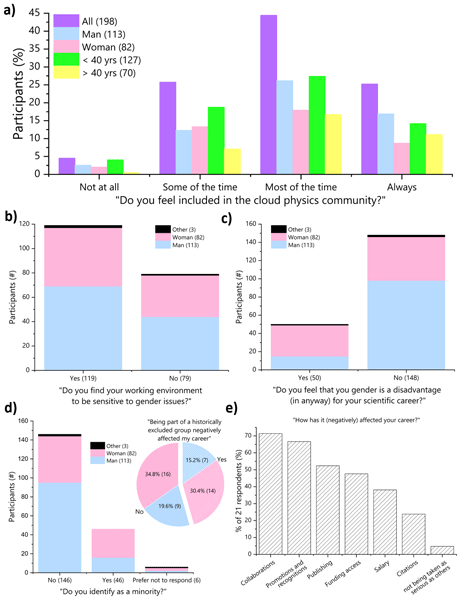
Luis A. Ladino, Karin Ardon-Dryer, Diana L. Pereira, Ulrike Proske, Zyanya Ramirez-Diaz, Antonia Velicu, and Zamin A. Kanji
Geosci. Commun., 9, 415–436, https://doi.org/10.5194/gc-9-415-2026, https://doi.org/10.5194/gc-9-415-2026, 2026
Short summary
Short summary
A survey and literature metadata analysis from the cloud physics community are used to investigate the state of diversity, equity and inclusion in the cloud physics community. We show the evolution of gender contributions to cloud physics and the inclusion of tropics-based scientists. The publication analysis reveals the rate of men and women dropping out of the field is not different, however, gender balance was better achieved when women led publications compared to men.
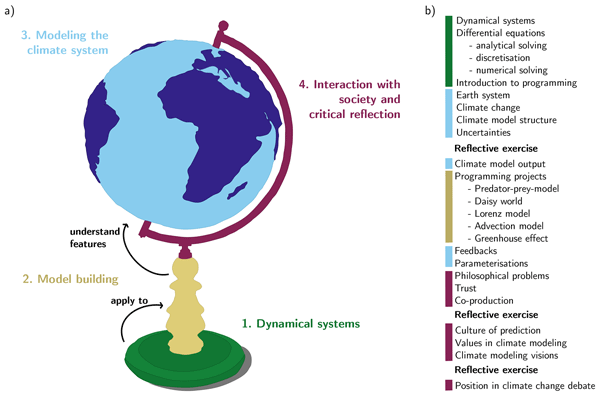
Ulrike Proske and Martin Staab
Geosci. Commun., 9, 239–259, https://doi.org/10.5194/gc-9-239-2026, https://doi.org/10.5194/gc-9-239-2026, 2026
Short summary
Short summary
Climate models are not just physics translated into code, but they influence and are influenced by humans. Thus modelers need to learn not only the physical basis, but also the underlying motivations and uncertainties of the modeling approach. We develop a course at Bachelor level that aims to teach such interdisciplinary perspectives and show that it proves itself in practice. We share the material as inspiration to include more interdisciplinary content and reflection into modeling courses.
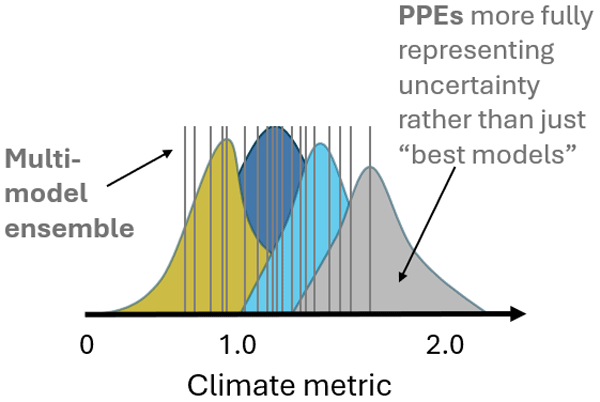
Ken S. Carslaw, Leighton A. Regayre, Ulrike Proske, Andrew Gettelman, David M. H. Sexton, Yun Qian, Lauren R. Marshall, Oliver Wild, Marcus van Lier-Walqui, Annika Oertel, Saloua Peatier, Ben Yang, Jill S. Johnson, Sihan Li, Daniel T. McCoy, Benjamin M. Sanderson, Christina J. Williamson, Gregory S. Elsaesser, Kuniko Yamazaki, and Ben B. B. Booth
Atmos. Chem. Phys., 26, 4651–4667, https://doi.org/10.5194/acp-26-4651-2026, https://doi.org/10.5194/acp-26-4651-2026, 2026
Short summary
Short summary
A major challenge in climate science is reducing projection uncertainty despite advances in models and observational constraints. Perturbed parameter ensembles (PPEs) offer a powerful tool to explore and reduce uncertainty by revealing model weaknesses and guiding development. PPEs are now widely applied across climate systems and scales. We argue they should be prioritized alongside complexity and resolution in model resource planning.
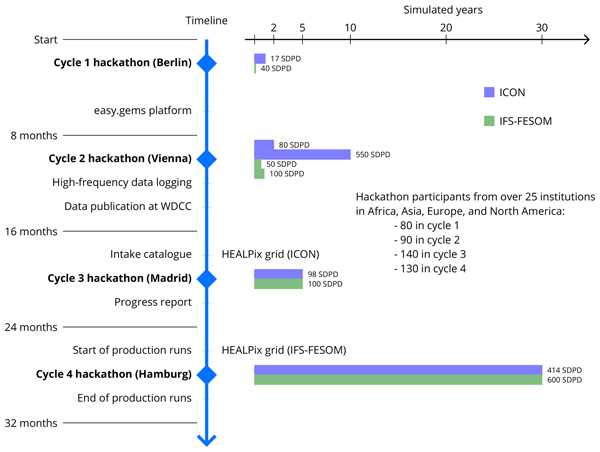
Hans Segura, Xabier Pedruzo-Bagazgoitia, Philipp Weiss, Sebastian K. Müller, Thomas Rackow, Junhong Lee, Edgar Dolores-Tesillos, Imme Benedict, Matthias Aengenheyster, Razvan Aguridan, Gabriele Arduini, Alexander J. Baker, Jiawei Bao, Swantje Bastin, Eulàlia Baulenas, Tobias Becker, Sebastian Beyer, Hendryk Bockelmann, Nils Brüggemann, Lukas Brunner, Suvarchal K. Cheedela, Sushant Das, Jasper Denissen, Ian Dragaud, Piotr Dziekan, Madeleine Ekblom, Jan Frederik Engels, Monika Esch, Richard Forbes, Claudia Frauen, Lilli Freischem, Diego García-Maroto, Philipp Geier, Paul Gierz, Álvaro González-Cervera, Katherine Grayson, Matthew Griffith, Oliver Gutjahr, Helmuth Haak, Ioan Hadade, Kerstin Haslehner, Shabeh ul Hasson, Jan Hegewald, Lukas Kluft, Aleksei Koldunov, Nikolay Koldunov, Tobias Kölling, Shunya Koseki, Sergey Kosukhin, Josh Kousal, Peter Kuma, Arjun U. Kumar, Rumeng Li, Nicolas Maury, Maximilian Meindl, Sebastian Milinski, Kristian Mogensen, Bimochan Niraula, Jakub Nowak, Divya Sri Praturi, Ulrike Proske, Dian Putrasahan, René Redler, David Santuy, Domokos Sármány, Reiner Schnur, Patrick Scholz, Dmitry Sidorenko, Dorian Spät, Birgit Sützl, Daisuke Takasuka, Adrian Tompkins, Alejandro Uribe, Mirco Valentini, Menno Veerman, Aiko Voigt, Sarah Warnau, Fabian Wachsmann, Marta Wacławczyk, Nils Wedi, Karl-Hermann Wieners, Jonathan Wille, Marius Winkler, Yuting Wu, Florian Ziemen, Janos Zimmermann, Frida A.-M. Bender, Dragana Bojovic, Sandrine Bony, Simona Bordoni, Patrice Brehmer, Marcus Dengler, Emanuel Dutra, Saliou Faye, Erich Fischer, Chiel van Heerwaarden, Cathy Hohenegger, Heikki Järvinen, Markus Jochum, Thomas Jung, Johann H. Jungclaus, Noel S. Keenlyside, Daniel Klocke, Heike Konow, Martina Klose, Szymon Malinowski, Olivia Martius, Thorsten Mauritsen, Juan Pedro Mellado, Theresa Mieslinger, Elsa Mohino, Hanna Pawłowska, Karsten Peters-von Gehlen, Abdoulaye Sarré, Pajam Sobhani, Philip Stier, Lauri Tuppi, Pier Luigi Vidale, Irina Sandu, and Bjorn Stevens
Geosci. Model Dev., 18, 7735–7761, https://doi.org/10.5194/gmd-18-7735-2025, https://doi.org/10.5194/gmd-18-7735-2025, 2025
Short summary
Short summary
The Next Generation of Earth Modeling Systems project (nextGEMS) developed two Earth system models that use horizontal grid spacing of 10 km and finer, giving more fidelity to the representation of local phenomena, globally. In its fourth cycle, nextGEMS simulated the Earth System climate over the 2020–2049 period under the SSP3-7.0 scenario. Here, we provide an overview of nextGEMS, insights into the model development, and the realism of multi-decadal, kilometer-scale simulations.
Janneke O. E. Remmers, Rozemarijn ter Horst, Ehsan Nabavi, Ulrike Proske, Adriaan J. Teuling, Jeroen Vos, and Lieke A. Melsen
Hydrol. Earth Syst. Sci., 29, 5371–5382, https://doi.org/10.5194/hess-29-5371-2025, https://doi.org/10.5194/hess-29-5371-2025, 2025
Short summary
Short summary
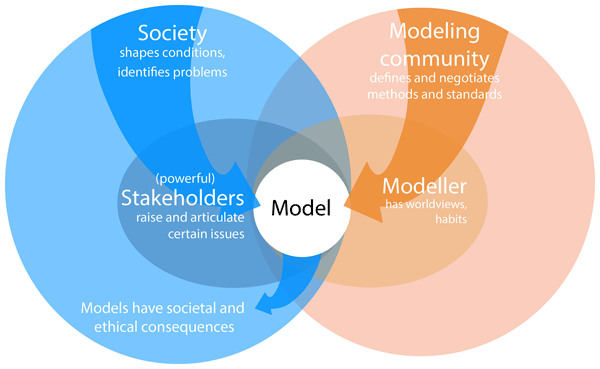
Hydrological models are generally seen as neutral, despite acknowledged uncertainties. This notion has several, possibly harmful, consequences. In critical social sciences, non-neutrality in methods and results is an established topic of debate. We propose that in order to deal with it in hydrological modelling, the hydrological modelling network can learn from, and with, critical social sciences. The main lesson, from our perspective, is that responsible modelling is a shared responsibility.
Ulrike Proske, Michael P. Adams, Grace C. E. Porter, Mark A. Holden, Jaana Bäck, and Benjamin J. Murray
Atmos. Chem. Phys., 25, 979–995, https://doi.org/10.5194/acp-25-979-2025, https://doi.org/10.5194/acp-25-979-2025, 2025
Short summary
Short summary
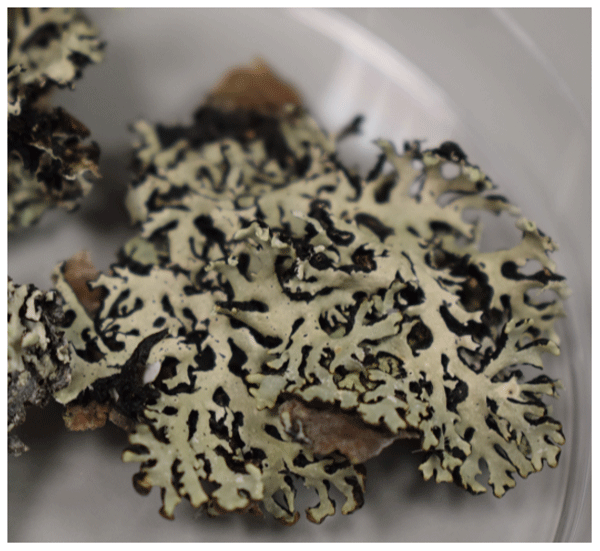
Ice-nucleating particles (INPs) aid the freezing of water droplets in clouds and thus modify cloud properties. In a campaign in a Finnish boreal forest, biological INPs were observed, despite many of their potential biological sources being snow-covered. We sampled tree-dwelling lichens that were not covered in snow and tested their ice nucleation ability in the laboratory. We found that the lichen harbours INPs, which may be important in similar snowy environments.
Ulrike Proske, Nils Brüggemann, Jan P. Gärtner, Oliver Gutjahr, Helmuth Haak, Dian Putrasahan, and Karl-Hermann Wieners
EGUsphere, https://doi.org/10.5194/egusphere-2024-3493, https://doi.org/10.5194/egusphere-2024-3493, 2024
Preprint archived
Short summary
Short summary
Climate models contain coding mistakes, which may look mundane, but can affect the results of interconnected and complex models in unforeseen ways. We describe a sea ice bug in the coupled atmosphere-ocean-sea ice model ICON, giving an example of visual and concise bug communication. This bug represents a novel species of resolution-dependent bugs. The case illustrates the value of open documentation of bugs in climate models and to encourage our community to adopt a similar approach.
Franziska Vogel, Michael P. Adams, Larissa Lacher, Polly B. Foster, Grace C. E. Porter, Barbara Bertozzi, Kristina Höhler, Julia Schneider, Tobias Schorr, Nsikanabasi S. Umo, Jens Nadolny, Zoé Brasseur, Paavo Heikkilä, Erik S. Thomson, Nicole Büttner, Martin I. Daily, Romy Fösig, Alexander D. Harrison, Jorma Keskinen, Ulrike Proske, Jonathan Duplissy, Markku Kulmala, Tuukka Petäjä, Ottmar Möhler, and Benjamin J. Murray
Atmos. Chem. Phys., 24, 11737–11757, https://doi.org/10.5194/acp-24-11737-2024, https://doi.org/10.5194/acp-24-11737-2024, 2024
Short summary
Short summary
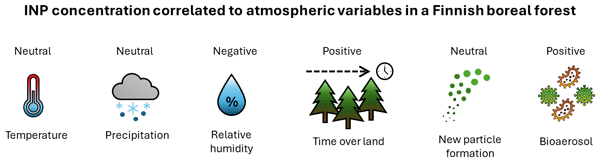
Primary ice formation in clouds strongly influences their properties; hence, it is important to understand the sources of ice-nucleating particles (INPs) and their variability. We present 2 months of INP measurements in a Finnish boreal forest using a new semi-autonomous INP counting device based on gas expansion. These results show strong variability in INP concentrations, and we present a case that the INPs we observe are, at least some of the time, of biological origin.
Ulrike Proske, Sylvaine Ferrachat, and Ulrike Lohmann
Atmos. Chem. Phys., 24, 5907–5933, https://doi.org/10.5194/acp-24-5907-2024, https://doi.org/10.5194/acp-24-5907-2024, 2024
Short summary
Short summary
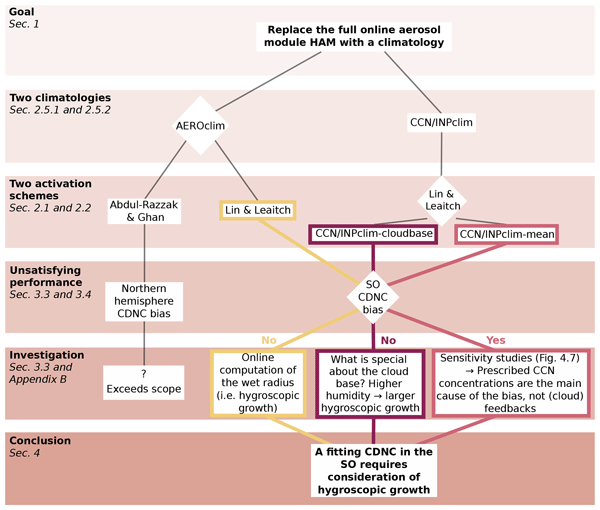
Climate models include treatment of aerosol particles because these influence clouds and radiation. Over time their representation has grown increasingly detailed. This complexity may hinder our understanding of model behaviour. Thus here we simplify the aerosol representation of our climate model by prescribing mean concentrations, which saves run time and helps to discover unexpected model behaviour. We conclude that simplifications provide a new perspective for model study and development.
Zane Dedekind, Ulrike Proske, Sylvaine Ferrachat, Ulrike Lohmann, and David Neubauer
Atmos. Chem. Phys., 24, 5389–5404, https://doi.org/10.5194/acp-24-5389-2024, https://doi.org/10.5194/acp-24-5389-2024, 2024
Short summary
Short summary
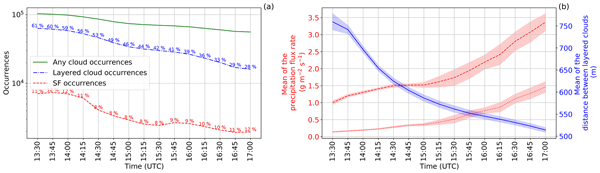
Ice particles precipitating into lower clouds from an upper cloud, the seeder–feeder process, can enhance precipitation. A numerical modeling study conducted in the Swiss Alps found that 48 % of observed clouds were overlapping, with the seeder–feeder process occurring in 10 % of these clouds. Inhibiting the seeder–feeder process reduced the surface precipitation and ice particle growth rates, which were further reduced when additional ice multiplication processes were included in the model.
Zoé Brasseur, Dimitri Castarède, Erik S. Thomson, Michael P. Adams, Saskia Drossaart van Dusseldorp, Paavo Heikkilä, Kimmo Korhonen, Janne Lampilahti, Mikhail Paramonov, Julia Schneider, Franziska Vogel, Yusheng Wu, Jonathan P. D. Abbatt, Nina S. Atanasova, Dennis H. Bamford, Barbara Bertozzi, Matthew Boyer, David Brus, Martin I. Daily, Romy Fösig, Ellen Gute, Alexander D. Harrison, Paula Hietala, Kristina Höhler, Zamin A. Kanji, Jorma Keskinen, Larissa Lacher, Markus Lampimäki, Janne Levula, Antti Manninen, Jens Nadolny, Maija Peltola, Grace C. E. Porter, Pyry Poutanen, Ulrike Proske, Tobias Schorr, Nsikanabasi Silas Umo, János Stenszky, Annele Virtanen, Dmitri Moisseev, Markku Kulmala, Benjamin J. Murray, Tuukka Petäjä, Ottmar Möhler, and Jonathan Duplissy
Atmos. Chem. Phys., 22, 5117–5145, https://doi.org/10.5194/acp-22-5117-2022, https://doi.org/10.5194/acp-22-5117-2022, 2022
Short summary
Short summary
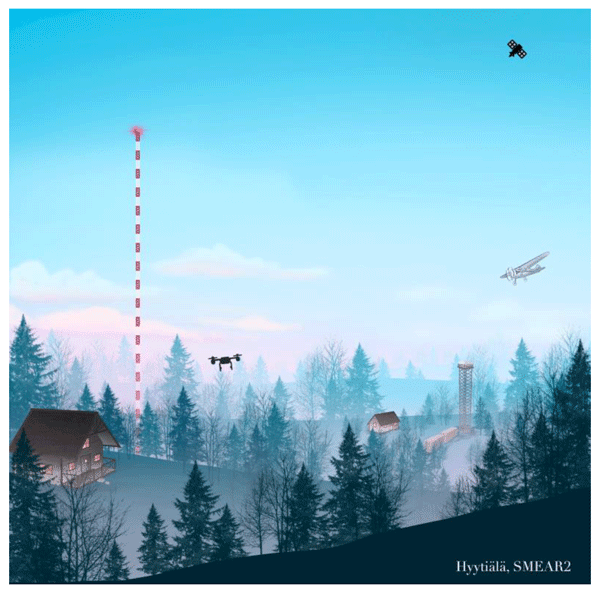
The present measurement report introduces the ice nucleation campaign organized in Hyytiälä, Finland, in 2018 (HyICE-2018). We provide an overview of the campaign settings, and we describe the measurement infrastructure and operating procedures used. In addition, we use results from ice nucleation instrument inter-comparison to show that the suite of these instruments deployed during the campaign reports consistent results.

Ulrike Proske, Sylvaine Ferrachat, David Neubauer, Martin Staab, and Ulrike Lohmann
Atmos. Chem. Phys., 22, 4737–4762, https://doi.org/10.5194/acp-22-4737-2022, https://doi.org/10.5194/acp-22-4737-2022, 2022
Short summary
Short summary
Cloud microphysical processes shape cloud properties and are therefore important to represent in climate models. Their parameterization has grown more complex, making the model results more difficult to interpret. Using sensitivity analysis we test how the global aerosol–climate model ECHAM-HAM reacts to changes to these parameterizations. The model is sensitive to the parameterization of ice crystal autoconversion but not to, e.g., self-collection, suggesting that it may be simplified.
Sanika Baste, Sebastian Lerch, Daniel Klotz, and Ralf Loritz
Hydrol. Earth Syst. Sci., 30, 6339–6358, https://doi.org/10.5194/hess-30-6339-2026, https://doi.org/10.5194/hess-30-6339-2026, 2026
Short summary
Short summary
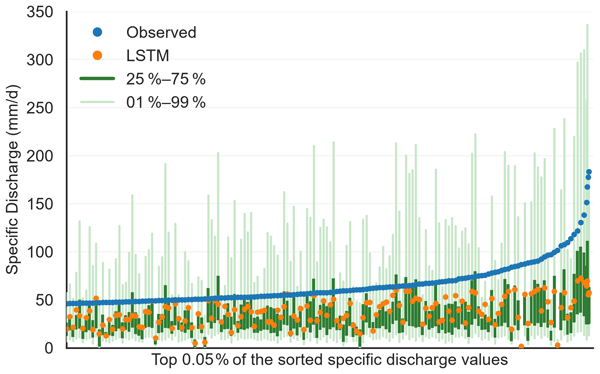
Probabilistic runoff predictions capture the likelihood of rare, high-stakes events that deterministic models – which predict only the conditional expectation – tend to underestimate. This added information can improve flood warning communication by learning reward-based rules for selecting predictive quantiles suited to specific hydrological and societal contexts.
Xinyi Huang, Paul R. Field, Ross J. Herbert, Benjamin J. Murray, Floortje van den Heuvel, Daniel P. Grosvenor, Rachel W. N. Sansom, and Kenneth S. Carslaw
Atmos. Chem. Phys., 26, 14577–14616, https://doi.org/10.5194/acp-26-14577-2026, https://doi.org/10.5194/acp-26-14577-2026, 2026
Short summary
Short summary
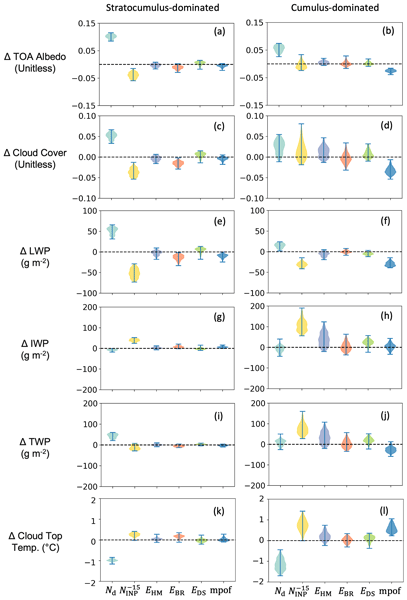
Aerosol-cloud interactions and ice formation processes are key to modelling mixed-phase clouds in cold-air outbreaks. However, no studies have investigated the joint effects of these processes. Here, we used perturbed parameter ensembles and model emulators to show that these processes have strongly interacting effects on the properties of cold air outbreak clouds. Single sensitivity tests may therefore provide incomplete information about cloud-controlling factors.
Felix Pohl, Burkhard Neuwirth, David Steger, Georgios Skiadaresis, Ingo Heinrich, Heye Bogena, Marvin Müsgen-von den Driesch, Boris Thies, Jörg Bendix, Michael Leuchner, Theresa Blume, Harrie-Jan Hendricks-Franssen, and Anke Hildebrandt
EGUsphere, https://doi.org/10.5194/egusphere-2026-5883, https://doi.org/10.5194/egusphere-2026-5883, 2026
This preprint is open for discussion and under review for Biogeosciences (BG).
Short summary
Short summary
From 2018 to 2022, Germany had its most severe multi year drought in over seventy years. To see how forests coped, we measured the yearly growth rings of more than 460 beech, oak, pine and Douglas fir trees across Germany. Growth declined strongly, by 21 to 66 percent, but losses varied greatly, even between neighboring stands under the same weather. Translating drought severity into local growth losses therefore requires considering local growing conditions.
Luis A. Ladino, Karin Ardon-Dryer, Diana L. Pereira, Ulrike Proske, Zyanya Ramirez-Diaz, Antonia Velicu, and Zamin A. Kanji
Geosci. Commun., 9, 415–436, https://doi.org/10.5194/gc-9-415-2026, https://doi.org/10.5194/gc-9-415-2026, 2026
Short summary
Short summary
A survey and literature metadata analysis from the cloud physics community are used to investigate the state of diversity, equity and inclusion in the cloud physics community. We show the evolution of gender contributions to cloud physics and the inclusion of tropics-based scientists. The publication analysis reveals the rate of men and women dropping out of the field is not different, however, gender balance was better achieved when women led publications compared to men.
Leslie Nuñez López, Pierre Amato, and Barbara Ervens
EGUsphere, https://doi.org/10.5194/egusphere-2026-5013, https://doi.org/10.5194/egusphere-2026-5013, 2026
This preprint is open for discussion and under review for Biogeosciences (BG).
Short summary
Short summary
Clouds contain microorganisms that can biodegrade organics, potentially influencing the atmospheric carbon cycle. We present a framework to estimate biodegradation rates for common cloud-water constituents and shows that microbial abundance is the main controlling factor. Overall, biodegradation is a minor atmospheric sink, only important for a few individual compounds. These findings improve estimates of atmospheric sinks and help advance our understanding of airborne microbial activity.
Ross J. Herbert, Larissa Lacher, Alexander Böhmländer, Mark D. Tarn, Antoine Canzi, Aidan Pantoya, Evelyn Freney, Kristina Höhler, Pia Bogert, Céline Planche, Ping Tian, Michael Adams, Sarah Barr, David Brus, Nicole Büttner, Martin Daily, Konstantinos Doulgeris, Konstantinos Eleftheriadis, Grant Forster, Romy Fösig, Dimitrios G. Georgakopoulos, Maria I. Gini, A. Gannet Hallar, Radovan Krejci, Elke Ludewig, Mauro Mazzola, Ian B. McCubbin, Athanasios Nenes, Tuukka Petäjä, Joseph Robinson, Franziska Vogel, Paul Zieger, Stephen Arnold, Kenneth S. Carslaw, Naruki Hiranuma, Ottmar Möhler, and Benjamin J. Murray
Earth Syst. Sci. Data, 18, 6465–6483, https://doi.org/10.5194/essd-18-6465-2026, https://doi.org/10.5194/essd-18-6465-2026, 2026
Short summary
Short summary
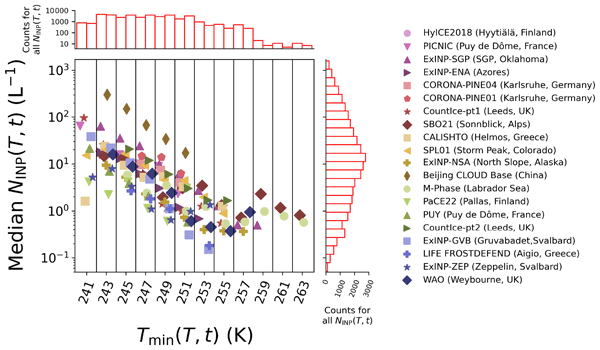
Ice formation in sub-zero clouds is influenced by airborne particles called ice-nucleating particles (INPs), whose concentrations vary substantially over short time and spatial scales. To assess the role of INPs in our climate, a comprehensive and consistent global dataset is essential. Our GloPINE model-ready dataset is a major step in this direction, comprising 36,000 measurements made using a single instrument design (PINE) over 70,000 hours of operation at 20 Northern Hemisphere sites.
Eduardo Jose Acuna Espinoza, Manuel Álvarez Chaves, Frederik Kratzert, Daniel Klotz, Martin Gauch, Robert Lang, Dominik Elfgang, Alexander Dolich, Ralf Loritz, and Uwe Ehret
EGUsphere, https://doi.org/10.5194/egusphere-2026-4885, https://doi.org/10.5194/egusphere-2026-4885, 2026
This preprint is open for discussion and under review for Hydrology and Earth System Sciences (HESS).
Short summary
Short summary
We present the Multi-Frequency Masked-Forecasting LSTM (MF2LSTM), a pipeline unifying multi-frequency modeling, missing-data handling, and real-time data assimilation for hourly streamflow forecasting. Forced with ICON-D2 weather data, MF2LSTM yields higher performance than LARSIM, the operational model used in Baden-Württemberg, Germany. Using a single-cell baseline, this work proves that simple deep learning models can deliver high-level operational performance without extra complexity.
Tsai-Wen Lin, Florian Adolphi, Hendrik Grotheer, Jens Hefter, Tommaso Tesi, Johannes Lachner, Stella Winkler, Junjie Wu, Eduardo Queiroz Alves, and Gesine Mollenhauer
EGUsphere, https://doi.org/10.5194/egusphere-2026-4726, https://doi.org/10.5194/egusphere-2026-4726, 2026
This preprint is open for discussion and under review for Climate of the Past (CP).
Short summary
Short summary
We refined the age-depth models of marine sediment cores from the western Laptev Sea shelf using authigenic 10Be/9Be ratios. Pre-depositional 14C ages of terrigenous biomarkers in the cores revealed distinct transport pathways. n-C28:0 fatty acids exhibited varied sources/transport mechanisms between periods strongly influenced by coastal erosion and river discharge, whereas n-alkanes suggested aged permafrost as the dominant source.
Noah Liguori-Bills, Catherine E. Scott, Ken S. Carslaw, Natalie Kehrwald, Stijn Hantson, Susan Kaspari, Carlo Barbante, Elena Barbaro, Paolo Gabrielli, Roberta Zangrando, Lonnie G. Thompson, and Douglas S. Hamilton
EGUsphere, https://doi.org/10.5194/egusphere-2026-2728, https://doi.org/10.5194/egusphere-2026-2728, 2026
Short summary
Short summary
Ice cores preserve changes in landscape fires and human-caused combustion. In this study, we compared ice core data from every continent, except Oceania, to computer model simulations of fire. We found a large disagreement in the 1850 CE to 1980 CE black carbon ratio. After exploring changes in emissions, transport, and aerosol microphysical processes as potential reasons for this disagreement, our results suggested that fire emission input datasets for climate models are the primary cause.

Daniel Klotz, Peter Miersch, Thiago V. M. do Nascimento, Fabrizio Fenicia, Corinna Frank, Martin Gauch, and Jakob Zscheischler
Earth Syst. Sci. Data, 18, 5485–5504, https://doi.org/10.5194/essd-18-5485-2026, https://doi.org/10.5194/essd-18-5485-2026, 2026
Short summary
Short summary
Data availability is central to hydrological science. It is the basis for advancing our understanding of hydrological processes, building prediction models, and anticipatory water management. We present a data-driven daily runoff reconstruction product for natural streamflow. We name it EARLS: European aggregated reconstruction for large-sample studies. The reconstructions represent daily simulations of natural streamflow across Europe and cover the period from 1953 to 2020.
Emanuel Thoenes, Theresa Blume, Markus Weiler, Bernhard Kohl, Luisa Hopp, and Stefan Achleitner
Hydrol. Earth Syst. Sci., 30, 4405–4436, https://doi.org/10.5194/hess-30-4405-2026, https://doi.org/10.5194/hess-30-4405-2026, 2026
Short summary
Short summary
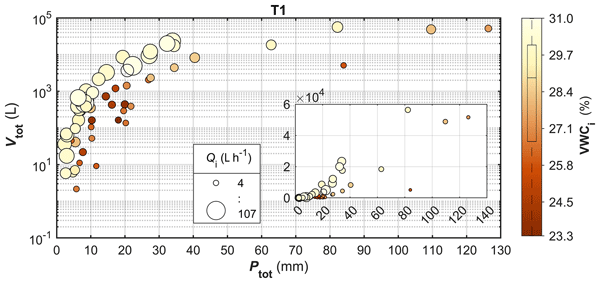
Subsurface stormflow (SSF) is a key runoff mechanism in upland environments. The analysis of SSF at two trenched hillslopes showed that SSF volume was controlled by total rainfall and initial wetness. Peakflow depended on rainfall amount, with initial wetness and rainfall intensity being important for small and large events, respectively. The rate at which SSF increased was linked to rainfall intensity and amount.
Kunal Ghosh, Leighton A. Regayre, Léa Prévost, and Ken S. Carslaw
EGUsphere, https://doi.org/10.5281/zenodo.20374157, https://doi.org/10.5281/zenodo.20374157, 2026
Short summary
Short summary
Tiny airborne particles affect climate by changing clouds, but this remains hard to predict. We tested whether an observed link between cloud droplet number and cloud water can reduce uncertainty in climate-model estimates. Using many versions of a climate model, we found that this link gives useful clues about cloud processes but cannot constrain aerosol–cloud climate effects on its own. Combining it with other observations helps, but also reveals weaknesses in how models represent clouds.
Ulrike Proske and Martin Staab
Geosci. Commun., 9, 239–259, https://doi.org/10.5194/gc-9-239-2026, https://doi.org/10.5194/gc-9-239-2026, 2026
Short summary
Short summary
Climate models are not just physics translated into code, but they influence and are influenced by humans. Thus modelers need to learn not only the physical basis, but also the underlying motivations and uncertainties of the modeling approach. We develop a course at Bachelor level that aims to teach such interdisciplinary perspectives and show that it proves itself in practice. We share the material as inspiration to include more interdisciplinary content and reflection into modeling courses.
Xinyue Shao, Yaman Liu, Xinyi Dong, Minghuai Wang, Ruochong Xu, Joel A. Thornton, Duseong S. Jo, Man Yue, Wenxiang Shen, Manish Shrivastava, Stephen R. Arnold, and Ken S. Carslaw
Atmos. Chem. Phys., 26, 6427–6448, https://doi.org/10.5194/acp-26-6427-2026, https://doi.org/10.5194/acp-26-6427-2026, 2026
Short summary
Short summary
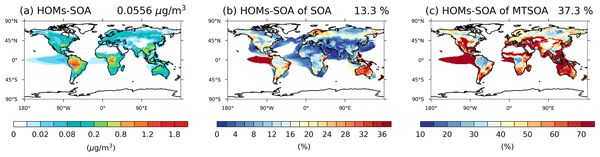
Highly Oxygenated Organic Molecules (HOMs) are key precursors of secondary organic aerosols (SOA). Incorporating the HOMs chemical mechanism into a global climate model allows for a reasonable reproduction of observed HOM characteristics. HOM-SOA constitutes a significant fraction of global SOA, and its distribution and formation pathways exhibit strong sensitivity to uncertainties in autoxidation processes and peroxy radical branching ratios.
Deborah Cohen, Rony Amira, Rom Aschner, Yuval Carny, Ben Feinstein, Hadas Fester, Shmulik Fronman, Martin Gauch, Oren Gilon, Rotem Green, Avinatan Hassidim, Daniel Klotz, Frederik Kratzert, Dan Korenfeld, Gila Loike, Amit Markel, Yossi Matias, Rotem Mayo, Asher Metzger, Benny Mosheyev, Aviel Niego, Stephanie Rees, Emily Reinstein, Amitay Sicherman, Guy Shalev, Omri Shefi, Yuval Shildan, Ido Zemach, Oleg Zlydenko, and Grey Nearing
EGUsphere, https://doi.org/10.5194/egusphere-2026-2283, https://doi.org/10.5194/egusphere-2026-2283, 2026
Short summary
Short summary
We improved our global river model to provide earlier, more reliable streamflow predictions. Testing over approximately 1,000 watersheds, we found it predicts river flows up to six days further into the future for monitored rivers, and one day further for unmonitored ones. Releasing our code publicly empowers the science community to improve global water forecasting.
Frédéric Mathonat, François Enault, Raphaëlle Péguilhan, Muriel Joly, Mariline Théveniot, Jean-Luc Baray, Barbara Ervens, and Pierre Amato
Biogeosciences, 23, 2885–2907, https://doi.org/10.5194/bg-23-2885-2026, https://doi.org/10.5194/bg-23-2885-2026, 2026
Short summary
Short summary
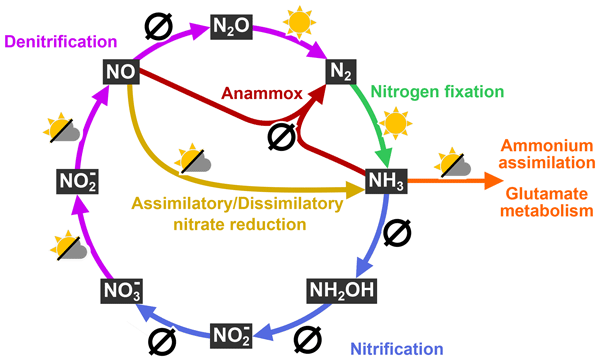
The atmosphere plays key roles in Earth’s biogeochemical cycles. Airborne microbes were demonstrated previously to participate in the processing of organic carbon in clouds. Using a combinaison of complementary methods, we examined here, for the first time, their potential contribution to the pool of nitrogen compounds. Airborne microorganisms interact with abundant forms of nitrogen in the air and cloud and we provide global estimates.
Ken S. Carslaw, Leighton A. Regayre, Ulrike Proske, Andrew Gettelman, David M. H. Sexton, Yun Qian, Lauren R. Marshall, Oliver Wild, Marcus van Lier-Walqui, Annika Oertel, Saloua Peatier, Ben Yang, Jill S. Johnson, Sihan Li, Daniel T. McCoy, Benjamin M. Sanderson, Christina J. Williamson, Gregory S. Elsaesser, Kuniko Yamazaki, and Ben B. B. Booth
Atmos. Chem. Phys., 26, 4651–4667, https://doi.org/10.5194/acp-26-4651-2026, https://doi.org/10.5194/acp-26-4651-2026, 2026
Short summary
Short summary
A major challenge in climate science is reducing projection uncertainty despite advances in models and observational constraints. Perturbed parameter ensembles (PPEs) offer a powerful tool to explore and reduce uncertainty by revealing model weaknesses and guiding development. PPEs are now widely applied across climate systems and scales. We argue they should be prioritized alongside complexity and resolution in model resource planning.
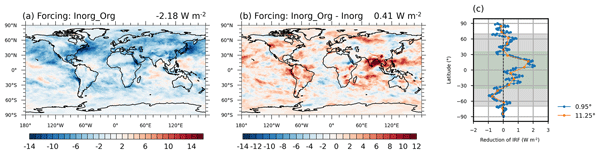
Xinyue Shao, Minghuai Wang, Xinyi Dong, Yaman Liu, Stephen R. Arnold, Leighton A. Regayre, Duseong S. Jo, Wenxiang Shen, Hao Wang, Man Yue, Jingyi Wang, Wenxin Zhang, and Ken S. Carslaw
Atmos. Chem. Phys., 26, 4439–4451, https://doi.org/10.5194/acp-26-4439-2026, https://doi.org/10.5194/acp-26-4439-2026, 2026
Short summary
Short summary
This study uses a global chemistry–climate model to investigate how new particle formation (NPF) from highly oxygenated organic molecules (HOMs) contributes to cloud condensation nuclei (CCN) in both preindustrial and present-day environments and its impact on aerosol indirect radiative forcing. The findings highlight the crucial role of biogenic emissions in climate change, providing new insights for carbon-neutral scenarios and enhancing our understanding of aerosol–cloud interactions.
Daniel Rasche, Cosimo Brogi, Markus Köhli, David McJannet, Jannis Weimar, Martin Schrön, Theresa Blume, and Andreas Güntner
EGUsphere, https://doi.org/10.5194/egusphere-2026-1495, https://doi.org/10.5194/egusphere-2026-1495, 2026
Short summary
Short summary
Cosmic-Ray Neutron Sensing is a passive technique to estimate soil moisture, plant traits and snow at the field scale by using instruments sensitive to different neutron energy ranges. For devices sensitive to lower energies, a generalised assessment of the signal response under varying environmental conditions is currently missing. Our simulation-based study highlights the differing signal response of different instruments to environmental variables and provides a baseline for further research.
Charlotte Braat, Stef Lhermitte, Marie Claire ten Veldhuis, Rolf Hut, and Ruud van der Ent
EGUsphere, https://doi.org/10.5194/egusphere-2026-1439, https://doi.org/10.5194/egusphere-2026-1439, 2026
This preprint is open for discussion and under review for Geoscientific Instrumentation, Methods and Data Systems (GI).
Short summary
Short summary
Deforestation influences the regional and global water cycle. In this paper, deforestation data is combined with data that links rainfall to where this water evaporated. We estimate to what extent rainfall in the region is potentially impacted by deforestation elsewhere. We find that most regions are mostly impacted by deforestation outside of the region. We could not yet confirm a generic link with actual rainfall due to limitations, complex system interactions and region specific dynamics.
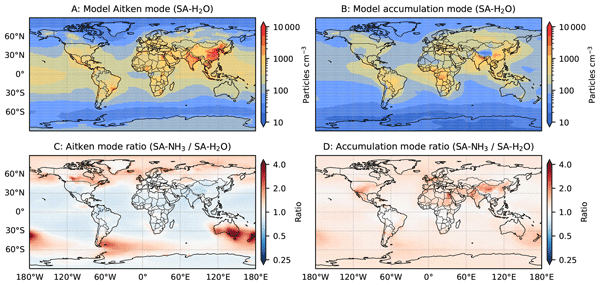
Xu-Cheng He, Nathan Luke Abraham, Han Ding, Maria R. Russo, Daniel P. Grosvenor, Yao Ge, Xuemei Wang, Anthony C. Jones, Pedro Campuzano-Jost, Benjamin Nault, Agnieszka Kupc, Donald Blake, Jose L. Jimenez, Christina J. Williamson, James Weber, Alexander T. Archibald, and Hamish Gordon
Atmos. Chem. Phys., 26, 3805–3851, https://doi.org/10.5194/acp-26-3805-2026, https://doi.org/10.5194/acp-26-3805-2026, 2026
Short summary
Short summary
Aerosols affect clouds and climate. However, current climate models still struggle to simulate them accurately. We used aircraft data from a global mission to evaluate how well the UK Earth System Model represents aerosols and their precursors. Our results show that the model misses key formation processes in clean ocean regions, suggesting that future improvements should focus on better representing how aerosols form naturally in the atmosphere.

Léa M. C. Prévost, Leighton A. Regayre, Jill S. Johnson, Doug McNeall, Sean Milton, and Kenneth S. Carslaw
Atmos. Chem. Phys., 26, 2487–2530, https://doi.org/10.5194/acp-26-2487-2026, https://doi.org/10.5194/acp-26-2487-2026, 2026
Short summary
Short summary
Climate models rely on uncertain adjustable parameters. We tested millions of combinations of these inputs to see how well the model matches real-world data. We found that no single set of inputs can match several observations at the same time, which suggests that the issue lies in the model itself. We developed a method to detect these conflicts and trace them back trace them to their source. The aim is to help modellers target improvements that reduce uncertainty in climate projections.

Leighton A. Regayre, Léa M. C. Prévost, Kunal Ghosh, Jill S. Johnson, Jeremy E. Oakley, Jonathan Owen, Iain Webb, and Ken S. Carslaw
Atmos. Chem. Phys., 26, 2293–2317, https://doi.org/10.5194/acp-26-2293-2026, https://doi.org/10.5194/acp-26-2293-2026, 2026
Short summary
Short summary
Tiny particles called aerosols affect how much sunlight the Earth reflects back into space – one of the biggest climate uncertainties. We use a large set of climate model simulations and find that uncertainty drops in some regions, but persists in other areas, after comparing models to observations. By identifying the specific processes that cause the remaining uncertainty, we guide future efforts to reduce the aerosol forcing uncertainty so we can make more reliable climate predictions.
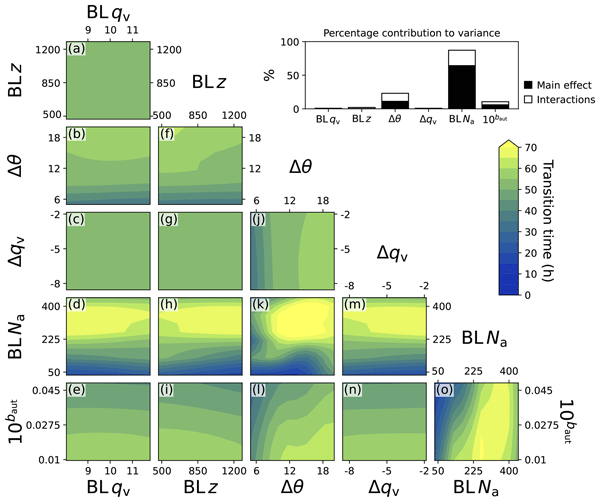
Rachel W. N. Sansom, Jill S. Johnson, Leighton A. Regayre, Lindsay A. Lee, and Ken S. Carslaw
Atmos. Chem. Phys., 26, 1713–1733, https://doi.org/10.5194/acp-26-1713-2026, https://doi.org/10.5194/acp-26-1713-2026, 2026
Short summary
Short summary
The cloud transition from stratocumulus to cumulus features a distinct decrease in cloud cover. We used a high-resolution model to simulate many instances of the transition with different environmental conditions. In low aerosol conditions, the transition occurred faster due to drizzle depleting the cloud of moisture and aerosol, whereas in high aerosol conditions, other factors were more important. Understanding different regimes is important for accurately simulating clouds in global models.
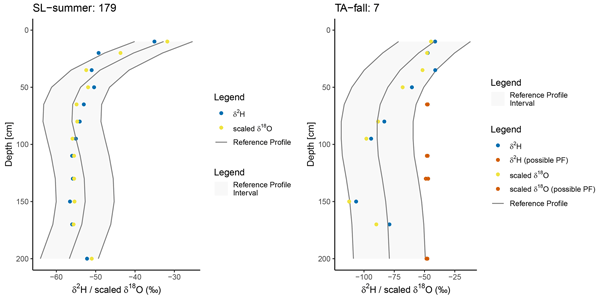
Jonas Pyschik and Markus Weiler
Hydrol. Earth Syst. Sci., 30, 485–501, https://doi.org/10.5194/hess-30-485-2026, https://doi.org/10.5194/hess-30-485-2026, 2026
Short summary
Short summary
This study introduces a new method of detecting how water moves quickly through certain paths in soil, bypassing the usual, slower flow. By analysing natural water markers in soil samples taken at different depths, we identified unusual flow patterns. Our method is simple and non-invasive, and can be used to cover large areas. This helps us to better understand how water travels through the ground, which is important for managing water resources and protecting the environment.
Huiwen Zhang, Jianzhi Dong, Xiaoqi Kang, Lingna Wei, Ying Zhu, Rolf Hut, and Vincent Hoogelander
Earth Syst. Sci. Data Discuss., https://doi.org/10.5194/essd-2025-792, https://doi.org/10.5194/essd-2025-792, 2026
Manuscript not accepted for further review
Short summary
Short summary
We present SUPER v2, a 3-hourly, 0.1° precipitation dataset for global land areas covering 2000–2023. It merges satellite and reanalysis products using a statistical uncertainty-based framework that minimizes reliance on gauge observations, making it particularly suitable for data-sparse regions. Evaluation using over 5,000 independent gauges shows that SUPER v2 achieves higher accuracy than existing products, supporting global drought monitoring and hydrological modeling.
Marc Emanuel Schneiter, Rolf Hut, and Erik Van Sebille
EGUsphere, https://doi.org/10.5194/egusphere-2025-6170, https://doi.org/10.5194/egusphere-2025-6170, 2025
Short summary
Short summary
We study land-water transitions of 24 small floating position-trackers that approximately mimic floating plastic litter. We describe how to automatically identify such transitions from recorded tracks, and we characterize our observations with respect to sea and wind conditions. The insights can be integrated in model simulations and used for the planning of beach cleanups. We released the trackers in the Wadden Sea, a shallow body of water that is strongly influenced by tides and wind.
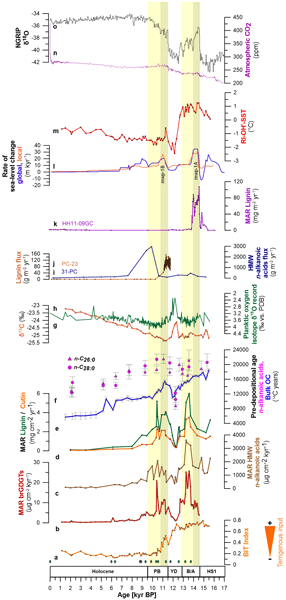
Arnaud Nicolas, Jens Hefter, Hendrik Grotheer, Tommaso Tesi, Ruediger Stein, Alessio Nogarotto, Eduardo Queiroz Alves, and Gesine Mollenhauer
Clim. Past, 21, 2579–2599, https://doi.org/10.5194/cp-21-2579-2025, https://doi.org/10.5194/cp-21-2579-2025, 2025
Short summary
Short summary
We analyzed a high-resolution marine sediment record from the Laptev Sea to reconstruct deglacial permafrost thaw events during the last 16 kyr. Using biomarkers and radiocarbon dating, we found that peaks in pre-aged terrigenous material coincided with rapid sea-level rise, indicating coastal erosion as the main mobilization mechanism. This research provides insights into past permafrost carbon release, informing predictions of future climate-permafrost feedback in a warming world.
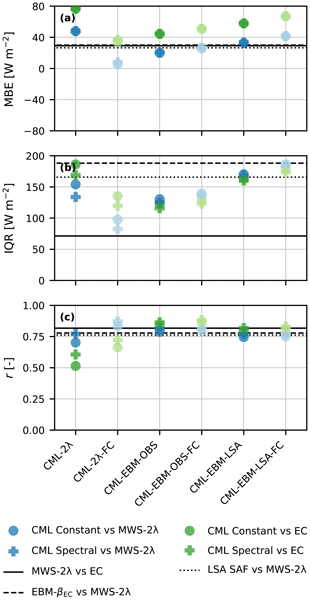
Luuk D. van der Valk, Oscar K. Hartogensis, Miriam Coenders-Gerrits, Rolf W. Hut, and Remko Uijlenhoet
Hydrol. Earth Syst. Sci., 29, 6589–6606, https://doi.org/10.5194/hess-29-6589-2025, https://doi.org/10.5194/hess-29-6589-2025, 2025
Short summary
Short summary
Commercial microwave links (CMLs), part of mobile phone networks, transmit comparable signals as instruments specially designed to estimate evaporation. Therefore, we investigate if CMLs could be used to estimate evaporation, even though they have not been designed for this purpose. Our results illustrate the potential of using CMLs to estimate evaporation, especially given their global coverage, but also outline some major drawbacks, often a consequence of unfavourable design choices for CMLs.
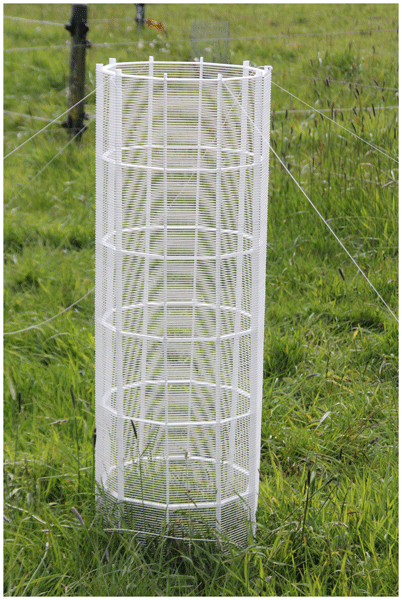
Constantijn G. B. ter Horst, Gijsbert A. Vis, Judith Jongen-Boekee, Marie-Claire ten Veldhuis, Rolf W. Hut, and Bas J. H. van de Wiel
Atmos. Meas. Tech., 18, 6853–6867, https://doi.org/10.5194/amt-18-6853-2025, https://doi.org/10.5194/amt-18-6853-2025, 2025
Short summary
Short summary
We present the the Fine Resolution Adaptable Distributed Temperature Sensing (FRADTS) method, which allows for mm-resolution probing of vertical temperature profiles, using coil-based distributed temperature sensing. The method is fully open source and parametric, such that unique field setups can be generated and reproduced. The method is extensively tested within a ~10cm grass canopy in a field campaign.
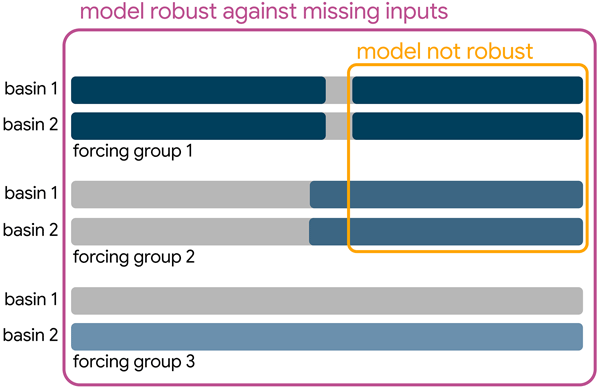
Martin Gauch, Frederik Kratzert, Daniel Klotz, Grey Nearing, Deborah Cohen, and Oren Gilon
Hydrol. Earth Syst. Sci., 29, 6221–6235, https://doi.org/10.5194/hess-29-6221-2025, https://doi.org/10.5194/hess-29-6221-2025, 2025
Short summary
Short summary
Missing input data are one of the most common challenges when building deep learning hydrological models. We present and analyze different methods that can produce predictions when certain inputs are missing during training or inference. Our proposed strategies provide high accuracy while allowing for more flexible data handling and being robust to outages in operational scenarios.
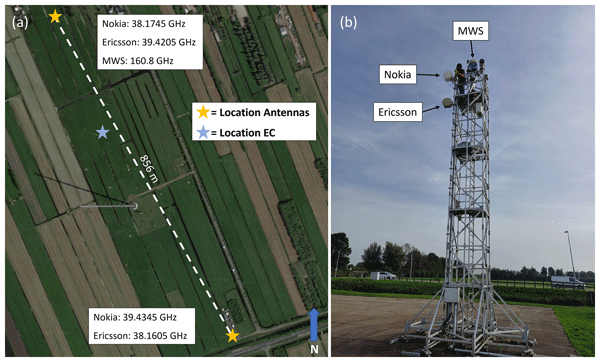
Luuk D. van der Valk, Oscar K. Hartogensis, Miriam Coenders-Gerrits, Rolf W. Hut, Bas Walraven, and Remko Uijlenhoet
Atmos. Meas. Tech., 18, 6143–6165, https://doi.org/10.5194/amt-18-6143-2025, https://doi.org/10.5194/amt-18-6143-2025, 2025
Short summary
Short summary
Commercial microwave links (CMLs), part of mobile phone networks, transmit comparable signals to instruments specially designed to estimate evaporation. Therefore, we investigate if CMLs could be used to estimate evaporation, even though they have not been designed for this purpose. Our results illustrate the potential for using CMLs to estimate evaporation, especially given their global coverage, but also outline some major drawbacks, often a consequence of unfavourable design choices for CMLs.
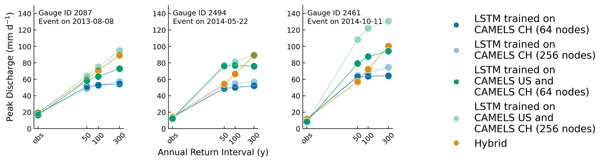
Sanika Baste, Daniel Klotz, Eduardo Acuña Espinoza, Andras Bardossy, and Ralf Loritz
Hydrol. Earth Syst. Sci., 29, 5871–5891, https://doi.org/10.5194/hess-29-5871-2025, https://doi.org/10.5194/hess-29-5871-2025, 2025
Short summary
Short summary
This study evaluates the extrapolation performance of long short-term memory (LSTM) networks in rainfall–runoff modeling, specifically under extreme precipitation conditions. The findings reveal that the LSTM cannot predict discharge values beyond a theoretical limit and that this limit is well below the extremity of its training data. This behavior results from the LSTM's gating structures rather than saturation of the cell states alone.
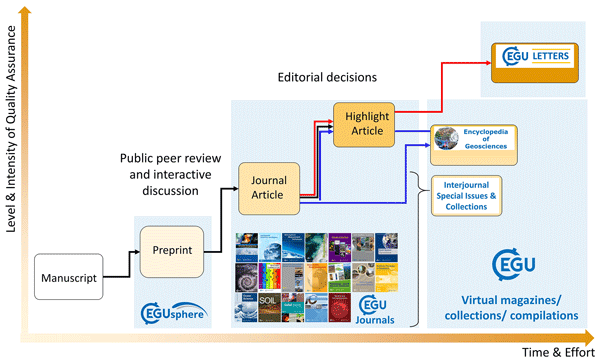
Barbara Ervens, Ken S. Carslaw, Thomas Koop, and Ulrich Pöschl
Atmos. Chem. Phys., 25, 13903–13952, https://doi.org/10.5194/acp-25-13903-2025, https://doi.org/10.5194/acp-25-13903-2025, 2025
Short summary
Short summary
Over 25 years, the European Geosciences Union (EGU) has demonstrated the success, viability and benefits of interactive open-access (OA) publishing with public peer review in its journals, its publishing platform EGUsphere and virtual compilations. The article summarizes the evolution of the EGU/Copernicus publications and of OA publishing with interactive public peer review at large by placing the EGU/Copernicus publications in the context of current and future global open science.
Hans Segura, Xabier Pedruzo-Bagazgoitia, Philipp Weiss, Sebastian K. Müller, Thomas Rackow, Junhong Lee, Edgar Dolores-Tesillos, Imme Benedict, Matthias Aengenheyster, Razvan Aguridan, Gabriele Arduini, Alexander J. Baker, Jiawei Bao, Swantje Bastin, Eulàlia Baulenas, Tobias Becker, Sebastian Beyer, Hendryk Bockelmann, Nils Brüggemann, Lukas Brunner, Suvarchal K. Cheedela, Sushant Das, Jasper Denissen, Ian Dragaud, Piotr Dziekan, Madeleine Ekblom, Jan Frederik Engels, Monika Esch, Richard Forbes, Claudia Frauen, Lilli Freischem, Diego García-Maroto, Philipp Geier, Paul Gierz, Álvaro González-Cervera, Katherine Grayson, Matthew Griffith, Oliver Gutjahr, Helmuth Haak, Ioan Hadade, Kerstin Haslehner, Shabeh ul Hasson, Jan Hegewald, Lukas Kluft, Aleksei Koldunov, Nikolay Koldunov, Tobias Kölling, Shunya Koseki, Sergey Kosukhin, Josh Kousal, Peter Kuma, Arjun U. Kumar, Rumeng Li, Nicolas Maury, Maximilian Meindl, Sebastian Milinski, Kristian Mogensen, Bimochan Niraula, Jakub Nowak, Divya Sri Praturi, Ulrike Proske, Dian Putrasahan, René Redler, David Santuy, Domokos Sármány, Reiner Schnur, Patrick Scholz, Dmitry Sidorenko, Dorian Spät, Birgit Sützl, Daisuke Takasuka, Adrian Tompkins, Alejandro Uribe, Mirco Valentini, Menno Veerman, Aiko Voigt, Sarah Warnau, Fabian Wachsmann, Marta Wacławczyk, Nils Wedi, Karl-Hermann Wieners, Jonathan Wille, Marius Winkler, Yuting Wu, Florian Ziemen, Janos Zimmermann, Frida A.-M. Bender, Dragana Bojovic, Sandrine Bony, Simona Bordoni, Patrice Brehmer, Marcus Dengler, Emanuel Dutra, Saliou Faye, Erich Fischer, Chiel van Heerwaarden, Cathy Hohenegger, Heikki Järvinen, Markus Jochum, Thomas Jung, Johann H. Jungclaus, Noel S. Keenlyside, Daniel Klocke, Heike Konow, Martina Klose, Szymon Malinowski, Olivia Martius, Thorsten Mauritsen, Juan Pedro Mellado, Theresa Mieslinger, Elsa Mohino, Hanna Pawłowska, Karsten Peters-von Gehlen, Abdoulaye Sarré, Pajam Sobhani, Philip Stier, Lauri Tuppi, Pier Luigi Vidale, Irina Sandu, and Bjorn Stevens
Geosci. Model Dev., 18, 7735–7761, https://doi.org/10.5194/gmd-18-7735-2025, https://doi.org/10.5194/gmd-18-7735-2025, 2025
Short summary
Short summary
The Next Generation of Earth Modeling Systems project (nextGEMS) developed two Earth system models that use horizontal grid spacing of 10 km and finer, giving more fidelity to the representation of local phenomena, globally. In its fourth cycle, nextGEMS simulated the Earth System climate over the 2020–2049 period under the SSP3-7.0 scenario. Here, we provide an overview of nextGEMS, insights into the model development, and the realism of multi-decadal, kilometer-scale simulations.
Janneke O. E. Remmers, Rozemarijn ter Horst, Ehsan Nabavi, Ulrike Proske, Adriaan J. Teuling, Jeroen Vos, and Lieke A. Melsen
Hydrol. Earth Syst. Sci., 29, 5371–5382, https://doi.org/10.5194/hess-29-5371-2025, https://doi.org/10.5194/hess-29-5371-2025, 2025
Short summary
Short summary
Hydrological models are generally seen as neutral, despite acknowledged uncertainties. This notion has several, possibly harmful, consequences. In critical social sciences, non-neutrality in methods and results is an established topic of debate. We propose that in order to deal with it in hydrological modelling, the hydrological modelling network can learn from, and with, critical social sciences. The main lesson, from our perspective, is that responsible modelling is a shared responsibility.
Theresa Blume, Peter Chifflard, Stefan Achleitner, Andreas Hartmann, Stefan Hergarten, Luisa Hopp, Bernhard Kohl, Florian Leese, Ilja van Meerveld, Christian Reinhardt-Imjela, and Markus Weiler
EGUsphere, https://doi.org/10.5194/egusphere-2025-4424, https://doi.org/10.5194/egusphere-2025-4424, 2025
Short summary
Short summary
Subsurface stormflow (SSF) is one of the least studied and therefore least understood runoff generation processes because detecting and quantifying SSF is extremely challenging. We present an ongoing concerted experimental effort to systematically investigate SSF across four catchments using a variety of methods covering different spatial scales. Centerpiece of this effort is the construction of 12 large trenches to capture and monitor SSF.
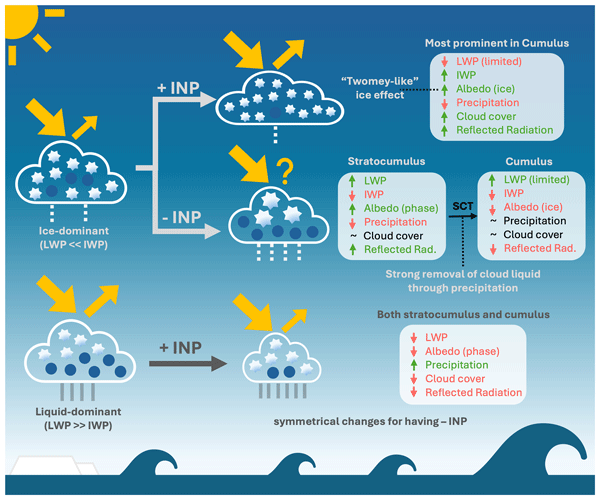
Xinyi Huang, Paul R. Field, Benjamin J. Murray, Daniel P. Grosvenor, Floortje van den Heuvel, and Kenneth S. Carslaw
Atmos. Chem. Phys., 25, 11363–11406, https://doi.org/10.5194/acp-25-11363-2025, https://doi.org/10.5194/acp-25-11363-2025, 2025
Short summary
Short summary
Cold-air outbreak (CAO) clouds play a vital role in climate prediction. This study explores the responses of CAO clouds to aerosols and ice production under different environmental conditions. We found that CAO cloud responses vary with cloud temperature and are strongly controlled by the liquid–ice partitioning in these clouds, suggesting the importance of good representations of cloud microphysics properties to predict the behaviours of CAO clouds in a warming climate.
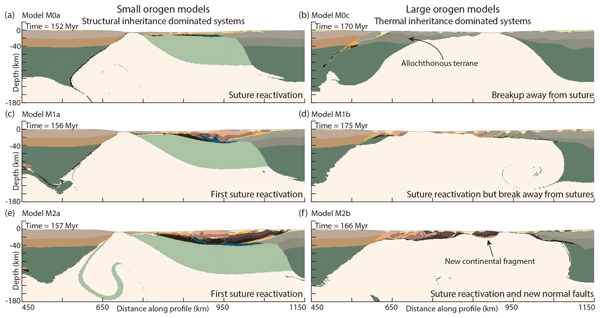
Zoltán Erdős, Susanne J. H. Buiter, and Joya L. Tetreault
Solid Earth, 16, 841–863, https://doi.org/10.5194/se-16-841-2025, https://doi.org/10.5194/se-16-841-2025, 2025
Short summary
Short summary
We used computer models to study how mountains formed by the collision of tectonic plates can later affect the breakup of these same plates. Our results show that in large, warm mountain belts, new faults form due to the orogen being weak overall, while in smaller, colder belts, breakup follows old fault zones. Microcontinents that were accreted during collision can create new continental fragments during extension. These findings help explain how past geological events shape continent margins.
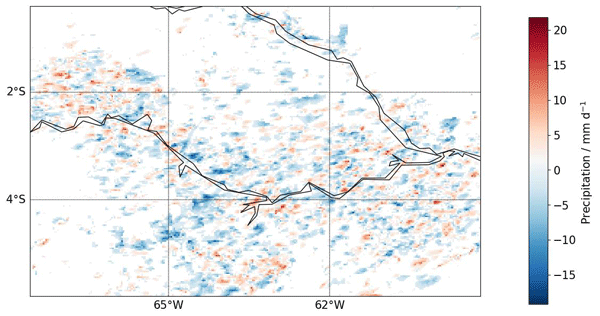
Xuemei Wang, Kenneth S. Carslaw, Daniel P. Grosvenor, and Hamish Gordon
Atmos. Chem. Phys., 25, 9685–9717, https://doi.org/10.5194/acp-25-9685-2025, https://doi.org/10.5194/acp-25-9685-2025, 2025
Short summary
Short summary
Anthropogenic emissions can influence aerosol particle number concentrations and cloud formation. Our model simulations predict around a 10 % increase in the particle and cloud droplet number concentrations when doubling the emissions in the Manaus region in the Amazonian wet season. However, the corresponding changes in cloud water and rain mass are around 4 %. Such a weak response implies that this convective environment is not sensitive to the localized anthropogenic emission changes here.
Eleanor Alice Dunn, Sam Illingworth, and Jon-Paul Orsi
EGUsphere, https://doi.org/10.5194/egusphere-2025-1963, https://doi.org/10.5194/egusphere-2025-1963, 2025
Short summary
Short summary
This study looks at the social media strategy of the British Geological Survey (BGS). We look at how BGS engage the public through its social media campaigns. We analyse the content in BGS social media posts and conduct interviews with BGS employees to understand their attitudes towards social media. Our results suggest increasing video content output and incorporating public feedback. This research acts as a template for other scientific organisations seeking to enhance their online presence.
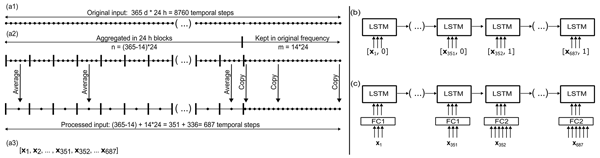
Eduardo Acuña Espinoza, Frederik Kratzert, Daniel Klotz, Martin Gauch, Manuel Álvarez Chaves, Ralf Loritz, and Uwe Ehret
Hydrol. Earth Syst. Sci., 29, 1749–1758, https://doi.org/10.5194/hess-29-1749-2025, https://doi.org/10.5194/hess-29-1749-2025, 2025
Short summary
Short summary
Long short-term memory (LSTM) networks have demonstrated state-of-the-art performance for rainfall-runoff hydrological modelling. However, most studies focus on predictions at a daily scale, limiting the benefits of sub-daily (e.g. hourly) predictions in applications like flood forecasting. In this study, we introduce a new architecture, multi-frequency LSTM (MF-LSTM), designed to use inputs of various temporal frequencies to produce sub-daily (e.g. hourly) predictions at a moderate computational cost.
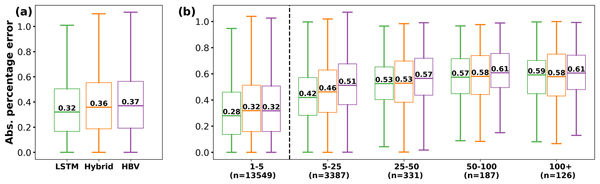
Eduardo Acuña Espinoza, Ralf Loritz, Frederik Kratzert, Daniel Klotz, Martin Gauch, Manuel Álvarez Chaves, and Uwe Ehret
Hydrol. Earth Syst. Sci., 29, 1277–1294, https://doi.org/10.5194/hess-29-1277-2025, https://doi.org/10.5194/hess-29-1277-2025, 2025
Short summary
Short summary
Data-driven techniques have shown the potential to outperform process-based models in rainfall–runoff simulations. Hybrid models, combining both approaches, aim to enhance accuracy and maintain interpretability. Expanding the set of test cases to evaluate hybrid models under different conditions, we test their generalization capabilities for extreme hydrological events.
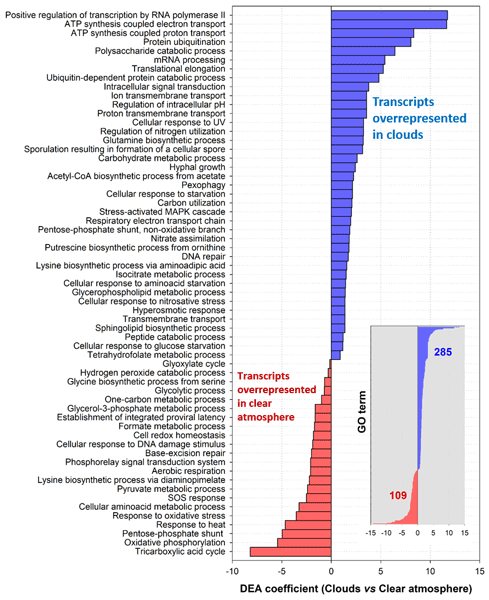
Raphaëlle Péguilhan, Florent Rossi, Muriel Joly, Engy Nasr, Bérénice Batut, François Enault, Barbara Ervens, and Pierre Amato
Biogeosciences, 22, 1257–1275, https://doi.org/10.5194/bg-22-1257-2025, https://doi.org/10.5194/bg-22-1257-2025, 2025
Short summary
Short summary
Using comparative metagenomics and metatranscriptomics, we examined the functioning of airborne microorganisms in clouds and a clear atmosphere. Clouds are atmospheric masses where multiple microbial processes are promoted compared with a clear atmosphere. Overrepresented microbial functions of interest include the processing of chemical compounds, biomass production, and regulation of oxidants. This has implications for biogeochemical cycles and microbial ecology.
Ulrike Proske, Michael P. Adams, Grace C. E. Porter, Mark A. Holden, Jaana Bäck, and Benjamin J. Murray
Atmos. Chem. Phys., 25, 979–995, https://doi.org/10.5194/acp-25-979-2025, https://doi.org/10.5194/acp-25-979-2025, 2025
Short summary
Short summary
Ice-nucleating particles (INPs) aid the freezing of water droplets in clouds and thus modify cloud properties. In a campaign in a Finnish boreal forest, biological INPs were observed, despite many of their potential biological sources being snow-covered. We sampled tree-dwelling lichens that were not covered in snow and tested their ice nucleation ability in the laboratory. We found that the lichen harbours INPs, which may be important in similar snowy environments.
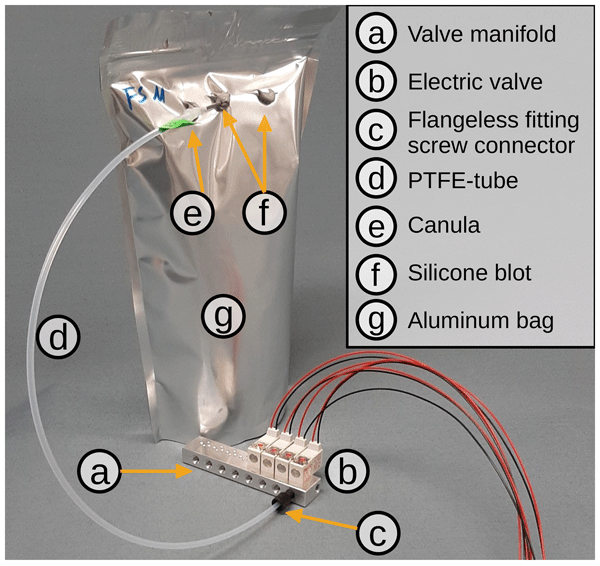
Jonas Pyschik, Stefan Seeger, Barbara Herbstritt, and Markus Weiler
Hydrol. Earth Syst. Sci., 29, 525–534, https://doi.org/10.5194/hess-29-525-2025, https://doi.org/10.5194/hess-29-525-2025, 2025
Short summary
Short summary
We developed a device (named VapAuSa) that automates stable water isotope analysis. Stable water isotopes are a natural tracer that many researchers use to investigate water (re-)distribution processes in environmental systems. VapAuSa helps to analyse such environmental samples by automating a formerly tedious manual process, allowing for higher sample throughput. This enables larger sampling campaigns, as more samples can be processed before reaching their limited storage time.
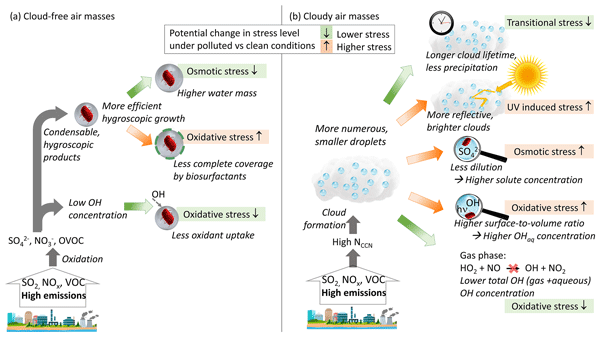
Barbara Ervens, Pierre Amato, Kifle Aregahegn, Muriel Joly, Amina Khaled, Tiphaine Labed-Veydert, Frédéric Mathonat, Leslie Nuñez López, Raphaëlle Péguilhan, and Minghui Zhang
Biogeosciences, 22, 243–256, https://doi.org/10.5194/bg-22-243-2025, https://doi.org/10.5194/bg-22-243-2025, 2025
Short summary
Short summary
Atmospheric microorganisms are a small fraction of Earth's microbiome, with bacteria being a significant part. Aerosolized bacteria are airborne for a few days, encountering unique chemical and physical conditions affecting stress levels and survival. We explore chemical and microphysical conditions bacteria encounter, highlighting potential nutrient and oxidant limitations and diverse effects by pollutants, which may ultimately impact the microbiome's role in global ecosystems and biodiversity.
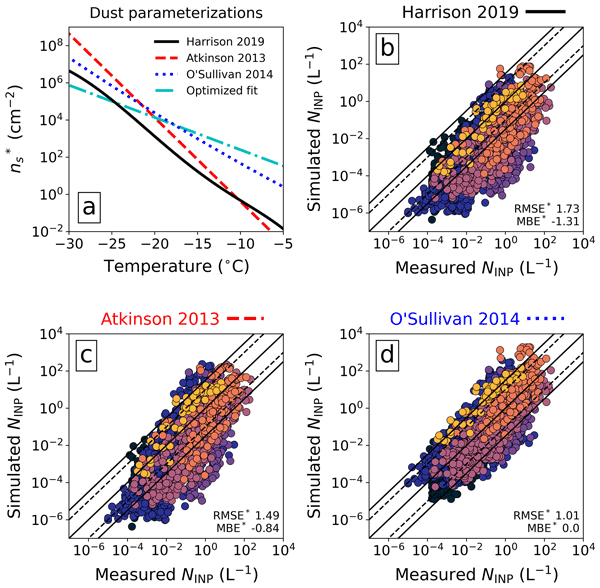
Ross J. Herbert, Alberto Sanchez-Marroquin, Daniel P. Grosvenor, Kirsty J. Pringle, Stephen R. Arnold, Benjamin J. Murray, and Kenneth S. Carslaw
Atmos. Chem. Phys., 25, 291–325, https://doi.org/10.5194/acp-25-291-2025, https://doi.org/10.5194/acp-25-291-2025, 2025
Short summary
Short summary
Aerosol particles that help form ice in clouds vary in number and type around the world and with time. However, in many weather and climate models cloud ice is not linked to aerosols that are known to nucleate ice. Here we report the first steps towards representing ice-nucleating particles within the UK Earth System Model. We conclude that in addition to ice nucleation by sea spray and mineral components of soil dust, we also need to represent ice nucleation by the organic components of soils.
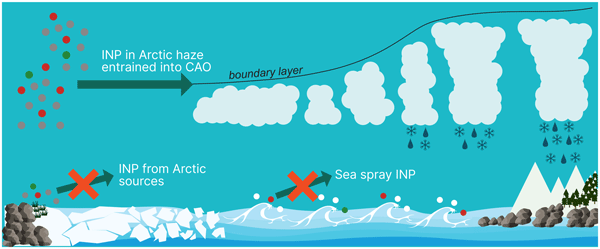
Erin N. Raif, Sarah L. Barr, Mark D. Tarn, James B. McQuaid, Martin I. Daily, Steven J. Abel, Paul A. Barrett, Keith N. Bower, Paul R. Field, Kenneth S. Carslaw, and Benjamin J. Murray
Atmos. Chem. Phys., 24, 14045–14072, https://doi.org/10.5194/acp-24-14045-2024, https://doi.org/10.5194/acp-24-14045-2024, 2024
Short summary
Short summary
Ice-nucleating particles (INPs) allow ice to form in clouds at temperatures warmer than −35°C. We measured INP concentrations over the Norwegian and Barents seas in weather events where cold air is ejected from the Arctic. These concentrations were among the highest measured in the Arctic. It is likely that the INPs were transported to the Arctic from distant regions. These results show it is important to consider hemispheric-scale INP processes to understand INP concentrations in the Arctic.
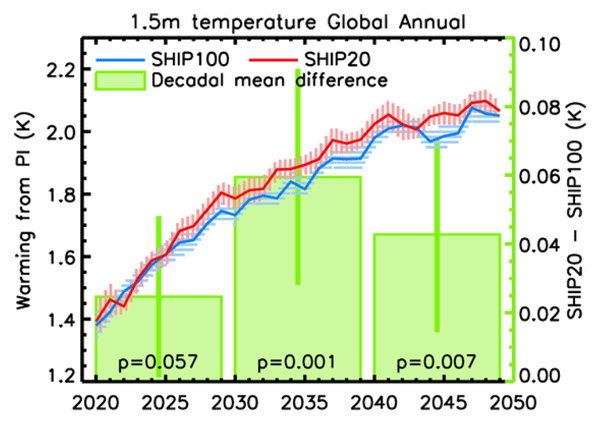
Masaru Yoshioka, Daniel P. Grosvenor, Ben B. B. Booth, Colin P. Morice, and Ken S. Carslaw
Atmos. Chem. Phys., 24, 13681–13692, https://doi.org/10.5194/acp-24-13681-2024, https://doi.org/10.5194/acp-24-13681-2024, 2024
Short summary
Short summary
A 2020 regulation has reduced sulfur emissions from shipping by about 80 %, leading to a decrease in atmospheric aerosols that have a cooling effect primarily by affecting cloud properties and amounts. Our climate model simulations predict a global temperature increase of 0.04 K over the next 3 decades as a result, which could contribute to surpassing the Paris Agreement's 1.5 °C target. Reduced aerosols may have also contributed to the recent temperature spikes.
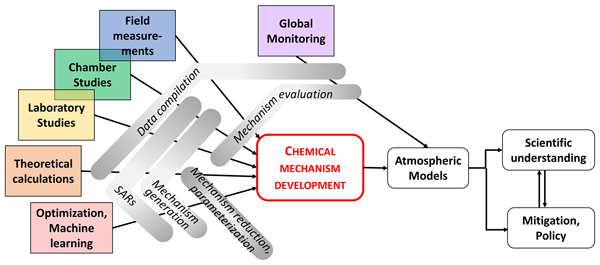
Barbara Ervens, Andrew Rickard, Bernard Aumont, William P. L. Carter, Max McGillen, Abdelwahid Mellouki, John Orlando, Bénédicte Picquet-Varrault, Paul Seakins, William R. Stockwell, Luc Vereecken, and Timothy J. Wallington
Atmos. Chem. Phys., 24, 13317–13339, https://doi.org/10.5194/acp-24-13317-2024, https://doi.org/10.5194/acp-24-13317-2024, 2024
Short summary
Short summary
Chemical mechanisms describe the chemical processes in atmospheric models that are used to describe the changes in the atmospheric composition. Therefore, accurate chemical mechanisms are necessary to predict the evolution of air pollution and climate change. The article describes all steps that are needed to build chemical mechanisms and discusses the advances and needs of experimental and theoretical research activities needed to build reliable chemical mechanisms.
Ulrike Proske, Nils Brüggemann, Jan P. Gärtner, Oliver Gutjahr, Helmuth Haak, Dian Putrasahan, and Karl-Hermann Wieners
EGUsphere, https://doi.org/10.5194/egusphere-2024-3493, https://doi.org/10.5194/egusphere-2024-3493, 2024
Preprint archived
Short summary
Short summary
Climate models contain coding mistakes, which may look mundane, but can affect the results of interconnected and complex models in unforeseen ways. We describe a sea ice bug in the coupled atmosphere-ocean-sea ice model ICON, giving an example of visual and concise bug communication. This bug represents a novel species of resolution-dependent bugs. The case illustrates the value of open documentation of bugs in climate models and to encourage our community to adopt a similar approach.
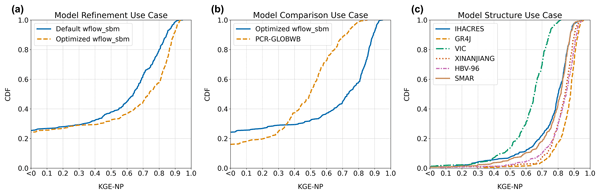
Jerom P. M. Aerts, Jannis M. Hoch, Gemma Coxon, Nick C. van de Giesen, and Rolf W. Hut
Hydrol. Earth Syst. Sci., 28, 5011–5030, https://doi.org/10.5194/hess-28-5011-2024, https://doi.org/10.5194/hess-28-5011-2024, 2024
Short summary
Short summary
For users of hydrological models, model suitability often hinges on how well simulated outputs match observed discharge. This study highlights the importance of including discharge observation uncertainty in hydrological model performance assessment. We highlight the need to account for this uncertainty in model comparisons and introduce a practical method suitable for any observational time series with available uncertainty estimates.

Shahzad Gani, Louise Arnal, Lucy Beattie, John Hillier, Sam Illingworth, Tiziana Lanza, Solmaz Mohadjer, Karoliina Pulkkinen, Heidi Roop, Iain Stewart, Kirsten von Elverfeldt, and Stephanie Zihms
Geosci. Commun., 7, 251–266, https://doi.org/10.5194/gc-7-251-2024, https://doi.org/10.5194/gc-7-251-2024, 2024
Short summary
Short summary
Science communication in geosciences has societal and scientific value but often operates in “shadowlands”. This editorial highlights these issues and proposes potential solutions. Our objective is to create a transparent and responsible geoscience communication landscape, fostering scientific progress, the well-being of scientists, and societal benefits.
Franziska Vogel, Michael P. Adams, Larissa Lacher, Polly B. Foster, Grace C. E. Porter, Barbara Bertozzi, Kristina Höhler, Julia Schneider, Tobias Schorr, Nsikanabasi S. Umo, Jens Nadolny, Zoé Brasseur, Paavo Heikkilä, Erik S. Thomson, Nicole Büttner, Martin I. Daily, Romy Fösig, Alexander D. Harrison, Jorma Keskinen, Ulrike Proske, Jonathan Duplissy, Markku Kulmala, Tuukka Petäjä, Ottmar Möhler, and Benjamin J. Murray
Atmos. Chem. Phys., 24, 11737–11757, https://doi.org/10.5194/acp-24-11737-2024, https://doi.org/10.5194/acp-24-11737-2024, 2024
Short summary
Short summary
Primary ice formation in clouds strongly influences their properties; hence, it is important to understand the sources of ice-nucleating particles (INPs) and their variability. We present 2 months of INP measurements in a Finnish boreal forest using a new semi-autonomous INP counting device based on gas expansion. These results show strong variability in INP concentrations, and we present a case that the INPs we observe are, at least some of the time, of biological origin.
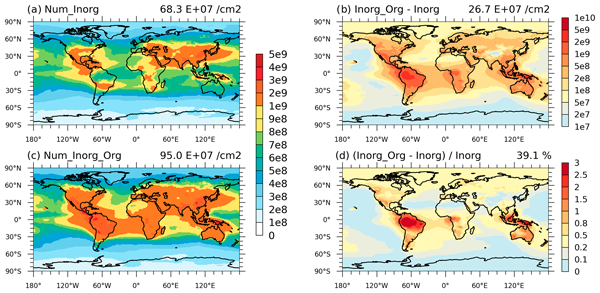
Xinyue Shao, Minghuai Wang, Xinyi Dong, Yaman Liu, Wenxiang Shen, Stephen R. Arnold, Leighton A. Regayre, Meinrat O. Andreae, Mira L. Pöhlker, Duseong S. Jo, Man Yue, and Ken S. Carslaw
Atmos. Chem. Phys., 24, 11365–11389, https://doi.org/10.5194/acp-24-11365-2024, https://doi.org/10.5194/acp-24-11365-2024, 2024
Short summary
Short summary
Highly oxygenated organic molecules (HOMs) play an important role in atmospheric new particle formation (NPF). By semi-explicitly coupling the chemical mechanism of HOMs and a comprehensive nucleation scheme in a global climate model, the updated model shows better agreement with measurements of nucleation rate, growth rate, and NPF event frequency. Our results reveal that HOM-driven NPF leads to a considerable increase in particle and cloud condensation nuclei burden globally.
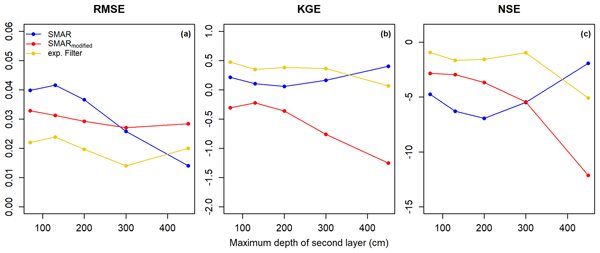
Daniel Rasche, Theresa Blume, and Andreas Güntner
SOIL, 10, 655–677, https://doi.org/10.5194/soil-10-655-2024, https://doi.org/10.5194/soil-10-655-2024, 2024
Short summary
Short summary
Soil moisture measurements at the field scale are highly beneficial for numerous (soil) hydrological applications. Cosmic-ray neutron sensing (CRNS) allows for the non-invasive monitoring of field-scale soil moisture across several hectares but only for the first few tens of centimetres of the soil. In this study, we modify and test a simple modeling approach to extrapolate CRNS-derived surface soil moisture information down to 450 cm depth and compare calibrated and uncalibrated model results.
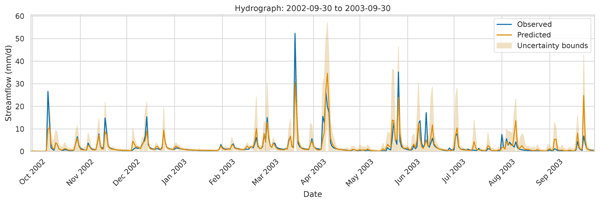
Andreas Auer, Martin Gauch, Frederik Kratzert, Grey Nearing, Sepp Hochreiter, and Daniel Klotz
Hydrol. Earth Syst. Sci., 28, 4099–4126, https://doi.org/10.5194/hess-28-4099-2024, https://doi.org/10.5194/hess-28-4099-2024, 2024
Short summary
Short summary
This work examines the impact of temporal and spatial information on the uncertainty estimation of streamflow forecasts. The study emphasizes the importance of data updates and global information for precise uncertainty estimates. We use conformal prediction to show that recent data enhance the estimates, even if only available infrequently. Local data yield reasonable average estimations but fall short for peak-flow events. The use of global data significantly improves these predictions.
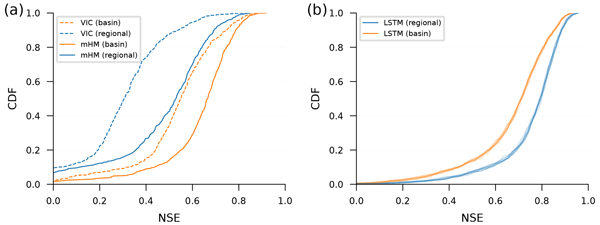
Frederik Kratzert, Martin Gauch, Daniel Klotz, and Grey Nearing
Hydrol. Earth Syst. Sci., 28, 4187–4201, https://doi.org/10.5194/hess-28-4187-2024, https://doi.org/10.5194/hess-28-4187-2024, 2024
Short summary
Short summary
Recently, a special type of neural-network architecture became increasingly popular in hydrology literature. However, in most applications, this model was applied as a one-to-one replacement for hydrology models without adapting or rethinking the experimental setup. In this opinion paper, we show how this is almost always a bad decision and how using these kinds of models requires the use of large-sample hydrology data sets.
Tim Hans Martin van Emmerik, Tim Willem Janssen, Tianlong Jia, Thank-Khiet L. Bui, Riccardo Taormina, Hong-Q. Nguyen, and Louise Jeanne Schreyers
EGUsphere, https://doi.org/10.5194/egusphere-2024-2270, https://doi.org/10.5194/egusphere-2024-2270, 2024
Preprint archived
Short summary
Short summary
Plastic pollution has negative effects on the environment. Tropical rivers around the world suffer from both plastic pollution and invasive water hyacinths. Water hyacinths grow rapidly and form dense floating mats. Using drones, cameras and AI, we show that along the Saigon river, Vietnam, the majority of floating plastic pollution is carried by water hyacinths. Better understanding water hyacinth-plastic trapping supports improving pollution monitoring and management strategies.
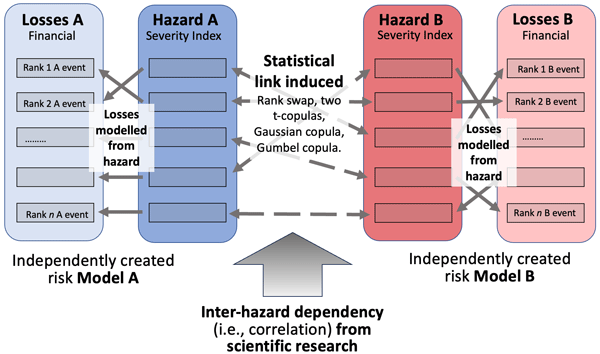
John Hillier, Adrian Champion, Tom Perkins, Freya Garry, and Hannah Bloomfield
Geosci. Commun., 7, 195–200, https://doi.org/10.5194/gc-7-195-2024, https://doi.org/10.5194/gc-7-195-2024, 2024
Short summary
Short summary
To allow for more effective use of climate science, this work proposes and evaluates an open-access R code that deploys a measure of how natural hazards (e.g. extreme wind and flooding) co-occur, is obtainable from scientific research and is usable in practice without restricted data (climate or risk) being exposed. The approach can be applied to hazards in various sectors (e.g. road, rail and telecommunications).
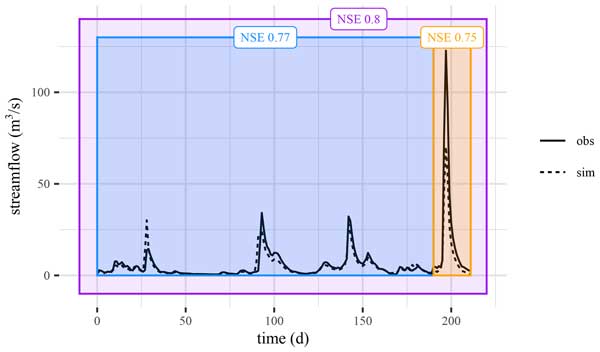
Daniel Klotz, Martin Gauch, Frederik Kratzert, Grey Nearing, and Jakob Zscheischler
Hydrol. Earth Syst. Sci., 28, 3665–3673, https://doi.org/10.5194/hess-28-3665-2024, https://doi.org/10.5194/hess-28-3665-2024, 2024
Short summary
Short summary
The evaluation of model performance is essential for hydrological modeling. Using performance criteria requires a deep understanding of their properties. We focus on a counterintuitive aspect of the Nash–Sutcliffe efficiency (NSE) and show that if we divide the data into multiple parts, the overall performance can be higher than all the evaluations of the subsets. Although this follows from the definition of the NSE, the resulting behavior can have unintended consequences in practice.
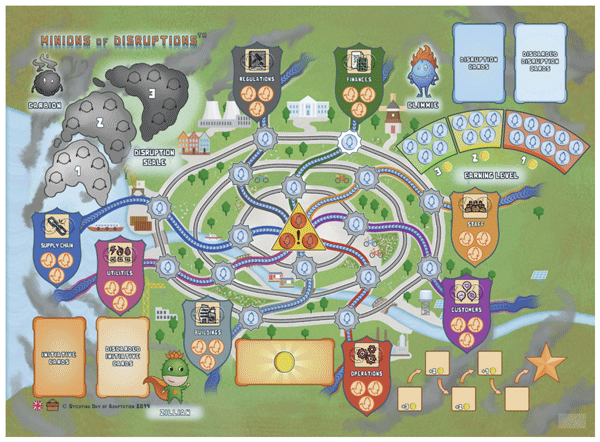
Minja Sillanpää, AnaCapri Mauro, Minttu Hänninen, Sam Illingworth, and Mo Hamza
Geosci. Commun., 7, 167–193, https://doi.org/10.5194/gc-7-167-2024, https://doi.org/10.5194/gc-7-167-2024, 2024
Short summary
Short summary
Minions of Disruptions is a climate change game designed as a communication tool for groups that do not regularly engage with the topic. In our research, we find that the game is liked by the general public because it encourages collective action. This is important because most local climate challenges can only be solved by groups and because gameplay can increase collaboration. The results of this study may be used to develop communication tools that better consider the needs of the audiences.
Ulrike Proske, Sylvaine Ferrachat, and Ulrike Lohmann
Atmos. Chem. Phys., 24, 5907–5933, https://doi.org/10.5194/acp-24-5907-2024, https://doi.org/10.5194/acp-24-5907-2024, 2024
Short summary
Short summary
Climate models include treatment of aerosol particles because these influence clouds and radiation. Over time their representation has grown increasingly detailed. This complexity may hinder our understanding of model behaviour. Thus here we simplify the aerosol representation of our climate model by prescribing mean concentrations, which saves run time and helps to discover unexpected model behaviour. We conclude that simplifications provide a new perspective for model study and development.
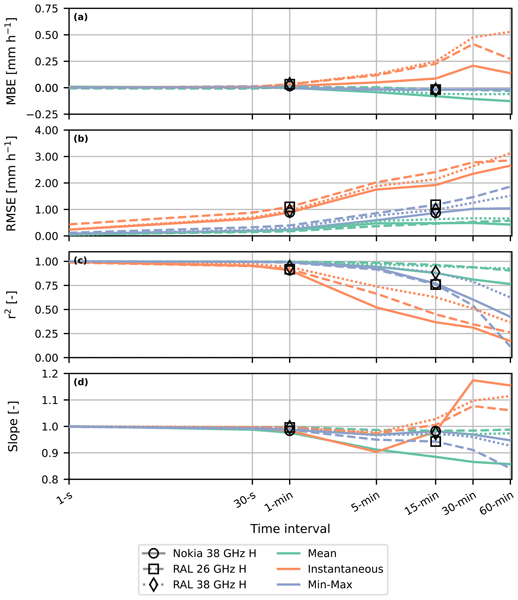
Luuk D. van der Valk, Miriam Coenders-Gerrits, Rolf W. Hut, Aart Overeem, Bas Walraven, and Remko Uijlenhoet
Atmos. Meas. Tech., 17, 2811–2832, https://doi.org/10.5194/amt-17-2811-2024, https://doi.org/10.5194/amt-17-2811-2024, 2024
Short summary
Short summary
Microwave links, often part of mobile phone networks, can be used to measure rainfall along the link path by determining the signal loss caused by rainfall. We use high-frequency data of multiple microwave links to recreate commonly used sampling strategies. For time intervals up to 1 min, the influence of sampling strategies on estimated rainfall intensities is relatively little, while for intervals longer than 5–15 min, the sampling strategy can have significant influences on the estimates.
Zane Dedekind, Ulrike Proske, Sylvaine Ferrachat, Ulrike Lohmann, and David Neubauer
Atmos. Chem. Phys., 24, 5389–5404, https://doi.org/10.5194/acp-24-5389-2024, https://doi.org/10.5194/acp-24-5389-2024, 2024
Short summary
Short summary
Ice particles precipitating into lower clouds from an upper cloud, the seeder–feeder process, can enhance precipitation. A numerical modeling study conducted in the Swiss Alps found that 48 % of observed clouds were overlapping, with the seeder–feeder process occurring in 10 % of these clouds. Inhibiting the seeder–feeder process reduced the surface precipitation and ice particle growth rates, which were further reduced when additional ice multiplication processes were included in the model.
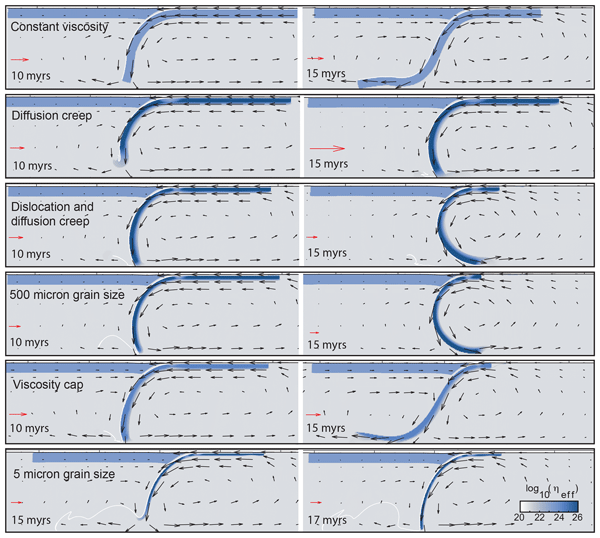
Natalie Hummel, Susanne Buiter, and Zoltán Erdős
Solid Earth, 15, 567–587, https://doi.org/10.5194/se-15-567-2024, https://doi.org/10.5194/se-15-567-2024, 2024
Short summary
Short summary
Simulations of subducting tectonic plates often use material properties extrapolated from the behavior of small rock samples in a laboratory to conditions found in the Earth. We explore several typical approaches to simulating these extrapolated material properties and show that they produce very rigid subducting plates with unrealistic dynamics. Our findings imply that subducting plates deform by additional mechanisms that are less commonly implemented in simulations.
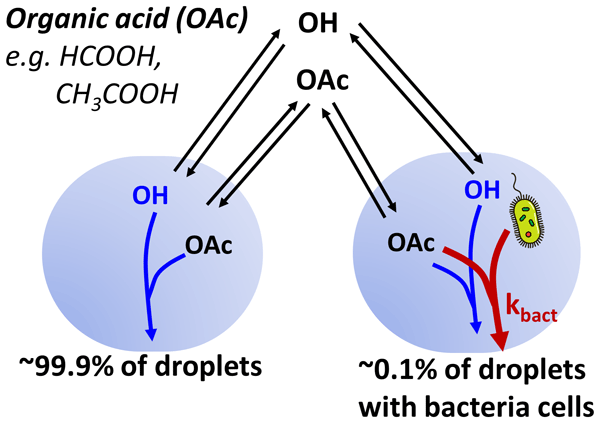
Leslie Nuñez López, Pierre Amato, and Barbara Ervens
Atmos. Chem. Phys., 24, 5181–5198, https://doi.org/10.5194/acp-24-5181-2024, https://doi.org/10.5194/acp-24-5181-2024, 2024
Short summary
Short summary
Living bacteria comprise a small particle fraction in the atmosphere. Our model study shows that atmospheric bacteria in clouds may efficiently biodegrade formic and acetic acids that affect the acidity of rain. We conclude that current atmospheric models underestimate losses of these acids as they only consider chemical processes. We suggest that biodegradation can affect atmospheric concentration not only of formic and acetic acids but also of other volatile, moderately soluble organics.
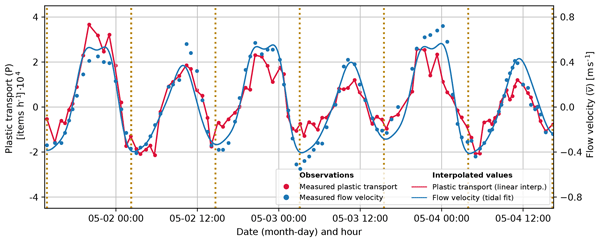
Louise J. Schreyers, Tim H. M. van Emmerik, Thanh-Khiet L. Bui, Khoa L. van Thi, Bart Vermeulen, Hong-Q. Nguyen, Nicholas Wallerstein, Remko Uijlenhoet, and Martine van der Ploeg
Hydrol. Earth Syst. Sci., 28, 589–610, https://doi.org/10.5194/hess-28-589-2024, https://doi.org/10.5194/hess-28-589-2024, 2024
Short summary
Short summary
River plastic emissions into the ocean are of global concern, but the transfer dynamics between fresh water and the marine environment remain poorly understood. We developed a simple Eulerian approach to estimate the net and total plastic transport in tidal rivers. Applied to the Saigon River, Vietnam, we found that net plastic transport amounted to less than one-third of total transport, highlighting the need to better integrate tidal dynamics in plastic transport and emission models.
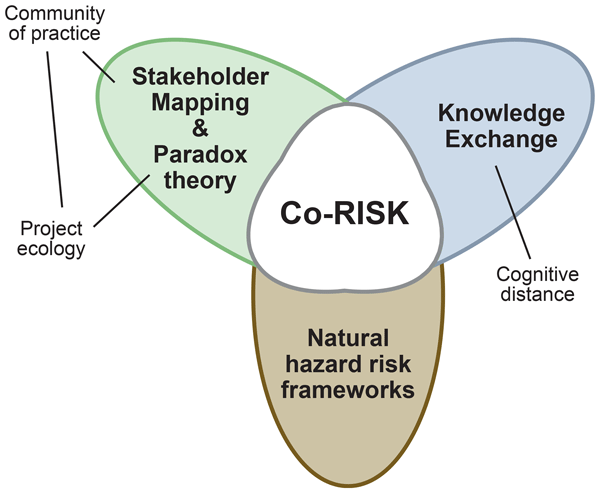
John K. Hillier and Michiel van Meeteren
Geosci. Commun., 7, 35–56, https://doi.org/10.5194/gc-7-35-2024, https://doi.org/10.5194/gc-7-35-2024, 2024
Short summary
Short summary
Co-RISK is a workshop-based
toolkitto aid the co-creation of joint projects in various sectors (e.g. insurance, rail, power generation) impacted by natural hazard risks. There is a genuine need to quickly convert the latest insights from environmental research into real-world climate change adaptation strategies, and a gap exists for an accessible (i.e. open access, low tech, zero cost) and practical solution tailored to assist with this.
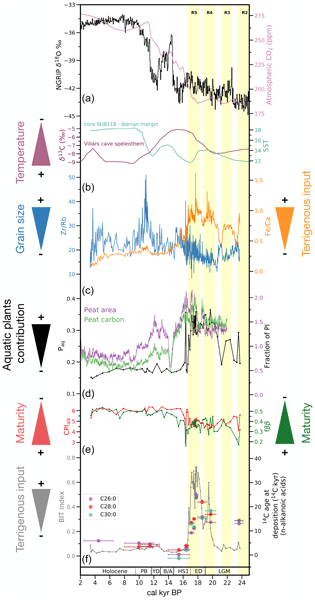
Eduardo Queiroz Alves, Wanyee Wong, Jens Hefter, Hendrik Grotheer, Tommaso Tesi, Torben Gentz, Karin Zonneveld, and Gesine Mollenhauer
Clim. Past, 20, 121–136, https://doi.org/10.5194/cp-20-121-2024, https://doi.org/10.5194/cp-20-121-2024, 2024
Short summary
Short summary
Our study reveals a previously unknown peat source for the massive influx of terrestrial organic matter that was exported from the European continent to the ocean during the last deglaciation. Our findings shed light on ancient terrestrial organic carbon mobilization, providing insights that are crucial for refining climate models.
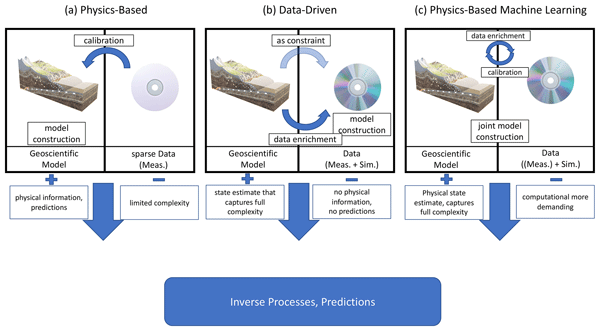
Denise Degen, Daniel Caviedes Voullième, Susanne Buiter, Harrie-Jan Hendricks Franssen, Harry Vereecken, Ana González-Nicolás, and Florian Wellmann
Geosci. Model Dev., 16, 7375–7409, https://doi.org/10.5194/gmd-16-7375-2023, https://doi.org/10.5194/gmd-16-7375-2023, 2023
Short summary
Short summary
In geosciences, we often use simulations based on physical laws. These simulations can be computationally expensive, which is a problem if simulations must be performed many times (e.g., to add error bounds). We show how a novel machine learning method helps to reduce simulation time. In comparison to other approaches, which typically only look at the output of a simulation, the method considers physical laws in the simulation itself. The method provides reliable results faster than standard.

Rolf Müller, Ulrich Pöschl, Thomas Koop, Thomas Peter, and Ken Carslaw
Atmos. Chem. Phys., 23, 15445–15453, https://doi.org/10.5194/acp-23-15445-2023, https://doi.org/10.5194/acp-23-15445-2023, 2023
Short summary
Short summary
Paul J. Crutzen was a pioneer in atmospheric sciences and a kind-hearted, humorous person with empathy for the private lives of his colleagues and students. He made fundamental scientific contributions to a wide range of scientific topics in all parts of the atmosphere. Paul was among the founders of the journal Atmospheric Chemistry and Physics. His work will continue to be a guide for generations of scientists and environmental policymakers to come.
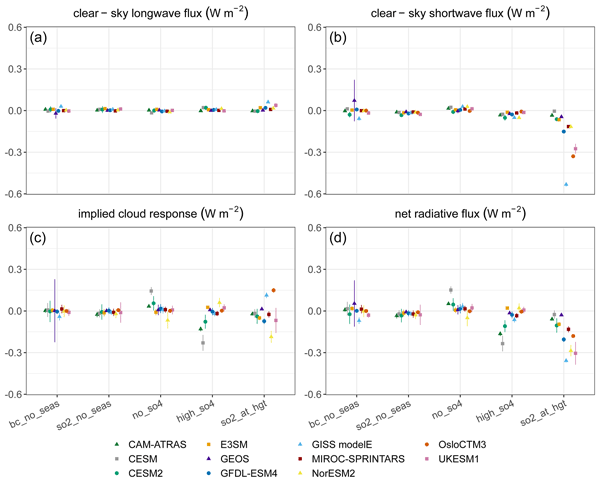
Hamza Ahsan, Hailong Wang, Jingbo Wu, Mingxuan Wu, Steven J. Smith, Susanne Bauer, Harrison Suchyta, Dirk Olivié, Gunnar Myhre, Hitoshi Matsui, Huisheng Bian, Jean-François Lamarque, Ken Carslaw, Larry Horowitz, Leighton Regayre, Mian Chin, Michael Schulz, Ragnhild Bieltvedt Skeie, Toshihiko Takemura, and Vaishali Naik
Atmos. Chem. Phys., 23, 14779–14799, https://doi.org/10.5194/acp-23-14779-2023, https://doi.org/10.5194/acp-23-14779-2023, 2023
Short summary
Short summary
We examine the impact of the assumed effective height of SO2 injection, SO2 and BC emission seasonality, and the assumed fraction of SO2 emissions injected as SO4 on climate and chemistry model results. We find that the SO2 injection height has a large impact on surface SO2 concentrations and, in some models, radiative flux. These assumptions are a
hiddensource of inter-model variability and may be leading to bias in some climate model results.
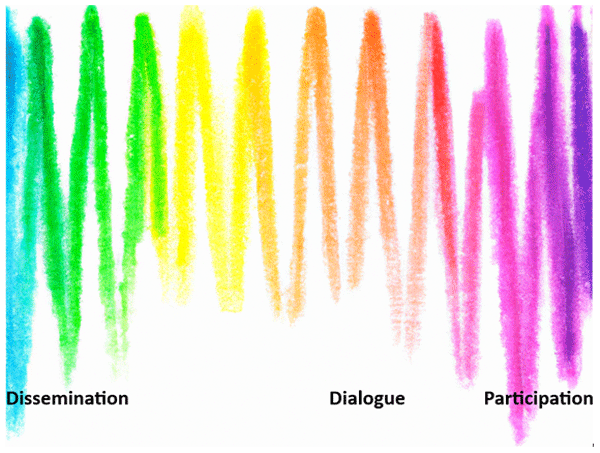
Sam Illingworth
Geosci. Commun., 6, 131–139, https://doi.org/10.5194/gc-6-131-2023, https://doi.org/10.5194/gc-6-131-2023, 2023
Short summary
Short summary
In this article, I explore the various ways the geosciences can be communicated to a wider audience. I focus on creative methods that range from sharing information to involving the public in the research process. By using examples from my own work and the wider literature, I demonstrate how these approaches can engage diverse communities and promote greater recognition for geoscience communication.
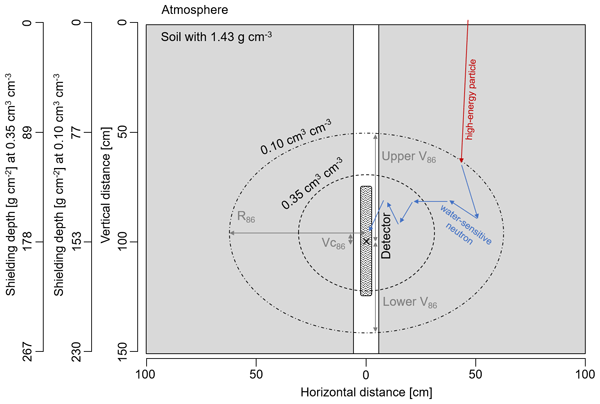
Daniel Rasche, Jannis Weimar, Martin Schrön, Markus Köhli, Markus Morgner, Andreas Güntner, and Theresa Blume
Hydrol. Earth Syst. Sci., 27, 3059–3082, https://doi.org/10.5194/hess-27-3059-2023, https://doi.org/10.5194/hess-27-3059-2023, 2023
Short summary
Short summary
We introduce passive downhole cosmic-ray neutron sensing (d-CRNS) as an approach for the non-invasive estimation of soil moisture in deeper layers of the unsaturated zone which exceed the observational window of above-ground CRNS applications. Neutron transport simulations are used to derive mathematical descriptions and transfer functions, while experimental measurements in an existing groundwater observation well illustrate the feasibility and applicability of the approach.
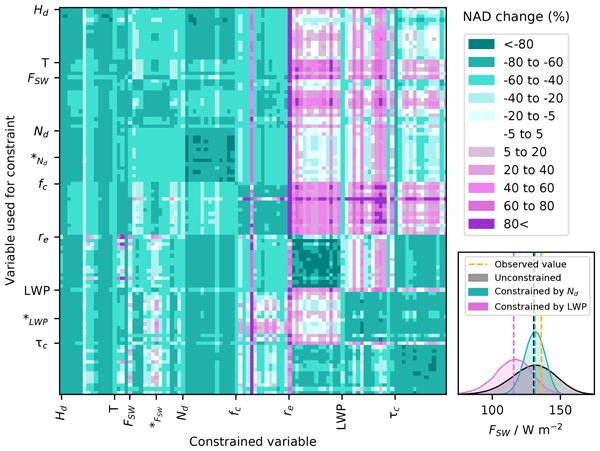
Leighton A. Regayre, Lucia Deaconu, Daniel P. Grosvenor, David M. H. Sexton, Christopher Symonds, Tom Langton, Duncan Watson-Paris, Jane P. Mulcahy, Kirsty J. Pringle, Mark Richardson, Jill S. Johnson, John W. Rostron, Hamish Gordon, Grenville Lister, Philip Stier, and Ken S. Carslaw
Atmos. Chem. Phys., 23, 8749–8768, https://doi.org/10.5194/acp-23-8749-2023, https://doi.org/10.5194/acp-23-8749-2023, 2023
Short summary
Short summary
Aerosol forcing of Earth’s energy balance has persisted as a major cause of uncertainty in climate simulations over generations of climate model development. We show that structural deficiencies in a climate model are exposed by comprehensively exploring parametric uncertainty and that these deficiencies limit how much the model uncertainty can be reduced through observational constraint. This provides a future pathway towards building models with greater physical realism and lower uncertainty.
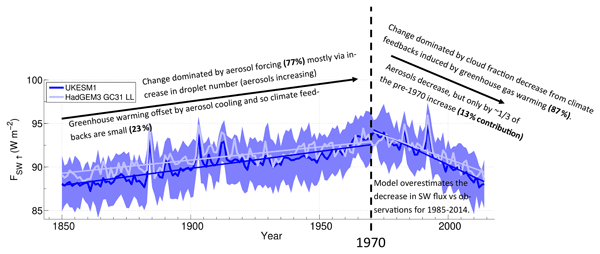
Daniel P. Grosvenor and Kenneth S. Carslaw
Atmos. Chem. Phys., 23, 6743–6773, https://doi.org/10.5194/acp-23-6743-2023, https://doi.org/10.5194/acp-23-6743-2023, 2023
Short summary
Short summary
We determine what causes long-term trends in short-wave (SW) radiative fluxes in two climate models. A positive trend occurs between 1850 and 1970 (increasing SW reflection) and a negative trend between 1970 and 2014; the pre-1970 positive trend is mainly driven by an increase in cloud droplet number concentrations due to increases in aerosol, and the 1970–2014 trend is driven by a decrease in cloud fraction, which we attribute to changes in clouds caused by greenhouse gas-induced warming.
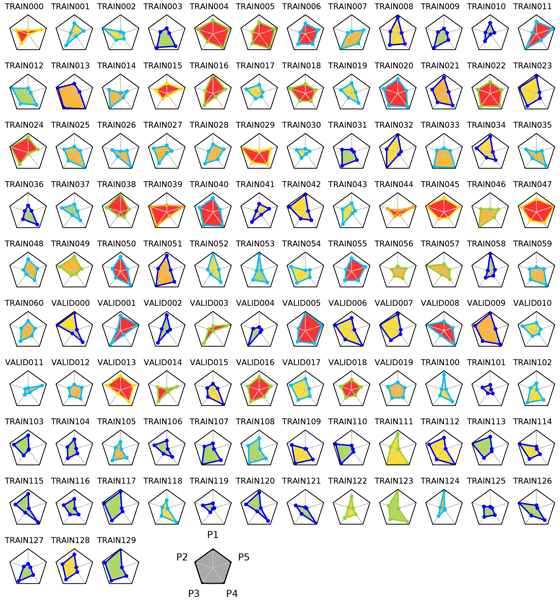
Ernesto Reyes-Villegas, Douglas Lowe, Jill S. Johnson, Kenneth S. Carslaw, Eoghan Darbyshire, Michael Flynn, James D. Allan, Hugh Coe, Ying Chen, Oliver Wild, Scott Archer-Nicholls, Alex Archibald, Siddhartha Singh, Manish Shrivastava, Rahul A. Zaveri, Vikas Singh, Gufran Beig, Ranjeet Sokhi, and Gordon McFiggans
Atmos. Chem. Phys., 23, 5763–5782, https://doi.org/10.5194/acp-23-5763-2023, https://doi.org/10.5194/acp-23-5763-2023, 2023
Short summary
Short summary
Organic aerosols (OAs), their sources and their processes remain poorly understood. The volatility basis set (VBS) approach, implemented in air quality models such as WRF-Chem, can be a useful tool to describe primary OA (POA) production and aging. However, the main disadvantage is its complexity. We used a Gaussian process simulator to reproduce model results and to estimate the sources of model uncertainty. We do this by comparing the outputs with OA observations made at Delhi, India, in 2018.
Xuemei Wang, Hamish Gordon, Daniel P. Grosvenor, Meinrat O. Andreae, and Ken S. Carslaw
Atmos. Chem. Phys., 23, 4431–4461, https://doi.org/10.5194/acp-23-4431-2023, https://doi.org/10.5194/acp-23-4431-2023, 2023
Short summary
Short summary
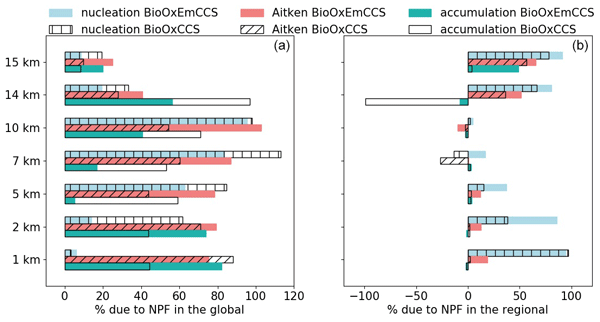
New particle formation in the upper troposphere is important for the global boundary layer aerosol population, and they can be transported downward in Amazonia. We use a global and a regional model to quantify the number of aerosols that are formed at high altitude and transported downward in a 1000 km region. We find that the majority of the aerosols are from outside the region. This suggests that the 1000 km region is unlikely to be a
closed loopfor aerosol formation, transport and growth.
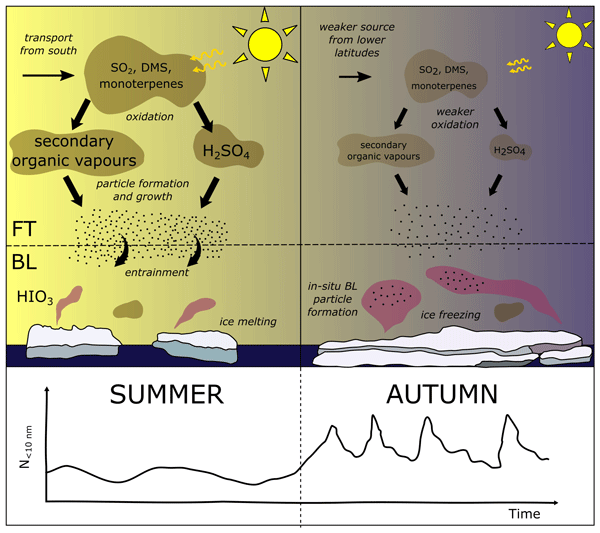
Ruth Price, Andrea Baccarini, Julia Schmale, Paul Zieger, Ian M. Brooks, Paul Field, and Ken S. Carslaw
Atmos. Chem. Phys., 23, 2927–2961, https://doi.org/10.5194/acp-23-2927-2023, https://doi.org/10.5194/acp-23-2927-2023, 2023
Short summary
Short summary
Arctic clouds can control how much energy is absorbed by the surface or reflected back to space. Using a computer model of the atmosphere we investigated the formation of atmospheric particles that allow cloud droplets to form. We found that particles formed aloft are transported to the lowest part of the Arctic atmosphere and that this is a key source of particles. Our results have implications for the way Arctic clouds will behave in the future as climate change continues to impact the region.

Nicolás Molnar and Susanne Buiter
Solid Earth, 14, 213–235, https://doi.org/10.5194/se-14-213-2023, https://doi.org/10.5194/se-14-213-2023, 2023
Short summary
Short summary
Progression of orogenic wedges over pre-existing extensional structures is common in nature, but deciphering the spatio-temporal evolution of deformation from the geological record remains challenging. Our laboratory experiments provide insights on how horizontal stresses are transferred across a heterogeneous crust, constrain which pre-shortening conditions can either favour or hinder the reactivatation of extensional structures, and explain what implications they have on critical taper theory.
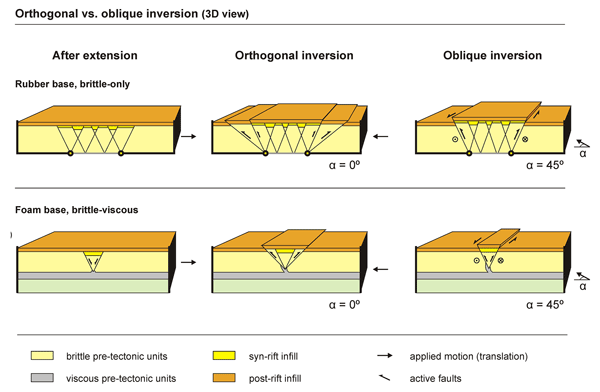
Frank Zwaan, Guido Schreurs, Susanne J. H. Buiter, Oriol Ferrer, Riccardo Reitano, Michael Rudolf, and Ernst Willingshofer
Solid Earth, 13, 1859–1905, https://doi.org/10.5194/se-13-1859-2022, https://doi.org/10.5194/se-13-1859-2022, 2022
Short summary
Short summary
When a sedimentary basin is subjected to compressional tectonic forces after its formation, it may be inverted. A thorough understanding of such
basin inversionis of great importance for scientific, societal, and economic reasons, and analogue tectonic models form a key part of our efforts to study these processes. We review the advances in the field of basin inversion modelling, showing how the modelling results can be applied, and we identify promising venues for future research.

Pau Wiersma, Jerom Aerts, Harry Zekollari, Markus Hrachowitz, Niels Drost, Matthias Huss, Edwin H. Sutanudjaja, and Rolf Hut
Hydrol. Earth Syst. Sci., 26, 5971–5986, https://doi.org/10.5194/hess-26-5971-2022, https://doi.org/10.5194/hess-26-5971-2022, 2022
Short summary
Short summary
We test whether coupling a global glacier model (GloGEM) with a global hydrological model (PCR-GLOBWB 2) leads to a more realistic glacier representation and to improved basin runoff simulations across 25 large-scale basins. The coupling does lead to improved glacier representation, mainly by accounting for glacier flow and net glacier mass loss, and to improved basin runoff simulations, mostly in strongly glacier-influenced basins, which is where the coupling has the most impact.
Leighton A. Regayre, Lucia Deaconu, Daniel P. Grosvenor, David Sexton, Christopher C. Symonds, Tom Langton, Duncan Watson-Paris, Jane P. Mulcahy, Kirsty J. Pringle, Mark Richardson, Jill S. Johnson, John Rostron, Hamish Gordon, Grenville Lister, Philip Stier, and Ken S. Carslaw
EGUsphere, https://doi.org/10.5194/egusphere-2022-1330, https://doi.org/10.5194/egusphere-2022-1330, 2022
Preprint archived
Short summary
Short summary
We show that potential structural deficiencies in a climate model can be exposed by comprehensively exploring its parametric uncertainty, and that these deficiencies limit how much the model uncertainty can be reduced through observational constraint. Combined consideration of parametric and structural uncertainties provides a future pathway towards building models that have greater physical realism and lower uncertainty.
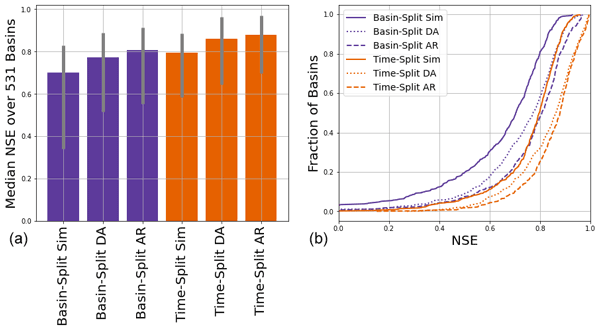
Grey S. Nearing, Daniel Klotz, Jonathan M. Frame, Martin Gauch, Oren Gilon, Frederik Kratzert, Alden Keefe Sampson, Guy Shalev, and Sella Nevo
Hydrol. Earth Syst. Sci., 26, 5493–5513, https://doi.org/10.5194/hess-26-5493-2022, https://doi.org/10.5194/hess-26-5493-2022, 2022
Short summary
Short summary
When designing flood forecasting models, it is necessary to use all available data to achieve the most accurate predictions possible. This manuscript explores two basic ways of ingesting near-real-time streamflow data into machine learning streamflow models. The point we want to make is that when working in the context of machine learning (instead of traditional hydrology models that are based on
bio-geophysics), it is not necessary to use complex statistical methods for injecting sparse data.
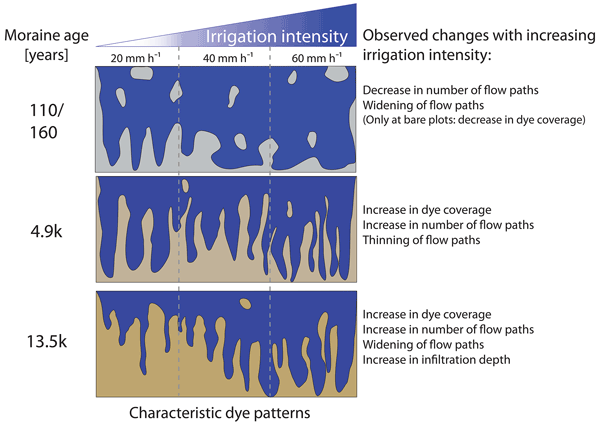
Anne Hartmann, Markus Weiler, Konrad Greinwald, and Theresa Blume
Hydrol. Earth Syst. Sci., 26, 4953–4974, https://doi.org/10.5194/hess-26-4953-2022, https://doi.org/10.5194/hess-26-4953-2022, 2022
Short summary
Short summary
Analyzing the impact of soil age and rainfall intensity on vertical subsurface flow paths in calcareous soils, with a special focus on preferential flow occurrence, shows how water flow paths are linked to the organization of evolving landscapes. The observed increase in preferential flow occurrence with increasing moraine age provides important but rare data for a proper representation of hydrological processes within the feedback cycle of the hydro-pedo-geomorphological system.
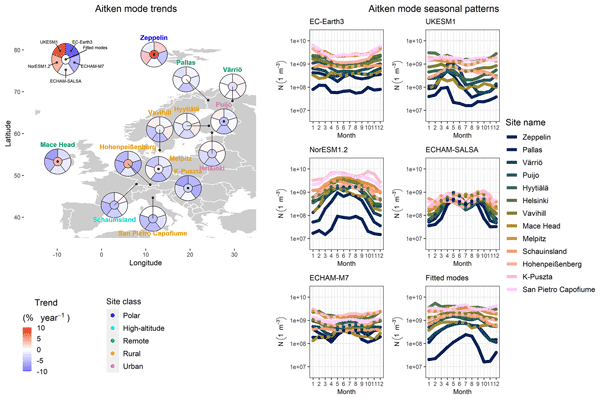
Ville Leinonen, Harri Kokkola, Taina Yli-Juuti, Tero Mielonen, Thomas Kühn, Tuomo Nieminen, Simo Heikkinen, Tuuli Miinalainen, Tommi Bergman, Ken Carslaw, Stefano Decesari, Markus Fiebig, Tareq Hussein, Niku Kivekäs, Radovan Krejci, Markku Kulmala, Ari Leskinen, Andreas Massling, Nikos Mihalopoulos, Jane P. Mulcahy, Steffen M. Noe, Twan van Noije, Fiona M. O'Connor, Colin O'Dowd, Dirk Olivie, Jakob B. Pernov, Tuukka Petäjä, Øyvind Seland, Michael Schulz, Catherine E. Scott, Henrik Skov, Erik Swietlicki, Thomas Tuch, Alfred Wiedensohler, Annele Virtanen, and Santtu Mikkonen
Atmos. Chem. Phys., 22, 12873–12905, https://doi.org/10.5194/acp-22-12873-2022, https://doi.org/10.5194/acp-22-12873-2022, 2022
Short summary
Short summary
We provide the first extensive comparison of detailed aerosol size distribution trends between in situ observations from Europe and five different earth system models. We investigated aerosol modes (nucleation, Aitken, and accumulation) separately and were able to show the differences between measured and modeled trends and especially their seasonal patterns. The differences in model results are likely due to complex effects of several processes instead of certain specific model features.

Caitlyn A. Hall, Sam Illingworth, Solmaz Mohadjer, Mathew Koll Roxy, Craig Poku, Frederick Otu-Larbi, Darryl Reano, Mara Freilich, Maria-Luisa Veisaga, Miguel Valencia, and Joey Morales
Geosci. Commun., 5, 275–280, https://doi.org/10.5194/gc-5-275-2022, https://doi.org/10.5194/gc-5-275-2022, 2022
Short summary
Short summary
In this manifesto, we offer six points of reflection that higher education geoscience educators can act upon to recognise and unlearn their biases and diversify the geosciences in higher education, complementing current calls for institutional and organisational change. This serves as a starting point to gather momentum to establish community-built opportunities for implementing and strengthening diversity, equity, inclusion, and justice holistically in geoscience education.
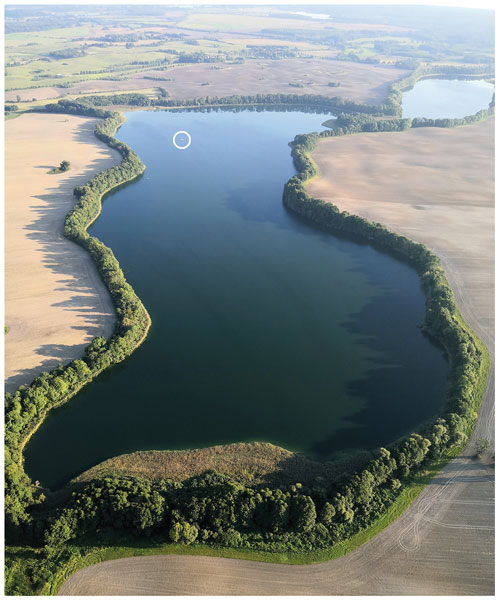
Achim Brauer, Ingo Heinrich, Markus J. Schwab, Birgit Plessen, Brian Brademann, Matthias Köppl, Sylvia Pinkerneil, Daniel Balanzategui, Gerhard Helle, and Theresa Blume
DEUQUA Spec. Pub., 4, 41–58, https://doi.org/10.5194/deuquasp-4-41-2022, https://doi.org/10.5194/deuquasp-4-41-2022, 2022
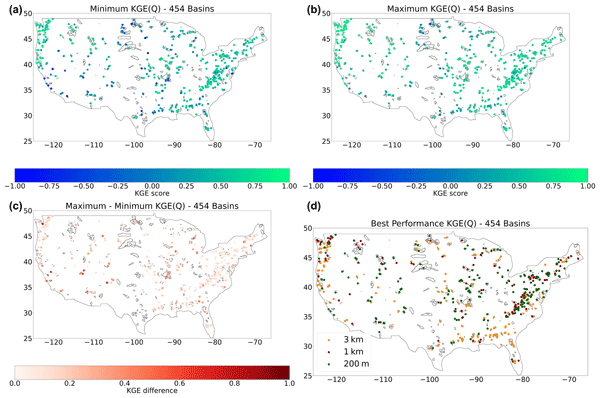
Jerom P. M. Aerts, Rolf W. Hut, Nick C. van de Giesen, Niels Drost, Willem J. van Verseveld, Albrecht H. Weerts, and Pieter Hazenberg
Hydrol. Earth Syst. Sci., 26, 4407–4430, https://doi.org/10.5194/hess-26-4407-2022, https://doi.org/10.5194/hess-26-4407-2022, 2022
Short summary
Short summary
In recent years gridded hydrological modelling moved into the realm of hyper-resolution modelling (<10 km). In this study, we investigate the effect of varying grid-cell sizes for the wflow_sbm hydrological model. We used a large sample of basins from the CAMELS data set to test the effect that varying grid-cell sizes has on the simulation of streamflow at the basin outlet. Results show that there is no single best grid-cell size for modelling streamflow throughout the domain.
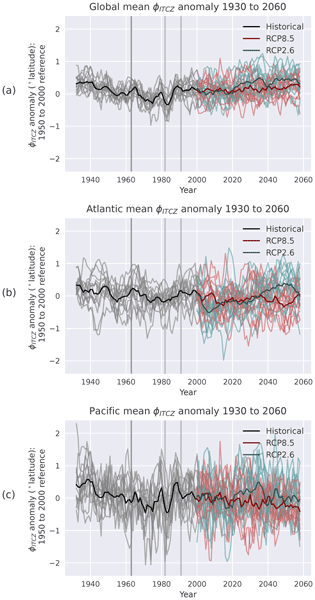
Amy H. Peace, Ben B. B. Booth, Leighton A. Regayre, Ken S. Carslaw, David M. H. Sexton, Céline J. W. Bonfils, and John W. Rostron
Earth Syst. Dynam., 13, 1215–1232, https://doi.org/10.5194/esd-13-1215-2022, https://doi.org/10.5194/esd-13-1215-2022, 2022
Short summary
Short summary
Anthropogenic aerosol emissions have been linked to driving climate responses such as shifts in the location of tropical rainfall. However, the interaction of aerosols with climate remains one of the most uncertain aspects of climate modelling and limits our ability to predict future climate change. We use an ensemble of climate model simulations to investigate what impact the large uncertainty in how aerosols interact with climate has on predicting future tropical rainfall shifts.
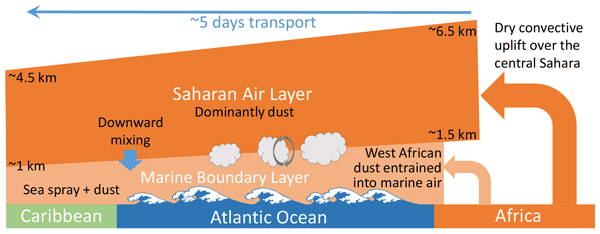
Alexander D. Harrison, Daniel O'Sullivan, Michael P. Adams, Grace C. E. Porter, Edmund Blades, Cherise Brathwaite, Rebecca Chewitt-Lucas, Cassandra Gaston, Rachel Hawker, Ovid O. Krüger, Leslie Neve, Mira L. Pöhlker, Christopher Pöhlker, Ulrich Pöschl, Alberto Sanchez-Marroquin, Andrea Sealy, Peter Sealy, Mark D. Tarn, Shanice Whitehall, James B. McQuaid, Kenneth S. Carslaw, Joseph M. Prospero, and Benjamin J. Murray
Atmos. Chem. Phys., 22, 9663–9680, https://doi.org/10.5194/acp-22-9663-2022, https://doi.org/10.5194/acp-22-9663-2022, 2022
Short summary
Short summary
The formation of ice in clouds fundamentally alters cloud properties; hence it is important we understand the special aerosol particles that can nucleate ice when immersed in supercooled cloud droplets. In this paper we show that African desert dust that has travelled across the Atlantic to the Caribbean nucleates ice much less well than we might have expected.
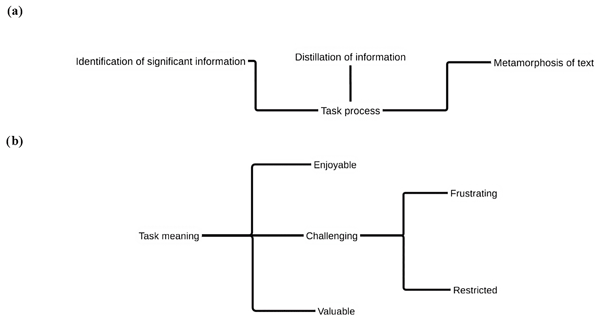
Alice Wardle and Sam Illingworth
Geosci. Commun., 5, 221–225, https://doi.org/10.5194/gc-5-221-2022, https://doi.org/10.5194/gc-5-221-2022, 2022
Short summary
Short summary
Participants answered four questions concerning their experience writing a haiku based on a geoscience extract. Data were categorised as being part of the
Task Processor
Task Meaning. The themes involved in the
Task Processwere
Identification of significant information,
Distillation of informationand
Metamorphosis of text, while the themes related to
Task Meaningwere made up of
Enjoyable,
Challenging(which has sub-themes
Frustratingand
Restricted) and
Valuable.
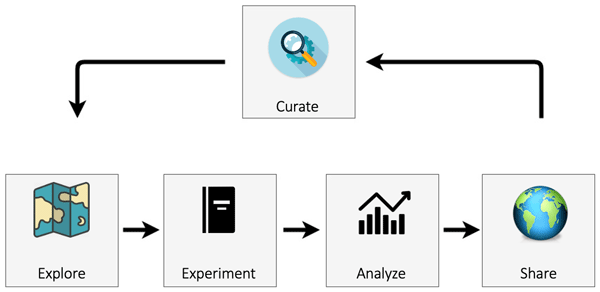
Rolf Hut, Niels Drost, Nick van de Giesen, Ben van Werkhoven, Banafsheh Abdollahi, Jerom Aerts, Thomas Albers, Fakhereh Alidoost, Bouwe Andela, Jaro Camphuijsen, Yifat Dzigan, Ronald van Haren, Eric Hutton, Peter Kalverla, Maarten van Meersbergen, Gijs van den Oord, Inti Pelupessy, Stef Smeets, Stefan Verhoeven, Martine de Vos, and Berend Weel
Geosci. Model Dev., 15, 5371–5390, https://doi.org/10.5194/gmd-15-5371-2022, https://doi.org/10.5194/gmd-15-5371-2022, 2022
Short summary
Short summary
With the eWaterCycle platform, we are providing the hydrological community with a platform to conduct their research that is fully compatible with the principles of both open science and FAIR science. The eWatercyle platform gives easy access to well-known hydrological models, big datasets and example experiments. Using eWaterCycle hydrologists can easily compare the results from different models, couple models and do more complex hydrological computational research.
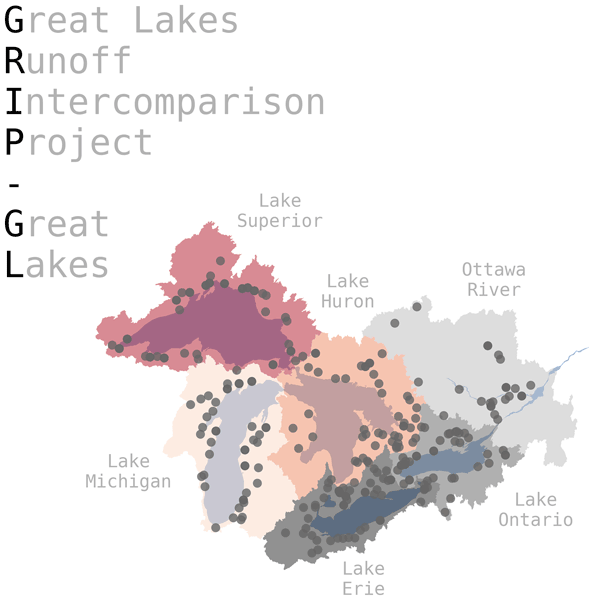
Juliane Mai, Hongren Shen, Bryan A. Tolson, Étienne Gaborit, Richard Arsenault, James R. Craig, Vincent Fortin, Lauren M. Fry, Martin Gauch, Daniel Klotz, Frederik Kratzert, Nicole O'Brien, Daniel G. Princz, Sinan Rasiya Koya, Tirthankar Roy, Frank Seglenieks, Narayan K. Shrestha, André G. T. Temgoua, Vincent Vionnet, and Jonathan W. Waddell
Hydrol. Earth Syst. Sci., 26, 3537–3572, https://doi.org/10.5194/hess-26-3537-2022, https://doi.org/10.5194/hess-26-3537-2022, 2022
Short summary
Short summary
Model intercomparison studies are carried out to test various models and compare the quality of their outputs over the same domain. In this study, 13 diverse model setups using the same input data are evaluated over the Great Lakes region. Various model outputs – such as streamflow, evaporation, soil moisture, and amount of snow on the ground – are compared using standardized methods and metrics. The basin-wise model outputs and observations are made available through an interactive website.

Jonathan M. Frame, Frederik Kratzert, Daniel Klotz, Martin Gauch, Guy Shalev, Oren Gilon, Logan M. Qualls, Hoshin V. Gupta, and Grey S. Nearing
Hydrol. Earth Syst. Sci., 26, 3377–3392, https://doi.org/10.5194/hess-26-3377-2022, https://doi.org/10.5194/hess-26-3377-2022, 2022
Short summary
Short summary
The most accurate rainfall–runoff predictions are currently based on deep learning. There is a concern among hydrologists that deep learning models may not be reliable in extrapolation or for predicting extreme events. This study tests that hypothesis. The deep learning models remained relatively accurate in predicting extreme events compared with traditional models, even when extreme events were not included in the training set.
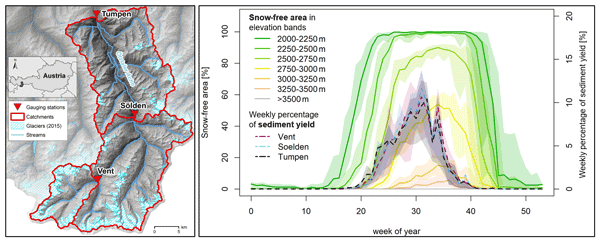
Lena Katharina Schmidt, Till Francke, Erwin Rottler, Theresa Blume, Johannes Schöber, and Axel Bronstert
Earth Surf. Dynam., 10, 653–669, https://doi.org/10.5194/esurf-10-653-2022, https://doi.org/10.5194/esurf-10-653-2022, 2022
Short summary
Short summary
Climate change fundamentally alters glaciated high-alpine areas, but it is unclear how this affects riverine sediment transport. As a first step, we aimed to identify the most important processes and source areas in three nested catchments in the Ötztal, Austria, in the past 15 years. We found that areas above 2500 m were crucial and that summer rainstorms were less influential than glacier melt. These findings provide a baseline for studies on future changes in high-alpine sediment dynamics.
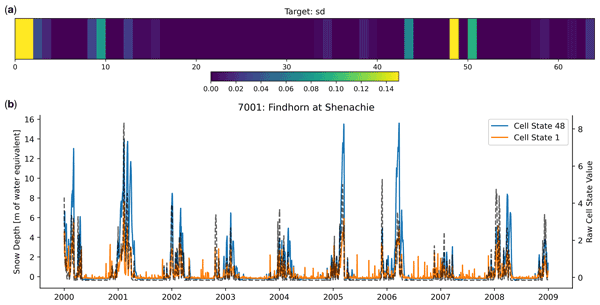
Thomas Lees, Steven Reece, Frederik Kratzert, Daniel Klotz, Martin Gauch, Jens De Bruijn, Reetik Kumar Sahu, Peter Greve, Louise Slater, and Simon J. Dadson
Hydrol. Earth Syst. Sci., 26, 3079–3101, https://doi.org/10.5194/hess-26-3079-2022, https://doi.org/10.5194/hess-26-3079-2022, 2022
Short summary
Short summary
Despite the accuracy of deep learning rainfall-runoff models, we are currently uncertain of what these models have learned. In this study we explore the internals of one deep learning architecture and demonstrate that the model learns about intermediate hydrological stores of soil moisture and snow water, despite never having seen data about these processes during training. Therefore, we find evidence that the deep learning approach learns a physically realistic mapping from inputs to outputs.
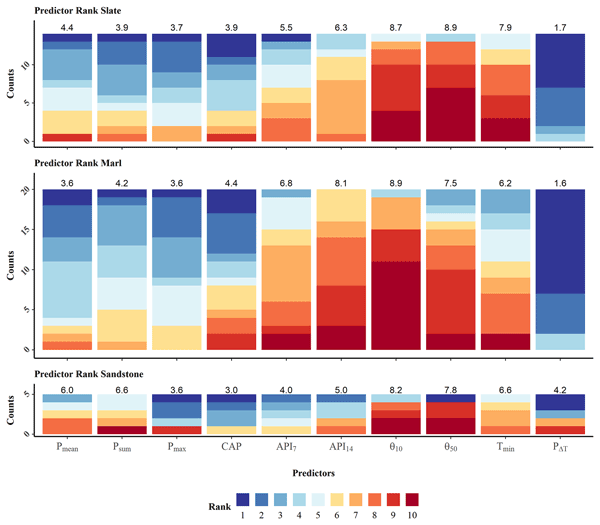
Nils Hinrich Kaplan, Theresa Blume, and Markus Weiler
Hydrol. Earth Syst. Sci., 26, 2671–2696, https://doi.org/10.5194/hess-26-2671-2022, https://doi.org/10.5194/hess-26-2671-2022, 2022
Short summary
Short summary
This study is analyses how characteristics of precipitation events and soil moisture and temperature dynamics during these events can be used to model the associated streamflow responses in intermittent streams. The models are used to identify differences between the dominant controls of streamflow intermittency in three distinct geologies of the Attert catchment, Luxembourg. Overall, soil moisture was found to be the most important control of intermittent streamflow in all geologies.
Susanne J. H. Buiter, Sascha Brune, Derek Keir, and Gwenn Peron-Pinvidic
EGUsphere, https://doi.org/10.5194/egusphere-2022-139, https://doi.org/10.5194/egusphere-2022-139, 2022
Preprint archived
Short summary
Short summary
Continental rifts can form when and where continents are stretched. Rifts are characterised by faults, sedimentary basins, earthquakes and/or volcanism. If rifting can continue, a rift may break a continent into conjugate margins such as along the Atlantic and Indian Oceans. In some cases, however, rifting fails, such as in the West African Rift. We discuss continental rifting from inception to break-up, focussing on the processes at play, and illustrate these with several natural examples.
Zoé Brasseur, Dimitri Castarède, Erik S. Thomson, Michael P. Adams, Saskia Drossaart van Dusseldorp, Paavo Heikkilä, Kimmo Korhonen, Janne Lampilahti, Mikhail Paramonov, Julia Schneider, Franziska Vogel, Yusheng Wu, Jonathan P. D. Abbatt, Nina S. Atanasova, Dennis H. Bamford, Barbara Bertozzi, Matthew Boyer, David Brus, Martin I. Daily, Romy Fösig, Ellen Gute, Alexander D. Harrison, Paula Hietala, Kristina Höhler, Zamin A. Kanji, Jorma Keskinen, Larissa Lacher, Markus Lampimäki, Janne Levula, Antti Manninen, Jens Nadolny, Maija Peltola, Grace C. E. Porter, Pyry Poutanen, Ulrike Proske, Tobias Schorr, Nsikanabasi Silas Umo, János Stenszky, Annele Virtanen, Dmitri Moisseev, Markku Kulmala, Benjamin J. Murray, Tuukka Petäjä, Ottmar Möhler, and Jonathan Duplissy
Atmos. Chem. Phys., 22, 5117–5145, https://doi.org/10.5194/acp-22-5117-2022, https://doi.org/10.5194/acp-22-5117-2022, 2022
Short summary
Short summary
The present measurement report introduces the ice nucleation campaign organized in Hyytiälä, Finland, in 2018 (HyICE-2018). We provide an overview of the campaign settings, and we describe the measurement infrastructure and operating procedures used. In addition, we use results from ice nucleation instrument inter-comparison to show that the suite of these instruments deployed during the campaign reports consistent results.
Ulrike Proske, Sylvaine Ferrachat, David Neubauer, Martin Staab, and Ulrike Lohmann
Atmos. Chem. Phys., 22, 4737–4762, https://doi.org/10.5194/acp-22-4737-2022, https://doi.org/10.5194/acp-22-4737-2022, 2022
Short summary
Short summary
Cloud microphysical processes shape cloud properties and are therefore important to represent in climate models. Their parameterization has grown more complex, making the model results more difficult to interpret. Using sensitivity analysis we test how the global aerosol–climate model ECHAM-HAM reacts to changes to these parameterizations. The model is sensitive to the parameterization of ice crystal autoconversion but not to, e.g., self-collection, suggesting that it may be simplified.
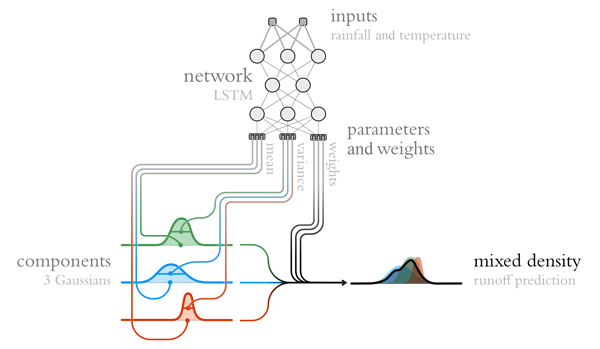
Daniel Klotz, Frederik Kratzert, Martin Gauch, Alden Keefe Sampson, Johannes Brandstetter, Günter Klambauer, Sepp Hochreiter, and Grey Nearing
Hydrol. Earth Syst. Sci., 26, 1673–1693, https://doi.org/10.5194/hess-26-1673-2022, https://doi.org/10.5194/hess-26-1673-2022, 2022
Short summary
Short summary
This contribution evaluates distributional runoff predictions from deep-learning-based approaches. We propose a benchmarking setup and establish four strong baselines. The results show that accurate, precise, and reliable uncertainty estimation can be achieved with deep learning.
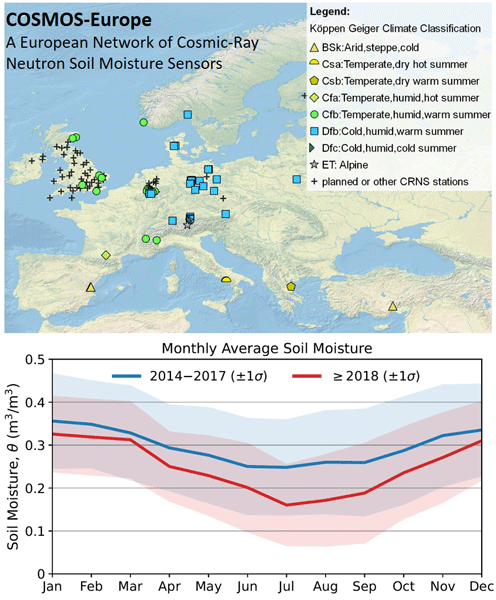
Heye Reemt Bogena, Martin Schrön, Jannis Jakobi, Patrizia Ney, Steffen Zacharias, Mie Andreasen, Roland Baatz, David Boorman, Mustafa Berk Duygu, Miguel Angel Eguibar-Galán, Benjamin Fersch, Till Franke, Josie Geris, María González Sanchis, Yann Kerr, Tobias Korf, Zalalem Mengistu, Arnaud Mialon, Paolo Nasta, Jerzy Nitychoruk, Vassilios Pisinaras, Daniel Rasche, Rafael Rosolem, Hami Said, Paul Schattan, Marek Zreda, Stefan Achleitner, Eduardo Albentosa-Hernández, Zuhal Akyürek, Theresa Blume, Antonio del Campo, Davide Canone, Katya Dimitrova-Petrova, John G. Evans, Stefano Ferraris, Félix Frances, Davide Gisolo, Andreas Güntner, Frank Herrmann, Joost Iwema, Karsten H. Jensen, Harald Kunstmann, Antonio Lidón, Majken Caroline Looms, Sascha Oswald, Andreas Panagopoulos, Amol Patil, Daniel Power, Corinna Rebmann, Nunzio Romano, Lena Scheiffele, Sonia Seneviratne, Georg Weltin, and Harry Vereecken
Earth Syst. Sci. Data, 14, 1125–1151, https://doi.org/10.5194/essd-14-1125-2022, https://doi.org/10.5194/essd-14-1125-2022, 2022
Short summary
Short summary
Monitoring of increasingly frequent droughts is a prerequisite for climate adaptation strategies. This data paper presents long-term soil moisture measurements recorded by 66 cosmic-ray neutron sensors (CRNS) operated by 24 institutions and distributed across major climate zones in Europe. Data processing followed harmonized protocols and state-of-the-art methods to generate consistent and comparable soil moisture products and to facilitate continental-scale analysis of hydrological extremes.

Amina Khaled, Minghui Zhang, and Barbara Ervens
Atmos. Chem. Phys., 22, 1989–2009, https://doi.org/10.5194/acp-22-1989-2022, https://doi.org/10.5194/acp-22-1989-2022, 2022
Short summary
Short summary
Chemical reactions with iron in clouds and aerosol form and cycle reactive oxygen species (ROS). Previous model studies assumed that all cloud droplets (particles) contain iron, while single-particle analyses showed otherwise. By means of a model, we explore the bias in predicted ROS budgets by distributing a given iron mass to either all or only a few droplets (particles). Implications for oxidation potential, radical loss and iron oxidation state are discussed.
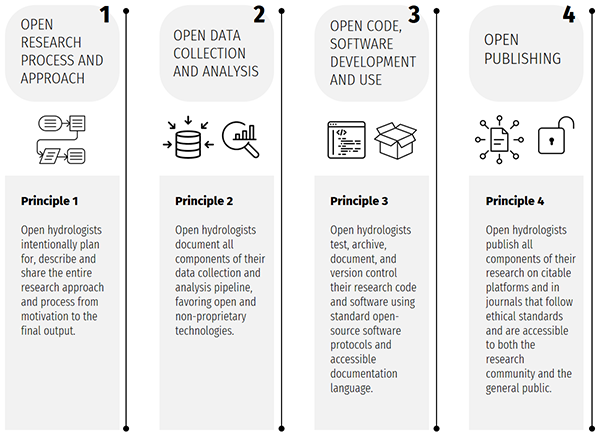
Caitlyn A. Hall, Sheila M. Saia, Andrea L. Popp, Nilay Dogulu, Stanislaus J. Schymanski, Niels Drost, Tim van Emmerik, and Rolf Hut
Hydrol. Earth Syst. Sci., 26, 647–664, https://doi.org/10.5194/hess-26-647-2022, https://doi.org/10.5194/hess-26-647-2022, 2022
Short summary
Short summary
Impactful open, accessible, reusable, and reproducible hydrologic research practices are being embraced by individuals and the community, but taking the plunge can seem overwhelming. We present the Open Hydrology Principles and Practical Guide to help hydrologists move toward open science, research, and education. We discuss the benefits and how hydrologists can overcome common challenges. We encourage all hydrologists to join the open science community (https://open-hydrology.github.io).
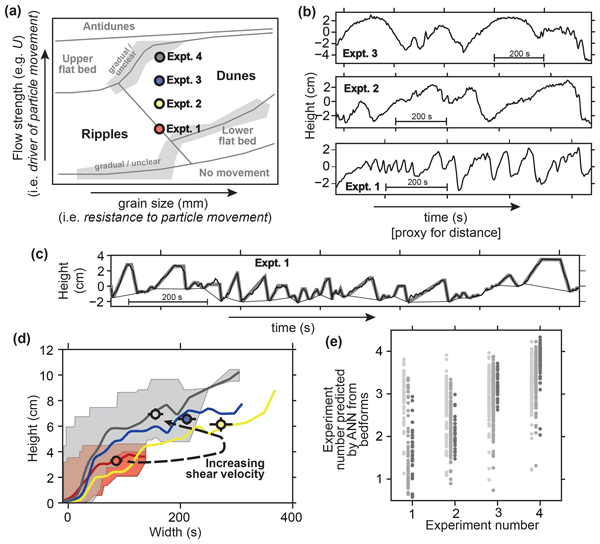
John K. Hillier, Chris Unsworth, Luke De Clerk, and Sergey Savel'ev
Geosci. Commun., 5, 11–15, https://doi.org/10.5194/gc-5-11-2022, https://doi.org/10.5194/gc-5-11-2022, 2022
Short summary
Short summary
It is an aspiration to infer flow conditions from bedform morphology (e.g. riverbed ripples) where sedimentary structures preserve the geological past or in inaccessible environments (e.g. Mars). This study was motivated by the idea of better designing an AI (artificial intelligence) algorithm to do this by using lessons from non-AI (i.e. human) abilities, investigated using a geoscience communication activity. A survey and an artificial neural network are used in a successful proof of concept.

Daniel Rasche, Markus Köhli, Martin Schrön, Theresa Blume, and Andreas Güntner
Hydrol. Earth Syst. Sci., 25, 6547–6566, https://doi.org/10.5194/hess-25-6547-2021, https://doi.org/10.5194/hess-25-6547-2021, 2021
Short summary
Short summary
Cosmic-ray neutron sensing provides areal average soil moisture measurements. We investigated how distinct differences in spatial soil moisture patterns influence the soil moisture estimates and present two approaches to improve the estimate of soil moisture close to the instrument by reducing the influence of soil moisture further afield. Additionally, we show that the heterogeneity of soil moisture can be assessed based on the relationship of different neutron energies.
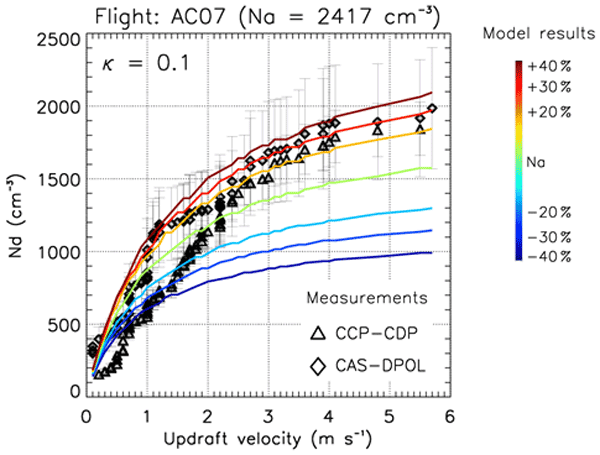
Ramon Campos Braga, Barbara Ervens, Daniel Rosenfeld, Meinrat O. Andreae, Jan-David Förster, Daniel Fütterer, Lianet Hernández Pardo, Bruna A. Holanda, Tina Jurkat-Witschas, Ovid O. Krüger, Oliver Lauer, Luiz A. T. Machado, Christopher Pöhlker, Daniel Sauer, Christiane Voigt, Adrian Walser, Manfred Wendisch, Ulrich Pöschl, and Mira L. Pöhlker
Atmos. Chem. Phys., 21, 17513–17528, https://doi.org/10.5194/acp-21-17513-2021, https://doi.org/10.5194/acp-21-17513-2021, 2021
Short summary
Short summary
Interactions of aerosol particles with clouds represent a large uncertainty in estimates of climate change. Properties of aerosol particles control their ability to act as cloud condensation nuclei. Using aerosol measurements in the Amazon, we performed model studies to compare predicted and measured cloud droplet number concentrations at cloud bases. Our results confirm previous estimates of particle hygroscopicity in this region.
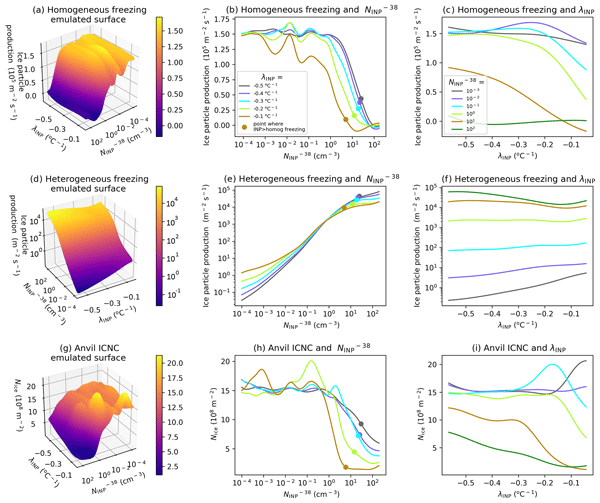
Rachel E. Hawker, Annette K. Miltenberger, Jill S. Johnson, Jonathan M. Wilkinson, Adrian A. Hill, Ben J. Shipway, Paul R. Field, Benjamin J. Murray, and Ken S. Carslaw
Atmos. Chem. Phys., 21, 17315–17343, https://doi.org/10.5194/acp-21-17315-2021, https://doi.org/10.5194/acp-21-17315-2021, 2021
Short summary
Short summary
We find that ice-nucleating particles (INPs), aerosols that can initiate the freezing of cloud droplets, cause substantial changes to the properties of radiatively important convectively generated anvil cirrus. The number concentration of INPs had a large effect on ice crystal number concentration while the INP temperature dependence controlled ice crystal size and cloud fraction. The results indicate information on INP number and source is necessary for the representation of cloud glaciation.
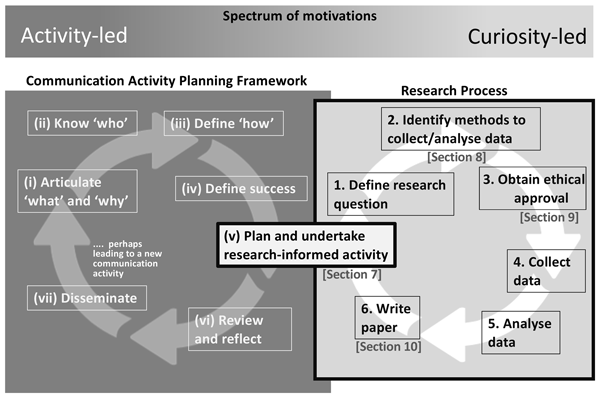
John K. Hillier, Katharine E. Welsh, Mathew Stiller-Reeve, Rebecca K. Priestley, Heidi A. Roop, Tiziana Lanza, and Sam Illingworth
Geosci. Commun., 4, 493–506, https://doi.org/10.5194/gc-4-493-2021, https://doi.org/10.5194/gc-4-493-2021, 2021
Short summary
Short summary
In this editorial we expand upon the brief advice in the first editorial of Geoscience Communication (Illingworth et al., 2018), illustrating what constitutes robust and publishable work for this journal and elucidating its key elements. Our aim is to help geoscience communicators plan a route to publication and to illustrate how good engagement work that is already being done might be developed into publishable research.
Cited articles
Andréassian, V., Perrin, C., Parent, E., and Bárdossy, A.: The Court of Miracles of Hydrology: Can Failure Stories Contribute to Hydrological Science?, Hydrolog. Sci. J., 55, 849–856, https://doi.org/10.1080/02626667.2010.506050, 2010. a, b, c
Arentoft, M., Berghmans, S., Borrell-Damian, L., Bottaro, S., Faure, J.-E., Gaillard, V., Glinos, K., Albacete, J. L., Morais, R., Morris, J., Schiltz, M., and Stroobants, K.: Agreement on Reforming Research Assessment, Zenodo [data set], https://doi.org/10.5281/zenodo.13480728, 2022. a
Bartoš, F., Maier, M., Wagenmakers, E.-J., Nippold, F., Doucouliagos, H., Ioannidis, J. P. A., Otte, W. M., Sladekova, M., Deresssa, T. K., Bruns, S. B., Fanelli, D., and Stanley, T. D.: Footprint of Publication Selection Bias on Meta-Analyses in Medicine, Environmental Sciences, Psychology, and Economics, Res. Synth. Meth., 15, 500–511, https://doi.org/10.1002/jrsm.1703, 2024. a, b
Becker, T.: Fixing the Water and Energy Budget Imbalances in ECMWF's Integrated Forecasting System (IFS), nextGEMS Blog, https://nextgems-h2020.eu/fixing-the-water-and-energy-budget-imbalances-in-ecmwfs-integrated-forecasting-system- ifs/ (last access: 19 August 2026), 2022. a
Berghuijs, W. R., Woods, R. A., and Hrachowitz, M.: A Precipitation Shift from Snow towards Rain Leads to a Decrease in Streamflow, Nat. Clim. Change, 4, 583–586, https://doi.org/10.1038/nclimate2246, 2014. a
Bespalov, A., Steckler, T., and Skolnick, P.: Be Positive about Negatives – Recommendations for the Publication of Negative (or Null) Results, Eur. Neuropsychopharmacol., 29, 1312–1320, https://doi.org/10.1016/j.euroneuro.2019.10.007, 2019. a
Blume, T., van Meerveld, I., and Weiler, M.: The Role of Experimental Work in Hydrological Sciences – Insights from a Community Survey, Hydrolog. Sci. J., 62, 334–337, https://doi.org/10.1080/02626667.2016.1230675, 2017. a
Blume, T., van Meerveld, I., and Weiler, M.: Why and When It Is Useful to Publish and Share Inconclusive Results and Failures: Reply to “Reporting Negative Results to Stimulate Experimental Hydrology”, Hydrol. Sci. J., 63, 1273–1274, https://doi.org/10.1080/02626667.2018.1493204, 2018. a
Brazil, R.: Illuminating “the Ugly Side of Science”: Fresh Incentives for Reporting Negative Results, Nature, Springer, https://doi.org/10.1038/d41586-024-01389-7, 2024. a, b
Bruins, G. J. and Scholte, J. G. J.: Felix Andries Vening Meinesz, 1887–1966, Biographical Memoirs of Fellows of the Royal Society, 294–308, https://doi.org/10.1098/rsbm.1967.0015, 1967. a
Brunner, L. and Voigt, A.: Pitfalls in Diagnosing Temperature Extremes, Nat. Commun., 15, 2087, https://doi.org/10.1038/s41467-024-46349-x, 2024. a, b
Buiter, S., Le Pourhiet, L., and Thieulot, C.: The Gallery of Failed Models and Negative Results, https://meetingorganizer.copernicus.org/EGU2016/session/20589 (last access: 19 August 2026), 2016. a
Chambers, C.: What's next for Registered Reports?, Nature, 573, 187–189, https://doi.org/10.1038/d41586-019-02674-6, 2019. a
Chambers, C. D.: Instead of “Playing the Game” It Is Time to Change the Rules: Registered Reports at AIMS Neuroscience and Beyond, AIMS Neurosci., 1, https://doi.org/10.3934/Neuroscience.2014.1.4, 2014. a
Chen, J., Su, Y., Li, Z., Ma, Z., and Shen, X.: Stripe Patterns in Wind Forecasts Induced by Physics-Dynamics Coupling on a Staggered Grid in CMA-GFS 3.0, Geosci. Model Dev., 18, 8253–8267, https://doi.org/10.5194/gmd-18-8253-2025, 2025. a
Cranford, S.: Want for Nothing, Need for Null, Useful Output from Negative Results, Matter, 7, 1679–1683, https://doi.org/10.1016/j.matt.2024.04.005, 2024. a
Curry, S., Mercado-Lara, E., Arechavala-Gomeza, V., Begley, C. G., Bernard, C., Bernard, R., Bertuzzi, S., Bhalla, N., Bowers, D., Brod, S., Chambers, C., Dougherty, M. R., Bueso, Y. F., Forner, S., Freeman, A. L. J., Haas, M., Henderson, D. P., Khanna, K., Lawrence, R., Liakath-Ali, K., Liu, C., Malhotra, N., Merino, J. G., Miguel, E., Miles, R., Munson, M., Nakagawa, S., Nobles, R., Owango, J., Pham, M. T., Poe, G., Ramirez, A. N., Sarabipour, S., Silverman, J. L., Smith, L. N., Sriramarao, P., Sternberg, P. W., Swamy, G. K., Tansey, M. G., Torres, G. E., Turner, E. H., von Klinggraeff, L., and Weis-Garcia, F.: Ending Publication Bias: A Values-Based Approach to Surface Null and Negative Results, PLOS Biol., 23, e3003368, https://doi.org/10.1371/journal.pbio.3003368, 2025. a, b
Devine, S., Perpinya, M. B., Delrue, V., Gaillard, S., Jorna, T. F. K., and Visser, J.: Science Fails. Let's Publish, J. Trial Error, 1, https://doi.org/10.36850/ed1, 2020. a, b, c, d
Dwan, K., Altman, D. G., Arnaiz, J. A., Bloom, J., Chan, A.-W., Cronin, E., Decullier, E., Easterbrook, P. J., Elm, E. V., Gamble, C., Ghersi, D., Ioannidis, J. P. A., Simes, J., and Williamson, P. R.: Systematic Review of the Empirical Evidence of Study Publication Bias and Outcome Reporting Bias, PLOS ONE, 3, e3081, https://doi.org/10.1371/journal.pone.0003081, 2008. a
East, A. E., Warrick, J. A., Li, D., Sankey, J. B., Redsteer, M. H., Gibbs, A. E., Coe, J. A., and Barnard, P. L.: Measuring and Attributing Sedimentary and Geomorphic Responses to Modern Climate Change: Challenges and Opportunities, Earth's Future, 10, https://doi.org/10.1029/2022EF002983, 2022. a
Echevarría, L., Malerba, A., and Arechavala-Gomeza, V.: Researcher's Perceptions on Publishing “Negative” Results and Open Access, Nucl. Acid Therapeut., 31, 185–189, https://doi.org/10.1089/nat.2020.0865, 2021. a
Emery, C., O'Donnel, C., and Dhand, R.: The State of Null Results – Insights from 11,000 Researchers on Negative or Inconclusive Results, White paper, Springer Nature, https://stories.springernature.com/the-state-of-null-results-white-paper/index.html (last access: 19 August 2026), 2025. a, b, c, d, e, f
Ervens, B., Carslaw, K. S., Koop, T., and Pöschl, U.: Review of interactive open-access publishing with community-based open peer review for improved scientific discourse and quality assurance, Atmos. Chem. Phys., 25, 13903–13952, https://doi.org/10.5194/acp-25-13903-2025, 2025. a, b, c, d
Fanelli, D.: Negative Results Are Disappearing from Most Disciplines and Countries, Scientometrics, 90, 891–904, https://doi.org/10.1007/s11192-011-0494-7, 2012. a
Fanelli, D.: Positive Results Receive More Citations, but Only in Some Disciplines, Scientometrics, 94, 701–709, https://doi.org/10.1007/s11192-012-0757-y, 2013. a
Feakins, S.: My Oh Miocene!, RealClimate, https://www.realclimate.org/index.php/archives/2012/07/my-oh-miocene/ (last access: 19 August 2026), 2012. a
Feakins, S. J., Warny, S., and Lee, J.-E.: Hydrologic Cycling over Antarctica during the Middle Miocene Warming, Nat. Geosci., 5, 557–560, https://doi.org/10.1038/ngeo1498, 2012. a
Hagenbeek, G. W., van Emmerik, T. H., Jia, T., Khamdahsag, P., Boonma, K., Taormina, R., Mani, T., and Rußwurm, M.: Exploring transferability of plastic-water hyacinth interaction and detection in rivers, Iscience, 29, https://doi.org/10.1016/j.isci.2026.116238, 2026. a
Hall, C. A., Saia, S. M., Popp, A. L., Dogulu, N., Schymanski, S. J., Drost, N., van Emmerik, T., and Hut, R.: A Hydrologist's Guide to Open Science, Hydrol. Earth Syst. Sci., 26, 647–664, https://doi.org/10.5194/hess-26-647-2022, 2022. a
Hannah, W., Pressel, K., Ovchinnikov, M., and Elsaesser, G.: Checkerboard Patterns in E3SMv2 and E3SM-MMFv2, Geosci. Model Dev., 15, 6243–6257, https://doi.org/10.5194/gmd-15-6243-2022, 2022. a
Hartmann, A. and Rath, V.: Uncertainties and Shortcomings of Ground Surface Temperature Histories Derived from Inversion of Temperature Logs, J. Geophys. Eng., 2, 299–311, https://doi.org/10.1088/1742-2132/2/4/S02, 2005. a
Hauk, R., van Emmerik, T. H. M., van der Ploeg, M., de Winter, W., Boonstra, M., Löhr, A. J., and Teuling, A. J.: Macroplastic Deposition and Flushing in the Meuse River Following the July 2021 European Floods, Environ. Res. Lett., 18, 124025, https://doi.org/10.1088/1748-9326/ad0768, 2023. a
Kepes, S., Banks, G. C., and Oh, I.-S.: Avoiding Bias in Publication Bias Research: The Value of “Null” Findings, J. Business Psychol., 29, 183–203, https://doi.org/10.1007/s10869-012-9279-0, 2014. a
Kozlov, M.: So You Got a Null Result. Will Anyone Publish It?, Nature, 631, 728–730, https://doi.org/10.1038/d41586-024-02383-9, 2024. a
Le Pourhiet, L., Buiter, S., and Thieulot, C.: Learning from Failed Models and Negative Results, EGU General Assembly, https://meetingorganizer.copernicus.org/EGU2018/posters/27137 (last access: 19 August 2026, 2018. a
Liaw, K.-L., Khomik, M., and Arain, M. A.: Explaining the Shortcomings of Log-Transforming the Dependent Variable in Regression Models and Recommending a Better Alternative: Evidence From Soil CO2 Emission Studies, J. Geophys. Res.-Biogeo., 126, e2021JG006238, https://doi.org/10.1029/2021JG006238, 2021. a
Lofty, J., Rebai, D., Valero, D., and Franca, M.: The Shapes and Sizes of Macroplastics and Other Litter in Rivers, Earth ArXive, https://doi.org/10.31223/X5RX6T, 2025. a
Mack, C.: In Praise of the Null Result, J. Micro/Nanolithogr. MEMS MOEMS, 13, 030101, https://doi.org/10.1117/1.JMM.13.3.030101, 2014. a
Makin, T. R. and Orban de Xivry, J.-J.: Ten Common Statistical Mistakes to Watch out for When Writing or Reviewing a Manuscript, eLife, 8, e48175, https://doi.org/10.7554/eLife.48175, 2019. a
Melsen, L. A., Puy, A., Torfs, P. J., and Saltelli, A.: The Rise of the Nash-Sutcliffe Efficiency in Hydrology, Hydrolog. Sci. J., 70, https://doi.org/10.1080/02626667.2025.2475105, 2025. a
Menard, C. B., Essery, R., Krinner, G., Arduini, G., Bartlett, P., Boone, A., Brutel-Vuilmet, C., Burke, E., Cuntz, M., Dai, Y., Decharme, B., Dutra, E., Fang, X., Fierz, C., Gusev, Y., Hagemann, S., Haverd, V., Kim, H., Lafaysse, M., Marke, T., Nasonova, O., Nitta, T., Niwano, M., Pomeroy, J., Schädler, G., Semenov, V. A., Smirnova, T., Strasser, U., Swenson, S., Turkov, D., Wever, N., and Yuan, H.: Scientific and Human Errors in a Snow Model Intercomparison, B. Am. Meteorol. Soc., 102, E61–E79, https://doi.org/10.1175/BAMS-D-19-0329.1, 2021. a
Menard, C. B., Rasmus, S., Merkouriadi, I., Balsamo, G., Bartsch, A., Derksen, C., Domine, F., Dumont, M., Ehrich, D., Essery, R., Forbes, B. C., Krinner, G., Lawrence, D., Liston, G., Matthes, H., Rutter, N., Sandells, M., Schneebeli, M., and Stark, S.: Exploring the Decision-Making Process in Model Development: Focus on the Arctic Snowpack, The Cryosphere, 18, 4671–4686, https://doi.org/10.5194/tc-18-4671-2024, 2024. a
Merali, Z.: Computational Science: … Error, Nature, 467, 775–777, https://doi.org/10.1038/467775a, 2010. a
Merton, R. K. and Barber, E.: The Travels and Adventures of Serendipity, Princeton University Press, ISBN 978-0-691-12630-2, 2006. a
Mielewczik, M. and Moll, J.: Spinach in Blunderland: How the Myth That Spinach Is Rich in Iron Became an Urban Academic Legend, Ann. Hist. Philos. Biol., 21, https://doi.org/10.17875/gup2018-1125, 2016. a
Miller, G.: A Scientist's Nightmare: Software Problem Leads to Five Retractions, Science, 314, 1856–1857, 2006. a
Mueck, L.: Report the Awful Truth!, Nat. Nanotechnol., 8, 693–695, https://doi.org/10.1038/nnano.2013.204, 2013. a
Muradchanian, J., Hoekstra, R., Kiers, H., and van Ravenzwaaij, D.: The Role of Results in Deciding to Publish: A Direct Comparison across Authors, Reviewers, and Editors Based on an Online Survey, PLOS ONE, 18, e0292279, https://doi.org/10.1371/journal.pone.0292279, 2023. a
Neher, A.: Probability Pyramiding, Research Error and the Need for Independent Replication, Psycholog. Rec., 17, 257–262, https://doi.org/10.1007/BF03393713, 1967. a
Nissen, S. B., Magidson, T., Gross, K., and Bergstrom, C. T.: Publication Bias and the Canonization of False Facts, eLife, 5, e21451, https://doi.org/10.7554/eLife.21451, 2016. a
Nosek, B. A. and Lakens, D.: Registered Reports: A Method to Increase the Credibility of Published Results, Social Psychol., 45, 137–141, https://doi.org/10.1027/1864-9335/a000192, 2014. a
Perez-Diaz, L.: Poster Safaris, Wildcard Talks, and Other EGU25 Adventures, EGU Blog GeoLog, https://blogs.egu.eu/geolog/2025/04/29/poster-safaris-wildcard-talks-and-other-egu25-adventures/ (last access: 19 August 2026), 2025. a
Pfister, L., Fenicia, F., and Matgen, P.: Progress in Hydrological Sciences: What Do We Learn from Our Mistakes?, EGU General Assembly, https://meetingorganizer.copernicus.org/EGU2009/session/422 (last access: 19 August 2026), 2009. a
Pipitone, J. and Easterbrook, S.: Assessing climate model software quality: a defect density analysis of three models, Geosci. Model Dev., 5, 1009–1022, https://doi.org/10.5194/gmd-5-1009-2012, 2012. a
PLOS: The Missing Pieces: A Collection of Negative, Null and Inconclusive Results, https://collections.plos.org/collection/missing-pieces/ (last access: 12 February 2026), 2020. a
PLOS Collections: Positively Negative: A New PLOS ONE Collection Focusing on Negative, Null and Inconclusive Results, https://collectionsblog.plos.org/positively-negative-new-plos-one-collection-focusing-negative-null-inconclusive-results- everyone/ (last access: 19 August 2026), 2015. a
Prior-Jones, M. R., Craw, L., Hawkins, J. D., Bagshaw, E. A., Carpenter, P., Nylen, T. H., and Pettit, J.: Solar Regulators for Polar Instrumentation: Why Night Consumption Matters, Geoscientific Instrumentation, Meth. Data Syst., 14, 503–512, https://doi.org/10.5194/gi-14-503-2025, 2025. a
Proske, U. and Melsen, L. A.: How Climate Model Developers Deal With Bugs, Earth's Future, 13, e2025EF006318, https://doi.org/10.1029/2025EF006318, 2025. a, b
Proske, U., Brüggemann, N., Gärtner, J. P., Gutjahr, O., Haak, H., Putrasahan, D., and Wieners, K.-H.: A case for open communication of bugs in climate models, made with ICON version 2024.01, EGUsphere [preprint], https://doi.org/10.5194/egusphere-2024-3493, 2024. a, b
Proske, U., Le Pourhiet, L., Klotz, D., Fuji, N., and Pyschik, J.: BUGS: Blunders, Unexpected Glitches, and Surprises (Session EOS4.8), EGU General Assembly, https://meetingorganizer.copernicus.org/EGU25/session/52496 (last access: 19 August 2026), 2025. a
Randall, K., Ewing, E. T., Marr, L. C., Jimenez, J. L., and Bourouiba, L.: How did we get here: What are droplets and aerosols and how far do they go? A historical perspective on the transmission of respiratory infectious diseases, Interface Focus, 11, 20210049, https://doi.org/10.1098/rsfs.2021.0049, 2021. a
Santiago Vispo, N.: Redefining Scientific Success: How Null Results Foster Open Research, Bionatura J., 2, https://doi.org/10.70099/BJ/2025.02.03.1, 2025. a
Schreyers, L. J., van Emmerik, T. H., Bui, T.-K. L., Biermann, L., Uijlenhoet, R., Nguyen, H. Q., Wallerstein, N., and van der Ploeg, M.: Water hyacinths retain river plastics, Environ. Pollut., 356, 124118, https://doi.org/10.1016/j.envpol.2024.124118, 2024. a
Schwartz, M. A.: The Importance of Stupidity in Scientific Research, J. Cell Sci., 121, 1771–1771, https://doi.org/10.1242/jcs.033340, 2008. a
Schweinfurth, M. K. and Frommen, J. G.: Beyond the Null: Recognizing and Reporting True Negative Findings, iScience, 28, 111676, https://doi.org/10.1016/j.isci.2024.111676, 2025. a
Sheffield, J., Wood, E. F., and Roderick, M. L.: Little Change in Global Drought over the Past 60 Years, Nature, 491, 435–438, https://doi.org/10.1038/nature11575, 2012. a
Soergel, D. A. W.: Rampant Software Errors May Undermine Scientific Results, F1000 Research, https://doi.org/10.12688/f1000research.5930.2, 2015. a
Springer Nature: Journal of Negative Results in BioMedicine, https://link.springer.com/journal/12952/articles (last access: 13 February 2026), 2017. a
Strieth-Kalthoff, F., Sandfort, F., Kühnemund, M., Schäfer, F. R., Kuchen, H., and Glorius, F.: Machine Learning for Chemical Reactivity: The Importance of Failed Experiments, Comput. Chem., 61, https://doi.org/10.1002/anie.202204647, 2022. a
Thieulot, C., Buiter, S., and Le Pourhiet, L.: Learning from Failed Models and Negative Results, https://meetingorganizer.copernicus.org/EGU2017/posters/23644 (last access: 19 August 2026), 2017. a
van Assen, M. A. L. M., van Aert, R. C. M., Nuijten, M. B., and Wicherts, J. M.: Why Publishing Everything Is More Effective than Selective Publishing of Statistically Significant Results, PLOS ONE, 9, e84896, https://doi.org/10.1371/journal.pone.0084896, 2014. a
van Belzen, J.: Ragworms Anecdotes, J. Trial Error, https://doi.org/10.36850/d17f-489b, 2024. a
van Bijsterveldt, C. E. J., Herman, P. M. J., van Wesenbeeck, B. K., Ramadhani, S., Heuts, T. S., van Starrenburg, C., Tas, S. A. J., Triyanti, A., Helmi, M., Tonneijck, F. H., and Bouma, T. J.: Subsidence Reveals Potential Impacts of Future Sea Level Rise on Inhabited Mangrove Coasts, Nat. Sustain., 6, 1565–1577, https://doi.org/10.1038/s41893-023-01226-1, 2023. a
van Emmerik, T., Müller-Thomy, H., Bartens, A., and Pohle, I.: Hydrology Pop-Ups: Sharing Failures, Lessons Learned and New Ideas, https://meetingorganizer.copernicus.org/EGU2016/pico/21034 (last access: 19 August 2026), 2016. a
van Emmerik, T., Popp, A., Solcerova, A., Müller, H., and Hut, R.: Reporting Negative Results to Stimulate Experimental Hydrology: Discussion of “The Role of Experimental Work in Hydrological Sciences – Insights from a Community Survey”, Hydrolog. Sci. J., 63, 1269–1272, https://doi.org/10.1080/02626667.2018.1493203, 2018. a, b, c, d
van Emmerik, T., Strady, E., Kieu-Le, T.-C., Nguyen, L., and Gratiot, N.: Seasonality of riverine macroplastic transport, Sci. Rep., 9, 13549, https://doi.org/10.1038/s41598-019-50096-1, 2019. a
Vening-Meinesz, F. A.: Gravity Expeditions at Sea 1923–1938, Publication of the Netherlands Geodetic Commission IV, 233 pp., https://doi.org/10.1038/132586a0, 1948. a
Warny, S., Askin, R. A., Hannah, M. J., Mohr, B. A., Raine, J. I., Harwood, D. M., Florindo, F., and the SMS Science Team: Palynomorphs from a Sediment Core Reveal a Sudden Remarkably Warm Antarctica during the Middle Miocene, Geology, 37, 955–958, https://doi.org/10.1130/G30139A.1, 2009. a
Wilby, R. L., Clifford, N. J., De Luca, P., Harrigan, S., Hillier, J. K., Hodgkins, R., Johnson, M. F., Matthews, T. K., Murphy, C., Noone, S. J., Parry, S., Prudhomme, C., Rice, S. P., Slater, L. J., Smith, K. A., and Wood, P. J.: The “Dirty Dozen” of Freshwater Science: Detecting Then Reconciling Hydrological Data Biases and Errors, WIREs Water, 4, e1209, https://doi.org/10.1002/wat2.1209, 2017. a, b, c
Yaqub, O.: Serendipity: Towards a Taxonomy and a Theory, Res. Policy, 47, 169–179, https://doi.org/10.1016/j.respol.2017.10.007, 2018. a
Zhu, Z., van Belzen, J., Hong, T., Kunihiro, T., Ysebaert, T., Herman, P. M. J., and Bouma, T. J.: Sprouting as a Gardening Strategy to Obtain Superior Supplementary Food: Evidence from a Seed-Caching Marine Worm, Ecology, 97, 3278–3284, https://doi.org/10.1002/ecy.1613, 2016. a
Editorial statement
Th editorial is of high interest to the wider geoscience community. It provides a valuable article type to EGU journals and contributes to open and transparent science.
Th editorial is of high interest to the wider geoscience community. It provides a valuable...
Short summary
We explain a new article type that is being introduced in participating EGU publications. "LESSONS" articles describe the Limitations, Errors, Surprises, Shortcomings and Opportunities for New Science emerging from the scientific process. The publication of non-positive results and associated learnings aims to complete an unbiased record of the research effort, contributes to open and transparent science, allows the authors and others to learn, and may open opportunities for new science.
We explain a new article type that is being introduced in participating EGU publications....


Altmetrics
Final-revised paper
Preprint