
the Creative Commons Attribution 4.0 License.
the Creative Commons Attribution 4.0 License.
 | 03 Aug 2026
Finding Gaia: exploring climate change through gamification
Maria Vittoria Gargiulo
Raffaella Russo
Paolo Capuano
Gamification has gained increasing traction as an innovative approach to science communication. In this work, we present and evaluate Finding Gaia, a virtual treasure hunt designed during the COVID-19 pandemic to engage secondary school students in climate change education.
The activity transforms a conventional lesson on climate risks and mitigation into a series of cooperative online challenges. It incorporates puzzles, narrative elements, and progression mechanics to foster scientific literacy on topics such as the greenhouse effect, adaptation strategies, and the energy transition.
The game was delivered entirely online and evaluated using pre- and post-surveys administered to 206 students aged 15–18, complemented by qualitative facilitator insights.
Results showed statistically significant gains in students' self-reported knowledge and interest in environmental and geophysical sciences. This study details the game design, learning objectives, and evaluation methodology, contributing a context-specific case study to current efforts in gamified science communication.
The findings are shaped by the exceptional constraints of the pandemic period, which required a fully remote implementation, an aspect that makes this experience analytically valuable but not directly replicable.
- Article
(1505 KB) - Full-text XML
-
Supplement
(395 KB) - BibTeX
- EndNote


Science communication serves as a cornerstone in translating research into meaningful societal benefits. Its importance lies in narrowing the divide between scientific innovation and its practical applications in everyday life (Bucchi, 2008). Effective science communication ensures that research findings extend beyond academic circles, becoming accessible and comprehensible to broader audiences, thereby enabling informed decision-making and advancing societal progress (Besley and Tanner, 2011; Nisbet and Scheufele, 2009; Scheufele and Lewenstein, 2005).
To address the diverse nature of society, developing multi-layered and inclusive communication strategies is essential (Brossard and Nisbet, 2007; Stilgoe et al., 2014). Different societal groups exhibit varying levels of scientific literacy, interests, and needs (European Commission, 2002). By tailoring communication approaches to meet these diverse requirements, we can enhance engagement, understanding, and relevance of scientific information (Foundation for Science and Technology, 2019; European Science Communication Network, 2020). For instance, employing simplified language and visuals may resonate more effectively with lay audiences, while more technical discussions could cater to policymakers and domain experts (Foundation for Science and Technology, 2019).
Young people hold a pivotal role in shaping future solutions to global challenges (Mitchell et al., 2008; OCED, 2020). Equipping youth with scientific knowledge and critical thinking skills empowers them to actively address pressing societal issues (Jun et al., 2021; UNESCO, 2022). Engaging young audiences in science communication activities fosters a generation of scientifically literate individuals capable of driving innovation and societal progress (Fernandez and Shaw, 2013). Additionally, their fresh perspectives and creative problem-solving capabilities can inspire novel approaches to complex issues.
Gamification represents an innovative approach to science communication, leveraging game design principles to captivate and educate audiences (Hamari et al., 2014; Poushter et al., 2018). Although Nick Pelling coined the term “gamification” in 2003, it was not until 2010 that it began to be widely adopted in the fields of education and professional training (Deterding et al., 2011), gamification refers to the integration of game elements, such as points, feedback, competition, and progression, into non-game settings to foster motivation, engagement, and learning. Unlike full games, it selectively applies game mechanics to enhance user experience without creating an entire game environment (Deterding et al., 2011).
While the academic literature increasingly acknowledges the potential of gamification (Anuradhani et al., 2024; Fitz-Walter, 2013) as an educational and engagement-oriented strategy, it also highlights a range of conceptual, empirical, and ethical limitations that are particularly salient in the context of climate change education. Systematic reviews and theoretical analyses suggest that, although gamification can enhance engagement and short-term motivation, its effects on deep learning, long-term knowledge retention, and sustained behavioural change are inconsistent and highly context-dependent (Krath et al., 2021; Johnson et al., 2016; Luo, 2022). Several studies emphasize that the effectiveness of gamified interventions varies according to learner characteristics, instructional design, and the theoretical grounding of game mechanics, underscoring the need for alignment between educational objectives and gamification elements (Landers et al., 2014, 2017; van Roy and Zaman, 2017; Fernández Galeote and Hamari, 2021).
A recurring concern in the literature relates to the overreliance on extrinsic motivational mechanisms such as points, badges, and leaderboards. While these elements may increase participation, they risk promoting surface-level engagement or competitive behaviors that do not necessarily translate into meaningful understanding or intrinsic motivation (Sailer et al., 2017; Woodcock and Johnson, 2018). From a psychological perspective, scholars caution that poorly designed gamified systems may fail to satisfy learners' autonomy, competence, and relatedness needs, thereby limiting their educational value (Landers and Callan, 2011; Dykens et al., 2021). These concerns are particularly relevant for climate change education, where reflective thinking, systems understanding, and value-based reasoning are essential learning outcomes.
Ethical critiques further complicate the application of gamification to climate-related topics. Gamification has been described as a persuasive technology that can subtly influence user behaviour, raising questions about manipulation, agency, and transparency (Ferrara, 2013; Kim and Werbach, 2016; Kriz et al., 2022). In the context of climate change, there is a risk that gamified approaches may oversimplify complex socio-ecological systems or frame climate action as a matter of individual choice rather than collective responsibility and structural change (Goethe and Palmquist, 2020; Thibault and Hamari, 2021; Niman, 2014; Gerber et al., 2021). Such reductions may inadvertently depoliticize climate issues and obscure the broader socio-economic and governance dimensions emphasized in climate education research.
Moreover, several authors argue that gamification research has historically suffered from conceptual ambiguity and inconsistent definitions, complicating the comparison of findings across studies (Deterding et al., 2011; Albertazzi et al., 2019; Stieglitz et al., 2017). This lack of conceptual clarity is mirrored in climate-focused applications, where gamification, serious games, and game-based learning are often conflated despite differing pedagogical assumptions and design goals (Crookall et al., 1987; Reiners and Wood, 2015; Kim et al., 2018). Recent reviews call for more theoretically informed and methodologically rigorous research that explicitly articulates the mechanisms through which gamification is expected to influence learning and engagement (Krath et al., 2021; Fernández Galeote et al., 2021).
Taken together, the literature suggests that gamification should not be treated as a universal or inherently transformative solution for climate change education. Instead, its value lies in its careful integration within broader educational frameworks that prioritize systems thinking, ethical reflection, collaboration, and participatory engagement (Ouariachi et al., 2020; Miao et al., 2022; Liu, 2024). When grounded in educational theory, designed with ethical awareness, and adapted to specific cultural and contextual conditions, gamification can complement traditional instructional approaches and support meaningful engagement with climate change. This critical perspective provides the foundation for examining how gamified elements may contribute to collaborative learning, experimentation, and empowerment, as discussed in the following section.
Finally, the integration of gamified elements promotes not only individual learning but also collaborative problem-solving and continuous self-improvement. By offering immediate feedback, clear goals, and measurable progress, gamification fosters an environment where users feel empowered to explore, experiment, and master new skills. However, its effectiveness depends strongly on the alignment between game elements and educational objectives, as well as on appropriate facilitation. This multifaceted approach underscores its potential to revolutionize how we communicate science, making it an essential tool for engaging diverse audiences and driving meaningful outcomes (Hamari et al., 2014).
Climate change education presents a compelling avenue for gamification, given its interdisciplinary nature and critical importance (Dichev and Dicheva, 2017; Wu and Lee, 2015). This method simplifies complex concepts, making them accessible through interactive games that foster an understanding of climate systems (Fernández Galeote and Hamari, 2021; Jensen and Gerber, 2021; Douglas and Brauer, 2021). These experiences not only educate participants but also empower them to take meaningful action within their communities (DeWaters and Powers, 2011). Gamification may therefore act as a tool to promote agency and engagement, especially when the content is localised and context-specific. Several targeted interventions illustrate this potential. For example, Games for a New Climate (Mendler de Suarez et al., 2012) and the World Climate Simulation (Climate Interactive, 2025) enable players to navigate complex negotiations or risk scenarios, while Parker et al. (2016) applied gaming to stakeholder engagement in extreme event attribution.
In this context, during the academic year 2020/21, the constraints of the COVID-19 pandemic necessitated the transition of our outreach and engagement initiatives from in-person laboratories to virtual platforms. Adapting to the virtual tools approved by schools, we aimed to retain an informal yet engaging learning experience. Our primary goal was to position students as active participants, fostering scientific understanding alongside leadership and problem-solving skills.
To achieve these aims, we employed gamification, recognising its potential to deliver effective and enjoyable learning experiences across varied genres, technologies, and demographics. Accordingly, we developed a climate change-focused educational activity, “Finding Gaia”, designed as a structured series of online challenges incorporating climate-related puzzles, team-based collaboration, and expert facilitation.
Drawing from the work of Jensen and Gerber (2020) and Veldkamp et al. (2021), we designed an evaluation framework to measure the impact of our serious games in teaching and communicating the concept of risk. This paper presents the results obtained from this evaluation process.
This study has two main aims: (1) to present Finding Gaia as a concrete example of science communication practice using gamification during school closures; and (2) to report its evaluation using student surveys and facilitator insights.
While the activity can be replicated in different settings, the particular circumstances of this implementation, developed under pandemic restrictions, delivered entirely online, and constrained by the tools authorised for remote teaching, constitute a unique context that informs the interpretation of the results.
We do not aim to validate gamification as a superior pedagogical tool, but rather to illustrate how it was successfully employed in this specific case to communicate climate-related risks to young audiences under emergency conditions.
In Finding Gaia, these principles are applied to a virtual treasure hunt addressing key climate change topics, including the greenhouse effect, human-induced climate drivers, climate adaptation, and environmental justice. The educational design aimed to align each task with one or more curriculum-relevant learning goals. The activity was designed to be inclusive and accessible to students aged 15–18, regardless of prior scientific expertise. Facilitation was provided by trained science communicators acting as “game masters”.
“Finding Gaia” was initially implemented in collaboration with the University of Naples Federico II, the University of Sannio, and the INGV during the 2021 edition of the science fair Futuro Remoto. Subsequently, it was replicated during the 2021/22 iteration of the Piano Lauree Scientifiche (PLS – Scientific Degree Plan) at the Department of Physics “E.R. Caianiello” of the University of Salerno, as well as within the framework of the project IDEE – Institution of a Deal for Environmental Education. This initiative, led by the Department of Chemistry and Biology “A. Zambelli” of the University of Salerno, aimed to establish a partnership between schools and universities to enhance, innovate, and disseminate a scientific culture oriented towards environmental awareness.
The data analysed in this study were gathered during the IDEE project, which involved the participation of 206 students in the Finding Gaia activity. To ensure the internal consistency of the collected data and to evaluate the degree of association among variables as a cohesive metric, Cronbach's alpha was calculated for both the pre- and post-evaluation datasets. As shown in Table 1, the results (Cronbach's alpha > 0.70) indicate a high degree of reliability and internal consistency among the indicators (Cronbach, 1951).
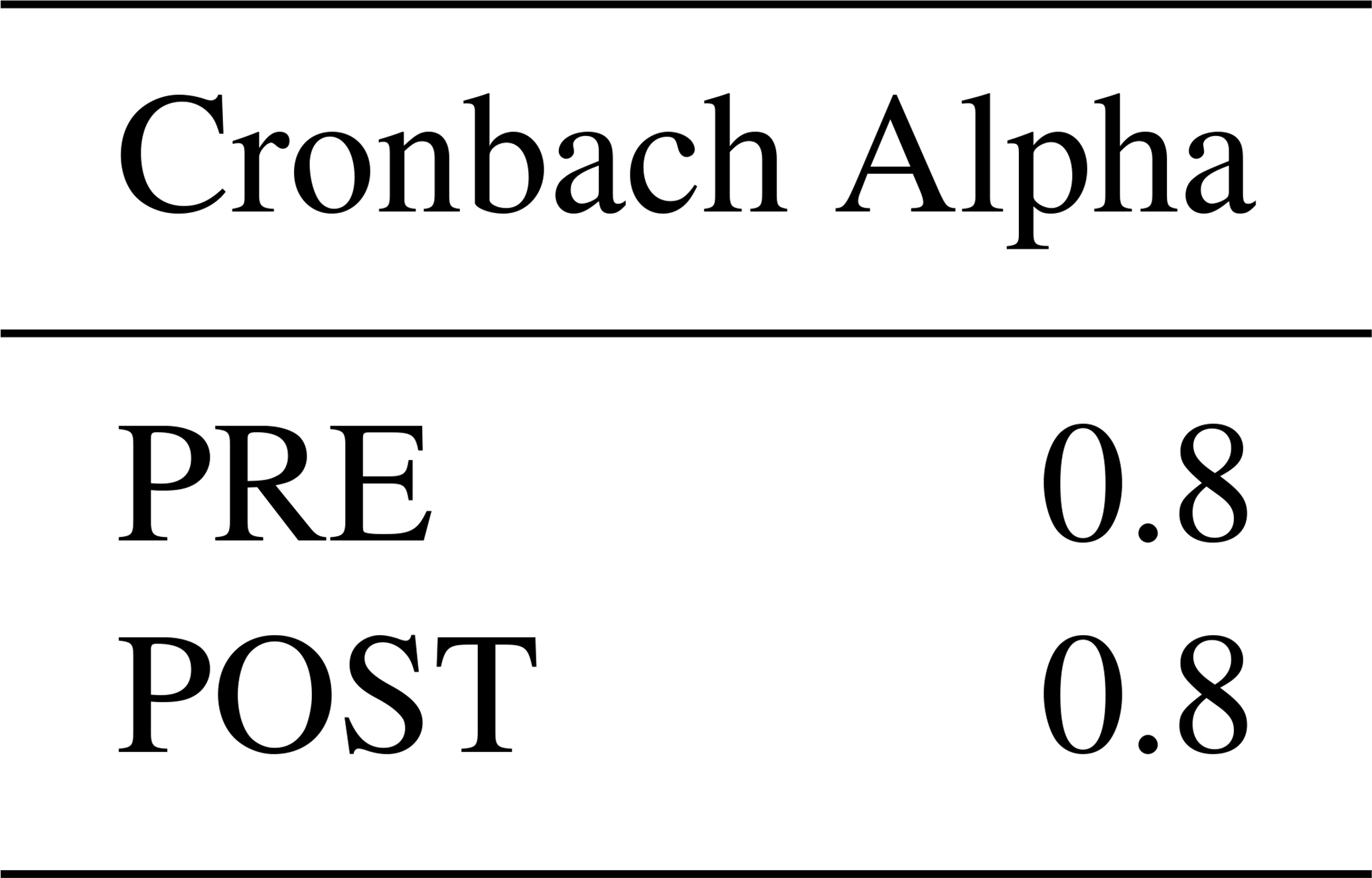
These metrics provided a robust basis for comparing mean values from the Likert scales in the pre- and post-evaluation surveys. The subsequent sections will present the results derived from this comparison, highlighting the impact of the activity on participants' knowledge and perceptions.
2.1 Game Mechanics and Flow
The experience unfolds over a series of stages, each comprising a climate change-themed challenge. These included puzzles, riddles, and collaborative problem-solving tasks, all presented in Italian, the students' native language. Each correct answer, typically a keyword, code, or number, served to unlock the next stage of the game and triggered a short narrative or explanatory input from the facilitator.
These facilitator-led interludes or videos are structured in a sequence of explanatory slides that address specific climate science topics in a progressive and age-appropriate manner. These slides introduce foundational concepts such as the distinction between weather and climate, mentioned explicitly through comparative definitions and visual examples, allowing the facilitator to clarify differences in temporal and spatial scales. Further slides focus on the concept of prediction and forecasting, using simplified representations of meteorological accuracy and uncertainty to explain why short-term weather forecasts differ fundamentally from long-term climate projections. This progression supports learners in building a coherent mental model of how climate knowledge is produced and interpreted, rather than treating climate change as a collection of isolated facts. Subsequent explanatory sections navigate learners through key themes of climate change by combining scientific evidence with interpretative guidance. Slides dedicated to human–climate interactions explicitly address the role of industrial activity, greenhouse gas emissions, and long-term CO2 concentration trends, drawing attention to both natural variability and anthropogenic drivers. Other slides introduce climate scenarios (e.g. different emission pathways), using comparative visual narratives to show how present-day choices influence future outcomes. These moments are deliberately positioned between gameplay challenges, allowing the facilitator to guide students through cause–effect relationships, discuss uncertainty and responsibility, and connect global climate processes to biological, cultural, and societal impacts. Through this alternation between navigation, explanation, and reflection, Finding Gaia enables learners to actively traverse climate change themes as a structured learning journey rather than a linear information delivery.
The alternation between puzzles and interludes ensures that every puzzle not only promoted teamwork and reasoning but also led to a deeper engagement with core scientific content. The total duration of the activity was approximately 90–120 min. All gameplay was conducted online, using digital platforms that had been previously approved by participating schools under COVID-19 restrictions. Figures 1 and 2 illustrate the logical structure of the Finding Gaia experience, showing how puzzle-based gameplay, explanatory slides, and facilitator mediation are sequentially integrated to support climate learning.
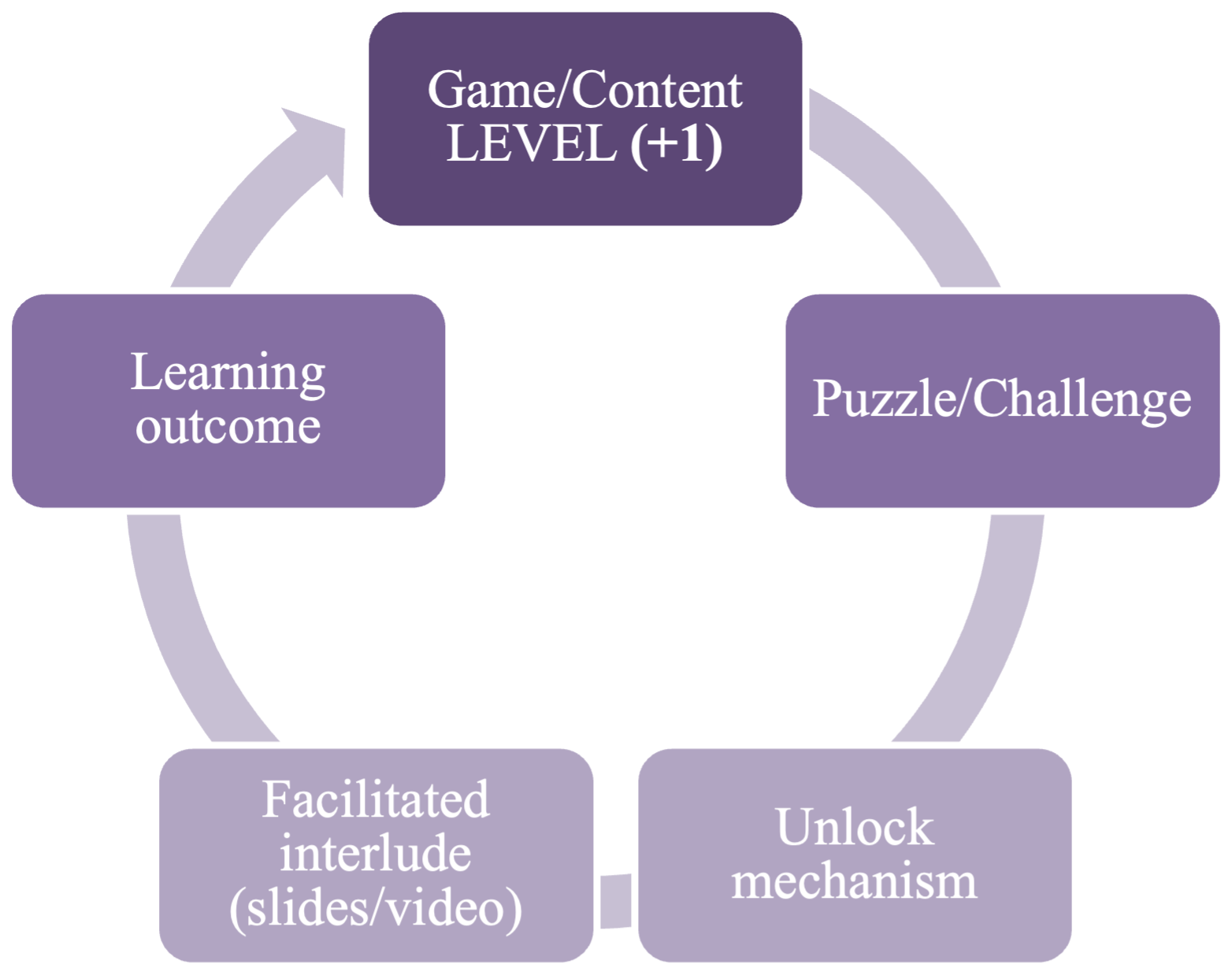
Figure 1Logical structure of the single stages of Finding Gaia experience. Successfully finishing one stage, leads to the next.
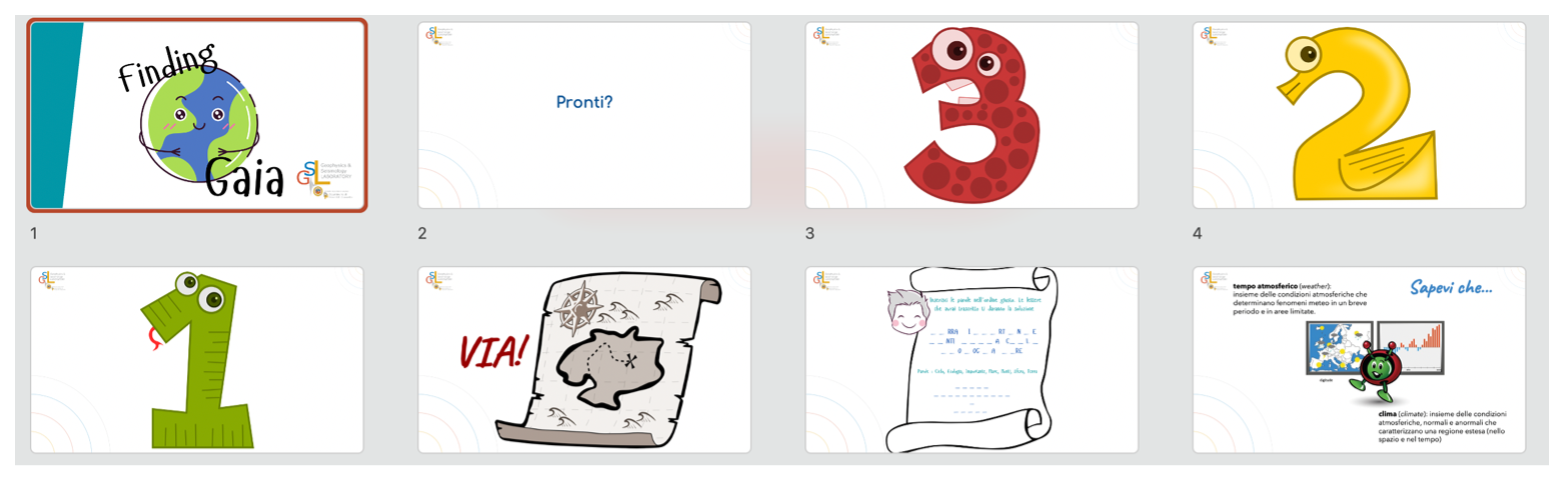
Figure 2First steps of Finding Gaia showing how the first puzzle unlocks the first facilitated interlude.
Finding Gaia incorporates several hallmark features of gamification to enhance engagement and learning (Deterding et al., 2011; Hamari et al., 2014):
-
Points and Rewards. Participants earn points or rewards for completing tasks, solving puzzles, or uncovering virtual treasures. These rewards contribute to leaderboard rankings, fostering competition.
-
Clues and Challenges. Participants receive clues and challenges in various formats, riddles, puzzles, and more, that guide them through the content, adding excitement and intrigue.
-
Leaderboards. Rankings displayed on leaderboards motivate participants to compete and track their performance.
-
Progress Tracking. Participants can monitor their progress, helping maintain focus and motivation throughout the treasure hunt.
-
Facilitator interaction. Experts monitor progress, provide clues, and moderate discussion in which participants can collaborate, share tips, and celebrate milestones, enhancing the social dimension of the activity.
2.2 Evaluation
The evaluation of science communication activities is essential for understanding their effectiveness in engaging stakeholders and fostering scientific literacy (Jensen and Gerber, 2020). Drawing inspiration from Veldkamp et al. (2021), who examined the educational potential of escape rooms in science education, we employed a combination of surveys and qualitative classroom observations to evaluate students' perceptions of the activity's educational value. This mixed-methods approach also informed the interpretation of quantitative survey data.
Prior to and following the activities, students completed a structured survey (see Supplement) designed to assess their baseline knowledge, interest levels, and expectations, as well as the overall impact of the event. The survey incorporated multiple-choice questions, Likert scales (Likert, 1932), and open-ended questions to capture both quantitative and qualitative feedback. Likert scales, widely used in psychometric research, enable the measurement of attitudes towards specific objects, events, or concepts, using a numerical scale, commonly ranging from 1 to 5. The inclusion of multiple-choice and open-ended questions further enriched the qualitative insights gathered from participants.
To ensure ethical data collection practices, all responses were anonymised, and no personal sensitive information, such as age, gender, or religion, was collected except in aggregated form. Participation in the survey was entirely voluntary, with no obligation to answer any question that could potentially cause discomfort.
To evaluate the assimilation of concepts presented during the activity, a Student's t-test (Student, 1908) was performed to analyse statistical correlations between pre- and post-activity responses. With a 99 % confidence level and 206 degrees of freedom, the analysis confirmed statistically significant differences in mean values before and after the session, demonstrating the educational impact of the experience. Additionally, a determination of Cronbach's alpha (Cronbach, 1951) was employed to assess the internal consistency of the survey data, measuring the degree of association among variables and comparing Likert scale mean values across the pre- and post-surveys.
While the described evaluation method offers meaningful insights, we recognise several limitations inherent to the process, primarily due to the constraints of the COVID-19 pandemic. To mitigate the potential burden of prolonged screen time on students, the survey was deliberately simplified. Moreover, the relative infancy of this field posed challenges in benchmarking our methodology against existing literature.
While the Finding Gaia activity is designed to be easily replicable and adaptable across different educational contexts, the implementation described in this study took place under exceptional conditions imposed by the COVID-19 pandemic. These unique circumstances,such as school closures, remote learning environments, and digital tool constraints,confer a singular character to the experience analysed here. This context-specificity contributes to the originality of the work and provides valuable insight into science communication under crisis-driven constraints, even as future replications may occur under different conditions.
3.1 Quantitative Results
A total of 206 students participated in the activity and completed both pre- and post-surveys. Participants were aged between 15 and 18 years, with a near-even gender distribution (52 % female, 47 % male, 1 % not specified). Only 9 % of participants reported prior experience with educational treasure hunts, escape rooms, or gamified science activities. The majority of students (64 %) were aged 16–17, and all participants were enrolled in upper secondary science or technical schools (Fig. 3).
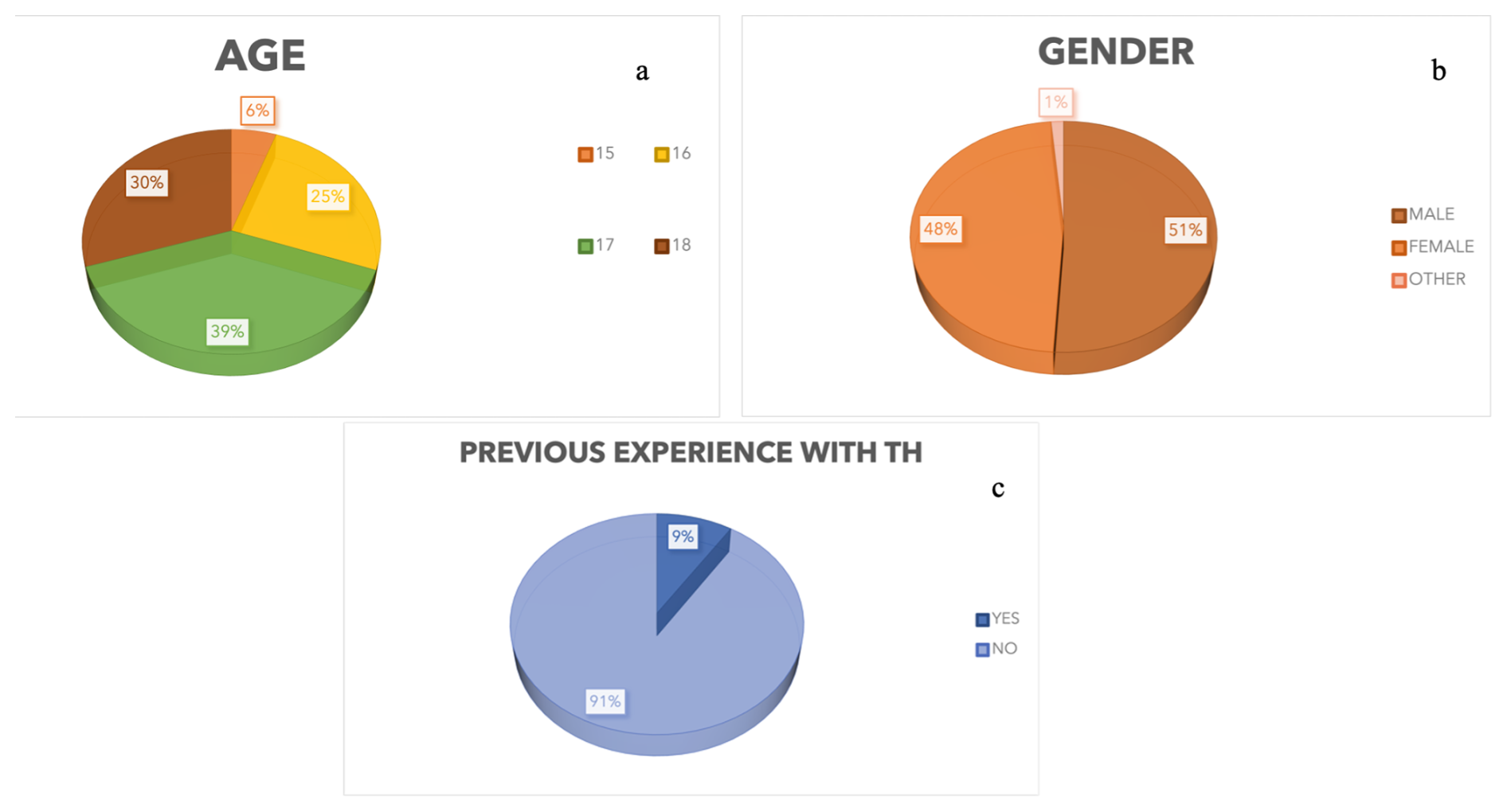
Figure 3Demographic characteristics and prior experience of the participating students. The pie charts indicate that 64 % of the students were aged 16–17, 30 % were 18 years old, and 6 % were 15 years old, with an approximately equal gender distribution. In addition, only 9 % of the participants reported previous experience with recreational or educational escape rooms.
Figures 3 through 7 illustrate the distribution of responses to control questions administered before and after the protocol. The Likert scale used for these responses, ranging from 1 to 5, is detailed in the Supplement. The figures demonstrate a shift towards higher ratings across response distributions, suggesting a favourable impact of the protocol. To substantiate this observation and determine whether students assimilated the concepts presented, statistical correlation analyses of pre- and post-experience responses were conducted using a Student's t-test to assess the significance of distribution differences. These results are summarised in Table 2.
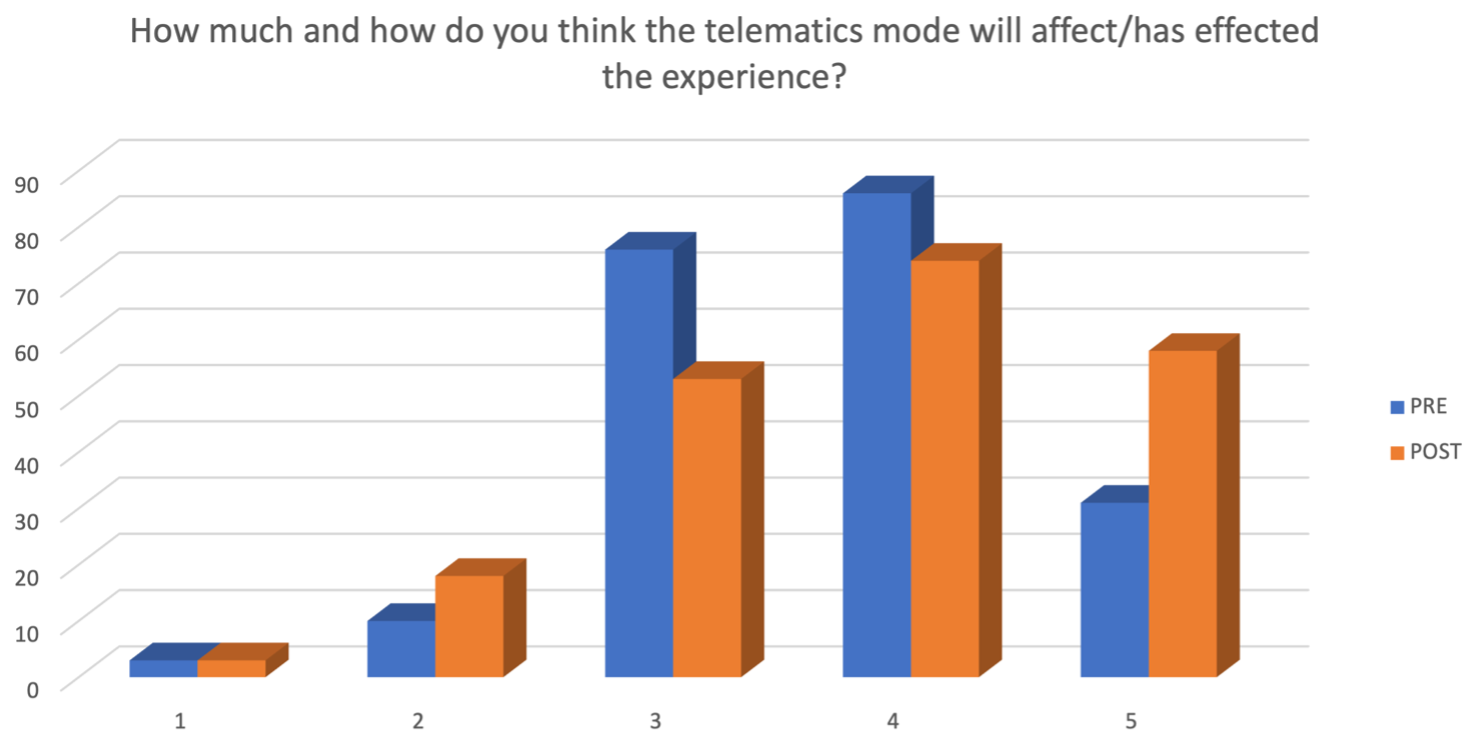
Figure 4Distribution of responses to Question E: “How much and how do you think the virtual characteristic of the treasure hunt will affect the experience?” The figure compares pre-protocol (mean = 3.6) and post-protocol (mean = 3.8) ratings on a 5-point Likert scale.
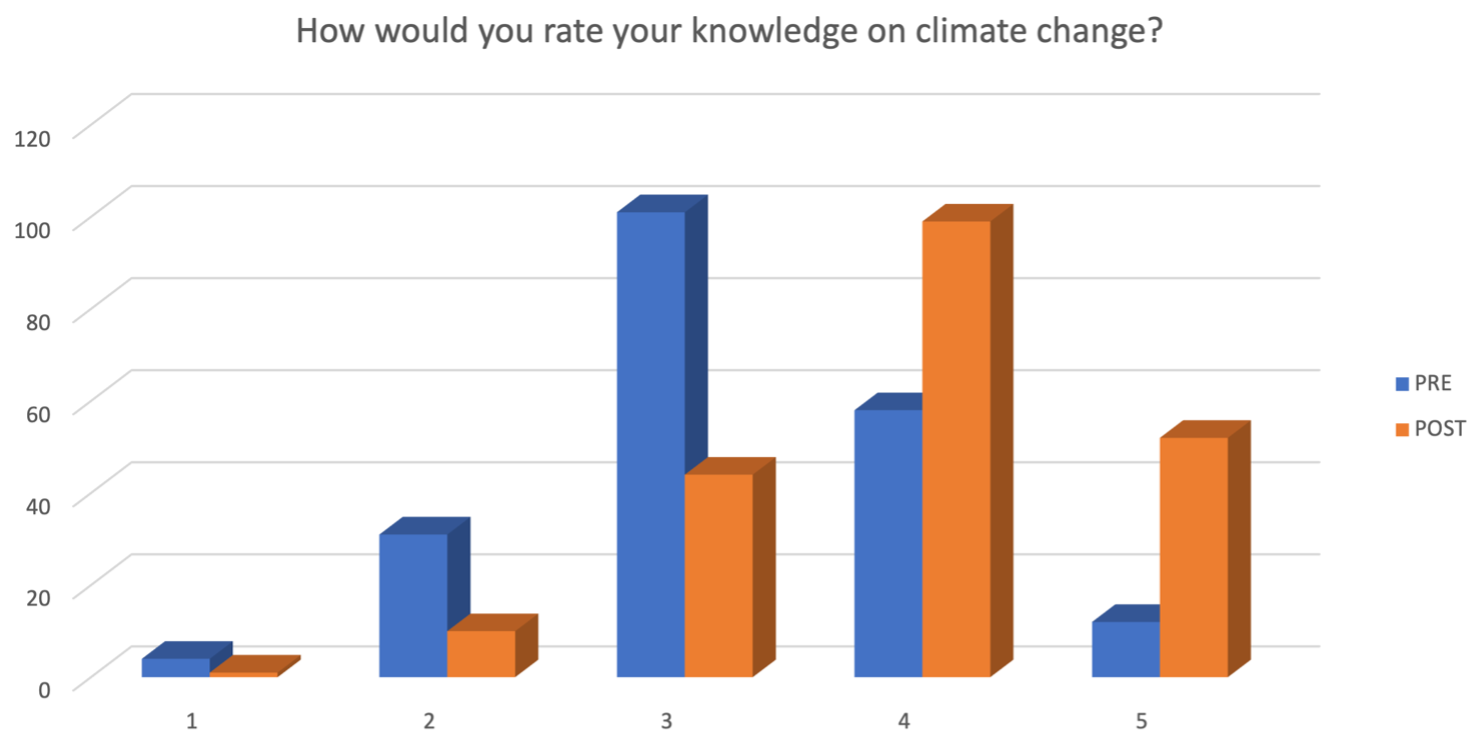
Figure 5Distribution of responses to Question A: “How would you rate your knowledge on climate change?” The histogram shows an increase in the average rating from 3.2 (pre-protocol) to 3.9 (post-protocol) on a 5-point Likert scale, indicating improved perceived knowledge.
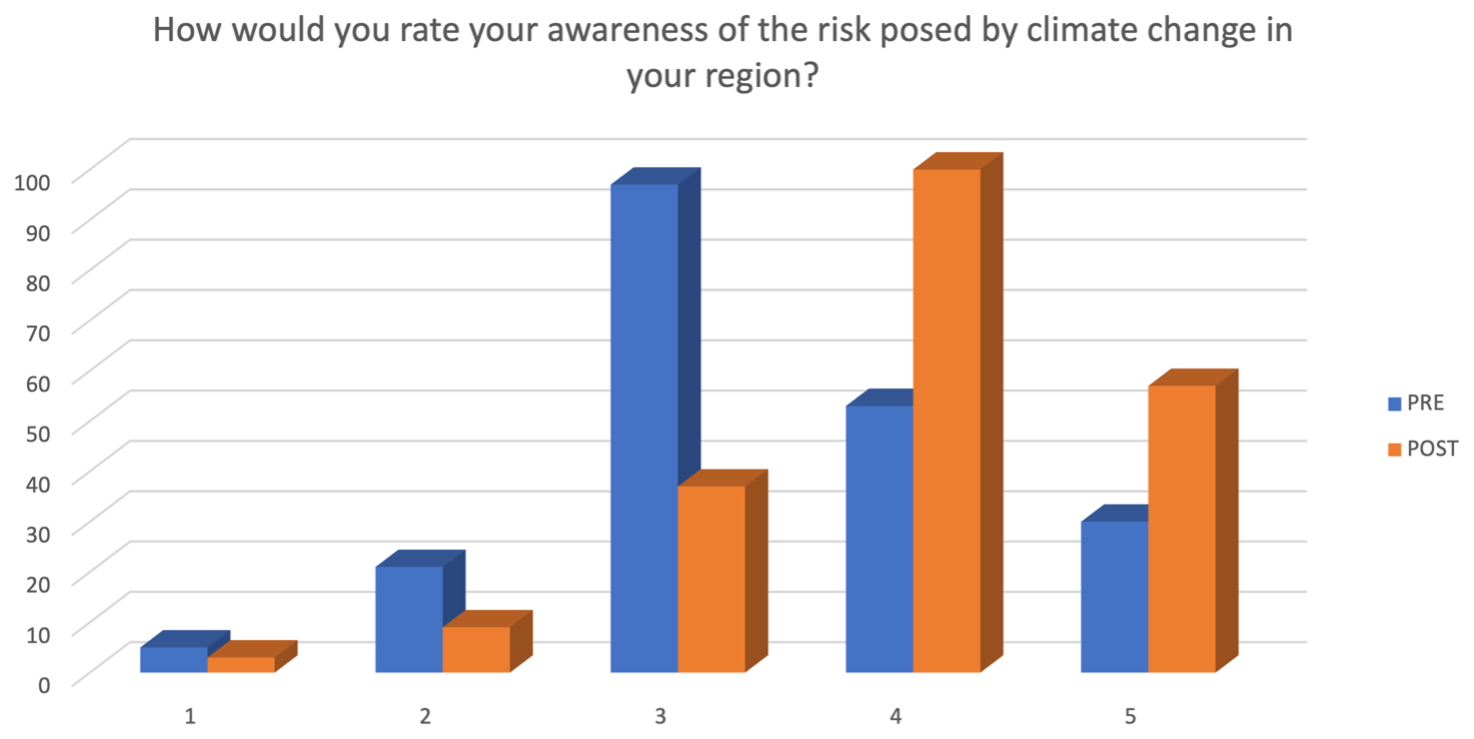
Figure 6Distribution of responses to Question B: “How would you rate your awareness of the risk posed by climate change in your region?” The data illustrate an increase in the average rating from 3.4 pre-protocol to 4.0 post-protocol, as measured on a 5-point Likert scale.
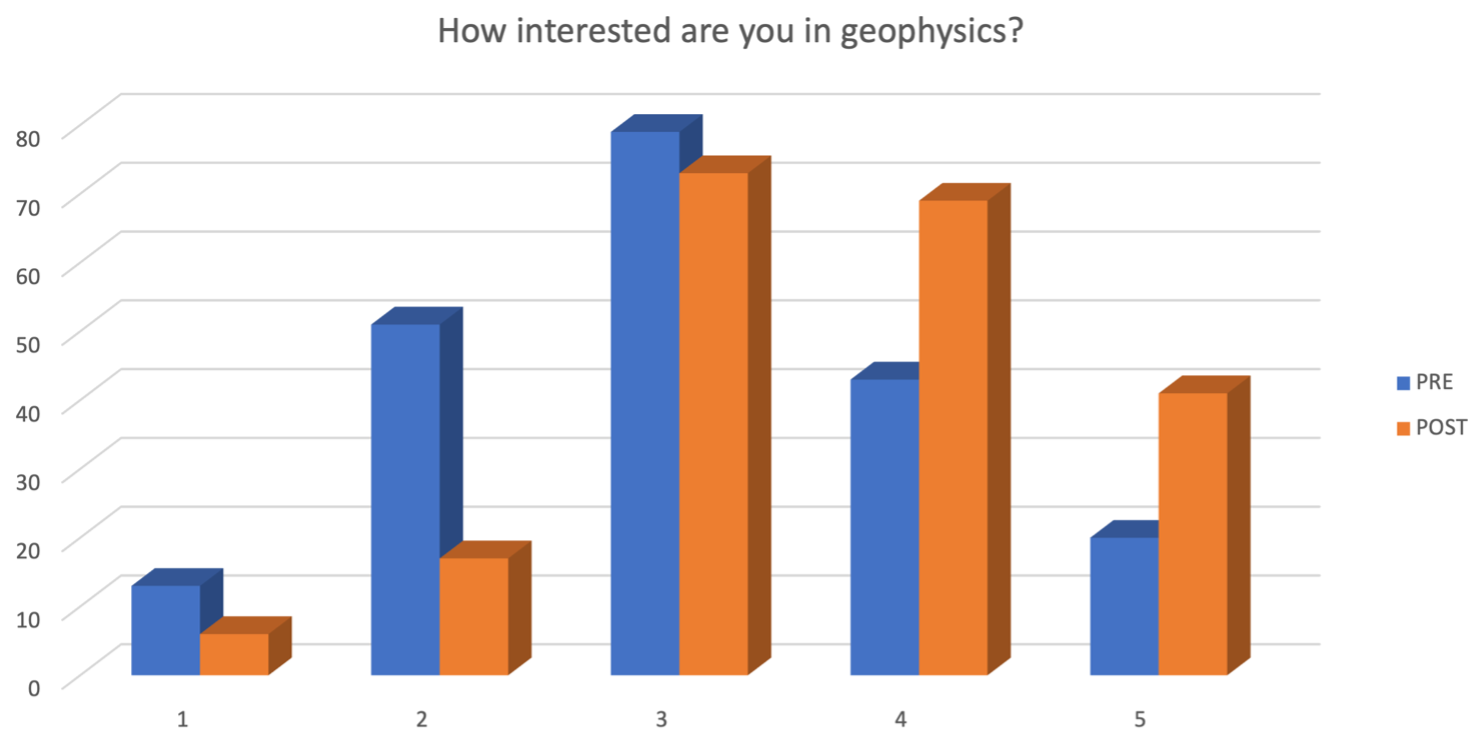
Figure 7Distribution of responses to Question C: “How interested are you in geophysics?” The histogram reflects an increase in average interest from 3.0 (pre-protocol) to 3.6 (post-protocol) on a 5-point Likert scale.
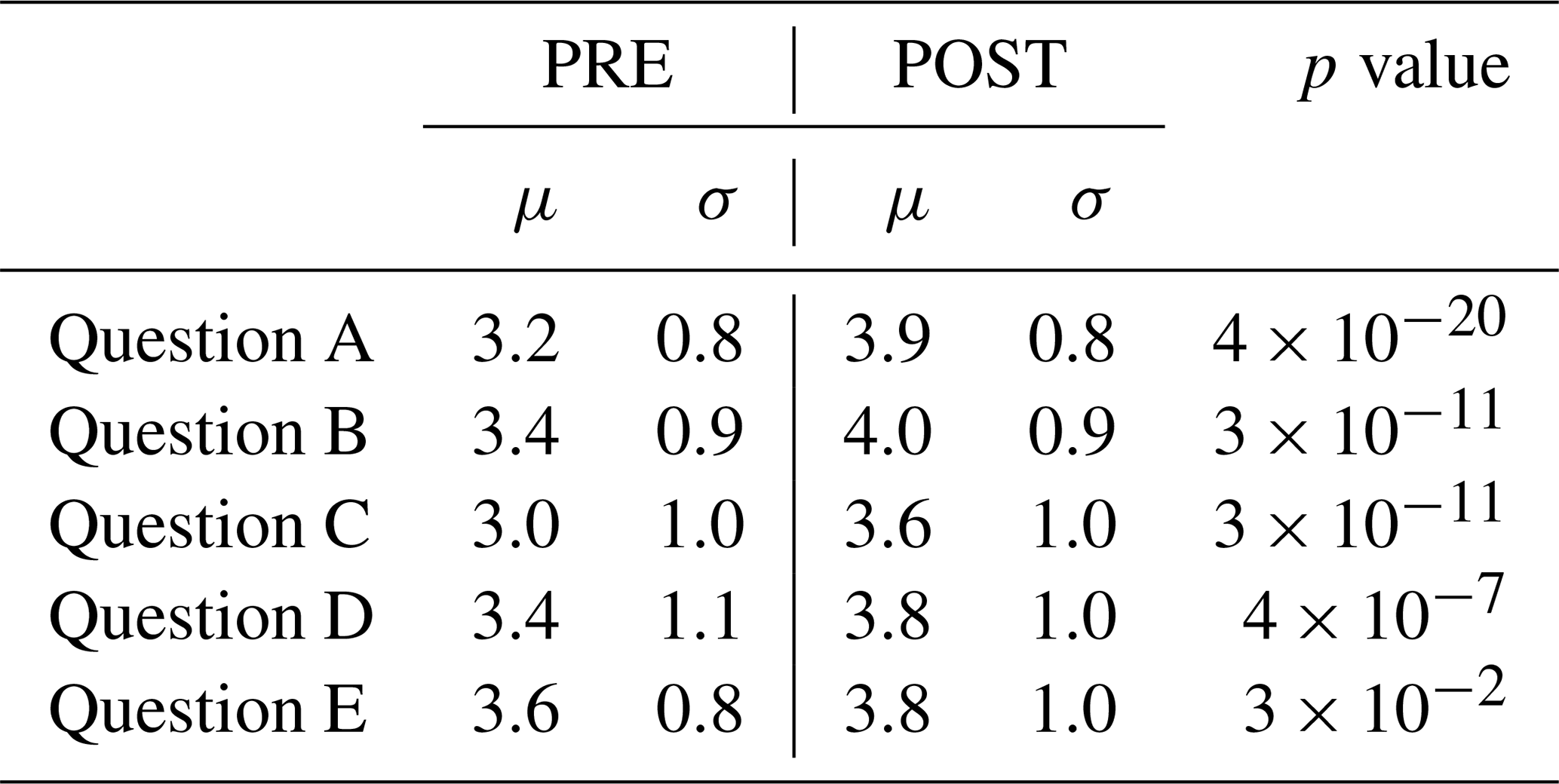
For each survey question, the results indicate a rejection of the null hypothesis with a 99 % probability (p<0.01) for Questions A to D, and a 95 % probability (p<0.05) for Question E, with 206 degrees of freedom. This confirms a statistically significant difference between the pre- and post-protocol distributions. The implications of these differences are examined for each question as follows:
-
Question A: How would you rate your knowledge on climate change?
Before the protocol, the average rating for knowledge on climate change was 3.2, indicating a moderate level of understanding. After the protocol, this rating increased to 3.9, suggesting that participants perceived the activity as both educational and effective (Fig. 5).
-
Question B: How would you rate your awareness of the risk posed by climate change in your region?
Prior to the protocol, the average rating for awareness of regional climate change risks was 3.4, slightly above neutral. Following the protocol, this rating rose to 4.0, reflecting an increased awareness. Although this finding underscores the perceived efficacy of the protocol in highlighting climate change risks, it is important to recognise that the measure reflects self-perception rather than objective knowledge (Fig. 6).
-
Question C: How interested are you in geophysics?
Initially, the average interest in geophysics was rated at 3.0, indicating a neutral level of interest. Post-protocol, this increased to 3.6, suggesting that the activity fostered greater interest in the subject, potentially due to the engaging nature of the protocol (Fig. 7).
-
Question D: How interested are you in environmental science?
Before the protocol, interest in environmental science had an average rating of 3.4, ranging from neutral to moderately high. After the protocol, this increased to 3.8, signifying an enhanced interest, thereby highlighting the positive impact of the protocol on student engagement with environmental science topics (Fig. 8).
-
Question E: How much and how do you think the virtual characteristic of the treasure hunt will affect the experience?
Regarding the influence of the virtual format on the overall experience, the pre-protocol average rating was 3.6, reflecting neutral to slightly positive expectations. Following the protocol, this rating increased to 3.8, indicating a more favourable perception. This suggests that integrating gamification elements into the virtual treasure hunt was regarded as a beneficial and appealing feature by the participants (Fig. 4).
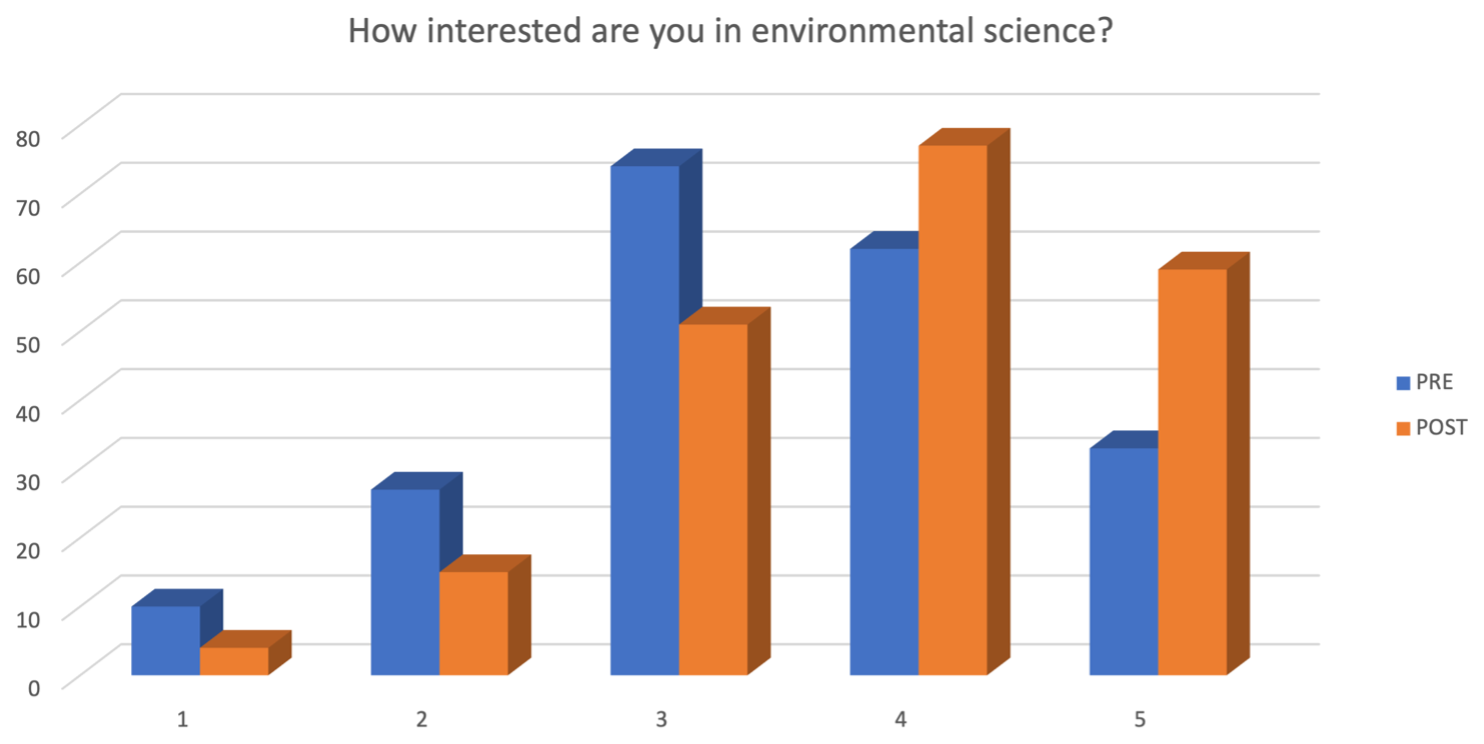
Figure 8Distribution of responses to Question D: “How interested are you in environmental science?” The figure demonstrates a shift in the average rating from 3.4 (pre-protocol) to 3.8 (post-protocol) on a 5-point Likert scale, indicating enhanced interest following the protocol.
3.1.1 Qualitative Results
To complement the quantitative analysis, the post-activity survey included both open-ended and structured questions aimed at exploring students' perceptions of the Finding Gaia experience. Of the 206 students who completed the activity, 168 (81 %) provided written responses to at least one open-ended question. These data were subjected to inductive thematic analysis to identify emerging patterns of engagement, learning, and reflection. The analysis followed a standard four-step approach:
-
Familiarisation: all responses were reviewed for initial impressions;
-
Initial coding: descriptive codes (e.g. “new knowledge”, “fun format”, “teamwork”, “relevance”) were assigned;
-
Theme development: related codes were clustered into broader categories;
-
Validation: recurrence, consistency, and outlier responses were examined.
In addition to student responses, the evaluation also incorporated facilitator insight gathered through observation and post activity reflection. This perspective was especially valuable in contextualising student behaviour, levels of engagement, and group dynamics during the activity. The combination of student feedback and facilitator experience enhanced the interpretative depth of the analysis. Despite varying in length and detail, students' reflections revealed five dominant themes:
-
Awareness and knowledge acquisition: Many students reported learning new concepts related to climate science, including adaptation, mitigation, and the anthropogenic drivers of global warming. These outcomes are consistent with the educational aims of the activity and suggest a meaningful cognitive impact.
-
Engagement and motivation: Students frequently described the activity as enjoyable, stimulating, and “different” from traditional lessons. The game's structure and pacing were credited with holding their attention and making science feel more accessible and less abstract.
-
Teamwork and collaboration: Several participants highlighted the importance of working in teams. The collaborative challenges fostered discussion and mutual problem-solving, which appeared to reinforce both social and academic dimensions of learning.
-
Perceived relevance and real-world application: A recurring theme was the connection between the content and real-life environmental issues. Students commented on the importance of pollution, energy, and climate risks, suggesting that the activity helped bridge abstract scientific concepts with concrete societal challenges.
-
Suggestions and constructive feedback
While the majority of feedback was positive, some students offered suggestions for improvement. These included clarifying specific puzzle instructions, improving pacing, and resolving minor technical glitches, insights that can inform future iterations. In parallel with the qualitative responses, students were asked to evaluate specific learning outcomes achieved through the activity. As illustrated in Fig. 9, participants reported not only acquiring new knowledge, but also reinforcing prior concepts, building teamwork skills, and gaining motivation to further explore topics in geophysics and environmental science.
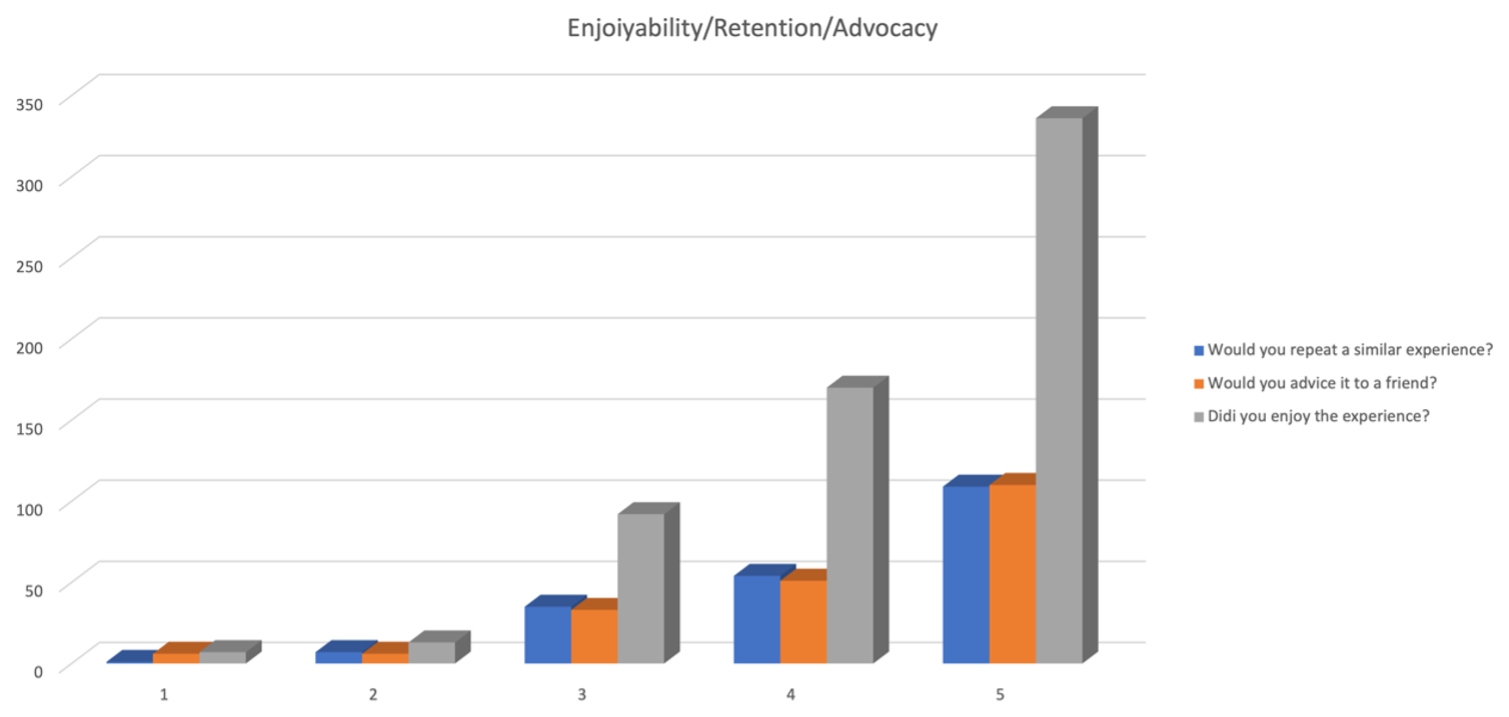
Figure 9Distribution of outcomes pertaining to likeability, retention, and advocacy. This histogram illustrates participants' post-protocol ratings on a 5-point Likert scale for three key dimensions: the overall likeability of the activity, the retention of the educational content, and the likelihood of advocating the activity to others. The figure shows that the majority of respondents provided high ratings across these dimensions, suggesting that the activity was not only enjoyable but also memorable and recommendable.
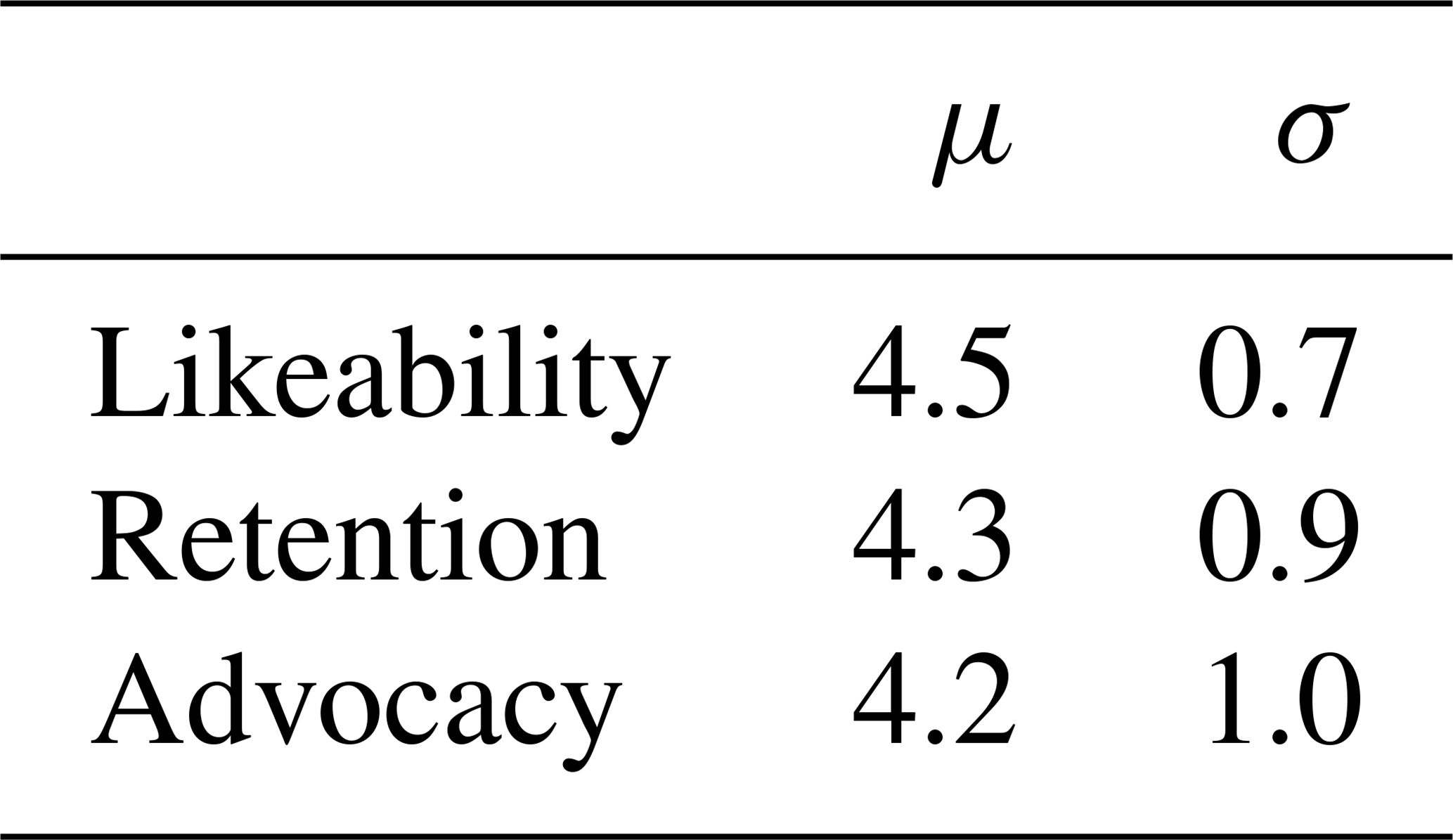
Additional marketing-style indicators, such as likeability, retention, and advocacy,were also included in the questionnaire to assess the overall appeal of the activity (see Fig. 9 and Table 3). Results indicate strong endorsement across all three metrics, suggesting that Finding Gaia was both impactful and memorable for students.
Notably, many participants expressed a newfound appreciation for the relevance of science in their everyday lives. As one student remarked, “I never realized that science is actually everywhere and affects what we do every day.” Another added, “This activity made science feel more real to me.” These reflections offer compelling evidence of a shift in students' perceptions of science as something personally relevant, socially meaningful, and central to understanding real-world problems.
Together, these qualitative insights, combined with facilitator observations, enrich the quantitative findings and offer a more comprehensive picture of the activity's effectiveness as a science communication intervention.
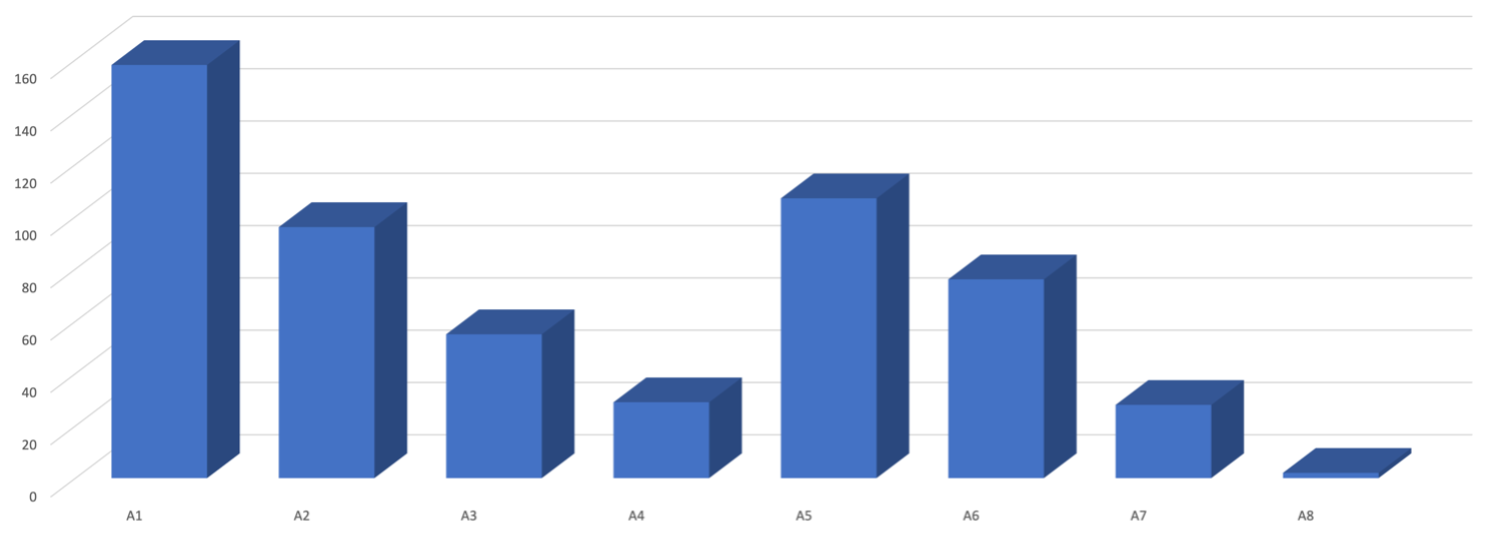
Figure 10The histogram displays the frequency distribution of responses to the multiple-choice question: “What do you think were the educational goals achieved with the treasure hunt?” The x-axis represents the eight distinct answer options: A1: Acquisition of new content knowledge and skills; A2: Developing content knowledge and skills; A3: Testing content knowledge and skills; A4: Formative assessment; A5: Improving teamwork; A6: Improving motivation for geophysics; A7: Getting to know each other; A8: Other objective(s). The y-axis indicates the number of respondents who selected each option. Each bar's height corresponds to the frequency with which participants identified that specific educational goal.
Science communication plays a crucial role in promoting a culture of awareness and informed decision-making, particularly in times marked by complex global risks and a growing disconnect between scientific knowledge and public trust (Algan et al., 2021). Engaging young people, who are both immediate participants and future decision-makers,is therefore a key objective in science communication practice. By involving them in meaningful and accessible learning experiences, we can help foster a deeper understanding of scientific issues, as well as encourage responsible participation in societal dialogue and problem-solving (Mitchell et al., 2008; OECD, 2020; Jun et al., 2021; UNESCO, 2022). Furthermore, young people often bring creative perspectives and innovative approaches to complex challenges, which can enrich both the learning environment and the broader discourse around sustainability, risk, and environmental change.
Among the diverse strategies available, gamification has emerged as a particularly interesting approach. By incorporating game mechanics such as problem-solving, feedback, time pressure, and collaboration into educational formats, gamification supports active learning and sustained engagement (Deterding et al., 2011; Hamari et al., 2014). It has already shown value in numerous domains, including education, healthcare, and climate awareness, due to its capacity to make abstract or technical content more approachable and relevant (Dicheva et al., 2015). Within this framework, we designed Finding Gaia, a digital, escape room-inspired activity aimed at students aged 15–18. The activity was developed to integrate content on climate change and environmental decision-making into a cooperative virtual game format that could be delivered during pandemic-related school closures.
Our findings suggest that this format was both effective and well received. Students described the activity as enjoyable, engaging, and different from traditional school experiences. Open-ended responses indicate that many participants felt they had learned new concepts and had developed a clearer understanding of the topics covered. These qualitative insights align with the quantitative trends reported in Figs. 8 and 9, and together suggest a positive shift in students' attitudes toward science and its societal relevance.
The collaborative format also appeared to support social learning. Working in teams encouraged interaction, discussion, and collective problem-solving, which were appreciated by participants and likely contributed to a more memorable experience. Moreover, the structure and difficulty level of the challenges were well aligned with the students' stage of cognitive development, requiring logic, inference, and communication, skills typically consolidated at the secondary level.
While the present study focused on a single-session intervention, we recognise that such activities are most impactful when embedded within a broader and sustained educational strategy. Previous research has shown that educational games are most effective when embedded in broader learning trajectories. For example, Dichev and Dicheva (2017) highlight the importance of sustained, scaffolded engagement for knowledge retention. Likewise, Wouters et al. (2013) demonstrate that serious games yield stronger cognitive and motivational outcomes when reinforced through repeated use and reflection. These findings support the notion that single-session gamified activities, while powerful as engagement tools, gain greater pedagogical value when part of a structured educational continuum. In this sense, single-session gamified activities can serve as an effective entry point, sparking curiosity, fostering emotional engagement, and introducing key themes, but their educational value increases significantly when followed by additional lessons, discussions, or projects that reinforce and expand upon the initial content.
A distinctive characteristic of this project lies in its limited reproducibility, not in terms of the activity design, which is fully transferable, but in the exceptional circumstances of its implementation.
The activity was developed and delivered during a period of emergency distance learning, using digital platforms authorised by schools, with students participating from home and facilitators operating remotely. These constraints shaped both the pedagogical format and the evaluation process, particularly the simplification of the survey instrument to avoid screen fatigue. As such, while the game structure and thematic content could be adapted for in-person or hybrid contexts, the exact conditions under which this study took place, such as isolated student participation, restricted facilitator interaction, and limited technical resources, are not likely to recur and thus limit direct comparability.
That said, the protocol is adaptable and may be amended for other educational settings, including classroom-based or extracurricular environments. For instance, puzzles could be revised to reflect local climate risks, or delivered through mobile apps or in-person breakout sessions. The facilitation model could be expanded to include teacher-led debriefings, making the activity suitable for integrated curricula.
In terms of limitations, the generalisability of our findings must be interpreted with caution. The activity was implemented in a specific set of circumstances, namely, during the COVID-19 pandemic, in a virtual-only format, and across a relatively small sample of Italian high school students aged 15–18. Additionally, the participating schools may have had varying degrees of prior engagement with science communication, which could influence receptiveness to the activity. As a result, while the observed outcomes are encouraging, they cannot be assumed to apply uniformly to other demographic groups, educational systems, or delivery contexts without further testing and adaptation. Future research across more diverse student populations and classroom settings is needed to validate the transferability of these results.
Despite these limitations, the project demonstrated that even short, single-session interventions can be valuable in promoting interest, participation, and reflection on complex scientific issues, particularly when designed with the learner's context and experience in mind.
The Finding Gaia protocol offers a compelling example of how gamification can be applied in science communication to create an engaging and pedagogically meaningful experience for secondary school students. By translating content related to climate change and risk into a digital escape-room format, the activity managed to capture students' attention, stimulate curiosity, and foster discussion in a setting that was both structured and interactive.
Although conducted under unusual and restrictive conditions due to the COVID-19 pandemic, the experience provides useful insights into how science communication tools can be adapted for distance learning environments without sacrificing educational value. Its uniqueness lies not in the game itself, but in the extraordinary context of delivery, which influenced all aspects of design, facilitation, and evaluation. This context, while limiting reproducibility, also adds analytical value, offering a snapshot of science engagement under emergency educational constraints. At the same time, the game mechanics and learning objectives remain broadly applicable and could be adapted to various classroom settings, subject areas, and delivery formats.
Looking ahead, future developments of this protocol will seek to explore how factors such as gender, socio-economic background, and family engagement may influence student outcomes. Additionally, further research should assess the long-term educational impact of gamified interventions, particularly regarding knowledge retention, shifts in perception, and the development of scientific reasoning skills. Evaluating how these experiences interact with broader curricular goals and institutional contexts will also be critical to scaling and sustaining their use in formal education. In summary, this study contributes to the growing literature on innovative formats for science communication by illustrating how short, well-designed interventions can support meaningful engagement with complex topics, even under challenging circumstances. With thoughtful adaptation, such tools may help bridge the gap between scientific knowledge and public understanding, particularly for the next generation of learners.
The research data underlying this study are not publicly deposited in an open repository. Data may be made available upon reasonable request by contacting the corresponding author at mgargiulo@unisa.it. Public deposition in an open repository is not currently available, as data sharing requests need to be assessed on a case-by-case basis.
The supplement related to this article is available online at https://doi.org/10.5194/gc-9-331-2026-supplement.
M.V.G. has developed the Treasure Hunt and the evaluation protocol and has carried on the data analysis. M.V.G., R.R., P.C. contributed in the activity and reviewed the work. P.C. is responsible for funding.
The contact author has declared that none of the authors has any competing interests.
The research conducted for the paper adheres to the highest ethical standards. The study design and data collection procedures were meticulously planned and executed to ensure the privacy, anonymity, and voluntary participation of all subjects involved. All data collected during the evaluation were anonymized to protect the identity of the participants. No identifying information was retained or associated with the responses. The collected data did not include any sensitive personal information such as age, gender, religion, or other identifiers, except when such information was aggregated and used for statistical analysis without linking to individual participants. Participation in the study was entirely voluntary. Participants were informed that they could choose not to answer any question that they felt uncomfortable with or that could potentially offend them in any way. Clear instructions and assurances were provided to participants, emphasizing that their choice to participate or not, as well as their responses, would not affect them adversely in any manner. Prior to data collection, participants were provided with detailed information about the purpose of the study, the nature of their involvement, and the measures taken to ensure their anonymity and data protection. By adhering to these ethical principles, we ensured the integrity of our research process and the protection of our participants' rights and well-being. We are committed to maintaining these high standards in all our research activities and welcome any questions or concerns regarding our ethical practices.
Publisher's note: Copernicus Publications remains neutral with regard to jurisdictional claims made in the text, published maps, institutional affiliations, or any other geographical representation in this paper. The authors bear the ultimate responsibility for providing appropriate place names. Views expressed in the text are those of the authors and do not necessarily reflect the views of the publisher.
Finding Gaia was firstly carried out in collaboration with the University of Napoli Federico II, the University of Sannio and the INGV during the 2021 Edition of the Science Fair “Futuro Remoto”. It was then repeated during the 2021/22 edition of the Piano Lauree Scientifiche – PLS (Scientific Degree Plan) at the department of Physics “E.R. Caianiello”of the University of Salerno and for the project “IDEE - Institution of a Deal for Environmental Education: Istituzione di un accordo tra scuola e università per il potenziamento, l'innovazione e la divulgazione di una cultura scientifica orientata all'ambiente” of the department of Chemistry and Biology “A. Zambelli” of the University of Salerno.
We acknowledge all the people and researchers involved in these three endeavours. A particular mention goes to Ferdinando Napolitano and Ortensia Amoroso, members of the Geophysics and Seismology Laboratory of the Department of Physics “E.R. Caianiello” of the University of Salerno.
This work has been partially supported by the project CORE – sCience and human factor for Resilient SociEty founded by the European Union's Horizon 2020 research and innovation program under grant agreement no. 101021746.
This paper was edited by Iain Stewart and reviewed by Pimnutcha Promduangsri, David Crookall, and one anonymous referee.
Albertazzi, D., Ferreira, M. G. G., and Forcellini, F. A.: A Wide View on Gamification, Technology, Knowledge and Learning, 24, 191–202, 2019.
Algan, Y., Cohen, D., Dovoine, E., Foucault, M., and Stantcheva, S.: Trust in scientists in times of pandemic: Panel evidence from 12 countries, P. Natl. Acad. Sci. USA, 118, e2108576118, https://doi.org/10.1073/pnas.2108576118, 2021.
Anuradhani, N., Yatigammana, K., and Wijayarathna, G.: Defining gamification: a systematic literature review for developing a process-oriented definition, Journal of Multidisciplinary and Translational Research (JMTR), 9, 66–85 https://doi.org/10.4038/jmtr.v9i1.6, 2024.
Besley, J. C. and Tanner, A. H.: What science communication scholars think about training scientists to communicate, Sci. Commun., 33, 239–263, 2011.
Brossard, D. and Nisbet, M. C.: Deference to scientific authority among a low information public: Understanding US opinion on agricultural biotechnology, Int. J. Public Opin. Res., 19, 24–52, 2007.
Bucchi, M.: Of deficits, deviations and dialogues: Theories of public communication of science, in: Communicating science in social contexts, Springer, Dordrecht, 17–50, https://doi.org/10.4324/9780203928240-11, 2008.
Climate Interactive: World Climate Simulation Game, https://worldclimatesimulation.org/ or https://www.climateinteractive.org/world-climate-simulation/, last access: 7 February 2025.
Cronbach, L. J.: Coefficient alpha and the internal structure of tests, Psychometrika 16, 297–334, https://doi.org/10.1007/BF02310555, 1951.
Crookall, D., Oxford, R. L., and Saunders, D.: Towards a reconceptualization of simulation: From representation to reality, Simulationj/Games for Learning, 17, 147–171, https://www.researchgate.net/publication/284024653_Towards_a_Reconceptualization_of_Simulation_From_Representation_to_Reality (last access: May 2026), 1987.
Deterding, S., Dixon, D., Khaled, R., and Nacke, L.: From game design elements to gamefulness: defining “gamification”, in: Proceedings of the 15th international academic MindTrek conference: Envisioning future media environments, 9–15, https://doi.org/10.1145/2181037.2181040, 2011.
DeWaters, J. and Powers, S. E.: Energy literacy of secondary students in New York State (USA): A measure of knowledge, affect, and behavior, Energ. Policy, 39, 1699–1710, 2011.
Dichev, C. and Dicheva, D.: Gamifying education: what is known, what is believed and what remains uncertain: a critical review, International Journal of Educational Technology in Higher Education, 14, 1–36, https://doi.org/10.1186/s41239-017-0042-5, 2017.
Dicheva, D., Dichev, C., Agre, G., and Angelova, G.: Gamification in Education: A Systematic Mapping study, Educational Technology and Society/Journal of Educational Technology and Society, 18, 75–88, 2015.
Douglas, B. D. and Brauer, M.: Gamification to prevent climate change: a review of games and apps for sustainability, Current Opinion in Psychology, 42, 89–94, https://doi.org/10.1016/j.copsyc.2021.04.008, 2021.
Dykens, I. T., Wetzel, A., Dorton, S. L., and Batchelor, E.: Towards a Unified Model of Gamification and p 12 Motivation, Adaptive Instructional Systems, Design and Evaluation, in: Sottilare, R. A. and Schwarz, J., Springer International Publishing, 53–70, https://doi.org/10.1007/978-3-030-77857-6_4, 2021.
European Commission: Science and society action plan, Luxembourg: Office for Official Publications of the European Communities, ISBN 92-894-3025-7, 2002.
European Science Communication Network (ESConet): Science Communication in Europe: Current Trends and Challenges, Brussels, ESConet, https://cordis.europa.eu/project/id/516861 (last access: May 2026), 2020.
Fernandez, G. and Shaw, R.: Youth Council Participation in Disaster Risk Reduction in Infanta and Makati, Philippines: A Policy Review, Int. J. Disaster Risk Sci., 4, 126–136, https://doi.org/10.1007/s13753-013-0014-x, 2013.
Fernández Galeote, D. and Hamari, J.: Game-based Climate Change Engagement: Analyzing the Potential of Entertainment and Serious Games, Proc. ACM Hum.-Comput. Interact., 5, CHI PLAY, Article 226, 21 pp., https://doi.org/10.1145/3474653, 2021.
Fernández Galeote, D., Rajanen, M., Rajanen, D., Legaki, N.-Z., Langley, D. J., and Hamari, J.: Gamification for climate change engagement: Review of corpus and future agenda, Environ. Res. Lett., 16, 063004, https://doi.org/10.1088/1748-9326/abec05, 2021.
Ferrara, J.: Games for Persuasion: Argumentation, Procedurality, and the Lie of Gamification, Games Cult., 8, 289–304, 2013.
Fitz-Walter, Z.: A brief history of gamification, http://zefcan.com/2013/01/a-brief-history-of-gamification (last access: 22 October 2016), 2013.
Foundation for Science and Technology: Science Communication in Europe: Practices, Research and Policy, London, The Foundation for Science and Technology, https://www.foundation.org.uk/Journal (last access: May 2026), 2019.
Gerber, A., Ulrich, M., Wäger, F. X., Roca-Puigròs, M., Gonçalves, J. S. V., and Wäger, P.: Games on Climate Change: Identifying Development Potentials through Advanced Classification and Game Characteristics Mapping, Sustainability, 13, 1997, https://doi.org/10.3390/su1304199, 2021.
Goethe, O. and Palmquist, A.: Broader Understanding of Gamification by Addressing Ethics and Diversity, in: HCI International 2020 – Late Breaking Papers: Cognition, Learning and Games, edited by: Stephanidis, C., Harris, D., Li, W.-C., Schmorrow, D. D., Fidopiastis, C. M., Zaphiris, P., Ioannou, A., Fang, X., Sottilare, R. A., and Schwarz, J., Springer International Publishing, 688–699, https://doi.org/10.1007/978-3-030-60128-7_50, 2020.
Hamari, J., Koivisto, J., and Sarsa, H.: Does gamification work? – A literature review of empirical studies on gamification, in: 2014 47th Hawaii International Conference on System Sciences, IEEE, 3025–3034, 2014.
Jensen, E. A. and Gerber, A.: Evidence-Based Science Communication, Front. Commun., 4, 78, https://doi.org/10.3389/fcomm.2019.00078, 2020.
Johnson, D., Deterding, S., Kuhn, K.-A., Staneva, A., Stoyanov, S., and Hides, L.: Gamification for health and wellbeing: A systematic review of the literature, Internet Interventions, 6, 89–106, 2016.
Jun, S. P., Yoo, H. S., and Lee, C.: Young people are not blameworthy: the generation's awareness of COVID-19 and behavioral responses, Sci. Rep., 11, https://doi.org/10.1038/s41598-021-03036-x, 2021.
Kim, S., Song, K., Lockee, B., and Burton, J.: Gamification in Learning and Education. Springer International Publishing, https://doi.org/10.1007/978-3-319-47283-6, 2018.
Kim, T. W. and Werbach, K.: More than just a game: Ethical issues in gamification, Ethics Inf. Technol., 18, 157–173, 2016.
Krath, J., Schürmann, L., and Von Korflesch, H. F. O.: Revealing the theoretical basis of gamification: A systematic review and analysis of theory in research on gamification, serious games and game-based learning, Comput. Hum. Behav., 125, 106963, https://doi.org/10.1016/j.chb.2021.106963, 2021.
Kriz, W. C., Kikkawa, T., and Sugiura, J.: Manipulation Through Gamification and Gaming, in: Gaming as a Cultural Commons: Risks, Challenges, and Opportunities, edited by: Kikkawa, T., Kriz, W. C., and Sugiura, J., Springer Nature, 185–199, https://doi.org/10.1007/978-981-19-0348-9_11, 2022.
Landers, R. N. and Callan, R. C.: Casual Social Games as Serious Games: The Psychology of Gamification in Undergraduate Education and Employee Training, in: Serious Games and Edutainment Applications, edited by: Ma, M., Oikonomou, A., and Jain, L. C., Springer London, 399–423, https://doi.org/10.1007/978-1-4471-2161-9_20, 2011.
Landers, R. N., Bauer, K. N., Callan, R. C., and Armstrong, M. B.: Psychological Theory and the Gamification of Learning, in: Gamification in Education and Business, edited by: Reiners, T. and Wood, L. C., Springer International Publishing, 165–186, https://doi.org/10.1007/978-3-319-10208-5_9, 2014.
Landers, R. N., Armstrong, M. B., and Collmus, A. B.: How to Use Game Elements to Enhance Learning: Applications of the Theory of Gamified Learning, in: Serious Games and Edutainment Applications: Volume II, edited by: Ma, M. and Oikonomou, A., Springer International Publishing, 457–483, https://doi.org/10.1007/978-3-319-51645-5_21, 2017.
Likert, R.: A technique for the measurement of attitudes, Psychol., 22, 1932.
Liu, Y.: Gamification in Climate Action: Understanding the Role of Game Technologies and Participatory Engagement, in: Advances in Environmental Engineering and Green Technologies, edited by: Hossain, I., Haque, A. K. M. M., and Ullah, S. M. A., IGI Global, 359–380, https://doi.org/10.4018/979-8-3693-7001-8.ch013, 2024.
Luo, Z.: Gamification for educational purposes: What are the factors contributing to varied effectiveness?, Education and Information Technologies, 27, 891–915, 2022.
Mendler de Suarez, J., Suarez, P., Bachofen, C., Fortugno, N., Goentzel, J., Gonçalves, P., Grist, N., Macklin, C., Pfeifer, K.,Schweizer, S., Van Aalst, M., and Virji, H.: Games for a new climate: Experiencing the complexity of future risks (Pardee Center Task Force Report), Boston, MA, The Frederick S. Pardee Center for the Study of the Longer-Range Future, Boston University, ISBN 978-1-936727-06-3, 2012.
Miao, H., Mohamad Saleh, M. S., and Zolkepli, I. A.: Gamification as a Learning Tool for Pro-Environmental Behavior: A Systematic Review, Malaysian Journal of Social Sciences and Humanities, 7, e001881, https://doi.org/10.47405/mjssh.v7i12.1881, 2022.
Mitchell, T., Haynes, K., Hall, N., Choong, W., and Oven, K.: The Roles of Children and Youth in Communicating Disaster Risk, Child. Youth Environ., 18 254–279, 2008.
Niman, N. B.: The Gamification of Higher Education, Palgrave Macmillan US, doi10.1057/9781137331465, 2014.
Nisbet, M. C. and Scheufele, D. A.: What's next for science communication? Promising directions and lingering distractions, Am. J. Bot., 96, 1767–1778, 2009.
OECD: Education at a Glance 2020: OECD Indicators, OECD Publishing, Paris, https://doi.org/10.1787/69096873-en, 2020.
Ouariachi, T., Li, C.-Y., and Elving, W. J. L.: Gamification Approaches for Education and Engagement on Pro-Environmental Behaviors: Searching for Best Practices, Sustainability, 12, 4565, https://doi.org/10.3390/su12114565, 2020.
Parker, H. R., Cornforth, R. J., Suarez, P., Allen, M. R., Boyd, E., James, R., Jones, R. G., Otto, F. E. L., and Walton, P.: Using a game to engage stakeholders in extreme event attribution science, Int. J. Disaster Risk Sci., 7, 353–365, https://doi.org/10.1007/s13753-016-0105-6, 2016.
Poushter, J., Bishop, C., and Chwe, H.: Social Media Use Continues to Rise in Developing Countries but Plateaus Across Developed Ones, Pew Research Center, 202.419.4372 pewresearch.org, 2018.
Reiners, T. and Wood, L. C. (Eds.): Gamification in Education and Business, Springer International Publishing, https://doi.org/10.1007/978-3-319-10208-5, 2015.
Sailer, M., Hense, J. U., Mayr, S. K., and Mandl, H.: How gamification motivates: An experimental study of the effects of specific game design elements on psychological need satisfaction, Computers in Human Behavior, 69, 371–380, 2017.
Scheufele, D. A. and Lewenstein, B. V.: The public and nanotechnology: How citizens make sense of emerging technologies, J. Nanopart. Res., 7, 659–667, 2005.
Stieglitz, S., Lattemann, C., Robra-Bissantz, S., Zarnekow, R., and Brockmann, T. (Eds.): Gamification, Springer International Publishing, https://doi.org/10.1007/978-3-319-45557-0, 2017.
Stilgoe, J., Lock, S. J., and Wilsdon, J.: Why should we promote public engagement with science?, Public Underst. Sci., 23, 4–15, 2014.
Student [Gosset, W. S.]: The Probable Error of a Mean, Biometrika, 6, 1–25, https://doi.org/10.1093/biomet/6.1.1, 1908.
Thibault, M. and Hamari, J.: Seven Points to Reappropriate Gamification, in: Transforming Society and Organizations through Gamification: From the Sustainable Development Goals to Inclusive Workplaces, edited by: Spanellis, A. and Harviainen, J. T., Springer International Publishing, 11–28, https://doi.org/10.1007/978-3-030-68207-1_2, 2021.
UNESCO: Youth demands for quality climate change education, UNESCO, Paris, 15 pp., document code ED-2022/WS/33, 2022.
van Roy, R. and Zaman, B.: Why Gamification Fails in Education and How to Make It Successful: Introducing Nine Gamification Heuristics Based on Self-Determination Theory, in: Serious Games and Edutainment Applications: Volume II, edited by: Ma, M. and Oikonomou, A., Springer International Publishing, 485–509, https://doi.org/10.1007/978-3-319-51645-5_22, 2017.
Veldkamp, A., Knippels, M. C. P. J., and van Joolingen, W. R.: Beyond the Early Adopters: Escape Rooms in Science Education, Front. Educ., 6, 622860, https://doi.org/10.3389/feduc.2021.622860, 2021.
Woodcock, J. and Johnson, M. R.: Gamification: What it is, and how to fight it, Sociol. Rev., 66, 542–558, 2018.
Wouters, P., van Nimwegen, C., van Oostendorp, H., and van der Spek, E. D.: A meta-analysis of the cognitive and motivational effects of serious games, J. Educ. Psychol., 105, 249–265, https://doi.org/10.1037/a0031311, 2013.
Wu, J. and Lee, J.: Climate change games as tools for education and engagement, Nat. Clim. Change, 5, 413–418, https://doi.org/10.1038/nclimate2566, 2015.