
Articles | Volume 9, issue 2
https://doi.org/10.5194/gc-9-239-2026
© Author(s) 2026. This work is distributed under
the Creative Commons Attribution 4.0 License.
the Creative Commons Attribution 4.0 License.
https://doi.org/10.5194/gc-9-239-2026
© Author(s) 2026. This work is distributed under
the Creative Commons Attribution 4.0 License.
the Creative Commons Attribution 4.0 License.
Research article
| 
03 Jun 2026
Research article |
| 03 Jun 2026
| 03 Jun 2026
Hello world! An interdisciplinary climate modelling course

Hydrology and Environmental Hydraulics, Wageningen University, Wageningen, the Netherlands
Martin Staab
SYRTE, Observatoire de Paris, Université PSL, CNRS, Sorbonne Université, LNE, Paris, France
Institute for Gravitational and Subatomic Physics (GRASP), Department of Physics, Utrecht University, Utrecht, the Netherlands
Related authors
Luis A. Ladino, Karin Ardon-Dryer, Diana L. Pereira, Ulrike Proske, Zyanya Ramirez-Diaz, Antonia Velicu, and Zamin A. Kanji
Geosci. Commun., 9, 415–436, https://doi.org/10.5194/gc-9-415-2026, https://doi.org/10.5194/gc-9-415-2026, 2026
Short summary
Short summary
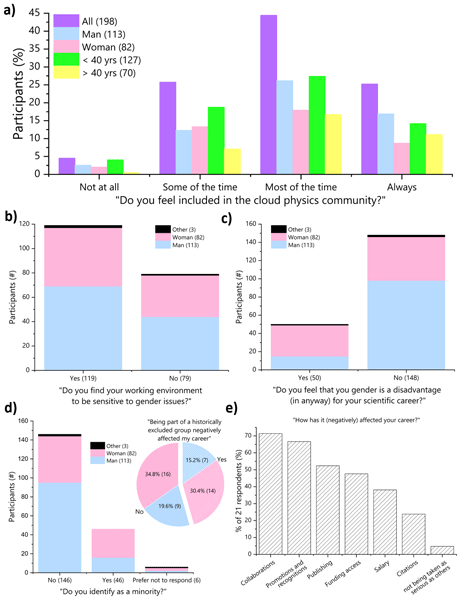
A survey and literature metadata analysis from the cloud physics community are used to investigate the state of diversity, equity and inclusion in the cloud physics community. We show the evolution of gender contributions to cloud physics and the inclusion of tropics-based scientists. The publication analysis reveals the rate of men and women dropping out of the field is not different, however, gender balance was better achieved when women led publications compared to men.
Ulrike Proske, John Hillier, Stefan Gaillard, Theresa Blume, Eduardo Queiroz Alves, Susanne Buiter, Ken S. Carslaw, Kirsten von Elverfeldt, Tim H. M. van Emmerik, Barbara Ervens, Rolf Hut, Sam Illingworth, Daniel Klotz, and Jonas Pyschik
Geosci. Commun., 9, 371–383, https://doi.org/10.5194/gc-9-371-2026, https://doi.org/10.5194/gc-9-371-2026, 2026
Short summary
Short summary
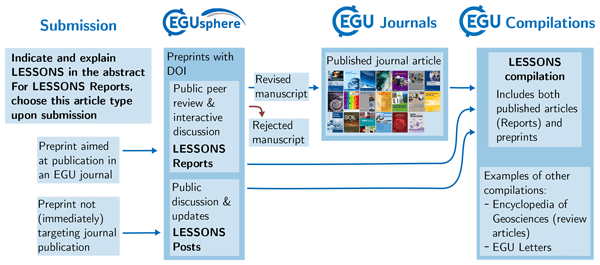
We explain a new article type that is being introduced in participating EGU publications. "LESSONS" articles describe the Limitations, Errors, Surprises, Shortcomings and Opportunities for New Science emerging from the scientific process. The publication of non-positive results and associated learnings aims to complete an unbiased record of the research effort, contributes to open and transparent science, allows the authors and others to learn, and may open opportunities for new science.
Ken S. Carslaw, Leighton A. Regayre, Ulrike Proske, Andrew Gettelman, David M. H. Sexton, Yun Qian, Lauren R. Marshall, Oliver Wild, Marcus van Lier-Walqui, Annika Oertel, Saloua Peatier, Ben Yang, Jill S. Johnson, Sihan Li, Daniel T. McCoy, Benjamin M. Sanderson, Christina J. Williamson, Gregory S. Elsaesser, Kuniko Yamazaki, and Ben B. B. Booth
Atmos. Chem. Phys., 26, 4651–4667, https://doi.org/10.5194/acp-26-4651-2026, https://doi.org/10.5194/acp-26-4651-2026, 2026
Short summary
Short summary
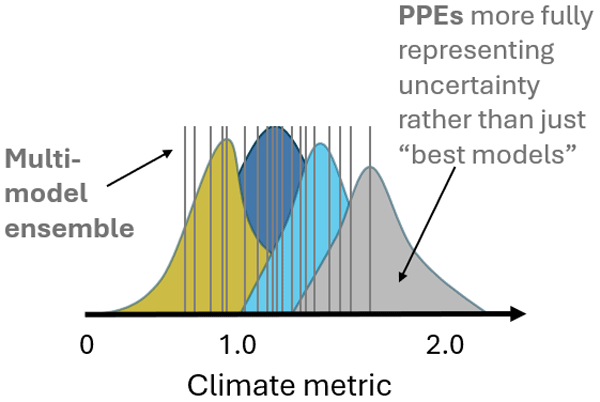
A major challenge in climate science is reducing projection uncertainty despite advances in models and observational constraints. Perturbed parameter ensembles (PPEs) offer a powerful tool to explore and reduce uncertainty by revealing model weaknesses and guiding development. PPEs are now widely applied across climate systems and scales. We argue they should be prioritized alongside complexity and resolution in model resource planning.
Hans Segura, Xabier Pedruzo-Bagazgoitia, Philipp Weiss, Sebastian K. Müller, Thomas Rackow, Junhong Lee, Edgar Dolores-Tesillos, Imme Benedict, Matthias Aengenheyster, Razvan Aguridan, Gabriele Arduini, Alexander J. Baker, Jiawei Bao, Swantje Bastin, Eulàlia Baulenas, Tobias Becker, Sebastian Beyer, Hendryk Bockelmann, Nils Brüggemann, Lukas Brunner, Suvarchal K. Cheedela, Sushant Das, Jasper Denissen, Ian Dragaud, Piotr Dziekan, Madeleine Ekblom, Jan Frederik Engels, Monika Esch, Richard Forbes, Claudia Frauen, Lilli Freischem, Diego García-Maroto, Philipp Geier, Paul Gierz, Álvaro González-Cervera, Katherine Grayson, Matthew Griffith, Oliver Gutjahr, Helmuth Haak, Ioan Hadade, Kerstin Haslehner, Shabeh ul Hasson, Jan Hegewald, Lukas Kluft, Aleksei Koldunov, Nikolay Koldunov, Tobias Kölling, Shunya Koseki, Sergey Kosukhin, Josh Kousal, Peter Kuma, Arjun U. Kumar, Rumeng Li, Nicolas Maury, Maximilian Meindl, Sebastian Milinski, Kristian Mogensen, Bimochan Niraula, Jakub Nowak, Divya Sri Praturi, Ulrike Proske, Dian Putrasahan, René Redler, David Santuy, Domokos Sármány, Reiner Schnur, Patrick Scholz, Dmitry Sidorenko, Dorian Spät, Birgit Sützl, Daisuke Takasuka, Adrian Tompkins, Alejandro Uribe, Mirco Valentini, Menno Veerman, Aiko Voigt, Sarah Warnau, Fabian Wachsmann, Marta Wacławczyk, Nils Wedi, Karl-Hermann Wieners, Jonathan Wille, Marius Winkler, Yuting Wu, Florian Ziemen, Janos Zimmermann, Frida A.-M. Bender, Dragana Bojovic, Sandrine Bony, Simona Bordoni, Patrice Brehmer, Marcus Dengler, Emanuel Dutra, Saliou Faye, Erich Fischer, Chiel van Heerwaarden, Cathy Hohenegger, Heikki Järvinen, Markus Jochum, Thomas Jung, Johann H. Jungclaus, Noel S. Keenlyside, Daniel Klocke, Heike Konow, Martina Klose, Szymon Malinowski, Olivia Martius, Thorsten Mauritsen, Juan Pedro Mellado, Theresa Mieslinger, Elsa Mohino, Hanna Pawłowska, Karsten Peters-von Gehlen, Abdoulaye Sarré, Pajam Sobhani, Philip Stier, Lauri Tuppi, Pier Luigi Vidale, Irina Sandu, and Bjorn Stevens
Geosci. Model Dev., 18, 7735–7761, https://doi.org/10.5194/gmd-18-7735-2025, https://doi.org/10.5194/gmd-18-7735-2025, 2025
Short summary
Short summary
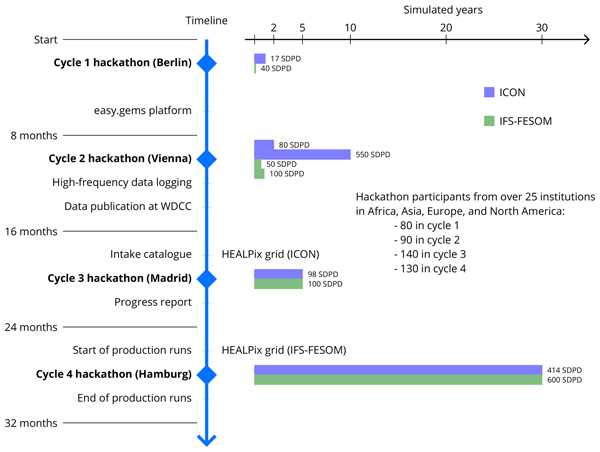
The Next Generation of Earth Modeling Systems project (nextGEMS) developed two Earth system models that use horizontal grid spacing of 10 km and finer, giving more fidelity to the representation of local phenomena, globally. In its fourth cycle, nextGEMS simulated the Earth System climate over the 2020–2049 period under the SSP3-7.0 scenario. Here, we provide an overview of nextGEMS, insights into the model development, and the realism of multi-decadal, kilometer-scale simulations.
Janneke O. E. Remmers, Rozemarijn ter Horst, Ehsan Nabavi, Ulrike Proske, Adriaan J. Teuling, Jeroen Vos, and Lieke A. Melsen
Hydrol. Earth Syst. Sci., 29, 5371–5382, https://doi.org/10.5194/hess-29-5371-2025, https://doi.org/10.5194/hess-29-5371-2025, 2025
Short summary
Short summary
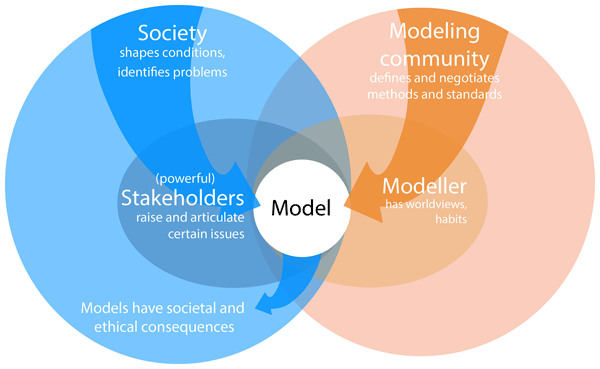
Hydrological models are generally seen as neutral, despite acknowledged uncertainties. This notion has several, possibly harmful, consequences. In critical social sciences, non-neutrality in methods and results is an established topic of debate. We propose that in order to deal with it in hydrological modelling, the hydrological modelling network can learn from, and with, critical social sciences. The main lesson, from our perspective, is that responsible modelling is a shared responsibility.
Ulrike Proske, Michael P. Adams, Grace C. E. Porter, Mark A. Holden, Jaana Bäck, and Benjamin J. Murray
Atmos. Chem. Phys., 25, 979–995, https://doi.org/10.5194/acp-25-979-2025, https://doi.org/10.5194/acp-25-979-2025, 2025
Short summary
Short summary
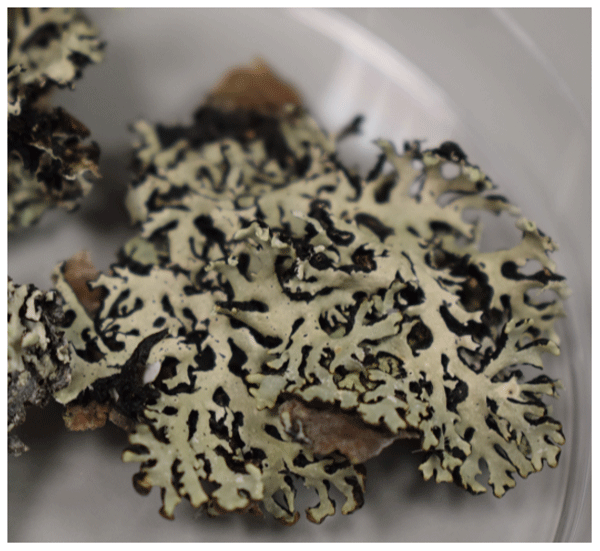
Ice-nucleating particles (INPs) aid the freezing of water droplets in clouds and thus modify cloud properties. In a campaign in a Finnish boreal forest, biological INPs were observed, despite many of their potential biological sources being snow-covered. We sampled tree-dwelling lichens that were not covered in snow and tested their ice nucleation ability in the laboratory. We found that the lichen harbours INPs, which may be important in similar snowy environments.
Ulrike Proske, Nils Brüggemann, Jan P. Gärtner, Oliver Gutjahr, Helmuth Haak, Dian Putrasahan, and Karl-Hermann Wieners
EGUsphere, https://doi.org/10.5194/egusphere-2024-3493, https://doi.org/10.5194/egusphere-2024-3493, 2024
Preprint archived
Short summary
Short summary
Climate models contain coding mistakes, which may look mundane, but can affect the results of interconnected and complex models in unforeseen ways. We describe a sea ice bug in the coupled atmosphere-ocean-sea ice model ICON, giving an example of visual and concise bug communication. This bug represents a novel species of resolution-dependent bugs. The case illustrates the value of open documentation of bugs in climate models and to encourage our community to adopt a similar approach.
Franziska Vogel, Michael P. Adams, Larissa Lacher, Polly B. Foster, Grace C. E. Porter, Barbara Bertozzi, Kristina Höhler, Julia Schneider, Tobias Schorr, Nsikanabasi S. Umo, Jens Nadolny, Zoé Brasseur, Paavo Heikkilä, Erik S. Thomson, Nicole Büttner, Martin I. Daily, Romy Fösig, Alexander D. Harrison, Jorma Keskinen, Ulrike Proske, Jonathan Duplissy, Markku Kulmala, Tuukka Petäjä, Ottmar Möhler, and Benjamin J. Murray
Atmos. Chem. Phys., 24, 11737–11757, https://doi.org/10.5194/acp-24-11737-2024, https://doi.org/10.5194/acp-24-11737-2024, 2024
Short summary
Short summary
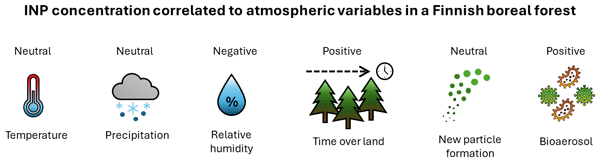
Primary ice formation in clouds strongly influences their properties; hence, it is important to understand the sources of ice-nucleating particles (INPs) and their variability. We present 2 months of INP measurements in a Finnish boreal forest using a new semi-autonomous INP counting device based on gas expansion. These results show strong variability in INP concentrations, and we present a case that the INPs we observe are, at least some of the time, of biological origin.
Ulrike Proske, Sylvaine Ferrachat, and Ulrike Lohmann
Atmos. Chem. Phys., 24, 5907–5933, https://doi.org/10.5194/acp-24-5907-2024, https://doi.org/10.5194/acp-24-5907-2024, 2024
Short summary
Short summary
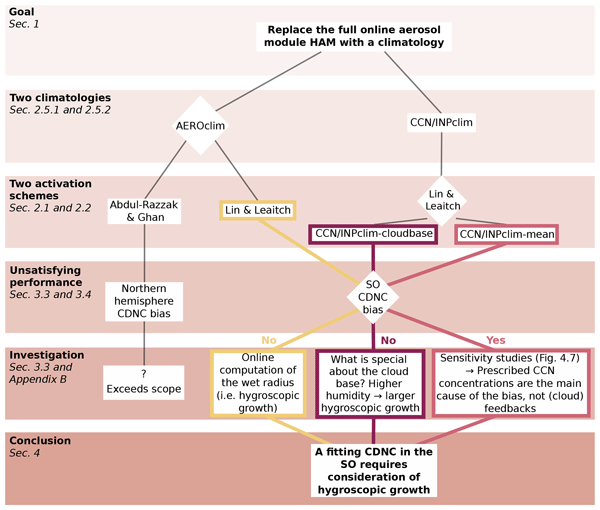
Climate models include treatment of aerosol particles because these influence clouds and radiation. Over time their representation has grown increasingly detailed. This complexity may hinder our understanding of model behaviour. Thus here we simplify the aerosol representation of our climate model by prescribing mean concentrations, which saves run time and helps to discover unexpected model behaviour. We conclude that simplifications provide a new perspective for model study and development.
Zane Dedekind, Ulrike Proske, Sylvaine Ferrachat, Ulrike Lohmann, and David Neubauer
Atmos. Chem. Phys., 24, 5389–5404, https://doi.org/10.5194/acp-24-5389-2024, https://doi.org/10.5194/acp-24-5389-2024, 2024
Short summary
Short summary
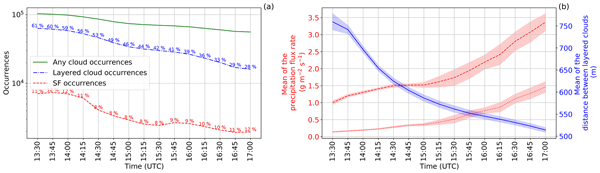
Ice particles precipitating into lower clouds from an upper cloud, the seeder–feeder process, can enhance precipitation. A numerical modeling study conducted in the Swiss Alps found that 48 % of observed clouds were overlapping, with the seeder–feeder process occurring in 10 % of these clouds. Inhibiting the seeder–feeder process reduced the surface precipitation and ice particle growth rates, which were further reduced when additional ice multiplication processes were included in the model.
Zoé Brasseur, Dimitri Castarède, Erik S. Thomson, Michael P. Adams, Saskia Drossaart van Dusseldorp, Paavo Heikkilä, Kimmo Korhonen, Janne Lampilahti, Mikhail Paramonov, Julia Schneider, Franziska Vogel, Yusheng Wu, Jonathan P. D. Abbatt, Nina S. Atanasova, Dennis H. Bamford, Barbara Bertozzi, Matthew Boyer, David Brus, Martin I. Daily, Romy Fösig, Ellen Gute, Alexander D. Harrison, Paula Hietala, Kristina Höhler, Zamin A. Kanji, Jorma Keskinen, Larissa Lacher, Markus Lampimäki, Janne Levula, Antti Manninen, Jens Nadolny, Maija Peltola, Grace C. E. Porter, Pyry Poutanen, Ulrike Proske, Tobias Schorr, Nsikanabasi Silas Umo, János Stenszky, Annele Virtanen, Dmitri Moisseev, Markku Kulmala, Benjamin J. Murray, Tuukka Petäjä, Ottmar Möhler, and Jonathan Duplissy
Atmos. Chem. Phys., 22, 5117–5145, https://doi.org/10.5194/acp-22-5117-2022, https://doi.org/10.5194/acp-22-5117-2022, 2022
Short summary
Short summary
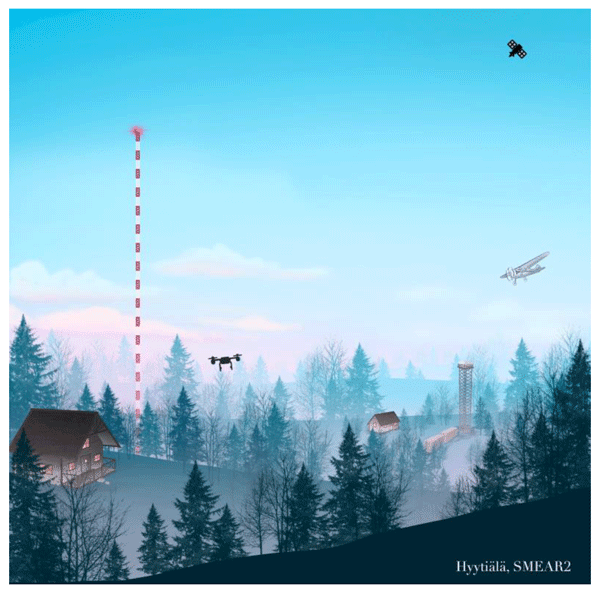
The present measurement report introduces the ice nucleation campaign organized in Hyytiälä, Finland, in 2018 (HyICE-2018). We provide an overview of the campaign settings, and we describe the measurement infrastructure and operating procedures used. In addition, we use results from ice nucleation instrument inter-comparison to show that the suite of these instruments deployed during the campaign reports consistent results.

Ulrike Proske, Sylvaine Ferrachat, David Neubauer, Martin Staab, and Ulrike Lohmann
Atmos. Chem. Phys., 22, 4737–4762, https://doi.org/10.5194/acp-22-4737-2022, https://doi.org/10.5194/acp-22-4737-2022, 2022
Short summary
Short summary
Cloud microphysical processes shape cloud properties and are therefore important to represent in climate models. Their parameterization has grown more complex, making the model results more difficult to interpret. Using sensitivity analysis we test how the global aerosol–climate model ECHAM-HAM reacts to changes to these parameterizations. The model is sensitive to the parameterization of ice crystal autoconversion but not to, e.g., self-collection, suggesting that it may be simplified.
Luis A. Ladino, Karin Ardon-Dryer, Diana L. Pereira, Ulrike Proske, Zyanya Ramirez-Diaz, Antonia Velicu, and Zamin A. Kanji
Geosci. Commun., 9, 415–436, https://doi.org/10.5194/gc-9-415-2026, https://doi.org/10.5194/gc-9-415-2026, 2026
Short summary
Short summary
A survey and literature metadata analysis from the cloud physics community are used to investigate the state of diversity, equity and inclusion in the cloud physics community. We show the evolution of gender contributions to cloud physics and the inclusion of tropics-based scientists. The publication analysis reveals the rate of men and women dropping out of the field is not different, however, gender balance was better achieved when women led publications compared to men.
Ulrike Proske, John Hillier, Stefan Gaillard, Theresa Blume, Eduardo Queiroz Alves, Susanne Buiter, Ken S. Carslaw, Kirsten von Elverfeldt, Tim H. M. van Emmerik, Barbara Ervens, Rolf Hut, Sam Illingworth, Daniel Klotz, and Jonas Pyschik
Geosci. Commun., 9, 371–383, https://doi.org/10.5194/gc-9-371-2026, https://doi.org/10.5194/gc-9-371-2026, 2026
Short summary
Short summary
We explain a new article type that is being introduced in participating EGU publications. "LESSONS" articles describe the Limitations, Errors, Surprises, Shortcomings and Opportunities for New Science emerging from the scientific process. The publication of non-positive results and associated learnings aims to complete an unbiased record of the research effort, contributes to open and transparent science, allows the authors and others to learn, and may open opportunities for new science.
Ken S. Carslaw, Leighton A. Regayre, Ulrike Proske, Andrew Gettelman, David M. H. Sexton, Yun Qian, Lauren R. Marshall, Oliver Wild, Marcus van Lier-Walqui, Annika Oertel, Saloua Peatier, Ben Yang, Jill S. Johnson, Sihan Li, Daniel T. McCoy, Benjamin M. Sanderson, Christina J. Williamson, Gregory S. Elsaesser, Kuniko Yamazaki, and Ben B. B. Booth
Atmos. Chem. Phys., 26, 4651–4667, https://doi.org/10.5194/acp-26-4651-2026, https://doi.org/10.5194/acp-26-4651-2026, 2026
Short summary
Short summary
A major challenge in climate science is reducing projection uncertainty despite advances in models and observational constraints. Perturbed parameter ensembles (PPEs) offer a powerful tool to explore and reduce uncertainty by revealing model weaknesses and guiding development. PPEs are now widely applied across climate systems and scales. We argue they should be prioritized alongside complexity and resolution in model resource planning.
Hans Segura, Xabier Pedruzo-Bagazgoitia, Philipp Weiss, Sebastian K. Müller, Thomas Rackow, Junhong Lee, Edgar Dolores-Tesillos, Imme Benedict, Matthias Aengenheyster, Razvan Aguridan, Gabriele Arduini, Alexander J. Baker, Jiawei Bao, Swantje Bastin, Eulàlia Baulenas, Tobias Becker, Sebastian Beyer, Hendryk Bockelmann, Nils Brüggemann, Lukas Brunner, Suvarchal K. Cheedela, Sushant Das, Jasper Denissen, Ian Dragaud, Piotr Dziekan, Madeleine Ekblom, Jan Frederik Engels, Monika Esch, Richard Forbes, Claudia Frauen, Lilli Freischem, Diego García-Maroto, Philipp Geier, Paul Gierz, Álvaro González-Cervera, Katherine Grayson, Matthew Griffith, Oliver Gutjahr, Helmuth Haak, Ioan Hadade, Kerstin Haslehner, Shabeh ul Hasson, Jan Hegewald, Lukas Kluft, Aleksei Koldunov, Nikolay Koldunov, Tobias Kölling, Shunya Koseki, Sergey Kosukhin, Josh Kousal, Peter Kuma, Arjun U. Kumar, Rumeng Li, Nicolas Maury, Maximilian Meindl, Sebastian Milinski, Kristian Mogensen, Bimochan Niraula, Jakub Nowak, Divya Sri Praturi, Ulrike Proske, Dian Putrasahan, René Redler, David Santuy, Domokos Sármány, Reiner Schnur, Patrick Scholz, Dmitry Sidorenko, Dorian Spät, Birgit Sützl, Daisuke Takasuka, Adrian Tompkins, Alejandro Uribe, Mirco Valentini, Menno Veerman, Aiko Voigt, Sarah Warnau, Fabian Wachsmann, Marta Wacławczyk, Nils Wedi, Karl-Hermann Wieners, Jonathan Wille, Marius Winkler, Yuting Wu, Florian Ziemen, Janos Zimmermann, Frida A.-M. Bender, Dragana Bojovic, Sandrine Bony, Simona Bordoni, Patrice Brehmer, Marcus Dengler, Emanuel Dutra, Saliou Faye, Erich Fischer, Chiel van Heerwaarden, Cathy Hohenegger, Heikki Järvinen, Markus Jochum, Thomas Jung, Johann H. Jungclaus, Noel S. Keenlyside, Daniel Klocke, Heike Konow, Martina Klose, Szymon Malinowski, Olivia Martius, Thorsten Mauritsen, Juan Pedro Mellado, Theresa Mieslinger, Elsa Mohino, Hanna Pawłowska, Karsten Peters-von Gehlen, Abdoulaye Sarré, Pajam Sobhani, Philip Stier, Lauri Tuppi, Pier Luigi Vidale, Irina Sandu, and Bjorn Stevens
Geosci. Model Dev., 18, 7735–7761, https://doi.org/10.5194/gmd-18-7735-2025, https://doi.org/10.5194/gmd-18-7735-2025, 2025
Short summary
Short summary
The Next Generation of Earth Modeling Systems project (nextGEMS) developed two Earth system models that use horizontal grid spacing of 10 km and finer, giving more fidelity to the representation of local phenomena, globally. In its fourth cycle, nextGEMS simulated the Earth System climate over the 2020–2049 period under the SSP3-7.0 scenario. Here, we provide an overview of nextGEMS, insights into the model development, and the realism of multi-decadal, kilometer-scale simulations.
Janneke O. E. Remmers, Rozemarijn ter Horst, Ehsan Nabavi, Ulrike Proske, Adriaan J. Teuling, Jeroen Vos, and Lieke A. Melsen
Hydrol. Earth Syst. Sci., 29, 5371–5382, https://doi.org/10.5194/hess-29-5371-2025, https://doi.org/10.5194/hess-29-5371-2025, 2025
Short summary
Short summary
Hydrological models are generally seen as neutral, despite acknowledged uncertainties. This notion has several, possibly harmful, consequences. In critical social sciences, non-neutrality in methods and results is an established topic of debate. We propose that in order to deal with it in hydrological modelling, the hydrological modelling network can learn from, and with, critical social sciences. The main lesson, from our perspective, is that responsible modelling is a shared responsibility.
Ulrike Proske, Michael P. Adams, Grace C. E. Porter, Mark A. Holden, Jaana Bäck, and Benjamin J. Murray
Atmos. Chem. Phys., 25, 979–995, https://doi.org/10.5194/acp-25-979-2025, https://doi.org/10.5194/acp-25-979-2025, 2025
Short summary
Short summary
Ice-nucleating particles (INPs) aid the freezing of water droplets in clouds and thus modify cloud properties. In a campaign in a Finnish boreal forest, biological INPs were observed, despite many of their potential biological sources being snow-covered. We sampled tree-dwelling lichens that were not covered in snow and tested their ice nucleation ability in the laboratory. We found that the lichen harbours INPs, which may be important in similar snowy environments.
Ulrike Proske, Nils Brüggemann, Jan P. Gärtner, Oliver Gutjahr, Helmuth Haak, Dian Putrasahan, and Karl-Hermann Wieners
EGUsphere, https://doi.org/10.5194/egusphere-2024-3493, https://doi.org/10.5194/egusphere-2024-3493, 2024
Preprint archived
Short summary
Short summary
Climate models contain coding mistakes, which may look mundane, but can affect the results of interconnected and complex models in unforeseen ways. We describe a sea ice bug in the coupled atmosphere-ocean-sea ice model ICON, giving an example of visual and concise bug communication. This bug represents a novel species of resolution-dependent bugs. The case illustrates the value of open documentation of bugs in climate models and to encourage our community to adopt a similar approach.
Franziska Vogel, Michael P. Adams, Larissa Lacher, Polly B. Foster, Grace C. E. Porter, Barbara Bertozzi, Kristina Höhler, Julia Schneider, Tobias Schorr, Nsikanabasi S. Umo, Jens Nadolny, Zoé Brasseur, Paavo Heikkilä, Erik S. Thomson, Nicole Büttner, Martin I. Daily, Romy Fösig, Alexander D. Harrison, Jorma Keskinen, Ulrike Proske, Jonathan Duplissy, Markku Kulmala, Tuukka Petäjä, Ottmar Möhler, and Benjamin J. Murray
Atmos. Chem. Phys., 24, 11737–11757, https://doi.org/10.5194/acp-24-11737-2024, https://doi.org/10.5194/acp-24-11737-2024, 2024
Short summary
Short summary
Primary ice formation in clouds strongly influences their properties; hence, it is important to understand the sources of ice-nucleating particles (INPs) and their variability. We present 2 months of INP measurements in a Finnish boreal forest using a new semi-autonomous INP counting device based on gas expansion. These results show strong variability in INP concentrations, and we present a case that the INPs we observe are, at least some of the time, of biological origin.
Ulrike Proske, Sylvaine Ferrachat, and Ulrike Lohmann
Atmos. Chem. Phys., 24, 5907–5933, https://doi.org/10.5194/acp-24-5907-2024, https://doi.org/10.5194/acp-24-5907-2024, 2024
Short summary
Short summary
Climate models include treatment of aerosol particles because these influence clouds and radiation. Over time their representation has grown increasingly detailed. This complexity may hinder our understanding of model behaviour. Thus here we simplify the aerosol representation of our climate model by prescribing mean concentrations, which saves run time and helps to discover unexpected model behaviour. We conclude that simplifications provide a new perspective for model study and development.
Zane Dedekind, Ulrike Proske, Sylvaine Ferrachat, Ulrike Lohmann, and David Neubauer
Atmos. Chem. Phys., 24, 5389–5404, https://doi.org/10.5194/acp-24-5389-2024, https://doi.org/10.5194/acp-24-5389-2024, 2024
Short summary
Short summary
Ice particles precipitating into lower clouds from an upper cloud, the seeder–feeder process, can enhance precipitation. A numerical modeling study conducted in the Swiss Alps found that 48 % of observed clouds were overlapping, with the seeder–feeder process occurring in 10 % of these clouds. Inhibiting the seeder–feeder process reduced the surface precipitation and ice particle growth rates, which were further reduced when additional ice multiplication processes were included in the model.
Zoé Brasseur, Dimitri Castarède, Erik S. Thomson, Michael P. Adams, Saskia Drossaart van Dusseldorp, Paavo Heikkilä, Kimmo Korhonen, Janne Lampilahti, Mikhail Paramonov, Julia Schneider, Franziska Vogel, Yusheng Wu, Jonathan P. D. Abbatt, Nina S. Atanasova, Dennis H. Bamford, Barbara Bertozzi, Matthew Boyer, David Brus, Martin I. Daily, Romy Fösig, Ellen Gute, Alexander D. Harrison, Paula Hietala, Kristina Höhler, Zamin A. Kanji, Jorma Keskinen, Larissa Lacher, Markus Lampimäki, Janne Levula, Antti Manninen, Jens Nadolny, Maija Peltola, Grace C. E. Porter, Pyry Poutanen, Ulrike Proske, Tobias Schorr, Nsikanabasi Silas Umo, János Stenszky, Annele Virtanen, Dmitri Moisseev, Markku Kulmala, Benjamin J. Murray, Tuukka Petäjä, Ottmar Möhler, and Jonathan Duplissy
Atmos. Chem. Phys., 22, 5117–5145, https://doi.org/10.5194/acp-22-5117-2022, https://doi.org/10.5194/acp-22-5117-2022, 2022
Short summary
Short summary
The present measurement report introduces the ice nucleation campaign organized in Hyytiälä, Finland, in 2018 (HyICE-2018). We provide an overview of the campaign settings, and we describe the measurement infrastructure and operating procedures used. In addition, we use results from ice nucleation instrument inter-comparison to show that the suite of these instruments deployed during the campaign reports consistent results.
Ulrike Proske, Sylvaine Ferrachat, David Neubauer, Martin Staab, and Ulrike Lohmann
Atmos. Chem. Phys., 22, 4737–4762, https://doi.org/10.5194/acp-22-4737-2022, https://doi.org/10.5194/acp-22-4737-2022, 2022
Short summary
Short summary
Cloud microphysical processes shape cloud properties and are therefore important to represent in climate models. Their parameterization has grown more complex, making the model results more difficult to interpret. Using sensitivity analysis we test how the global aerosol–climate model ECHAM-HAM reacts to changes to these parameterizations. The model is sensitive to the parameterization of ice crystal autoconversion but not to, e.g., self-collection, suggesting that it may be simplified.
Cited articles
Addor, N. and Melsen, L. A.: Legacy, Rather Than Adequacy, Drives the Selection of Hydrological Models, Water Resources Research, 55, 378–390, https://doi.org/10.1029/2018WR022958, 2019. a
Alves, D. S.: Two Cultures, Multiple Theoretical Perspectives: The Problem of Integration of Natural and Social Sciences in Earth System Research, International Perspectives on Global Environmental Change, edited by: Young, S., InTech, ISBN 978-953-307-815-1, 2012. a
Aroskay, A., Hirtzig, M., Klein, S., Vial, J., and Vogt, N.: The climate in our hands – Climate Models, a teacher’s handbook for high schools, edited by: Vogt, N., Office for Climate Education (OCE), Paris, 2024. a
Assaraf, O. B.-Z. and Orion, N.: A Design Based Research of an Earth Systems Based Environmental Curriculum, Eurasia J. Math. Sci. T., 5, 47–62, 2009. a
Babel, L.: Decision-Making in Model Construction: Unveiling Habits, Environ. Modell. Softw., 120, 14, https://doi.org/10.1016/j.envsoft.2019.07.015, 2019. a
Bhattacharya, D., Carroll Steward, K., and Forbes, C. T.: Climate Education in Secondary Science: Comparison of Model-Based and Non-Model-Based Investigations of Earth's Climate, Int. J. Sci. Educ., 43, 2226–2249, https://doi.org/10.1080/09500693.2021.1958022, 2021. a
Bice, D. M.: Using Stella Models To Explore The Dynamics Of Earth Systems: Experimenting With Earth's Climate System Using A Simple Computer Model, Journal of Geoscience Education, 49, 170–181, https://doi.org/10.5408/1089-9995-49.2.170, 2001. a
Cohen, L., Manion, L., and Morrison, K.: Coding and Content Analysis, Chapter 30 in: Research Methods in Education, Routledge, 7th edn., ISBN 978-0-415-58336-7, 2011a. a
Corona Bustamante, J.: Globe Terrestre En Relief [Document Cartographique], Bibliothèque nationale de France, département Cartes et plans, GE A-283, https://catalogue.bnf.fr/ark:/12148/cb40673676k (last access: 27 May 2026), 1860. a
Curtain, C. and Dröge, K.: QualCoder 3.6, GitHub, https://github.com/ccbogel/QualCoder/releases/tag/3.6 (last access: 27 May 2026), 2025. a
Democratic Schools for All: Dealing with Propaganda, Misinformation and Fake News, Council of Europe, https://www.coe.int/en/web/campaign-free-to-speak-safe-to-learn/dealing-with-propaganda-misinformation-and-fake-news (last access: 27 May 2026), 2026. a
Easterbrook, S. M.: Computing the Climate: How We Know What We Know About Climate Change, Cambridge University Press, Cambridge, https://doi.org/10.1017/9781316459768, 2023. a
Edwards, P. N.: Representing the Global Atmosphere, in: Changing the Atmosphere, edited by: Miller, C. A. and Edwards, P. N., The MIT Press, https://doi.org/10.7551/mitpress/1789.003.0005, 2001. a
Feng, X., Sundman, J., Aarnio, H., Taka, M., Keskinen, M., and Varis, O.: Towards transformative learning: students’ disorienting dilemmas and coping strategies in interdisciplinary problem-based learning, European Journal of Engineering Education, 50, 428–450, https://doi.org/10.1080/03043797.2024.2424197, 2025. a
Franke, L., Hajok, D., and Rau, J.: Desinformation und Rechtsextremismus, Bundeszentrale für politische Bildung, https://www.bpb.de/themen/medien-journalismus/desinformation/ (last access: 27 May 2026), 2024. a
Gutiérrez, J. M., Jones, R. G., Narisma, G. T., Alves, L. M., Amjad, M., Gorodetskaya, I. V., Grose, M., Klutse, N. A. B., Krakovska, S., Li, J., Martínez-Castro, D., Mearns, L. O., Mernild, S. H., Ngo-Duc, T., van den Hurk, B., and Yoon, J.-H.: Atlas, in: Climate Change 2021: The Physical Science Basis. Contribution of Working Group I to the Sixth Assessment Report of the Intergovernmental Panel on Climate Change, Cambridge University Press, Cambridge, United Kingdom and New York, NY, USA, https://doi.org/10.1017/9781009157896.021, 2021. a, b
Hausermann, H. and Adomako, J.: Positionality, “the Field”, and Implications for Knowledge Production and Research Ethics in Land Change Science, Journal of Land Use Science, 17, 211–225, https://doi.org/10.1080/1747423X.2021.2015000, 2022. a
Heymann, M.: Constructing Evidence and Trust: How Did Climate Scientists' Confidence in Their Models and Simulations Emerge?, in: The Social Life of Climate Change Models, edited by: Skrydstrup, M. and Hastrup, K., Taylor & Francis, 213–234, ISBN 0-415-62858-X, 2013. a
Heymann, M.: The Climate Change Dilemma: Big Science, the Globalizing of Climate and the Loss of the Human Scale, Reg. Environ. Change, 19, 1549–1560, https://doi.org/10.1007/s10113-018-1373-z, 2019. a
Heymann, M.: Knowledge Production with Climate Models: On the Power of a “Weak” Type of Knowledge, in: Weak Knowledge: Forms, Functions, and Dynamics, edited by: Epple, M., Imhausen, A., and Müller, F., Campus Verlag, Frankfurt, 321–349, ISBN 978-3-593-50977-8, 2020. a
Heymann, M., Gramelsberger, G., and Mahony, M. (Eds).: Cultures of Prediction in Atmospheric and Climate Science: Epistemic and Cultural Shifts in Computer-Based Modelling and Simulation, Routledge Environmental Humanities Series, Routledge, Taylor & Francis Group, London New York, NY, ISBN 978-1-138-22298-4, 2017a. a
Hoadley, C. and Campos, F. C.: Design-Based Research: What It Is and Why It Matters to Studying Online Learning, Educ. Psychol., 57, 207–220, https://doi.org/10.1080/00461520.2022.2079128, 2022. a, b
Hulme, M.: Geographical Work at the Boundaries of Climate Change: Boundary Crossings, T. I. Brit. Geogr., 33, 5–11, https://doi.org/10.1111/j.1475-5661.2007.00289.x, 2008. a
ISB-Arbeitskreis Link-Ebene: SpG 9.2 Kommunikation Und Manipulation, Staatsinstitut für Schulqualität und Bildungsforschung München, 2004. a
Iturbide, M., Fernández, J., Gutiérrez, J. M., Pirani, A., Huard, D., Al Khourdajie, A., Baño-Medina, J., Bedia, J., Casanueva, A., Cimadevilla, E., Cofiño, A. S., De Felice, M., Diez-Sierra, J., García-Díez, M., Goldie, J., Herrera, D. A., Herrera, S., Manzanas, R., Milovac, J., Radhakrishnan, A., San-Martín, D., Spinuso, A., Thyng, K. M., Trenham, C., and Yelekçi, Ö.: Implementation of FAIR Principles in the IPCC: The WGI AR6 Atlas Repository, Scientific Data, 9, 629, https://doi.org/10.1038/s41597-022-01739-y, 2022. a
Jakeman, A. J., Elsawah, S., Wang, H.-H., Hamilton, S. H., Melsen, L., and Grimm, V.: Towards Normalizing Good Practice across the Whole Modeling Cycle: Its Instrumentation and Future Research Topics, Socio-Environmental Systems Modelling, 6, 18755–18755, https://doi.org/10.18174/sesmo.18755, 2024. a
Jasanoff, S.: Is Science Socially Constructed – And Can It Still Inform Public Policy?, Sci. Eng. Ethics, 2, 263–276, https://doi.org/10.1007/BF02583913, 1996. a, b
Jasanoff, S. (Ed.): Handbook of Science and Technology Studies, rev. edn., 2nd print edn., Sage, Thousand Oaks, Calif., ISBN 978-0-7619-2498-2, 2007. a
Jeevanjee, N., Hassanzadeh, P., Hill, S., and Sheshadri, A.: A Perspective on Climate Model Hierarchies, J. Adv. Model. Earth Sy., 9, 1760–1771, https://doi.org/10.1002/2017MS001038, 2017. a
JGW e.V.: NachhaltigkeitsAkademie, https://jgw-ev.de/nachhaltigkeitsakademie/ (last access: 27 May 2026), 2025. a
Knutti, R.: Hotter or Not? Should We Believe Model Predictions of Future Climate Change?, Significance, 5, 159–162, https://doi.org/10.1111/j.1740-9713.2008.00320.x, 2008a. a
Knutti, R.: Should We Believe Model Predictions of Future Climate Change?, Philos. T. R. Soc. A,, 366, 4647–4664, https://doi.org/10.1098/rsta.2008.0169, 2008b. a
Knutti, R., Masson, D., and Gettelman, A.: Climate Model Genealogy: Generation CMIP5 and How We Got There, Geophys. Res. Lett., 40, 1194–1199, https://doi.org/10.1002/grl.50256, 2013. a
Kuma, P., Bender, F. A.-M., and Jönsson, A. R.: Climate Model Code Genealogy and Its Relation to Climate Feedbacks and Sensitivity, J. Adv. Model. Earth Sy., 15, e2022MS003588, https://doi.org/10.1029/2022MS003588, 2023. a, b
Mahony, M. and Hulme, M.: Modelling and the Nation: Institutionalising Climate Prediction in the UK, 1988–92, Minerva, 54, 445–470, https://doi.org/10.1007/s11024-016-9302-0, 2016. a
Mahony, M. and Hulme, M.: Epistemic Geographies of Climate Change: Science, Space and Politics, Prog. Hum. Geog., 42, 395–424, https://doi.org/10.1177/0309132516681485, 2018. a
McGuffie, K. and Henderson-Sellers, A.: A Climate Modelling Primer: McGuffie/A Climate Modelling Primer, John Wiley & Sons, Ltd, Chichester, UK, https://doi.org/10.1002/0470857617, 2005. a
Melsen, L. A.: It Takes a Village to Run a Model – The Social Practices of Hydrological Modeling, Water Resources Research, 58, https://doi.org/10.1029/2021WR030600, 2022. a
Moon, K. and Blackman, D.: A Guide to Understanding Social Science Research for Natural Scientists, Conserv. Biol., 28, 1167–1177, https://doi.org/10.1111/cobi.12326, 2014. a, b
Nichols, A. L. and Maner, J. K.: The Good-Subject Effect: Investigating Participant Demand Characteristics, J. Gen. Psychol., 135, 151–166, https://doi.org/10.3200/GENP.135.2.151-166, 2008. a, b
Oldfield, M.: Towards Pedagogy Supporting Ethics in Modelling, Journal of Humanistic Mathematics, 12, 128–159, https://doi.org/10.5642/jhummath.XVSP3245, 2022. a
Orne, M. T.: On the Social Psychology of the Psychological Experiment: With Particular Reference to Demand Characteristics and Their Implications, Am. Psychol., 17, https://doi.org/10.1037/h0043424, 1962. a
Parker, W. S.: Computer Modeling in Climate Science: Experiment, Explanation, Pluralism, PhD thesis, University of Pittsburgh, 2003. a
Parker, W. S.: Understanding Pluralism in Climate Modeling, Found. Sci., 11, 349–368, https://doi.org/10.1007/s10699-005-3196-x, 2006. a, b
Parker, W. S.: Confirmation and Adequacy-for-Purpose in Climate Modelling, Arist. Soc P., 83, 233–249, https://doi.org/10.1111/j.1467-8349.2009.00180.x, 2009. a
Pipitone, J. and Easterbrook, S.: Assessing climate model software quality: a defect density analysis of three models, Geosci. Model Dev., 5, 1009–1022, https://doi.org/10.5194/gmd-5-1009-2012, 2012. a
Proske, U. and Melsen, L. A.: How Climate Model Developers Deal With Bugs, Earths Future, 13, e2025EF006318, https://doi.org/10.1029/2025EF006318, 2025. a
Proske, U. and Staab, M.: Teaching Materials for “Hello World! Teaching an Interdisciplinary Understanding of Climate Modelling”, Zenodo [data set], https://doi.org/10.5281/zenodo.17791563, 2026. a, b, c
Proske, U., Ferrachat, S., Klampt, S., Abeling, M., and Lohmann, U.: Addressing Complexity in Global Aerosol Climate Model Cloud Microphysics, J. Adv. Model. Earth Sy., 15, e2022MS003571, https://doi.org/10.1029/2022MS003571, 2023. a
Proske, U., Ferrachat, S., and Lohmann, U.: Developing a climatological simplification of aerosols to enter the cloud microphysics of a global climate model, Atmos. Chem. Phys., 24, 5907–5933, https://doi.org/10.5194/acp-24-5907-2024, 2024. a, b
Pulkkinen, K., Undorf, S., Bender, F., Wikman-Svahn, P., Doblas-Reyes, F., Flynn, C., Hegerl, G. C., Jönsson, A., Leung, G.-K., Roussos, J., Shepherd, T. G., and Thompson, E.: The Value of Values in Climate Science, Nat. Clim. Change, 12, 4–6, https://doi.org/10.1038/s41558-021-01238-9, 2022. a
Rafolt, S., Kapelari, S., and Kremer, K.: Kritisches Denken im naturwissenschaftlichen Unterricht – Synergiemodell, Problemlage und Desiderata, Zeitschrift für Didaktik der Naturwissenschaften, 25, 63–75, https://doi.org/10.1007/s40573-019-00092-9, 2019. a, b
Remmers, J. O. E., ter Horst, R., Nabavi, E., Proske, U., Teuling, A. J., Vos, J., and Melsen, L. A.: HESS Opinions: Reflecting and acting on the social aspects of modelling, EGUsphere [preprint], https://doi.org/10.5194/egusphere-2025-673, 2025. a, b, c
Rödder, S., Heymann, M., and Stevens, B.: Historical, Philosophical, and Sociological Perspectives on Earth System Modeling, J. Adv. Model. Earth Sy., 12, https://doi.org/10.1029/2020MS002139, 2020. a
Saltelli, A., Bammer, G., Bruno, I., Charters, E., Di Fiore, M., Didier, E., Nelson Espeland, W., Kay, J., Lo Piano, S., Mayo, D., Pielke Jr, R., Portaluri, T., Porter, T. M., Puy, A., Rafols, I., Ravetz, J. R., Reinert, E., Sarewitz, D., Stark, P. B., Stirling, A., van der Sluijs, J., and Vineis, P.: Five Ways to Ensure That Models Serve Society: A Manifesto, Nature, 582, 482–484, https://doi.org/10.1038/d41586-020-01812-9, 2020. a
Schindler, S.: The Task of Critique in Times of Post-Truth Politics, Rev. Int. Stud., 46, 376–394, https://doi.org/10.1017/S0260210520000091, 2020. a
Seeley, L. H.: Tutorials in Climate Modeling, Am. J. Phys., 91, 690–695, https://doi.org/10.1119/5.0134144, 2023. a
Shackley, S.: Epistemic Lifestyles in Climate Change Modelling, in: Changing the Atmosphere, edited by: Miller, C. A. and Edwards, P. N., MIT Press, ISBN 978-0-262-63219-5, 2001. a
Shackley, S., Young, P., Parkinson, S., and Wynne, B.: Uncertainty, Complexity and Concepts of Good Science in Climate Change Modelling: Are GCMs the Best Tools?, Climatic Change, 38, 159–205, https://doi.org/10.1023/A:1005310109968, 1998. a, b
Shackley, S., Risbey, J., Stone, P., and Wynne, B.: Adjusting to Policy Expectations in Climate Change Modeling, Climatic Change, 43, 413–454, https://doi.org/10.1023/A:1005474102591, 1999. a
Sismondo, S.: An Introduction to Science and Technology Studies, second edition edn., Wiley-Blackwell, Chichester, ISBN 978-1-4051-8765-7, 2010. a
Slawig, T.: Klimamodelle und Klimasimulationen, Springer Berlin Heidelberg, Berlin, Heidelberg, https://doi.org/10.1007/978-3-662-47064-0, 2015. a
Stefanidou, C. and Skordoulis, C.: Subjectivity and Objectivity in Science: An Educational Approach, Advances in Historical Studies, 3, 183–193, https://doi.org/10.4236/ahs.2014.34016, 2014. a
Stensrud, D. J.: Parameterization Schemes: Keys to Understanding Numerical Weather Prediction Models, 1st edn., Cambridge University Press, https://doi.org/10.1017/CBO9780511812590, 2007. a, b
Stocker, T.: Introduction to Climate Modelling, in series: Advances in Geophysical and Environmental Mechanics and Mathematics, Springer, New York, ISBN 978-3-642-00772-9, 2011. a
Storch, H., Güss, S., and Heimann, M.: Das Klimasystem und seine Modellierung: Eine Einführung, Springer, ISBN 978-3-540-65830-6, 1999. a
Sundberg, M.: Parameterizations as Boundary Objects on the Climate Arena, Soc. Stud. Sci., 37, 473–488, https://doi.org/10.1177/0306312706075330, 2007. a
Sundberg, M.: The Everyday World of Simulation Modeling: The Development of Parameterizations in Meteorology, Sci. Technol. Hum. Val., 34, 162–181, https://doi.org/10.1177/0162243907310215, 2009. a
Undorf, S., Pulkkinen, K., Wikman-Svahn, P., and Bender, F. A.-M.: How Do Value-Judgements Enter Model-Based Assessments of Climate Sensitivity?, Climatic Change, 174, 19, https://doi.org/10.1007/s10584-022-03435-7, 2022. a
Ward, Z. B.: On Value-Laden Science, Stud. Hist. Philos. Sci. A, 85, 54–62, https://doi.org/10.1016/j.shpsa.2020.09.006, 2021. a, b
Short summary
Climate models are not just physics translated into code, but they influence and are influenced by humans. Thus modelers need to learn not only the physical basis, but also the underlying motivations and uncertainties of the modeling approach. We develop a course at Bachelor level that aims to teach such interdisciplinary perspectives and show that it proves itself in practice. We share the material as inspiration to include more interdisciplinary content and reflection into modeling courses.
Climate models are not just physics translated into code, but they influence and are influenced...


Altmetrics
Final-revised paper
Preprint