
the Creative Commons Attribution 4.0 License.
the Creative Commons Attribution 4.0 License.
 | 21 May 2026
Increasing earthquake awareness: seismo-at-school Switzerland
Maren Böse
Nadja Valenzuela
György Hetényi
Romain Roduit
Irina Dallo
Kerstin Bircher
John Clinton
Urs Fässler
Florian Haslinger
Tanja Jaeger
Michèle Marti
Roman Racine
Anne Sauron
Shiba Subedi
Stefan Wiemer
The Increasing Earthquake Awareness in Switzerland project set out to connect students, teachers, and the wider public with earthquake science by reviving and extending the nationwide seismo@school initiative. Supported by the Swiss National Science Foundation (SNSF) AGORA programme, the project developed a suite of multilingual teaching resources, deployed near real-time seismic sensors in schools, and created hands-on activities such as the Lambda Slinky Seismometer kit to engage 12- to 18-year-olds. Although Switzerland is exposed to only moderate seismic hazard, earthquakes remain the natural hazard with the highest damage potential. Because most residents have never experienced a damaging earthquake, educational programmes play a crucial role in raising awareness and strengthening preparedness. Moreover, seismo@school initiatives can inspire younger generations to pursue geosciences by helping them appreciate the relevance of the field. This article presents the rationale, implementation, and impact of the project, and may serve as a guide for other countries seeking to develop similar initiatives. It examines how experiential, data-driven educational approaches can improve earthquake awareness and preparedness in moderate-hazard regions, how school-based seismometers benefit both teaching and scientific monitoring while considering the practical challenges of installation and operation, and what institutional and policy conditions are required to sustain such efforts over the long term.
- Article
(6015 KB) - Full-text XML
-
Supplement
(556 KB) - BibTeX
- EndNote


Although Switzerland is not among the most seismically active regions in the world, earthquakes remain an underestimated risk. Historical events such as the Basel earthquake of 1356 (Mw ∼ 6.6) and the more recent 1946 Sierre earthquake (Mw 5.8) – still recalled by some of the local population – highlight the hazard in a country where damaging earthquakes occur roughly every 100 to 150 years (Wiemer et al., 2016; Fäh et al., 2011). National hazard models show overall moderate seismicity, with the highest hazard in Valais, followed by Basel, Grisons, Central Switzerland, the St. Gallen Rhine Valley, and the rest of Switzerland. Earthquakes represent the natural hazard with the greatest potential to cause casualties and economic losses in Switzerland (FOCP, 2026; Wiemer et al., 2023). However, because few inhabitants have ever felt strong earthquake shaking, either domestically or abroad, public awareness and preparedness remain low (Dallo et al., 2022a).
Although seismic hazard in Switzerland is moderate, strong earthquakes will occur again, and preparedness will be a major advantage. Educational initiatives play a crucial role in building community resilience by embedding knowledge of earthquake processes, hazard, and risk into school curricula and public discourse. International experience shows that citizen seismology and educational seismology (seismo@school) programmes are particularly effective for engaging with the public and spreading knowledge in earthquake prone countries (e.g., Chen et al., 2020). They also help motivate younger generations to study geosciences, even in regions where earthquakes are less common (e.g., Denton et al., 2018). Key examples include the SISMOS à l'École network in France, which has successfully run for over 25 years and is now managed by EDUMED-Obs, the Mediterranean Educational Observatory at the Université Côte d'Azur (Berenguer et al., 2020; Courboulex et al., 2012); the UK School Seismology Project (Stevenson et al., 2015; Denton, 2008), run by the British Geological Survey; the European EDUSEIS initiative (Zollo and Bobbio, 2000; Cantore et al., 2003); and the long-running U.S. IRIS Seismographs in Schools programme (Braile et al., 2003; Bravo et al., 2020). The success of these programmes has been driven often by installation of low-cost seismometers at schools, as demonstrated, for example, in Nepal (Subedi et al., 2020a, b), Australia (AuSIS; Balfour et al., 2014), Ukraine (Amashukeli et al., 2024), New Zealand (CRISiSLab Challenge; Tan et al., 2022), Ireland (QuakeShake; https://quakeshake.ie/home/, last access: April 2026), or at Yale University (Löberich and Long, 2024).
Building on this international experience, a temporary project in Switzerland (Sornette and Haslinger, 2009), as well as on the implementation of an educational seismology project in Nepal (Subedi et al., 2020a) by the University of Lausanne (UNIL), the first phase of seismo@school in Switzerland was launched in 2021 in the French-speaking cantons of Vaud and Valais. Over two years, a network of schools and school seismometers was established, led by UNIL, the University of Applied Sciences and Arts in the Valais region (Haute École Spécialisée de Suisse Occidentale Valais-Wallis, HES-SO Valais-Wallis), and the Earthquake Prevention Learning Centre (Centre de Prévention des Séismes, CPPS) in Sion.
To make this initiative a national programme, these institutions joined forces with the Swiss Seismological Service (SED) at ETH Zurich (ETHZ) and other partners, which played a central role in expanding the network and offering further scientific and operational expertise. Led by the SED, they launched the Increasing Earthquake Awareness in Switzerland project in May 2023, targeting 12–18-year-olds (Dallo et al., 2023; Böse et al., 2024a; Hetényi et al., 2025). This two-year project aimed to revitalise and expand seismo@school Switzerland by providing schools with updated educational resources reflecting current knowledge in seismology and related fields, Raspberry Shake classroom seismometers for earthquake recording, and a simple Lambda Slinky seismometer kit for hands-on assembly to introduce the principles of seismic monitoring. Additional objectives included strengthening STEM education and addressing the declining number of students pursuing Earth Sciences and related fields as future career paths.
In this paper, we investigate how experiential, data-driven educational approaches can enhance earthquake awareness and preparedness in moderate-hazard regions; how school-based seismometers support both teaching and scientific monitoring while introducing practical challenges regarding installation and operation; and what institutional and policy conditions are necessary to sustain such efforts over the long term. We first present the project components and their implementation, including the development and dissemination of multilingual teaching materials on earthquake-related topics. We then examine the benefits and limitations of deploying low-cost seismometers in schools, followed by the introduction of a student-assembled seismometer kit designed to familiarise students with basic monitoring principles and foster engagement. In the next section, we outline the methods and results of a survey conducted with teachers at participating schools at the end of the project, which serves to evaluate the educational impact of the presented activities. Finally, we discuss the challenges associated with implementation and long-term sustainability of seismo-at-school and propose possible pathways for future developments of the initiative.
2.1 Teaching Resources
A first key outcome and central achievement of our project was the development of a comprehensive set of teaching resources on earthquake-related topics. While the official Swiss school curriculum defines clear teaching objectives, existing educational materials – particularly on socially relevant seismic themes – remain limited, underscoring the need for updated, multilingual, and visually engaging resources aligned with the curriculum. The content of the resources was identified and developed in close collaboration with scientists and teachers, beginning with an online survey to ensure relevance to classroom needs. The materials were structured into five thematic modules (General Earthquake Knowledge, Earthquake Monitoring and Raspberry Shake, Seismic Hazard and Risk in Switzerland, Induced Seismicity, and Misinformation and Media Literacy), each comprising a general introduction and a Swiss-specific component. Each module combines explanatory texts with graphics and a variety of interactive elements, including quizzes, experiments, and hands-on activities, targeting 12- to 18-year-olds, and expected to be completed within 1 to 2 h. The educational materials encourage active participation through practical exercises, critical thinking tasks, and real-world examples, helping students connect scientific principles with everyday experience.
The resources can be used as stand-alone topics or complete modules, depending on curricular requirements and lesson planning. This structure allows teachers to integrate the educational materials flexibly into science and geography lessons. To maximise reach across Switzerland – a country with four official languages – and to facilitate international outreach, the resources were translated into German, French, Italian, and English, and made available through a dedicated SED seismo@school webpage (http://seismo.ethz.ch/en/news-and-services/for-schools/teaching-resources, last access: April 2026). The educational materials were promoted through (geography) teacher networks (e.g., online Teams groups), workshops, and direct engagement with schools. The following sections provide a summary of each of the five modules.
2.1.1 General Earthquake Knowledge
The General Earthquake Knowledge module introduces the fundamental science of earthquakes, beginning with the role of plate tectonics and fault movement in generating seismic activity. Students learn how stress accumulates along tectonic boundaries and is released as seismic waves during earthquakes. The material explores where earthquakes occur – mostly along active margins such as the Pacific Ring of Fire, but also in intraplate regions (such as Switzerland), volcanic zones, or due to other natural phenomena and human activity triggering earthquakes. Different exercises and visual aids help illustrate these geological processes and set the foundation for understanding earthquake origins.
A second focus of the module is the characterization and measurement of earthquakes. The differences between P-waves, S-waves, and surface waves are discussed, along with concepts such as hypocentre, epicentre, magnitude, and intensity. Case studies and analogies clarify how magnitude measures total energy release, while intensity captures local effects. Tools such as ShakeMaps and early warning systems are introduced to show how scientists monitor and communicate earthquake data and information to the public. These components combine theoretical knowledge with real-world applications, encouraging students to interpret seismic information critically.
The final section addresses seismic risks, consequences, and preparedness. Students learn about direct impacts of earthquakes like structural damage and casualties, as well as secondary hazards including tsunamis, landslides, and liquefaction. Emphasis is placed on practical safety strategies such as earthquake resistant construction, earthquake insurance as well as recommendations for actions to be taken before, during, and after a strong earthquake. Through exercises and scenario-based tasks, students apply this knowledge to both Swiss and international contexts, raising awareness of earthquakes and their effects while strengthening society's resilience.
2.1.2 Earthquake Monitoring and Raspberry Shake
The Earthquake Monitoring and Raspberry Shake module traces the history of earthquake detection from early instruments, such as Zhang Heng's seismoscope, to today's highly sensitive electromechanical devices. Students are introduced to the Swiss National Seismic Network, which includes over 200 permanent monitoring stations across the country operated by the SED. A simple method is introduced to demonstrate how earthquakes can be located via triangulation, which uses differences in P- and S-wave arrival times at various stations. By analysing seismograms and applying simple formulas, students gain hands-on insight into this method. They also learn why triangulation is not used in professional seismic monitoring.
The second part of the module focuses on Raspberry Shake seismometers, which are affordable and user-friendly devices to record earthquakes mostly for non-professional use. In the scope of our seismo@school initiative, we deployed Raspberry Shake seismometers in 46 Swiss schools (see Fig. 1, Sect. 2.2). Students learn how geophones in the devices convert ground vibrations into digital signals, which can then be visualized, for example, through the Raspberry Shake webpage (https://stationview.raspberryshake.org/, last access: April 2026), allowing real-time exploration of seismograms, spectrograms, and daily helicorder plots. The exercises highlight how everyday seismic noise, such as traffic, concerts or variable-frequency sources (helicopter, washing machine), also appears in recordings, helping students distinguish natural from human-induced vibrations.
To extend the learning, students engage with programming and data analysis using a Jupyter Notebook. This environment allows them to process and interpret recordings from the Swiss school network, familiarizing them with basics of scientific programming. By connecting classroom learning to live data and real monitoring tools, the module combines theoretical seismology with practical, technology-driven investigation. It provides an authentic experience of how earthquakes are monitored, recorded, and data interpreted, while also encouraging older students to conduct their own scientific projects.
2.1.3 Earthquake Hazard and Risk in Switzerland
The Earthquake Hazard and Risk in Switzerland module introduces the key concepts of earthquake hazard and risk, emphasizing the distinction between natural probability and human vulnerability. Hazard refers to the likelihood or probability of earthquakes occurring in a specific region, whereas risk describes the potential consequences or impacts of these events on people, infrastructure, and society. Using everyday analogies, students see how external events are unavoidable, yet how preparedness and resilience influence outcomes. The module offers different exercises using Switzerland's seismic hazard and risk models to help students better understand the two terms.
Following the general introduction, the module examines the distribution of earthquake risk across Switzerland, showing how urban areas like Basel, Geneva, Zurich, and Bern face higher risk due to dense populations and concentrated assets (Wiemer et al., 2023). Historical examples, such as the 1356 Basel earthquake, illustrate how the consequences of seismic events vary over time, reflecting differences in urban development, construction standards, and possibly societal preparedness between past and present contexts. Earthquake scenarios for various Swiss cities illustrate the potential damage in terms of building damage costs, fatalities, the number of people seeking shelter, and other key indicators of societal disruption (Marti et al., 2023). By comparing different scenarios and conducting an exercise using the SED Earthquake Risk Tool (https://www.seismo.ethz.ch/earthquake-country-switzerland/risk/earthquake-risk-tool/, last access: April 2026), students analyse and discuss the various factors influencing risk in detail. Finally, the Swiss case is set within global and European contexts (Danciu et al., 2021; Crowley et al., 2021). Comparisons with higher-hazard regions in southern Europe highlight Switzerland's moderate hazard but significant risk due to infrastructure density. Interactive mapping tools from European (http://www.efehr.org, last access: April 2026) and global hazard and risk models (https://www.globalquakemodel.org/, last access: April 2026) invite students to explore worldwide variations.
2.1.4 Induced Seismicity
The Induced Seismicity module examines how human activities – such as mining, dam construction, fracking, wastewater injection, CO2 storage, and deep geothermal energy projects – can trigger earthquakes (e.g., Moein et al., 2023). Although most induced events are small and pose minimal risk, some have caused significant damage, raising important safety and risk management concerns (Grigoli et al., 2017). Over recent decades, induced seismicity has become an increasingly prominent multidisciplinary field of research, integrating perspectives from engineering, geology, and social sciences (e.g., Paluszny et al., 2024). At the same time, these phenomena continue to provoke public and political debate. The module specifically investigates induced seismicity in the context of deep geothermal energy, exploring it through multiple disciplinary and societal lenses.
The module situates geothermal energy within Switzerland's national climate strategy, emphasizing its potential contribution to achieving net-zero emissions by 2050. Students examine the principles and applications of deep geothermal energy, exploring both the opportunities and challenges associated with petrothermal and hydrothermal systems. These concepts are illustrated through Swiss case studies, including the Basel (2006) and St. Gallen (2013) projects (Mignan et al., 2015; Diehl et al., 2017), where induced earthquakes ultimately led to the cancellation of geothermal operations, underscoring the complex balance between renewable energy development and seismic risk management.
Classroom exercises include role-play debates, allowing students to adopt the perspectives of stakeholders such as residents, authorities, environmental organisations, and energy companies. These activities foster discussion on balancing sustainable energy development, public acceptance, and safety. By linking scientific understanding with social decision-making, the module underscores the interdisciplinary nature of earthquake risks and energy policy.
2.1.5 Misinformation and Media Literacy
The Misinformation and Media Literacy module examines the dissemination of earthquake-related misinformation and fosters students' critical media literacy. It clarifies the distinctions between misinformation, disinformation, fake news, and conspiracy theories, enabling students to critically assess information sources and understand how inaccurate narratives can shape public perception and responses (Dallo et al., 2022b). Furthermore, the module provides insight into why false information is spread, both consciously and unconsciously, and analyses how social media, messaging apps, and online platforms amplify its spread, particularly in the aftermath of disasters. Real-world cases from the 2023 Türkiye-Syria and the 2023 Morocco earthquakes illustrate these dynamics.
The module also addresses common earthquake myths. Students are presented with current knowledge on earthquake causes, forecasting, and induced seismicity, and are required to apply this knowledge through practical exercises. By contrasting misinformation with scientific explanations, students are encouraged to critically evaluate claims and to recognise the boundaries of current understanding.
The final section focuses on developing practical media literacy skills. Exercises extend beyond the context of earthquakes and promote transferable competencies for navigating digital information. This module helps students become better equipped to identify misinformation, understand its psychological appeal, and take responsibility for how they share and interpret information online.
2.2 Raspberry Shake School Network Switzerland
A second key outcome of the programme was the expansion of the seismo@school Raspberry Shake school network across Swiss schools. In the earlier SNSF-funded initiative, UNIL and CPPS installed 23 vertical-component (1D) Raspberry Shake geophones in the French-speaking cantons of Vaud and Valais, identified through newsletters from the cantonal Education Departments. With the new Increasing Seismic Awareness in Switzerland project, we were able to expand this network to 46 secondary schools nationwide.
In Switzerland, the Swiss Seismological Service (SED) at ETH Zurich holds the official mandate for seismic monitoring and providing the public with earthquake information and warnings (Böse et al., 2024b). To fulfil this role, the SED operates a dense nationwide network composed of different modern seismometers and integrates near real-time data streams from neighbouring countries (Clinton et al., 2011; Cauzzi and Clinton, 2013; Diehl et al., 2025). The service is supported by professional scientific and technical staff on call around the clock to analyse seismic data and ensure reliable network and infrastructure operations. Given this framework, it is natural to incorporate the seismo@school Raspberry Shake instruments into the SED's monitoring infrastructure, despite their clear limitations compared to the high-quality sensors and digitizers normally deployed. The school-based devices are significantly noisier – especially during daytime hours when students and teachers are active in the buildings where they are installed – and occasionally underperform in time accuracy. However, care has been taken in their installation to avoid excessive noise.
A critical aspect of integrating the Raspberry Shake into the Swiss seismic network was maintaining control over the data flow. One of the main advantages of using Raspberry Shake instruments is their ease of setup and seamless integration into the Raspberry Shake ecosystem. However, this convenience comes with limitations: data is routed through Raspberry Shake servers and station names are constrained by their system. Also, the system may fail at any time and has failed in the past. To ensure full control of data flow and management, all Raspberry Shakes included in the seismo@school Switzerland project have a secondary stream to SED-ETHZ running a proprietary, but simple UDP protocol designed by Raspberry Shake. Data is received by a seedlink plugin written by SED-ETHZ which converts the incoming data according to SED standards in respect to network, station, location and channel naming as well as MiniSEED formatting. It is then incorporated into established workflows for monitoring, archiving, distribution, and processing. In parallel, the data also continue to flow to the Raspberry Shake servers, ensuring full availability within their system.
At the start of the project, we integrated the existing 1D Raspberry Shake school seismometers in Vaud and Valais into the SED monitoring infrastructure. In parallel, we identified new schools in other cantons from a survey conducted at the start of the project, using comprehensive email lists available at ETH Zurich. Schools expressing interest in hosting a Raspberry Shake were contacted via email with details on participation requirements. Once a school had accepted these conditions, we shared a detailed installation guide covering location selection, network configuration, sensor setup, and operation. We asked the schools to install the Raspberry Shake sensor directly on the ground, on a firm and level surface, away from vibration sources and ideally near a room corner. Installation in a basement and within a small building is preferable. The sensor should be connected to power and Ethernet and configured via a web interface with site details, data forwarding, and the SED-ETHZ server IP (preconfigured by us with the Raspberry Shake-specific port). Data should be sent to both the Raspberry Shake server and the SED-ETHZ server. For 3-component seismometers, the device should be oriented to north, levelled, and secured in place with cables marked to prevent movement. Schools were requested to document the installation, including site coordinates, building details, and photos, and send this information back to us. Most schools identified their sub-basements or server rooms as suitable locations, as these rooms are rarely used and generally have the necessary infrastructure. Schools in Vaud and Valais also favoured the school library or temporary teaching rooms, where students could more easily access the Raspberry Shakes with their teachers for in-class activities. We recommended teachers not to move the stations for teaching purposes, and this was very well respected.
For the initial installations, we visited schools in person to assist with setup, familiarize ourselves with the process, and identify potential issues to provide better guidance for subsequent schools. At later stages, when we were confident our documentation was sufficient to allow independent high-quality installations, we shipped the Raspberry Shake units by post. Before shipping, the standard SD cards in each unit were replaced with high-quality, industrial-grade 16 GB microSD cards, since SD cards are a common point of failure, particularly when the system is not properly powered down before unplugging. Each Raspberry Shake was also preconfigured with the appropriate port information, ensuring a straightforward setup process upon arrival.
A common challenge was ensuring that the Raspberry Shake could communicate continuously with the SED-ETHZ server through the school's network. Some schools experienced firewall restrictions that blocked outgoing or incoming connections required for data transmission. To address this, we provided detailed instructions on server and port configuration. Schools were encouraged to work with their IT departments to verify that the Ethernet connection could reach external servers without interruption. In some cantons, school IT is centrally managed by the Education Department, which requires additional coordination to overcome firewall issues. Unfortunately, firewall settings at many schools are reset during vacation periods, which can temporarily block Raspberry Shake data transmission. To mitigate this, schools were advised to check connectivity after holidays and, where possible, to coordinate with IT administrators to implement persistent firewall rules or automated reconnection procedures. This, however, remained a challenge throughout the project.
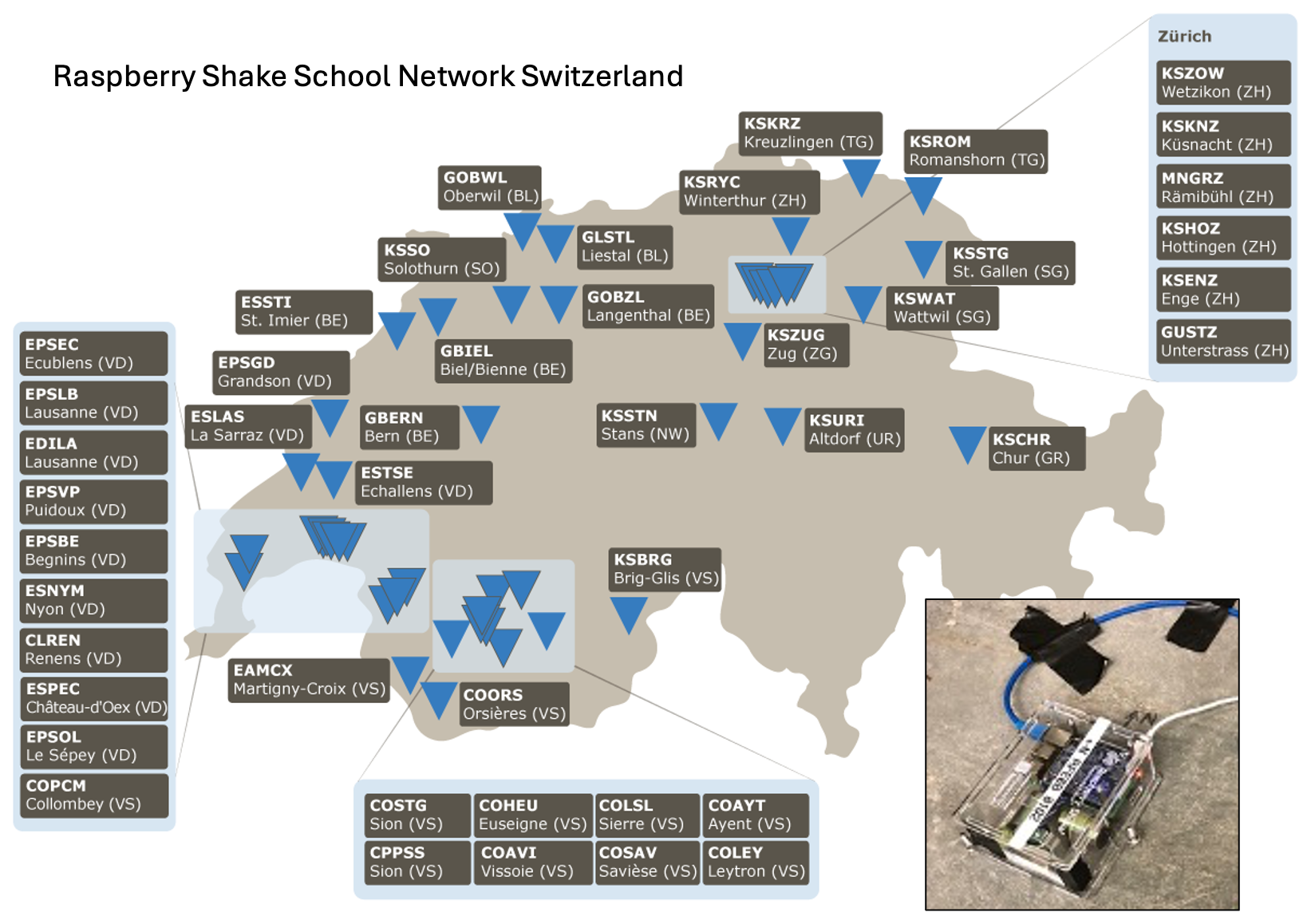
Figure 1The Raspberry Shake school network Switzerland, as of today including 46 seismometers, deployed in secondary schools throughout the country.
Over a period of two years, we were able to install an additional set of 23 3-component (3D) Raspberry Shake geophones in secondary schools across Switzerland (Fig. 1). While we initially contacted schools based on our survey, interest spread quickly, and additional schools reached out to participate. Due to the limited funding, we could not accommodate all requests and had to be selective, also considering the need for a well-balanced network across the country. Schools that were unable to receive a sensor were offered the option to collaborate with nearby participating schools or to purchase their own seismometer, which could then be integrated into the seismo@school network. Despite several attempts, we have not yet been able to identify a suitable school in the canton of Ticino, in the Italian-speaking part of Switzerland.
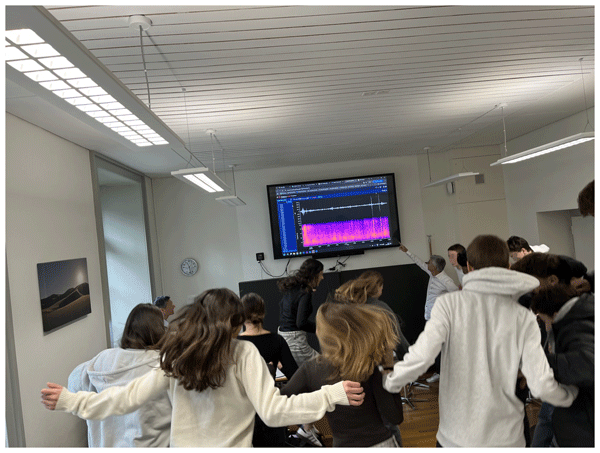
Students, teachers, and other users have unrestricted access to data from the Raspberry Shake stations. Data can be accessed via multiple platforms, including the Raspberry Shake DataView webpage, the ShakeNet mobile app, and the SED websites http://sas-viewer.ethz.ch/ (last access: April 2026, local seismicity) and https://rs-viewer.ethz.ch/ (last access: April 2026, local, regional, and global seismicity) (see Sect. “Data availability”). The project has a fully open data policy (see Sect. “Data availability”). For advanced users, such as students working on school projects, we provide a Jupyter notebook with example codes demonstrating how to access data through FDSN web services and how to visualize it. Our teaching module Earthquake Monitoring and Raspberry Shake (see Sect. 2.1.2) provides further guidance. To engage students and raise awareness of a newly installed Raspberry Shake, we encouraged schools to start with interactive experiments, such as gathering students around the sensor or in a neighbouring room to perform jump tests, for example with an increasing number of students, or by one person and decreasing distance to the seismometer. Several schools have also announced the Raspberry Shake installation in internal newsletters to promote interest and participation.
Power Spectral Density (PSD) analysis, computed daily at the SED for all stations (see Sect. “Data availability”), provides a quantitative framework for assessing the quality of seismic data from both high-quality SED stations and Raspberry Shake school seismometers. PSDs measure how seismic signal power is distributed across frequencies, allowing separation of natural seismic signals from anthropogenic noise. High-quality SED stations exhibit low, stable noise across both low frequencies (<0.1 Hz, e.g., microseisms) and higher frequencies (>1 Hz). In contrast, Raspberry Shake school seismometers show elevated noise above ∼ 1 Hz during school hours, caused by human activity, footsteps, and machinery. Lower-frequency signals (<0.1 Hz) are generally more reliable, but low-cost Raspberry Shake instruments are not optimal for measuring very long-period signals (e.g., periods > 20–30 s) due to instrumental limitations. In general, above 1 Hz, the school seismometers are at or below the Peterson high-noise model (Peterson, 1993), and some stations are well below this level.
Despite their limitations, we found that the Raspberry Shake seismometers can generally detect local earthquakes of magnitude 2.5 and larger at distances of up to ∼ 330 km – consistent with observations by Subedi et al. (2020a) – , as well as moderate- to large-magnitude regional and teleseismic earthquakes, often even during noisy school days and more consistently at night, on weekends, or during school vacations (Fig. 2). Although their primary purpose remains educational, yet the school seismometers have also proven scientifically valuable. While, by choice, they are not used for trigger-based detection or standard automatic locations at the SED, they are integrated into automated event-based machine-learning re-location pipelines, and 3-component station amplitudes contribute to automatic magnitude estimates. Additionally, the school sensors are used in manual solutions for picking P and S phases, determining P-wave polarity and magnitude. They are often important stations as they fill data gaps for depth estimation, focal mechanisms, and tomography. Notable events include a magnitude (MLhc) 3.0 earthquake near Zürich (Affoltern am Albis, 30 July 2025) and a series of small earthquakes near Ebnat-Kappel (June 2025), where Raspberry Shake seismometers provided valuable data, in particular for depth determination. Recently, the detection of a suspicious signal at a Raspberry Shake school sensor in the canton of Vaud in October 2025 even triggered the search for the path of a meteorite entering the atmosphere that induced ground vibrations across western Switzerland (T. Kraft et al., personal communication, April 2026).
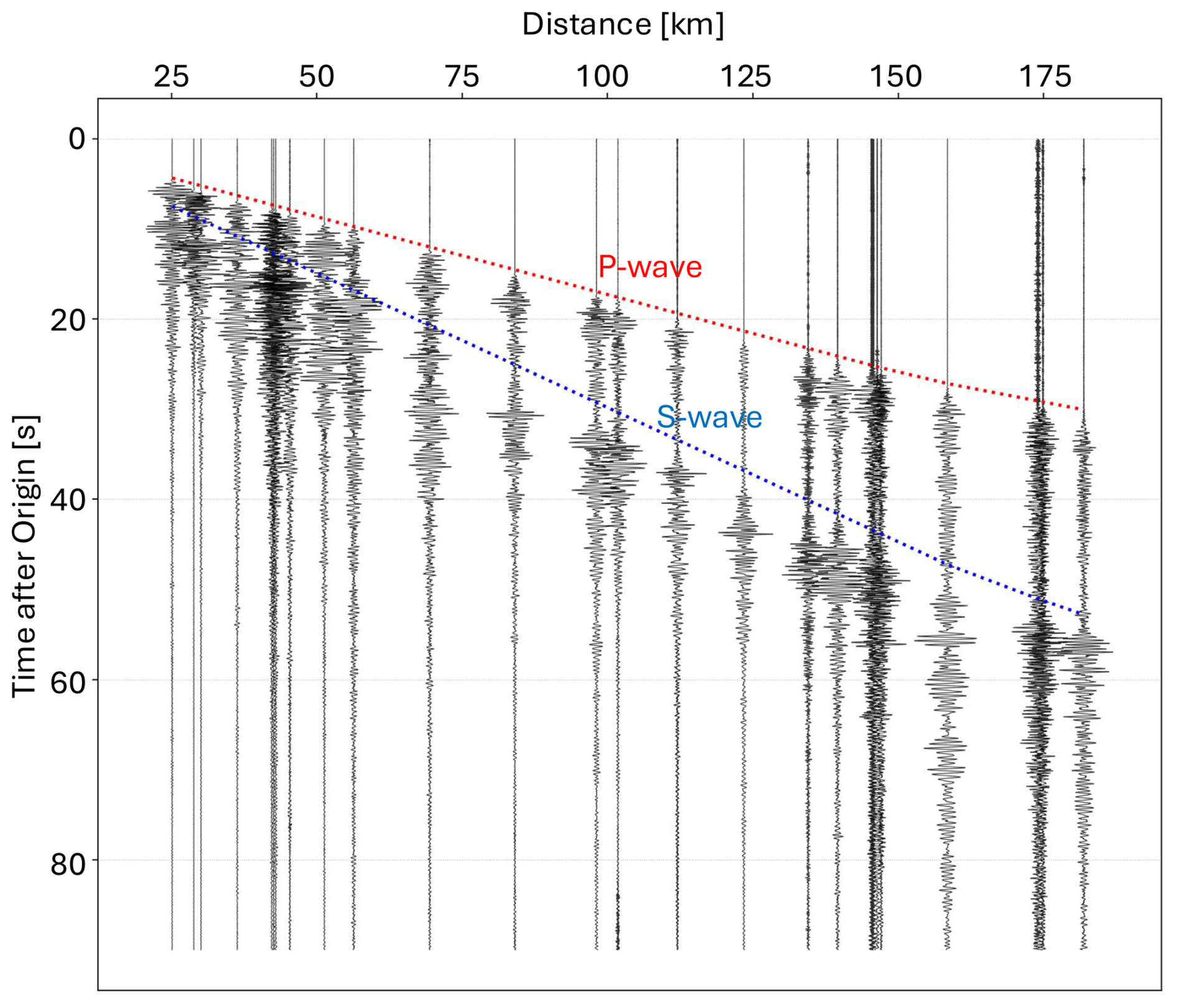
Figure 2Raspberry Shake school network recordings of the local 2024 magnitude (MLhc) 4.4 Sihltal earthquake. Red and blue dashed lines mark theoretical P- and S-wave arrival times based on the regional velocity model.
The Raspberry Shake school network allows students to monitor real-time seismicity directly from their classrooms, fostering a sense of ownership and engagement through active participation. Schools can investigate both local and global earthquakes using data from their own instrument and undertake small research projects – for example, as part of a Matura thesis, an independent research project carried out during the final year of upper secondary school in Switzerland (Gymnasium, Lycée, or Liceo). An important aspect of the Raspberry Shake is that they can record all types of vibrations, not just those from earthquakes. This includes traffic, sonic booms, concerts (e.g., the Swift quakes during a Taylor Swift concert in Zurich), and landslides. Mass movements are of particular interest in Switzerland, where their frequency has increased over the last decade, probably as a result of climate change. For example, a massive mass movement occurred in Blatten in Valais in southern Switzerland on 28 May 2025, equivalent to a magnitude (MLhc) 3.1 earthquake. Although this event occurred during school hours, it was well recorded by the entire Raspberry Shake school network across Switzerland beyond 175 km distance (Fig. 3). Schools found this particularly impressive, partly due to the strong media coverage, and the event was frequently used in lessons to discuss mass movements in the context of climate change and its impacts on Switzerland.
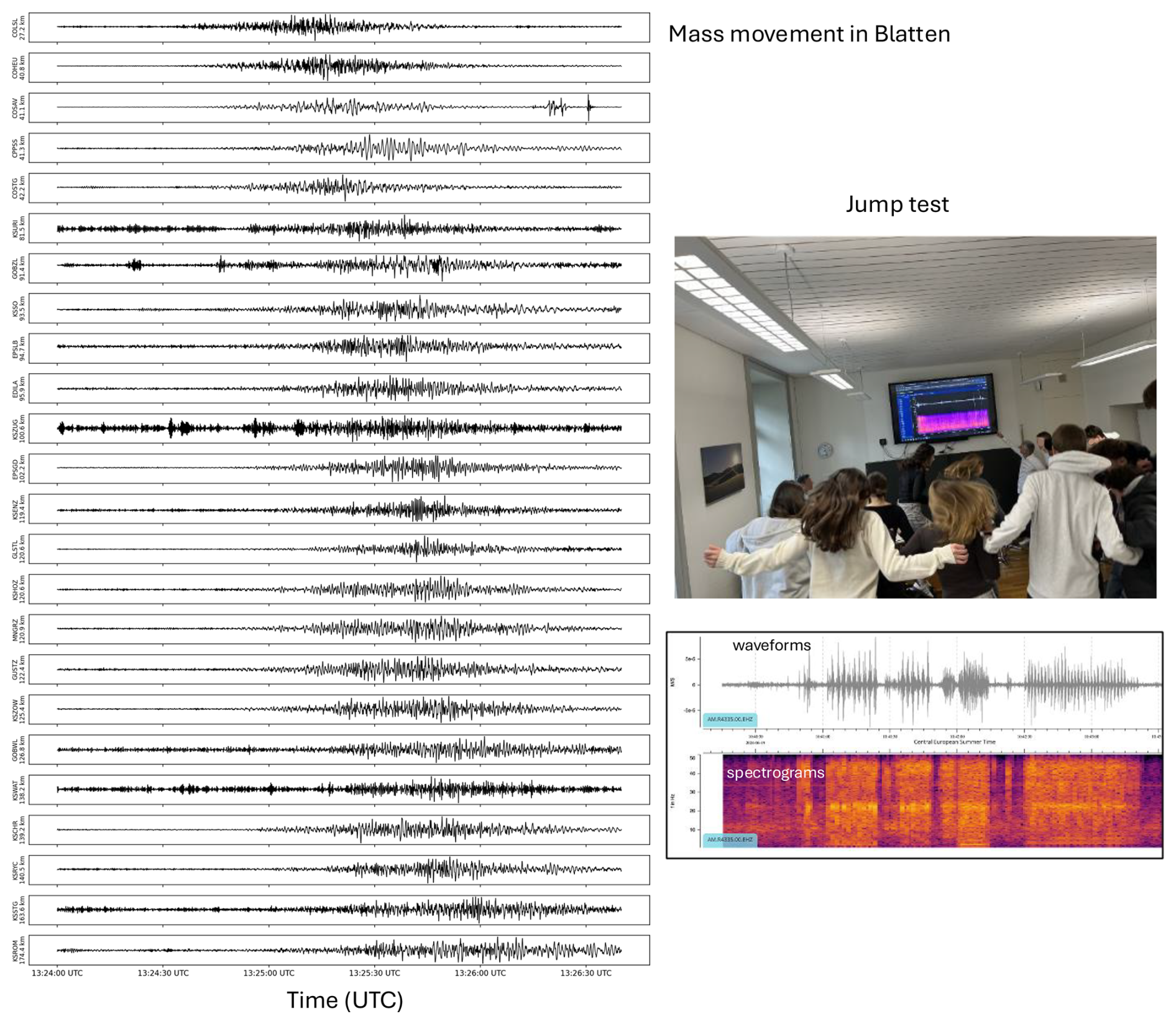
Figure 3Left: Raspberry Shake school network recordings of a massive mass movement occurred in Blatten in Valais in southern Switzerland on 28 May 2025, equivalent to a magnitude (MLhc) 3.1 earthquake. Right: “Jumping tests” help students understand how seismometers record seismic events (© Marion Loher).
2.3 Exploratory Activities
To introduce students to the principles of earthquake detection, we developed a compact do-it-yourself seismometer kit for schools – the Lambda Slinky Seismometer (Fig. 4) –, named for its distinctive shape, as a third key outcome of the project. The seismometer consists of a wooden base supporting a homemade coil, a load, and a box containing an Arduino and a screen displaying real-time measurements. A gallows structure holds a Slinky spring with two magnets: one serving as the measuring element and the other for centring and damping. The instrument is designed to record both seismic events and classroom jump experiments. By turning a knob on the display unit, users can access the ten most recently recorded events, each showing the corresponding date and time.
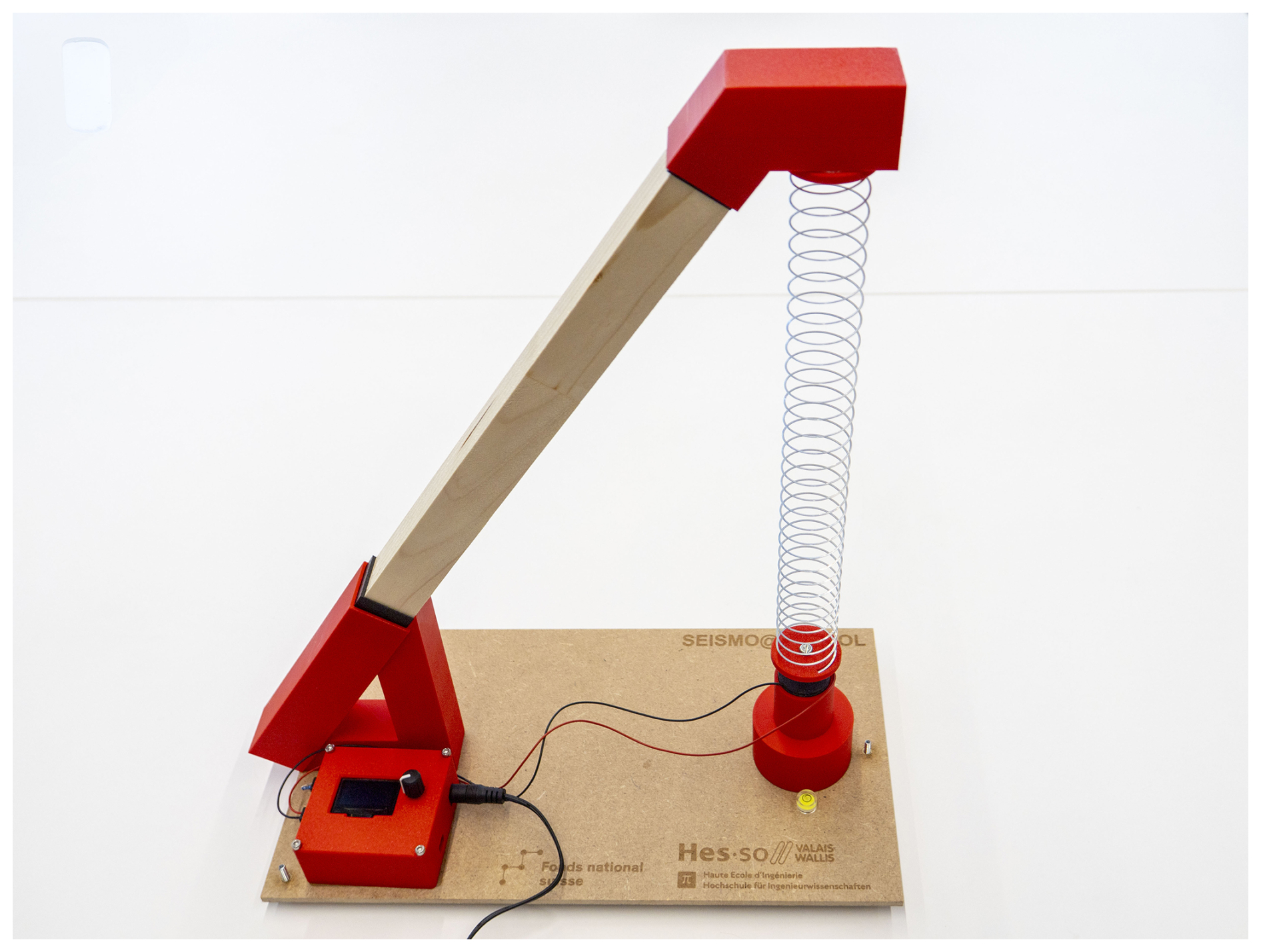
Figure 4The Lambda Slinky Seismometer, here already assembled (approximately 40 cm tall), for schools developed during the seismo@school Switzerland project.
The housing and mechanical components can be 3D-printed, while the electronic parts are standard and readily available online. The Arduino-based processor can easily be reprogrammed by teachers or students, allowing for further experimentation and adaptation to classroom needs. The device can be assembled in roughly 30 min with the support of a step-by-step video tutorial (http://static.seismo.ethz.ch/sedvideos/seismo_school/tutorial_de.mp4, last access: April 2026), making it accessible even for beginners. Once built, the seismometer reacts to small ground vibrations, such as footsteps or jumps, and displays the resulting signals in real time on an Arduino screen.
Although the kit is not intended for scientific research, it provides an engaging and tangible demonstration of how seismic instruments work. By letting students see their own movements converted into measurable signals, it bridges abstract concepts of ground motion with a hands-on learning experience. This playful approach captures curiosity while reinforcing the physical principles behind seismology. The project benefits from the so-called IKEA effect: learners feel greater attachment and motivation when they build the tool themselves, turning assembly into an integral part of the educational journey. By owning a physical device, the IKEA effect is most likely even stronger than owning “data” from one's school seismometer. Around 20 kits have been distributed to schools across Switzerland so far, expanding opportunities for classroom experiments.
2.4 Teacher, Student and International Engagement
The educational resources developed during the project were promoted and disseminated through teacher networks and educational events, reaching not only participating schools but also those without a seismometer. We organized several online and in-person workshops, engaging approximately 60 teachers in total, to familiarize them with the new educational materials and the Raspberry Shake seismometers. These workshops provided valuable opportunities for direct exchange with teachers, allowing us to gain insights into everyday school practices. Furthermore, we obtained a clearer understanding of the teachers' existing knowledge – what they already master and where gaps remain. Conversely, the teachers valued the opportunity to discuss their questions directly with experts and to gain insights into ongoing research projects. As a result of these workshops, additional schools contacted us, expressing interest in joining the seismo@school initiative. During these workshops and through follow-up email communication teachers were guided also on how to access and interpret Raspberry Shake data. For significant seismic events, we continue to provide seismograms and contextual background information. A recent survey indicated that many teachers have actively used these materials in their classrooms to discuss seismic events with students.
Beyond workshops, student visits to ETH Zurich and the supervision of Matura theses provided opportunities for motivated pupils to conduct original analyses. For example, one student developed a Dash app that visualizes data from the Raspberry Shake school seismometers for selected local earthquakes and provides an approximate animation of P- and S-wave propagation (http://sas-viewer.ethz.ch/). Another project analysed seismic data recorded by a school-based Raspberry Shake seismometer to determine earthquake detection thresholds and identify anthropogenic noise sources. School classes can also visit focusTerra at ETH Zurich or the CPPS in Sion to complement their classroom learning with interactive exhibits on earthquakes and seismic phenomena. Both locations feature earthquake simulators that reproduce ground shaking, allowing students to experience earthquakes in an immersive and safe environment. Such simulators allow students to feel the ground motion associated with different earthquakes – an experience that is especially valuable in Switzerland, where large earthquakes are rare. By combining the direct physical experience with scientific explanations, these visits create a powerful and memorable learning experience that bridges theoretical understanding and real-world perception of seismic phenomena.
At the international level, our team actively engaged with the global educational seismology community. To exchange ideas, we conducted two online meetings in 2025 with participants from ten countries, including France, United Kingdom, Ireland, Ukraine, Germany, Nepal, New Zealand, Ecuador, and the United States of America. To further strengthen global partnerships, the team supported in April 2025 the 5th International Workshop on Educational Seismology in Nepal and its associated Earthquake Learning Exhibit (Subedi et al., 2026), organized to commemorate the 10th anniversary of the 2015 magnitude 7.9 Gorkha earthquake. The exhibition comprised 14 interactive modules, covering topics such as tectonic processes, seismic waves, building construction, and practical, location-based safety guidance on what to do before, during, and after an earthquake, as well as the installation of a seismometer. Approximately 2000 pupils participated in this event. Pre- and post-event surveys of several hundred participating students revealed substantial improvements in knowledge, heightened risk perception, and increased intent to take preparedness actions. Subedi et al. (2026) highlight how the exhibition's experiential, student-centred format effectively bridged scientific concepts and local realities to foster both individual and collective preparedness through education. However, sustaining the impact will require follow-up interventions, institutionalization through schools and local governance, and expanded training for teachers and volunteers. We propose that this model is scalable and could serve as a replicable framework for earthquake education programmes in other vulnerable regions. Regardless of the differences between Nepal and Switzerland, we aim to continue cooperation between the two countries for knowledge and experience transfer in the domain of educational seismology. The educational materials and modules developed during our project are currently being translated into Nepali for use within the local education system.
Throughout the initiative (2023–2025), a combination of qualitative and quantitative approaches was used to monitor and enhance the effectiveness of the developed activities while also providing insights into the overarching research interest (see last paragraph in Sect. 1). This included two online surveys and a series of teacher workshops (May 2024, March 2025, and May 2025), which offered structured opportunities to gather detailed feedback and better understand teachers' needs. Scientific accuracy was ensured through reviews by experts from the relevant fields.
3.1 Transdisciplinary approach
The seismo@school initiative followed a transdisciplinary and iterative approach, bringing together teachers, partner organisations with extensive experience in knowledge transfer and outreach, researchers, and communication specialists. This collaborative framework ensured that all materials and activities were co-designed for practical and effective classroom use. Such an approach aligns with the principles of transdisciplinary research, which focuses on the active involvement of diverse stakeholders – not only scientists but also non-academic stakeholders such as teachers – who jointly frame the problems and generate knowledge (Lang et al., 2012; Pearce and Ejderyan, 2020; Jahn et al., 2012)
3.2 Online surveys
The first online survey was conducted between July and August 2023 among 49 teachers of grades 7 to 12 in the German-speaking part of Switzerland. It provided an initial assessment of expectations and requirements regarding information materials on current earthquake topics, proposed exploratory activities and experiments, interest in RS seismometers and preferences for different teaching formats. The survey was created using Unipark (https://www.tivian.com, last access: April 2026) and distributed via personal contacts and comprehensive email lists available at ETH Zurich. Participation was anonymous, and responses could not be traced back to individuals. Teachers could voluntarily provide contact details, if they were interested in receiving a seismometer, but these details were not linked to their answers.
A second online survey was conducted between August and September 2025 among participating teachers. Its aim was to assess the initiative's effectiveness, i.e. to gain a comprehensive understanding of how schools evaluated the activities and the provided teaching materials, in line with the overarching research interest. The questionnaire (see Supplement) comprised 23 questions covering four areas: overall impression and reach, use of Raspberry Shake seismometer, the Lambda Slinky Seismometer and the developed teaching materials. The survey was created using Microsoft Forms (https://forms.office.com; last access: April 2026) and distributed by email to all participants on 12 August 2025. Teachers had one month to respond. The questionnaire was available in both German and French and sent to approximately 44 recipients across participating schools. In total, 18 teachers responded, representing a response rate of 40.9 %; two-thirds (67 %) were German-speaking and one-third (33 %) French-speaking. The survey was anonymous, with an option for participants to voluntarily disclose personal information at the end. All respondents were informed that the survey data would be used for the project's final report and for scientific research purposes.
The following sections present the results of the second online survey, which provides the basis for the evaluation of activities.
4.1 General Impression
Most respondents (78 %) rated their participation in the seismo@school initiative very positively, while 22 % gave a neutral response. A large majority indicated that the initiative inspired their classroom teaching (89 %) and helped raise awareness of earthquake risk among both students and teachers (83 %). Overall, participants expressed a high level of satisfaction with the programme and considered it a valuable link between academic research and secondary education, promoting scientific thinking and strengthening awareness of earthquake risk in school (Fig. 5).
Teachers' qualitative feedback emphasised the educational benefits of transdisciplinary collaboration between schools and scientific experts, particularly in terms of bridging the gap between scientific depth and practical classroom application. The teachers particularly valued the workshops and the regular email updates about recent earthquake detections or other phenomena recorded by the network.
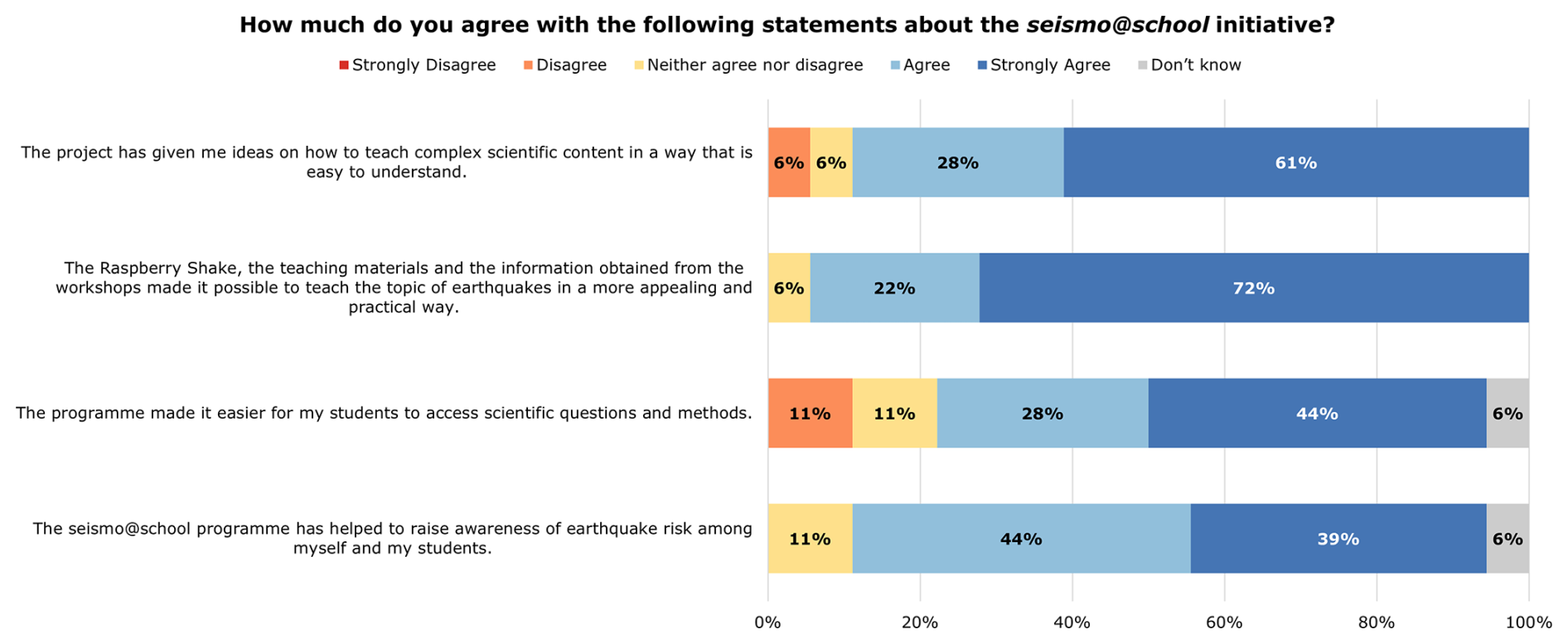
Figure 5Results of the online survey (question 1) on various statements about the general impression of the seismo@school Switzerland initiative. Participants (n=18) rated their agreement with four statements on a five-point Likert scale ranging from “strongly disagree” to “strongly agree”. Percentages indicate the distribution of responses for each statement.
4.2 Use of Raspberry Shake Seismometers in School Lessons
Survey participants reported having already used the Raspberry Shake with more than 955 students. Thirteen teachers (72 %) agreed that the Raspberry Shake helps explain earthquakes more clearly, and two-thirds (66 %) consider the seismometer well suited for classroom use. Although a smaller group of teachers (38 %) reported using the device to analyse local or global earthquakes (Fig. 6), several mentioned using the recordings of the Blatten landslide in May 2025 with their classes or incorporating them into activities such as jumping tests or other recorded vibrations (e.g., trucks, train traffic, or machinery). Some teachers also highlighted a couple of practical challenges and a need for additional guidance and technical support, particularly regarding data management and network connectivity.
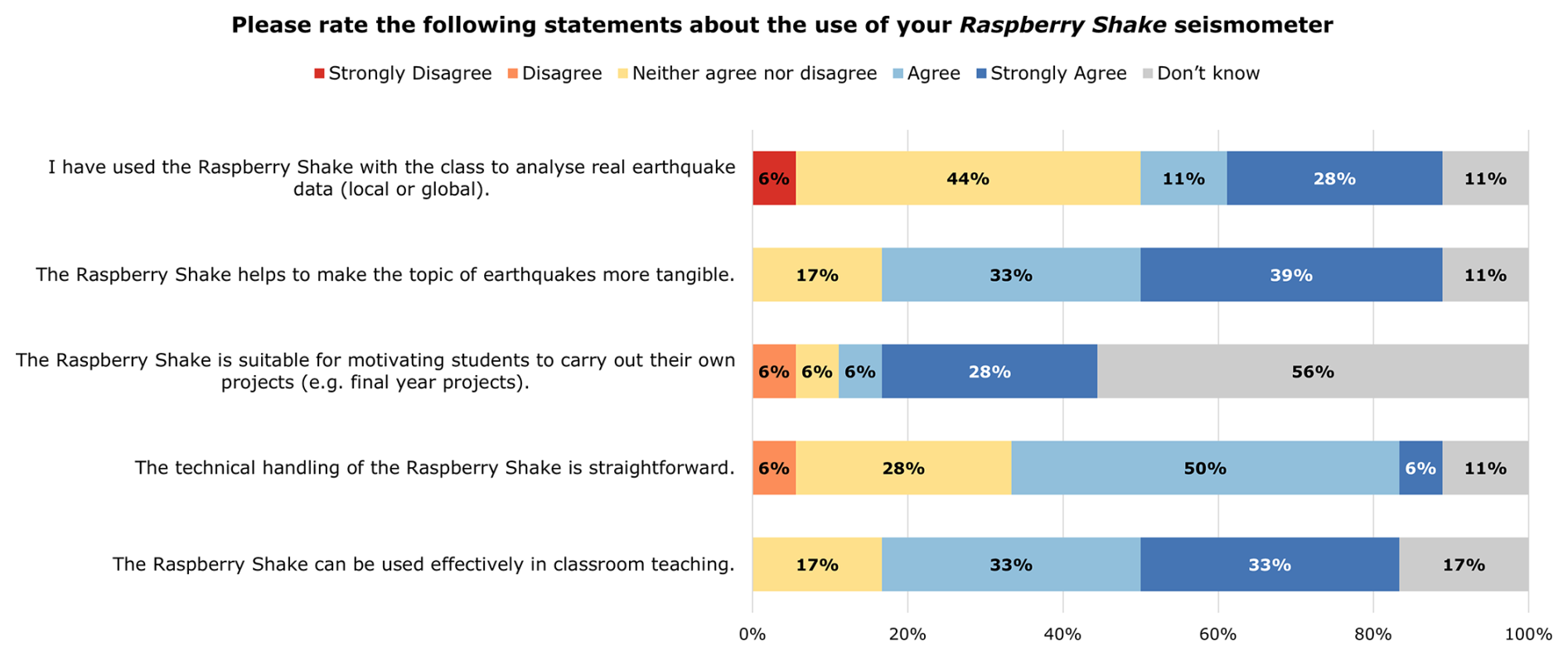
Figure 6Results of an online survey on various statements regarding the use of Raspberry Shake seismometers in classrooms (question 8). Participants (n=18) rated their agreement with four statements on a five-point Likert scale ranging from “strongly disagree” to “strongly agree”. Percentages indicate the distribution of responses for each statement.
4.3 Teaching Materials and Seismometer Kit
The teaching modules were published online between spring and summer 2025. Two-thirds of survey participants (66 %) had already viewed at least one module, but – given the short time before the survey and the start of the new school year – only about one-third (33 %) had used them in class. Among those who viewed at least one module, more than 80 % rated them as good or very good. Respondents valued the clarity of explanations, well-designed graphics, and the integration of realistic and locally relevant examples. Teachers found the materials adaptable and pedagogically sound, although some reported time constraints limiting full integration into their curricula.
By August 2025, we had distributed 21 Lambda Slinky Seismometers to schools across Switzerland (see Sect. 2.3). As additional kits remain available, we will continue to provide them to interested Swiss schools. Of the 18 survey respondents, 11 reported owning such a device, and just over half of them (54 %) found it exciting to use them in their lessons. According to the comments, most teachers had not yet had the opportunity to use the device in class due to the summer holidays. A more detailed evaluation will therefore be possible at a later stage.
The seismo@school Switzerland initiative demonstrates how experiential, data-driven learning can translate complex seismological concepts into meaningful classroom experiences. By combining real-time data with locally relevant examples, students engage in observation, experimentation, and interpretation, thereby strengthening both conceptual understanding and scientific literacy. Although the initiative requires significant effort from scientists to support its implementation, its success depends primarily on effective knowledge transfer (through appropriate language and communication formats) rather than on overcoming scientific challenges. Teachers emphasized that collaboration with scientific experts effectively bridged the gap between research and school practice. This transdisciplinary approach aligns with the student-centred format advocated by Subedi et al. (2026), who emphasize that immersive, locally contextualized education can foster preparedness and strengthen the link between science and society. Seismo@school also aims to strengthen STEM education more broadly and may help counter the global trend of declining student interest in Earth sciences (e.g., Martinez, 2022) and related disciplines as future career paths.
While these findings highlight the project's potential to enhance science education, certain methodological limitations should be acknowledged. The survey conducted as part of the project provides an initial indication of its potential impact. Although the response rate of 40.9 % is acceptable, the overall sample size remains limited, which restricts the generalisability of the findings. In addition, the survey period was relatively short, and many teachers will only implement the modules in the coming months. Repeating the survey at a later stage would therefore be advisable. Furthermore, it would be valuable to assess the direct impact on students (e.g., Subedi et al., 2026).
The integration of earthquake education in Swiss schools is shaped by Lehrplan 21 (“Study Plan 21”), a joint curriculum framework developed during 2010–2014 and adopted by 21 German-speaking or multi-language cantons and the Principality of Liechtenstein for primary and lower secondary levels. Although Lehrplan 21 promotes interdisciplinary, competence-oriented teaching across geography, natural sciences, and technology, earthquakes receive only limited explicit coverage. The situation is the same in the French-speaking part of the country and the Plan d'Etudes Romand. Implementation thus depends largely on cantonal priorities and individual teacher engagement. Survey responses indicated that most teachers devote only a few hours per semester to the topic, reflecting the limited curricular emphasis. The seismo@school resources and activities developed during our programme partly compensate for this gap by offering ready-to-use materials aligned with Lehrplan 21, which may enhance teachers' confidence and motivation to address the subject within existing time constraints. Expanding the number of instructional hours dedicated to earthquakes or natural hazards in official study plans would, however, require educational–political efforts involving multi-year negotiations, beyond the scope of short-term (two-year) projects.
The introduction of Raspberry Shake and Lambda Slinky Seismometers creates tangible connections between theory and observation, allowing students to collect and analyse real seismic data and (possibly unconsciously) benefit from the IKEA effect. This practical engagement promotes curiosity and reveals the potential of open data for inquiry-based science education. However, technical challenges – in particular regarding strict firewall settings in schools – highlight the need for ongoing guidance and institutional support including IT experts. Sustained collaboration with schools will be essential to ensure continuity and maintain data quality in classroom applications.
Beyond formal education, the initiative strengthens the interface between science and the public. Museum exhibitions, public events, and multilingual online resources expand access to seismological knowledge and foster dialogue about earthquake risk. By connecting classroom-based sensors to the national seismic network, seismo@school makes scientific data more accessible and transparent, thereby reinforcing public trust in research institutions. This participatory element aligns with broader citizen-science initiatives that link community engagement to shared awareness and resilience. The initiative aims for students to act as intermediaries of knowledge, fostering awareness of earthquake science and preparedness beyond the classroom and into their homes and neighbourhoods. This aspect can become an invaluable addition in countries located in high to very high seismic hazard levels. A clear challenge remains the mid- to long-term funding of such efforts. The most promising avenue for sustainability may lie in the development of appropriate policies on earthquake education (e.g., Hetényi and Subedi, 2023).
Although the seismo@school network was created primarily for educational purposes, the Raspberry Shake seismometers have become a valuable complement to Switzerland's professional seismic monitoring system. They help reduce spatial data gaps in the seismic network and enhance the characterization of local earthquakes. Moreover, integrating the Raspberry Shake sensors into the professional seismic monitoring network of the Swiss Seismological Service ensures regular quality checks, technical support, and long-term maintenance. In this way, both the schools and the professional network benefit. Overall, seismo@school Switzerland illustrates how a locally embedded, student-centred initiative can simultaneously advance seismic monitoring, scientific research, strengthen earthquake education, and enhance societal preparedness by raising awareness of seismic risk among young people and their families.
The revival and expansion of seismo@school Switzerland demonstrate the value of combining formal education, citizen science, and professional monitoring in a single framework. Even in regions of moderate seismic hazard – but considerable risk –, sustained educational efforts are essential to maintain awareness of earthquake risk and to prepare society for rare but potentially damaging events, as well as for events people may face during travels to high-risk zones. The integration of real-time instruments, modular teaching resources, and international collaboration positions Switzerland as an active partner in the global educational seismology community.
This project has laid the groundwork for a sustainable, nationwide seismo@school initiative. In the near- to mid-term, the programme aims to continue supporting teachers and public engagement, expand the sensor network and learning materials – particularly to include lower secondary schools – and deepen partnerships with international school programmes while promoting Swiss-developed teaching materials abroad, for example in Nepal. Further efforts will focus on developing citizen science components, strengthening integration with cantonal Education Departments, and broadening the teacher network to include subjects such as physics, computer science, and mathematics. In parallel, collaboration within and among the Swiss academic institutions involved in the project will be reinforced, and links to other earthquake-related natural hazards, including volcanoes and tsunamis, will be explored. The seismo@school network now forms a strong foundation for long-term collaboration between schools and Earth scientists in Switzerland. Participating in such a project as a scientist is both meaningful and rewarding: it enables the achievement of multiple milestones and often elicits enthusiastic feedback – beyond the inherent satisfaction of contributing to a societally relevant and useful initiative.
Educational materials (available in English, German, French, and Italian) developed through this project can be accessed at http://seismo.ethz.ch/en/news-and-services/for-schools/teaching-resources/. Schools and interested parties can easily access seismograms from the Raspberry Shake school network Switzerland (http://seismo.ethz.ch/en/news-and-services/for-schools/raspberryshake-school-seismometer/, last access: April 2026) via http://sas-viewer.ethz.ch/ (local seismicity) and https://rs-viewer.ethz.ch/ (local, regional and global seismicity). Data are also available for download from the European Integrated Data Archive (EIDA). The FDSN network code for the project is “S” (https://doi.org/10.12686/SED/NETWORKS/S, Swiss Seismological Service, 2008; https://networks.seismo.ethz.ch/en/networks/s/, last access: April 2026). Seismologists can access the data using standard FDSN services operated by the SED: for example metadata at https://eida.ethz.ch/fdsnws/station/1/query?network=S&format=text&level=sta&nodata=404 (last access: April 2026) and waveform data can be accessed from the dataselect service, e.g. https://eida.ethz.ch/fdsnws/dataselect/1/ (last access: April 2026). Daily updated Power Spectral Density (PSD) plots for all Raspberry Shake school sensors (network code “S”) in Switzerland are available at https://networks.seismo.ethz.ch/en/networks/s/psd/ (last access: April 2026).
The Supplement includes the school evaluation questionnaire (see Sect. 3). The supplement related to this article is available online at https://doi.org/10.5194/gc-9-223-2026-supplement.
Conceptualization: MB, NV, GH, RRo, ID; Installation and operation of RS school network: MB, GH, NV, RRa, RRo, JC, UF, SS; Development and editing of teaching resources: NV (lead), ID, MB, GH, RRo, FH, MM, TJ, AS, KB; Development of exploratory activities: RRo; Development, conduct, and analysis of survey: NV; Writing – original draft preparation: MB, NV; Writing – review and editing: GH, RRo, ID, KB, JC, FH, MM, RRa, AS, SS, WS.
The contact author has declared that none of the authors has any competing interests.
This study did not involve human-subject research or the collection of personal data, since the survey could be conducted anonymous. However, participants were able to voluntarily enter their details at the end of the survey. These were not required for the evaluation at any time, nor were they passed on to third parties. Surveys were only conducted with individuals who were involved in or interested in the project. Due to these reasons, this study did not require formal ethical approval under Swiss guideline.
Publisher's note: Copernicus Publications remains neutral with regard to jurisdictional claims made in the text, published maps, institutional affiliations, or any other geographical representation in this paper. The authors bear the ultimate responsibility for providing appropriate place names. Views expressed in the text are those of the authors and do not necessarily reflect the views of the publisher.
Special thanks to Patrik Weiss (ETHZ geography specialist and teacher), Orianne Tramaux and Bernhard Marti (geography teachers in Vaud and Solothurn), Noé Henseler (student who developed the SAV during his Matura thesis), Vanille Ritz (SED-ETHZ), Lorena Kuratle (SED-ETHZ), Federica Müller (SED-ETHZ), Noah Martini (SED-ETHZ), Federica Lanza (SED-ETHZ), Philippe Roth (SED-ETHZ), Yannis Fritsche (SED-ETHZ), Savas Ceylan (SED-ETHZ), Stefan Heimers (SED-ETHZ), Lukas Heiniger (SED-ETHZ), Ulrike Kastrup (ETH focusTerra), Ralph Schumacher (ETHZ MINT Center), Aurélien Gay-des-Combes and Simon Hiscox (UNIL), Simone Zaugg, and the many teachers, school IT personnel, students, and outreach partners who contributed their time, energy, and insights throughout the project. We would to thank Jean-Daniel Champagnac for triggering the identification efforts of the meteorite signal in the canton of Vaud. AI tools were used for language refinement of this paper without modifying the scientific content.
This project was supported by the Swiss National Science Foundation (SNSF) through AGORA project LAAGP0_215861.
This paper was edited by Jenna Sutherland and reviewed by Jean Luc Berenguer and John Taber.
Amashukeli, T., Farfuliak, L., Haniiev, O., and Petrenko, K.: Ukrainian Seismic Network: Current Status and Challenges, Seismol. Res. Lett., 95, 2038–2040, https://doi.org/10.1785/0220230337, 2024.
Balfour, N. J., Salmon, M., and Sambridge, M.: The Australian Seismometers in Schools Network: Education, Outreach, Research, and Monitoring, Seismol. Res. Lett., 85, 1063–1068, https://doi.org/10.1785/0220140025, 2014.
Berenguer, J.-L., Balestra, J., Jouffray, F., Mourau, F., Courboulex, F., and Virieux, J.: Celebrating 25 years of seismology at schools in France, Geosci. Commun., 3, 475–481, https://doi.org/10.5194/gc-3-475-2020, 2020.
Braile, L., Hall, M., Taber, J., and Aster, R.: The IRIS education and outreach program, Seismol. Res. Lett., 74, 503–510, https://doi.org/10.1785/gssrl.74.5.503, 2003.
Bravo, T., Taber, J., and Davis, H.: A Case Study of Highly-Engaged Educators' Integration of Real-Time Seismic Data in Secondary Classrooms, Front. Earth Sci., 8, 180, https://doi.org/10.3389/feart.2020.00180, 2020.
Böse, M., Valenzuela, N., Dallo, I., Hetényi, G., Racine, R., Clinton, J., and Roduit, R.: Seismo@School – A Swiss-wide initiative to bring current earthquake knowledge to schools, 39th General Assembly of the European Seismological Commission, 22–27 September 2024, Corfu, Greece, https://www.erasmus.gr/UsersFiles/microsite1277/Documents/2024.08.22_ESC2024PROGRAMME.pdf (last access: April 2026), 2024a.
Böse, M., Danciu, L., Papadopoulos, A., Clinton, J., Cauzzi, C., Dallo, I., Mizrahi, L., Diehl, T., Bergamo, P., Reuland, Y., Fichtner, A., Roth, P., Haslinger, F., Massin, F., Valenzuela, N., Blagojević, N., Bodenmann, L., Chatzi, E., Fäh, D., Glueer, F., Han, M., Heiniger, L., Janusz, P., Jozinović, D., Kästli, P., Lanza, F., Lee, T., Martakis, P., Marti, M., Meier, M.-A., Mena Cabrera, B., Mesimeri, M., Obermann, A., Sanchez-Pastor, P., Scarabello, L., Schmid, N., Shynkarenko, A., Stojadinović, B., Giardini, D., and Wiemer, S.: Towards a dynamic earthquake risk framework for Switzerland, Nat. Hazards Earth Syst. Sci., 24, 583–607, https://doi.org/10.5194/nhess-24-583-2024, 2024b.
Cantore, L., Bobbio, A., Di Martino, F., Petrilio, A., Simini, M., and Zollo, A.: The EduSeis Project in Italy: An Educational Tool for Training and Increasing Awareness of Seismic Risk, Seismol. Res. Lett., 74, 596–602, https://doi.org/10.1785/gssrl.74.5.596, 2003.
Cauzzi, C. and Clinton, J.: A High- and Low-Noise Model for High-Quality Strong-Motion Accelerometer Stations, Earthq. Spectra, 29, 85–102, https://doi.org/10.1193/1.4000107, 2013.
Chen, K. H., Bossu, R., and Liang, W.-T.: Editorial: The Power of Citizen Seismology: Science and Social Impacts, Front. Earth Sci., 8, 610813, https://doi.org/10.3389/feart.2020.610813, 2020.
Clinton, J., Cauzzi, C., Fäh, D., Michel, C., Zweifel, P., Olivieri, M., Cua, G., Haslinger, F., and Giardini, D.: The current state of strong motion monitoring in Switzerland, Earthquake Data in Engineering Seismology: Predictive Models, Data Management and Networks, Springer Dordrecht Heidelberg London New York, 219–233, ISBN 978-94-007-0151-9, https://doi.org/10.1007/978-94-007-0152-6_15, 2011.
Courboulex, F., Bérenguer, J.-L., Tocheport, A., Bouin, M.-P., Calais, E., Dervaux, S., Virmoux, C., and Vincent, M. P.: Sismos à l'Ecole: A worldwide network of real-time seismometers in schools, Seismol. Res. Lett., 83, 870–873, 2012.
Crowley, H., Dabbeek, J., Despotaki, V., Rodrigues, D., Martins, L., Silva, V., Romão, X., Pereira, N., Weatherill, G., and Danciu, L.: European Seismic Risk Model (ESRM20), EFEHR Technical Report 002, V1.0.0, 84 pp., https://doi.org/10.7414/EUC-EFEHR-TR002-ESRM20, 2021.
Dallo, I., Marti, M., Clinton, J., Böse, M., Massin, F., and Zaugg, S.: Earthquake early warning in countries where damaging earthquakes only occur every 50 to 150 years – The societal perspective, Int. J. Disast. Risk Re., 83, 103, https://doi.org/10.1016/j.ijdrr.2022.103441, 2022a.
Dallo, I., Corradini, M., Fallou, L., and Marti, M.: How to fight misinformation about earthquakes? – A Communication Guide, Swiss Seismological Service at ETH Zurich, https://doi.org/10.3929/ethz-b-000530319, 2022b.
Dallo, I., Böse, M., Hetényi, G., and Roduit, R.: Seismo@School – A Swiss-wide initiative to bring current earthquake knowledge to schools, 21st Swiss Geoscience Meeting, 17–19 November 2023, Mendrisio, Switzerland, https://geoscience-meeting.ch/sgm2023/ (last access: April 2026), 2023.
Danciu, L., Nandan, S., Reyes, C., Basili, R., Weatherill, G., Beauval, C., Rovida, A., Vilanova, S., Sesetyan, K., Bard, P.-Y., Cotton, F., Wiemer, S., and Giardini, D.: The 2020 update of the European Seismic Hazard Model: Model Overview, EFEHR Technical Report 001, V1.0.0, https://doi.org/10.12686/a15, 2021.
Denton, P.: Seismology in schools: 10 years on, Astron. Geophys., 49, 6.13–6.14, https://doi.org/10.1111/j.1468-4004.2008.49613.x, 2008.
Denton, P., Fishwick, S., Lane, V., and Daly, D.: Football Quakes as a Tool for Student Engagement, Seismol. Res. Lett., 89, 1902–1907, https://doi.org/10.1785/0220180078, 2018.
Diehl, T., Kraft, T., Kissling, E., and Wiemer, S.: The induced earthquake sequence related to the St. Gallen deep geothermal project (Switzerland): Fault reactivation and fluid interactions imaged by microseismicity, J. Geophys. Res.-Sol. Ea., 122, 7272–7290, https://doi.org/10.1002/2017JB014473, 2017.
Diehl, T., Cauzzi, C., Clinton, J., Kraft, T., Kästli, P., Massin, F., Lanza, F., Simon, V., Grigoli, F., Hobiger, M., Roth, P., Haslinger, F., and Fäh, D.: Earthquakes in Switzerland and surrounding regions during 2019 and 2020, Swiss J. Geosci., 118, https://doi.org/10.1186/s00015-025-00489-4, 2025.
Fäh, D., Giardini, D., Kästli, P., Deichmann, N., Gisler, M., Schwarz-Zanetti, G., Alvarez-Rubio, S., Sellami, S., Edwards, B., Allmann, B., Bethmann, F., Wössner, J., Gassner-Stamm, G., Fritsche, S., and Eberhard, D.: ECOS-09 Earthquake Catalogue of Switzerland Release 2011 Report and Database, Public catalogue, 17, 4, Swiss Seismological Service ETH Zurich, Report SED/RISK/R/001/20110417, 2011.
FOCP (Federal Office for Civil Protection): National Risk Analysis Report, Disasters and Emergencies in Switzerland 2025, FOCP, Bern, https://www.babs.admin.ch/en/publication?id=P5wShHylcu1J (last access: April 2026), 2026.
Grigoli, F., Cesca, S., Priolo, E., Rinaldi, A. P., Clinton, J. F., Stabile, T. A., Dost, B., Fernandez, M. G., Wiemer, S., and Dahm, T.: Current challenges in monitoring, discrimination, and management of induced seismicity related to underground industrial activities: A European perspective, Rev. Geophys., 55, 310–340, https://doi.org/10.1002/2016RG000542, 2017.
Hetényi, G. and Subedi, S.: A call to action for a comprehensive earthquake education policy in Nepal, Seismica, 2, 242, https://doi.org/10.26443/seismica.v2i2.242, 2023.
Hetényi, G., Subedi, S., Roduit, R., Valenzuela, N., Böse, M., and Sauron, A.: Programmes scolaires dédiés comme actions de science citoyenne: exemples du Népal et de la Suisse, CitSciHelvetia'25, 5–6 June 2025, Lausanne, Switzerland, https://www.citscihelvetia.ch/provisional-program (last access: April 2026), 2025.
Jahn, T., Bergmann, M., and Keil, F.: Transdisciplinarity: Between mainstreaming and marginalization. Ecological Economics, 79, 1–10, https://doi.org/10.1016/j.ecolecon.2012.04.017, 2012.
Lang, D. J., Wiek, A., Bergmann, M., Stauffacher, M., Martens, P., Moll, P., Swilling, M., and Thomas, C. J.: Transdisciplinary research in sustainability science: Practice, principles, and challenges, Sustain. Sci., 7, 25–43, https://doi.org/10.1007/s11625-011-0149-x, 2012.
Löberich, E. and Long, M. D.: Follow the Trace: Becoming a Seismo-Detective with a Campus-Based Raspberry Shake Seismometer, Seismol. Res. Lett., 95, 2538–2553, https://doi.org/10.1785/0220230365, 2024.
Marti, M., Dallo, I., Roth, P., Papadopoulos, A. N., and Zaugg, S.: Illustrating the impact of earthquakes: Evidence-based and user-centered recommendations on how to design earthquake scenarios and rapid impact assessments, Int. J. Disast. Risk Re., 90, 103674, https://doi.org/10.1016/j.ijdrr.2023.103674, 2023.
Martinez, S.: Geoscience enrollment and degrees continue to decline through 2021, Geoscience Currents, 172, American Geosciences Institute, https://profession.americangeosciences.org/research/geoscience-currents (last access: April 2026), 2022.
Mignan, A., Landtwing, D., Kästli, P., Mena, B., and Wiemer, S.: Induced seismicity risk analysis of the 2006 Basel, Switzerland, Enhanced Geothermal System project: Influence of uncertainties on risk mitigation, Geothermics, 53, 133–146, https://doi.org/10.1016/j.geothermics.2014.05.007, 2015.
Moein, M. J. A., Langenbruch, C., Schultz, R., Grigoli, F., Ellsworth, W. L., Wang, R., Rinaldi, A. P., and Shapiro, S.: The physical mechanisms of induced earthquakes, Nat. Rev. Earth Environ., 4, 847–863, https://doi.org/10.1038/s43017-023-00497-8, 2023.
Paluszny, A., Schultz, R., and Zimmermann, G.: Induced seismicity in coupled subsurface systems, Philos. T. R. Soc. A, 382, 20230193, https://doi.org/10.1098/rsta.2023.0193, 2024.
Pearce, B. and Ejderyan, O.: Joint problem framing as reflexive practice: Honing a transdisciplinary skill, Sustain. Sci., 15, 683–698, https://doi.org/10.1007/s11625-019-00744-2, 2020.
Peterson, J.: Observations and modeling of background seismic noise, U.S. Geol. Surv. Open-File Rept. 93-322, Albuquerque, New Mexico, https://doi.org/10.3133/ofr93322, 1993.
Sornette, A. and Haslinger, F.: Seismo at school in Switzerland, EMSC Newsl., 24, 15, 2009.
Stevenson, J., Denton, P., and Lemon, K.: BGS – Education through open doors and OpenGeoscience, Leading Edge, 34, 1376–1380, https://doi.org/10.1190/tle34111376.1, 2015.
Subedi, S., Hetényi, G., Denton, P., and Sauron, A.: Seismology at School in Nepal: A program for educational and citizen seismology through a low-cost seismic network, Front. Earth Sci., 8, 73, https://doi.org/10.3389/feart.2020.00073, 2020a.
Subedi, S., Hetényi, G., and Shackleton, R.: Impact of an educational program on earthquake awareness and preparedness in Nepal, Geosci. Commun., 3, 279–290, https://doi.org/10.5194/gc-3-279-2020, 2020b.
Subedi, S., Valenzuela, N., Dhami, P., Böse, M., Hetényi, G., Chardot, L., Adhikari, L. B., Bhattarai, M., Dhakal, R. P., Houghton, S., and Upreti, B. N.: Organizing an Earthquake Learning Exhibition for transferring geoscience knowledge to the public: the example from Nepal, Geosci. Commun., 9, 101–114, https://doi.org/10.5194/gc-9-101-2026, 2026.
Swiss Seismological Service (SED At ETH Zurich): Seismology at School Program, ETH Zurich; ETH Zurich [data set], https://doi.org/10.12686/SED/NETWORKS/S, 2008.
Tan, M. L., Vinnell, L., Prasanna, R., Cui, A., Chandrakumar, C., Imtiaz, S. Y., Hong, B., and Viggers, Z.: CRISiSLab Challenge: Hands-on learning with Raspberry Shake seismometers, Poster abstract, QuakeCoRE Annual Meeting, https://quakecore.nz/wp-content/uploads/2022/08/2022-Abstract-Book-FINAL.pdf (last access: April 2026), 2022.
Wiemer, S., Danciu, L., Edwards, B., Marti, M., Fäh, D., Hiemer, S., Wössner, J., Cauzzi, C., Kästli, P., and Kremer, K.: Seismic Hazard Model 2015 for Switzerland (SUIhaz2015), Swiss Seismological Service at ETH Zurich, https://doi.org/10.12686/a2, 2016.
Wiemer, S., Bazzurro, P., Bergamo, P., Cauzzi, C., Dallo, I., Danciu, L., Duvernay, B., Fagà, E., Fäh, D., Hammer, C., Haslinger, F., Kästli, P., Khodaverdian, A., Lestuzzi, P., Marti, M., Odabaşı, Ö., Panzera, F., Papadopoulos, A., Perron, V., Roth, P., Schmid, N., Valenzuela, N., and Zaugg, S.: Earthquake Risk Model of Switzerland ERM-CH23, Swiss Seismological Service at ETH Zurich, https://doi.org/10.12686/a20, 2023.
Zollo, A. and Bobbio, A.: The Educational Seismological Project: EDUSEIS, Seismol. Res. Lett., 71, 530–535, 2000.