
Articles | Volume 9, issue 2
https://doi.org/10.5194/gc-9-223-2026
© Author(s) 2026. This work is distributed under
the Creative Commons Attribution 4.0 License.
the Creative Commons Attribution 4.0 License.
https://doi.org/10.5194/gc-9-223-2026
© Author(s) 2026. This work is distributed under
the Creative Commons Attribution 4.0 License.
the Creative Commons Attribution 4.0 License.
Research article
| Highlight paper
| 
21 May 2026
Research article | Highlight paper |
| 21 May 2026
| 21 May 2026
Increasing earthquake awareness: seismo-at-school Switzerland
Maren Böse
CORRESPONDING AUTHOR

Swiss Seismological Service (SED), ETH Zurich, Zurich, 8092, Switzerland
Nadja Valenzuela
Swiss Seismological Service (SED), ETH Zurich, Zurich, 8092, Switzerland
György Hetényi
Institute of Earth Sciences, University of Lausanne, Lausanne, 1015, Switzerland
Romain Roduit
HES-SO Valais-Wallis, School of engineering, Sion, 1950, Switzerland
Irina Dallo
Federal Office for Civil Protection (FOCP), Bern, 3003, Switzerland
Kerstin Bircher
focusTerra, ETH Zurich, Zurich, 8092, Switzerland
John Clinton
Swiss Seismological Service (SED), ETH Zurich, Zurich, 8092, Switzerland
Urs Fässler
Swiss Seismological Service (SED), ETH Zurich, Zurich, 8092, Switzerland
Florian Haslinger
Swiss Seismological Service (SED), ETH Zurich, Zurich, 8092, Switzerland
Tanja Jaeger
EducETH Kompetenzzentrum für Lehren und Lernen, ETH Zurich, Zurich, 8092, Switzerland
Michèle Marti
Swiss Seismological Service (SED), ETH Zurich, Zurich, 8092, Switzerland
Roman Racine
Swiss Seismological Service (SED), ETH Zurich, Zurich, 8092, Switzerland
Anne Sauron
HES-SO Valais-Wallis, School of engineering, Sion, 1950, Switzerland
Shiba Subedi
Nepal Academy of Science and Technology, Lalitpur, Nepal
Stefan Wiemer
Swiss Seismological Service (SED), ETH Zurich, Zurich, 8092, Switzerland
Related authors
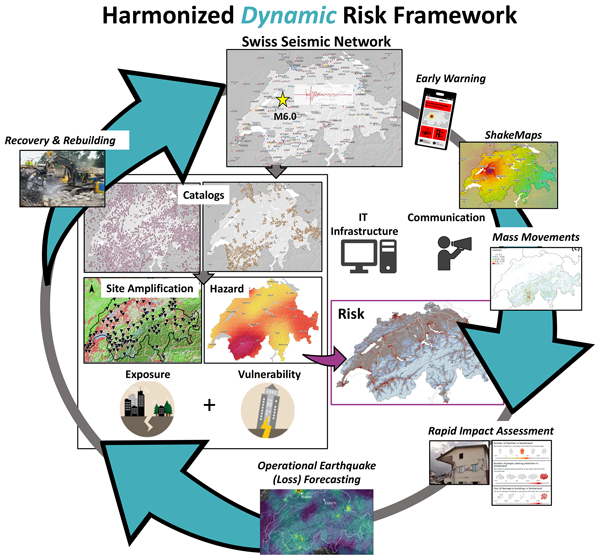
Maren Böse, Laurentiu Danciu, Athanasios Papadopoulos, John Clinton, Carlo Cauzzi, Irina Dallo, Leila Mizrahi, Tobias Diehl, Paolo Bergamo, Yves Reuland, Andreas Fichtner, Philippe Roth, Florian Haslinger, Frédérick Massin, Nadja Valenzuela, Nikola Blagojević, Lukas Bodenmann, Eleni Chatzi, Donat Fäh, Franziska Glueer, Marta Han, Lukas Heiniger, Paulina Janusz, Dario Jozinović, Philipp Kästli, Federica Lanza, Timothy Lee, Panagiotis Martakis, Michèle Marti, Men-Andrin Meier, Banu Mena Cabrera, Maria Mesimeri, Anne Obermann, Pilar Sanchez-Pastor, Luca Scarabello, Nicolas Schmid, Anastasiia Shynkarenko, Bozidar Stojadinović, Domenico Giardini, and Stefan Wiemer
Nat. Hazards Earth Syst. Sci., 24, 583–607, https://doi.org/10.5194/nhess-24-583-2024, https://doi.org/10.5194/nhess-24-583-2024, 2024
Short summary
Short summary
Seismic hazard and risk are time dependent as seismicity is clustered and exposure can change rapidly. We are developing an interdisciplinary dynamic earthquake risk framework for advancing earthquake risk mitigation in Switzerland. This includes various earthquake risk products and services, such as operational earthquake forecasting and early warning. Standardisation and harmonisation into seamless solutions that access the same databases, workflows, and software are a crucial component.
Michèle Marti, Mika Chadzelek, and Donat Fulda
EGUsphere, https://doi.org/10.5194/egusphere-2026-3789, https://doi.org/10.5194/egusphere-2026-3789, 2026
This preprint is open for discussion and under review for Natural Hazards and Earth System Sciences (NHESS).
Short summary
Short summary
People can only protect themselves against natural hazards if they know their risks. We tested a new natural hazard risk map for the canton of Lucerne, developed step by step with experts and residents. Our results show that with a careful, collaborative process, different colour schemes work equally well for understanding. Instead, comprehension depends more on who reads the map and how its design is perceived. This shifts the focus from single design elements to a process centred on users.
Shiba Subedi, György Hetényi, Sarah Houghton, Priyanka Dhami, Aastha Poudel, Shreedhar Dhakal, and Kushal Pokhrel
EGUsphere, https://doi.org/10.5194/egusphere-2026-4706, https://doi.org/10.5194/egusphere-2026-4706, 2026
This preprint is open for discussion and under review for Natural Hazards and Earth System Sciences (NHESS).
Short summary
Short summary
Many schools in Nepal remain vulnerable to future earthquakes despite reconstruction efforts after the 2015 earthquake. We assessed earthquake risks in 730 classrooms by examining buildings, evacuation routes, and safe open spaces. We found that many risks can be reduced through simple, low-cost improvements and better preparedness. Our study provides practical guidance to help schools become safer and can support earthquake risk reduction across Nepal and the Himalayan region.
Pooya Hamdi, Jonas Dickmann, Michal Kruszewski, Antonio Pio Rinaldi, Linus Villiger, Alexis Shakas, Mathew Perras, Navid Bahrani, Patrick Bianchi, Peter Achtziger-Zupancic, Steven Gaines, Kai Bröker, Xiaodong Ma, Paul Antony Selvadurai, Virginie Durand, Kavan Khaledi, Mohammadreza Jalali, Yousef Golabchi, Sam Harris, Alba Simona Zappone, Mathilde Wimez, Marian Hertrich, Stefan Wiemer, and Florian Amann
EGUsphere, https://doi.org/10.5194/egusphere-2026-3474, https://doi.org/10.5194/egusphere-2026-3474, 2026
Short summary
Short summary
Deep geological repositories are considered one of the safest solutions for the long-term disposal of nuclear waste. This paper presents the PRECODE experiment at BedrettoLab, Switzerland, where a new 100 m long tunnel was excavated in granite at a depth of 1300 m to investigate excavation-induced rock damage and its time-dependent evolution.
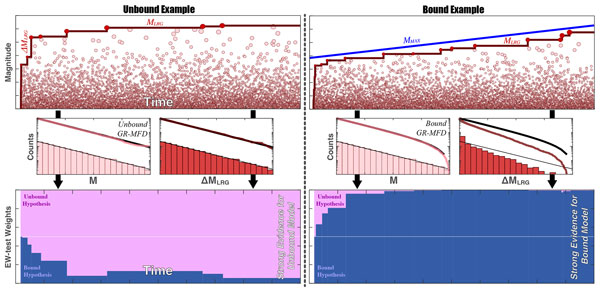
Ryan Schultz, Linus Villiger, Valentin Gischig, and Stefan Wiemer
Solid Earth, 17, 617–642, https://doi.org/10.5194/se-17-617-2026, https://doi.org/10.5194/se-17-617-2026, 2026
Short summary
Short summary
We use statistical tests to infer MMAX (maximum possible magnitude) from an earthquake catalogue and focus on data from three underground laboratories with controlled injection experiments. There, we find clear evidence for MMAX bounds and corroborate interpretations of fracture growth against other geophysical studies. Unbound sequences occur when stimulation is directed towards pre-existing faults. The validation of our methods against well-studied cases is encouraging and will help validate future interpretations.
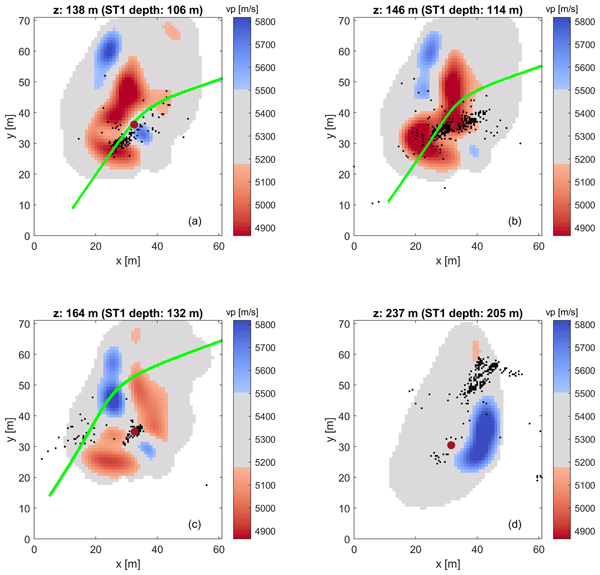
Miriam Larissa Schwarz, Hansruedi Maurer, Anne Christine Obermann, Paul Antony Selvadurai, Alexis Shakas, Stefan Wiemer, and Domenico Giardini
Solid Earth, 17, 347–368, https://doi.org/10.5194/se-17-347-2026, https://doi.org/10.5194/se-17-347-2026, 2026
Short summary
Short summary
We applied fat ray travel time tomography to image the geothermal testbed at the BedrettoLab (Switzerland). An active seismic crosshole survey provided a dataset of 41’881 manually picked first breaks. The complex major fault zone was identified by a 3D velocity model and validated with wireline logs and geological observations. Induced seismicity from hydraulic stimulation experiments preferentially occurs in intermediate-velocity regions, possibly due to the presence of stress gradients.
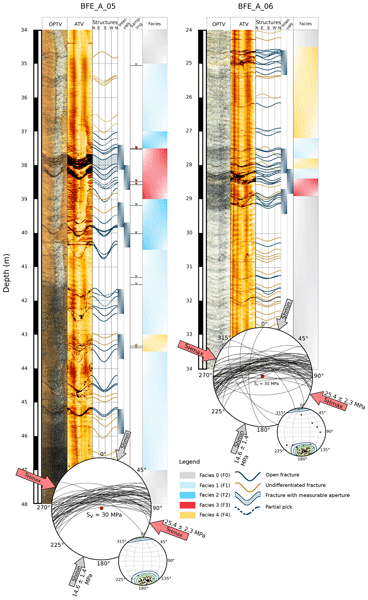
Tom Schaber, Mohammedreza Jalali, Alberto Ceccato, Alba Simona Zappone, Giacomo Pozzi, Valentin Gischig, Marian Hertrich, Men-Andrin Meier, Timo Seemann, Hannes Claes, Yves Guglielmi, Domenico Giardini, Stefan Wiemer, Massimo Cocco, and Florian Amann
Solid Earth, 17, 275–295, https://doi.org/10.5194/se-17-275-2026, https://doi.org/10.5194/se-17-275-2026, 2026
Short summary
Short summary
We studied a deep fault zone in Switzerland to gain a better understanding of how water moves through faults and how this affects earthquake activity. Using field and laboratory tests, we found that flow is strongly controlled by open fractures and permeability changes significantly with scale. Small samples underestimate flow compared to larger tests. Our results show that faults are heterogeneous, highlighting the need for site-specific studies when assessing risks or planning experiments.
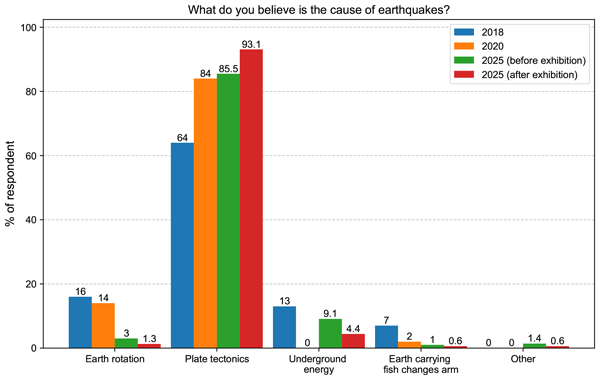
Shiba Subedi, Nadja Valenzuela, Priyanka Dhami, Maren Böse, György Hetényi, Lauriane Chardot, Lok Bijaya Adhikari, Mukunda Bhattarai, Rabindra Prasad Dhakal, Sarah Houghton, and Bishal Nath Upreti
Geosci. Commun., 9, 101–114, https://doi.org/10.5194/gc-9-101-2026, https://doi.org/10.5194/gc-9-101-2026, 2026
Short summary
Short summary
An interactive exhibition in Pokhara, Nepal, held on the tenth anniversary of the 2015 earthquake, helped school students understand why earthquakes occur and how to protect themselves. After taking part, most felt more confident and prepared, and many planned to share safety tips with their families and friends. This ripple effect shows how hands-on learning can spread awareness, inspire action, and help entire communities build resilience for future earthquakes.
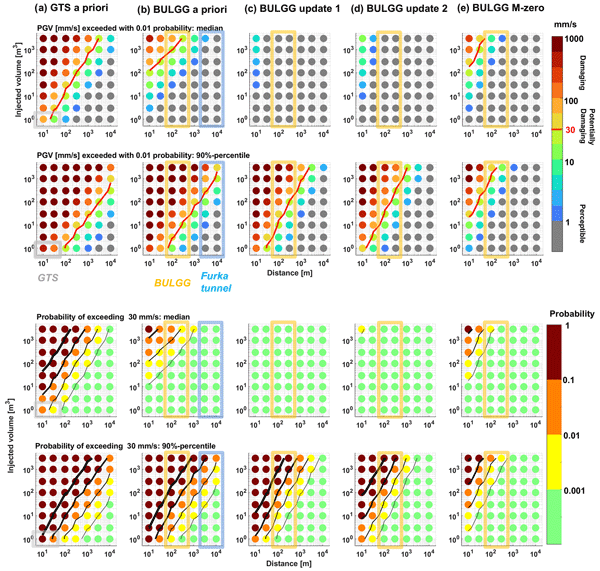
Valentin Samuel Gischig, Antonio Pio Rinaldi, Andres Alcolea, Falko Bethman, Marco Broccardo, Kai Bröker, Raymi Castilla, Federico Ciardo, Victor Clasen Repollés, Virginie Durand, Nima Gholizadeh Doonechaly, Marian Hertrich, Rebecca Hochreutener, Philipp Kästli, Dimitrios Karvounis, Xiaodong Ma, Men-Andrin Meier, Peter Meier, Maria Mesimeri, Arnaud Mignan, Anne Obermann, Katrin Plenkers, Martina Rosskopf, Francisco Serbeto, Paul Selvadurai, Alexis Shakas, Linus Villiger, Quinn Wenning, Alba Zappone, Jordan Aaron, Hansruedi Maurer, Domenico Giardini, and Stefan Wiemer
Solid Earth, 16, 1153–1180, https://doi.org/10.5194/se-16-1153-2025, https://doi.org/10.5194/se-16-1153-2025, 2025
Short summary
Short summary
Induced earthquakes present a major obstacle for developing geoenergy resources. These occur during hydraulic stimulations that enhance fluid pathways in the rock. In the Bedretto Underground Laboratory, hydraulic stimulations are investigated in a downscaled manner. A workflow to analyze the hazard posed by induced earthquakes is applied at different stages of the test program. The hazard estimates illustrate the difficulty in reducing the uncertainty due to the variable seismogenic responses.
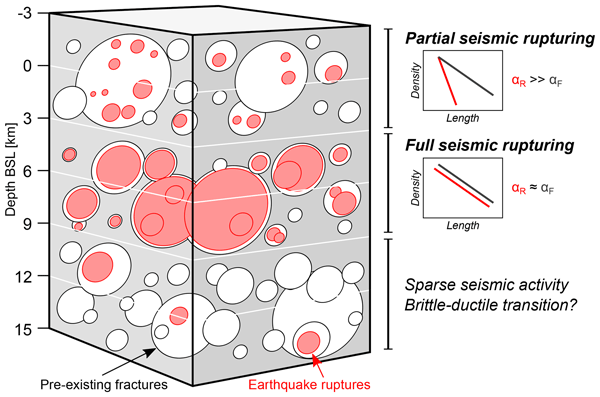
Sandro Truttmann, Tobias Diehl, Marco Herwegh, and Stefan Wiemer
Solid Earth, 16, 641–662, https://doi.org/10.5194/se-16-641-2025, https://doi.org/10.5194/se-16-641-2025, 2025
Short summary
Short summary
Our study investigates the statistical relationship between geological fractures and earthquakes in the southwestern Swiss Alps. We analyze how the fracture size and earthquake rupture are related and find differences in how fractures at different depths rupture seismically. While shallow fractures tend to rupture only partially, deeper fractures are more likely to rupture along their entire length, potentially resulting in larger earthquakes.
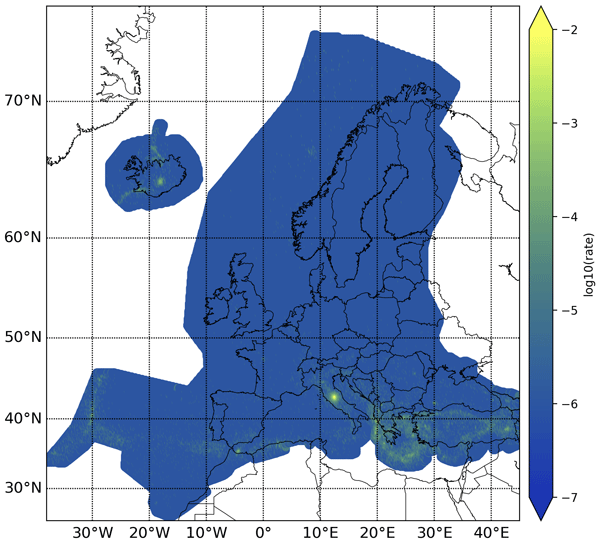
Marta Han, Leila Mizrahi, and Stefan Wiemer
Nat. Hazards Earth Syst. Sci., 25, 991–1012, https://doi.org/10.5194/nhess-25-991-2025, https://doi.org/10.5194/nhess-25-991-2025, 2025
Short summary
Short summary
Relying on recent accomplishments of collecting and harmonizing data by the 2020 European Seismic Hazard Model (ESHM20) and leveraging advancements in state-of-the-art earthquake forecasting methods, we develop a harmonized earthquake forecasting model for Europe. We propose several model variants and test them on training data for consistency and on a 7-year testing period against each other, as well as against both a time-independent benchmark and a global time-dependent benchmark.
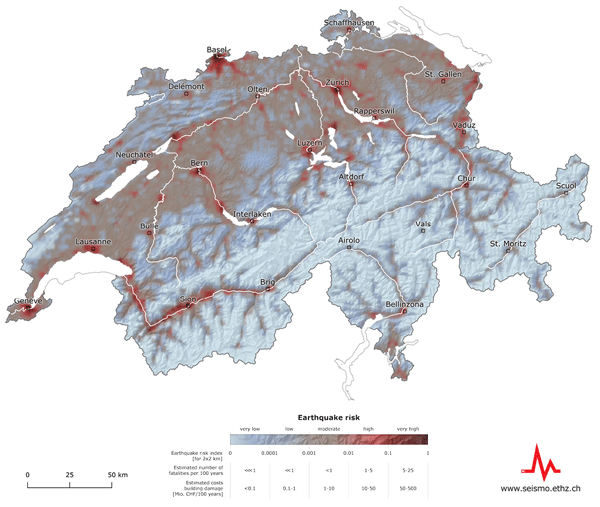
Athanasios N. Papadopoulos, Philippe Roth, Laurentiu Danciu, Paolo Bergamo, Francesco Panzera, Donat Fäh, Carlo Cauzzi, Blaise Duvernay, Alireza Khodaverdian, Pierino Lestuzzi, Ömer Odabaşi, Ettore Fagà, Paolo Bazzurro, Michèle Marti, Nadja Valenzuela, Irina Dallo, Nicolas Schmid, Philip Kästli, Florian Haslinger, and Stefan Wiemer
Nat. Hazards Earth Syst. Sci., 24, 3561–3578, https://doi.org/10.5194/nhess-24-3561-2024, https://doi.org/10.5194/nhess-24-3561-2024, 2024
Short summary
Short summary
The Earthquake Risk Model of Switzerland (ERM-CH23), released in early 2023, is the culmination of a multidisciplinary effort aiming to achieve, for the first time, a comprehensive assessment of the potential consequences of earthquakes on the Swiss building stock and population. ERM-CH23 provides risk estimates for various impact metrics, ranging from economic loss as a result of damage to buildings and their contents to human losses, such as deaths, injuries, and displaced population.
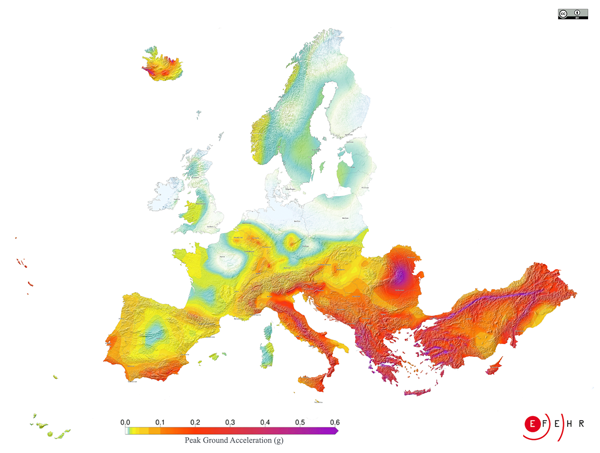
Laurentiu Danciu, Domenico Giardini, Graeme Weatherill, Roberto Basili, Shyam Nandan, Andrea Rovida, Céline Beauval, Pierre-Yves Bard, Marco Pagani, Celso G. Reyes, Karin Sesetyan, Susana Vilanova, Fabrice Cotton, and Stefan Wiemer
Nat. Hazards Earth Syst. Sci., 24, 3049–3073, https://doi.org/10.5194/nhess-24-3049-2024, https://doi.org/10.5194/nhess-24-3049-2024, 2024
Short summary
Short summary
The 2020 European Seismic Hazard Model (ESHM20) is the latest seismic hazard assessment update for the Euro-Mediterranean region. This state-of-the-art model delivers a broad range of hazard results, including hazard curves, maps, and uniform hazard spectra. ESHM20 provides two hazard maps as informative references in the next update of the European Seismic Design Code (CEN EC8), and it also provides a key input to the first earthquake risk model for Europe.
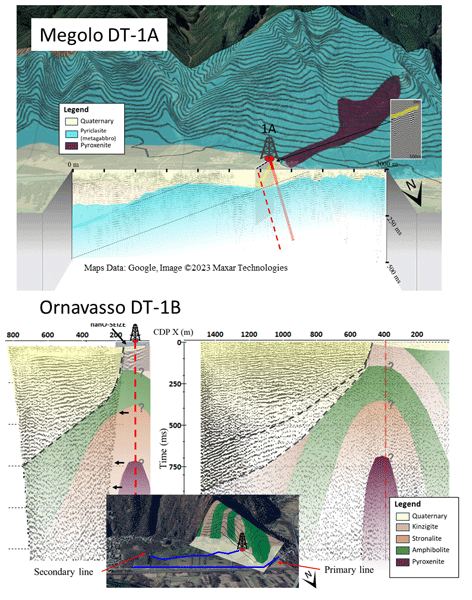
Andrew Greenwood, György Hetényi, Ludovic Baron, Alberto Zanetti, Othmar Müntener, and the MOS field team
Sci. Dril., 33, 219–236, https://doi.org/10.5194/sd-33-219-2024, https://doi.org/10.5194/sd-33-219-2024, 2024
Short summary
Short summary
A set of seismic reflection surveys were conducted in May 2019 in the Ossola Valley, Western Italian Alps, to image the geologic structure below two proposed boreholes. The boreholes plan to penetrate the upper 2 km of the lower continental crust, a zone of much scientific interest. The seismic surveys have defined the valley structure to depths of 550 m, determined the dip of geological banding, and ruled out the possibility of major geologic drilling hazards that could be encountered.
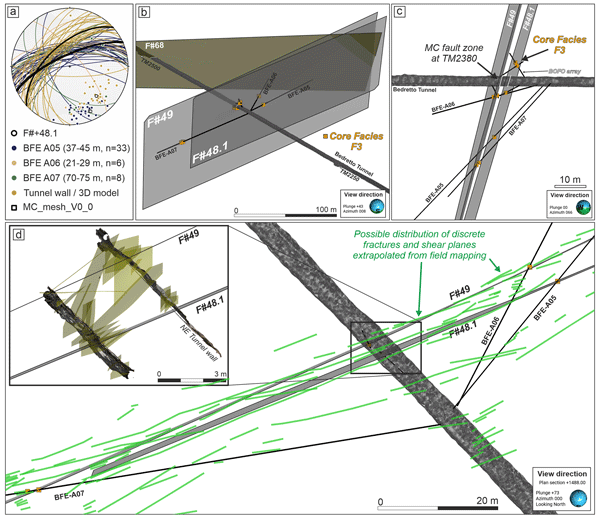
Peter Achtziger-Zupančič, Alberto Ceccato, Alba Simona Zappone, Giacomo Pozzi, Alexis Shakas, Florian Amann, Whitney Maria Behr, Daniel Escallon Botero, Domenico Giardini, Marian Hertrich, Mohammadreza Jalali, Xiaodong Ma, Men-Andrin Meier, Julian Osten, Stefan Wiemer, and Massimo Cocco
Solid Earth, 15, 1087–1112, https://doi.org/10.5194/se-15-1087-2024, https://doi.org/10.5194/se-15-1087-2024, 2024
Short summary
Short summary
We detail the selection and characterization of a fault zone for earthquake experiments in the Fault Activation and Earthquake Ruptures (FEAR) project at the Bedretto Lab. FEAR, which studies earthquake processes, overcame data collection challenges near faults. The fault zone in Rotondo granite was selected based on geometry, monitorability, and hydro-mechanical properties. Remote sensing, borehole logging, and geological mapping were used to create a 3D model for precise monitoring.
Maren Böse, Laurentiu Danciu, Athanasios Papadopoulos, John Clinton, Carlo Cauzzi, Irina Dallo, Leila Mizrahi, Tobias Diehl, Paolo Bergamo, Yves Reuland, Andreas Fichtner, Philippe Roth, Florian Haslinger, Frédérick Massin, Nadja Valenzuela, Nikola Blagojević, Lukas Bodenmann, Eleni Chatzi, Donat Fäh, Franziska Glueer, Marta Han, Lukas Heiniger, Paulina Janusz, Dario Jozinović, Philipp Kästli, Federica Lanza, Timothy Lee, Panagiotis Martakis, Michèle Marti, Men-Andrin Meier, Banu Mena Cabrera, Maria Mesimeri, Anne Obermann, Pilar Sanchez-Pastor, Luca Scarabello, Nicolas Schmid, Anastasiia Shynkarenko, Bozidar Stojadinović, Domenico Giardini, and Stefan Wiemer
Nat. Hazards Earth Syst. Sci., 24, 583–607, https://doi.org/10.5194/nhess-24-583-2024, https://doi.org/10.5194/nhess-24-583-2024, 2024
Short summary
Short summary
Seismic hazard and risk are time dependent as seismicity is clustered and exposure can change rapidly. We are developing an interdisciplinary dynamic earthquake risk framework for advancing earthquake risk mitigation in Switzerland. This includes various earthquake risk products and services, such as operational earthquake forecasting and early warning. Standardisation and harmonisation into seamless solutions that access the same databases, workflows, and software are a crucial component.
Irina Dallo, Michèle Marti, Nadja Valenzuela, Helen Crowley, Jamal Dabbeek, Laurentiu Danciu, Simone Zaugg, Fabrice Cotton, Domenico Giardini, Rui Pinho, John F. Schneider, Céline Beauval, António A. Correia, Olga-Joan Ktenidou, Päivi Mäntyniemi, Marco Pagani, Vitor Silva, Graeme Weatherill, and Stefan Wiemer
Nat. Hazards Earth Syst. Sci., 24, 291–307, https://doi.org/10.5194/nhess-24-291-2024, https://doi.org/10.5194/nhess-24-291-2024, 2024
Short summary
Short summary
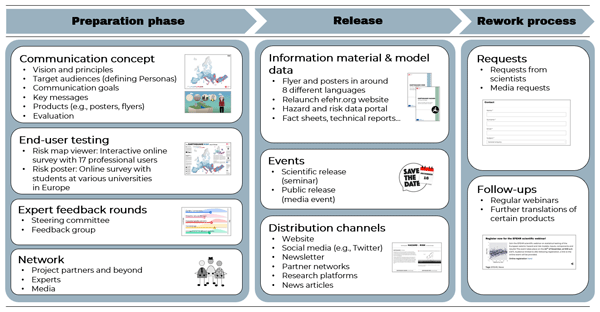
For the release of cross-country harmonised hazard and risk models, a communication strategy co-defined by the model developers and communication experts is needed. The strategy should consist of a communication concept, user testing, expert feedback mechanisms, and the establishment of a network with outreach specialists. Here we present our approach for the release of the European Seismic Hazard Model and European Seismic Risk Model and provide practical recommendations for similar efforts.
Konstantinos Michailos, György Hetényi, Matteo Scarponi, Josip Stipčević, Irene Bianchi, Luciana Bonatto, Wojciech Czuba, Massimo Di Bona, Aladino Govoni, Katrin Hannemann, Tomasz Janik, Dániel Kalmár, Rainer Kind, Frederik Link, Francesco Pio Lucente, Stephen Monna, Caterina Montuori, Stefan Mroczek, Anne Paul, Claudia Piromallo, Jaroslava Plomerová, Julia Rewers, Simone Salimbeni, Frederik Tilmann, Piotr Środa, Jérôme Vergne, and the AlpArray-PACASE Working Group
Earth Syst. Sci. Data, 15, 2117–2138, https://doi.org/10.5194/essd-15-2117-2023, https://doi.org/10.5194/essd-15-2117-2023, 2023
Short summary
Short summary
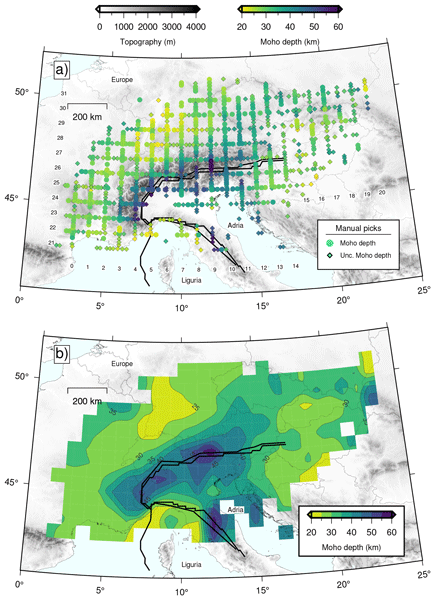
We examine the spatial variability of the crustal thickness beneath the broader European Alpine region by using teleseismic earthquake information (receiver functions) on a large amount of seismic waveform data. We compile a new Moho depth map of the broader European Alps and make our results freely available. We anticipate that our results can potentially provide helpful hints for interdisciplinary imaging and numerical modeling studies.
Christophe Lienert, Franziska Angly Bieri, Irina Dallo, and Michèle Marti
Abstr. Int. Cartogr. Assoc., 5, 154, https://doi.org/10.5194/ica-abs-5-154-2022, https://doi.org/10.5194/ica-abs-5-154-2022, 2022
Xiaodong Ma, Marian Hertrich, Florian Amann, Kai Bröker, Nima Gholizadeh Doonechaly, Valentin Gischig, Rebecca Hochreutener, Philipp Kästli, Hannes Krietsch, Michèle Marti, Barbara Nägeli, Morteza Nejati, Anne Obermann, Katrin Plenkers, Antonio P. Rinaldi, Alexis Shakas, Linus Villiger, Quinn Wenning, Alba Zappone, Falko Bethmann, Raymi Castilla, Francisco Seberto, Peter Meier, Thomas Driesner, Simon Loew, Hansruedi Maurer, Martin O. Saar, Stefan Wiemer, and Domenico Giardini
Solid Earth, 13, 301–322, https://doi.org/10.5194/se-13-301-2022, https://doi.org/10.5194/se-13-301-2022, 2022
Short summary
Short summary
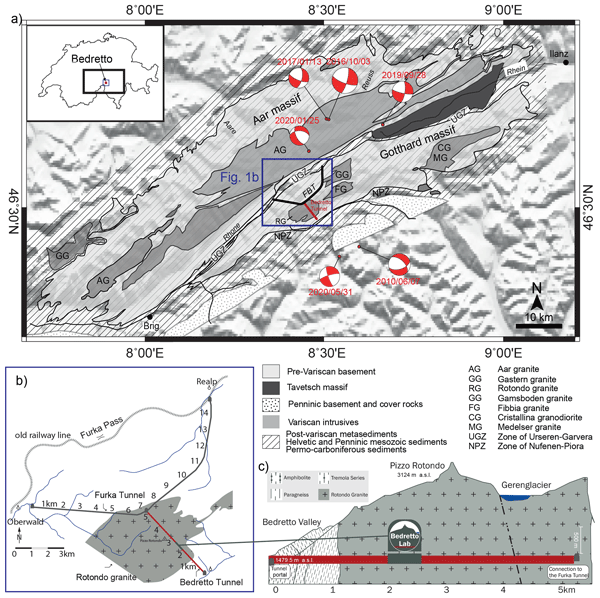
Questions on issues such as anthropogenic earthquakes and deep geothermal energy developments require a better understanding of the fractured rock. Experiments conducted at reduced scales but with higher-resolution observations can shed some light. To this end, the BedrettoLab was recently established in an existing tunnel in Ticino, Switzerland, with preliminary efforts to characterize realistic rock mass behavior at the hectometer scale.

Jaroslava Plomerová, Helena Žlebčíková, György Hetényi, Luděk Vecsey, Vladislav Babuška, and AlpArray-EASI and AlpArray working
groups
Solid Earth, 13, 251–270, https://doi.org/10.5194/se-13-251-2022, https://doi.org/10.5194/se-13-251-2022, 2022
Short summary
Short summary
We present high-resolution tomography images of upper mantle structure beneath the E Alps and the adjacent Bohemian Massif. The northward-dipping lithosphere, imaged down to ∼200 km beneath the E Alps without signs of delamination, is probably formed by a mixture of a fragment of detached European plate and the Adriatic plate subductions. A detached high-velocity anomaly, sub-parallel to and distinct from the E Alps heterogeneity, is imaged at ∼100–200 km beneath the southern part of the BM.
Cited articles
Amashukeli, T., Farfuliak, L., Haniiev, O., and Petrenko, K.: Ukrainian Seismic Network: Current Status and Challenges, Seismol. Res. Lett., 95, 2038–2040, https://doi.org/10.1785/0220230337, 2024.
Balfour, N. J., Salmon, M., and Sambridge, M.: The Australian Seismometers in Schools Network: Education, Outreach, Research, and Monitoring, Seismol. Res. Lett., 85, 1063–1068, https://doi.org/10.1785/0220140025, 2014.
Berenguer, J.-L., Balestra, J., Jouffray, F., Mourau, F., Courboulex, F., and Virieux, J.: Celebrating 25 years of seismology at schools in France, Geosci. Commun., 3, 475–481, https://doi.org/10.5194/gc-3-475-2020, 2020.
Braile, L., Hall, M., Taber, J., and Aster, R.: The IRIS education and outreach program, Seismol. Res. Lett., 74, 503–510, https://doi.org/10.1785/gssrl.74.5.503, 2003.
Bravo, T., Taber, J., and Davis, H.: A Case Study of Highly-Engaged Educators' Integration of Real-Time Seismic Data in Secondary Classrooms, Front. Earth Sci., 8, 180, https://doi.org/10.3389/feart.2020.00180, 2020.
Böse, M., Valenzuela, N., Dallo, I., Hetényi, G., Racine, R., Clinton, J., and Roduit, R.: Seismo@School – A Swiss-wide initiative to bring current earthquake knowledge to schools, 39th General Assembly of the European Seismological Commission, 22–27 September 2024, Corfu, Greece, https://www.erasmus.gr/UsersFiles/microsite1277/Documents/2024.08.22_ESC2024PROGRAMME.pdf (last access: April 2026), 2024a.
Böse, M., Danciu, L., Papadopoulos, A., Clinton, J., Cauzzi, C., Dallo, I., Mizrahi, L., Diehl, T., Bergamo, P., Reuland, Y., Fichtner, A., Roth, P., Haslinger, F., Massin, F., Valenzuela, N., Blagojević, N., Bodenmann, L., Chatzi, E., Fäh, D., Glueer, F., Han, M., Heiniger, L., Janusz, P., Jozinović, D., Kästli, P., Lanza, F., Lee, T., Martakis, P., Marti, M., Meier, M.-A., Mena Cabrera, B., Mesimeri, M., Obermann, A., Sanchez-Pastor, P., Scarabello, L., Schmid, N., Shynkarenko, A., Stojadinović, B., Giardini, D., and Wiemer, S.: Towards a dynamic earthquake risk framework for Switzerland, Nat. Hazards Earth Syst. Sci., 24, 583–607, https://doi.org/10.5194/nhess-24-583-2024, 2024b.
Cantore, L., Bobbio, A., Di Martino, F., Petrilio, A., Simini, M., and Zollo, A.: The EduSeis Project in Italy: An Educational Tool for Training and Increasing Awareness of Seismic Risk, Seismol. Res. Lett., 74, 596–602, https://doi.org/10.1785/gssrl.74.5.596, 2003.
Cauzzi, C. and Clinton, J.: A High- and Low-Noise Model for High-Quality Strong-Motion Accelerometer Stations, Earthq. Spectra, 29, 85–102, https://doi.org/10.1193/1.4000107, 2013.
Chen, K. H., Bossu, R., and Liang, W.-T.: Editorial: The Power of Citizen Seismology: Science and Social Impacts, Front. Earth Sci., 8, 610813, https://doi.org/10.3389/feart.2020.610813, 2020.
Clinton, J., Cauzzi, C., Fäh, D., Michel, C., Zweifel, P., Olivieri, M., Cua, G., Haslinger, F., and Giardini, D.: The current state of strong motion monitoring in Switzerland, Earthquake Data in Engineering Seismology: Predictive Models, Data Management and Networks, Springer Dordrecht Heidelberg London New York, 219–233, ISBN 978-94-007-0151-9, https://doi.org/10.1007/978-94-007-0152-6_15, 2011.
Courboulex, F., Bérenguer, J.-L., Tocheport, A., Bouin, M.-P., Calais, E., Dervaux, S., Virmoux, C., and Vincent, M. P.: Sismos à l'Ecole: A worldwide network of real-time seismometers in schools, Seismol. Res. Lett., 83, 870–873, 2012.
Crowley, H., Dabbeek, J., Despotaki, V., Rodrigues, D., Martins, L., Silva, V., Romão, X., Pereira, N., Weatherill, G., and Danciu, L.: European Seismic Risk Model (ESRM20), EFEHR Technical Report 002, V1.0.0, 84 pp., https://doi.org/10.7414/EUC-EFEHR-TR002-ESRM20, 2021.
Dallo, I., Marti, M., Clinton, J., Böse, M., Massin, F., and Zaugg, S.: Earthquake early warning in countries where damaging earthquakes only occur every 50 to 150 years – The societal perspective, Int. J. Disast. Risk Re., 83, 103, https://doi.org/10.1016/j.ijdrr.2022.103441, 2022a.
Dallo, I., Corradini, M., Fallou, L., and Marti, M.: How to fight misinformation about earthquakes? – A Communication Guide, Swiss Seismological Service at ETH Zurich, https://doi.org/10.3929/ethz-b-000530319, 2022b.
Dallo, I., Böse, M., Hetényi, G., and Roduit, R.: Seismo@School – A Swiss-wide initiative to bring current earthquake knowledge to schools, 21st Swiss Geoscience Meeting, 17–19 November 2023, Mendrisio, Switzerland, https://geoscience-meeting.ch/sgm2023/ (last access: April 2026), 2023.
Danciu, L., Nandan, S., Reyes, C., Basili, R., Weatherill, G., Beauval, C., Rovida, A., Vilanova, S., Sesetyan, K., Bard, P.-Y., Cotton, F., Wiemer, S., and Giardini, D.: The 2020 update of the European Seismic Hazard Model: Model Overview, EFEHR Technical Report 001, V1.0.0, https://doi.org/10.12686/a15, 2021.
Denton, P.: Seismology in schools: 10 years on, Astron. Geophys., 49, 6.13–6.14, https://doi.org/10.1111/j.1468-4004.2008.49613.x, 2008.
Denton, P., Fishwick, S., Lane, V., and Daly, D.: Football Quakes as a Tool for Student Engagement, Seismol. Res. Lett., 89, 1902–1907, https://doi.org/10.1785/0220180078, 2018.
Diehl, T., Kraft, T., Kissling, E., and Wiemer, S.: The induced earthquake sequence related to the St. Gallen deep geothermal project (Switzerland): Fault reactivation and fluid interactions imaged by microseismicity, J. Geophys. Res.-Sol. Ea., 122, 7272–7290, https://doi.org/10.1002/2017JB014473, 2017.
Diehl, T., Cauzzi, C., Clinton, J., Kraft, T., Kästli, P., Massin, F., Lanza, F., Simon, V., Grigoli, F., Hobiger, M., Roth, P., Haslinger, F., and Fäh, D.: Earthquakes in Switzerland and surrounding regions during 2019 and 2020, Swiss J. Geosci., 118, https://doi.org/10.1186/s00015-025-00489-4, 2025.
Fäh, D., Giardini, D., Kästli, P., Deichmann, N., Gisler, M., Schwarz-Zanetti, G., Alvarez-Rubio, S., Sellami, S., Edwards, B., Allmann, B., Bethmann, F., Wössner, J., Gassner-Stamm, G., Fritsche, S., and Eberhard, D.: ECOS-09 Earthquake Catalogue of Switzerland Release 2011 Report and Database, Public catalogue, 17, 4, Swiss Seismological Service ETH Zurich, Report SED/RISK/R/001/20110417, 2011.
FOCP (Federal Office for Civil Protection): National Risk Analysis Report, Disasters and Emergencies in Switzerland 2025, FOCP, Bern, https://www.babs.admin.ch/en/publication?id=P5wShHylcu1J (last access: April 2026), 2026.
Grigoli, F., Cesca, S., Priolo, E., Rinaldi, A. P., Clinton, J. F., Stabile, T. A., Dost, B., Fernandez, M. G., Wiemer, S., and Dahm, T.: Current challenges in monitoring, discrimination, and management of induced seismicity related to underground industrial activities: A European perspective, Rev. Geophys., 55, 310–340, https://doi.org/10.1002/2016RG000542, 2017.
Hetényi, G. and Subedi, S.: A call to action for a comprehensive earthquake education policy in Nepal, Seismica, 2, 242, https://doi.org/10.26443/seismica.v2i2.242, 2023.
Hetényi, G., Subedi, S., Roduit, R., Valenzuela, N., Böse, M., and Sauron, A.: Programmes scolaires dédiés comme actions de science citoyenne: exemples du Népal et de la Suisse, CitSciHelvetia'25, 5–6 June 2025, Lausanne, Switzerland, https://www.citscihelvetia.ch/provisional-program (last access: April 2026), 2025.
Jahn, T., Bergmann, M., and Keil, F.: Transdisciplinarity: Between mainstreaming and marginalization. Ecological Economics, 79, 1–10, https://doi.org/10.1016/j.ecolecon.2012.04.017, 2012.
Lang, D. J., Wiek, A., Bergmann, M., Stauffacher, M., Martens, P., Moll, P., Swilling, M., and Thomas, C. J.: Transdisciplinary research in sustainability science: Practice, principles, and challenges, Sustain. Sci., 7, 25–43, https://doi.org/10.1007/s11625-011-0149-x, 2012.
Löberich, E. and Long, M. D.: Follow the Trace: Becoming a Seismo-Detective with a Campus-Based Raspberry Shake Seismometer, Seismol. Res. Lett., 95, 2538–2553, https://doi.org/10.1785/0220230365, 2024.
Marti, M., Dallo, I., Roth, P., Papadopoulos, A. N., and Zaugg, S.: Illustrating the impact of earthquakes: Evidence-based and user-centered recommendations on how to design earthquake scenarios and rapid impact assessments, Int. J. Disast. Risk Re., 90, 103674, https://doi.org/10.1016/j.ijdrr.2023.103674, 2023.
Martinez, S.: Geoscience enrollment and degrees continue to decline through 2021, Geoscience Currents, 172, American Geosciences Institute, https://profession.americangeosciences.org/research/geoscience-currents (last access: April 2026), 2022.
Mignan, A., Landtwing, D., Kästli, P., Mena, B., and Wiemer, S.: Induced seismicity risk analysis of the 2006 Basel, Switzerland, Enhanced Geothermal System project: Influence of uncertainties on risk mitigation, Geothermics, 53, 133–146, https://doi.org/10.1016/j.geothermics.2014.05.007, 2015.
Moein, M. J. A., Langenbruch, C., Schultz, R., Grigoli, F., Ellsworth, W. L., Wang, R., Rinaldi, A. P., and Shapiro, S.: The physical mechanisms of induced earthquakes, Nat. Rev. Earth Environ., 4, 847–863, https://doi.org/10.1038/s43017-023-00497-8, 2023.
Paluszny, A., Schultz, R., and Zimmermann, G.: Induced seismicity in coupled subsurface systems, Philos. T. R. Soc. A, 382, 20230193, https://doi.org/10.1098/rsta.2023.0193, 2024.
Pearce, B. and Ejderyan, O.: Joint problem framing as reflexive practice: Honing a transdisciplinary skill, Sustain. Sci., 15, 683–698, https://doi.org/10.1007/s11625-019-00744-2, 2020.
Peterson, J.: Observations and modeling of background seismic noise, U.S. Geol. Surv. Open-File Rept. 93-322, Albuquerque, New Mexico, https://doi.org/10.3133/ofr93322, 1993.
Sornette, A. and Haslinger, F.: Seismo at school in Switzerland, EMSC Newsl., 24, 15, 2009.
Stevenson, J., Denton, P., and Lemon, K.: BGS – Education through open doors and OpenGeoscience, Leading Edge, 34, 1376–1380, https://doi.org/10.1190/tle34111376.1, 2015.
Subedi, S., Hetényi, G., Denton, P., and Sauron, A.: Seismology at School in Nepal: A program for educational and citizen seismology through a low-cost seismic network, Front. Earth Sci., 8, 73, https://doi.org/10.3389/feart.2020.00073, 2020a.
Subedi, S., Hetényi, G., and Shackleton, R.: Impact of an educational program on earthquake awareness and preparedness in Nepal, Geosci. Commun., 3, 279–290, https://doi.org/10.5194/gc-3-279-2020, 2020b.
Subedi, S., Valenzuela, N., Dhami, P., Böse, M., Hetényi, G., Chardot, L., Adhikari, L. B., Bhattarai, M., Dhakal, R. P., Houghton, S., and Upreti, B. N.: Organizing an Earthquake Learning Exhibition for transferring geoscience knowledge to the public: the example from Nepal, Geosci. Commun., 9, 101–114, https://doi.org/10.5194/gc-9-101-2026, 2026.
Swiss Seismological Service (SED At ETH Zurich): Seismology at School Program, ETH Zurich; ETH Zurich [data set], https://doi.org/10.12686/SED/NETWORKS/S, 2008.
Tan, M. L., Vinnell, L., Prasanna, R., Cui, A., Chandrakumar, C., Imtiaz, S. Y., Hong, B., and Viggers, Z.: CRISiSLab Challenge: Hands-on learning with Raspberry Shake seismometers, Poster abstract, QuakeCoRE Annual Meeting, https://quakecore.nz/wp-content/uploads/2022/08/2022-Abstract-Book-FINAL.pdf (last access: April 2026), 2022.
Wiemer, S., Danciu, L., Edwards, B., Marti, M., Fäh, D., Hiemer, S., Wössner, J., Cauzzi, C., Kästli, P., and Kremer, K.: Seismic Hazard Model 2015 for Switzerland (SUIhaz2015), Swiss Seismological Service at ETH Zurich, https://doi.org/10.12686/a2, 2016.
Wiemer, S., Bazzurro, P., Bergamo, P., Cauzzi, C., Dallo, I., Danciu, L., Duvernay, B., Fagà, E., Fäh, D., Hammer, C., Haslinger, F., Kästli, P., Khodaverdian, A., Lestuzzi, P., Marti, M., Odabaşı, Ö., Panzera, F., Papadopoulos, A., Perron, V., Roth, P., Schmid, N., Valenzuela, N., and Zaugg, S.: Earthquake Risk Model of Switzerland ERM-CH23, Swiss Seismological Service at ETH Zurich, https://doi.org/10.12686/a20, 2023.
Zollo, A. and Bobbio, A.: The Educational Seismological Project: EDUSEIS, Seismol. Res. Lett., 71, 530–535, 2000.
Editorial statement
This manuscript, and the excellent teaching resources and classroom materials within, effectively raises awareness of earthquake risk and should be disseminated to a wider audience. The hands-on, engaging DIY seismometer kit could also be commercially viable thereby allowing the initiative to reach its full potential.
This manuscript, and the excellent teaching resources and classroom materials within,...
Short summary
Although Switzerland faces moderate seismic hazard, earthquakes represent the natural risk with the greatest impact potential. As most residents have never experienced a damaging earthquake, education is critical for raising awareness and enhancing preparedness. In a recent project, we expanded the seismo@school program in Switzerland by developing new teaching materials in four languages, related classroom activities, and by installing Raspberry Shake seismometers in schools across the country.
Although Switzerland faces moderate seismic hazard, earthquakes represent the natural risk with...


Altmetrics
Final-revised paper
Preprint