
the Creative Commons Attribution 4.0 License.
the Creative Commons Attribution 4.0 License.
 | 21 Apr 2026
Multi-hazard risk assessment and management: pathways for the Sendai Framework and beyond
Timothy Tiggeloven

Colin Raymond
Marleen C. de Ruiter
Jana Sillmann
Annegret H. Thieken
Sophie L. Buijs
Roxana Ciurean
Emma Cordier
Julia M. Crummy
Lydia Cumiskey
Kelley De Polt
Melanie Duncan
Davide M. Ferrario
Wiebke S. Jäger
Elco E. Koks
Nicole van Maanen
Heather J. Murdock
Jaroslav Mysiak
Sadhana Nirandjan
Benjamin Poschlod
Peter Priesmeier
Nivedita Sairam
Pia-Johanna Schweizer
Tristian R. Stolte
Marie-Luise Zenker
James E. Daniell
Alexander Fekete
Christian M. Geiß
Marc J. C. van den Homberg
Sirkku K. Juhola
Christian Kuhlicke
Karen Lebek
Robert Šakić Trogrlić
Stefan Schneiderbauer
Silvia Torresan
Cees J. van Westen
Judith N. Claassen
Bijan Khazai
Virginia Murray
Julius Schlumberger
Philip J. Ward
Multi-hazard events pose increasingly complex challenges as natural hazards interact in cascading and compounding ways that amplify risks beyond individual hazards. Understanding these interactions – from hazard processes to cascading effects across social, economic, governance, and infrastructure systems – is critical for effective disaster risk management. National and international frameworks increasingly recognise these risk dynamics, most notably the United Nations Sendai Framework for Disaster Risk Reduction 2015–2030. The Sendai Framework Mid-Term Review (MTR) in 2023, however, identified substantial implementation challenges across its four priorities; these challenges include gaps in risk data governance, fragmented multi-scale coordination, insufficient investment mechanisms, and limited coverage of multi-hazard early warning systems. With the Sendai Framework approaching its conclusion, there is a pressing need to address these current shortcomings. Responding to this need, the 3rd International Conference on Natural Hazards and Risks in a Changing World took place in Amsterdam, the Netherlands, on 12–13 June 2024, with the objective of: (1) assessing current progress in multi-hazard risk research and policy practice; and (2) identifying scientific priorities to support further implementation of Sendai Framework until 2030 and beyond. Here, we document the arc of the scientific discussions held at the conference, synthesise the main findings from sessions, and set forth expert knowledge on how state-of-the-art science can fill gaps outlined by the MTR by identifying four perspective themes: (1) assessments and tools for risk understanding and decision-making; (2) understanding and management of complex risk landscapes; (3) emerging technologies for risk and resilience; and (4) multi-level governance for coordinated risk management. Ultimately, we call for governance reform enabling multi-scale coordination, investment in knowledge brokers translating across systems and scales, and participatory technology deployment ensuring emerging tools are applied to reduce disaster risk management inequalities. This perspective emphasises that effective Disaster Risk Reduction requires both incremental technical improvements and fundamental shifts in governance, data sharing, and inclusive engagement to address systemic risks and implementation gaps.
- Article
(2042 KB) - Full-text XML
- BibTeX
- EndNote


In March 2011, northeastern Japan experienced a devastating cascade of hazards when a magnitude 9.0 earthquake, the Great East Japan Earthquake, triggered a tsunami that breached protective barriers leading to the Fukushima nuclear disaster. This overwhelmed existing response systems and revealed compounding vulnerabilities (Mimura et al., 2011; Ranghieri and Ishiwatari, 2014). It is a tragic example of the complexity and interconnected nature of multi-hazard events and their subsequent catastrophic impacts on society. Understanding and managing disaster risk in all its dimensions requires consideration of complex interplays between natural hazards, exposure, vulnerability and response. Complex interactions may take many forms: hazards such as earthquakes, flooding, heatwaves, or windstorms may have direct and tangible impacts (e.g., injuries, deaths, infrastructure damage), and indirect or intangible impacts (e.g., long-term economic or social disruptions) (Ducros et al., 2025; Gall et al., 2015; Knittel et al., 2024; Mandel et al., 2021; Peduzzi, 2019; Ward et al., 2020; Weichselgartner and Pigeon, 2015). Often, these hazards are interconnected through triggering, amplifying, and compounding relationships that create complex risk landscapes, such as heatwaves and droughts increasing wildfire risk or seismic events causing landslides (Ciurean et al., 2018; Claassen et al., 2023; Gill and Malamud, 2014, 2016; Jäger et al., 2025; Libonati et al., 2022; de Ruiter et al., 2020; Takagi et al., 2019).
The multitude of hazards that a region faces, and the different ways in which they interact, are more broadly understood as multi-hazards (UNDRR, 2017). As of 2025, the UNDRR/International Science Council Hazard Information Profiles (Murray et al., 2021) have been updated to encompass multi-hazard contexts (Gill et al., 2025). The inherent complexity of multi-hazards challenges both preparatory and responsive disaster risk management (DRM), particularly because societies still recovering from one event often have reduced capacity to prepare for or respond to another hazard (De Angeli et al., 2022). In the context of multi-hazards, social, economic, governance, and cultural factors require explicit consideration that goes beyond traditional exposure and vulnerability assessments (Buijs et al., 2025; Haer and de Ruiter, 2024; Juhola et al., 2022). Advancing our understanding of multi-hazards is therefore critical for reducing their societal risks and impacts (Ward et al., 2022, 2026; White et al., 2025).
Recognising these challenges, national and international frameworks have increasingly stressed the importance of these dynamics, most notably the Sendai Framework for Disaster Risk Reduction 2015–2030 (UNDRR, 2015). The Sendai Framework represents a paradigm shift in DRM by emphasising the need for a multi-hazard and systemic risk assessment approach. It focuses on reducing existing risks and avoiding new risks. and enhancing resilience through four priorities: (1) Understanding Risks; (2) Strengthening Governance to Manage Risk; (3) Investing in Disaster Risk Reduction (DRR) for Resilience; and (4) Preparedness for Response and “Building Back Better (BBB)” for Recovery. One of the guiding principles of the Sendai Framework is the recognition of systemic risks that emerge from the interconnectedness of multi-hazards and their cascading effects on society, economy, and the environment (Hochrainer-Stigler et al., 2023; ISC-UNDRR-RISK KAN Briefing note on systemic risk, 2025). It also highlights the need for a comprehensive, multi-level governance and stakeholder approach to DRR, including governmental actors, the private sector, and the civil society/community level.
Nearly a decade after its inception, while the Sendai Framework has seen some advances toward its seven global targets, particularly in expanding early warning system (EWS) coverage (Target G) and enhancing international cooperation (Target F), overall progress remains insufficient. The Sendai Framework Midterm Review (MTR) (UNDRR, 2023) documented that most targets are unlikely to be met by 2030, with particular shortfalls in reducing disaster affected population totals (Target B), economic losses (Target C), and infrastructure damage (Target D). Critically, there has been a lack of progress on preventing the creation of new risks, as disaster impacts continue to rise in absolute terms despite increased DRR investments.
Analysis of the MTR reveals that implementation gaps cluster around three interrelated challenges. First, persistent knowledge and data gaps: inadequate understanding of how hazards interact, limited data on cascading impacts, and insufficient tools for multi-hazard risk assessment hinder effective planning and investment decisions. Second, governance fragmentation: siloed institutional structures, weak coordination across scales and sectors, and inadequate legal frameworks prevent coherent risk management even when knowledge exists. Third, resource and capacity constraints: insufficient public and private investments in DRR, limited technical capacity for integrated risk assessment, and inequitable access to EWS perpetuate vulnerabilities, particularly in resource-poor contexts. Critically, these challenges are interconnected: knowledge gaps justify continued siloed approaches; fragmented governance limits demand for integrated knowledge; and resource constraints prevent both knowledge generation and governance reform.
Therefore, advancing the scientific foundation of multi-hazard risk assessment is essential, not as a substitute for governance or investment reforms, but as a necessary complement that can demonstrate the value of integrated approaches and at the same time provide evidence for investment prioritisation, and enable more effective multi-scale coordination. This includes developing a shared understanding of risk, improving tools and methodologies, ensuring all-of-society engagement in DRR, and applying emerging technologies to manage complex risks. Multi-hazard research is particularly crucial because single-hazard approaches systematically underestimate risks when hazards interact, leading to sub-optimal resources and inadequate preparedness for such events (Brett et al., 2025b; Hochrainer-Stigler et al., 2023; Šakić Trogrlić et al., 2024). Extreme events continue to increase in frequency and severity, heightening the urgency. Although various multi-stakeholder initiatives, such as the Global Platform for Disaster Risk Reduction, Early Warning for All, and the Global Initiative on Resilience to Natural Hazards through AI Solutions, have been making important strides, critical implementation gaps however remain.
Responding to these needs, the 3rd International Conference on Natural Hazards and Risks in a Changing World took place in Amsterdam, the Netherlands, on 12–13 June 2024, with the objective of strengthening the integration of multi-hazard risk into scientific research and policy practice in support of the Sendai Framework. This gathering brought together approximately 280 scientists and practitioners, providing a platform to foster a dialogue and collaboration across disciplines and sectors, while placing special emphasis on strategies for tackling the complexity of multi-hazard DRM research and management. Attendees presented progress in addressing multi-hazards and captured how emerging research and technologies can be harnessed for reducing risks in an increasingly interconnected world. Here, we document the extent of the scientific discussions held at the conference, synthesise the main findings from sessions, and set forth expert knowledge on how state-of-the-art science can address gaps outlined by the MTR through four research questions linked to identified perspective themes that emerged from conference discussions and are aligned with Sendai Framework MTR gaps. The following research questions arose during discussions and will be considered throughout this study:
-
How can inclusive, participatory assessment approaches and advanced analytical tools bridge the gap between scientific risk knowledge and actionable decision-making across diverse stakeholder communities? (Tools and Assessments for Resilient Decision-Making)
-
What methodological and governance advances are needed to capture systemic risk dynamics and enable integrated decision-making for multi-hazard risks across interconnected social-ecological systems? (Complex Risk Landscapes)
-
How can artificial intelligence (AI), digital twins, and earth observation technologies be integrated to enhance multi-hazard risk assessment capabilities while ensuring accessibility and interpretability for decision-makers? (Emerging Technologies for Risk and Resilience)
-
What governance frameworks and institutional arrangements are most effective for enabling coherent, integrated risk management that spans sectors, scales, and disciplines while maintaining operational feasibility? (Multi-Level Governance for Multi-Hazard Risk Management)
We address these questions by drawing on multiple complementary sources such as expert consultations with session conveners, thematic analysis of conference session reports, posters and presentations, and examples of existing tools and applications from the literature to contextualise conference insights within broader scientific and policy developments. Our findings identify key areas of attention for scientific research, policy, and practice to develop a more resilient and better prepared society.
This paper synthesises insights from the “Natural Hazards and Risks in a Changing World” conference, held in Amsterdam, the Netherlands, in June 2024, through a structured methodological approach that combines multiple data collection and analysis techniques. The conference was organised by the MYRIAD-EU project, RISK-KAN, and the NatRiskChange research training group, but abstract submission was open to all, though many attendees were affiliated with institutes in Europe. Our methodological approach progressed through the following sequential steps:
-
Identification of key themes and knowledge gaps in multi-hazard risk research by the organising committee, with themes aligned to address shortcomings identified in the Sendai Framework MTR
-
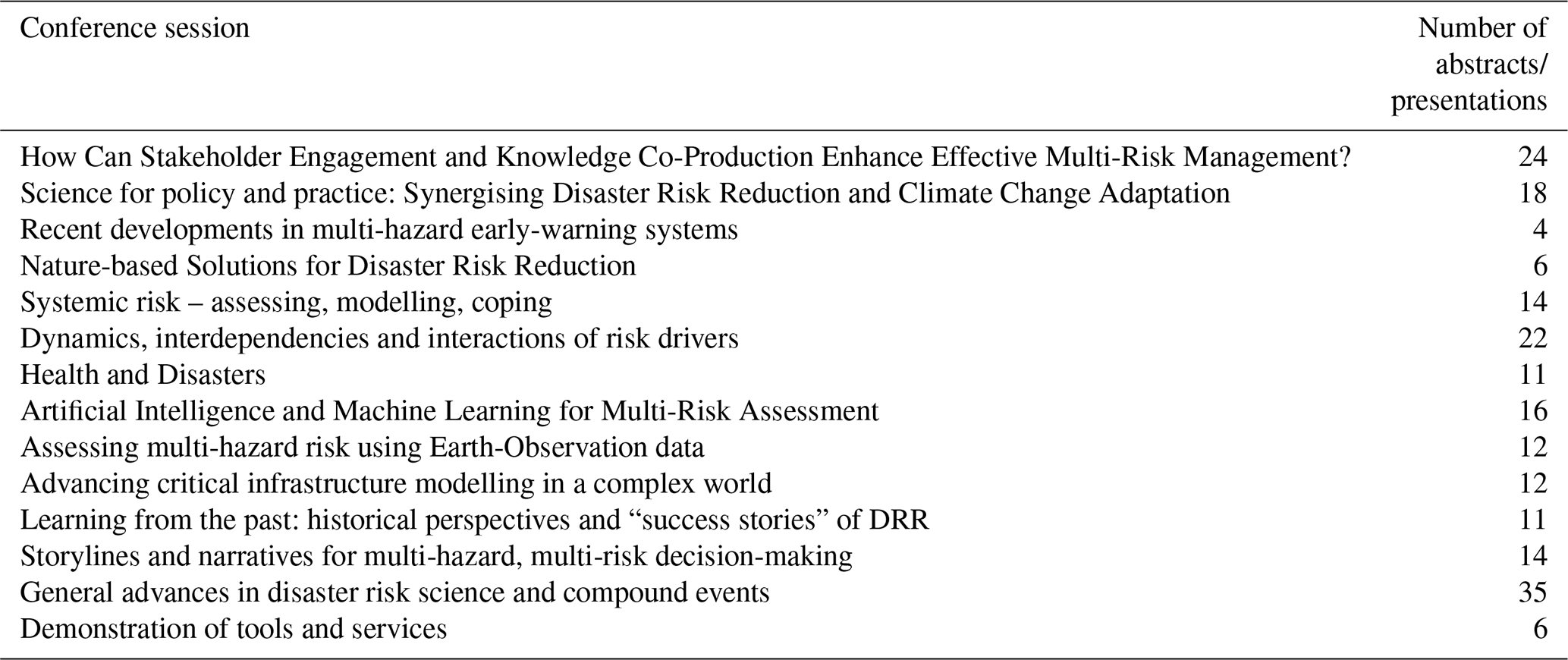
Development and organisation of 14 specialised conference sessions by expert session conveners reflecting these priority themes (see Table 1)
-
Pre-conference survey of participants (n=86) to identify perceived barriers to multi-hazard risk research and management
-
Facilitation of the conference with approximately 280 participants from diverse scientific disciplines and areas of practice
-
Collection of session summaries/reports from conveners and rapporteurs, focusing on contributions to novel scientific ideas (Appendix A)
-
Inductive thematic analysis of conference outputs is developed to identify emergent themes and knowledge priorities
-
Retrospective mapping of emergent themes and themes assigned to gaps identified in the Sendai Framework MTR
-
Development of four “perspective themes” based on the cross-comparison of conference discussions and Sendai Framework gaps: Complex Risks; Assessments and Tools; Emerging Technologies; and Multi-level Governance
-
Post-conference survey of session conveners for detailed written input on how their sessions can address gaps identified in the Sendai Framework MTR linked to one of the perspectives themes (Appendix B)
-
Integration and thematic analysis of all inputs (survey data, session reports, expert insights) to refine/discuss four key perspective themes (Sect. 3) and outlook (Sect. 4, see Fig. 2)
2.1 Conference structure and participants
The conference hosted 14 sessions, as proposed by the conveners (see Table 1). For an overview of all abstracts, see Mirenzi and Pijpen (2024) (abstract booklet). For an overview of conference reports of the sessions see Appendix A.
Table 1Overview of conference sessions and number of abstracts selected for poster or oral presentation.
2.2 Analytical framework development
Following the conference, we conducted a systematic, inductive analysis of the 14 session reports to identify recurring themes, methodological approaches, and knowledge gaps that organically emerged from conference discussions. This bottom-up analysis revealed four major thematic clusters (Complex Risks; Tools and Assessment; Emerging Technologies; and Multi-level Governance), which we then mapped against gaps identified in the Sendai Framework MTR (UNDRR, 2023) to situate them within the policy context. This retrospective mapping demonstrated strong alignment between conference priorities and policy needs. Each emergent theme was then articulated as a research question (see Sect. 3 introductions) to provide a framework for organising our synthesis.
2.3 Post-conference expert consultation
After the conference, we assigned each session to one of the four perspective themes based on the primary focus of the session content and its strongest alignment with our analytical approach. Session conveners of the 14 sessions were asked to respond to specific questions related to their assigned perspective theme (detailed in Appendix B). These questions were designed to elicit insights on how their session topics contribute to addressing the specific research question associated with their perspective theme.
We acknowledge that these thematic categorisations are not mutually exclusive as many sessions contained elements relevant to multiple perspective themes. For example, AI applications discussions in the Emerging Technologies perspective theme may overlap with methodology advances in the Assessments and Tools perspective theme. At the same time, Complex Risks could reasonably intersect with governance challenges addressed in the Multi-level Governance perspective theme. Moreover, the Critical Infrastructure session could equally fit within Complex Risks as its assigned category of Emerging Technologies. This interconnected nature reflects the holistic approach needed to address multi-hazard risks, and the categorisation served as a practical analytical approach rather than a rigid taxonomy. The assignment of sessions to perspectives was conducted by the lead authors and validated through discussion with session conveners during the post-conference consultation process. Drawing from all sources across these interconnected perspectives, we synthesised two main priorities per perspective theme through iterative discussion among the author team.
2.4 Survey design and analysis
The anonymous online survey of conference participants was conducted in the weeks leading up to the conference. From this we obtained 86 unique responses, representing approximately 40 % of conference attendees. As questions were not mandatory, per-question sample sizes vary from 32 to 73. Respondents span various career stages, with 66 % identified themselves as Early Career Researchers (PhD students or postdoctoral researchers). Half of the respondents work at universities, followed by another 26 % at national research institutes. This academic-heavy representation should be noted as a potential limitation when interpreting the survey findings. Fields of research and practice were highly diverse, spanning the physical and social sciences across disaster risk research, with flooding (25 %) being the most frequently cited specialisation, followed by multi-hazard (21 %), DRM/DRR (18 %), climate adaptation/change/risk (18 %), and infrastructure resilience (8 %), along with substantial representation across other hazards (11 %) such as volcanic eruptions, landslides, and wildfires.
The survey consisted of 20 questions covering demographic information, research specialisations, conference logistics, perceived barriers to multi-hazard research and management, and prototypical examples of multi-hazard events. The survey was distributed via email to all registered conference participants two weeks before the conference, with several reminders sent.
Within the survey, we used the answers to the following questions to directly inform our outlook section (Sect. 4): “What do you think is the biggest impediment to progress in understanding of multi-hazard risks over the next 5 years?” and “What do you think is the biggest impediment to better managing multi-hazard risks over the next 5 years?”. We conducted a qualitative, thematic analysis of these open-ended responses, identifying recurring concerns and grouping them into key categories that informed our recommendations. From the survey responses, thematic patterns emerged around institutional capacity, coordination challenges, and technical limitations. The integration of survey insights with conference discussions and expert consultations provided triangulation of findings across different data sources. The following sections combine these data sources and are bolstered by comparison with recent literature.
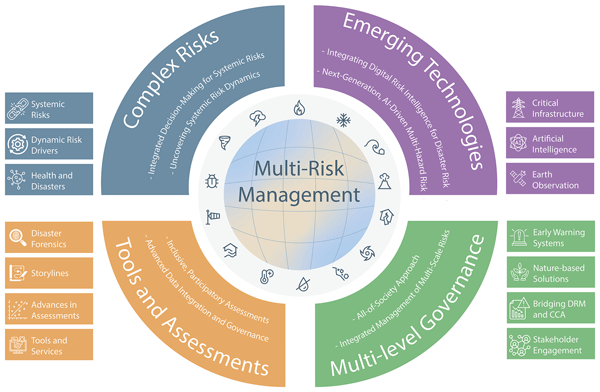
In this section, we integrate the input from the conference sessions, survey results, and expert insights to gain insights around our four perspective themes and illustrate how the current state of the art science can help to fill these gaps. First, we outline the structure of this section, which progresses through the four key perspective themes that emerged from our analysis of conference discussions and their alignment with MTR gaps (see Fig. 1): (1) assessments and tools for risk understanding and decision-making; (2) complex risk landscapes; (3) emerging technologies for risk and resilience; and (4) multi-level governance for coordinated risk management. For each perspective theme, we begin with an overview of current scientific understanding, then present a discussion for two key research avenues, that draws on conference reports and expert consultation and highlight critical pathways for advancing disaster risk science and practice. Each perspective relates to a specific research question.
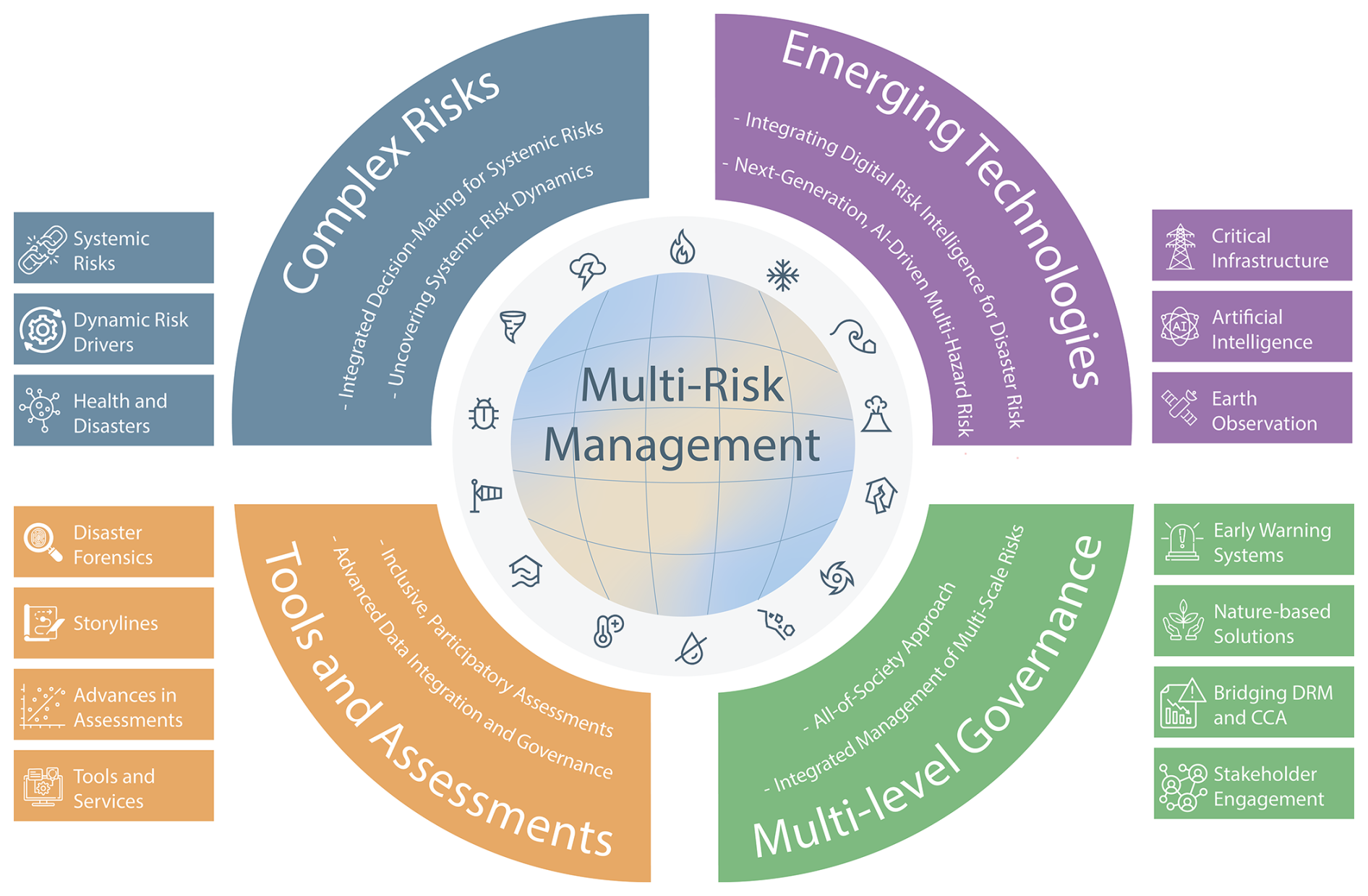
Figure 1Overview of the four perspective themes and key messages (circle segments) and the contributing conference session topics (smaller rectangles at the sides). CCA: Climate Change Adaptation.
3.1 Advancing risk science: tools and assessments for resilient decision-making
New developments in risk assessment methods and tools, such as improved learning from past events (e.g., retrospective analysis) and the use of storylines, can support an increase in risk awareness and improve risk management capabilities (van den Hurk et al., 2023; Keating et al., 2016; Sillmann et al., 2021; UNDRR, 2024). These tools and assessments demonstrate how complex data can be transformed into actionable insights for better decision-making and proactive risk management (Bastos Moroz and Thieken, 2024; Tools for mainstreaming disaster risk reduction, 2025; Marshall, 2020). However, barriers to their widespread application in multi-risk assessment and DRM remain (Šakić Trogrlić et al., 2024), including technical limitations (model uncertainties, data quality), institutional challenges (fragmented governance, resource constraints), and usability issues (skill gaps, accessibility, differing stakeholder needs, language barriers). Bridging the gap between scientific capabilities and practical application requires improving tool accessibility and co-developing tools with end-users to ensure relevance and legitimacy. We have identified two research avenues (Sect. 3.1.1 and 3.1.2) for how science can contribute to the Sendai Framework and beyond through participatory approaches and advanced analytical tools that enable shared understanding of risk knowledge and actionable decision-making.
3.1.1 Inclusive, participatory assessments
Conference participants highlighted that effective stakeholder engagement – from local communities to decision-makers – can ensure recovery efforts reflect diverse needs while building resilience and long-term sustainability (Granville et al., 2016; Lillywhite and Wolbring, 2022; Mojtahedi and Oo, 2017; van Oosterhout et al., 2023; Villeneuve, 2021). However, participatory processes can themselves become maladaptive when they reinforce existing power imbalances, exclude marginalised voices, or legitimise predetermined decisions without genuine influence on outcomes (Juhola and Käyhkö, 2023). Effective planning can benefit from involving all levels of society, particularly marginalised groups, to address systemic vulnerabilities and power imbalances that can otherwise hinder equitable recovery (Carrasco et al., 2023). Similarly, evidence also shows that some effective DRR measures (such as building codes and regulatory frameworks) have been successfully implemented through hierarchical governance structures. Nevertheless, this all-of-society engagement begins with participatory processes and elicitation, such as interviews and workshops, that explicitly address power dynamics, cultural contexts, and competing interests, recognising that community knowledge on disaster risk and capacity to prepare and respond can be central to shaping risk mitigation and recovery strategies (Haer and de Ruiter, 2024; Mortensen et al., 2024a; Olonilua, 2022; Petraroli and Baars, 2022).
Here, we discuss novel tools and approaches that have the potential to make DRM more inclusive and participatory.
One of these tools and approaches is storylines, defined here as plausible, narrative-based representations of how risks and event pathways might unfold under different social, environmental, and policy conditions (Mazzoglio et al., 2021). These narrative-based approaches are increasingly being used to explore uncertainty and support decision-making in DRR (Marciano et al., 2024; Shepherd et al., 2018), and can be used to facilitate the communication and understanding of complex multi-risk interactions. Moreover, they are flexible enough to enable integration of qualitative and quantitative data (Tanaka et al., 2023), as highlighted by many of the session presentations. An essential component of storyline development is stakeholder engagement through iterative participatory methods (Aldunce et al., 2015; Baulenas et al., 2023). The flexible nature of storylines allows them to be developed together with a range of stakeholder groups, depending on their intended scope. For example, some storylines are co-created at the community level, involving decision-makers and community groups using local knowledge and data (Cocuccioni et al., 2025). Co-creative processes should be sure to include marginalised groups, such as those with varying levels of literacy, gender and sexual minorities, people with disabilities, and socioeconomically disadvantaged communities (e.g., Bou Nassar et al., 2021; Mortensen et al., 2025). This enables knowledge sharing and further helps to acknowledge and reduce potential power imbalances and engages stakeholders at different levels of decision-making processes (Aldunce et al., 2015). Guides for practical implementation, especially with respect to multi-risks, facilitate these public-facing engagements, such as the online repository of storylines and storymaps by the British Geological Survey that may support stakeholder engagement with drafting forward looking pathways for plausible future events (British Geological Survey, 2025). The visualisations of these storymaps make them attractive and understandable for engaging with the general public.
Involving stakeholders can build trust and collaboration, and this is a critical (often overlooked) concept (Bonfanti et al., 2023). Achieving meaningful stakeholder engagement requires carefully identifying and critical thinking of who should be involved, how to make sure marginalised voices are genuinely represented rather than tokenised, and how to develop solutions that respect diverse cultural contexts and knowledge systems. When these conditions are met, trust and meaningful stakeholder engagement may also allow for producing more context-specific solutions that integrate local knowledge with scientific data and hazard analysis. Subsequently, it allows for reducing the risk of top-down interventions not responding to the local realities and needs of communities (Prabhakar et al., 2024). It also aids the identification of potential shortcomings in preparedness. For example, during a series of snowstorms in March 2023 in the Southern California mountains, lack of advance coordination across emergency response, road-maintenance teams, and utility companies contributed to 2–3 m of snow accumulation on roadways as the snow accumulation of the previous storm remained to be cleared. Subsequently, tens of thousands of residents were homebound for up to two weeks, food and medicine had to be airlifted and hand-delivered at great expense, and numerous fires occurred due to gas leaks in houses buried under snowdrifts. Subsequently, it is important to incorporate stakeholder insights and co-production as early in the (tool) development process as possible (Parviainen et al., 2025). For example, platforms like FloodAdapt (https://www.deltares.nl/en/software-and-data/products/floodadapt, last access: 2 April 2026) and Urban Digital Twin (https://regions4climate.eu/unlocking-efficiency-and-insight-with-digital-twins/, last access: 2 April 2026) incorporate local insights to guide interventions and enhance transparency. They encourage open data and citizen input, along with other perspectives on recovery, to ensure just and equitable recovery outcomes. Building trust between communities, stakeholders, governments and researchers ultimately requires genuine co-production of risk knowledge where communities are equal partners (Lejano et al., 2021; Sharpe, 2021).
Moreover, DRR frameworks may further support inclusive preparedness and recovery by incorporating multi-sector collaboration. Initiatives like RiskScape (Paulik et al., 2023) and MYRIAD-EU (Ward et al., 2022) aim to exemplify the design of DRR actions that are holistic, context-specific, and adaptive. Such examples show how education, communication, and stakeholder collaboration help build community resilience, while addressing regional research gaps and optimising data collection. Several decision-support tools have emerged to address the challenges of making tools accessible for a wide range of users. For example, DAPP-MR employs interactive visualisations of Dynamic Adaptation and Policy Pathways to facilitate multi-hazard risk decision-making under uncertainty (Schlumberger et al., 2024, 2025). Similarly, open-source platforms like RiskScape enable rapid assessment of risks from multiple hazards including volcanic eruptions, earthquakes, and floods (https://www.riskscape.org.nz/, last access: 2 April 2026), while CLIMADA provides comprehensive climate risk and adaptation modelling capabilities (https://climada.ethz.ch/, last access: 2 April 2026). The MYRIAD-EU software platform offers modular, open-source tools for multi-hazard and multi-risk scenario generation (Daniell et al., 2025). Another example is the use of serious games to foster better awareness, agreement and common insights by simulated multi-risk events and stakeholder roleplaying (Arctik, 2025; de Ruiter et al., 2021).To ensure that tools are regularly and widely used their application could be increased by providing incentives, e.g. certificates, or by linking them to certain funding schemes.
3.1.2 Integrating risk assessment tools in governance frameworks
Several talks and tool demonstrations at the conference illustrated how the increasing granularity of risk data and governance frameworks permits precise, equitable interventions through the integration of different data sources across hazards and sectors. The DELTA Resilience system (Disaster and Hazardous Events, Losses and Damages Tracking and Analysis) exemplifies this integration by enabling nationally owned disaster tracking that links hazardous events to disaggregated losses and damages across sectors and scales, supporting both risk-informed planning and accountability through standardised, interoperable data structures. Here, we provide a discussion on data governance and the need for data granularity for assessment and tools to move towards context-specific tools and assessments.
Although technological advances enable ever more detailed disaster data collection the ultimate goal is not achieving the highest possible resolution but rather ensuring data are fit-for-purpose and appropriately tailored to support effective disaster knowledge services (Wang et al., 2020). Data granularity is most essential when there is a need for more precise risk management strategies and processing and visualising data at higher resolutions. For example, for hazards like landslides or urban flooding, impacts can vary significantly within small spatial extents and where fine-scale topography and infrastructure characteristics determine both exposure and vulnerability (Ferrer et al., 2024; Sieg et al., 2023).
However, overly fine resolutions can possibly lead to a challenge in model validation, increase computational demands, and introduce false confidence or uncertainty. Therefore, it is essential to balance system resolution, problem scale, and user requirements to develop effective and trustworthy DRR tools. For example, starting with local knowledge and then moving to satellite imagery to capture nuanced vulnerabilities at local and regional scales was found to be an effective approach (Migliorini et al., 2019; Montillet et al., 2024; Saulnier et al., 2019).
Despite growing recognition of data's critical role in disaster risk management, current data governance practices face several significant challenges, including the fragmented nature of data policies and distribution mechanisms. For example, there is institutional competition for funding and policies that often prevent data sharing across organisations and sectors. Furthermore, the predominant focus of existing datasets on single-hazards further reflects the domain-specific nature of most research efforts, while the need for integrated multi-hazard data is continuing to grow (Ward et al., 2022; White et al., 2025). Fragmented data ecosystems with immature governance structures and limited collaboration further compound these interoperability challenges (Van den Homberg and Susha, 2018).
A prototypical example of a challenge for data governance can be found in the Earth Observation (EO) domain, as satellite datasets from national space agencies are provided in multiple formats with inconsistent documentation and are often scattered across various mission-specific websites, which can create substantial friction for users. While many EO products are freely available, there are also products that would be incredibly useful for scientific research, such as the high-definition product of NASA's VIIRS Black Marble Nighttime Light data, that are currently only available to collaborators on funded projects. Similarly, insurance and risk datasets marketed to homeowners and businesses are typically proprietary and opaque, with methodologies going undocumented and key assumptions remaining unquestioned, even when different providers present sharply conflicting metrics for identical risk assessments (Condon, 2023; Schubert et al., 2024). These governance gaps are further complicated by emerging technologies such as AI and Internet of Things (IoT) sensors, which generate actionable data but lack established frameworks for integration, standardisation or in the case of AI lacking ethical frameworks and responsible usage for DRM (Tiggeloven et al., 2025b).
Addressing these challenges requires fundamental improvements to data governance, which includes the policies, standards, and accountability frameworks that determine how data are collected, used, and shared (Kanbara and Shaw, 2022). For example, transparent data governance frameworks enhance the accountability and credibility of decision-makers, actors, and the whole disaster governance system. Such frameworks can also help ensure that data are shared responsibly and used ethically. Subsequently, this strengthens collaborative efforts across sectors and regional data partnerships, even though competition for funding and disconnects between research, industry, and government may still persist. These challenges are increasingly being addressed through better stakeholder interaction and inclusive governance approaches that are also tackling vulnerabilities that are otherwise able to undermine resilience-building efforts (Shahat et al., 2020). This is especially the case in dynamic and rapidly changing risk landscapes for which timely and localised data are essential for risk-informed decision-making. Likewise, good practices rely on data standards and interoperability, which would pave the way to enable information exchange across systems, sectors, and regions (Migliorini et al., 2019). Open standards such as those in platforms like the Crisis Management Innovation Network Europe (CMINE) cluster and the Disaster Risk Gateway (https://disasterriskgateway.net, last access: 2 April 2026) ensure consistency and reliability across different datasets, supporting coherent decision-making in line with global frameworks like the Sendai Framework.
To address these governance and interoperability challenges, several platforms have emerged to facilitate data sharing and knowledge exchange. The MYRIAD-EU dashboard guides users through systemic risk frameworks for multi-hazard assessment and management (Hochrainer-Stigler et al., 2023; https://dashboard.myriadproject.eu/, last access: 2 April 2026). The Climate ADAPT platform similarly supports climate resilience through shared adaptation knowledge (https://climate-adapt.eea.europa.eu/, last access: 2 April 2026). Additionally, toolboxes such as the CLIMAAX CRA toolbox provide risk workflows for compiling regional climate multi-risk assessments (https://www.climaax.eu/handbook/toolbox/, last access: 2 April 2026) complemented by the living metadata catalogue of geospatial data for climate risk assessments (Climate Risk STAC; https://climate-risk-data.github.io/climate-risk-stac/, last access: 2 April 2026; Reimann et al., 2026), and the CCDR toolbox enables quick risk screening (https://gfdrr.github.io/CCDR-tools/home.html, last access: 2 April 2026).
Yet, critical infrastructure data present a fundamental paradox, as comprehensive detailed data are essential for modelling interdependencies and protecting systems, yet can expose vulnerabilities and security risks, which is particularly relevant for energy grids amid increasing geopolitical tensions and hybrid threats (Larsson and Große, 2023; Ouyang, 2014). Subsequently, governance approaches should address this tension in distinct ways, where security concerns necessitate direct researcher-operator collaboration rather than public data sharing to balance analytical needs with vulnerability protection (Larsson and Große, 2023).
Some sector-specific tools have emerged with the purpose of sectoral integration for multi-hazard risk assessment and DRM. For example, the “Tourism Destination Resilience and Sustainability Scorecard” integrates qualitative expert evaluations with quantitative multi-hazard and multi-risk data to generate a holistic risk profile for tourism destinations. The scorecard is designed in line with the Sendai Framework's priorities and targets for disaster risk reduction. By embedding these principles, the scorecard operationalises Sendai's priorities in a tourism context, translating high-level multi-hazard goals into actionable local metrics. This approach has been fully implemented for California (https://www.risklayer-explorer.com/, last access: 2 April 2026) and extended to the Canary Islands. Beyond tourism, enhanced data granularity has improved assessments across multiple sectors; examples of these include the commercial flood impacts in France using balance sheet data (Bossut and Tyagi, 2024) and drivers of flood hazard types through detailed inventory research in Serbia (Petrović et al., 2024).
Such sector-specific applications demonstrate how Sendai Framework targets can be effectively transferred to diverse economic contexts and provide a template for similar risk assessment frameworks in sectors such as agriculture, healthcare, and urban planning. However, sectoral development can itself drive risk by increasing exposure, as demonstrated by research showing how flood insurance can incentivise population growth in floodplains (Tesselaar et al., 2023). This highlights the broader challenge that disaster risk management is more developed in some sectors than in others. Thus, there is a need for cross-sectoral tools so that sectors can consider the implications of interventions, planning, and actions they take on other sectors and vice versa.
Furthermore, the ability to turn granular data into actionable insights requires the application of both quantitative and qualitative approaches, as discussed in Sect. 3.1.1 on storylines. By further integrating socio-economic data, exposure, and vulnerability indicators, storylines allow scientists and decision-makers to explore potential hazard and impact trajectories and the outcomes of different interventions based on preferences and risk perception (Goulart et al., 2024; Kunimitsu et al., 2023; Young et al., 2021), as well as identify data governance and granularity needs to support actionable insights.
3.1.3 Bridging science and action: key insights and recommendations
Our analysis reveals that bridging the gap between scientific risk knowledge and actionable decision-making requires participatory assessment approaches and inclusive governance structures to guide the usage of advanced analytical tools, from study design through to practical application. We discuss for example that participatory assessment approaches have the potential to enable us to develop complex scientific information into locally relevant, contextually appropriate decisions.
However, several critical implementation barriers persist. First, usability and accessibility challenges mean that many sophisticated tools remain confined to expert users. This is limiting their uptake by decision-makers and communities. Next to co-development, the key to address this is investment in user-centred design, training programs, and simplified interfaces without sacrificing analytical rigour. Second, data governance fragmentation is preventing seamless integration across sectors and scales. This issue is evident for institutional competition, proprietary datasets, and inconsistent standards. To overcome these issues, it is important to move towards transparent governance frameworks, open data policies, and standardised protocols that balance data sharing with privacy and security concerns. An example would be the development of standardised multi-risk metrics and their implementation in international frameworks (White et al., 2025). Third, there are resource constraints and capacity gaps that limit the ability of resource-poor communities and organisations to access, interpret, and apply advanced tools, perpetuating inequalities in risk management capacity. This necessitates dedicated funding mechanisms, capacity-building initiatives, and attention to digital divides (Brett et al., 2025a; Budimir et al., 2025).
We recommend three strategic interventions to strengthen and bridge the gap between knowledge and action. First, we argue that co-developing tools with end-users from inception through iterative participatory design processes would ensure that tools actually meet decision-making needs rather than only reflecting researcher assumptions (Parviainen et al., 2025; Tran and Kim, 2023). Second, we recommend establishing interoperability standards and open-access repositories that reduce friction in data discovery, access, and integration while maintaining quality control and ethical safeguards, and that these should be applied across disciplines and sectors (Kanbara and Shaw, 2022). A third recommendation is to invest in boundary organisations and knowledge brokers who are specialised in the translation between scientific, policy, and community contexts (Lejano et al., 2021). This would facilitate more comprehensive knowledge exchange and ultimately build trust across stakeholder communities (Sharpe, 2021).
3.2 Complex risks landscapes: understanding systemic interactions and cascading impacts
Traditionally, the focus of DRR measures is often on short-term risk reduction. However, a shift is occurring toward more forward-looking, long-term actions in response to climate change (Sillmann et al., 2024). For example, this includes proactive approaches that embed long-term adaptation to prepare communities for evolving (risks Owen, 2020; Pal et al., 2023; Schlumberger et al., 2024; Tiggeloven et al., 2020). The 2012 IPCC Special Report on Managing the Risks of Extreme Events and Disasters (SREX) was a key milestone in aligning concepts, frameworks, and methods that framed risk as the interaction between hazards, exposure, and vulnerability. A decade later, the complexity of risk was stressed in IPCC (2023) and the need to account for the multivariate nature of interacting drivers, including hazards, exposure, vulnerabilities, and societal responses, was highlighted. As such, the IPCC risk framework has evolved beyond assessing climate change impacts alone to also include risks from ineffective risk mitigation and adaptation responses (Malmström et al., 2025). Based on insights from the conference and expert consultations, we identify two key research avenues (Sect. 3.2.1 and 3.2.2) for how science can contribute to further uncovering these complex risk landscapes in terms of systemic risk and highlight the need to integrate decision-making for systemic risks in support of the Sendai Framework and beyond.
3.2.1 Uncovering systemic risk dynamics
Systemic risk describes situations where interconnections within and across systems amplify risks beyond individual hazards through cascading impacts, compounding effects, contagion, and feedback loops (Hochrainer-Stigler et al., 2023; ISC-UNDRR-RISK KAN Briefing note on systemic risk, 2025). Emerging from system structure and dependencies, these risks often centre on “keystone” vulnerabilities where small disruptions trigger wider failures (Mechler et al., 2025; Schweizer and Renn, 2019). Important drivers include socio-economic vulnerabilities, critical infrastructure dependencies, institutional fragmentation, and unequal power distributions that shape how shocks propagate through systems (Bakhtiari et al., 2025; Kuran et al., 2020; Stolte et al., 2024). Recent Alpine flood and landslide events illustrate how interconnected vulnerabilities can trigger cascading failures (e.g., the 2024 Swiss floods and landslides). Research increasingly focuses on understanding systemic risks (Hochrainer-Stigler et al., 2023; Santos et al., 2024; Schweizer and Juhola, 2024), while exploring forward-looking approaches (Haasnoot et al., 2024; Jack et al., 2024; Lüthi et al., 2023) or stakeholder engagement methods to address and prevent systemic risks (Syukriyah and Himaz, 2024; Thieken et al., 2023a; Zenker et al., 2024).
An important challenge is identification of appropriate methodologies to capture and model systemic risks. While systemic risks are increasingly recognised in policy and practice, current approaches remain conceptual or limited to single-system analyses, lacking operational frameworks for real-world decision-making (Schweizer and Juhola, 2024; ISC-UNDRR-RISK KAN Briefing note on systemic risk, 2025). Methodological challenges persist: defining which system elements and spatial/temporal scales to include, identifying whether to focus analysis on triggering events or whole-system dynamics, and determining when to apply quantitative, qualitative or mixed-method approaches (Hochrainer-Stigler et al., 2020, 2023). Sillmann et al. (2022) offer a comprehensive review of systemic risk attributes and emerging methodologies. For example, researchers must decide whether to frame analysis around the entire system, a specific hazard, or a triggering event. Furthermore, the temporal dimensions of systemic risks are important yet often neglected. This is challenging because risk drivers change at different rates; for example, climate hazards and variability tend to change gradually while socioeconomic vulnerabilities can change rapidly following policy shifts or economic disruptions (Haasnoot et al., 2013; de Ruiter and van Loon, 2022; Vogel et al., 2024). This temporal complexity aligns with evolutionary resilience perspectives in which systems continuously adapt and transform in response to disturbances, making vulnerability a dynamic rather than static characteristic (Davoudi et al., 2013; Shao and Sun, 2023). Various approaches, including forward-looking storylines (Lüthi et al., 2023), surveys (Thieken et al., 2023b) and case studies (Sairam et al., 2025; Syukriyah and Himaz, 2024) contribute critical insights into evolving systemic risks. Furthermore, the criticality of temporal dimensions of systemic risks is illustrated by Matanó et al. (2022) in a study on a series of drought and flood events in East Africa, where ethnic conflicts, food insecurities, and health issues have led to economic disruptions.
The dimensions of vulnerability as identified by de Ruiter and van Loon (2022), such as underlying structural drivers, vulnerability during prolonged disasters, and the compounding effects of consecutive events, are further challenging to capture due to their complex, dynamic, and context-dependent nature. For example, a community's vulnerability to hazards such as landslides, wildfires, or flooding changes both due to underlying factors like migration patterns or economic shifts, and through erosion of financial resources and mental health during multi-year droughts or through damage to infrastructure and social networks from previous disasters. These are examples of dynamics that standard vulnerability assessments typically fail to capture (Stolte et al., 2024). Data availability poses a major challenge to operationalising these concepts and capturing vulnerability dynamics in practice, particularly regarding vulnerability data, which frequently vary in quality and quantity across regions and over time (Cutter, 2024) and often fail to address risk perception (Rufat et al., 2025). Moreover, data accessibility remains restricted due to privacy regulations (von Szombathely et al., 2023) and the lack of standardised formats or tools, as discussed in Sect.3.1.2 (Lindner et al., 2021; Poschlod et al., 2021). Addressing these data challenges requires combining traditional and novel data sources: for instance, integrating mobile phone data, satellite imagery, and household surveys can be integrated to create high-resolution poverty maps (Chi et al., 2022; Steele et al., 2017). Additionally, qualitative studies provide complementary insights into local process-based understanding of vulnerability dynamics within specific geographical contexts, which have the potential to capture mechanisms and contextual factors that quantitative datasets alone cannot reveal (Bertoldo, 2021). Yet, the challenge of generalising these findings across different spatial contexts remains (Sparkes et al., 2025).
While hazard projections can represent short-duration extremes, corresponding exposure and vulnerability projections are rarely available at high temporal resolution (Bubeck et al., 2020; Geiß et al., 2024; Hudson et al., 2020). Addressing these dimensions for sudden onset disasters requires data capturing rapid changes in assets and population dynamics at high temporal resolution (hourly to daily) (Haraguchi et al., 2022; Pittore et al., 2017, 2023). Post-disaster longitudinal surveys are methodologically challenging and remain limited in number (Bronstert et al., 2018; Hudson et al., 2020; Thieken et al., 2023a). They are crucial for understanding recovery pathways and the causes of setbacks (Ngulube et al., 2023; Terumoto et al., 2021). They are also essential for capturing long-term impacts, such as persistent mental health effects after major disasters, evolving social networks, and changing livelihood opportunities, as well as revealing how factors like displacement, housing insecurity, and demographic characteristics differentially shape recovery trajectories over time (Kunii et al., 2022; Sairam et al., 2025; Syukriyah and Himaz, 2024; Zenker et al., 2024). Further development of methodologies that can capture these varied temporal scales is essential for comprehensive risk management (Jurgilevich et al., 2021; Peters, 2021; Staupe-Delgado and Rubin, 2022).
3.2.2 Integrated decision-making for systemic risks
Systemic risks challenge traditional risk governance models, which are often compartmentalised and sector-specific (Maskrey et al., 2023; Schweizer, 2021). Therefore, an integrative governance approach is needed – one that combines interdisciplinary analysis with adaptive, inclusive, and transparent decision-making (Schweizer and Juhola, 2024). For example, externalities and non-economic impacts, such as the health and public-safety implications of power outages, are rarely considered when regulating utilities in the US, contributing to underinvestment in resilience (The February 2021 Cold Weather Outages in Texas and the South Central United States|FERC, 2025). Although DRR and climate change adaptation (CCA) are deeply interconnected (Birkmann et al., 2013), they still operate largely in silos, limiting integrated responses (Dias et al., 2018; Sillmann et al., 2024). Important frameworks like the Sendai Framework for DRR and the Paris Agreement's Global Goal on Adaptation are taking steps to bridge these gaps, but further scientific support is needed.
Effective integrated decision-making for systemic risks requires overcoming technical and institutional barriers to knowledge integration. Several frameworks have recently been proposed to address interoperability challenges between data, models, communication channels, and governance structures, which can fragment decision-making processes, as highlighted by Schröter et al. (2025). To address these challenges, Parviainen et al. (2025) developed the Risk-Tandem Framework, which uses a transdisciplinary approach that structures stakeholder engagement and knowledge co-production to bridge gaps between risk science, policy, and practice and consolidates diverse data sources and analytical tools that address the need for better risk assessment and governance (Hochrainer-Stigler et al., 2024; Parviainen et al., 2025; Schröter et al., 2025).
Moreover, Ciullo et al. (2025) advocate for a systemic risk governance approach that moves beyond sectoral silos to address the interconnections between climate hazards, disaster risk, and sustainability through coordinated multi-level governance, cross-sectoral policy integration, and adaptive institutional arrangements. This includes developing and utilising vulnerability scores from the Sustainable Development Goals (SDGs), which allows for modelling complex socio-economic networks while, for example, studying how the impacts from weather extremes propagate through systems. Such integration can be achieved through various methodological approaches. For example, agent-based modelling simulates environmental–social interactions to assess systemic risks (Aerts, 2020; Jiang et al., 2024; Moradi et al., 2025). Similarly, social and causal network analysis can map dynamic risk drivers and tipping points for stakeholder engagement, while Bayesian networks can incorporate stakeholder perceptions of risk and preferences into risk assessments (Kunimitsu et al., 2023). By advancing the methodologies and governance frameworks, systemic risk research can better inform policy and strengthen societal resilience in the face of future climate and nature-related challenges.
3.2.3 Understanding and governing systemic risks: key insights and recommendations
Effectively managing systemic risks requires methodological innovation and reformed governance structures. While conceptual understanding has advanced, critical gaps persist in translating systemic risk insights into operational frameworks for decision-making across interconnected systems.
Three critical barriers limit progress. First, methodological challenges: defining system boundaries, selecting appropriate temporal and spatial scales, and determining suitable uses of quantitative versus qualitative approaches remain unresolved, particularly for capturing dynamic vulnerabilities (Hochrainer-Stigler et al., 2023; de Ruiter and van Loon, 2022). Second, data limitations: integrating traditional and novel data sources (e.g., satellite imagery, mobile networks, surveys) to create high-resolution, temporally dynamic vulnerability assessments is constrained by inconsistent quality, accessibility, and standardisation, with longitudinal data particularly scarce (Steele et al., 2017). Third, governance fragmentation: DRR and climate adaptation remain siloed despite deep thematic interconnections, and interoperability challenges between data, models, and institutions impede decision-making (Schweizer and Juhola, 2024; Scolobig et al., 2017; Sillmann et al., 2024).
We recommend three strategic interventions. First, develop integrated methodological frameworks orchestrating multiple methods that address temporal dynamics from rapid-onset events to slow-developing stressors while incorporating stakeholder knowledge, e.g., agent-based modelling, network analysis, and participatory methods (Jiang et al., 2024; Lüthi et al., 2023; Moradi et al., 2025; Wu et al., 2022). Second, invest in transdisciplinary knowledge co-production using approaches that bridge science, policy, and practice through structured stakeholder engagement and federated data infrastructures (Parviainen et al., 2025). Third, transform governance to enable coordinated multi-level action, cross-sectoral integration, and adaptive institutions that address climate–disaster–sustainability interconnections (Brett et al., 2025a; Ciullo et al., 2025). Ultimately, managing systemic risks requires better methods better data, and integrated, adaptive, and equitable governance systems tailored to context-specific gaps and needs (Renn et al., 2022).
3.3 Emerging technologies for risk and resilience
Emerging technologies such as Artificial Intelligence (AI), Earth Observation (EO) instrumentation, and digital risk modelling transform risk assessment and management in multi-hazard and systemic risk contexts (Kuglitsch et al., 2022b; Lagap and Ghaffarian, 2024). For example, AI, remote sensing, and digital modelling can uncertainty around risk characteristics and enhance the effectiveness of risk reduction strategies across multiple scales (Cao, 2023; Cheng et al., 2024; Rezvani et al., 2024). However, these technologies come with critical challenges including computational barriers, algorithmic biases, limited interpretability, and risks of technological solutionism that can exacerbate existing inequalities (Lythreatis et al., 2022; McGovern et al., 2024; Tiggeloven et al., 2025b). Based on the conference and expert consultation, we identified two research avenues (Sect. 3.3.1 and 3.3.2) regarding how science can contribute to the progress of the Sendai Framework and beyond.
3.3.1 Next-generation, AI-driven multi-hazard risk assessment
Emerging technologies (e.g., AI and machine learning) are now capable of processing vast, multi-dimensional datasets that capture the dynamic interplay of multiple hazards, sometimes in real time, and can provide predictive insights for more informed multi-hazard risk management (Kolivand et al., 2024; Kuglitsch et al., 2022a; Ogie et al., 2018).
However, as conference participants emphasised, realising AI's potential requires addressing fundamental challenges (Kochupillai et al., 2022). These include potential biases in training data (Gevaert et al., 2024; Láng-Ritter et al., 2025), temporal biases that underrepresent short-duration high-magnitude events, inherent observational biases from training data, challenges in capturing indirect multi-hazard interactions and dynamic factors, challenges of interpretability, and the risk of reinforcing existing inequalities (Ferrario et al., 2025; Gevaert et al., 2021; McGovern et al., 2024; Tiggeloven et al., 2025a). For instance, AI-powered EWS trained predominantly on data from high-income countries may perform poorly in data-scarce regions, creating warning gaps precisely where vulnerability is highest (Tiggeloven et al., 2025b). Similarly, the computational demands and financial costs of state-of-the-art deep learning models can exclude researchers and practitioners in resource-constrained settings from developing locally relevant applications, potentially widening rather than narrowing global inequalities in disaster risk management capacity (Lythreatis et al., 2022). To ensure responsible usage of AI for EWS, Tiggeloven et al. (2025b) posed critical questions addressing explainability and accountability, establishing clear responsibility frameworks when systems fail, integrating local and indigenous knowledge alongside technological solutions, and maintaining meaningful community engagement to ensure that AI complements rather than replaces local expertise.
Nevertheless, AI can offer innovative solutions to longstanding challenges, such as real-time responses to cascading disasters (AghaKouchak et al., 2023; Dunant et al., 2021). AI models, such as long short-term memory (LSTM) networks for fast onset predictions (e.g., floods, landslides), have been harnessed to integrate sensor data and climate models, which in turn may enable more accurate predictions (Prakash et al., 2023). Moreover, for slow onset predictions, models such as XGBoost are used for predicting droughts and food security (Busker et al., 2024). Deep learning techniques have been applied to analyse the intersection between hazards and socio-economic and infrastructure data, allowing researchers to pinpoint communities and regions that are most susceptible to multi-hazards and disaster impacts. Finally, natural language processing (NLP) tools, such as large language models (LLM) and text mining, can also be used to analyse textual information in policy documents and other media to detect and quantify hazard impacts (Diemert and Weber, 2023; Madruga de Brito et al., 2020; Sodoge et al., 2023). Yet these methods may amplify existing language and cultural biases, struggle with misinformation detection, and underrepresent impacts in digitally disconnected communities (Gevaert et al., 2021; Karimiziarani and Moradkhani, 2023).
One of the identified gaps of the Sendai Framework MTR centres on increasing the granularity of data and creating hazard maps and tools for collecting data on vulnerability, particularly relevant in high-risk rural areas (UN, 2024). For example, 2024's Hurricane Helene caused devastating flooding in Southeast US mountain communities, nearly all of which occurred along small, steep, poorly observed and modelled watercourses, leading to a major underestimation and communication of high-end flood risk. AI and remote sensing technologies enable the collection of high-resolution, location-specific data. For example, combining high-resolution hydrogeomorphic modelling with EO data and AI enables detailed multi-hazard exposure assessments (Paszkowski et al., 2025). AI can be used to produce fast and accurate downscaling in complex topography, which is key to reducing uncertainty in extreme event representation in future climate projections, and is particularly relevant for indicators that have sparse ground measurements (in combination with space-based EO). Additionally, foundation models can be trained with specific applications through transfer learning, for example in the contexts of specific regions (Bommasani et al., 2022; Zhuang et al., 2021), and data augmentation techniques can be used in areas of low data coverage (Alzubaidi et al., 2023). In-situ impact data are essential for supporting these advances and their paucity remain a bottleneck in many cases.
To responsibly integrate AI into DRR, advancing technical capabilities must ensure these innovations address real-world DRR needs including interpretability, uncertainty quantification, and integration with local knowledge. As the field of AI and multi-hazard research are both fast developing, we outline some future steps that may be crucial for better understanding, monitoring and communication of risks. For instance, emerging tools (e.g., graph diffusion models, causal AI, hierarchical Graph Neural Networks and field theory) go beyond static predictions, while enabling the discovery of causal relationships and feedback mechanisms in complex Earth systems that can inform anticipatory humanitarian interventions and reveal context-specific vulnerabilities across different spatial and temporal scales (Cerdà-Bautista et al., 2025; Tárraga et al., 2024; Tesch et al., 2023). Moreover, physically-informed AI bound to scientific principles enhance the reliability and interpretability of predictions (Zheng et al., 2023), while probabilistic machine learning reduces the uncertainty of model outcomes to better inform risk estimates (Zhou et al., 2022). Critically, AI and participatory approaches should be complementary, rather than competing paradigms: technical advances require validation and contextualisation through in-situ data and input from local communities to ensure model outputs translate into actionable, locally appropriate DRR interventions (Kuglitsch et al., 2022b; Pham et al., 2021; Ye et al., 2021), especially with the rise of explainability of AI frameworks (Ghaffarian et al., 2023).
3.3.2 Integrating digital technologies for disaster risk management
While effective governance remains central to DRM, improving multi-hazard risk assessments at the local level, where impact-based forecasting and risk reduction planning are often most effective, also requires the development of local asset databases (UNDRR, 2015), a need clearly emphasised in conference discussions. Remote sensing in combination with AI has in recent years been instrumental in creating digital global built-environment databases that are detailed, standardised, and interoperable. The next challenge is to develop procedures for automated characterisation to link this more directly with physical vulnerability and quantifiable economic losses (Aravena Pelizari et al., 2021). Furthermore, EO techniques allow continuous collection and monitoring of spatiotemporal data for large areas (Khan et al., 2020; Li et al., 2023). When combined with AI-driven classification and change detection algorithms, this information helps disaggregate coarse exposure data into finer spatial resolution and augment various risk parameters, for example by identifying building footprints, land-use changes, or infrastructure development (Chen et al., 2023; De Plaen et al., 2024; Gu et al., 2023; Kuglitsch et al., 2023).
The field of digital technologies for DRM, such as digital twins, creates a space for highly detailed assessments (Ghaffarian, 2025; Yu and He, 2022). Digital twins create virtual replicas of physical systems, such as cities, infrastructure, or watersheds, that synchronise with real-world data through sensors, satellites, and manual inputs, enabling stakeholders to simulate disaster scenarios and monitor conditions in near real-time (Fan et al., 2020; Ford and Wolf, 2020). The enormous quantities of data produced by (semi-overlapping) remote-sensing missions, together with the multidimensional specifications, uncertainties, spatiotemporal coverages, and other considerations that vary by mission, make AI-powered data-harmonisation tools particularly attractive to explore (Fan et al., 2021). Recent advances integrate IoT sensors, agent-based models, and human-in-the-loop decision-making, allowing flexible interventions across disaster management phases (Ghaffarian, 2025).
However, to enhance localised risk and impact assessments, these vast amounts of data need to be integrated into meaningful digital representations of risks (Ariyachandra and Wedawatta, 2023). Critical barriers persist : high computational demands and infrastructure requirements limit accessibility; data gaps from limited satellite revisit times, cloud cover, and sensor limitations constrain real-time monitoring capabilities for rapid-onset hazards; and challenges in validating remotely sensed products against ground-truth observations introduce uncertainties that can undermine decision-maker confidence (Zhao et al., 2022). Furthermore, the development of digital twins requires substantial investments in data infrastructure, technical expertise, and ongoing maintenance, which raises questions about scalability, equity, and sustainability (Yu and He, 2022). Technological advances and international data-sharing frameworks are needed, as well as capacity-building initiatives and hybrid approaches that combine automated EO with manual field observations, IoT and local knowledge to ensure these tools serve diverse contexts equitably (Bellini et al., 2022).
Complementing these technological advances, volunteered geographic information and crowdsourcing are increasingly contributing to disaster risk data generation and response capacities (Moghadas et al., 2022). Digital volunteering networks, including Humanitarian OpenStreetMap Teams, map affected areas during disasters, and Virtual Operations Support Teams provide real-time social media analytics to emergency operation centres during crises for situational awareness and decision-making (Fathi and Fiedrich, 2022). Transitioning from theoretical models to real-world analyses, especially when moving from assessing single infrastructure impacts to modelling complex failure cascades, requires vast heterogeneous datasets that include potentially crowdsourced socio-economic data (Nirandjan et al., 2024). In addition, recent studies show the potential of using unpiloted aerial vehicles (UAVs) or drones to aid rapid emergency response evaluation that can be used by communities (Chandran and Vipin, 2024; Khan et al., 2022; Kucharczyk and Hugenholtz, 2021). These community-driven approaches fill critical data gaps and demonstrate how resilience may emerge from bottom-up information systems that complement top-down risk assessment frameworks.
Towards 2030, the Sendai Framework MTR stresses that multi-hazard, vulnerability, and exposure analysis must inform high-level, multi-year socio-economic planning (UNDRR, 2023). This requires integrating multi-hazard risk assessments into decision-making processes, highlighting how hazards interact and cascade. Many EO products are now open source to maximise operational relevance and long-term improvement. These form the backbone of critical services protecting life and infrastructure-protection services against hazards like earthquakes, floods and forest fires, such as the European Forest Fire Information System (McInerney et al., 2012) or the European Flood Awareness System (https://www.copernicus.eu/en/european-flood-awareness-system, last access: 2 April 2026). Similarly, where hazards are dynamic and involve both natural and managed components, decisions around risk-mitigating infrastructure must be supported by near-real-time information. For decision makers it can be challenging to pinpoint where exactly resources and measures must be implemented to efficiently improve system-wide infrastructure resilience, and digital twins and other emerging targeted technologies may be vital in these developments.
3.3.3 Deploying emerging technologies responsibly: key insights and recommendations
Emerging technologies offer transformative potential for advancing multi-hazard risk assessment and subsequently informing DRM. Yet, realising this potential requires us to confront critical implementation barriers and pursue deliberate strategies to ensure equitable, effective, and responsible deployment.
Three interconnected barriers limit progress. First, data and algorithmic challenges: AI systems can be trained with biased datasets, temporal biases underrepresent short-duration high-magnitude events, and limited interpretability of complex models undermines decision-maker trust and stakeholder engagement (Kuglitsch et al., 2022b; UN, 2024). Second, there are infrastructure and capacity constraints as these technologies require substantial computational demands, specialised expertise, and ongoing maintenance costs that potentially widen rather than narrow global inequalities in DRM capacity (Lythreatis et al., 2022; Yu and He, 2022). Third, the following barriers exist as integration and validation gaps: challenges in combining automated systems with manual field observations and local knowledge, difficulty validating against ground-truth data, and limitations in real-time monitoring for rapid-onset hazards (Kochupillai et al., 2022). All of these constrain the translation of technical capabilities into operational DRM (Khan et al., 2022; Zhao et al., 2022).
We recommend three strategic interventions in the research, practice, and policy spheres to ensure responsible and equitable deployment of emerging technologies. First is advancing and centralising responsible AI frameworks that prioritise interpretability, establish clear accountability mechanisms when systems fail, integrate uncertainty quantification into model outputs, and ensure meaningful community engagement to complement rather than replace local expertise (Kuglitsch et al., 2022a; Tiggeloven et al., 2025b). Second is building accessible and interoperable infrastructure through open-source platforms, international data-sharing frameworks, and AI-powered harmonisation tools that integrate diverse data sources including EO, IoT sensors, crowdsourcing, and field observations (Bellini et al., 2022; Fan et al., 2021). This requires supporting bottom-up information systems such as community-driven OpenStreetMap and volunteered geographic information to fill critical data gaps while strengthening capacity through training programs and technology transfer initiatives. Third is developing hybrid methodologies and governance frameworks that combine automated monitoring with human-in-the-loop decision-making, enable digital twins spanning preparedness through recovery phases, and integrate multi-hazard vulnerability and exposure analysis into high-level socio-economic planning (Ghaffarian, 2025; UNDRR, 2023). Ultimately, responsibly advancing emerging technologies for DRM requires coordination and guardrails to ensure that these powerful tools reduce rather than exacerbate existing inequalities.
3.4 Integrating multi-level governance for multi-hazard risk management
Effectively managing disaster risks requires a shift towards more coherent, integrated approaches that transcend silos, sectors, and scales (Becker and Reusser, 2016). It demands clearer defined and coordinated roles and responsibilities, better governance, and knowledge co-production to manage trade-offs and synergies in decision-making (Maldonado et al., 2010). However, institutional silos, competing sectoral priorities, and the technical complexity of risk frameworks often prevent such coordination, limiting the development of shared understanding and reducing capacity for integrated responses (Hochrainer-Stigler et al., 2023; Šakić Trogrlić et al., 2024). Based on the conference and expert consultation, we identified two research avenues (Sect. 3.4.1 and 3.4.2) regarding how science can advance the Sendai Framework and beyond to facilitate more coherent and integrated risk management and build capacity for risk-informed decision making.
3.4.1 Coherent and integrated management of multi-scale risks
Effective disaster risk management requires coherent governance structures spanning local communities, national authorities, and regional/global coordination bodies. However, the Sendai Framework MTR reveals persistent fragmentation as local authorities lack sufficient capacity, and national frameworks often fail to meet local needs. Moreover, disconnects between global policies and local realities, as well as unclear roles across scales, continue to hinder integration of DRM and climate change adaptation (CCA) (Liss et al., 2024; UNDRR, 2023). Initiatives that bridge scales, such as the UNDRR programme on Comprehensive Disaster and Climate Risk Management (CRM), help increase coherence by integrating risk-centred approaches into National Adaptation Plans (NAPs) while supporting subnational authorities to incorporate climate information into local strategies.
Capacity building across local, national, and regional actors is crucial to develop skills in multi-risk thinking, methods, and approaches (Schlumberger et al., 2022). Examples include co-produced evaluation frameworks (Schlumberger et al., 2024); the Dynamic Adaptive Policy Pathways for Multi-Risk (DAPP-MR) approach to co-develop multi-hazard risk reduction pathways engaging actors from community to national scales; in-depth stakeholder interviews across governance levels and sectors (van Maanen et al., 2025); evidence-based tools to support bridging DRR and CCA communities' capacity at local and national scales (Poljansek et al., 2017); and stochastic multi-criteria acceptability analysis (Jäpölä et al., 2024).
Realising these multi-scale approaches requires dedicated knowledge brokers to translate across knowledge systems and facilitate co-production (Butler et al., 2025; Kusumastuti et al., 2021). These competencies support systems thinking and learning in dynamic risk contexts (Butler et al., 2025). During disasters, such brokering roles also emerge informally through digital volunteers who function as “disaster knowledge workers”, able to coordinate information flows, connect resources with the specific needs of people on the ground, and mediate between formal response organisations and the affected communities (McKay and Perez, 2024; Smith et al., 2021).
Multi-scale risk management requires stronger governance capacity to strengthen relationships among actors and enable collaborative mechanisms (e.g. boundary spanning staff or joint funds) that reduce trade-offs and support cross-scale coordination (Allen et al., 2023; Cumiskey et al., 2019). For example, England's partnership funding mechanism show how joint project definition and co-financing can reduce fragmentation (Cumiskey et al., 2019). Allen et al. (2023) note that multi-scale governance must also navigate inherent tensions between centralised control and decentralised autonomy, short-term versus long-term priorities, and competing worldviews across actors. Together, they require adaptive, learning-based approaches that balance stability with flexibility. Overarching and vertical coordination and knowledge sharing are needed to bridge crosscutting DRR and CCA issues (Zuccaro et al., 2020).
Nature-based Solutions (NbS) exemplify how disaster risk governance and progress toward SDGs can be strengthened by applying established ecosystem management principles within participatory, multi-stakeholder processes across sectors, domains, and scales (Nithila Devi et al., 2025; Sudmeier-Rieux et al., 2019, 2021). NbS operate across scales with distinct objectives: at regional/macro scales they maintain ecological security patterns, co-benefits and connectivity; at city/meso scales they address urban challenges through integrated green-blue infrastructure networks; and at site/micro scales they deliver specific services like stormwater management (Langemeyer and Baró, 2021; Liu et al., 2024; Mortensen et al., 2024b; Tiggeloven et al., 2026).
3.4.2 Early warning systems and risk-informed decision-making in an all-of-society approach to risk management
Reflecting the above points, the consensus view at the conference called for an all-of-society risk management, integrated stakeholder engagement, improved early warning systems, and risk-informed decision making (Budimir et al., 2025). To foster such an approach, it would be essential to enhance inclusive stakeholder engagement where the values and perspectives of policymakers, researchers, nonprofit organizations, and local as well as indigenous communities are reflected (Clark et al., 2025; Seddon et al., 2021). The UN's Early Warnings for All (EW4ALL) initiative demonstrates operational pathways toward all-of-society engagement through locally led co-design, multi-stakeholder platforms, clarified governance roles, and coordinated financing (WMO, 2025). However, implementation gaps persist as few countries have anticipatory action plans or MHEWS and many systems depend on external, unsustainable funding, particularly in LDCs.
Presented examples of methods to achieve risk management objectives include qualitative system dynamics modelling (e.g. causal loop diagrams) that can help to build a shared understanding (Hanf et al., 2025). Studies by Michellier et al. (2026) and Villeneuve (2021) show how participatory methods prioritise high-risk groups' needs by integrating lived experiences with scientific evidence. Similar insights emerge from the EWS community, where a growing body of knowledge highlights the effectiveness of including the most vulnerable in EWS (Hermans et al., 2022; UN.ESCAP et al., 2023) – particularly through community-based efforts, such as building a low-cost and effective local-level EWS (Rai et al., 2020). Similarly, the Missing Voices Approach developed by Practical Action (Brown et al., 2022) focuses on the inclusion of the most marginalised people across social and geographical categories.
The current state of MHEWS distils many of these challenges (WMO, 2025). A MHEWS consists of a warning value chain with multiple actors from the weather modellers and agencies who are generating forecasts to end users who receive these warnings (Golding, 2022). In a perfect warning chain, the warning received by the end user would contain precise and accurate information that perfectly meets their needs. Yet, weather and hazard forecasting models – and their communication effectiveness – remain imperfect. Forecasting multi-hazard events is particularly complex, as impacts often depend on infrastructure performance or operational decisions that are difficult to model due to stochasticity or information of an intricate, internal nature (Budimir et al., 2025). Various projects, presented at the conference, are developing protocols to evaluate EWS (e.g. The HuT project, HiWeather project, MEDEWSA project), and these form a good starting point to improve and expand MHEWS to account for multi-hazard interactions and response trade-offs (van den Homberg and McQuistan, 2019). Yet these predominantly address hydrometeorological hazards where forecasting capabilities are relatively mature. Multi-hazard complexity intensifies dramatically when integrating geophysical hazards with deep epistemic uncertainties, such as earthquake-triggered tsunamis requiring rapid evacuation, volcano-earthquake interactions where cascading lahars and ashfall require divergent protective actions, or earthquake-triggered landslides evolving with aftershock sequences. Each requires a fundamentally different forecasting approach, lead times, and communication strategies that are challenging unified MHEWS frameworks (Amaliya et al., 2021; Fathani et al., 2023; Gill and Malamud, 2016; McBride et al., 2022; Srinivasa Kumar and Manneela, 2021).
To develop meaningful multi-hazard early warnings, indicators must capture not just individual hazards but their interactions, cascades, and combined risk dimensions. While many indicators exist for single hazards, few explicitly address multi-hazard relationships or integrate vulnerability and exposure alongside hazard characteristics into composite risk indicators suitable for early warning thresholds (White et al., 2025). Doing so requires co-developing actionable indicators with stakeholders using mixed methods aligned with real-time monitoring frameworks like EW4All (Hermans et al., 2022; White et al., 2025). Stakeholder engagement and knowledge co-production contribute significantly to improving MHEWS. Research presented by Msigwa and Makinde (2024) and Siu (2024) demonstrates how combining community-driven insights, vulnerability data, and new technologies have made these systems more effective and actionable in different geographic settings.
3.4.3 Operationalising multi-level governance: key barriers and recommendations
Three main barriers impede multi-scale governance. First, we observe a vertical misalignment of authority, resources, and responsibility. This is evident as risks manifest locally but resources and decision-making authority concentrate nationally or globally, which subsequently creates implementation gaps where local authorities bear responsibility without adequate capacity or funding. At the same time national frameworks control investments without sufficient local contextual knowledge, and global commitments rarely translate into enforceable local action (Cumiskey et al., 2019; Hermans et al., 2022). Second, risk frameworks are often incompatible across scales and disciplines. For example, different governance levels prioritise different hazards, operate on incompatible timescales (local immediate action versus national long-term planning), and use sector-specific metrics that prevent integration (Hochrainer-Stigler et al., 2020; Parviainen et al., 2025). Third, weak vertical accountability and knowledge flows show that top-down policy frameworks rarely specify how communities can challenge inadequate implementation or feed local knowledge upward, participation remains consultative rather than co-decisional, and power asymmetries undervalue local and indigenous expertise (Allen et al., 2023; Hermans et al., 2022).
We recommend three strategic interventions. First, develop integrated multi-risk indicators for EWS that address various hazards and embed vulnerability and exposure alongside hazard interactions. This can be achieved through participatory threshold-setting, locally adaptable design, and impact-based forecasting that is able to translate technical monitoring into actionable predictions across diverse social groups (Budimir et al., 2025; White et al., 2025). Second, institutionalise multi-scale coordination through statutory frameworks that specify mutual obligations between governance levels, partnership funding requiring co-financing across scales, dedicated boundary-spanning roles connecting local to national actors, and platforms formalising bidirectional knowledge and resource flows (Allen et al., 2023; Cumiskey et al., 2019). Third, invest in knowledge brokers who translate across scientific and local knowledge systems, facilitate co-production across governance levels, and bridge incommensurable disciplinary frameworks through shared vocabularies and standards (Butler et al., 2025; Smith et al., 2021).
As the global community begins shaping the post-2030 DRR framework, our contribution highlights innovations in science and technology that advance global DRR priorities. The 2024 conference provided a timely platform to gather community perspectives and explore future directions, and this paper surveys how emerging risk assessment tools and inclusive, participatory approaches are transforming our understanding of multi-hazard risks, reflecting the rapid evolution in multi-hazard risk research and practice over the past decade. Through structured expert consultation combining presentations, breakout discussions, and post-conference synthesis, we identify concrete scientific priorities and implementation barriers that can inform the Sendai Framework Mid-Term Review recommendations and the design of post-2030 frameworks.
Our findings align with broader community perspectives: a recent survey of natural hazards researchers identified similar challenges, including shortcomings in risk knowledge and inadequate translation of science to policy and practice (Šakić Trogrlić et al., 2022). Similarly, Brett et al. (2025b) found several critical barriers related to persistent silos, conflicting terminology across disciplines, and limited uptake of existing multi-hazard frameworks by practitioners. We note our findings are shaped mainly by perspectives from European researchers and may underrepresent practitioner viewpoints from other regions and hazard contexts. Below, we summarise how our work addresses gaps identified in the Sendai Framework MTR and how scientific advances – and our recommendations – align with priorities raised in pre-conference survey responses.
4.1 Synthesising science-policy priorities for the Sendai Framework and beyond
Our analysis across four thematic perspectives reveals interconnected challenges that require integrated solutions. Table 2 provides an overview of critical barriers and strategic interventions.
Table 2Critical barriers and recommended action for the Sendai Framework and discussions beyond.
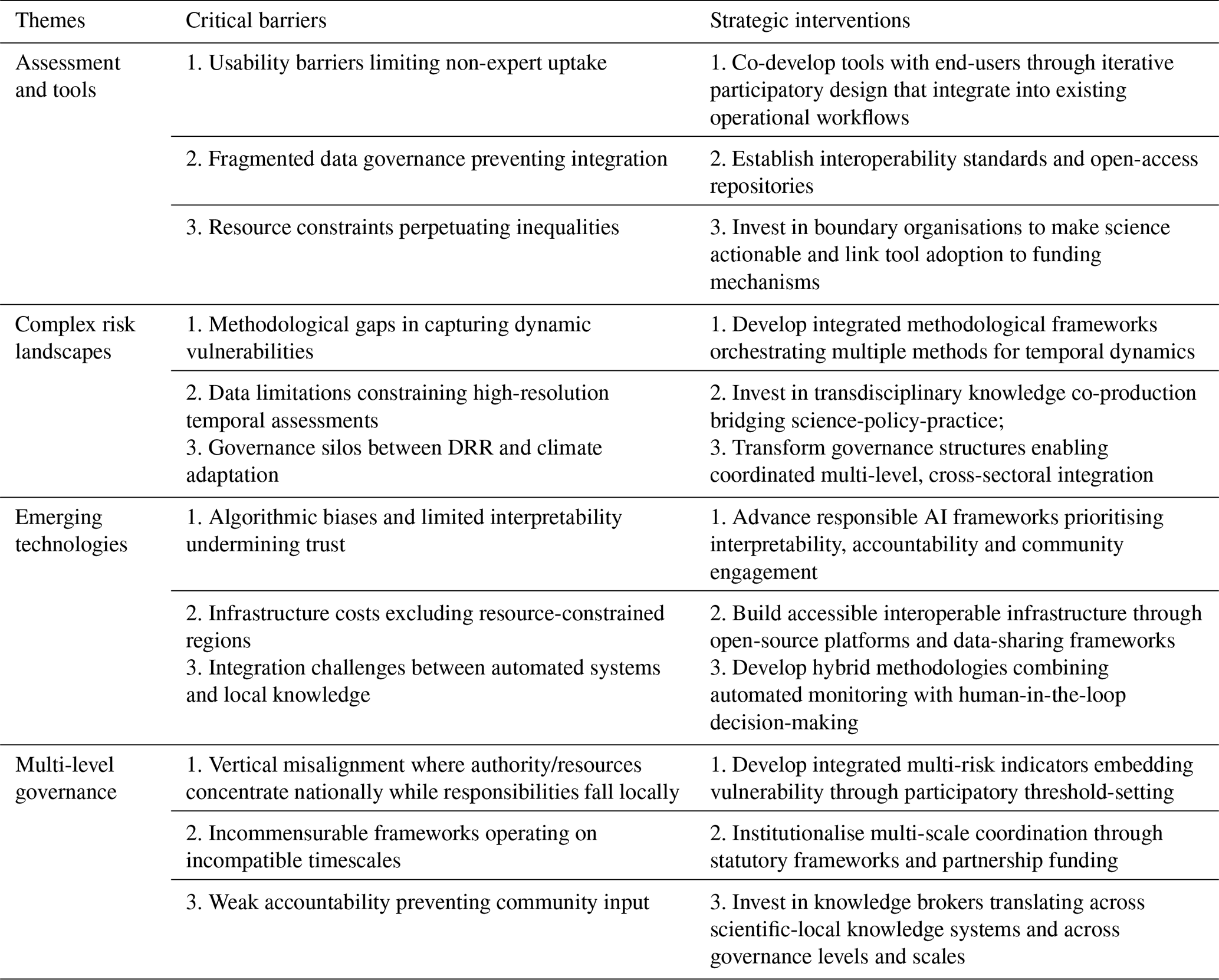
Addressing these interconnected barriers requires systemic interventions operating across multiple scales and timeframes which address fundamental governance, equity, and capacity dimensions. We synthesise here immediate priority actions, spanning the technological, governance, social, and physical-scientific realms, that should be pursued both to accelerate progress toward the 2030 Sendai targets and to contribute to broader discussions on post-2030 disaster risk reduction governance.
However, there are substantial obstacles that extend beyond technical or financial constraints. Power asymmetries embedded in existing institutional structures resist redistribution of resources and authority required for genuine multi-level coordination. Moreover, disciplinary silos are perpetuated by academic incentive structures, funding mechanisms, and professional identities hinder the transdisciplinary collaboration essential for systemic risk management. Acknowledging such structural barriers is essential for designing realistic, largely incremental pathways toward transformation.
Nonetheless, these strategic interventions would directly advance Sendai Framework objectives across all four priorities. For example, Priority 1 (understanding disaster risk) can benefit from integrated methodological frameworks capturing systemic interactions, and multi-risk indicators embedding vulnerability dynamics. Statutory multi-level coordination mechanisms and knowledge brokers facilitating vertical knowledge flows could contribute to Priority 2 (strengthening disaster risk governance). Priority 3 (investing in DRR for resilience) should be supported by interoperable infrastructure, open-access repositories, and hybrid methodologies combining technological innovation with local knowledge. Priority 4 (enhancing preparedness for effective response and “Build Back Better”) can be advanced through participatory early warning indicator development and human-in-the-loop decision-making frameworks.
While we recognise that international frameworks do not automatically translate into effective on-the-ground disaster risk reduction, particularly in resource-constrained contexts, the Sendai Framework MTR provides a valuable structure for identifying where scientific advances can support policy objectives and prioritise research investments.
4.2 Community perspectives: validating priorities through broader consultation
Prior to the conference, we conducted a survey of prospective conference attendees (n=86 respondents, primarily academic researchers) to identify key priorities and barriers in multi-hazard risk research. These survey responses both informed our conference agenda and provided advance indication of themes subsequently elaborated at the conference and in manuscript preparation. Figure 2 summarises the survey responses on multi-hazard risk research priorities and barriers in Word Clouds.
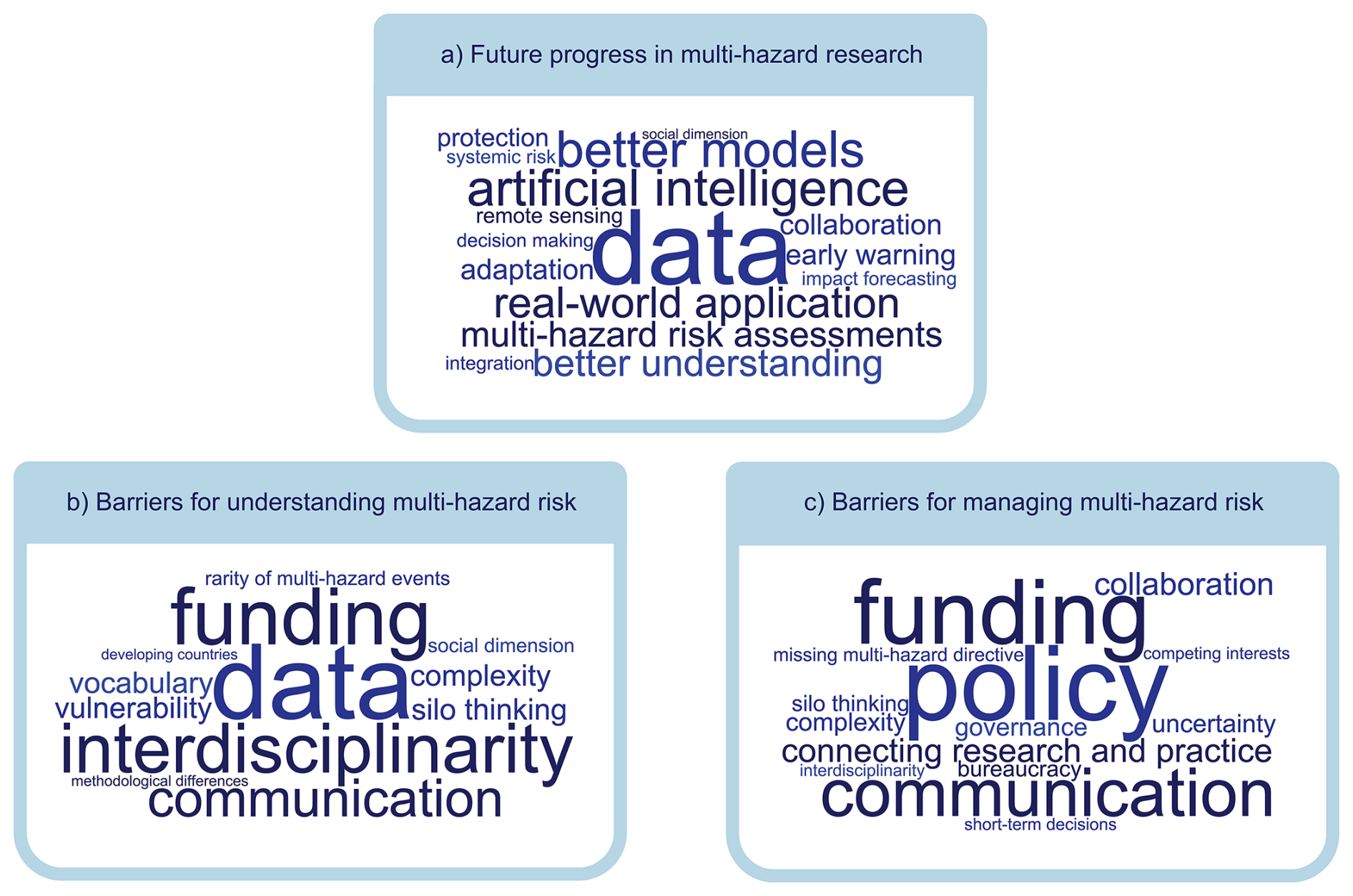
Figure 2Word clouds depicting survey responses on multi-hazard risk research priorities and barriers. Survey respondents (n=86) identified key themes for (a) future progress in multi-hazard research, emphasising the need for better models, data integration, and artificial intelligence applications; barriers to (b) understanding multi-hazard risks, highlighting funding constraints, data limitations, and interdisciplinary communication challenges; and barriers to (c) managing multi-hazard risks, focusing on policy gaps, funding issues, and communication between science and practice. Word size reflects frequency of mention across open-ended survey responses.
Our analysis of survey responses validates three key dimensions of the barriers and priorities identified in Sect. 4.1. Firstly, respondents emphasised that effective risk management for multi-hazards requires institutions that are both capable of and committed to making long-term, large-scale investments in knowledge generation and sharing, policy development, and concrete actions across domains and geographies. These efforts should both inform and be informed by relevant physical and social science research as interpreted, integrated, or indeed enhanced by qualified boundary-spanning organisations as part of an all-of-society approach. This directly supports our recommendation to invest in boundary organisations and knowledge brokers (Table 2).
Secondly, survey respondents expressed strong enthusiasm for delivering on the promise of current and emerging science to enhance societal well-being through a robust, transdisciplinary environment of actors spanning research, policy, and practice, through conferences, training programmes, research grants, and similar initiatives. The greatest excitement lies in the increasing integration of efforts across the research-to-action or research for policy spectrum. Such advances are understood to hinge on progress both in technical areas and at the organisational or governance level, with the latter perceived to potentially benefit most from developing science-informed multi-hazard policies and incentivising the bidirectional exchange of ideas between research and practice. This community-wide recognition of integration momentum reinforces our recommended priority actions for transdisciplinary co-production, knowledge brokers, and interoperability standards.
Thirdly, respondents highlighted that emerging technologies such as digital twins, AI-driven frameworks, and participatory tools can drive the development of integrated and adaptive models that deepen knowledge and enhance decision-making. Such an environment could naturally integrate concepts, share data and methods, and build from foundational multi (-hazard) risk concepts toward a more fully realised risk management meta-strategy that responds to current needs while anticipating those that may yet be over the horizon. However, implementing this is likely to be significantly challenging, particularly due to persistent data limitations which remain a major obstacle to advancing understanding of multi-hazard risks, as cited by nearly half of survey respondents. This widespread recognition of data barriers underscores the urgency of our recommended strategic interventions for accessible infrastructure, open-access repositories, and hybrid methodologies that can function despite data constraints.
4.3 Concluding remarks
The barriers and strategic interventions identified across our four thematic perspectives share a common thread: effective disaster risk reduction depends fundamentally on strengthening connections between data systems, governance levels, scientific disciplines, and knowledge systems. We call for integrated approaches that combine technological innovation with governance transformation: establishing knowledge brokers who bridge scales and disciplines; institutionalising transdisciplinary co-production from research design through implementation; and redistributing authority to match responsibility across governance levels. These findings and recommendations not only address current gaps in the Sendai Framework MTR but also seek to inform the development of its post-2030 successor, emphasising that effective DRR must initiate transformative processes to build resilience amid growing pressures from climate change and other global challenges – ultimately supporting broader efforts to achieve the Sustainable Development Goals (SDGs) through enhanced societal resilience.
A1 General advances in disaster risk science and compound events
This area drives a nuanced understanding of disaster risks and compound events, recognising interconnected risks and scientific breakthroughs (which directly supports Priority 1 and 4 of the Sendai Framework). The session “General advances in disaster risk science and compound events” highlighted many forms of single and multi-hazards, covering both meteorological and hydrological, geohazard, societal and biological types. Disaster risk science is a fast-evolving field where progress is being made for a diverse range of topics, including hazard assessment, management, impacts, adaptation, and the inclusion of inequality in social vulnerability. Valuable steps to advance this dynamic field include enhancing communication strategies to better engage decision-makers and the public, addressing data gaps through targeted collection efforts in the Global South, and maximising the potential of existing datasets by fostering innovative approaches to their integration and analysis. The need for addressing disaster risk in an increasingly inclusive (e.g., multi-hazard context and all-inclusive world) manner holds a key opportunity to address the systemic nature of hazards without unnecessary complexity. There is a need for the compound risk communities to communicate and collaborate with those in the disaster risk reduction field to work around this complexity.
A2 Dynamics, interdependencies and interactions of risk drivers
Understanding how risk drivers interlink and amplify each other is crucial for systemic resilience, underscoring the need for comprehensive, integrative risk analysis methods (which directly supports Priority 1, 2, and 4 of the Sendai Framework). The session “Dynamics, interdependencies and interactions of risk drivers” detailed these complexities and stressed the value of coordinated risk reduction strategies. Although, the session was marked by single-hazard studies, and difficulties in including dynamics in risk assessments, many promising developments in the field of dynamic risk assessments are emerging. For example, novel qualitative assessments may give new insights into vulnerability and risk, such as causal loop diagrams and risk profile scenarios, but introduce complexities and challenges in transferring findings across locations or scaling across spatial levels. For quantitative analyses however, data limitations, uncertainty in quality/biases significantly restricted the scope of the research, which could lead to creating a paradox where increased focus demands even more precise information. Future scenarios, while uncertain, highlight that present choices shape potential outcomes, underscoring the need to consider evolving risk drivers, socio-economic trends, and unintended impacts in risk assessments.
A3 Systemic risk – assessing, modelling, coping
Evaluating systemic risk across interconnected domains emphasises the need for coordinated risk assessments in a multi-hazard context. This approach advances understanding of complex risk interactions, addressing gaps in data and governance to manage risks across sectors (Priority 1: Understanding Risk and Priority 2: Governance). The session “Systemic risk – assessing, modelling, coping” explored the challenges of addressing multi-hazards and the need for cross-sector collaboration. A key challenge is to identify and potentially streamline approaches for capturing and analysing systemic risk. While several features of systemic risk set risks apart from other risks, e.g. complexity as well as transboundary and cascading effects within systems, across systems or systems domains, a key methodological challenge remains with regards to setting system boundaries and defining what is considered inside or outside a system and, hence, the analytical focus. Another key methodological challenge is on starting points for systemic risk analysis, such as whether to focus on the system, hazard, or trigger event, and how to balance quantitative with qualitative data for meaningful insights. Furthermore, there is a need for harmonising diverse case study approaches and improving models by integrating simulations with real-world observations, but also for paying attention to societal impacts and distributive justice issues. Finally, a key take-away of the session is that researchers should not only focus on academic puzzles but also provide scenarios, models, and tools that are useful for policymakers, interest groups and the public for answering societally relevant questions.
A4 Advancing critical infrastructure modelling in a complex world
Modelling critical infrastructure (CI) interdependencies helps mitigate risks to essential services in multi-hazard scenarios. Progress here is critical for both reducing exposure and building resilient systems (Priority 2: Governance, Priority 3: Resilience Investment). The session “Advancing critical infrastructure modelling in a complex world” was characterised by a high degree of diversity, on the one hand through a wide variety of applied methods, but also through the coverage of various CI (e.g., transportation networks, ports, health infrastructure, airports, and electricity grids) and different hazard types (e.g., floods, multi-hazards, volcanic eruptions, storms), although no man-made hazards. One of the key challenges is to approach CI from an all-encompassing and systemic perspective of the interconnected nature of CI and resulting cascading effects not only on the physical level but including social and economic factors. Another, yet scarcely addressed challenge is the inclusion of the temporal dimension (short and long-term) in CI impact modelling. Data availability remains a bottleneck, but the growing access to public data is improving CI modelling, shifting from theoretical to more empirical, real-world-based approaches. Future research should focus on deepening the understanding of complex CI interactions further, especially in the face of multi-hazard and cascading effects beyond hazard boundaries, for example by using novel methods such as deep learning algorithms and agent-based modelling seems promising to make use of the growing data availability.
A5 Artificial intelligence and machine learning for multi-risk assessment
AI and ML improve predictive capabilities for multi-risk assessments, which may enhance early detection and response strategies. Rapid advancement in these fields is essential for furthering the understanding (Priority 1: Understanding Risk and Priority 4: Preparedness and “Build Back Better”). The session “Artificial Intelligence and Machine Learning for Multi-Risk Assessment” emphasised the transformative role of AI in synthesising complex hazard data for more adaptive risk management, and covered applications of AI methods on very different aspect of risk analysis, starting from hazard analysis and forecasts, exposure and vulnerability factors and integrated multi-risk approaches. Recent advancements in machine learning, including deep learning (e.g., convolutional neural networks and Transformers) and ensemble models (e.g., Random Forest and XGBoost), have been applied to a range of problems such as multi-hazard susceptibility mapping (that integrates climate and geophysical hazards), downscaling techniques, water quality assessment, and analysing the relationship between food security, social conflicts, and weather factors. A key recent development in the field is the growing emphasis of explainability of AI, with many methods, such as feature importance, SHAP values and Partial Dependency plots, being used to understand the role played by risk factors in the analyses. One of the challenges is the integration of the multi-hazard context into risk analysis applications of AI, however more attempts are lately recently made. Furthermore, the role of Large Language Models and Generative AI in climate services, highlight the potential of Deep Reinforcement Learning (DRL) to optimise the adaptation process and Multi-Modal Generative ML to identify specific adaptation options addressing multi-risks.
A6 Assessing multi-hazard risk using Earth-observation data
Earth Observation (EO) data supports real-time monitoring and allow for spatially detailed risk assessments (Priority 1: Understanding Risk and Priority 4: Preparedness and “Build Back Better”). The session “Assessing multi-hazard risk using Earth-Observation data” provided an in-depth look at EO's potential in capturing dynamic, overlapping hazards with precision covering a wide array of hazards (among them volcanic eruptions, floods, landslides, earthquakes, and heavy cloud cover) and geographies. One of the benefits of using satellite data is the global coverage and advances in imaging and data analysis that enable detailed earth science at building or field scales, even in traditionally data-poor areas. Oftentimes on-site collaboration with stakeholders helps guide problem identification and contribute crucial local knowledge about both the relevant processes and the impacts of the events in question. However, attributing risk in multi-hazard scenarios and distinguishing their cumulative impact (such as spatial correlations in geography) remains a significant challenge to consider hazards that are not just multiple but correlated. To address these challenges, future directions could include refining methodologies, promoting satellite use for disaster studies, and leveraging interpretable AI to develop standardised multi-sensor comparison products for multi-hazard risk analysis.
A7 Health and disasters
Integrating health considerations into multi-hazard assessments is vital, as disasters often exacerbate health risks, including disease outbreaks like waterborne illnesses post-floods or vector-borne diseases like malaria. Strengthening health resilience within disaster risk reduction directly supports Sendai Priority 2 and 4 by emphasising preventive measures and rapid response to safeguard populations. The session “Health and Disasters” highlighted critical intersections between disaster risk and public health, addressing both immediate and long-term risk assessments. In recent years, it has proven quite a challenge to bring together the disaster risk and health research domains, which made clear that there are still improvements to be made in integrating health and disease research into disaster risk science. However, a lot of studies, ranging from climate models to identify potential heat mortality extremes, mental health, systemic effects on healthcare facilities to practitioners discussing real-life impacts, are taking important steps to address these challenges. One of the main needs is for practitioners and scientists to work together to advance the integration of these research domains, and to produce actionable research outputs on health and disasters. A key opportunity is to not only learn from the risk as we have seen it in the past, but also potential health implications that the world could face in the future, such as intensified heat extremes and the potential expansion of the endemic area of diseases, in which storylines have proven to be a specifically useful tool.
A8 Recent developments in multi-hazard early-warning systems
MHEWS play a critical role in preventing disasters and facilitating anticipatory action by providing timely, reliable warnings that empower communities to respond proactively. Progress in expanding and integrating MHEWS is urgent to enhance community resilience (Priority 4: Preparedness and “Build Back Better”). The session “recent developments in multi-hazard early-warning systems” highlighted a list of key challenges and opportunities in early warning systems (EWS), especially for MHEWS. Small Islands Developing States (SIDS) are often overlooked in EWS research, and there is a need to avoid getting caught in terminology, instead focusing on addressing multi-risk within EWS. It is essential to ensure a clear link between modelling activities, hazard intensity thresholds, and warning criteria, theoretically embedded within the disaster warning model itself. On the opportunities side, soft adaptation measures show promise, particularly in the context of SIDS. MHEWS should also expand beyond natural hazards to consider other systems, such as health and human-induced risks. The UNDRR's “first mile” approach, which emphasises local engagement for those directly impacted, should be widely adopted, and standardisation of MHEWS approaches is necessary to streamline efforts.
A9 Nature-based solutions for disaster risk reduction
Nature-based Solutions (NbS) integrate ecosystem-based approaches to reduce disaster risks while promoting environmental sustainability. Their role in fostering resilience aligns with investments in long-term DRR measures (Priority 3: Resilience Investment, Priority 4: Preparedness). The session “Nature-based Solutions for Disaster Risk Reduction” explored the benefits and challenges of implementing ecosystem-based approaches in hazard-prone areas. This is a powerful approach building on nature enhancement, ecosystem restoration, and protection, which can help societies to adapt to climate change and reduce disaster risk while providing numerous additional benefits such as health, recreation, food, and clean water. However, their implementation is hindered by an array of gaps in the knowledge base, preventing them from delivering their full potential. Some challenges relate directly to stakeholders involved in NBS projects and to better understand how stakeholders interact within debates, their roles, and the values they share, to facilitate future coalition building and enhance acceptance of NbS. Continued research on stakeholder attitudes, acceptance, and investment willingness is crucial and providing stakeholders with evaluation frameworks can further facilitate NBS implementation. Literature on NbS is complex and entails different terminologies and heterogeneous approaches to evaluate their performance, while novel methods allow for new risk frameworks that can include NbS.
A10 How can stakeholder engagement and knowledge co-production enhance effective multi-risk management?
Stakeholder engagement and knowledge co-production are essential for developing inclusive, effective risk management strategies, enabling communities and experts to work collaboratively to build greater resilience (Priority 2: Governance, Priority 4: Preparedness). The session “How Can Stakeholder Engagement and Knowledge Co-Production Enhance Effective Multi-Risk Management?” underscored the importance of knowledge co-production and stakeholder engagement in understanding multi-risk contexts and capturing the interrelationships necessary for developing adaptable, context-specific risk management solutions. Connecting local and scientific knowledge, including systemic, orientation, and transformation knowledge, enhances the effectiveness of these efforts. One of the key challenges in effective engagement is ensuring equity and enabling interdisciplinary collaboration, as well as transdisciplinary work with stakeholders such as policymakers, technical practitioners, and local communities in a multi-sectoral, multi-hazard setting. Additionally, ethical considerations are crucial, and collaborators should be involved at every stage, with special attention to sensitive contexts like conflict settings where sensitive data must be handled carefully. In doing so, building trustworthy relationships may slow progress, but the long-term value is clear. Capacity-building for interface roles – those who support dialogue and co-creation – is critical yet often undervalued.
A11 Science for policy and practice: synergising disaster risk reduction and climate change adaptation
Science-driven strategies help bridge DRR and climate adaptation, strengthening policies and frameworks to address intersecting risks. Advancements here drive systemic understanding and proactive responses (Priority 1: Understanding Risk, Priority : Governance). The session “Science for policy and practice: Synergising Disaster Risk Reduction and Climate Change Adaptation” was characterised by challenges, novel approaches and recommendations that enhance resilience by linking DRR and Climate Change Adaptation by using methods such as participatory approaches, the co-creation of knowledge, and the communication of risks to non-scientific actors. One of the biggest challenges is the increasing complexity of quantifications and inherent uncertainties of managing risks in a multi-hazard decision-making context, where present-day risks and long-term future risks need to be considered. Oftentimes, the relevant planning timelines across risk-relevant sectors and governance levels rarely align as they might be influenced by election cycles being shorter than planning cycles, thus requiring additional interfacing capacity to proactively seek synergies and integration. Recent tools and approaches are incorporating innovative ways to co-create future scenarios in a participatory way following a systematic understanding of present and future risks, like the gradual introduction the complexity of the multi-hazard risk context to non-scientific actors, and the potential of stronger qualitative or semi-quantitative approaches such as system dynamics and agent-based modelling. Improved communication and mainstreaming the benefits of addressing DRR and CCA together will help minimise the risk of maladaptation and lock-ins while simultaneously reducing future risks through DRR and addressing current risks through CCA (REF).
A12 Storylines and narratives for multi-hazard, multi-risk decision-making
Narrative-based scenario planning helps communicate complex risks, increase risk awareness and informed decision-making among diverse stakeholders (Priority 1: Understanding Risk, Priority 2: Governance). The session “Storylines and narratives for multi-hazard, multi-risk decision-making” discussed the important role of storylines and narratives as an approach to explore complex and cascading risks and unprecedented events, including direct and indirect impacts across different sectors and contexts, such as the humanitarian sector and hazard specific contexts. There are many definitions of the term storyline, the frameworks and the methodologies applied to create storylines, as well as varying methods and tools including narratives and elicitation, timelines, scenarios, modelling, impact chains and causal networks, often tied to the local context. One of the key challenges is the intersectionality of the physical and social sciences and the role of the interdisciplinary and transdisciplinary approaches for storylines that include the social drivers. Furthermore, there is a challenge of integrating quantitative evidence into the qualitative storylines, or what qualitative data can bring to quantitative analysis. The iterative nature of storyline development is an essential component of storyline development, such as stakeholder engagement through participatory engagement (e.g. elicitation). Finally, a challenge of visualising storylines remains, including how to communicate complex graphical models to diverse audiences and incorporate temporal components, and an opportunity exists in exploring the role of arts and humanities, like illustrations, to make the science more accessible.
A13 Learning from the past: historical perspectives and “success stories” of DRR
Historical perspectives offer valuable insights into effective DRR strategies, emphasising the importance of building on past successes to inform present and future actions (Priority 1: Understanding Risk, Priority 4: Preparedness). The session “Learning from the past: historical perspectives and `success stories' of DRR” highlighted how historical analysis can guide improvements in current DRR practices. One of the key challenges, however, for disaster forensics is incorporating climate change and urbanisation as multi-hazard drivers into assessment frameworks. In the response phase there is a need for hazard-specific response capacity and recovery planning, including evacuation facilities and long-term housing, while also identifying synergies with other sectors. More education and public communication are needed to improve public safety in the face of climate change-influenced hazards, which can enhance the effectiveness of warning, response, and recovery measures, including severe and infrequent “black swan” events. Currently, there is a research gap in addressing topics such as evacuation, large-scale recovery analyses, and the role of insurance in recovery and adaptation needs in the field of disaster forensics. However, while there may be opportunities and benefits for learning across regions, barriers to transferring lessons learned remain and more harmonisation is needed to contextualise these lessons.
A14 Demonstration of tools and services
Demonstrations of new tools underline their impact in translating complex data into actionable insights, supporting informed decision-making and proactive risk management (Priority 1: Understanding Risk, Priority 4: Preparedness). The session “Demonstration of tools and services” showcased innovative tools and services enhancing data-driven decision-making for multi-hazard resilience. The barriers in the use of new technology-based solutions for multi-risk assessment and management may relate to usability, skills gaps, access, availability, and stakeholder interests, needs, and priorities. Ensuring these tools are accessible to a diverse range of stakeholders, using tutorials, and addressing technological challenges based on stakeholders' needs, especially for non-technical users, can enhance engagement, for example through initiative like the Disaster Risk Gateway. Early discussions with stakeholders about their information needs, especially for tools like Digital Twins, and integrating these tools into planning processes, particularly for urban planners, can significantly improve their relevance and usability. Maintaining open-mindedness, understanding data barriers, and ensuring that platforms are designed by and for the users can enhance their effectiveness and adoption.
B1 Assessments and tools
The “Assessments and tools” perspective focuses on enhancing the understanding and management of disaster risk through inclusive, data-driven, and technology-enabled approaches. This includes developing a shared understanding of risk, improving tools and methodologies, and ensuring all-of-society engagement in disaster risk reduction (DRR). The following themes aim to gather insights on how the topic and focus of your session can contribute to advancing these goals:
-
Enable more inclusive recovery: highlight the role of tools and assessments in ensuring recovery processes are inclusive and aligned with Building Back Better (BBB) principles, supported by legal frameworks.
-
Develop a shared understanding of risk: explore how your topic/session contributes to better data availability, stakeholder engagement, and multi-hazard risk management to inform planning and decision-making.
-
State-of-the-art tools: share advancements in tools methodologies that enhance risk analysis or decision support for DRR.
-
Enhance granularity in risk data and information: explain how your topic/session addresses the need for disaggregated data that captures vulnerabilities and impacts across different groups and indicators.
-
Improve data standards, governance, and technology: provide insights on how your topic/session supports better data interoperability, governance, and integration into decision-making platforms.
-
Enable all-of-society engagement and participation: reflect on how the research of your topic/session promotes community involvement, stakeholder collaboration, and the use of open and local data for DRR.
B2 Complex risks
The “Complex risks” perspective focuses on understanding and addressing the interconnected and multi-layered nature of risks in today's world. This includes systemic risks, health and disease-related risks, and the challenges posed by technological advancements and rapid change. This perspective will also highlight the need for improved collaboration between DRR and statistical communities, enhanced granularity of data, and strengthened communication and awareness to build resilience and support governance. The following themes aim to gather insights on how the topic and focus of your session can contribute to advancing these goals:
-
Enhance knowledge and understanding of the systemic nature of risk: reflect on how your topic/session supports systemic evaluations (address health and disease-related risks or risk drivers) and promotes stakeholder engagement to manage interconnected risks.
-
Improve collaboration between disaster risk reduction and statistical communities: share examples of how collaboration between statistical and DRR practices can improve data collection, analysis, and risk assessments.
-
Emerging technologies: discuss what the role of scientific and technological advancements in addressing or managing complex risks for your topic.
-
Enhance granularity in risk data and information: explain how the research of your topic/session contributes to creating disaggregated data sets to capture vulnerability, exposure, and impacts across diverse groups and indicators.
-
Strengthen risk awareness and communication: provide insights on how your topic/session improves public or stakeholder understanding of risks and fosters a culture of prevention and resilience-building.
B3 Emerging technologies
The “Emerging technologies” perspective focuses on leveraging transformative tools and advancements to expand our capacity for risk assessment, resilience-building, and disaster preparedness. This includes improving infrastructure resilience, fostering a shared understanding of risk, enhancing data quality and granularity, and applying emerging technologies to manage complex risks. The following themes aim to gather insights on how the topic and focus of your session can contribute to advancing these goals:
-
Invest in resilient infrastructure and systems: describe how the research of your topic/session contributes to developing, upgrading, or incentivising resilient infrastructure systems that integrate risk assessments and support public investment mechanisms.
-
Develop a shared understanding of risk: share insights on how your topic/session promotes multi-hazard, vulnerability, and exposure analysis to inform planning, budgeting, and financing for disaster risk reduction.
-
Emerging technologies: highlight the role of innovative technologies, such as AI or scenario-planning tools, in improving risk assessments and managing complex risks.
-
Enhance granularity in risk data and risk information: discuss how the research of your topic/session advances the development of disaggregated datasets to capture diverse vulnerabilities, and disaster impacts across multiple indicators.
-
Improve data standards, enhance data governance, and invest in data technology: reflect on how your topic/session emphasises the importance of interoperable data systems, enhanced data governance, or the integration of advanced tools for risk analysis and decision-making.
B4 Stakeholder engagement and disaster risk management
The “Stakeholder engagement and disaster risk management (DRM)” perspective highlights the critical role of inclusive governance, cross-sectoral collaboration, and community-based approaches in managing and reducing risks effectively. It emphasises building capacity for integrated decision-making, multi-scale governance, and improving early warning systems. The following themes aim to gather insights on how the topic and focus of your session can contribute to advancing these goals:
-
There is a need for more coherent and integrated management of risks: reflect on how the research of your topic/session supports adaptive governance and coordinated risk management across sectors, domains, and scales, considering the evolving scope of hazards and risks.
-
An all-of-society approach to risk management: describe how your topic/session fosters inclusivity by engaging diverse stakeholders, including scientific, private, local, and Indigenous communities, with a focus on addressing the needs of high-risk groups.
-
Multi-scale risk management: discuss how your topic/session contributes to connecting risk governance structures at local, national, regional, and global levels to strengthen risk reduction efforts.
-
Building capacity for integrated risk-informed decision-making: share insights into how your topic/session builds technical capacity and supports pathways or storylines to inform decision-making across all phases of the risk management process.
-
Increase the coverage and performance of early warning systems: highlight how your topic/session contributes to improving Multi-Hazard Early Warning Systems (MHEWS) by incorporating vulnerability data, integrating regional and community-level insights, or leveraging cross-boundary collaboration.
The underlying data are not publicly available due to privacy and confidentiality restrictions protecting survey participants and expert consultations.
TT: Led the research, prepared the manuscript, conceptualization, methodology, formal analysis, writing – original draft, writing – review & editing, project administration. CR, MdR, JS, AT: Core writing team – conceptualization, methodology, formal analysis, writing – original draft, writing – review & editing. SLB, RC, EC, JMC, LC, KDP, DMF, WSJ, EEK, HJM, JM, SN, BP, PP, NSS, PJS, TRS, NvM, MLZ: Conference session reports, Sendai Framework survey input, writing – review & editing. JED, AF, CMG, SKJ, CK, RŠT, StS, ST, MJCvdH, CJVdW: Writing – review & editing, and either conference session reports or Sendai Framework survey input. JNC, BK, VM, JS: Writing – review & editing. PJW: Co-led the conceptualisation and methodology; core writing team, formal analysis, writing – original draft, writing – review & editing, funding acquisition.
The contact author has declared that none of the authors has any competing interests.
The work performed in this study is original, reflects the authors' understanding, and does not involve human research participants in the traditional sense. However, this research did include two forms of data collection from human subjects: (1) a questionnaire distributed to conference attendees, and (2) expert consultation completed by the co-authors of this study. Both data collection activities were conducted with informed consent as participants were made aware of the research purpose and their voluntary participation. The questionnaire and expert consultation was focussing on professional opinions and expertise rather than personal or sensitive information. All responses were handled confidentially and used solely for the purposes of this research.
Publisher's note: Copernicus Publications remains neutral with regard to jurisdictional claims made in the text, published maps, institutional affiliations, or any other geographical representation in this paper. The authors bear the ultimate responsibility for providing appropriate place names. Views expressed in the text are those of the authors and do not necessarily reflect the views of the publisher.
We gratefully acknowledge the main project sponsors of the 3rd International Conference on Natural Hazards and Risks in a Changing World: MYRIAD-EU, RISK-KAN, and NatRiskChange/University of Potsdam. We extend our appreciation to the conference scientific committee, organising committee, session conveners, session rapporteurs, and the team at Arctik for their excellent facilitation of communications and logistics organisation. Additional funding support was provided by Deutsche Forschungsgemeinschaft (DFG, German Research Foundation) under Germany's Excellence Strategy – EXC 2037 “CLICCS – Climate, Climatic Change, and Society” – Project Number: 390683824 at Universität Hamburg, the European Space Agency (ESA), World Climate Research Programme (WCRP), the European Commission DG ECHO, and the University of Potsdam. We would also like to thank all participants who presented at or attended the conference, and especially those who contributed by completing surveys and providing session reports that formed the foundation of this synthesis.
This research is carried out within the MYRIAD-EU project, which has received funding from the European Union's Horizon 2020 research and innovation programme under grant agreement no. 101003276.
This paper was edited by Solmaz Mohadjer and reviewed by three anonymous referees.
Aerts, J. C. J. H.: Integrating agent-based approaches with flood risk models: A review and perspective, Water Secur., 11, 100076, https://doi.org/10.1016/j.wasec.2020.100076, 2020.
AghaKouchak, A., Huning, L. S., Sadegh, M., Qin, Y., Markonis, Y., Vahedifard, F., Love, C. A., Mishra, A., Mehran, A., Obringer, R., Hjelmstad, A., Pallickara, S., Jiwa, S., Hanel, M., Zhao, Y., Pendergrass, A. G., Arabi, M., Davis, S. J., Ward, P. J., Svoboda, M., Pulwarty, R., and Kreibich, H.: Toward impact-based monitoring of drought and its cascading hazards, Nat. Rev. Earth Environ., 4, 582–595, https://doi.org/10.1038/s43017-023-00457-2, 2023.
Aldunce, P., Beilin, R., Howden, M., and Handmer, J.: Resilience for disaster risk management in a changing climate: Practitioners' frames and practices, Global Environ. Change, 30, 1–11, https://doi.org/10.1016/j.gloenvcha.2014.10.010, 2015.
Allen, C., Malekpour, S., and Mintrom, M.: Cross-scale, cross-level and multi-actor governance of transformations toward the Sustainable Development Goals: A review of common challenges and solutions, Sustain. Dev., 31, 1250–1267, https://doi.org/10.1002/sd.2495, 2023.
Alzubaidi, L., Bai, J., Al-Sabaawi, A., Santamaría, J., Albahri, A. S., Al-dabbagh, B. S. N., Fadhel, M. A., Manoufali, M., Zhang, J., Al-Timemy, A. H., Duan, Y., Abdullah, A., Farhan, L., Lu, Y., Gupta, A., Albu, F., Abbosh, A., and Gu, Y.: A survey on deep learning tools dealing with data scarcity: definitions, challenges, solutions, tips, and applications, J. Big Data, 10, 46, https://doi.org/10.1186/s40537-023-00727-2, 2023.
Amaliya, V. F., Lakudo, H., Ulum, A. H., Destarina, L., Seno, S., Rakhmadi, F., Aminah, N. S., Evita, M., and Djamal, M.: Development of IoT-Based Volcano Early Warning System, J. Phys.: Conf. Ser., 1772, 012009, https://doi.org/10.1088/1742-6596/1772/1/012009, 2021.
Aravena Pelizari, P., Geiß, C., Aguirre, P., Santa María, H., Merino Peña, Y., and Taubenböck, H.: Automated building characterization for seismic risk assessment using street-level imagery and deep learning, ISPRS J. Photogram. Remote Sens., 180, 370–386, https://doi.org/10.1016/j.isprsjprs.2021.07.004, 2021.
Arctik: D7.4 Serious Game, Zenodo [data set], https://doi.org/10.5281/zenodo.16366986, 2025.
Ariyachandra, M. R. M. F. and Wedawatta, G.: Digital Twin Smart Cities for Disaster Risk Management: A Review of Evolving Concepts, Sustainability, 15, 11910, https://doi.org/10.3390/su151511910, 2023.
Bakhtiari, S., Najafi, M. R., Goda, K., and Peerhossaini, H.: A dynamic Bayesian network approach to characterize multi-hazard risks and resilience in interconnected critical infrastructures, Reliabil. Eng. Syst. Safe., 257, 110815, https://doi.org/10.1016/j.ress.2025.110815, 2025.
Bastos Moroz, C. and Thieken, A. H.: Urban growth and spatial segregation increase disaster risk: lessons learned from the 2023 disaster on the North Coast of São Paulo, Brazil, Nat. Hazards Earth Syst. Sci., 24, 3299–3314, https://doi.org/10.5194/nhess-24-3299-2024, 2024.
Baulenas, E., Versteeg, G., Terrado, M., Mindlin, J., and Bojovic, D.: Assembling the climate story: use of storyline approaches in climate-related science, Global Challeng., 7, 2200183, https://doi.org/10.1002/gch2.202200183, 2023.
Becker, S. L. and Reusser, D. E.: Disasters as opportunities for social change: Using the multi-level perspective to consider the barriers to disaster-related transitions, Int. J. Disast. Risk Reduct., 18, 75–88, https://doi.org/10.1016/j.ijdrr.2016.05.005, 2016.
Bellini, P., Nesi, P., Pantaleo, G., Bellini, P., Nesi, P., and Pantaleo, G.: IoT-Enabled Smart Cities: A Review of Concepts, Frameworks and Key Technologies, Appl. Sci., 12, https://doi.org/10.3390/app12031607, 2022.
Bertoldo, R.: A comparative frame for a contextualised analysis of local natural risk management, Int. J. Disast. Risk Reduct., 52, 101945, https://doi.org/10.1016/j.ijdrr.2020.101945, 2021.
Birkmann, J., Cardona, O. D., Carreño, M. L., Barbat, A. H., Pelling, M., Schneiderbauer, S., Kienberger, S., Keiler, M., Alexander, D., Zeil, P., and Welle, T.: Framing vulnerability, risk and societal responses: the MOVE framework, Nat. Hazards, 67, 193–211, https://doi.org/10.1007/s11069-013-0558-5, 2013.
Bommasani, R., Hudson, D. A., Adeli, E., Altman, R., Arora, S., von Arx, S., Bernstein, M. S., Bohg, J., Bosselut, A., Brunskill, E., Brynjolfsson, E., Buch, S., Card, D., Castellon, R., Chatterji, N., Chen, A., Creel, K., Davis, J. Q., Demszky, D., Donahue, C., Doumbouya, M., Durmus, E., Ermon, S., Etchemendy, J., Ethayarajh, K., Fei-Fei, L., Finn, C., Gale, T., Gillespie, L., Goel, K., Goodman, N., Grossman, S., Guha, N., Hashimoto, T., Henderson, P., Hewitt, J., Ho, D. E., Hong, J., Hsu, K., Huang, J., Icard, T., Jain, S., Jurafsky, D., Kalluri, P., Karamcheti, S., Keeling, G., Khani, F., Khattab, O., Koh, P. W., Krass, M., Krishna, R., Kuditipudi, R., Kumar, A., Ladhak, F., Lee, M., Lee, T., Leskovec, J., Levent, I., Li, X. L., Li, X., Ma, T., Malik, A., Manning, C. D., Mirchandani, S., Mitchell, E., Munyikwa, Z., Nair, S., Narayan, A., Narayanan, D., Newman, B., Nie, A., Niebles, J. C., Nilforoshan, H., Nyarko, J., Ogut, G., Orr, L., Papadimitriou, I., Park, J. S., Piech, C., Portelance, E., Potts, C., Raghunathan, A., Reich, R., Ren, H., Rong, F., Roohani, Y., Ruiz, C., Ryan, J., Ré, C., Sadigh, D., Sagawa, S., Santhanam, K., Shih, A., Srinivasan, K., Tamkin, A., Taori, R., Thomas, A. W., Tramèr, F., Wang, R. E., Wang, W., Wu, B., Wu, J., Wu, Y., Xie, S. M., Yasunaga, M., You, J., Zaharia, M., Zhang, M., Zhang, T., Zhang, X., Zhang, Y., Zheng, L., Zhou, K., and Liang, P.: On the Opportunities and Risks of Foundation Models, arXiv [preprint], https://doi.org/10.48550/arXiv.2108.07258, 2022.
Bonfanti, R. C., Oberti, B., Ravazzoli, E., Rinaldi, A., Ruggieri, S., Schimmenti, A., Bonfanti, R. C., Oberti, B., Ravazzoli, E., Rinaldi, A., Ruggieri, S., and Schimmenti, A.: The Role of Trust in Disaster Risk Reduction: A Critical Review, Int. J. Environ. Res. Publ. Health, 21, https://doi.org/10.3390/ijerph21010029, 2023.
Bossut, M. and Tyagi, A.: Financial recovery after a flood event: Evidence from French manufacturing SMEs, in: Abstract booklet – 3rd International Conference Natural Hazards and Risks in a Changing World: Addressing Compound and Multi-Hazard Risk, edited by: Mirenzi, V. and Pijpen, I., https://doi.org/10.5281/zenodo.12744934, 2024.
Bou Nassar, J. A., Malard, J. J., Adamowski, J. F., Ramírez Ramírez, M., Medema, W., and Tuy, H.: Multi-level storylines for participatory modeling – involving marginalized communities in Tz'olöj Ya', Mayan Guatemala, Hydrol. Earth Syst. Sci., 25, 1283–1306, https://doi.org/10.5194/hess-25-1283-2021, 2021.
Brett, L., White, C. J., Domeisen, D. I. V., van den Hurk, B., Ward, P., and Zscheischler, J.: Review article: The growth in compound weather and climate event research in the decade since SREX, Nat. Hazards Earth Syst. Sci., 25, 2591–2611, https://doi.org/10.5194/nhess-25-2591-2025, 2025a.
Brett, L., Bloomfield, H. C., Bradley, A., Calvet, T., Champion, A., De Angeli, S., de Ruiter, M. C., Guerreiro, S. B., Hillier, J., Jaroszweski, D., Kamranzad, B., Keinänen-Toivola, M. M., Kornhuber, K., Küpfer, K., Manning, C., Mattu, K., Murtagh, E., Murray, V., Bhreasail, Á. N., O'Loughlin, F., Parker, C., Pregnolato, M., Ramos, A. M., Schlumberger, J., Theochari, D., Ward, P., Wessels, A., and White, C. J.: Science–policy–practice insights for compound and multi-hazard risks, Meteorol. Appl., 32, e70043, https://doi.org/10.1002/met.70043, 2025b.
British Geological Survey: Online repository of storylines on multi-risk decision-making, Zenodo, https://doi.org/10.5281/zenodo.16366883, 2025.
Bronstert, A., Agarwal, A., Boessenkool, B., Crisologo, I., Fischer, M., Heistermann, M., Köhn-Reich, L., López-Tarazón, J. A., Moran, T., Ozturk, U., Reinhardt-Imjela, C., and Wendi, D.: Forensic hydro-meteorological analysis of an extreme flash flood: The 2016-05-29 event in Braunsbach, SW Germany, Sci. Total Environ., 630, 977–991, https://doi.org/10.1016/j.scitotenv.2018.02.241, 2018.
Brown, S., Budimir, M., Sneddon, A., Clements, R. and Upadhyay Crawford, S.: Missing Voices Approach Manual: Executive Summary, Practical Action Publishing, Rugby, UK, https://practicalaction.org/knowledge-centre/resources/missing-voices-approach-manual-executive-summary/ (last access: 2 April 2026), 2022.
Bubeck, P., Berghäuser, L., Hudson, P., and Thieken, A. H.: Using Panel Data to Understand the Dynamics of Human Behavior in Response to Flooding, Risk Anal., 40, 2340–2359, https://doi.org/10.1111/risa.13548, 2020.
Budimir, M., Šakić Trogrlić, R., Almeida, C., Arestegui, M., Chuquisengo Vásquez, O., Cisneros, A., Cuba Iriarte, M., Dia, A., Lizon, L., Madueño, G., Ndiaye, A., Ordoñez Caldas, M., Rahman, T., RanaTharu, B., Sall, A., Uprety, D., Anderson, C., and McQuistan, C.: Opportunities and challenges for people-centered multi-hazard early warning systems: Perspectives from the Global South, iScience, 28, https://doi.org/10.1016/j.isci.2025.112353, 2025.
Buijs, S. L., Sauer, I. J., Kropf, C. M., Juhel, S., Stalhandske, Z., and De Ruiter, M. C.: Recovery under consecutive disasters: how recovery dynamics shape societal resilience, EGUsphere [preprint], https://doi.org/10.5194/egusphere-2025-3200, 2025.
Busker, T., van den Hurk, B., de Moel, H., van den Homberg, M., van Straaten, C., Odongo, R. A., and Aerts, J. C. J. H.: Predicting Food-Security Crises in the Horn of Africa Using Machine Learning, Earth's Future, 12, e2023EF004211, https://doi.org/10.1029/2023EF004211, 2024.
Butler, J. R. A., Meharg, S., Grigg, N., Barbour, E. J., Barrowman, H., Nilsson, D., and Stone-Jovicich, S.: Designing development programmes for climate change and uncertainty in Pacific Melanesia – the role for knowledge brokers, Clim. Dev., 17, 243–254, https://doi.org/10.1080/17565529.2024.2353829, 2025.
Cao, L.: AI and data science for smart emergency, crisis and disaster resilience, Int. J. Data Sci. Anal., 15, 231–246, https://doi.org/10.1007/s41060-023-00393-w, 2023.
Carrasco, S., Egbelakin, T., and Dangol, N.: Fostering recovery through stakeholders-community collaboration in post-earthquake recovery in Nepal, Int. J. Disast. Risk Reduct., 88, 103619, https://doi.org/10.1016/j.ijdrr.2023.103619, 2023.
Cerdà-Bautista, J., Tárraga, J. M., Sitokonstantinou, V., and Camps-Valls, G.: Assessing the Causal Impact of Humanitarian Aid on Food Security: arXiv [preprint], https://doi.org/10.48550/arXiv.2310.11287, 2025.
Chandran, I. and Vipin, K.: Multi-UAV networks for disaster monitoring: challenges and opportunities from a network perspective, Drone Syst. Appl., 12, 1–28, https://doi.org/10.1139/dsa-2023-0079, 2024.
Chen, S., Ogawa, Y., Zhao, C., and Sekimoto, Y.: Large-scale individual building extraction from open-source satellite imagery via super-resolution-based instance segmentation approach, ISPRS J. Photogram. Remote Sens., 195, 129–152, https://doi.org/10.1016/j.isprsjprs.2022.11.006, 2023.
Cheng, C.-S., Behzadan, A., and Noshadravan, A.: A post-hurricane building debris estimation workflow enabled by uncertainty-aware AI and crowdsourcing, Int. J. Disast. Risk Reduct., 112, 104785, https://doi.org/10.1016/j.ijdrr.2024.104785, 2024.
Chi, G., Fang, H., Chatterjee, S., and Blumenstock, J. E.: Microestimates of wealth for all low- and middle-income countries, P. Natl. Acad. Sci. USA, 119, e2113658119, https://doi.org/10.1073/pnas.2113658119, 2022.
Ciullo, A., Franzke, C. L. E., Scheffran, J., and Sillmann, J.: Climate-driven systemic risk to the sustainable development goals, PLOS Clim., 4, e0000564, https://doi.org/10.1371/journal.pclm.0000564, 2025.
Ciurean, R., Gill, J., Reeves, H. J., O'Grady, S., and Aldridge, T.: Review of multi-hazards research and risk assessments, British Geological Survey, Nottingham, UK, 109 pp., https://nora.nerc.ac.uk/id/eprint/524399/ (last access: 2 April 2026), 2018.
Claassen, J. N., Ward, P. J., Daniell, J., Koks, E. E., Tiggeloven, T., and de Ruiter, M. C.: A new method to compile global multi-hazard event sets, Sci. Rep., 13, 13808, https://doi.org/10.1038/s41598-023-40400-5, 2023.
Clark, N., Boersma, K., Raju, E., Opromolla, A., Orru, K., Hansson, S., Russo, R., Gargiulo, M. V., Duca, G., Capuano, P., Schweizer, P.-J., Cumiskey, L., Steinhausen, M., Branlat, M., Olson, A., Andersen, N. B., Larruina, R., Atun, F., van Westen, C., Tamborrino, R., and Vollmer, M.: Strengthening all-of-society approaches for disaster resilient societies through competency building: A European research agenda, Int. J. Disast. Risk Reduct., 121, 105345, https://doi.org/10.1016/j.ijdrr.2025.105345, 2025.
Cocuccioni, S., Pittore, M., Zebisch, M., Schneiderbauer, S., Shepherd, T. G., Casartelli, V., Crummy, J., and Pedde, S.: Risk Storylines: A Community-Led Discussion between Disaster and Climate Science, B. Am. Meteorol. Soc., 106, E1717–E1723, https://doi.org/10.1175/BAMS-D-25-0155.1, 2025.
Condon, M.: Climate Services: The Business of Physical Risk, SSRN, https://doi.org/10.2139/ssrn.4396826, 2023.
Cumiskey, L., Priest, S., Klijn, F., and Juntti, M.: A framework to assess integration in flood risk management: implications for governance, policy, and practice, Ecol. Soc., 24, https://doi.org/10.5751/ES-11298-240417, 2019.
Cutter, S. L.: The origin and diffusion of the social vulnerability index (SoVI), Int. J. Disast. Risk Reduct., 109, 104576, https://doi.org/10.1016/j.ijdrr.2024.104576, 2024.
Daniell, J., Schaefer, A., Khazai, B., Girard, T., Brand, J., Maier, A., Michalke, S., Blanz, B., Claassen, J., Strelkovskii, N., and Raj, S.: D5.4 Software package and user guide for multi-hazard and multi-risk scenario generation, Zenodo [code], https://doi.org/10.5281/zenodo.16834214, 2025.
Davoudi, S., Brooks, E., and Mehmood, A.: Evolutionary Resilience and Strategies for Climate Adaptation, Plan. Pract. Res., 28, 307–322, https://doi.org/10.1080/02697459.2013.787695, 2013.
De Angeli, S., Malamud, B. D., Rossi, L., Taylor, F. E., Trasforini, E., and Rudari, R.: A multi-hazard framework for spatial-temporal impact analysis, Int. J. Disast. Risk Reduct., 73, 102829, https://doi.org/10.1016/j.ijdrr.2022.102829, 2022.
De Plaen, J. J.-F. G., Koks, E. E., and Ward, P. J.: Towards an open pipeline for the detection of critical infrastructure from satellite imagery – a case study on electrical substations in The Netherlands, Environ. Res.: Infrastruct. Sustain., 4, 035009, https://doi.org/10.1088/2634-4505/ad63c9, 2024.
de Ruiter, M. C. and van Loon, A. F.: The challenges of dynamic vulnerability and how to assess it, iScience, 25, 104720, https://doi.org/10.1016/j.isci.2022.104720, 2022.
de Ruiter, M. C., Couasnon, A., van den Homberg, M. J. C., Daniell, J. E., Gill, J. C., and Ward, P. J.: Why We Can No Longer Ignore Consecutive Disasters, Earth's Future, 8, e2019EF001425, https://doi.org/10.1029/2019EF001425, 2020.
de Ruiter, M. C., Couasnon, A., and Ward, P. J.: Breaking the Silos: an online serious game for multi-risk disaster risk reduction (DRR) management, Geosci. Commun., 4, 383–397, https://doi.org/10.5194/gc-4-383-2021, 2021.
Dias, N., Amaratunga, D., and Haigh, R.: Challenges associated with integrating CCA and DRR in the UK – A review on the existing legal and policy background, Proced. Eng., 212, 978–985, https://doi.org/10.1016/j.proeng.2018.01.126, 2018.
Diemert, S. and Weber, J. H.: Can Large Language Models Assist in Hazard Analysis?, in: Computer Safety, Reliability, and Security, SAFECOMP 2023 Workshops, 410–422, https://doi.org/10.1007/978-3-031-40953-0_35, 2023.
Ducros, G., Tiggeloven, T., Ma, L., Daloz, A. S., Schuhen, N., Claassen, J., and de Ruiter, M. C.: Multi-hazards in Scandinavia: impacts and risks from compound heatwaves, droughts and wildfires, Nat. Hazards Earth Syst. Sci., 25, 4693–4712, https://doi.org/10.5194/nhess-25-4693-2025, 2025.
Dunant, A., Bebbington, M., and Davies, T.: Probabilistic cascading multi-hazard risk assessment methodology using graph theory, a New Zealand trial, Int. J. Disast. Risk Reduct., 54, 102018, https://doi.org/10.1016/j.ijdrr.2020.102018, 2021.
Fan, C., Jiang, Y., and Mostafavi, A.: Social Sensing in Disaster City Digital Twin: Integrated Textual–Visual–Geo Framework for Situational Awareness during Built Environment Disruptions, J. Manage. Eng., 36, 04020002, https://doi.org/10.1061/(ASCE)ME.1943-5479.0000745, 2020.
Fan, C., Zhang, C., Yahja, A., and Mostafavi, A.: Disaster City Digital Twin: A vision for integrating artificial and human intelligence for disaster management, Int. J. Inform. Manage., 56, 102049, https://doi.org/10.1016/j.ijinfomgt.2019.102049, 2021.
Fathani, T. F., Karnawati, D., Wilopo, W., and Setiawan, H.: Strengthening the Resilience by Implementing a Standard for Landslide Early Warning System, in: Progress in Landslide Research and Technology, Volume 1, edited by: Sassa, K., Konagai, K., Tiwari, B., Arbanas, Ž., and Sassa, S., Springer International Publishing, Cham, 277–284, https://doi.org/10.1007/978-3-031-16898-7_20, 2023.
Fathi, R. and Fiedrich, F.: Social Media Analytics by Virtual Operations Support Teams in disaster management: Situational awareness and actionable information for decision-makers, Front. Earth Sci., 10, https://doi.org/10.3389/feart.2022.941803, 2022.
Ferrario, D. M., Tiggeloven, T., Casagrande, S., Sanò, M., De Ruiter, M., Critto, A., and Torresan, S.: An AI approach for multi-risk assessment in the Veneto Region, EGU General Assembly, EGU25-16640, https://doi.org/10.5194/egusphere-egu25-16640, 2025.
Ferrer, J. V., Samprogna Mohor, G., Dewitte, O., Pánek, T., Reyes-Carmona, C., Handwerger, A. L., Hürlimann, M., Köhler, L., Teshebaeva, K., Thieken, A. H., Tsou, C.-Y., Urgilez Vinueza, A., Demurtas, V., Zhang, Y., Zhao, C., Marwan, N., Kurths, J., and Korup, O.: Human Settlement Pressure Drives Slow-Moving Landslide Exposure, Earth's Future, 12, e2024EF004830, https://doi.org/10.1029/2024EF004830, 2024.
Ford, D. N. and Wolf, C. M.: Smart Cities with Digital Twin Systems for Disaster Management, J. Manage. Eng., 36, 04020027, https://doi.org/10.1061/(ASCE)ME.1943-5479.0000779, 2020.
Gall, M., Nguyen, K. H., and Cutter, S. L.: Integrated research on disaster risk: Is it really integrated?, Int. J. Disast. Risk Reduct., 12, 255–267, https://doi.org/10.1016/j.ijdrr.2015.01.010, 2015.
Geiß, C., Maier, J., So, E., Schoepfer, E., Harig, S., Gómez Zapata, J. C., and Zhu, Y.: Anticipating a risky future: long short-term memory (LSTM) models for spatiotemporal extrapolation of population data in areas prone to earthquakes and tsunamis in Lima, Peru, Nat. Hazards Earth Syst. Sci., 24, 1051–1064, https://doi.org/10.5194/nhess-24-1051-2024, 2024.
Gevaert, C. M., Carman, M., Rosman, B., Georgiadou, Y., and Soden, R.: Fairness and accountability of AI in disaster risk management: Opportunities and challenges, Patterns, 2, https://doi.org/10.1016/j.patter.2021.100363, 2021.
Gevaert, C. M., Buunk, T., and van den Homberg, M. J. C.: Auditing Geospatial Datasets for Biases: Using Global Building Datasets for Disaster Risk Management, IEEE J. Select. Top. Appl. Earth Obs. Remote Sens., 17, 12579–12590, https://doi.org/10.1109/JSTARS.2024.3422503, 2024.
Ghaffarian, S.: Rethinking digital twin: Introducing digital risk twin for disaster risk management, npj Nat. Hazards, 2, 79, https://doi.org/10.1038/s44304-025-00135-x, 2025.
Ghaffarian, S., Taghikhah, F. R., and Maier, H. R.: Explainable artificial intelligence in disaster risk management: Achievements and prospective futures, Int. J. Disast. Risk Reduct., 98, 104123, https://doi.org/10.1016/j.ijdrr.2023.104123, 2023.
Gill, J. C. and Malamud, B. D.: Reviewing and visualizing the interactions of natural hazards, Rev. Geophys., 52, 680–722, https://doi.org/10.1002/2013RG000445, 2014.
Gill, J. C. and Malamud, B. D.: Hazard interactions and interaction networks (cascades) within multi-hazard methodologies, Earth Syst. Dynam., 7, 659–679, https://doi.org/10.5194/esd-7-659-2016, 2016.
Gill, J. C., Duncan, M., de Ruiter, M., Tiggeloven, T., Ward, P. J., Smale, L., and Ciurean, R.: Concept note: The multi-hazard context and its relevance to the UN Office for Disaster Risk Reduction/International Science Council's Hazard Information Profiles (HIPs), Zenodo, https://doi.org/10.5281/zenodo.15574444, 2025.
Golding, B. (Ed.): Towards the “Perfect” Weather Warning: Bridging Disciplinary Gaps through Partnership and Communication, Springer Nature, https://doi.org/10.1007/978-3-030-98989-7, 2022.
Goulart, H. M. D., Benito Lazaro, I., van Garderen, L., van der Wiel, K., Le Bars, D., Koks, E., and van den Hurk, B.: Compound flood impacts from Hurricane Sandy on New York City in climate-driven storylines, Nat. Hazards Earth Syst. Sci., 24, 29–45, https://doi.org/10.5194/nhess-24-29-2024, 2024.
Granville, F., Mehta, A., and Pike, S.: Destinations, disasters and public relations: Stakeholder engagement in multi-phase disaster management, J. Hospital. Tourism Manage., 28, 73–79, https://doi.org/10.1016/j.jhtm.2016.02.001, 2016.
Gu, Z., Zeng, M., Gu, Z., and Zeng, M.: The Use of Artificial Intelligence and Satellite Remote Sensing in Land Cover Change Detection: Review and Perspectives, Sustainability, 16, https://doi.org/10.3390/su16010274, 2023.
Haasnoot, M., Kwakkel, J. H., Walker, W. E., and ter Maat, J.: Dynamic adaptive policy pathways: A method for crafting robust decisions for a deeply uncertain world, Global Environ. Change, 23, 485–498, https://doi.org/10.1016/j.gloenvcha.2012.12.006, 2013.
Haasnoot, M., Di Fant, V., Kwakkel, J., and Lawrence, J.: Lessons from a decade of adaptive pathways studies for climate adaptation, Global Environ. Change, 88, 102907, https://doi.org/10.1016/j.gloenvcha.2024.102907, 2024.
Haer, T. and de Ruiter, M.: A multi-hazard perspective on equitable adaptation and how to assess it, PLOS Clim., 3, e0000521, https://doi.org/10.1371/journal.pclm.0000521, 2024.
Hanf, F. S., Ament, F., Boettcher, M., Burgemeister, F., Gaslikova, L., Hoffmann, P., Knieling, J., Matthias, V., Meier, L., Pein, J., Poschlod, B., Quante, M., Ratzke, L., Rudolph, E., Scheffran, J., Schlünzen, K. H., Shokri, N., Sillmann, J., Vogelbacher, A., von Szombathely, M., and Wickel, M.: Towards a socio-ecological system understanding of urban flood risk and barriers to climate change adaptation using causal loop diagrams, Int. J. Urban Sustain. Dev., 17, 69–102, https://doi.org/10.1080/19463138.2025.2474399, 2025.
Haraguchi, M., Nishino, A., Kodaka, A., Allaire, M., Lall, U., Kuei-Hsien, L., Onda, K., Tsubouchi, K., and Kohtake, N.: Human mobility data and analysis for urban resilience: A systematic review, Environ. Plan. B, 49, 1507–1535, 2022.
Hermans, T. D. G., Šakić Trogrlić, R., van den Homberg, M. J. C., Bailon, H., Sarku, R., and Mosurska, A.: Exploring the integration of local and scientific knowledge in early warning systems for disaster risk reduction: a review, Nat. Hazards, 114, 1125–1152, https://doi.org/10.1007/s11069-022-05468-8, 2022.
Hochrainer-Stigler, S., Colon, C., Boza, G., Poledna, S., Rovenskaya, E., and Dieckmann, U.: Enhancing resilience of systems to individual and systemic risk: Steps toward an integrative framework, Int. J. Disast. Risk Reduct., 51, 101868, https://doi.org/10.1016/j.ijdrr.2020.101868, 2020.
Hochrainer-Stigler, S., Trogrlić, R. Š., Reiter, K., Ward, P. J., de Ruiter, M. C., Duncan, M. J., Torresan, S., Ciurean, R., Mysiak, J., Stuparu, D., and Gottardo, S.: Toward a framework for systemic multi-hazard and multi-risk assessment and management, iScience, 26, https://doi.org/10.1016/j.isci.2023.106736, 2023.
Hochrainer-Stigler, S., Deubelli-Hwang, T. M., Parviainen, J., Cumiskey, L., Schweizer, P.-J., and Dieckmann, U.: Managing systemic risk through transformative change: Combining systemic risk analysis with knowledge co-production, One Earth, 7, 771–781, https://doi.org/10.1016/j.oneear.2024.04.014, 2024.
Hudson, P., Thieken, A. H., and Bubeck, P.: The challenges of longitudinal surveys in the flood risk domain, J. Risk Res., 23, 642–663, https://doi.org/10.1080/13669877.2019.1617339, 2020.
IPCC: AR6 Synthesis Report: Climate Change, https://www.ipcc.ch/report/sixth-assessment-report-cycle/ (last access: 2 April 2026), 2023.
Jack, C., Korodimou, M., Vogel, M., Heinrich, D., Jaime, C., and Hajj, R. E.: Climate risk storylines: Navigating the uncertainties of climate change: Guidelines for humanitarian practitioners, https://www.preventionweb.net/publication/documents-and-publications/climate-risk-storylines-navigating-uncertainties-climate (last access: 2 April 2026), 2024.
Jäger, W. S., de Ruiter, M. C., Tiggeloven, T., and Ward, P. J.: What can we learn about multi-hazard impacts from global disaster records?, Nat. Hazards Earth Syst. Sci., 25, 2751–2769, https://doi.org/10.5194/nhess-25-2751-2025, 2025.
Jäpölä, J.-P., Van Schoubroeck, S., and Van Passel, S.: Preferences on funding humanitarian aid and disaster management under climatic losses and damages: A multinational Delphi panel, Climatic Change, 177, 113, https://doi.org/10.1007/s10584-024-03741-2, 2024.
Jiang, X., Wang, X., Fang, Y., Yang, L., and Tatano, H.: An agent-based model for the assessment of the ripple effect of disaster economic losses considering firms' adaptive behaviors, Int. J. Disast. Risk Reduct., 111, 104646, https://doi.org/10.1016/j.ijdrr.2024.104646, 2024.
Juhola, S. and Käyhkö, J.: Maladaptation as a concept and a metric in national adaptation policy- Should we, would we, could we?, PLOS Clim., 2, e0000213, https://doi.org/10.1371/journal.pclm.0000213, 2023.
Juhola, S., Filatova, T., Hochrainer-Stigler, S., Mechler, R., Scheffran, J., and Schweizer, P.-J.: Social tipping points and adaptation limits in the context of systemic risk: Concepts, models and governance, Front. Clim., 4, https://doi.org/10.3389/fclim.2022.1009234, 2022.
Jurgilevich, A., Räsänen, A., and Juhola, S.: Assessing the dynamics of urban vulnerability to climate change: Case of Helsinki, Finland, Environ. Sci. Policy, 125, 32–43, https://doi.org/10.1016/j.envsci.2021.08.002, 2021.
Kanbara, S. and Shaw, R.: Disaster Risk Reduction Regime in Japan: An Analysis in the Perspective of Open Data, Open Governance, Sustainability, 14, 19, https://doi.org/10.3390/su14010019, 2022.
Karimiziarani, M. and Moradkhani, H.: Social response and Disaster management: Insights from twitter data Assimilation on Hurricane Ian, Int. J. Disast. Risk Reduct., 95, 103865, https://doi.org/10.1016/j.ijdrr.2023.103865, 2023.
Keating, A., Venkateswaran, K., Szoenyi, M., MacClune, K., and Mechler, R.: From event analysis to global lessons: disaster forensics for building resilience, Nat. Hazards Earth Syst. Sci., 16, 1603–1616, https://doi.org/10.5194/nhess-16-1603-2016, 2016.
Khan, A., Gupta, S., and Gupta, S. K.: Multi-hazard disaster studies: Monitoring, detection, recovery, and management, based on emerging technologies and optimal techniques, Int. J. Disast. Risk Reduct., 47, 101642, https://doi.org/10.1016/j.ijdrr.2020.101642, 2020.
Khan, A., Gupta, S., and Gupta, S. K.: Emerging UAV technology for disaster detection, mitigation, response, and preparedness, J. Field Robot., 39, 905–955, https://doi.org/10.1002/rob.22075, 2022.
Knittel, N., Tesselaar, M., Wouter Botzen, W. J., Bachner, G., and Tiggeloven, T.: Who bears the indirect costs of flood risk? An economy-wide assessment of different insurance systems in Europe under climate change, Econ. Syst. Res., 36, 131–160, https://doi.org/10.1080/09535314.2023.2272211, 2024.
Kochupillai, M., Kahl, M., Schmitt, M., Taubenböck, H., and Zhu, X. X.: Earth Observation and Artificial Intelligence: Understanding emerging ethical issues and opportunities, IEEE Geosci. Remote Sens. Mag., 10, 90–124, https://doi.org/10.1109/MGRS.2022.3208357, 2022.
Kolivand, P., Saberian, P., Tanhapour, M., Karimi, F., Kalhori, S. R. N., Javanmard, Z., Heydari, S., Talari, S. S. H., Mousavi, S. M. L., Alidadi, M., Ahmadi, M., and Ayyoubzadeh, S. M.: A systematic review of Earthquake Early Warning (EEW) systems based on Artificial Intelligence, Earth Sci. Inform., 17, 957–984, https://doi.org/10.1007/s12145-024-01253-2, 2024.
Kucharczyk, M. and Hugenholtz, C. H.: Remote sensing of natural hazard-related disasters with small drones: Global trends, biases, and research opportunities, Remote Sens. Environ., 264, 112577, https://doi.org/10.1016/j.rse.2021.112577, 2021.
Kuglitsch, M., Albayrak, A., Aquino, R., Craddock, A., Edward-Gill, J., Kanwar, R., Koul, A., Ma, J., Marti, A., and Menon, M.: Artificial intelligence for disaster risk reduction: Opportunities, challenges, and prospects, in: Vol. 71, Bulletin, WMO, https://wmo.int/media/magazine-article/artificial-intelligence-disaster-risk-reduction-opportunities (last access: 2 April 2026), 2022a.
Kuglitsch, M., Albayrak, A., Luterbacher, J., Craddock, A., Toreti, A., Ma, J., Vilela, P. P., Xoplaki, E., Kotani, R., Berod, D., Cox, J., and Pelivan, I.: When it comes to Earth observations in AI for disaster risk reduction, is it feast or famine? A topical review, Environ. Res. Lett., 18, 093004, https://doi.org/10.1088/1748-9326/acf601, 2023.
Kuglitsch, M. M., Pelivan, I., Ceola, S., Menon, M., and Xoplaki, E.: Facilitating adoption of AI in natural disaster management through collaboration, Nat. Commun., 13, 1579, https://doi.org/10.1038/s41467-022-29285-6, 2022b.
Kunii, Y., Usukura, H., Otsuka, K., Maeda, M., Yabe, H., Takahashi, S., Tachikawa, H., and Tomita, H.: Lessons learned from psychosocial support and mental health surveys during the 10 years since the Great East Japan Earthquake: Establishing evidence-based disaster psychiatry, Psych. Clin. Neurosci., 76, 212–221, https://doi.org/10.1111/pcn.13339, 2022.
Kunimitsu, T., Baldissera Pacchetti, M., Ciullo, A., Sillmann, J., Shepherd, T. G., Taner, M. Ü., and van den Hurk, B.: Representing storylines with causal networks to support decision making: Framework and example, Clim. Risk Manage., 40, 100496, https://doi.org/10.1016/j.crm.2023.100496, 2023.
Kuran, C. H. A., Morsut, C., Kruke, B. I., Krüger, M., Segnestam, L., Orru, K., Nævestad, T. O., Airola, M., Keränen, J., Gabel, F., Hansson, S., and Torpan, S.: Vulnerability and vulnerable groups from an intersectionality perspective, Int. J. Disast. Risk Reduct., 50, 101826, https://doi.org/10.1016/j.ijdrr.2020.101826, 2020.
Kusumastuti, R. D., Arviansyah, A., Nurmala, N., and Wibowo, S. S.: Knowledge management and natural disaster preparedness: A systematic literature review and a case study of East Lombok, Indonesia, Int. J. Disast. Risk Reduct., 58, 102223, https://doi.org/10.1016/j.ijdrr.2021.102223, 2021.
Lagap, U. and Ghaffarian, S.: Digital post-disaster risk management twinning: A review and improved conceptual framework, Int. J. Disast. Risk Reduct., 110, 104629, https://doi.org/10.1016/j.ijdrr.2024.104629, 2024.
Langemeyer, J. and Baró, F.: Nature-based solutions as nodes of green-blue infrastructure networks: A cross-scale, co-creation approach, Nat.-Based Solut., 1, 100006, https://doi.org/10.1016/j.nbsj.2021.100006, 2021.
Láng-Ritter, J., Keskinen, M., and Tenkanen, H.: Global gridded population datasets systematically underrepresent rural population, Nat. Commun., 16, 2170, https://doi.org/10.1038/s41467-025-56906-7, 2025.
Larsson, A. and Große, C.: Data use and data needs in critical infrastructure risk analysis, J. Risk Res., 26, 524–546, https://doi.org/10.1080/13669877.2023.2181858, 2023.
Lejano, R. P., Haque, C. E., and Berkes, F.: Co-production of risk knowledge and improvement of risk communication: A three-legged stool, Int. J. Disast. Risk Reduct., 64, 102508, https://doi.org/10.1016/j.ijdrr.2021.102508, 2021.
Li, T., López Valencia, O. M., Johansen, K., and McCabe, M. F.: A Retrospective Analysis of National-Scale Agricultural Development in Saudi Arabia from 1990 to 2021, Remote Sens., 15, 731, https://doi.org/10.3390/rs15030731, 2023.
Libonati, R., Geirinhas, J. L., Silva, P. S., Russo, A., Rodrigues, J. A., Belém, L. B. C., Nogueira, J., Roque, F. O., DaCamara, C. C., Nunes, A. M. B., Marengo, J. A., and Trigo, R. M.: Assessing the role of compound drought and heatwave events on unprecedented 2020 wildfires in the Pantanal, Environ. Res. Lett., 17, 015005, https://doi.org/10.1088/1748-9326/ac462e, 2022.
Lillywhite, B. and Wolbring, G.: Emergency and Disaster Management, Preparedness, and Planning (EDMPP) and the `Social': A Scoping Review, Sustainability, 14, 13519, https://doi.org/10.3390/su142013519, 2022.
Lindner, R., Lückerath, D., Milde, K., Ullrich, O., Maresch, S., Peinhardt, K., Latinos, V., Hernantes, J., Jaca, C., Lindner, R., Lückerath, D., Milde, K., Ullrich, O., Maresch, S., Peinhardt, K., Latinos, V., Hernantes, J., and Jaca, C.: The Standardization Process as a Chance for Conceptual Refinement of a Disaster Risk Management Framework: The ARCH Project, Sustainability, 13, https://doi.org/10.3390/su132112276, 2021.
Liss, B. M., Grobusch, L. C., and Garschagen, M.: Mainstreaming climate change adaptation into local land use planning in Metro Manila: lessons learned and potential for knowledge transfer, EGU General Assembly 2024, Vienna, Austria, 14–19 Apr 2024, EGU24-14632, https://doi.org/10.5194/egusphere-egu24-14632, 2024.
Liu, L., Shi, L., Yang, M., Yang, F., and Lan, T.: Evaluation framework for multi-scale ecological infrastructure construction benefits based on nature-based solutions: A case study of Guangdong-Hong Kong-Macao Greater Bay Area, Ecol. Indic., 158, 111609, https://doi.org/10.1016/j.ecolind.2024.111609, 2024.
Lüthi, S., Fairless, C., Fischer, E. M., Scovronick, N., Ben Armstrong, Coelho, M. D. S. Z. S., Guo, Y. L., Guo, Y., Honda, Y., Huber, V., Kyselý, J., Lavigne, E., Royé, D., Ryti, N., Silva, S., Urban, A., Gasparrini, A., Bresch, D. N., and Vicedo-Cabrera, A. M.: Rapid increase in the risk of heat-related mortality, Nat. Commun., 14, 4894, https://doi.org/10.1038/s41467-023-40599-x, 2023.
Lythreatis, S., Singh, S. K., and El-Kassar, A.-N.: The digital divide: A review and future research agenda, Technol. Forecast. Social Change, 175, 121359, https://doi.org/10.1016/j.techfore.2021.121359, 2022.
Madruga de Brito, M., Kuhlicke, C., and Marx, A.: Near-real-time drought impact assessment: a text mining approach on the 2018/19 drought in Germany, Environ. Res. Lett., 15, 1040a9, https://doi.org/10.1088/1748-9326/aba4ca, 2020.
Maldonado, E. A., Maitland, C. F., and Tapia, A. H.: Collaborative systems development in disaster relief: The impact of multi-level governance, Inform. Syst. Front., 12, 9–27, https://doi.org/10.1007/s10796-009-9166-z, 2010.
Malmström, A., Käyhkö, J., Räsänen, A., Tuomimaa, J., and Juhola, S.: Making sense of response: How policies affect climate vulnerability, Ambio, 54, 1142–1152, https://doi.org/10.1007/s13280-025-02140-w, 2025.
Mandel, A., Tiggeloven, T., Lincke, D., Koks, E., Ward, P., and Hinkel, J.: Risks on global financial stability induced by climate change: the case of flood risks, Climatic Change, 166, 4, https://doi.org/10.1007/s10584-021-03092-2, 2021.
Marciano, C., Peresan, A., Pirni, A., Pittore, M., Tocchi, G., and Zaccaria, A. M.: A participatory foresight approach in disaster risk management: The multi-risk storylines, Int. J. Disast. Risk Reduct., 114, 104972, https://doi.org/10.1016/j.ijdrr.2024.104972, 2024.
Marshall, T. M.: Risk perception and safety culture: Tools for improving the implementation of disaster risk reduction strategies, Int. J. Disast. Risk Reduct., 47, 101557, https://doi.org/10.1016/j.ijdrr.2020.101557, 2020.
Maskrey, A., Jain, G., and Lavell, A.: The social construction of systemic risk: towards an actionable framework for risk governance, Disast. Prevent. Manage., 32, 4–26, https://doi.org/10.1108/DPM-07-2022-0155, 2023.
Matanó, A., de Ruiter, M. C., Koehler, J., Ward, P. J., and Van Loon, A. F.: Caught Between Extremes: Understanding Human-Water Interactions During Drought-To-Flood Events in the Horn of Africa, Earth's Future, 10, e2022EF002747, https://doi.org/10.1029/2022EF002747, 2022.
Mazzoglio, P., Macchia, S., Gallo, E., Winter, J., and Claps, P.: Disaster Tales as Communication Tool for Increasing Risk Resilience, Int. J. Disast. Risk Sci., 12, 341–354, https://doi.org/10.1007/s13753-021-00341-x, 2021.
McBride, S. K., Smith, H., Morgoch, M., Sumy, D., Jenkins, M., Peek, L., Bostrom, A., Baldwin, D., Reddy, E., de Groot, R., Becker, J., Johnston, D., and Wood, M.: Evidence-based guidelines for protective actions and earthquake early warning systems, Geophysics, 87, WA77–WA102, https://doi.org/10.1190/geo2021-0222.1, 2022.
McGovern, A., Demuth, J., Bostrom, A., Wirz, C. D., Tissot, P. E., Cains, M. G., and Musgrave, K. D.: The value of convergence research for developing trustworthy AI for weather, climate, and ocean hazards, npj Nat. Hazards, 1, 1–6, https://doi.org/10.1038/s44304-024-00014-x, 2024.
McInerney, D., San-Miguel-Ayanz, J., Corti, P., Whitmore, C. J., Giovando, C., and Camia, A.: Design and Function of the European Forest Fire 1 Information System, Photogram. Eng. Remote Sens., 10, 965–973, https://doi.org/10.14358/PERS.79.10.965, 2012.
McKay, D. and Perez, P.: Citizen aid, social media and brokerage after disaster, in: Citizen Aid and Everyday Humanitarianism, Routledge, 462 pp., ISBN 9781800886803, eISBN 9781800886810, https://doi.org/10.4337/9781800886810, 2024.
Mechler, R., Żebrowski, P., Clercq-Roques, R., Patil, P., and Hochrainer-Stigler, S.: Positive Externalities in the Polycrisis: Effectively Addressing Disaster and Climate Risks for Generating Multiple Resilience Dividends, Int. J. Disast. Risk Sci., 16, 575–593, https://doi.org/10.1007/s13753-025-00661-2, 2025.
Michellier, C., Mana Ngotuly, T., Maki Mateso, J. C., Ndagana, J., and Kervyn, F.: From data scarcity to local action: The Kivu Citizen Observer network as an asset for community-led awareness raising, EGU General Assembly 2026, Vienna, Austria, 3–8 May 2026, EGU26-22049, https://doi.org/10.5194/egusphere-egu26-22049, 2026.
Migliorini, M., Hagen, J. S., Mihaljević, J., Mysiak, J., Rossi, J.-L., Siegmund, A., Meliksetian, K., and Sapir, D. G.: Data interoperability for disaster risk reduction in Europe, Disast. Prevent. Manage., 28, 804–816, https://doi.org/10.1108/DPM-09-2019-0291, 2019.
Mimura, N., Yasuhara, K., Kawagoe, S., Yokoki, H., and Kazama, S.: Damage from the Great East Japan Earthquake and Tsunami – A quick report, Mitig. Adapt. Strat. Global Change, 16, 803–818, https://doi.org/10.1007/s11027-011-9297-7, 2011.
Mirenzi, V. and Pijpen, I.: Abstract booklet – 3rd International Conference Natural Hazards and Risks in a Changing World: Addressing Compound and Multi-Hazard Risk, Zenodo, https://doi.org/10.5281/zenodo.12744934, 2024.
Moghadas, M., Rajabifard, A., Fekete, A., and Kötter, T.: A Framework for Scaling Urban Transformative Resilience through Utilizing Volunteered Geographic Information, ISPRS Int. J. Geo-Inform., 11, 114, https://doi.org/10.3390/ijgi11020114, 2022.
Mojtahedi, M. and Oo, B. L.: Critical attributes for proactive engagement of stakeholders in disaster risk management, Int. J. Disast. Risk Reduct., 21, 35–43, https://doi.org/10.1016/j.ijdrr.2016.10.017, 2017.
Montillet, J.-P., Kermarrec, G., Forootan, E., Haberreiter, M., He, X., Finsterle, W., Fernandes, R., and Shum, C. K.: How Big Data Can Help to Monitor the Environment and to Mitigate Risks due to Climate Change: A review, IEEE Geosci. Remote Sens. Mag., 12, 67–89, https://doi.org/10.1109/MGRS.2024.3379108, 2024.
Moradi, H., Iskandar, R., Rodriguez, S., Singh, D., Dugdale, J., Tzempelikos, D., Sfetsos, A., Bakogianni, E., Pavlidi, E., Díaz, J., Ribas, M., Moragues, A., and Estrany, J.: Improving evacuation policies through agent-based modeling and stakeholder engagement in hazard-prone areas, Int. J. Disast. Risk Reduct., 119, 105280, https://doi.org/10.1016/j.ijdrr.2025.105280, 2025.
Mortensen, E., Tiggeloven, T., Kiesel, J., and Ward, P. J.: For resilient rural shorelines: reviewing Nature-based Solutions for flood risk reduction in small coastal communities, Nat.-Based Solut., 6, 100189, https://doi.org/10.1016/j.nbsj.2024.100189, 2024a.
Mortensen, E., Tiggeloven, T., Haer, T., van Bemmel, B., Le Bars, D., Muis, S., Eilander, D., Sperna Weiland, F., Bouwman, A., Ligtvoet, W., and Ward, P. J.: The potential of global coastal flood risk reduction using various DRR measures, Nat. Hazards Earth Syst. Sci., 24, 1381–1400, https://doi.org/10.5194/nhess-24-1381-2024, 2024b.
Mortensen, E., Cassanti, A. C., Tiggeloven, T., Twaalfhoven, A., Ward, P. J., and Haer, T.: On moving towards a more inclusive understanding of disaster risk reduction: A sexual and gender minorities perspective through the lens of global flood risk, Prog. Disast. Sci., 26, 100442, https://doi.org/10.1016/j.pdisas.2025.100442, 2025.
Msigwa, A. and Makinde, A. S.: Building Climate Resilience Northern, Tanzania: A Participatory Action Research Approach to Enhancing Effective develop Early warning system for drought and Rain, in: Abstract booklet – 3rd International Conference Natural Hazards and Risks in a Changing World: Addressing Compound and Multi-Hazard Risk, edited by: Mirenzi, V. and Pijpen, I., Zenodo, https://doi.org/10.5281/zenodo.12744934, 2024.
Murray, V., Abrahams, J., Abdallah, C., Ahmed, K., Angeles, L., Benouar, D., Brenes Torres, A., Chang Hun, C., Cox, S., Douris, J., Fagan, L., Fra Paleo, U., Han, Q., Handmer, J., Hodson, S., Khim, W., Mayner, L., Moody, N., Moraes Luiz Leal, O., Nagy, M., Norris, J., Peduzzi, P., Perwaiz, A., Peters, K., Radisch, J., Reichstein, M., Schneider, J., Smith, A., Souch, C., Stevance, A.-S., Triyanti, A., Weir, M., and Wright, N.: Hazard Information Profiles: Supplement to UNDRR-ISC Hazard Definition & Classification Review, Technical Report, United Nations Office for Disaster Risk Reduction, Geneva, Switzerland, International Science Council, Paris, France, https://doi.org/10.24948/2021.05, 2021.
Ngulube, N. K., Tatano, H., and Samaddar, S.: Community Insights: Citizen Participation in Kamaishi Unosumai Decade-Long Recovery from the Great East Japan Earthquake, Int. J. Disast. Risk Sci., 14, 886–897, https://doi.org/10.1007/s13753-023-00527-5, 2023.
Nirandjan, S., Koks, E. E., Ye, M., Pant, R., Van Ginkel, K. C. H., Aerts, J. C. J. H., and Ward, P. J.: Review article: Physical vulnerability database for critical infrastructure hazard risk assessments – a systematic review and data collection, Nat. Hazards Earth Syst. Sci., 24, 4341–4368, https://doi.org/10.5194/nhess-24-4341-2024, 2024.
Nithila Devi, N., Ganapathy, A., Silva, A. F. R., Vorogushyn, S., Apel, H., Kreibich, H., Oostwegel, L. J. N., Kuiry, S. N., and Sairam, N.: Lost water bodies and a flooded city – Counterfactual scenarios of the extreme Chennai flood highlight the potential of nature-based solutions, Urban Clim., 61, 102454, https://doi.org/10.1016/j.uclim.2025.102454, 2025.
Ogie, R. I., Rho, J. C., and Clarke, R. J.: Artificial Intelligence in Disaster Risk Communication: A Systematic Literature Review, in: 2018 5th International Conference on Information and Communication Technologies for Disaster Management (ICT-DM), 1–8, https://doi.org/10.1109/ICT-DM.2018.8636380, 2018.
Olonilua, O.: Equity and Justice in Hazard Mitigation, in: Justice, Equity, and Emergency Management, vol. 25, Emerald Publishing Limited, 107–129, https://doi.org/10.1108/S2040-726220220000025006, 2022.
Ouyang, M.: Review on modeling and simulation of interdependent critical infrastructure systems, Reliabil. Eng. Syst. Safe., 121, 43–60, https://doi.org/10.1016/j.ress.2013.06.040, 2014.
Owen, G.: What makes climate change adaptation effective? A systematic review of the literature, Global Environ. Change, 62, 102071, https://doi.org/10.1016/j.gloenvcha.2020.102071, 2020.
Pal, I., Kumar, A., and Mukhopadhyay, A.: Risks to Coastal Critical Infrastructure from Climate Change, Annu. Rev. Environ. Resour., 48, 681–712, https://doi.org/10.1146/annurev-environ-112320-101903, 2023.
Parviainen, J., Hochrainer-Stigler, S., Cumiskey, L., Bharwani, S., Schweizer, P.-J., Hofbauer, B., and Cubie, D.: The Risk-Tandem Framework: An iterative framework for combining risk governance and knowledge co-production toward integrated disaster risk management and climate change adaptation, Int. J. Disast. Risk Reduct., 116, 105070, https://doi.org/10.1016/j.ijdrr.2024.105070, 2025.
Paszkowski, A., Tiggeloven, T., Borgomeo, E., and Hall, J. W.: Disparities in exposure to hydrogeomorphic hazards in Bangladesh, Nat. Commun., 16, 10208, https://doi.org/10.1038/s41467-025-64920-y, 2025.
Paulik, R., Horspool, N., Woods, R., Griffiths, N., Beale, T., Magill, C., Wild, A., Popovich, B., Walbran, G., and Garlick, R.: RiskScape: a flexible multi-hazard risk modelling engine, Nat. Hazards, 119, 1073–1090, https://doi.org/10.1007/s11069-022-05593-4, 2023.
Peduzzi, P.: The Disaster Risk, Global Change, and Sustainability Nexus, Sustainability, 11, 957, https://doi.org/10.3390/su11040957, 2019.
Peters, L. E. R.: Beyond disaster vulnerabilities: An empirical investigation of the causal pathways linking conflict to disaster risks, Int. J. Disast. Risk Reduct., 55, 102092, https://doi.org/10.1016/j.ijdrr.2021.102092, 2021.
Petraroli, I. and Baars, R.: To be a woman in Japan: Disaster vulnerabilities and gendered discourses in disaster preparedness in Japan, Int. J. Disast. Risk Reduct., 70, 102767, https://doi.org/10.1016/j.ijdrr.2021.102767, 2022.
Petrović, A. M., Leščešen, I., and Radevski, I.: Unveiling Torrential Flood Dynamics: A Comprehensive Study of Spatio-Temporal Patterns in the Šumadija Region, Serbia, Water, 16, 991, https://doi.org/10.3390/w16070991, 2024.
Pham, B. T., Luu, C., Phong, T. V., Nguyen, H. D., Le, H. V., Tran, T. Q., Ta, H. T., and Prakash, I.: Flood risk assessment using hybrid artificial intelligence models integrated with multi-criteria decision analysis in Quang Nam Province, Vietnam, J. Hydrol., 592, 125815, https://doi.org/10.1016/j.jhydrol.2020.125815, 2021.
Pittore, M., Wieland, M., and Fleming, K.: Perspectives on global dynamic exposure modelling for geo-risk assessment, Nat. Hazards, 86, 7–30, https://doi.org/10.1007/s11069-016-2437-3, 2017.
Pittore, M., Campalani, P., Renner, K., Plörer, M., and Tagliavini, F.: Border-independent multi-functional, multi-hazard exposure modelling in Alpine regions, Nat. Hazards, 119, 837–858, https://doi.org/10.1007/s11069-023-06134-3, 2023.
Poljansek, K., Marin Ferrer, M., De Groeve, T., and Clarck, I. (Eds.): Science for disaster risk management 2017: knowing better and losing less, JRC Scientific and Technical Reports JRC102482, Publications Office of the European Union, Luxembourg, 551 pp., ISBN 978-92-79-60678-6, e-ISBN 978-92-79-60679-3, https://doi.org/10.2788/688605, 2017.
Poschlod, B., Ludwig, R., and Sillmann, J.: Ten-year return levels of sub-daily extreme precipitation over Europe, Earth Syst. Sci. Data, 13, 983–1003, https://doi.org/10.5194/essd-13-983-2021, 2021.
Prabhakar, S. V. R. K., Shimizu, N., and Lee, S.-Y.: Equity and Fairness in Community Based Adaptation and Disaster Risk Reduction, in: Disaster Risk and Management Under Climate Change, edited by: Gupta, A. K., Gupta, A., and Acharya, P., Springer Nature, Singapore, 369–390, https://doi.org/10.1007/978-981-99-4105-6_18, 2024.
Prakash, C., Barthwal, A., and Acharya, D.: FLOODWALL: A Real-Time Flash Flood Monitoring and Forecasting System Using IoT, IEEE Sensors J., 23, 787–799, https://doi.org/10.1109/JSEN.2022.3223671, 2023.
Rai, R. K., van den Homberg, M. J. C., Ghimire, G. P., and McQuistan, C.: Cost-benefit analysis of flood early warning system in the Karnali River Basin of Nepal, Int. J. Disast. Risk Reduct., 47, 101534, https://doi.org/10.1016/j.ijdrr.2020.101534, 2020.
Ranghieri, F. and Ishiwatari, M.: Learning from Megadisasters: Lessons from the Great East Japan Earthquake, World Bank Publications, 391 pp., https://www.worldbank.org/en/news/feature/2021/03/11/learning-from-megadisasters-a-decade-of-lessons-from-the (last access: 2 April 2026), 2014.
Reimann, L., Eilander, D., Tiggeloven, T., Vuckovic, M., Kummu, M., Vajda, A., Pal, J. S., Mazzoleni, M., Wetterhall, F., and Aerts, J. C. J. H.: Climate Risk STAC: A living metadata catalog of geospatial data for climate risk assessments, Environ. Model. Softw., 198, 106906, https://doi.org/10.1016/j.envsoft.2026.106906, 2026.
Renn, O., Laubichler, M., Lucas, K., Kröger, W., Schanze, J., Scholz, R. W., and Schweizer, P.-J.: Systemic Risks from Different Perspectives, Risk Anal., 42, 1902–1920, https://doi.org/10.1111/risa.13657, 2022.
Rezvani, S. M. H. S., Silva, M. J. F., and de Almeida, N. M.: Urban Resilience Index for Critical Infrastructure: A Scenario-Based Approach to Disaster Risk Reduction in Road Networks, Sustainability, 16, 4143, https://doi.org/10.3390/su16104143, 2024.
Rufat, S., Fekete, A., and Enderlin, E.: Addressing the social vulnerability gap in disaster risk perception, Int. J. Disast. Risk Reduct., 129, 105789, https://doi.org/10.1016/j.ijdrr.2025.105789, 2025.
Sairam, N., Sánchez, D. M. J., Dillenardt, L., and Thieken, A. H.: Evacuating Flash Flood Victims: Key Drivers and Psychological Burden, J. Flood Risk Manage., 18, e70065, https://doi.org/10.1111/jfr3.70065, 2025.
Šakić Trogrlić, R., Donovan, A., and Malamud, B. D.: Invited perspectives: Views of 350 natural hazard community members on key challenges in natural hazards research and the Sustainable Development Goals, Nat. Hazards Earth Syst. Sci., 22, 2771–2790, https://doi.org/10.5194/nhess-22-2771-2022, 2022.
Šakić Trogrlić, R., Reiter, K., Ciurean, R. L., Gottardo, S., Torresan, S., Daloz, A. S., Ma, L., Padrón Fumero, N., Tatman, S., Hochrainer-Stigler, S., de Ruiter, M. C., Schlumberger, J., Harris, R., Garcia-Gonzalez, S., García-Vaquero, M., Arévalo, T. L. F., Hernandez-Martin, R., Mendoza-Jimenez, J., Ferrario, D. M., Geurts, D., Stuparu, D., Tiggeloven, T., Duncan, M. J., and Ward, P. J.: Challenges in assessing and managing multi-hazard risks: A European stakeholders perspective, Environ. Sci. Policy, 157, 103774, https://doi.org/10.1016/j.envsci.2024.103774, 2024.
Santos, A. P., Rodriguez Lopez, J. M., Peng, Y., and Scheffran, J.: Integrating broad and deep multiple-stressor research: A framework for translating across scales and disciplines, One Earth, 7, 1713–1726, https://doi.org/10.1016/j.oneear.2024.09.006, 2024.
Saulnier, D. D., Green, H. K., Ismail, R., Chhorvann, C., Mohamed, N. B., Waite, T. D., and Murray, V.: Disaster risk reduction: Why do we need accurate disaster mortality data to strengthen policy and practice?, Disast. Prevent. Manage., 28, 846–861, https://doi.org/10.1108/DPM-09-2019-0296, 2019.
Schlumberger, J., Haasnoot, M., Aerts, J., and de Ruiter, M.: Proposing DAPP-MR as a disaster risk management pathways framework for complex, dynamic multi-risk, iScience, 25, https://doi.org/10.1016/j.isci.2022.105219, 2022.
Schlumberger, J., Haasnoot, M., Aerts, J. C. J. H., Bril, V., van der Weide, L., and de Ruiter, M.: Evaluating Adaptation Pathways in a Complex Multi-Risk System, Earth's Future, 12, e2023EF004288, https://doi.org/10.1029/2023EF004288, 2024.
Schlumberger, J., Šakić Trogrlić, R., Aerts, J. C. J. H., Hyun, J.-H., Hochrainer-Stigler, S., de Ruiter, M., and Haasnoot, M.: A pathways analysis dashboard prototype for multi-risk systems, Nat. Hazards Earth Syst. Sci., 25, 4089–4113, https://doi.org/10.5194/nhess-25-4089-2025, 2025.
Schröter, K., Schweizer, P.-J., Gräler, B., Cumiskey, L., Bharwani, S., Parviainen, J., Kropf, C. M., Håkansson, V. W., Drews, M., Irvine, T., Dondi, C., Apel, H., Löhrlein, J., Hochrainer-Stigler, S., Bagli, S., Huszti, L., Genillard, C., Unguendoli, S., Hattermann, F., and Steinhausen, M.: Invited perspectives: Fostering interoperability of data, models, communication, and governance for disaster resilience through transdisciplinary knowledge co-production, Nat. Hazards Earth Syst. Sci., 25, 3055–3073, https://doi.org/10.5194/nhess-25-3055-2025, 2025.
Schubert, J. E., Mach, K. J., and Sanders, B. F.: National-Scale Flood Hazard Data Unfit for Urban Risk Management, Earth's Future, 12, e2024EF004549, https://doi.org/10.1029/2024EF004549, 2024.
Schweizer, P.-J.: Systemic risks – concepts and challenges for risk governance, J. Risk Res., 24, 78–93, https://doi.org/10.1080/13669877.2019.1687574, 2021.
Schweizer, P.-J. and Juhola, S.: Navigating systemic risks: governance of and for systemic risks, Global Sustain., 7, e38, https://doi.org/10.1017/sus.2024.30, 2024.
Schweizer, P.-J. and Renn, O.: Governance of systemic risks for disaster prevention and mitigation, Disast. Prevent. Manage., 28, 862–874, https://doi.org/10.1108/DPM-09-2019-0282, 2019.
Scolobig, A., Komendantova, N., and Mignan, A.: Mainstreaming Multi-Risk Approaches into Policy, Geosciences, 7, 129, https://doi.org/10.3390/geosciences7040129, 2017.
Seddon, N., Smith, A., Smith, P., Key, I., Chausson, A., Girardin, C., House, J., Srivastava, S., and Turner, B.: Getting the message right on nature-based solutions to climate change, Global Change Biol., 27, 1518–1546, https://doi.org/10.1111/gcb.15513, 2021.
Shahat, E., Hyun, C. T., and Yeom, C.: Conceptualizing Smart Disaster Governance: An Integrative Conceptual Framework, Sustainability, 12, 9536, https://doi.org/10.3390/su12229536, 2020.
Shao, Y. and Sun, Y.: Examining governance of post-earthquake reconstruction planning from an evolutionary resilience perspective, Int. J. Disast. Resilience Built Environ., 16, 38–56, https://doi.org/10.1108/IJDRBE-06-2022-0057, 2023.
Sharpe, J.: Learning to trust: Relational spaces and transformative learning for disaster risk reduction across citizen led and professional contexts, Int. J. Disast. Risk Reduct., 61, 102354, https://doi.org/10.1016/j.ijdrr.2021.102354, 2021.
Shepherd, T. G., Boyd, E., Calel, R. A., Chapman, S. C., Dessai, S., Dima-West, I. M., Fowler, H. J., James, R., Maraun, D., Martius, O., Senior, C. A., Sobel, A. H., Stainforth, D. A., Tett, S. F. B., Trenberth, K. E., van den Hurk, B. J. J. M., Watkins, N. W., Wilby, R. L., and Zenghelis, D. A.: Storylines: an alternative approach to representing uncertainty in physical aspects of climate change, Climatic Change, 151, 555–571, https://doi.org/10.1007/s10584-018-2317-9, 2018.
Sieg, T., Kienzler, S., Rözer, V., Vogel, K., Rust, H., Bronstert, A., Kreibich, H., Merz, B., and Thieken, A. H.: Toward an adequate level of detail in flood risk assessments, J. Flood Risk Manage., 16, e12889, https://doi.org/10.1111/jfr3.12889, 2023.
Sillmann, J., Shepherd, T. G., van den Hurk, B., Hazeleger, W., Martius, O., Slingo, J., and Zscheischler, J.: Event-Based Storylines to Address Climate Risk, Earth's Future, 9, e2020EF001783, https://doi.org/10.1029/2020EF001783, 2021.
Sillmann, J., Christensen, I., Hochrainer-Stigler, S., Huang-Lachmann, J., Juhola, S., Kornhuber, K., Mahecha, M., Mechler, R., Reichstein, M., Ruane, A. C., Schweizer, P., and Williams, S.: ISC-UNDRR-RISK KAN Briefing Note on Systemic Risk, International Science Council, https://doi.org/10.24948/2022.01, 2022.
Sillmann, J., Raupach, T. H., Findell, K. L., Donat, M., Alves, L. M., Alexander, L., Borchert, L., de Amorim, P. B., Buontempo, C., Fischer, E. M., Franzke, C. L., Guan, B., Haasnoot, M., Hawkins, E., Jacob, D., Mahon, R., Maraun, D., Morrison, M. A., Poschlod, B., Ruane, A. C., Shampa, Stephenson, T., van der Wel, N., Wang, Z., Zhang, X., and Županić, J.: Climate extremes and risks: links between climate science and decision-making, Front. Clim., 6, https://doi.org/10.3389/fclim.2024.1499765, 2024.
Siu, Y. L.: Do participation and co-production help the water sector in multi-hazard risk management?, in: Abstract booklet – 3rd International Conference Natural Hazards and Risks in a Changing World: Addressing Compound and Multi-Hazard Risk, edited by: Mirenzi, V. and Pijpen, I., Zenodo, https://doi.org/10.5281/zenodo.12744934, 2024.
Smith, W. R., W. Robertson, B., K. Stephens, K., and Murthy, D.: A different type of disaster response digital volunteer: Looking behind the scenes to reveal coordinating actions of disaster knowledge workers, J. Conting. Crisis Manage., 29, 116–130, https://doi.org/10.1111/1468-5973.12352, 2021.
Sodoge, J., Kuhlicke, C., and de Brito, M. M.: Automatized spatio-temporal detection of drought impacts from newspaper articles using natural language processing and machine learning, Weather Clim. Ext., 41, 100574, https://doi.org/10.1016/j.wace.2023.100574, 2023.
Sparkes, E., Cotti, D., Valdiviezo Ajila, A., Werners, S. E., and Hagenlocher, M.: Impact Webs: a novel conceptual modelling approach for characterising and assessing complex risks, Hydrol. Earth Syst. Sci., 29, 3297–3313, https://doi.org/10.5194/hess-29-3297-2025, 2025.
Srinivasa Kumar, T. and Manneela, S.: A Review of the Progress, Challenges and Future Trends in Tsunami Early Warning Systems, J. Geol. Soc. India, 97, 1533–1544, https://doi.org/10.1007/s12594-021-1910-0, 2021.
Staupe-Delgado, R. and Rubin, O.: Challenges Associated with Creeping Disasters in Disaster Risk Science and Practice: Considering Disaster Onset Dynamics, Int. J. Disast. Risk Sci., 13, 1–11, https://doi.org/10.1007/s13753-022-00391-9, 2022.
Steele, J. E., Sundsøy, P. R., Pezzulo, C., Alegana, V. A., Bird, T. J., Blumenstock, J., Bjelland, J., Engø-Monsen, K., de Montjoye, Y.-A., Iqbal, A. M., Hadiuzzaman, K. N., Lu, X., Wetter, E., Tatem, A. J., and Bengtsson, L.: Mapping poverty using mobile phone and satellite data, J. Roy. Soc. Interface, 14, 20160690, https://doi.org/10.1098/rsif.2016.0690, 2017.
Stolte, T. R., Koks, E. E., de Moel, H., Reimann, L., van Vliet, J., de Ruiter, M. C., and Ward, P. J.: VulneraCity – drivers and dynamics of urban vulnerability based on a global systematic literature review, Int. J. Disast. Risk Reduct., 108, 104535, https://doi.org/10.1016/j.ijdrr.2024.104535, 2024.
Sudmeier-Rieux, K., Nehren, U., Sandholz, S., and Doswald, N.: Disasters and Ecosystems: Resilience in a Changing Climate – Source Book, Zenodo https://doi.org/10.5281/zenodo.3493377, 2019.
Sudmeier-Rieux, K., Arce-Mojica, T., Boehmer, H. J., Doswald, N., Emerton, L., Friess, D. A., Galvin, S., Hagenlocher, M., James, H., Laban, P., Lacambra, C., Lange, W., McAdoo, B. G., Moos, C., Mysiak, J., Narvaez, L., Nehren, U., Peduzzi, P., Renaud, F. G., Sandholz, S., Schreyers, L., Sebesvari, Z., Tom, T., Triyanti, A., van Eijk, P., van Staveren, M., Vicarelli, M., and Walz, Y.: Scientific evidence for ecosystem-based disaster risk reduction, Nat. Sustain., 4, 803–810, https://doi.org/10.1038/s41893-021-00732-4, 2021.
Syukriyah, D. and Himaz, R.: Short and medium-run effects of the Indian Ocean tsunami on health costs in Indonesia, World Dev., 180, 106648, https://doi.org/10.1016/j.worlddev.2024.106648, 2024.
Takagi, H., Pratama, M. B., Kurobe, S., Esteban, M., Aránguiz, R., and Ke, B.: Analysis of generation and arrival time of landslide tsunami to Palu City due to the 2018 Sulawesi earthquake, Landslides, 16, 983–991, https://doi.org/10.1007/s10346-019-01166-y, 2019.
Tanaka, T., Kawase, H., Imada, Y., Kawai, Y., and Watanabe, S.: Risk-based versus storyline approaches for global warming impact assessment on basin-averaged extreme rainfall: a case study for Typhoon Hagibis in eastern Japan, Environ. Res. Lett., 18, 054010, https://doi.org/10.1088/1748-9326/accc24, 2023.
Tárraga, J. M., Sevillano-Marco, E., Muñoz-Marí, J., Piles, M., Sitokonstantinou, V., Ronco, M., Miranda, M. T., Cerdà, J., and Camps-Valls, G.: Causal discovery reveals complex patterns of drought-induced displacement, iScience, 27, https://doi.org/10.1016/j.isci.2024.110628, 2024.
Terumoto, K., Tsuchiya, Y., Otagiri, R., Nakabayashi, H., and Nakabayashi, I.: Individual disaster recovery: A framework in the long-term recovery process after the Great East Japan Earthquake, Int. J. Disast. Risk Reduct., 60, 102280, https://doi.org/10.1016/j.ijdrr.2021.102280, 2021.
Tesch, T., Kollet, S., and Garcke, J.: Causal deep learning models for studying the Earth system, Geosci. Model Dev., 16, 2149–2166, https://doi.org/10.5194/gmd-16-2149-2023, 2023.
Tesselaar, M., Botzen, W. J. W., Tiggeloven, T., and Aerts, J. C. J. H.: Flood insurance is a driver of population growth in European floodplains, Nat. Commun., 14, 7483, https://doi.org/10.1038/s41467-023-43229-8, 2023.
Thieken, A., Zenker, M.-L., and Bubeck, P.: Flood-related fatalities during the flood of July 2021 in North Rhine-Westphalia, Germany: what can be learnt for future flood risk management?, J. Coast. River. Flood Risk, 2, https://doi.org/10.59490/jcrfr.2023.0005, 2023a.
Thieken, A. H., Bubeck, P., Heidenreich, A., von Keyserlingk, J., Dillenardt, L., and Otto, A.: Performance of the flood warning system in Germany in July 2021 – insights from affected residents, Nat. Hazards Earth Syst. Sci., 23, 973–990, https://doi.org/10.5194/nhess-23-973-2023, 2023b.
The February 2021 Cold Weather Outages in Texas and the South Central United States|FERC: NERC and Regional Entity Staff Report, https://ferc.gov/media/february-2021-cold-weather-outages-texas-and-south-central (last access: 6 December 2025), 2025.
Tiggeloven, T., de Moel, H., Winsemius, H. C., Eilander, D., Erkens, G., Gebremedhin, E., Diaz Loaiza, A., Kuzma, S., Luo, T., Iceland, C., Bouwman, A., van Huijstee, J., Ligtvoet, W., and Ward, P. J.: Global-scale benefit–cost analysis of coastal flood adaptation to different flood risk drivers using structural measures, Nat. Hazards Earth Syst. Sci., 20, 1025–1044, https://doi.org/10.5194/nhess-20-1025-2020, 2020.
Tiggeloven, T., Ferrario, D. M., Claassen, J. N., Jäger, W. S., Shapovalova, Y., Koyama, M., de Ruiter, M. C., Daniell, J. E., Torresan, S., and Ward, P. J.: A Global Approach for Mapping Multi-Hazard Susceptibility Using Deep Learning: A Case Study in Japan, Artif. Intel. Earth Syst., 4, 250039, https://doi.org/10.1175/AIES-D-25-0039.1, 2025a.
Tiggeloven, T., Pfeiffer, S., Matanó, A., van den Homberg, M., Thalheimer, L., Reichstein, M., and Torresan, S.: The role of artificial intelligence for early warning systems: Status, applicability, guardrails, and ways forward, iScience, 28, https://doi.org/10.1016/j.isci.2025.113689, 2025b.
Tiggeloven, T., van Zelst, V., Mortensen, E., van Wesenbeeck, B. K., Worthington, T. A., Spalding, M., de Moel, H., and Ward, P. J.: Mangrove restoration and coastal flood adaptation: A global perspective on the potential for hybrid coastal defenses, P. Natl. Acad. Sci. USA, 123, e2510980123, https://doi.org/10.1073/pnas.2510980123, 2026.
Tools for mainstreaming disaster risk reduction: Guidance notes for development organisations, PreventionWeb, https://www.preventionweb.net/publication/tools-mainstreaming-disaster-risk-reduction-guidance-notes (last access: 6 February 2025), 2025.
Tran, M. and Kim, D.: Co-production revisited: from knowledge plurality to action for disaster risk reduction, Disast. Prevent. Manage., 33, 250–269, https://doi.org/10.1108/DPM-06-2023-0131, 2023.
UN: Artificial Intelligence for Climate Action in Developing Countries: Opportunities, Challenges and Risks, https://unfccc.int/ttclear/tec/AI4climate.html (last access: 2 April 2026), 2024.
UNDRR: Sendai framework for disaster risk reduction 2015–2030, https://www.undrr.org/publication/sendai-framework-disaster-risk-reduction-2015-2030 (last access: 2 April 2026), 2015.
UNDRR: Sendai Framework Terminology on Disaster Risk Reduction, https://www.undrr.org/drr-glossary/terminology (last access: 2 April 2026), 2017.
UNDRR: The Report of the Midterm Review of the Implementation of the Sendai Framework for Disaster Risk Reduction 2015–2030, https://www.undrr.org/publication/report-midterm-review-implementation-sendai-framework (last access: 2 April 2026), 2023.
UNDRR: Global Assessment Report on Disaster Risk Reduction 2024: Forensic Insights for Future Resilience – Learning from Past Disasters, United Nations, https://doi.org/10.18356/9789211067545, 2024.
UN-ESCAP: Compendium of multi-hazard early warning cooperation, https://www.preventionweb.net/publication/compendium-multi-hazard-early-warning-cooperation (last access: 2 April 2026), 2023.
van den Homberg, M. and McQuistan, C.: Technology for Climate Justice: A Reporting Framework for Loss and Damage as Part of Key Global Agreements, in: Loss and Damage from Climate Change: Concepts, Methods and Policy Options, edited by: Mechler, R., Bouwer, L. M., Schinko, T., Surminski, S., and Linnerooth-Bayer, J., Springer International Publishing, Cham, 513–545, https://doi.org/10.1007/978-3-319-72026-5_22, 2019.
Van den Homberg, M. and Susha, I.: Characterizing Data Ecosystems to Support Official Statistics with Open Mapping Data for Reporting on Sustainable Development Goals, ISPRS Int. J. Geo-Inf., 7, https://doi.org/10.3390/ijgi7120456, 2018.
van den Hurk, B. J. J. M., Baldissera Pacchetti, M., Boere, E., Ciullo, A., Coulter, L., Dessai, S., Ercin, E., Goulart, H. M. D., Hamed, R., Hochrainer-Stigler, S., Koks, E., Kubiczek, P., Levermann, A., Mechler, R., van Meersbergen, M., Mester, B., Middelanis, R., Minderhoud, K., Mysiak, J., Nirandjan, S., van den Oord, G., Otto, C., Sayers, P., Schewe, J., Shepherd, T. G., Sillmann, J., Stuparu, D., Vogt, T., and Witpas, K.: Climate impact storylines for assessing socio-economic responses to remote events, Clim. Risk Manage., 40, 100500, https://doi.org/10.1016/j.crm.2023.100500, 2023.
van Maanen, N., de Ruiter, M., Jäger, W., Casartelli, V., Ciurean, R., Padrón-Fumero, N., Daloz, A. S., Geurts, D., Gottardo, S., Hochrainer-Stigler, S., López Diez, A., Díaz Pacheco, J., Dorta Antequera, P., Febles Arévalo, T., García González, S., Hernández-Martín, R., Alvarez-Albelo, C., Diaz-Hernandez, J. J., Ma, L., Monteleone, L., Reiter, K., Stolte, T., Šakić Trogrlić, R., Torresan, S., Tatman, S., Romero Manrique de Lara, D., Hernández González, Y., and Ward, P. J.: Bridging science and practice on multi-hazard risk drivers: stakeholder insights from five pilot studies in Europe, Earth Syst. Dynam., 16, 2295–2311, https://doi.org/10.5194/esd-16-2295-2025, 2025.
van Oosterhout, L., Koks, E., van Beukering, P., Schep, S., Tiggeloven, T., van Manen, S., van der Knaap, M., Duinmeijer, C., and Buijs, S. L.: An Integrated Assessment of Climate Change Impacts and Implications on Bonaire, Econ. Disast. Clim. Change, 7, 147–178, https://doi.org/10.1007/s41885-023-00127-z, 2023.
Villeneuve, M.: Building a roadmap for inclusive disaster risk reduction in Australian communities, Prog. Disast. Sci., 10, 100166, https://doi.org/10.1016/j.pdisas.2021.100166, 2021.
Vogel, K., Sieg, T., Veh, G., Fiedler, B., Moran, T., Peter, M., Rottler, E., and Bronstert, A.: Natural Hazards in a Changing World: Methods for Analyzing Trends and Non-Linear Changes, Earth's Future, 12, e2023EF003553, https://doi.org/10.1029/2023EF003553, 2024.
von Szombathely, M., Hanf, F. S., Bareis, J., Meier, L., Oßenbrügge, J., and Pohl, T.: An Index-Based Approach to Assess Social Vulnerability for Hamburg, Germany, Int. J. Disast. Risk Sci., 14, 782–794, https://doi.org/10.1007/s13753-023-00517-7, 2023.
Wang, J., Bu, K., Yang, F., Yuan, Y., Wang, Y., Han, X., and Wei, H.: Disaster Risk Reduction Knowledge Service: A Paradigm Shift from Disaster Data Towards Knowledge Services, Pure Appl. Geophys., 177, 135–148, https://doi.org/10.1007/s00024-019-02229-w, 2020.
Ward, P. J., Blauhut, V., Bloemendaal, N., Daniell, J. E., de Ruiter, M. C., Duncan, M. J., Emberson, R., Jenkins, S. F., Kirschbaum, D., Kunz, M., Mohr, S., Muis, S., Riddell, G. A., Schäfer, A., Stanley, T., Veldkamp, T. I. E., and Winsemius, H. C.: Review article: Natural hazard risk assessments at the global scale, Nat. Hazards Earth Syst. Sci., 20, 1069–1096, https://doi.org/10.5194/nhess-20-1069-2020, 2020.
Ward, P. J., Daniell, J., Duncan, M., Dunne, A., Hananel, C., Hochrainer-Stigler, S., Tijssen, A., Torresan, S., Ciurean, R., Gill, J. C., Sillmann, J., Couasnon, A., Koks, E., Padrón-Fumero, N., Tatman, S., Tronstad Lund, M., Adesiyun, A., Aerts, J. C. J. H., Alabaster, A., Bulder, B., Campillo Torres, C., Critto, A., Hernández-Martín, R., Machado, M., Mysiak, J., Orth, R., Palomino Antolín, I., Petrescu, E.-C., Reichstein, M., Tiggeloven, T., Van Loon, A. F., Vuong Pham, H., and de Ruiter, M. C.: Invited perspectives: A research agenda towards disaster risk management pathways in multi-(hazard-)risk assessment, Nat. Hazards Earth Syst. Sci., 22, 1487–1497, https://doi.org/10.5194/nhess-22-1487-2022, 2022.
Ward, P. J., Buijs, S. L., Ciurean, R., Claassen, J. N., Daniell, J., De Polt, K., Duncan, M., Gottardo, S., Hochrainer-Stigler, S., Šakić Trogrlić, R., Schlumberger, J., Tiggeloven, T., Torresan, S., van Maanen, N., Warren, A., Álvarez-Albelo, C. D., Banks, V., Blanz, B., Casartelli, V., Correa, J., Crummy, J., Daloz, A. S., de Ruiter, M. C., Díaz-Hernández, J. J., Díaz-Pacheco, J., Dorta Antequera, P., Ferrario, D., Geurts, D., García-González, S., Gill, J. C., Hernández-Martín, R., Jäger, W. S., López-Díez, A., Ma, L., Mysiak, J., Ngoc Nguyen, D., Padrón Fumero, N., Petrescu, E.-C., Reiter, K., Sillmann, J., Smale, L., and Stolte, T.: Reducing risk together: moving towards a more holistic approach to multi-hazard and multi-risk assessment and management, Nat. Hazards Earth Syst. Sci., 26, 1325–1345, https://doi.org/10.5194/nhess-26-1325-2026, 2026.
Weichselgartner, J. and Pigeon, P.: The Role of Knowledge in Disaster Risk Reduction, Int. J. Disast. Risk Sci., 6, 107–116, https://doi.org/10.1007/s13753-015-0052-7, 2015.
White, C. J., Adnan, M. S. G., Arosio, M., Buller, S., Cha, Y., Ciurean, R., Crummy, J. M., Duncan, M., Gill, J., Kennedy, C., Nobile, E., Smale, L., and Ward, P. J.: Review article: Towards multi-hazard and multi-risk indicators – a review and recommendations for development and implementation, Nat. Hazards Earth Syst. Sci., 25, 4263–4281, https://doi.org/10.5194/nhess-25-4263-2025, 2025.
WMO: Global Status of Multi-Hazard Early Warning Systems, https://library.wmo.int/records/item/69684-global-status-of-multi-hazard-early-warning-systems-2025 (last access: 20 November 2025), 2025.
Wu, S., Lei, Y., Yang, S., Cui, P., and Jin, W.: An Agent-Based Approach to Integrate Human Dynamics Into Disaster Risk Management, Front. Earth Sci., 9, https://doi.org/10.3389/feart.2021.818913, 2022.
Ye, X., Wang, S., Lu, Z., Song, Y., and Yu, S.: Towards an AI-driven framework for multi-scale urban flood resilience planning and design, Comput. Urban Sci., 1, 11, https://doi.org/10.1007/s43762-021-00011-0, 2021.
Young, H. R., Shepherd, T. G., Acidri, J., Cornforth, R. J., Petty, C., Seaman, J., and Todman, L. C.: Storylines for decision-making: climate and food security in Namibia, Clim. Dev., 13, 515–528, https://doi.org/10.1080/17565529.2020.1808438, 2021.
Yu, D. and He, Z.: Digital twin-driven intelligence disaster prevention and mitigation for infrastructure: advances, challenges, and opportunities, Nat. Hazards, 112, 1–36, https://doi.org/10.1007/s11069-021-05190-x, 2022.
Zenker, M.-L., Bubeck, P., and Thieken, A. H.: Always on my mind: indications of post-traumatic stress disorder among those affected by the 2021 flood event in the Ahr valley, Germany, Nat. Hazards Earth Syst. Sci., 24, 2837–2856, https://doi.org/10.5194/nhess-24-2837-2024, 2024.
Zhao, Q., Yu, L., Du, Z., Peng, D., Hao, P., Zhang, Y., Gong, P., Zhao, Q., Yu, L., Du, Z., Peng, D., Hao, P., Zhang, Y., and Gong, P.: An Overview of the Applications of Earth Observation Satellite Data: Impacts and Future Trends, Remote Sens., 14, https://doi.org/10.3390/rs14081863, 2022.
Zheng, X.-W., Li, H.-N., and Shi, Z.-Q.: Hybrid AI-Bayesian-based demand models and fragility estimates for tall buildings against multi-hazard of earthquakes and winds, Thin-Wall. Struct., 187, 110749, https://doi.org/10.1016/j.tws.2023.110749, 2023.
Zhou, Y., Cui, Z., Lin, K., Sheng, S., Chen, H., Guo, S., and Xu, C.-Y.: Short-term flood probability density forecasting using a conceptual hydrological model with machine learning techniques, J. Hydrol., 604, 127255, https://doi.org/10.1016/j.jhydrol.2021.127255, 2022.
Zhuang, F., Qi, Z., Duan, K., Xi, D., Zhu, Y., Zhu, H., Xiong, H., and He, Q.: A Comprehensive Survey on Transfer Learning, Proc. IEEE, 109, 43–76, https://doi.org/10.1109/JPROC.2020.3004555, 2021.
Zuccaro, G., Leone, M. F., and Martucci, C.: Future research and innovation priorities in the field of natural hazards, disaster risk reduction, disaster risk management and climate change adaptation: a shared vision from the ESPREssO project, Int. J. Disast. Risk Reduct., 51, 101783, https://doi.org/10.1016/j.ijdrr.2020.101783, 2020.
- Abstract
- Introduction
- Methods and conference setup
- Perspective themes
- Implications and future directions
- Appendix A: Conference reports
- Appendix B: Expert consultation on how science can contribute Sendai Framework progress
- Data availability
- Author contributions
- Competing interests
- Ethical statement
- Disclaimer
- Acknowledgements
- Financial support
- Review statement
- References
- Abstract
- Introduction
- Methods and conference setup
- Perspective themes
- Implications and future directions
- Appendix A: Conference reports
- Appendix B: Expert consultation on how science can contribute Sendai Framework progress
- Data availability
- Author contributions
- Competing interests
- Ethical statement
- Disclaimer
- Acknowledgements
- Financial support
- Review statement
- References