Articles | Volume 9, issue 4
https://doi.org/10.5194/gc-9-473-2026
© Author(s) 2026. This work is distributed under
the Creative Commons Attribution 4.0 License.
https://doi.org/10.5194/gc-9-473-2026
© Author(s) 2026. This work is distributed under
the Creative Commons Attribution 4.0 License.
Supporting climate change adaptation worldwide: a web application for exploring uncertain future changes in water resources

Institute of Physical Geography, Goethe University Frankfurt, 60348 Frankfurt am Main, Germany
Senckenberg Leibniz Biodiversity and Climate Research Centre (SBiK-F) Frankfurt, 60325 Frankfurt am Main, Germany
Guillaume Attard
AGEOCE, 69003 Lyon, France
Earth Blox, EH12 9EG Edinburgh, UK
Fabian Kneier
Institute of Physical Geography, Goethe University Frankfurt, 60348 Frankfurt am Main, Germany
Laura Müller
Institute of Physical Geography, Goethe University Frankfurt, 60348 Frankfurt am Main, Germany
Related authors
Thedini Asali Peiris and Petra Döll
EGUsphere, https://doi.org/10.5194/egusphere-2026-3412, https://doi.org/10.5194/egusphere-2026-3412, 2026
Short summary
Short summary
Global hydrological models are widely used to estimate how climate change may affect water resources, floods, and droughts. We evaluated these models using year-to-year changes in annual river flow, which are mainly driven by climate variability, rather than river flow amounts alone. Using observations from 589 river basins worldwide, we found that the models generally capture year-to-year variability better than absolute river flow. This can improve climate change impact studies.
Emmanuel Nyenah, Petra Döll, Martina Flörke, Leon Mühlenbruch, Lasse Nissen, and Robert Reinecke
Geosci. Model Dev., 18, 5635–5653, https://doi.org/10.5194/gmd-18-5635-2025, https://doi.org/10.5194/gmd-18-5635-2025, 2025
Short summary
Short summary
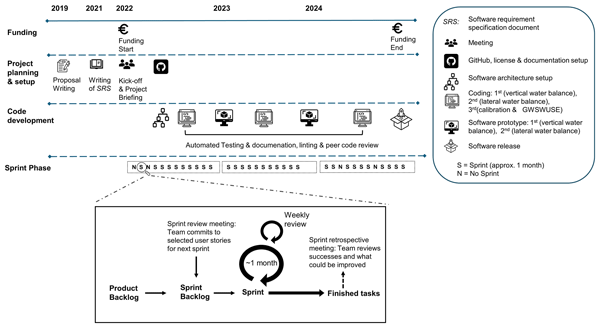
We reprogrammed the latest WaterGAP model (2.2e) to create a sustainable global hydrological model. By utilizing best software practices like modular design, version control, and clear documentation, the new WaterGAP supports collaboration across teams. It can be easily understood, applied, and enhanced by both novice and experienced modellers. Additionally, we share the reprogramming process to assist in the reprogramming of other large geoscientific research software.
Seyed-Mohammad Hosseini-Moghari and Petra Döll
Hydrol. Earth Syst. Sci., 29, 4073–4092, https://doi.org/10.5194/hess-29-4073-2025, https://doi.org/10.5194/hess-29-4073-2025, 2025
Short summary
Short summary
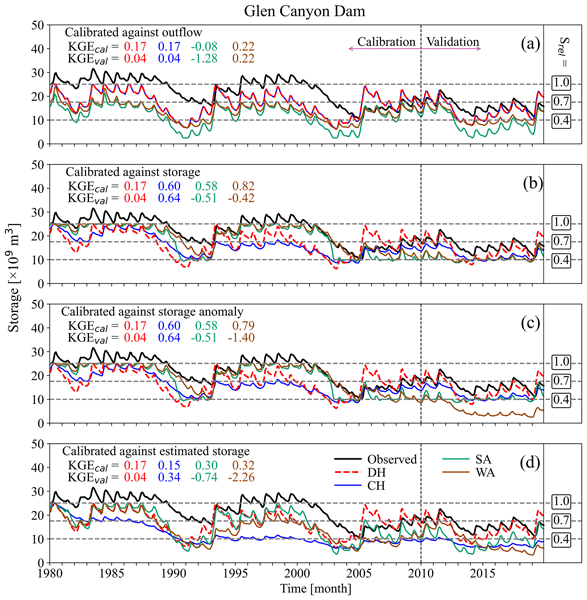
Modeling reservoir outflow and storage is challenging due to limited publicly available data and human decision-making. For 100 reservoirs in the US, we examined how calibrating reservoir algorithms against outflow and storage-related variables affects performance. We found that calibration notably improves storage simulations, while outflow simulations are more influenced by the quality of inflow data. We recommend using remotely sensed storage anomalies to calibrate reservoir algorithms.
Howlader Mohammad Mehedi Hasan, Petra Döll, Seyed-Mohammad Hosseini-Moghari, Fabrice Papa, and Andreas Güntner
Hydrol. Earth Syst. Sci., 29, 567–596, https://doi.org/10.5194/hess-29-567-2025, https://doi.org/10.5194/hess-29-567-2025, 2025
Short summary
Short summary
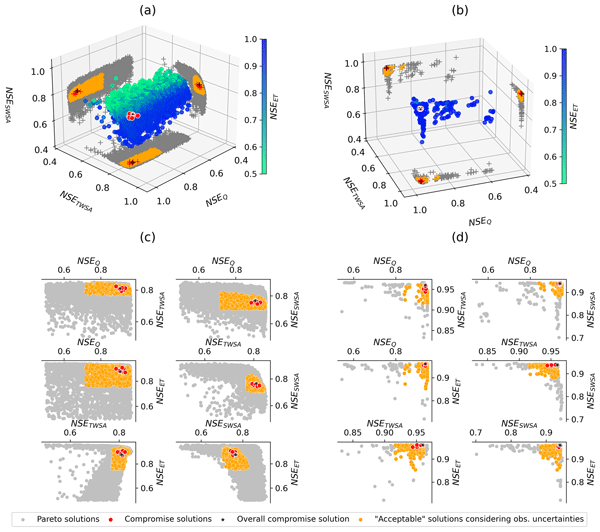
We calibrate a global hydrological model using multiple observations to analyse the benefits and trade-offs of multi-variable calibration. We found such an approach to be very important for understanding the real-world system. However, some observations are very essential to the system, in particular, streamflow. We also showed uncertainties in the calibration results, which are often useful for making informed decisions. We emphasize considering observation uncertainty in model calibration.
Hannes Müller Schmied, Tim Trautmann, Sebastian Ackermann, Denise Cáceres, Martina Flörke, Helena Gerdener, Ellen Kynast, Thedini Asali Peiris, Leonie Schiebener, Maike Schumacher, and Petra Döll
Geosci. Model Dev., 17, 8817–8852, https://doi.org/10.5194/gmd-17-8817-2024, https://doi.org/10.5194/gmd-17-8817-2024, 2024
Short summary
Short summary
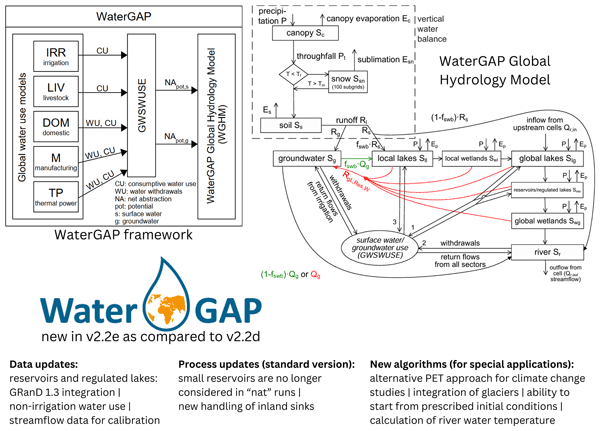
Assessing water availability and water use at the global scale is challenging but essential for a range of purposes. We describe the newest version of the global hydrological model WaterGAP, which has been used for numerous water resource assessments since 1996. We show the effects of new model features, as well as model evaluations, against water abstraction statistics and observed streamflow and water storage anomalies. The publicly available model output for several variants is described.
Emmanuel Nyenah, Petra Döll, Daniel S. Katz, and Robert Reinecke
Geosci. Model Dev., 17, 8593–8611, https://doi.org/10.5194/gmd-17-8593-2024, https://doi.org/10.5194/gmd-17-8593-2024, 2024
Short summary
Short summary
Research software is vital for scientific progress but is often developed by scientists with limited skills, time, and funding, leading to challenges in usability and maintenance. Our study across 10 sectors shows strengths in version control, open-source licensing, and documentation while emphasizing the need for containerization and code quality. We recommend workshops; code quality metrics; funding; and following the findable, accessible, interoperable, and reusable (FAIR) standards.
Petra Döll, Howlader Mohammad Mehedi Hasan, Kerstin Schulze, Helena Gerdener, Lara Börger, Somayeh Shadkam, Sebastian Ackermann, Seyed-Mohammad Hosseini-Moghari, Hannes Müller Schmied, Andreas Güntner, and Jürgen Kusche
Hydrol. Earth Syst. Sci., 28, 2259–2295, https://doi.org/10.5194/hess-28-2259-2024, https://doi.org/10.5194/hess-28-2259-2024, 2024
Short summary
Short summary
Currently, global hydrological models do not benefit from observations of model output variables to reduce and quantify model output uncertainty. For the Mississippi River basin, we explored three approaches for using both streamflow and total water storage anomaly observations to adjust the parameter sets in a global hydrological model. We developed a method for considering the observation uncertainties to quantify the uncertainty of model output and provide recommendations.
Laura Müller and Petra Döll
Geosci. Commun., 7, 121–144, https://doi.org/10.5194/gc-7-121-2024, https://doi.org/10.5194/gc-7-121-2024, 2024
Short summary
Short summary
To be able to adapt to climate change, stakeholders need to be informed about future uncertain climate change hazards. Using freely available output of global hydrological models, we quantified future local changes in water resources and their uncertainty. To communicate these in participatory processes, we propose using "percentile boxes" to support the development of flexible strategies for climate risk management worldwide, involving stakeholders and scientists.
Thedini Asali Peiris and Petra Döll
Hydrol. Earth Syst. Sci., 27, 3663–3686, https://doi.org/10.5194/hess-27-3663-2023, https://doi.org/10.5194/hess-27-3663-2023, 2023
Short summary
Short summary
Hydrological models often overlook vegetation's response to CO2 and climate, impairing their ability to forecast impacts on evapotranspiration and water resources. To address this, we suggest involving two model variants: (1) the standard method and (2) a modified approach (proposed here) based on the Priestley–Taylor equation (PT-MA). While not universally applicable, a dual approach helps consider uncertainties related to vegetation responses to climate change, enhancing model representation.
Claudia Herbert and Petra Döll
Nat. Hazards Earth Syst. Sci., 23, 2111–2131, https://doi.org/10.5194/nhess-23-2111-2023, https://doi.org/10.5194/nhess-23-2111-2023, 2023
Short summary
Short summary
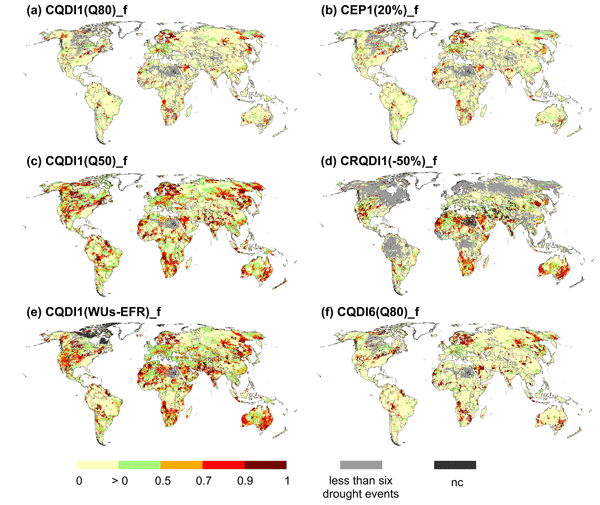
This paper presents a new method for selecting streamflow drought hazard indicators for monitoring drought hazard for human water supply and river ecosystems in large-scale drought early warning systems. Indicators are classified by their inherent assumptions about the habituation of people and ecosystems to the streamflow regime and their level of drought characterization, namely drought magnitude (water deficit at a certain point in time) and severity (cumulated magnitude since drought onset).
Martin Horwath, Benjamin D. Gutknecht, Anny Cazenave, Hindumathi Kulaiappan Palanisamy, Florence Marti, Ben Marzeion, Frank Paul, Raymond Le Bris, Anna E. Hogg, Inès Otosaka, Andrew Shepherd, Petra Döll, Denise Cáceres, Hannes Müller Schmied, Johnny A. Johannessen, Jan Even Øie Nilsen, Roshin P. Raj, René Forsberg, Louise Sandberg Sørensen, Valentina R. Barletta, Sebastian B. Simonsen, Per Knudsen, Ole Baltazar Andersen, Heidi Ranndal, Stine K. Rose, Christopher J. Merchant, Claire R. Macintosh, Karina von Schuckmann, Kristin Novotny, Andreas Groh, Marco Restano, and Jérôme Benveniste
Earth Syst. Sci. Data, 14, 411–447, https://doi.org/10.5194/essd-14-411-2022, https://doi.org/10.5194/essd-14-411-2022, 2022
Short summary
Short summary
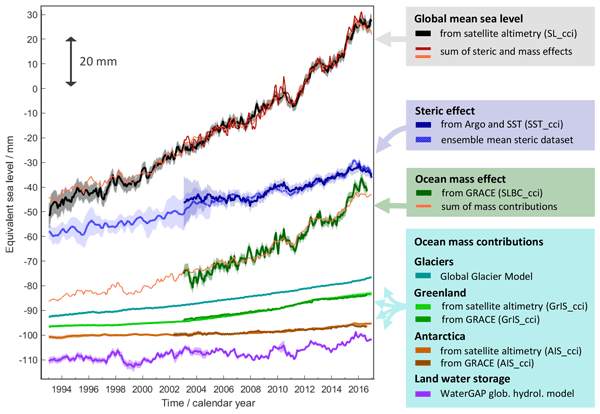
Global mean sea-level change observed from 1993 to 2016 (mean rate of 3.05 mm yr−1) matches the combined effect of changes in water density (thermal expansion) and ocean mass. Ocean-mass change has been assessed through the contributions from glaciers, ice sheets, and land water storage or directly from satellite data since 2003. Our budget assessments of linear trends and monthly anomalies utilise new datasets and uncertainty characterisations developed within ESA's Climate Change Initiative.
Tom Gleeson, Thorsten Wagener, Petra Döll, Samuel C. Zipper, Charles West, Yoshihide Wada, Richard Taylor, Bridget Scanlon, Rafael Rosolem, Shams Rahman, Nurudeen Oshinlaja, Reed Maxwell, Min-Hui Lo, Hyungjun Kim, Mary Hill, Andreas Hartmann, Graham Fogg, James S. Famiglietti, Agnès Ducharne, Inge de Graaf, Mark Cuthbert, Laura Condon, Etienne Bresciani, and Marc F. P. Bierkens
Geosci. Model Dev., 14, 7545–7571, https://doi.org/10.5194/gmd-14-7545-2021, https://doi.org/10.5194/gmd-14-7545-2021, 2021
Short summary
Short summary
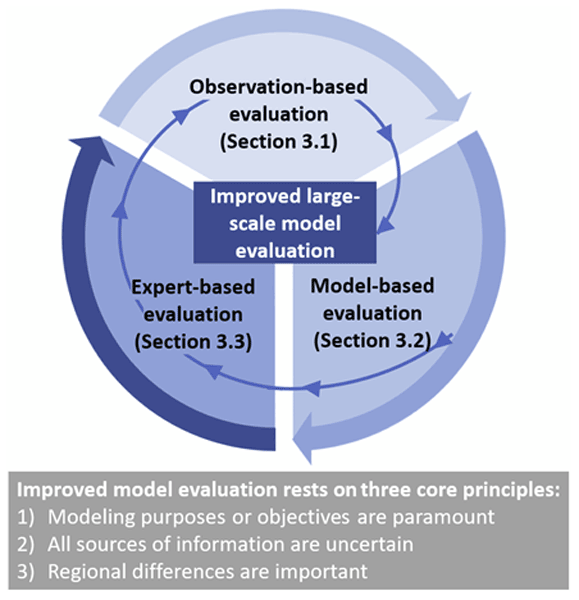
Groundwater is increasingly being included in large-scale (continental to global) land surface and hydrologic simulations. However, it is challenging to evaluate these simulations because groundwater is
hiddenunderground and thus hard to measure. We suggest using multiple complementary strategies to assess the performance of a model (
model evaluation).
Thedini Asali Peiris and Petra Döll
EGUsphere, https://doi.org/10.5194/egusphere-2026-3412, https://doi.org/10.5194/egusphere-2026-3412, 2026
Short summary
Short summary
Global hydrological models are widely used to estimate how climate change may affect water resources, floods, and droughts. We evaluated these models using year-to-year changes in annual river flow, which are mainly driven by climate variability, rather than river flow amounts alone. Using observations from 589 river basins worldwide, we found that the models generally capture year-to-year variability better than absolute river flow. This can improve climate change impact studies.
Emmanuel Nyenah, Petra Döll, Martina Flörke, Leon Mühlenbruch, Lasse Nissen, and Robert Reinecke
Geosci. Model Dev., 18, 5635–5653, https://doi.org/10.5194/gmd-18-5635-2025, https://doi.org/10.5194/gmd-18-5635-2025, 2025
Short summary
Short summary
We reprogrammed the latest WaterGAP model (2.2e) to create a sustainable global hydrological model. By utilizing best software practices like modular design, version control, and clear documentation, the new WaterGAP supports collaboration across teams. It can be easily understood, applied, and enhanced by both novice and experienced modellers. Additionally, we share the reprogramming process to assist in the reprogramming of other large geoscientific research software.
Seyed-Mohammad Hosseini-Moghari and Petra Döll
Hydrol. Earth Syst. Sci., 29, 4073–4092, https://doi.org/10.5194/hess-29-4073-2025, https://doi.org/10.5194/hess-29-4073-2025, 2025
Short summary
Short summary
Modeling reservoir outflow and storage is challenging due to limited publicly available data and human decision-making. For 100 reservoirs in the US, we examined how calibrating reservoir algorithms against outflow and storage-related variables affects performance. We found that calibration notably improves storage simulations, while outflow simulations are more influenced by the quality of inflow data. We recommend using remotely sensed storage anomalies to calibrate reservoir algorithms.
Hannes Müller Schmied, Simon Newland Gosling, Marlo Garnsworthy, Laura Müller, Camelia-Eliza Telteu, Atiq Kainan Ahmed, Lauren Seaby Andersen, Julien Boulange, Peter Burek, Jinfeng Chang, He Chen, Lukas Gudmundsson, Manolis Grillakis, Luca Guillaumot, Naota Hanasaki, Aristeidis Koutroulis, Rohini Kumar, Guoyong Leng, Junguo Liu, Xingcai Liu, Inga Menke, Vimal Mishra, Yadu Pokhrel, Oldrich Rakovec, Luis Samaniego, Yusuke Satoh, Harsh Lovekumar Shah, Mikhail Smilovic, Tobias Stacke, Edwin Sutanudjaja, Wim Thiery, Athanasios Tsilimigkras, Yoshihide Wada, Niko Wanders, and Tokuta Yokohata
Geosci. Model Dev., 18, 2409–2425, https://doi.org/10.5194/gmd-18-2409-2025, https://doi.org/10.5194/gmd-18-2409-2025, 2025
Short summary
Short summary
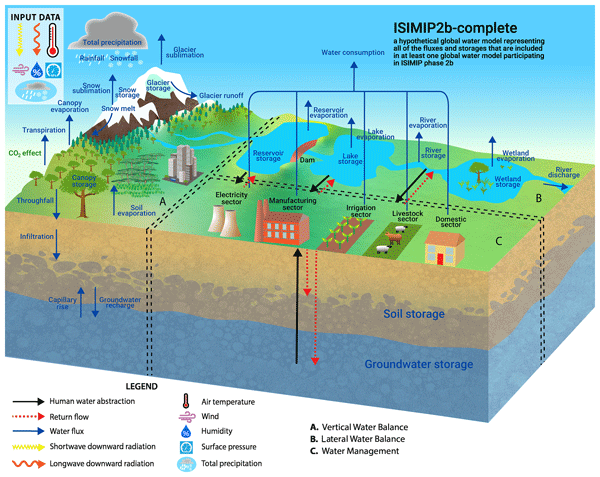
Global water models contribute to the evaluation of important natural and societal issues but are – as all models – simplified representation of reality. So, there are many ways to calculate the water fluxes and storages. This paper presents a visualization of 16 global water models using a standardized visualization and the pathway towards this common understanding. Next to academic education purposes, we envisage that these diagrams will help researchers, model developers, and data users.
Howlader Mohammad Mehedi Hasan, Petra Döll, Seyed-Mohammad Hosseini-Moghari, Fabrice Papa, and Andreas Güntner
Hydrol. Earth Syst. Sci., 29, 567–596, https://doi.org/10.5194/hess-29-567-2025, https://doi.org/10.5194/hess-29-567-2025, 2025
Short summary
Short summary
We calibrate a global hydrological model using multiple observations to analyse the benefits and trade-offs of multi-variable calibration. We found such an approach to be very important for understanding the real-world system. However, some observations are very essential to the system, in particular, streamflow. We also showed uncertainties in the calibration results, which are often useful for making informed decisions. We emphasize considering observation uncertainty in model calibration.
Hannes Müller Schmied, Tim Trautmann, Sebastian Ackermann, Denise Cáceres, Martina Flörke, Helena Gerdener, Ellen Kynast, Thedini Asali Peiris, Leonie Schiebener, Maike Schumacher, and Petra Döll
Geosci. Model Dev., 17, 8817–8852, https://doi.org/10.5194/gmd-17-8817-2024, https://doi.org/10.5194/gmd-17-8817-2024, 2024
Short summary
Short summary
Assessing water availability and water use at the global scale is challenging but essential for a range of purposes. We describe the newest version of the global hydrological model WaterGAP, which has been used for numerous water resource assessments since 1996. We show the effects of new model features, as well as model evaluations, against water abstraction statistics and observed streamflow and water storage anomalies. The publicly available model output for several variants is described.
Emmanuel Nyenah, Petra Döll, Daniel S. Katz, and Robert Reinecke
Geosci. Model Dev., 17, 8593–8611, https://doi.org/10.5194/gmd-17-8593-2024, https://doi.org/10.5194/gmd-17-8593-2024, 2024
Short summary
Short summary
Research software is vital for scientific progress but is often developed by scientists with limited skills, time, and funding, leading to challenges in usability and maintenance. Our study across 10 sectors shows strengths in version control, open-source licensing, and documentation while emphasizing the need for containerization and code quality. We recommend workshops; code quality metrics; funding; and following the findable, accessible, interoperable, and reusable (FAIR) standards.
Petra Döll, Howlader Mohammad Mehedi Hasan, Kerstin Schulze, Helena Gerdener, Lara Börger, Somayeh Shadkam, Sebastian Ackermann, Seyed-Mohammad Hosseini-Moghari, Hannes Müller Schmied, Andreas Güntner, and Jürgen Kusche
Hydrol. Earth Syst. Sci., 28, 2259–2295, https://doi.org/10.5194/hess-28-2259-2024, https://doi.org/10.5194/hess-28-2259-2024, 2024
Short summary
Short summary
Currently, global hydrological models do not benefit from observations of model output variables to reduce and quantify model output uncertainty. For the Mississippi River basin, we explored three approaches for using both streamflow and total water storage anomaly observations to adjust the parameter sets in a global hydrological model. We developed a method for considering the observation uncertainties to quantify the uncertainty of model output and provide recommendations.
Laura Müller and Petra Döll
Geosci. Commun., 7, 121–144, https://doi.org/10.5194/gc-7-121-2024, https://doi.org/10.5194/gc-7-121-2024, 2024
Short summary
Short summary
To be able to adapt to climate change, stakeholders need to be informed about future uncertain climate change hazards. Using freely available output of global hydrological models, we quantified future local changes in water resources and their uncertainty. To communicate these in participatory processes, we propose using "percentile boxes" to support the development of flexible strategies for climate risk management worldwide, involving stakeholders and scientists.
Thedini Asali Peiris and Petra Döll
Hydrol. Earth Syst. Sci., 27, 3663–3686, https://doi.org/10.5194/hess-27-3663-2023, https://doi.org/10.5194/hess-27-3663-2023, 2023
Short summary
Short summary
Hydrological models often overlook vegetation's response to CO2 and climate, impairing their ability to forecast impacts on evapotranspiration and water resources. To address this, we suggest involving two model variants: (1) the standard method and (2) a modified approach (proposed here) based on the Priestley–Taylor equation (PT-MA). While not universally applicable, a dual approach helps consider uncertainties related to vegetation responses to climate change, enhancing model representation.
Claudia Herbert and Petra Döll
Nat. Hazards Earth Syst. Sci., 23, 2111–2131, https://doi.org/10.5194/nhess-23-2111-2023, https://doi.org/10.5194/nhess-23-2111-2023, 2023
Short summary
Short summary
This paper presents a new method for selecting streamflow drought hazard indicators for monitoring drought hazard for human water supply and river ecosystems in large-scale drought early warning systems. Indicators are classified by their inherent assumptions about the habituation of people and ecosystems to the streamflow regime and their level of drought characterization, namely drought magnitude (water deficit at a certain point in time) and severity (cumulated magnitude since drought onset).
Martin Horwath, Benjamin D. Gutknecht, Anny Cazenave, Hindumathi Kulaiappan Palanisamy, Florence Marti, Ben Marzeion, Frank Paul, Raymond Le Bris, Anna E. Hogg, Inès Otosaka, Andrew Shepherd, Petra Döll, Denise Cáceres, Hannes Müller Schmied, Johnny A. Johannessen, Jan Even Øie Nilsen, Roshin P. Raj, René Forsberg, Louise Sandberg Sørensen, Valentina R. Barletta, Sebastian B. Simonsen, Per Knudsen, Ole Baltazar Andersen, Heidi Ranndal, Stine K. Rose, Christopher J. Merchant, Claire R. Macintosh, Karina von Schuckmann, Kristin Novotny, Andreas Groh, Marco Restano, and Jérôme Benveniste
Earth Syst. Sci. Data, 14, 411–447, https://doi.org/10.5194/essd-14-411-2022, https://doi.org/10.5194/essd-14-411-2022, 2022
Short summary
Short summary
Global mean sea-level change observed from 1993 to 2016 (mean rate of 3.05 mm yr−1) matches the combined effect of changes in water density (thermal expansion) and ocean mass. Ocean-mass change has been assessed through the contributions from glaciers, ice sheets, and land water storage or directly from satellite data since 2003. Our budget assessments of linear trends and monthly anomalies utilise new datasets and uncertainty characterisations developed within ESA's Climate Change Initiative.
Tom Gleeson, Thorsten Wagener, Petra Döll, Samuel C. Zipper, Charles West, Yoshihide Wada, Richard Taylor, Bridget Scanlon, Rafael Rosolem, Shams Rahman, Nurudeen Oshinlaja, Reed Maxwell, Min-Hui Lo, Hyungjun Kim, Mary Hill, Andreas Hartmann, Graham Fogg, James S. Famiglietti, Agnès Ducharne, Inge de Graaf, Mark Cuthbert, Laura Condon, Etienne Bresciani, and Marc F. P. Bierkens
Geosci. Model Dev., 14, 7545–7571, https://doi.org/10.5194/gmd-14-7545-2021, https://doi.org/10.5194/gmd-14-7545-2021, 2021
Short summary
Short summary
Groundwater is increasingly being included in large-scale (continental to global) land surface and hydrologic simulations. However, it is challenging to evaluate these simulations because groundwater is
hiddenunderground and thus hard to measure. We suggest using multiple complementary strategies to assess the performance of a model (
model evaluation).
Cited articles
Alegría, A., Poloczanska, E., Loeschke, S., Mintenbeck, K., and Poertner, H.: Towards an IPCC Atlas for comprehensive climate change risk assessments, npj Clim. Action, 3, 108, https://doi.org/10.1038/s44168-024-00193-3, 2024.
Cimadevilla, E., Iturbide, M., Cofiño, A.S., Fernández, J., Sitz, L. E., Palacio, A., Heredia, A., and Gutiérrez, J. M.: The IPCC Interactive Atlas DataLab: Online reusability for regional climate change assessment, PLOS Clim., 4, e0000644, https://doi.org/10.1371/journal.pclm.0000644, 2025.
Döll, P. and Romero-Lankao, P.: How to embrace uncertainty in participatory climate change risk management – A roadmap, Earth's Future, 5, 18–36, https://doi.org/10.1002/2016EF000411, 2017.
Döll, P., Jiménez-Cisneros, B., Oki, T., Arnell, N., Benito, G., Cogley, J. G., Jiang, T., Kundzewicz, Z. W., Mwakalila, S., and Nishijima, A.: Integrating risks of climate change into water management, Hydrolog. Sci. J., 60, 4–13, https://doi.org/10.1080/02626667.2014.967250, 2015.
Döll, P., Kneier, F., Cáceres, D., and Vazgileviciute, V.: PUNI Handbook – Methods for Providing and Utilizing Uncertain Multi-model Based Information on Freshwater Related Hazards of Climate Change, Goethe University Frankfurt, https://doi.org/10.23689/fidgeo-9426, 2021.
Gorelick, N., Hancher, M., Dixon, M., Ilyushchenko, S., Thau, D., and Moore, R.: Google Earth Engine: Planetary-scale geospatial analysis for everyone, Remote Sens. Environ., 220, 18–27, https://doi.org/10.1016/j.rse.2017.06.031, 2017.
Gosling, S. N., Müller Schmied, H., Bradley, A., Burek, P., Gedney, N., Grillakis, M., Guillaumot, L., Hanasaki, N., Ito, A., Kou-Giesbrecht, S., Koutroulis, A., Nishina, K., Otta, K., Sahu, R.-K., Satoh, Y., and Schewe, J.: ISIMIP3b Simulation Data from the Global Water Sector (v1.3), ISIMIP Repository [data set], https://doi.org/10.48364/ISIMIP.230418.3, 2024.
Hagemann, S., Chen, C., Clark, D. B., Folwell, S., Gosling, S. N., Haddeland, I., Hanasaki, N., Heinke, J., Ludwig, F., Voss, F., and Wiltshire, A. J.: Climate change impact on available water resources obtained using multiple global climate and hydrology models, Earth Syst. Dynam., 4, 129–144, https://doi.org/10.5194/esd-4-129-2013, 2013.
Herrera, M., Moraga, M. A., Caballero, I., and Calero, C.: Quality in Use Model for Web Portals (QiUWeP), in: Current Trends in Web Engineering, ICWE 2010, edited by: Daniel, F. and Facca, F. M., Lecture Notes in Computer Science, 6385, Springer, Berlin, Heidelberg, Germany, 91–101, https://doi.org/10.1007/978-3-642-16985-4_9, 2010.
ISO/IEC 25019:2023: Systems and software engineering, Systems and software Quality Requirements and Evaluation (SQuaRE), Quality-in-use model, https://www.iso.org/standard/78177.html (last access: 13 October 2026), 2023.
Müller, L. and Döll, P.: Quantifying and communicating uncertain climate change hazards in participatory climate change adaptation processes, Geosci. Commun., 7, 121–144, https://doi.org/10.5194/gc-7-121-2024, 2024.
Müller, L., Czymai, M., Blättel-Mink, B., and Döll, P.: How to assess conditions for the acceptance of climate change adaptation measures by applying implementation probability Bayesian Networks in participatory processes, Environ. Model. Softw. 181, 106188, https://doi.org/10.1016/j.envsoft.2024.106188, 2024.
Müller, L., Czymai, M., Döll, P., and Blättel-Mink, B.: Interdisciplinary collaboration in transdisciplinary projects. Effects on, and challenges for, early-career researchers and the project design, GAIA, 34, 274–281, https://doi.org/10.14512/gaia.34.4.5, 2025.
Neset, T. S., Opach, T., Lion, P., Lilja, A., and Johansson, J.: Map-Based Web Tools Supporting Climate Change Adaptation, Prof. Geogr., 68, 103–114, https://doi.org/10.1080/00330124.2015.1033670, 2016.
Reinecke, R., Müller Schmied, H., Trautmann, T., Andersen, L. S., Burek, P., Flörke, M., Gosling, S. N., Grillakis, M., Hanasaki, N., Koutroulis, A., Pokhrel, Y., Thiery, W., Wada, Y., Yusuke, S., and Döll, P.: Uncertainty of simulated groundwater recharge at different global warming levels: a global-scale multi-model ensemble study, Hydrol. Earth Syst. Sci., 25, 787–810, https://doi.org/10.5194/hess-25-787-2021, 2021.
Söller, L., Frick-Trzebitzky, F., Luetkemeier, R., Kuhn, D., Jäger, A., von Beyme, J., Diebes, M., Donner, J., Hoch, A., Hooper, S., Meier, T., Parnieske-Pasterkamp, J., Ritter, L., Schneppmüller, M., and Wagner, T.: Leitbild 2040 Grundwasser – Ziele und Maßnahmen für ein nachhaltiges Grundwassermanagement im Landkreis Mansfeld-Südharzm ISOE – Institut für sozial-ökologische Forschung, Frankfurt am Main, Zenodo, https://doi.org/10.5281/zenodo.11370519, 2024a.
Söller, L., Hodžić, D., and Luetkemeier, R.: Water Futures on Krk Island. Guiding Principles for achieving a Sustainable Water-Tourism-Nexus, in: collaboration with stakeholders. Groundwater Dimensions 1, ISOE – Institute for Social-Ecological Research, Frankfurt am Main, Zenodo, https://doi.org/10.5281/zenodo.10907296, 2024b.
Söller, L., Hodžić, D., Kuhn, D., Jäger, A., Frick-Trzebitzky, F., Luetkemeier, R., and Döll, P.: Addressing complex social-hydrogeological challenges through inter- and transdisciplinary knowledge co-production, Hydrogeol. J., https://doi.org/10.1007/s10040-025-03002-1, 2026.
Tabari, H., Hosseinzadehtalaei, P., Thiery, W., and Willems, P.: Amplified Drought and Flood Risk Under Future Socioeconomic and Climatic Change, Earth's Future, 9, e2021EF002295, https://doi.org/10.1029/2021EF002295, 2021.
Tarín-Carrasco, P., Petrova, D., Chica-Castells, L., Lukovic, J., Rodó, X., and Cvijanovic, I.: Assessment of future precipitation changes in Mediterranean climate regions from CMIP6 ensemble, Int. J. Climatol., 45, e70039, https://doi.org/10.1002/joc.70039, 2025.
VanderMolen, K., Wall, T. U., and Daudert, B.: A Call for the Evaluation of Web-Based Climate Data and Analysis Tools, B. Am. Meteorol. Soc., 100, 257–268, https://doi.org/10.1175/BAMS-D-18-0006.1, 2019
Short summary
Worldwide, there is a need to adapt to changes in water resources caused by climate change. The freely accessible, interactive web app “Climate Change Impact on Water Resources Explorer” provides information on the potential range of future changes in water resources across the Earth's land areas. This information can be easily communicated to stakeholders in participatory climate change adaptation processes, enabling them to identify adaptation measures that consider their risk aversion.
Worldwide, there is a need to adapt to changes in water resources caused by climate change. The...
Altmetrics
Final-revised paper
Preprint