
Articles | Volume 9, issue 3
https://doi.org/10.5194/gc-9-415-2026
© Author(s) 2026. This work is distributed under
the Creative Commons Attribution 4.0 License.
the Creative Commons Attribution 4.0 License.
https://doi.org/10.5194/gc-9-415-2026
© Author(s) 2026. This work is distributed under
the Creative Commons Attribution 4.0 License.
the Creative Commons Attribution 4.0 License.
Research article
| Highlight paper
| 
17 Sep 2026
Research article | Highlight paper |
| 17 Sep 2026
| 17 Sep 2026
The state of diversity, equity, and inclusion in the cloud physics community
Luis A. Ladino
Institute for Atmospheric Sciences and Climate Change, Universidad Nacional Autónoma de México (UNAM), Mexico City, Mexico
Karin Ardon-Dryer
Department of Geosciences, Texas Tech University, Lubbock, TX 79409, USA
Diana L. Pereira
Institute for Atmospheric and Earth System Research/Physics, Faculty of Science, University of Helsinki, Helsinki, Finland
Ulrike Proske
Institute for Atmospheric and Climate Science, ETH Zurich, Universitätstrasse 16, Zurich, 8092, Switzerland
now at: Hydrology and Environmental Hydraulics Group, Wageningen University and Research, Wageningen, the Netherlands
Zyanya Ramirez-Diaz
Department of Geosciences, Texas Tech University, Lubbock, TX 79409, USA
Antonia Velicu
Department of Sociology, University of Zurich, Zurich, 8050, Switzerland

Institute for Atmospheric and Climate Science, ETH Zurich, Universitätstrasse 16, Zurich, 8092, Switzerland
Related authors
Sebastián Mendoza-Téllez, Karla Valdés, David Ramírez, Jan Alexis Cedillo, Olivia Rivera-Hernández, Fernanda Córdoba, Harry Alvarez, Javier Miranda, Irma Rosas, Graciela B. Raga, Emma Negrete, Leticia Martínez, Eva Salinas, and Luis A. Ladino
Atmos. Chem. Phys., 26, 8295–8310, https://doi.org/10.5194/acp-26-8295-2026, https://doi.org/10.5194/acp-26-8295-2026, 2026
Short summary
Short summary
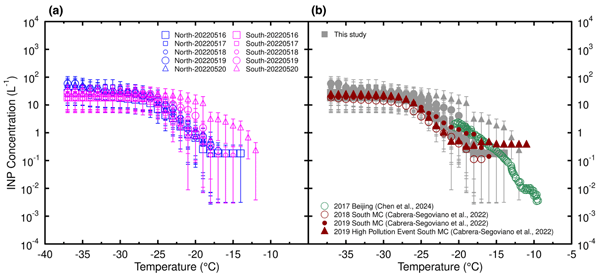
Magacities (i.e., urban centers with > 10 million inhabitants) are a great source of urban aerosol particles. In this study we evaluated the differences in the physicochemical and biological properties of the urban particles from southern and northern Mexico City, one of the largest Megacities worldwide. We also, correlated the observed differences with their capability to impact cloud formation, with the aim to link these observations with the presence of microclimates.
M. Fernanda Córdoba, Rachel Chang, Harry Alvarez-Ospina, Aramis Olivos-Ortiz, Graciela B. Raga, Daniel Rosas-Ramírez, Guadalupe Campos, Isabel Márquez, Telma Castro, and Luis A. Ladino
Atmos. Meas. Tech., 18, 2463–2479, https://doi.org/10.5194/amt-18-2463-2025, https://doi.org/10.5194/amt-18-2463-2025, 2025
Short summary
Short summary
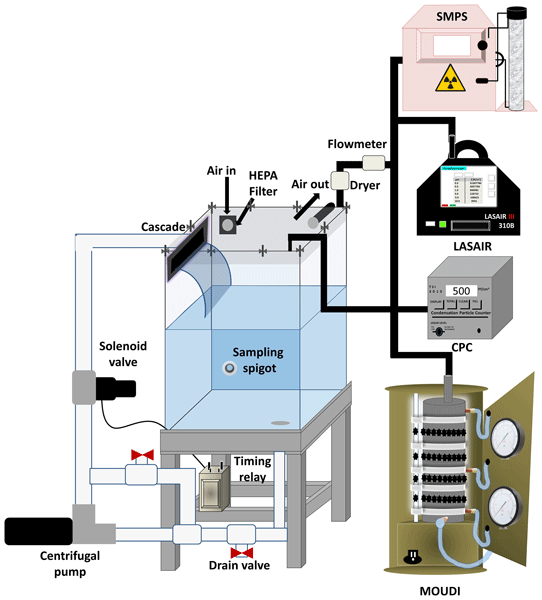
The present study shows the development of the UNAM-MARine Aerosol Tank (UNAM-MARAT), a device that simulates wave breaking to generate marine aerosol particles. The portable and automatic tank is able to generate particle concentrations as high as 2000 cm-3, covering a wide range of sizes, similar to those found in the ambient marine boundary layer. The sea spray aerosol generated from three natural seawater samples was found to act as ice-nucleating particles (INPs) via immersion freezing.
Larissa Lacher, Michael P. Adams, Kevin Barry, Barbara Bertozzi, Heinz Bingemer, Cristian Boffo, Yannick Bras, Nicole Büttner, Dimitri Castarede, Daniel J. Cziczo, Paul J. DeMott, Romy Fösig, Megan Goodell, Kristina Höhler, Thomas C. J. Hill, Conrad Jentzsch, Luis A. Ladino, Ezra J. T. Levin, Stephan Mertes, Ottmar Möhler, Kathryn A. Moore, Benjamin J. Murray, Jens Nadolny, Tatjana Pfeuffer, David Picard, Carolina Ramírez-Romero, Mickael Ribeiro, Sarah Richter, Jann Schrod, Karine Sellegri, Frank Stratmann, Benjamin E. Swanson, Erik S. Thomson, Heike Wex, Martin J. Wolf, and Evelyn Freney
Atmos. Chem. Phys., 24, 2651–2678, https://doi.org/10.5194/acp-24-2651-2024, https://doi.org/10.5194/acp-24-2651-2024, 2024
Short summary
Short summary
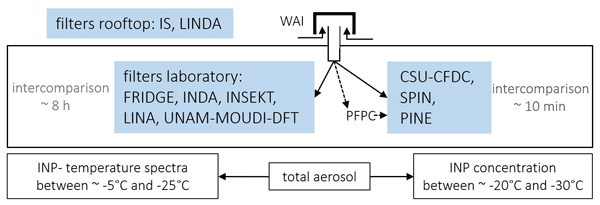
Aerosol particles that trigger ice formation in clouds are important for the climate system but are very rare in the atmosphere, challenging measurement techniques. Here we compare three cloud chambers and seven methods for collecting aerosol particles on filters for offline analysis at a mountaintop station. A general good agreement of the methods was found when sampling aerosol particles behind a whole air inlet, supporting their use for obtaining data that can be implemented in models.
Diana L. Pereira, Irma Gavilán, Consuelo Letechipía, Graciela B. Raga, Teresa Pi Puig, Violeta Mugica-Álvarez, Harry Alvarez-Ospina, Irma Rosas, Leticia Martinez, Eva Salinas, Erika T. Quintana, Daniel Rosas, and Luis A. Ladino
Atmos. Chem. Phys., 22, 6435–6447, https://doi.org/10.5194/acp-22-6435-2022, https://doi.org/10.5194/acp-22-6435-2022, 2022
Short summary
Short summary
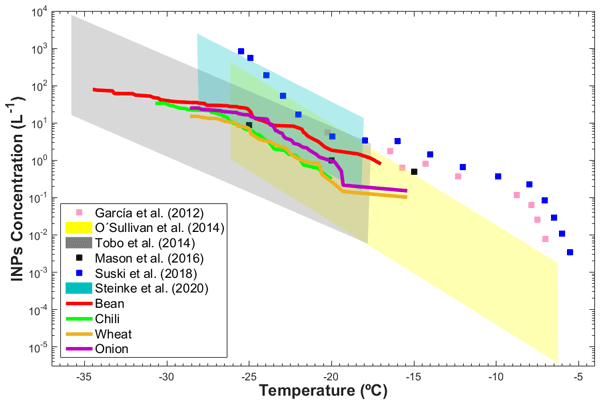
Airborne particles were i) collected in an agricultural fields and ii) generated in the laboratory from agricultural soil samples to analyze their ice nucleating abilities. It was found that the size and chemical composition of the Mexican agricultural dust particles influence their ice nucleating behavior, where the organic components are likely responsible for their efficiency as INPs. The INP concentrations from the present study are comparable to those from higher latitudes.
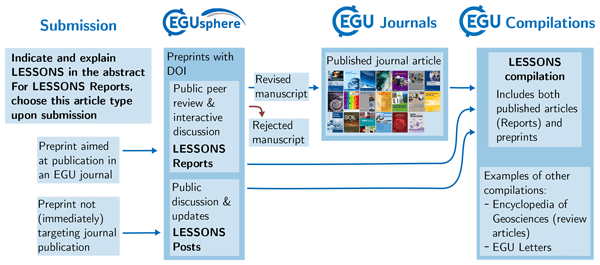
Ulrike Proske, John Hillier, Stefan Gaillard, Theresa Blume, Eduardo Queiroz Alves, Susanne Buiter, Ken S. Carslaw, Kirsten von Elverfeldt, Tim H. M. van Emmerik, Barbara Ervens, Rolf Hut, Sam Illingworth, Daniel Klotz, and Jonas Pyschik
Geosci. Commun., 9, 371–383, https://doi.org/10.5194/gc-9-371-2026, https://doi.org/10.5194/gc-9-371-2026, 2026
Short summary
Short summary
We explain a new article type that is being introduced in participating EGU publications. "LESSONS" articles describe the Limitations, Errors, Surprises, Shortcomings and Opportunities for New Science emerging from the scientific process. The publication of non-positive results and associated learnings aims to complete an unbiased record of the research effort, contributes to open and transparent science, allows the authors and others to learn, and may open opportunities for new science.
Lea Haberstock, Darrel Baumgardner, Dagen D. Hughes, Julie Legrand, Almuth Neuberger, Cuiqi Zhang, Zamin A. Kanji, Christian Maier, Ilona Riipinen, Radovan Krejci, and Paul Zieger
EGUsphere, https://doi.org/10.5194/egusphere-2026-3790, https://doi.org/10.5194/egusphere-2026-3790, 2026
This preprint is open for discussion and under review for Atmospheric Measurement Techniques (AMT).
Short summary
Short summary
Here, we present the characterization and first application of a new cloud spectrometer, the Ground-based Fog and Aerosol Spectrometer (GFAS). Besides particle number concentration and size, the GFAS also provides an indicator of particle morphology and composition. We present a new calibration routine and first laboratory and field measurements. Using the GFAS, we can show that cloud droplets are optically different compared to pure water droplets.
Konstantinos Matthaios Doulgeris, David Brus, Christian Maier, Naděžda Zikova, Kajal Julaha, Cuiqi Zhang, Zamin A. Kanji, Ville Kaikkonen, Harri Juttula, Eero Molkoselkä, Anssi Makynen, Mika Komppula, Sergej Sel, and Elke Ludewig
EGUsphere, https://doi.org/10.5194/egusphere-2026-3898, https://doi.org/10.5194/egusphere-2026-3898, 2026
Short summary
Short summary
Clouds are important for weather and climate, but measuring their cloud water droplets accurately is difficult. We compared seven instruments during a field campaign at a high mountain observatory under natural cloud conditions. We found that the way instruments are installed can strongly influence the measurements. Our results provide practical guidance for improving cloud observations and support more consistent measurements across the European ACTRIS research infrastructure.
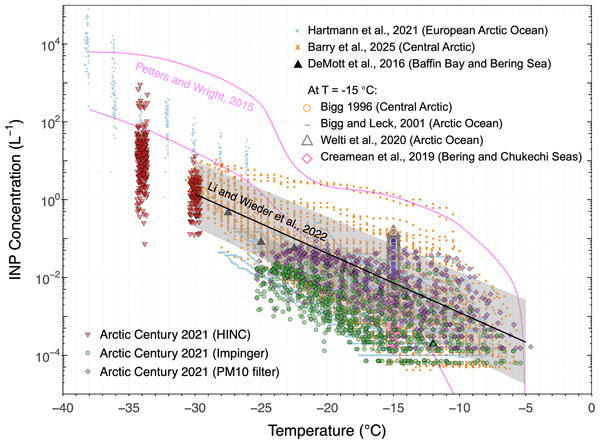
Guangyu Li, André Welti, Iris Thurnherr, Ulrike Lohmann, and Zamin A. Kanji
Atmos. Chem. Phys., 26, 10835–10859, https://doi.org/10.5194/acp-26-10835-2026, https://doi.org/10.5194/acp-26-10835-2026, 2026
Short summary
Short summary
This study presents ship-based measurements of summertime ice-nucleating particles (INPs) over the data-scarce Eurasian-Arctic Seas. We found that INPs are driven by both local and regional sources, with the highest levels observed near land and over ice-free waters. This study is highlighted for improving the understanding of INP abundance, sources, and their role in cloud processes in the rapidly warming Arctic.
Sebastián Mendoza-Téllez, Karla Valdés, David Ramírez, Jan Alexis Cedillo, Olivia Rivera-Hernández, Fernanda Córdoba, Harry Alvarez, Javier Miranda, Irma Rosas, Graciela B. Raga, Emma Negrete, Leticia Martínez, Eva Salinas, and Luis A. Ladino
Atmos. Chem. Phys., 26, 8295–8310, https://doi.org/10.5194/acp-26-8295-2026, https://doi.org/10.5194/acp-26-8295-2026, 2026
Short summary
Short summary
Magacities (i.e., urban centers with > 10 million inhabitants) are a great source of urban aerosol particles. In this study we evaluated the differences in the physicochemical and biological properties of the urban particles from southern and northern Mexico City, one of the largest Megacities worldwide. We also, correlated the observed differences with their capability to impact cloud formation, with the aim to link these observations with the presence of microclimates.
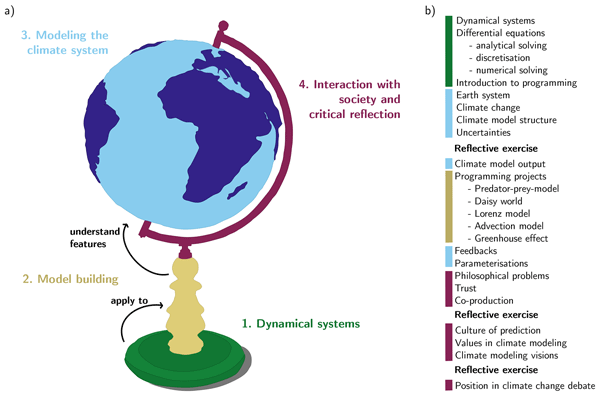
Ulrike Proske and Martin Staab
Geosci. Commun., 9, 239–259, https://doi.org/10.5194/gc-9-239-2026, https://doi.org/10.5194/gc-9-239-2026, 2026
Short summary
Short summary
Climate models are not just physics translated into code, but they influence and are influenced by humans. Thus modelers need to learn not only the physical basis, but also the underlying motivations and uncertainties of the modeling approach. We develop a course at Bachelor level that aims to teach such interdisciplinary perspectives and show that it proves itself in practice. We share the material as inspiration to include more interdisciplinary content and reflection into modeling courses.
Kunfeng Gao, Romanos Foskinis, Marilena Gidarakou, Kalliopi Violaki, Guangyu Li, Benjamin Tobias Brem, Sophie Erb, Bernard Clot, Marie-José Graber, Branko Sikoparjja, Predrag Matavulj, Dusan Licina, Cuiqi Zhang, Benoît Crouzy, Alexandros Papayannis, Zamin A. Kanji, and Athanasios Nenes
EGUsphere, https://doi.org/10.5194/egusphere-2026-2699, https://doi.org/10.5194/egusphere-2026-2699, 2026
Short summary
Short summary
This study identified bioaerosols (>85%) as the dominant source for ice nucleating particles in mixed-phase clouds at a semi-rural site in central Europe, using a combination of in-situ, remote sensing and airmass modelling analysis. We developed a bioaerosol-aware ice nucleating particle parameterization that outperformed existing dust-only schemes across multiple field datasets. These findings improve representation of bioaerosol–cloud interactions and reduce uncertainty in climate feedback.
Jian Xu, Junteng Wu, Mayur Gajanan Sapkal, Jim Grisillon, Shravan Deshmukh, Brice Temime Roussel, Julien Kammer, Nicolas Brun, Fabien Robert-Peillard, Beiping Luo, Judith Kleinheins, Silvia Henning, Bénédicte Picquet-Varrault, Edouard Pangui, Mathieu Cazaunau, Zamin A. Kanji, Claudia Marcolli, and Anne Monod
Aerosol Research Discuss., https://doi.org/10.5194/ar-2026-14, https://doi.org/10.5194/ar-2026-14, 2026
Preprint under review for AR
Short summary
Short summary
The study aimed to mimic the atmospheric behaviour of a semi-volatile organic compound in the presence of fine particles and at various relative humidities. The objective was to determine the influence of organic matter on humid particle growth. These results are essential for improving our understanding of cloud formation.
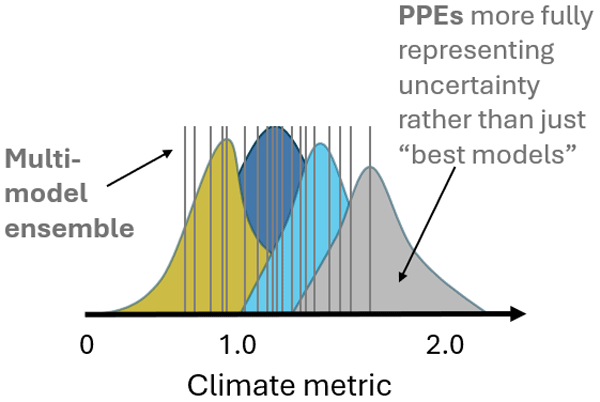
Ken S. Carslaw, Leighton A. Regayre, Ulrike Proske, Andrew Gettelman, David M. H. Sexton, Yun Qian, Lauren R. Marshall, Oliver Wild, Marcus van Lier-Walqui, Annika Oertel, Saloua Peatier, Ben Yang, Jill S. Johnson, Sihan Li, Daniel T. McCoy, Benjamin M. Sanderson, Christina J. Williamson, Gregory S. Elsaesser, Kuniko Yamazaki, and Ben B. B. Booth
Atmos. Chem. Phys., 26, 4651–4667, https://doi.org/10.5194/acp-26-4651-2026, https://doi.org/10.5194/acp-26-4651-2026, 2026
Short summary
Short summary
A major challenge in climate science is reducing projection uncertainty despite advances in models and observational constraints. Perturbed parameter ensembles (PPEs) offer a powerful tool to explore and reduce uncertainty by revealing model weaknesses and guiding development. PPEs are now widely applied across climate systems and scales. We argue they should be prioritized alongside complexity and resolution in model resource planning.
Jie Chen and Zamin A. Kanji
EGUsphere, https://doi.org/10.5194/egusphere-2025-6368, https://doi.org/10.5194/egusphere-2025-6368, 2026
Short summary
Short summary
Desert dust particles act as important seeds that enable cloud droplets to freeze. However, their ice formation ability is highly variable and difficult to represent in climate models. By analyzing previously published data, we found that both the measurement methods used and the way dust ages strongly influence its ice forming behavior. We developed new parameterizations that account for these effects, which are expected to improve the prediction of how dust impacts cloud formation and climate.
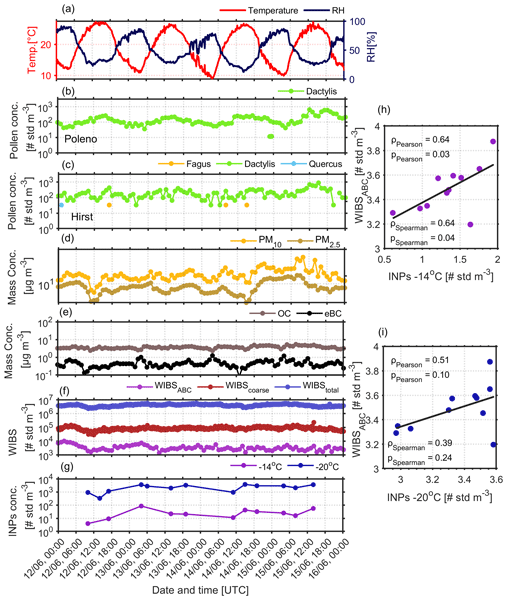
Marilena Gidarakou, Alexandros Papayannis, Kunfeng Gao, Panagiotis Gidarakos, Benoît Crouzy, Romanos Foskinis, Sophie Erb, Benjamin T. Brem, Cuiqi Zhang, Gian Lieberherr, Martine Collaud Coen, Branko Sikoparija, Zamin A. Kanji, Bernard Clot, Bertrand Calpini, Eugenia Giagka, and Athanasios Nenes
Atmos. Chem. Phys., 26, 923–945, https://doi.org/10.5194/acp-26-923-2026, https://doi.org/10.5194/acp-26-923-2026, 2026
Short summary
Short summary
Vertical profiles of pollen and biomass burning particles were obtained at a semi-rural site at the MeteoSwiss station near Payerne (Switzerland) using a novel multi-channel elastic-fluorescence lidar system combined with in situ measurements during the spring 2023 wildfires and pollination season during the PERICLES (PayernE lidaR and Insitu detection of fluorescent bioaerosol and dust partiCLES and their cloud impacts) campaign.
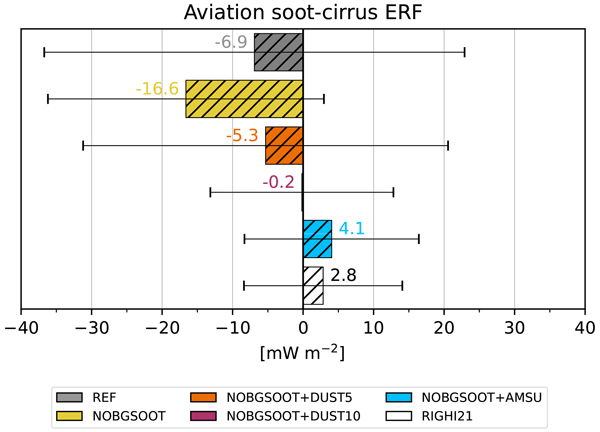
Mattia Righi, Baptiste Testa, Christof G. Beer, Johannes Hendricks, and Zamin A. Kanji
Atmos. Chem. Phys., 25, 18341–18353, https://doi.org/10.5194/acp-25-18341-2025, https://doi.org/10.5194/acp-25-18341-2025, 2025
Short summary
Short summary
The effective radiative forcing due to the effect of aviation soot on natural cirrus clouds is likely very small, thus confirming most previous studies, but for the first time with the support of laboratory measurements specifically targeting aviation soot and its ice nucleation ability.
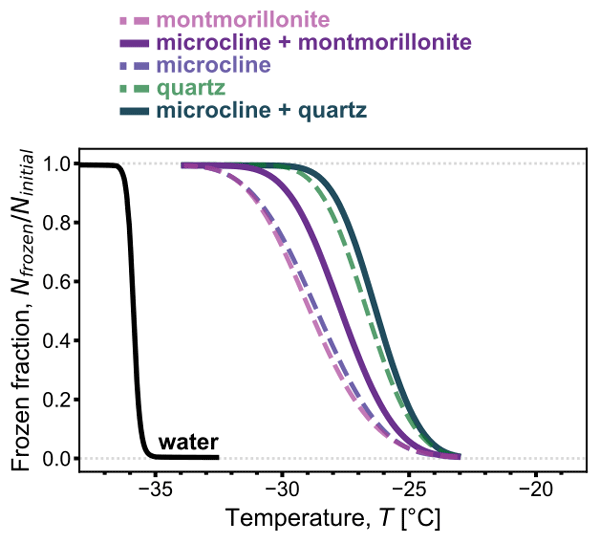
Nadia Shardt, Florin N. Isenrich, Julia Nette, Christopher Dreimol, Ning Ma, Zamin A. Kanji, Andrew J. deMello, and Claudia Marcolli
Atmos. Chem. Phys., 25, 17997–18014, https://doi.org/10.5194/acp-25-17997-2025, https://doi.org/10.5194/acp-25-17997-2025, 2025
Short summary
Short summary
In the atmosphere, minerals suspended in cloud droplets promote the formation of ice. We investigated ice formation in the presence of pure and binary mixtures of common minerals using a microfluidic device. The mineral with the best ability to initiate ice formation alone (that is, at the highest temperature) typically determined when ice formed in the binary mixture.
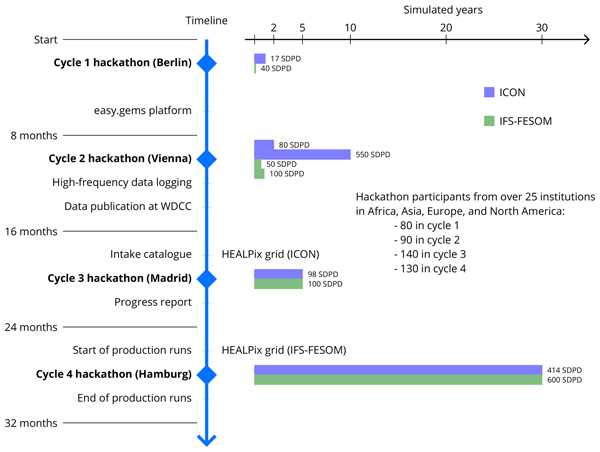
Hans Segura, Xabier Pedruzo-Bagazgoitia, Philipp Weiss, Sebastian K. Müller, Thomas Rackow, Junhong Lee, Edgar Dolores-Tesillos, Imme Benedict, Matthias Aengenheyster, Razvan Aguridan, Gabriele Arduini, Alexander J. Baker, Jiawei Bao, Swantje Bastin, Eulàlia Baulenas, Tobias Becker, Sebastian Beyer, Hendryk Bockelmann, Nils Brüggemann, Lukas Brunner, Suvarchal K. Cheedela, Sushant Das, Jasper Denissen, Ian Dragaud, Piotr Dziekan, Madeleine Ekblom, Jan Frederik Engels, Monika Esch, Richard Forbes, Claudia Frauen, Lilli Freischem, Diego García-Maroto, Philipp Geier, Paul Gierz, Álvaro González-Cervera, Katherine Grayson, Matthew Griffith, Oliver Gutjahr, Helmuth Haak, Ioan Hadade, Kerstin Haslehner, Shabeh ul Hasson, Jan Hegewald, Lukas Kluft, Aleksei Koldunov, Nikolay Koldunov, Tobias Kölling, Shunya Koseki, Sergey Kosukhin, Josh Kousal, Peter Kuma, Arjun U. Kumar, Rumeng Li, Nicolas Maury, Maximilian Meindl, Sebastian Milinski, Kristian Mogensen, Bimochan Niraula, Jakub Nowak, Divya Sri Praturi, Ulrike Proske, Dian Putrasahan, René Redler, David Santuy, Domokos Sármány, Reiner Schnur, Patrick Scholz, Dmitry Sidorenko, Dorian Spät, Birgit Sützl, Daisuke Takasuka, Adrian Tompkins, Alejandro Uribe, Mirco Valentini, Menno Veerman, Aiko Voigt, Sarah Warnau, Fabian Wachsmann, Marta Wacławczyk, Nils Wedi, Karl-Hermann Wieners, Jonathan Wille, Marius Winkler, Yuting Wu, Florian Ziemen, Janos Zimmermann, Frida A.-M. Bender, Dragana Bojovic, Sandrine Bony, Simona Bordoni, Patrice Brehmer, Marcus Dengler, Emanuel Dutra, Saliou Faye, Erich Fischer, Chiel van Heerwaarden, Cathy Hohenegger, Heikki Järvinen, Markus Jochum, Thomas Jung, Johann H. Jungclaus, Noel S. Keenlyside, Daniel Klocke, Heike Konow, Martina Klose, Szymon Malinowski, Olivia Martius, Thorsten Mauritsen, Juan Pedro Mellado, Theresa Mieslinger, Elsa Mohino, Hanna Pawłowska, Karsten Peters-von Gehlen, Abdoulaye Sarré, Pajam Sobhani, Philip Stier, Lauri Tuppi, Pier Luigi Vidale, Irina Sandu, and Bjorn Stevens
Geosci. Model Dev., 18, 7735–7761, https://doi.org/10.5194/gmd-18-7735-2025, https://doi.org/10.5194/gmd-18-7735-2025, 2025
Short summary
Short summary
The Next Generation of Earth Modeling Systems project (nextGEMS) developed two Earth system models that use horizontal grid spacing of 10 km and finer, giving more fidelity to the representation of local phenomena, globally. In its fourth cycle, nextGEMS simulated the Earth System climate over the 2020–2049 period under the SSP3-7.0 scenario. Here, we provide an overview of nextGEMS, insights into the model development, and the realism of multi-decadal, kilometer-scale simulations.
Mayur G. Sapkal, Michael Rösch, and Zamin A. Kanji
Atmos. Meas. Tech., 18, 5649–5667, https://doi.org/10.5194/amt-18-5649-2025, https://doi.org/10.5194/amt-18-5649-2025, 2025
Short summary
Short summary
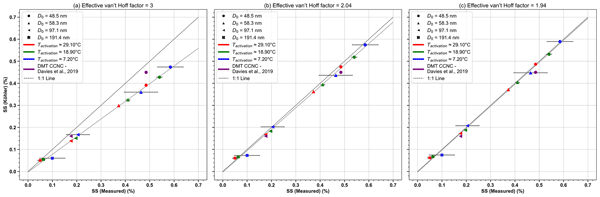
The newly developed Horizontal Cloud Condensation Nuclei Counter (HCCNC) is capable of generating supersaturation as low as 0.05 % at temperatures as low as 4 °C, allowing for the investigation of CCN activity of ammonium sulfate particles up to 200 nm diameter and ambient aerosol of larger diameter. The HCCNC could be used for low-temperature experiments where gas-phase partitioning into or out of the aerosol phase for semi-volatile compounds is relevant for CCN activity.
Janneke O. E. Remmers, Rozemarijn ter Horst, Ehsan Nabavi, Ulrike Proske, Adriaan J. Teuling, Jeroen Vos, and Lieke A. Melsen
Hydrol. Earth Syst. Sci., 29, 5371–5382, https://doi.org/10.5194/hess-29-5371-2025, https://doi.org/10.5194/hess-29-5371-2025, 2025
Short summary
Short summary
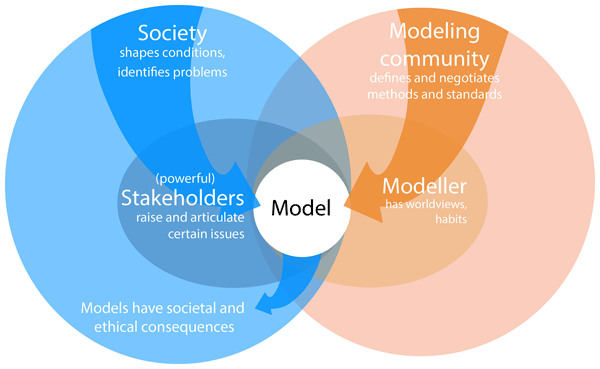
Hydrological models are generally seen as neutral, despite acknowledged uncertainties. This notion has several, possibly harmful, consequences. In critical social sciences, non-neutrality in methods and results is an established topic of debate. We propose that in order to deal with it in hydrological modelling, the hydrological modelling network can learn from, and with, critical social sciences. The main lesson, from our perspective, is that responsible modelling is a shared responsibility.
John Garber and Karin Ardon-Dryer
EGUsphere, https://doi.org/10.5194/egusphere-2025-4300, https://doi.org/10.5194/egusphere-2025-4300, 2025
Preprint archived
Short summary
Short summary
This study aimed to develop a calibration using a multivariate linear regression for the Clarity Node S for PM1, PM2.5, and PM10. Calibrations for PM1 and PM2.5 were successfully implemented using internal temperature, relative humidity, and EDM-180 PM10. Comparison of the calibration of sensors for eight months showed improvements in detecting spikes in high PM concentrations and maintained good correlation with a reference monitor.
M. Fernanda Córdoba, Rachel Chang, Harry Alvarez-Ospina, Aramis Olivos-Ortiz, Graciela B. Raga, Daniel Rosas-Ramírez, Guadalupe Campos, Isabel Márquez, Telma Castro, and Luis A. Ladino
Atmos. Meas. Tech., 18, 2463–2479, https://doi.org/10.5194/amt-18-2463-2025, https://doi.org/10.5194/amt-18-2463-2025, 2025
Short summary
Short summary
The present study shows the development of the UNAM-MARine Aerosol Tank (UNAM-MARAT), a device that simulates wave breaking to generate marine aerosol particles. The portable and automatic tank is able to generate particle concentrations as high as 2000 cm-3, covering a wide range of sizes, similar to those found in the ambient marine boundary layer. The sea spray aerosol generated from three natural seawater samples was found to act as ice-nucleating particles (INPs) via immersion freezing.
Anna J. Miller, Christopher Fuchs, Fabiola Ramelli, Huiying Zhang, Nadja Omanovic, Robert Spirig, Claudia Marcolli, Zamin A. Kanji, Ulrike Lohmann, and Jan Henneberger
Atmos. Chem. Phys., 25, 5387–5407, https://doi.org/10.5194/acp-25-5387-2025, https://doi.org/10.5194/acp-25-5387-2025, 2025
Short summary
Short summary
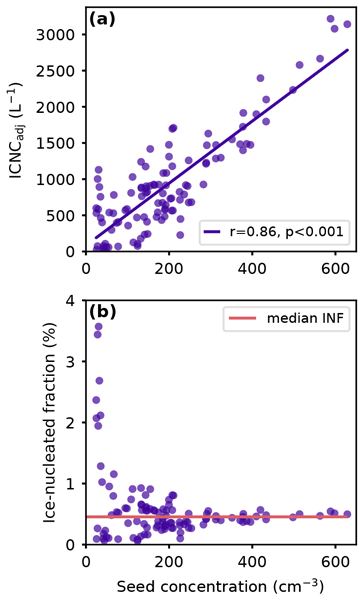
We analyzed the ability of silver iodide particles (a commonly used cloud-seeding agent) to form ice crystals in naturally occurring liquid clouds at −5 to −8 °C and found that only ≈ 0.1 %−1 % of particles nucleate ice, with a negative dependence on temperature. By contextualizing our results with previous laboratory studies, we help to bridge the gap between laboratory and field experiments, which also helps to inform future cloud-seeding projects.
Ulrike Proske, Michael P. Adams, Grace C. E. Porter, Mark A. Holden, Jaana Bäck, and Benjamin J. Murray
Atmos. Chem. Phys., 25, 979–995, https://doi.org/10.5194/acp-25-979-2025, https://doi.org/10.5194/acp-25-979-2025, 2025
Short summary
Short summary
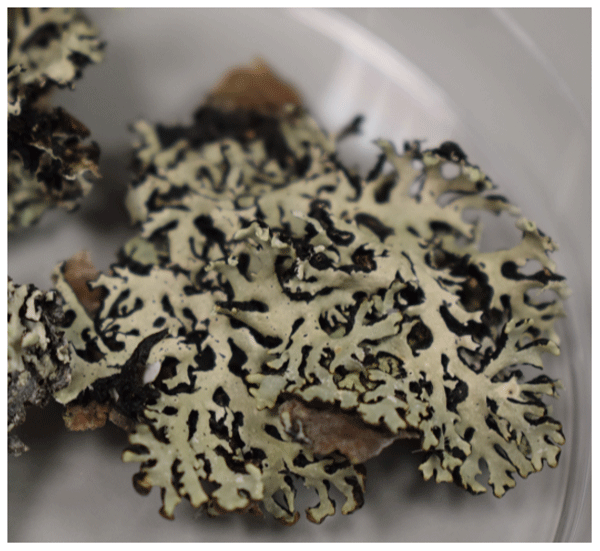
Ice-nucleating particles (INPs) aid the freezing of water droplets in clouds and thus modify cloud properties. In a campaign in a Finnish boreal forest, biological INPs were observed, despite many of their potential biological sources being snow-covered. We sampled tree-dwelling lichens that were not covered in snow and tested their ice nucleation ability in the laboratory. We found that the lichen harbours INPs, which may be important in similar snowy environments.
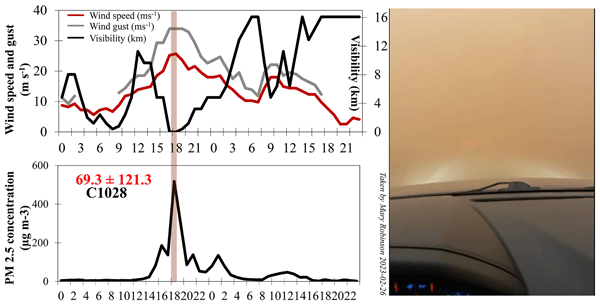
Mary C. Robinson, Kaitlin Schueth, and Karin Ardon-Dryer
Atmos. Chem. Phys., 24, 13733–13750, https://doi.org/10.5194/acp-24-13733-2024, https://doi.org/10.5194/acp-24-13733-2024, 2024
Short summary
Short summary
On 26 February 2023, New Mexico and West Texas were impacted by a severe dust storm. To analyze this storm, 28 meteorological stations and 19 PM2.5 and PM10 stations were used. Dust particles were in the air for 16 h, and dust storm conditions lasted for up to 120 min. Hourly PM2.5 and PM10 concentrations were up to 518 and 9983 µg m−3, respectively. For Lubbock, Texas, the maximum PM2.5 concentrations were the highest ever recorded.
Ulrike Proske, Nils Brüggemann, Jan P. Gärtner, Oliver Gutjahr, Helmuth Haak, Dian Putrasahan, and Karl-Hermann Wieners
EGUsphere, https://doi.org/10.5194/egusphere-2024-3493, https://doi.org/10.5194/egusphere-2024-3493, 2024
Preprint archived
Short summary
Short summary
Climate models contain coding mistakes, which may look mundane, but can affect the results of interconnected and complex models in unforeseen ways. We describe a sea ice bug in the coupled atmosphere-ocean-sea ice model ICON, giving an example of visual and concise bug communication. This bug represents a novel species of resolution-dependent bugs. The case illustrates the value of open documentation of bugs in climate models and to encourage our community to adopt a similar approach.
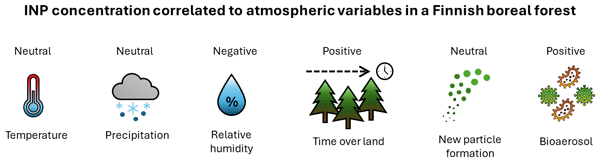
Franziska Vogel, Michael P. Adams, Larissa Lacher, Polly B. Foster, Grace C. E. Porter, Barbara Bertozzi, Kristina Höhler, Julia Schneider, Tobias Schorr, Nsikanabasi S. Umo, Jens Nadolny, Zoé Brasseur, Paavo Heikkilä, Erik S. Thomson, Nicole Büttner, Martin I. Daily, Romy Fösig, Alexander D. Harrison, Jorma Keskinen, Ulrike Proske, Jonathan Duplissy, Markku Kulmala, Tuukka Petäjä, Ottmar Möhler, and Benjamin J. Murray
Atmos. Chem. Phys., 24, 11737–11757, https://doi.org/10.5194/acp-24-11737-2024, https://doi.org/10.5194/acp-24-11737-2024, 2024
Short summary
Short summary
Primary ice formation in clouds strongly influences their properties; hence, it is important to understand the sources of ice-nucleating particles (INPs) and their variability. We present 2 months of INP measurements in a Finnish boreal forest using a new semi-autonomous INP counting device based on gas expansion. These results show strong variability in INP concentrations, and we present a case that the INPs we observe are, at least some of the time, of biological origin.
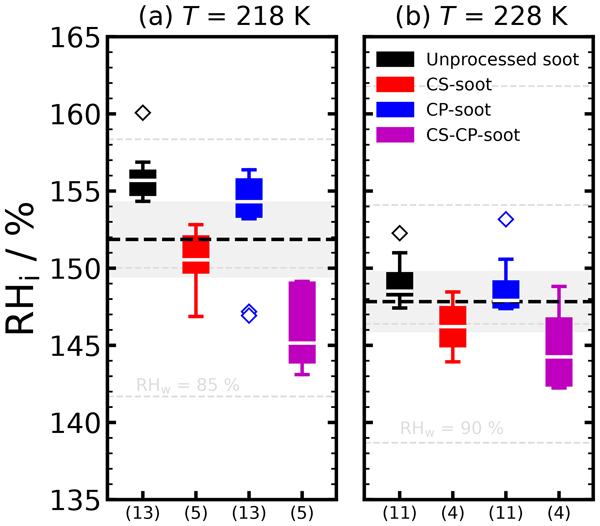
Baptiste Testa, Lukas Durdina, Jacinta Edebeli, Curdin Spirig, and Zamin A. Kanji
Atmos. Chem. Phys., 24, 10409–10424, https://doi.org/10.5194/acp-24-10409-2024, https://doi.org/10.5194/acp-24-10409-2024, 2024
Short summary
Short summary
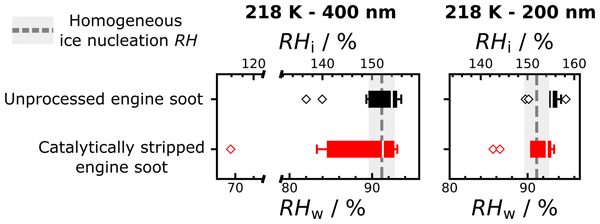
Aviation soot residuals released from contrails can become compacted upon sublimation of the ice crystals, generating new voids in the aggregates where ice nucleation can occur. Here we show that contrail-processed soot is highly compact but that it remains unable to form ice at a relative humidity different from that required for the formation of background cirrus from the more ubiquitous aqueous solution droplets, suggesting that it will not perturb cirrus cloud formation via ice nucleation.
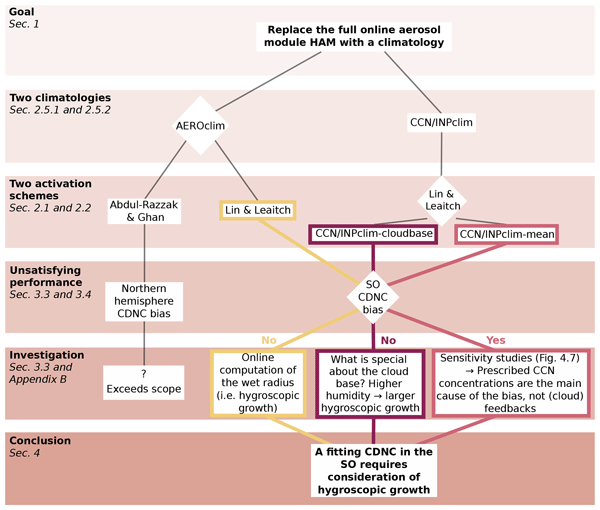
Ulrike Proske, Sylvaine Ferrachat, and Ulrike Lohmann
Atmos. Chem. Phys., 24, 5907–5933, https://doi.org/10.5194/acp-24-5907-2024, https://doi.org/10.5194/acp-24-5907-2024, 2024
Short summary
Short summary
Climate models include treatment of aerosol particles because these influence clouds and radiation. Over time their representation has grown increasingly detailed. This complexity may hinder our understanding of model behaviour. Thus here we simplify the aerosol representation of our climate model by prescribing mean concentrations, which saves run time and helps to discover unexpected model behaviour. We conclude that simplifications provide a new perspective for model study and development.
Zane Dedekind, Ulrike Proske, Sylvaine Ferrachat, Ulrike Lohmann, and David Neubauer
Atmos. Chem. Phys., 24, 5389–5404, https://doi.org/10.5194/acp-24-5389-2024, https://doi.org/10.5194/acp-24-5389-2024, 2024
Short summary
Short summary
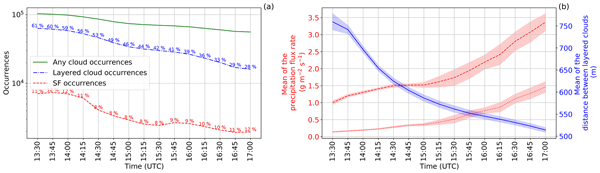
Ice particles precipitating into lower clouds from an upper cloud, the seeder–feeder process, can enhance precipitation. A numerical modeling study conducted in the Swiss Alps found that 48 % of observed clouds were overlapping, with the seeder–feeder process occurring in 10 % of these clouds. Inhibiting the seeder–feeder process reduced the surface precipitation and ice particle growth rates, which were further reduced when additional ice multiplication processes were included in the model.
Baptiste Testa, Lukas Durdina, Peter A. Alpert, Fabian Mahrt, Christopher H. Dreimol, Jacinta Edebeli, Curdin Spirig, Zachary C. J. Decker, Julien Anet, and Zamin A. Kanji
Atmos. Chem. Phys., 24, 4537–4567, https://doi.org/10.5194/acp-24-4537-2024, https://doi.org/10.5194/acp-24-4537-2024, 2024
Short summary
Short summary
Laboratory experiments on the ice nucleation of real commercial aviation soot particles are investigated for their cirrus cloud formation potential. Our results show that aircraft-emitted soot in the upper troposphere will be poor ice-nucleating particles. Measuring the soot particle morphology and modifying their mixing state allow us to elucidate why these particles are ineffective at forming ice, in contrast to previously used soot surrogates.
Larissa Lacher, Michael P. Adams, Kevin Barry, Barbara Bertozzi, Heinz Bingemer, Cristian Boffo, Yannick Bras, Nicole Büttner, Dimitri Castarede, Daniel J. Cziczo, Paul J. DeMott, Romy Fösig, Megan Goodell, Kristina Höhler, Thomas C. J. Hill, Conrad Jentzsch, Luis A. Ladino, Ezra J. T. Levin, Stephan Mertes, Ottmar Möhler, Kathryn A. Moore, Benjamin J. Murray, Jens Nadolny, Tatjana Pfeuffer, David Picard, Carolina Ramírez-Romero, Mickael Ribeiro, Sarah Richter, Jann Schrod, Karine Sellegri, Frank Stratmann, Benjamin E. Swanson, Erik S. Thomson, Heike Wex, Martin J. Wolf, and Evelyn Freney
Atmos. Chem. Phys., 24, 2651–2678, https://doi.org/10.5194/acp-24-2651-2024, https://doi.org/10.5194/acp-24-2651-2024, 2024
Short summary
Short summary
Aerosol particles that trigger ice formation in clouds are important for the climate system but are very rare in the atmosphere, challenging measurement techniques. Here we compare three cloud chambers and seven methods for collecting aerosol particles on filters for offline analysis at a mountaintop station. A general good agreement of the methods was found when sampling aerosol particles behind a whole air inlet, supporting their use for obtaining data that can be implemented in models.
Anna J. Miller, Fabiola Ramelli, Christopher Fuchs, Nadja Omanovic, Robert Spirig, Huiying Zhang, Ulrike Lohmann, Zamin A. Kanji, and Jan Henneberger
Atmos. Meas. Tech., 17, 601–625, https://doi.org/10.5194/amt-17-601-2024, https://doi.org/10.5194/amt-17-601-2024, 2024
Short summary
Short summary
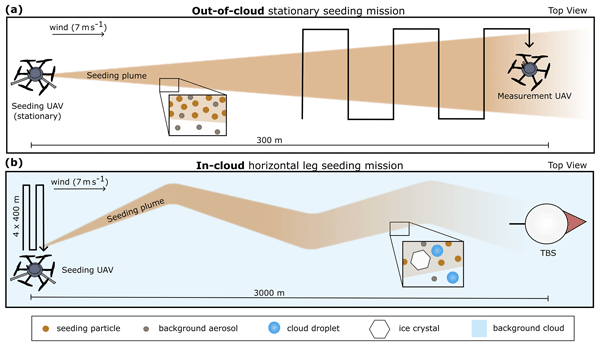
We present a method for aerosol and cloud research using two uncrewed aerial vehicles (UAVs). The UAVs have a propeller heating mechanism that allows flights in icing conditions, which has so far been a limitation for cloud research with UAVs. One UAV burns seeding flares, producing a plume of particles that causes ice formation in supercooled clouds. The second UAV measures aerosol size distributions and is used for measuring the seeding plume or for characterizing the boundary layer.
Guangyu Li, Elise K. Wilbourn, Zezhen Cheng, Jörg Wieder, Allison Fagerson, Jan Henneberger, Ghislain Motos, Rita Traversi, Sarah D. Brooks, Mauro Mazzola, Swarup China, Athanasios Nenes, Ulrike Lohmann, Naruki Hiranuma, and Zamin A. Kanji
Atmos. Chem. Phys., 23, 10489–10516, https://doi.org/10.5194/acp-23-10489-2023, https://doi.org/10.5194/acp-23-10489-2023, 2023
Short summary
Short summary
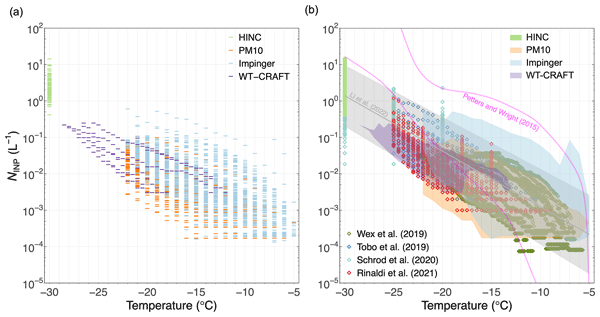
In this work, we present results from an Arctic field campaign (NASCENT) in Ny-Ålesund, Svalbard, on the abundance, variability, physicochemical properties, and potential sources of ice-nucleating particles (INPs) relevant for mixed-phase cloud formation. This work improves the data coverage of Arctic INPs and aerosol properties, allowing for the validation of models predicting cloud microphysical and radiative properties of mixed-phase clouds in the rapidly warming Arctic.
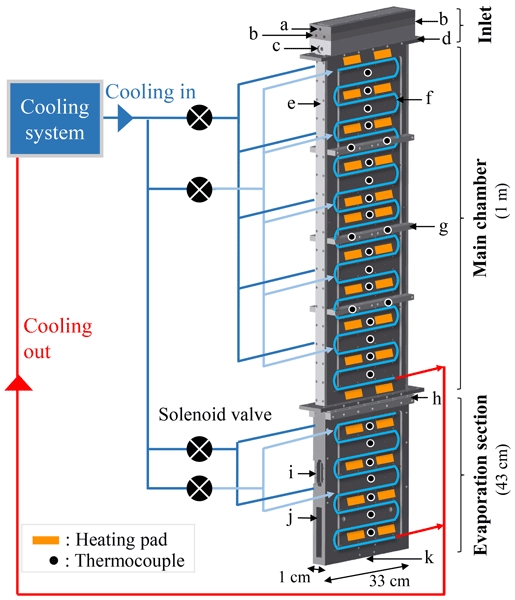
Dimitri Castarède, Zoé Brasseur, Yusheng Wu, Zamin A. Kanji, Markus Hartmann, Lauri Ahonen, Merete Bilde, Markku Kulmala, Tuukka Petäjä, Jan B. C. Pettersson, Berko Sierau, Olaf Stetzer, Frank Stratmann, Birgitta Svenningsson, Erik Swietlicki, Quynh Thu Nguyen, Jonathan Duplissy, and Erik S. Thomson
Atmos. Meas. Tech., 16, 3881–3899, https://doi.org/10.5194/amt-16-3881-2023, https://doi.org/10.5194/amt-16-3881-2023, 2023
Short summary
Short summary
Clouds play a key role in Earth’s climate by influencing the surface energy budget. Certain types of atmospheric aerosols, called ice-nucleating particles (INPs), induce the formation of ice in clouds and, thus, often initiate precipitation formation. The Portable Ice Nucleation Chamber 2 (PINCii) is a new instrument developed to study ice formation and to conduct ambient measurements of INPs, allowing us to investigate the sources and properties of the atmospheric aerosols that can act as INPs.

Fabian Mahrt, Carolin Rösch, Kunfeng Gao, Christopher H. Dreimol, Maria A. Zawadowicz, and Zamin A. Kanji
Atmos. Chem. Phys., 23, 1285–1308, https://doi.org/10.5194/acp-23-1285-2023, https://doi.org/10.5194/acp-23-1285-2023, 2023
Short summary
Short summary
Major aerosol types emitted by biomass burning include soot, ash, and charcoal particles. Here, we investigated the ice nucleation activity of 400 nm size-selected particles of two different pyrolyis-derived charcoal types in the mixed phase and cirrus cloud regime. We find that ice nucleation is constrained to cirrus cloud conditions, takes place via pore condensation and freezing, and is largely governed by the particle porosity and mineral content.
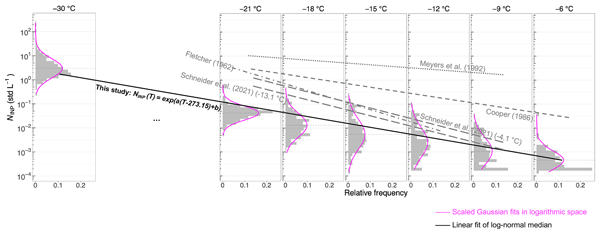
Guangyu Li, Jörg Wieder, Julie T. Pasquier, Jan Henneberger, and Zamin A. Kanji
Atmos. Chem. Phys., 22, 14441–14454, https://doi.org/10.5194/acp-22-14441-2022, https://doi.org/10.5194/acp-22-14441-2022, 2022
Short summary
Short summary
The concentration of ice-nucleating particles (INPs) is atmospherically relevant for primary ice formation in clouds. In this work, from 12 weeks of field measurement data in the Arctic, we developed a new parameterization to predict INP concentrations applicable for pristine background conditions based only on temperature. The INP parameterization could improve the cloud microphysical representation in climate models, aiding in Arctic climate predictions.
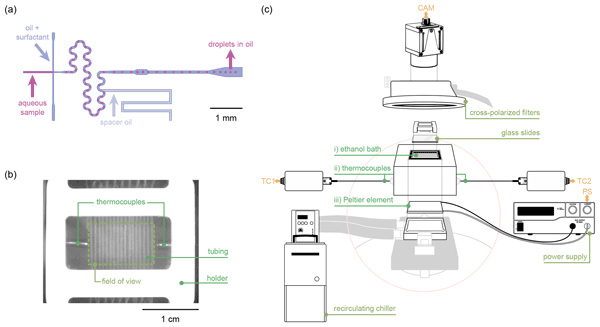
Florin N. Isenrich, Nadia Shardt, Michael Rösch, Julia Nette, Stavros Stavrakis, Claudia Marcolli, Zamin A. Kanji, Andrew J. deMello, and Ulrike Lohmann
Atmos. Meas. Tech., 15, 5367–5381, https://doi.org/10.5194/amt-15-5367-2022, https://doi.org/10.5194/amt-15-5367-2022, 2022
Short summary
Short summary
Ice nucleation in the atmosphere influences cloud properties and lifetimes. Microfluidic instruments have recently been used to investigate ice nucleation, but these instruments are typically made out of a polymer that contributes to droplet instability over extended timescales and relatively high temperature uncertainty. To address these drawbacks, we develop and validate a new microfluidic instrument that uses fluoropolymer tubing to extend droplet stability and improve temperature accuracy.

Jörg Wieder, Nikola Ihn, Claudia Mignani, Moritz Haarig, Johannes Bühl, Patric Seifert, Ronny Engelmann, Fabiola Ramelli, Zamin A. Kanji, Ulrike Lohmann, and Jan Henneberger
Atmos. Chem. Phys., 22, 9767–9797, https://doi.org/10.5194/acp-22-9767-2022, https://doi.org/10.5194/acp-22-9767-2022, 2022
Short summary
Short summary
Ice formation and its evolution in mixed-phase clouds are still uncertain. We evaluate the lidar retrieval of ice-nucleating particle concentration in dust-dominated and continental air masses over the Swiss Alps with in situ observations. A calibration factor to improve the retrieval from continental air masses is proposed. Ice multiplication factors are obtained with a new method utilizing remote sensing. Our results indicate that secondary ice production occurs at temperatures down to −30 °C.

Karin Ardon-Dryer and Mary C. Kelley
Atmos. Chem. Phys., 22, 9161–9173, https://doi.org/10.5194/acp-22-9161-2022, https://doi.org/10.5194/acp-22-9161-2022, 2022
Short summary
Short summary
Changes in the particle size distribution and particulate matter concentrations during different dust events in West Texas were examined. Analysis based on different timescales showed that current common methods used to evaluate the impact of dust events on air quality will not capture the true impact of short (convective) dust events and, therefore, do not provide an insightful understanding of their impact on the environment and human health.
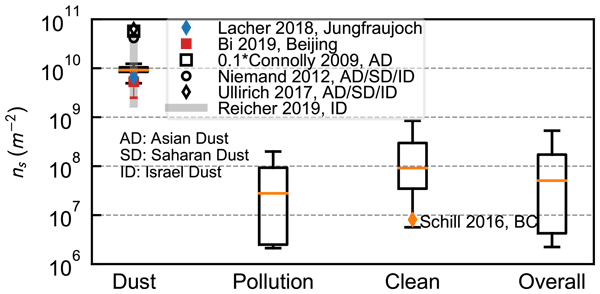
Cuiqi Zhang, Zhijun Wu, Jingchuan Chen, Jie Chen, Lizi Tang, Wenfei Zhu, Xiangyu Pei, Shiyi Chen, Ping Tian, Song Guo, Limin Zeng, Min Hu, and Zamin A. Kanji
Atmos. Chem. Phys., 22, 7539–7556, https://doi.org/10.5194/acp-22-7539-2022, https://doi.org/10.5194/acp-22-7539-2022, 2022
Short summary
Short summary
The immersion ice nucleation effectiveness of aerosols from multiple sources in the urban environment remains elusive. In this study, we demonstrate that the immersion ice-nucleating particle (INP) concentration increased dramatically during a dust event in an urban atmosphere. Pollutant aerosols, including inorganic salts formed through secondary transformation (SIA) and black carbon (BC), might not act as effective INPs under mixed-phase cloud conditions.
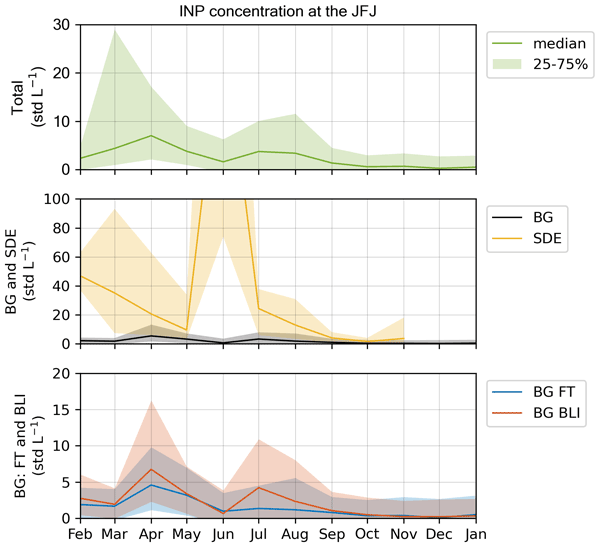
Cyril Brunner, Benjamin T. Brem, Martine Collaud Coen, Franz Conen, Martin Steinbacher, Martin Gysel-Beer, and Zamin A. Kanji
Atmos. Chem. Phys., 22, 7557–7573, https://doi.org/10.5194/acp-22-7557-2022, https://doi.org/10.5194/acp-22-7557-2022, 2022
Short summary
Short summary
Microscopic particles called ice-nucleating particles (INPs) are essential for ice crystals to form in clouds. INPs are a tiny proportion of atmospheric aerosol, and their abundance is poorly constrained. We study how the concentration of INPs changes diurnally and seasonally at a mountaintop station in central Europe. Unsurprisingly, a diurnal cycle is only found when considering air masses that have had lower-altitude ground contact. The highest INP concentrations occur in spring.
Diana L. Pereira, Irma Gavilán, Consuelo Letechipía, Graciela B. Raga, Teresa Pi Puig, Violeta Mugica-Álvarez, Harry Alvarez-Ospina, Irma Rosas, Leticia Martinez, Eva Salinas, Erika T. Quintana, Daniel Rosas, and Luis A. Ladino
Atmos. Chem. Phys., 22, 6435–6447, https://doi.org/10.5194/acp-22-6435-2022, https://doi.org/10.5194/acp-22-6435-2022, 2022
Short summary
Short summary
Airborne particles were i) collected in an agricultural fields and ii) generated in the laboratory from agricultural soil samples to analyze their ice nucleating abilities. It was found that the size and chemical composition of the Mexican agricultural dust particles influence their ice nucleating behavior, where the organic components are likely responsible for their efficiency as INPs. The INP concentrations from the present study are comparable to those from higher latitudes.
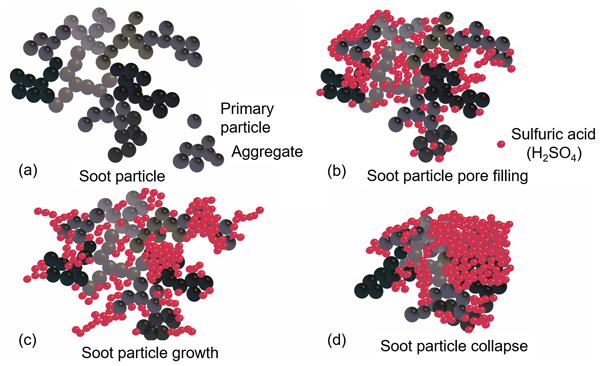
Kunfeng Gao, Chong-Wen Zhou, Eszter J. Barthazy Meier, and Zamin A. Kanji
Atmos. Chem. Phys., 22, 5331–5364, https://doi.org/10.5194/acp-22-5331-2022, https://doi.org/10.5194/acp-22-5331-2022, 2022
Short summary
Short summary
Incomplete combustion of fossil fuel produces carbonaceous particles called soot. These particles can affect cloud formation by acting as centres for droplet or ice formation. The atmospheric residence time of soot particles is of the order of days to weeks, which can result in them becoming coated by various trace species in the atmosphere such as acids. In this study, we quantify the cirrus cloud-forming ability of soot particles coated with the atmospherically ubiquitous sulfuric acid.
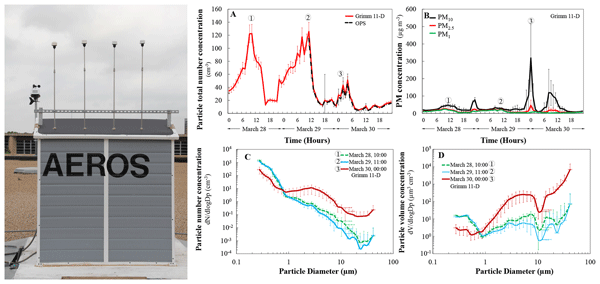
Karin Ardon-Dryer, Mary C. Kelley, Xia Xueting, and Yuval Dryer
Atmos. Meas. Tech., 15, 2345–2360, https://doi.org/10.5194/amt-15-2345-2022, https://doi.org/10.5194/amt-15-2345-2022, 2022
Short summary
Short summary
The Aerosol Research Observation Station (AEROS) located in West Texas was designed to continuously measure atmospheric particles, including different particulate matter sizes, total particle number concentration, and size distribution. This article provides a description of AEROS as well as an intercomparison of the different instruments using laboratory and atmospheric particles, showing similar concentration as well to distinguish between various pollution events (natural vs. anthropogenic).
Zoé Brasseur, Dimitri Castarède, Erik S. Thomson, Michael P. Adams, Saskia Drossaart van Dusseldorp, Paavo Heikkilä, Kimmo Korhonen, Janne Lampilahti, Mikhail Paramonov, Julia Schneider, Franziska Vogel, Yusheng Wu, Jonathan P. D. Abbatt, Nina S. Atanasova, Dennis H. Bamford, Barbara Bertozzi, Matthew Boyer, David Brus, Martin I. Daily, Romy Fösig, Ellen Gute, Alexander D. Harrison, Paula Hietala, Kristina Höhler, Zamin A. Kanji, Jorma Keskinen, Larissa Lacher, Markus Lampimäki, Janne Levula, Antti Manninen, Jens Nadolny, Maija Peltola, Grace C. E. Porter, Pyry Poutanen, Ulrike Proske, Tobias Schorr, Nsikanabasi Silas Umo, János Stenszky, Annele Virtanen, Dmitri Moisseev, Markku Kulmala, Benjamin J. Murray, Tuukka Petäjä, Ottmar Möhler, and Jonathan Duplissy
Atmos. Chem. Phys., 22, 5117–5145, https://doi.org/10.5194/acp-22-5117-2022, https://doi.org/10.5194/acp-22-5117-2022, 2022
Short summary
Short summary
The present measurement report introduces the ice nucleation campaign organized in Hyytiälä, Finland, in 2018 (HyICE-2018). We provide an overview of the campaign settings, and we describe the measurement infrastructure and operating procedures used. In addition, we use results from ice nucleation instrument inter-comparison to show that the suite of these instruments deployed during the campaign reports consistent results.
Kunfeng Gao, Franz Friebel, Chong-Wen Zhou, and Zamin A. Kanji
Atmos. Chem. Phys., 22, 4985–5016, https://doi.org/10.5194/acp-22-4985-2022, https://doi.org/10.5194/acp-22-4985-2022, 2022
Short summary
Short summary
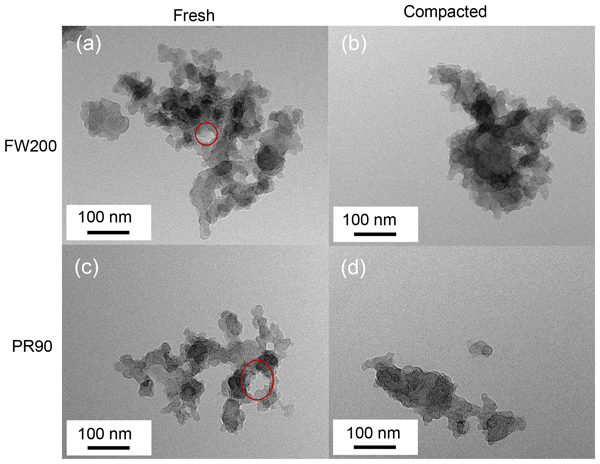
Soot particles impact cloud formation and radiative properties in the upper atmosphere where aircraft emit carbonaceous particles. We use cloud chambers to mimic the upper atmosphere temperature and humidity to test the influence of the morphology of the soot particles on ice cloud formation. For particles larger than 200 nm, the compacted (densified) samples have a higher affinity for ice crystal formation in the cirrus regime than the fluffy (un-compacted) soot particles of the same sample.

Ulrike Proske, Sylvaine Ferrachat, David Neubauer, Martin Staab, and Ulrike Lohmann
Atmos. Chem. Phys., 22, 4737–4762, https://doi.org/10.5194/acp-22-4737-2022, https://doi.org/10.5194/acp-22-4737-2022, 2022
Short summary
Short summary
Cloud microphysical processes shape cloud properties and are therefore important to represent in climate models. Their parameterization has grown more complex, making the model results more difficult to interpret. Using sensitivity analysis we test how the global aerosol–climate model ECHAM-HAM reacts to changes to these parameterizations. The model is sensitive to the parameterization of ice crystal autoconversion but not to, e.g., self-collection, suggesting that it may be simplified.
Jörg Wieder, Claudia Mignani, Mario Schär, Lucie Roth, Michael Sprenger, Jan Henneberger, Ulrike Lohmann, Cyril Brunner, and Zamin A. Kanji
Atmos. Chem. Phys., 22, 3111–3130, https://doi.org/10.5194/acp-22-3111-2022, https://doi.org/10.5194/acp-22-3111-2022, 2022
Short summary
Short summary
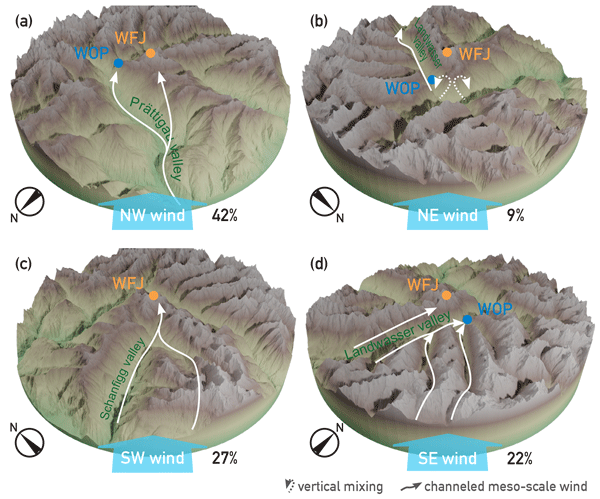
We investigate the variation in ice-nucleating particles (INPs) relevant for primary ice formation in mixed-phased clouds over the Alps based on simultaneous in situ observations at a mountaintop and a nearby high valley (1060 m height difference). In most cases, advection from the surrounding lower regions was responsible for changes in INP concentration, causing a diurnal cycle at the mountaintop. Our study underlines the importance of the planetary boundary layer as an INP reserve.
Cyril Brunner, Benjamin T. Brem, Martine Collaud Coen, Franz Conen, Maxime Hervo, Stephan Henne, Martin Steinbacher, Martin Gysel-Beer, and Zamin A. Kanji
Atmos. Chem. Phys., 21, 18029–18053, https://doi.org/10.5194/acp-21-18029-2021, https://doi.org/10.5194/acp-21-18029-2021, 2021
Short summary
Short summary
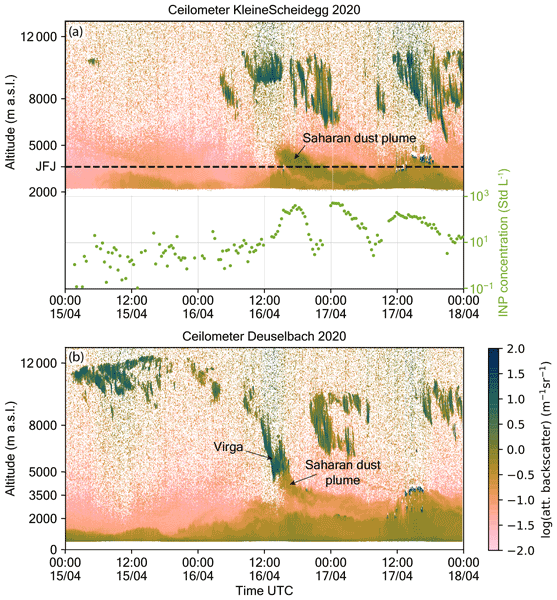
Special microscopic particles called ice-nucleating particles (INPs) are essential for ice crystals to form in the atmosphere. INPs are sparse and their atmospheric concentration and properties are not well understood. Mineral dust particles make up a significant fraction of INPs but how much remains unknown. Here, we address this knowledge gap by studying periods when mineral particles are present in large quantities at a mountaintop station in central Europe.
Larissa Lacher, Hans-Christian Clemen, Xiaoli Shen, Stephan Mertes, Martin Gysel-Beer, Alireza Moallemi, Martin Steinbacher, Stephan Henne, Harald Saathoff, Ottmar Möhler, Kristina Höhler, Thea Schiebel, Daniel Weber, Jann Schrod, Johannes Schneider, and Zamin A. Kanji
Atmos. Chem. Phys., 21, 16925–16953, https://doi.org/10.5194/acp-21-16925-2021, https://doi.org/10.5194/acp-21-16925-2021, 2021
Short summary
Short summary
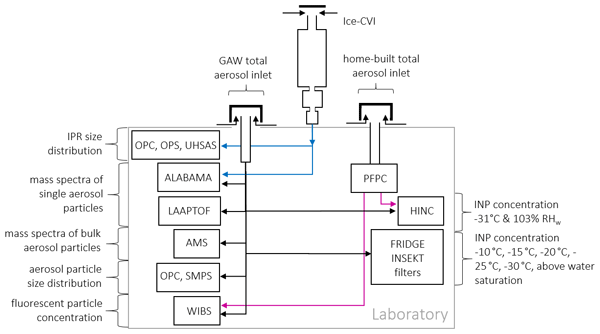
We investigate ice-nucleating particle properties at Jungfraujoch during the 2017 joint INUIT/CLACE field campaign, to improve the knowledge about those rare particles in a cloud-relevant environment. By quantifying ice-nucleating particles in parallel to single-particle mass spectrometry measurements, we find that mineral dust and aged sea spray particles are potential candidates for ice-nucleating particles. Our findings are supported by ice residual analysis and source region modeling.
Cited articles
Abramo, G., D'Angelo, C. A., and Murgia, G.: Gender differences in research collaboration, J. Informetr., 7, 811–822, https://doi.org/10.1016/j.joi.2013.07.002, 2013.
Abramo, G., D'Angelo, C. A., and Di Costa, F.: The effects of gender, age and academic rank on research diversification, Scientometrics, 114, 373–387, https://doi.org/10.1007/s11192-017-2529-1, 2018.
Adams, F., Van Espen, P., and Maenhaut, W.: Aerosol composition at Chacaltaya, Bolivia, as determined by size-fractionated sampling, Atmos. Environ., 17, 1521–1536, https://doi.org/10.1016/0004-6981(83)90306-2, 1983.
Adams, J. D., Black, G. C., Clemmons, J. R., and Stephan, P. E.: Scientific teams and institutional collaborations: Evidence from U.S. universities, 1981–1999, Res. Policy, 34, 259–285, https://doi.org/10.1016/j.respol.2005.01.014, 2005.
Afonso, A.: How academia resembles a drug gang, SSRN 2407748, https://doi.org/10.2139/ssrn.2407748, 2014.
Aksnes, D. W., Rorstad, K., Piro, F., and Sivertsen, G.: Are female researchers less cited? A large-scale study of Norwegian scientists, J. Am. Soc. Inf. Sci. Tec., 62, 628–636, https://doi.org/10.1002/asi.21486, 2011.
Almouzni, G.: Diversity in research, research in diversity, https://erc.europa.eu/news-events/magazine-article/diversity-research-research-diversity (last access: 14 June 2026), 2024.
AlShebli, B. K., Rahwan, T., and Woon, W. L.: The preeminence of ethnic diversity in scientific collaboration, Nat. Commun., 9, 5163, https://doi.org/10.1038/s41467-018-07634-8, 2018.
Andreae, M. O., Hegg, D. A., and Baltensperger, U.: Sources and Nature of Atmospheric Aerosols, in: Aerosol Pollution Impact on Precipitation, edited by: Levin, Z. and Cotton, W. R., Springer Netherlands, Dordrecht, 45–89, https://doi.org/10.1007/978-1-4020-8690-8_3, 2009.
April, K.: The new diversity, equity and inclusion (DEI) realities and challenges. HR: The new agenda, KR Publishing, ISBN-10 1869229193, 2021.
Arosoaie, A., Hennessy, E., Marín-Spiotta, E., and Hepler-Smith, E.: White Supremacy, Scientific Racism, and Extractivism, Sci. Educ., https://doi.org/10.1007/s11191-025-00715-3, 2026.
Atiles, J. and Rojas-Paez, G.: Coal Criminals: Crimes of the Powerful, Extractivism and Historical Harm in the Global South, Brit. J. Criminol., 62, 1289–1304, https://doi.org/10.1093/bjc/azac050, 2022.
Baker, S., Crew, B., Dargie, R., and Payne, D.: North-south collaboration, Nature Index, 624, S1, https://doi.org/10.1038/d41586-023-03901-x, 2023.
Barber, P. H., Hayes, T. B., Johnson, T. L., Marquez-Magaña, L., and 10,234 signatories: Systemic racism in higher education, Science, 369, 1440–1441, https://doi.org/10.1126/science.abd7140, 2020.
Baumgardner, D., Avallone, L., Bansemerm A., Borrmann, S., Brown, P., Bundke, U., Chuang, P. Y., Cziczo, D., Field, P., Gallagher, M., Gayet, Heymsfield, A., Korolev, A., Krämer, M., McFarquhar, G., Mertes, S., Möhler, O., Lance, S., Lawson, P., Petters, M. D., Pratt, K., Roberts, G., Rogers, D., Stetzer, O., Stith, J., Strapp, W., Twohy, C., and Wendisch, M.: In situ, airborne instrumentation: Addressing and solving measurement problems in ice clouds, B. Am. Meteorol. Soc., 93, ES29–ES34, https://doi.org/10.1175/BAMS-D-11-00123.1, 2012.
Beirle, S., Platt, U., Wenig, M., and Wagner, T.: Highly resolved global distribution of tropospheric NO2 using GOME narrow swath mode data, Atmos. Chem. Phys., 4, 1913–1924, https://doi.org/10.5194/acp-4-1913-2004, 2004.
Berhe, A. A., Barnes, R. T., Hastings, M. G., Mattheis, A., Schneider, B., Williams, B. M., and Marín-Spiotta, E.: Scientists from historically excluded groups face a hostile obstacle course, Nat. Geosci., 15, 2–4, https://doi.org/10.1038/s41561-021-00868-0, 2022.
Bernard, R. E. and Cooperdock, E. H. G.: No progress on diversity in 40 years, Nat. Geosci., 11, 292–295, https://doi.org/10.1038/s41561-018-0116-6, 2018.
Bernstein, D.: A Path to Gender Equity in the Geosciences: Empowering Women Postdocs, B. Am. Meteorol. Soc., 105, E686–E689, https://doi.org/10.1175/BAMS-D-22-0116.1, 2024.
Beswick, K., Baumgardner, D., Gallagher, M., Raga, G. B., Minnis, P., Spangenberg, D. A., Volz-Thomas, A., Nedelec, P., and Wang, K. Y.: Properties of small cirrus ice crystals from commercial aircraft measurements and implications for flight operations, Tellus B, 67, 27876, https://doi.org/10.3402/tellusb.v67.27876, 2015.
Botts, T. F., Bright, L. K., Cherry, M., Mallarangeng, G., and Spencer, Q.: What is the state of blacks in philosophy?, Critical Philosophy of Race, 2, 224–242, https://doi.org/10.5325/critphilrace.2.2.0224, 2014.
Cambois, E., Garrouste, C., and Pailhé, A.: Gender career divide and women's disadvantage in depressive symptoms and physical limitations in France, SSM Population Health, 3, 81–88, https://doi.org/10.1016/j.ssmph.2016.12.008, 2017.
Brown, K. D. and Laihonen, P.: Marginalisation: non-dominant language learning and teaching from a comparative perspective, Comp. J. Comp. Int. Educ., 55, 155–173, https://doi.org/10.1080/03057925.2023.2234281, 2025.
Burrows, S. M., McCluskey, C. S., Cornwell, G., Steinke, I., Zhang, K., Zhao, B., Zawadowicz, M., Raman, A., Kulkarni, G., China, S., Zelenyuk, A., and DeMott, P. J.: Ice-nucleating particles that impact clouds and climate: Observational and modeling research needs, Rev. Geophys., 60, e2021RG000745, https://doi.org/10.1029/2021RG000745, 2022.
Castro, I. O. and Atchison, C. L.: Acknowledging the intersectionality of geoscientists with disabilities to enhance diversity, equity, inclusion, and accessibility, Earth Sci. Syst. Soc., 4, 10081, https://doi.org/10.3389/esss.2024.10081, 2024.
Ceci, S. J. and Williams, W. M.: Understanding current causes of women's under-representation in science, P. Natl. Acad. Sci. USA, 108, 3157–3162, https://doi.org/10.1073/pnas.1014871108, 2011.
Cesana, G. and Storelvmo, T.: Improving climate projections by understanding how cloud phase affects radiation, J. Geophys. Res.-Atmos., 122, 4594–4599, https://doi.org/10.1002/2017JD026927, 2017.
Cesana, G. V., Ackerman, A. S., Črnivec, N., Pincus, R., and Chepfer, H: An observation-based method to assess tropical stratocumulus and shallow cumulus clouds and feedbacks in CMIP6 and CMIP5 models, Environ. Res. Comm., 5, 045001, https://doi.org/10.1088/2515-7620/acc78a, 2023.
Chavarro, D., Tang, P., and Rafols, I.: Why researchers publish in non-mainstream journals: training, knowledge bridging, and gap filling, Res. Policy., 46, 1666–1680, https://doi.org/10.1016/j.respol.2017.08.002, 2017.
Chen, C. Y., Kahanamoku, S. S., Tripati A., Alegado, R. A., Morris, V. R., Andrade, K., and Hosbey, J.: Systemic racial disparities in funding rates at the National Science Foundation, eLife, 11, e83071, https://doi.org/10.7554/eLife.83071, 2022.
Choudhury, G. and Tesche, M.: Assessment of CALIOP-derived CCN concentrations by in situ surface measurements, Remote Sens., 14, 3342, https://doi.org/10.3390/rs14143342, 2022.
Cohen, J.: Statistical power analysis for the behavioral sciences, 2nd Edn., Hillsdale, N.J., L. Erlbaum Associates, ISBN-10 0805802835, 1988.
Crenshaw, K.: Mapping the margins: Intersectionality, identity politics, and violence against women of color, Stanford Law Review, 43, 1241–1299, https://doi.org/10.2307/1229039, 1991.
D'Elia, C. F., Falls, K., Bargu, S., and Hooper-Bùi, L.: Charting the course to advance DEI in the Ocean sciences, Oceanography, 36, 140–145, https://www.jstor.org/stable/27278276 (last access: 1 July 2025), 2023.
Demografix, ApS: Genderize.io, https://genderize.io/ (last access: 1 July 2025), 2022.
DeMott, P. J., Prenni, A. J., Liu, X., Kreidenweis, S. M., Petters, M. D., Twohy, C. H., Richardson, M. S., Eidhammer, T., and Rogers, D. C.: Predicting global atmospheric ice nuclei distributions and their impacts on climate, P. Natl. Acad. Sci. USA, 107, 11217–11222, https://doi.org/10.1073/pnas.0910818107, 2010.
Dervis, K.: Devastating for the world's poor: Climate change threatens the development gains already achieved, UN Chronicle, https://www.uncclearn.org/wp-content/uploads/library/undp30.pdf (last access: 1 July 2025), 2007.
Després, V., Huffman, J., Burrows, S. M., Hoose, C., Safatov, A. S., Buryak, G., Fröhlich-Nowoisky, J., Elbert, W., Andreae, M. O., Pöschl, U., and Jaenicke, R.: Primary biological aerosol particles in the atmosphere: A review. Tellus B, 64, 15598, https://doi.org/10.3402/tellusb.v64i0.15598, 2012.
De Vera, M. V., Di Girolamo, L., Zhao, G., Rauber, R. M., Nesbitt, S. W., and McFarquhar, G. M.: Observations of the macrophysical properties of cumulus cloud fields over the tropical western Pacific and their connection to meteorological variables, Atmos. Chem. Phys., 24, 5603–5623, https://doi.org/10.5194/acp-24-5603-2024, 2024.
de Vos, A. and Schwartz, M. W.: Confronting parachute science in conservation, Conserv. Sci. Pract., 4, e12681, https://doi.org/10.1111/csp2.12681, 2022.
de Vos, A., Cambronero-Solano, S., Mangubhai, S., Nefdt, L., Woodall, L.C., and Stefanoudis, P. V.: Towards equity and justice in ocean sciences, npj Ocean Sustain., 2, https://doi.org/10.1038/s44183-023-00028-4, 2023.
Dovchin, S.: Beyond linguistic racism: Linguicism and intersectionality among Mongolian background postgraduate female students in Australia, Urban Educ., 00420859251331555, https://doi.org/10.1177/004208592513315, 2025.
Dutt, K.: Race and racism in the geosciences, Nat. Geosci., 13, 2–3, https://doi.org/10.1038/s41561-019-0519-z, 2020.
Dyess, B. and Teplitzky, S.: Developing a Collaborative Diversity, Equity, and Inclusion (DEI) Guide: A Library-Department Partnership in the Earth Sciences, J. Map Geogr. Lib., 18, 41–53, https://doi.org/10.1080/15420353.2022.2080790, 2022.
Eck, T. F., Holben, B. N., Ward, D. E., Mukelabai, M. M., Dubovik, O., Smirnov, A., Schafer, J. S., Hsu, N. C., Piketh, S. J., Queface, A., Le Roux, J., Swap, R. J., and Slutsker, I.: Variability of biomass burning aerosol optical characteristics in southern Africa during the SAFARI 2000 dry season campaign and a comparison of single scattering albedo estimates from radiometric measurements: Biomass Burning Aerosol Optical Characteristics, J. Geophys. Res.-Atmos., 108, D13, https://doi.org/10.1029/2002JD002321, 2003.
Editorial: Beware the impact factor, Nat Mater., 12, 89–91, https://doi.org/10.1038/nmat3566, 2013.
Einarsen, S.: Harassment and bullying at work: A review of the Scandinavian approach, Aggress. Violent Beh., 5, 379–401, 2000.
Feijó, J. and Orre, A.: Domination, Collaboration and Conflict in Cabo Delgado's History of Extractivism, Kronos, 50, 1–29, https://doi.org/10.17159/2309-9585/2024/v50a1, 2024.
Finney, D. L., Doherty, R. M., Wild, O., Stevenson, D. S., Mackenzie, I. A., and Blyth, A. M.: A projected decrease in lightning under climate change, Nat. Clim. Change, 8, 210–213, https://doi.org/10.1038/s41558-018-0072-6, 2018.
Ford, H. L., Brick, C., Azmitia, M., Blaufuss, K., and Dekens, P.: Women from some under-represented minorities are given too few talks at world's largest Earth-science conference, Nature, 576, 32–35, https://doi.org/10.1038/d41586-019-03688-w, 2019.
Gates, A. E., McNeal, K., Riggs, E., Sullivan, S., and Dalbotten, D.: New developments in diversity and inclusiveness in geosciences, J. Geosci. Edu., 67, 285–286, https://doi.org/10.1080/10899995.2019.1671713, 2019.
Gazni, A., Sugimoto, C. R., and Didegah, F.: Mapping world scientific collaboration: Authors, institutions, and countries, J. Am. Soc. Info. Sci. Tec., 63, 323–335, https://doi.org/10.1002/asi.21688, 2012.
Gewin, V.: What Black scientists want from colleagues and their institutions, Nature, 583, 319–322, https://doi.org/10.1038/d41586-020-01883-8, 2020.
Gewin, V.: Pack up the parachute: why global north–south collaborations need to change, Nature, 619, 885–887, https://doi.org/10.1038/d41586-023-02313-1, 2023.
Gibney, E.: Teaching load could put female scientists at career disadvantage, Nature, 10, 1–2, https://doi.org/10.1038/nature.2017.21839, 2017.
Godrie, B.: Resisting scientific extractivism: A post-extractivist policy of knowledge production with marginalised communities, Gateways Int. J. Community Res. Engagem., 18, 1–14, 2025.
Haak, L. L.: Women in Neuroscience (WIN): The First Twenty Years, J. Hist. Neurosci., 11, 70–79, https://doi.org/10.1076/jhin.11.1.70, 2002.
Hall, C. A., Illingworth, S., Mohadjer, S., Roxy, M. K., Poku, C., Otu-Larbi, F., Reano, D., Freilich, M., Veisaga, M.-L., Valencia, M., and Morales, J.: GC Insights: Diversifying the geosciences in higher education: a manifesto for change, Geosci. Commun., 5, 275–280, https://doi.org/10.5194/gc-5-275-2022, 2022.
Herfeld, C., Müller, J., and von Allmen, K.: Why do women philosophy students drop out of philosophy? some evidence from the classroom at the bachelor's level, Ergo, 8, https://doi.org/10.3998/ergo.2252, 2022.
Heymsfield, A. J., Krämer, M., Luebke, A., Brown, P., Cziczo, D. J., Franklin, F., Lawson, P., Lohmann, U., McFarquhar, G., Ulanowski, Z., and Van Tricht, K.: Cirrus clouds, Meteor. Mon., 58, 2.1–2.26, https://doi.org/10.1175/AMSMONOGRAPHS-D-16-0010.1, 2017.
Hirschauer, S.: Der Diskriminierungsdiskurs und das Kavaliersmodell universitärer Frauenforderung, Soziale Welt, 67, 119–136, https://doi.org/10.5771/0038-6073-2016-2-119, 2016.
Holman, L., Stuart-Fox, D., and Hauser, C. E.: The gender gap in science: How long until women are equally represented?, PLOS Biol., 16, e2004956, https://doi.org/10.1371/journal.pbio.2004956, 2018.
Irish, V. E., Elizondo, P., Chen, J., Chou, C., Charette, J., Lizotte, M., Ladino, L. A., Wilson, T. W., Gosselin, M., Murray, B. J., Polishchuk, E., Abbatt, J. P. D., Miller, L. A., and Bertram, A. K.: Ice-nucleating particles in Canadian Arctic sea-surface microlayer and bulk seawater, Atmos. Chem. Phys., 17, 10583–10595, https://doi.org/10.5194/acp-17-10583-2017, 2017.
Jacob, A. K. and Teichler, U.: Der Wandel des Hochschullehrerberufs im internationalen Vergleich. Ergebnisse einer Befragung in den Jahren 2007/08. Tech. rep., Bundesministerium für Bildung und Forschung (BMBF), Bonn, Berlin, https://www.researchgate.net/publication/281812737_Der_Wandel_des_Hochschullehrerberufs_im_internationalen_Vergleich_Ergebnisse_einer_Befragung_in_den_Jahren_200708 (last access: 1 July 2025), 2011.
Kanji, Z. A., Ladino, L. A., Wex, H., Boose, Y., Burkert-Kohn, M., Cziczo, D. J., and Krämer, M.: Overview of Ice Nucleating Particles, Meteorol. Monogr., 58, 1.1–1.33, https://doi.org/10.1175/amsmonographs-d-16-0006.1, 2017.
Katz, J. and Martin, B. R.: What is research collaboration?, Res. Policy, 26, 1–18, https://doi.org/10.1016/S0048-7333(96)00917-1, 1997.
Koffman, B. G., Osman, M. B., Criscitiello, A. S., and Guest, S.: Collaboration between women helps close the gender gap in ice core science, Nat. Geosci., 16, 1088–1091, https://doi.org/10.1038/s41561-023-01315-y, 2023.
Ladino, L. A., Raga, G. B., Alvarez-Ospina, H., Andino-Enríquez, M. A., Rosas, I., Martínez, L., Salinas, E., Miranda, J., Ramírez-Díaz, Z., Figueroa, B., Chou, C., Bertram, A. K., Quintana, E. T., Maldonado, L. A., García-Reynoso, A., Si, M., and Irish, V. E.: Ice-nucleating particles in a coastal tropical site, Atmos. Chem. Phys., 19, 6147–6165, https://doi.org/10.5194/acp-19-6147-2019, 2019.
Ladino, L. A., Ardon-Dryer, K., Pereira, D. L., Proske, U., Ramirez-Diaz, Z., Velicu, A., and Kanji, Z. A.: Data for “The State of Diversity, Equity, and Inclusion in the Cloud Physics Community”, ETH Zurich Research Collection, ETH Zurich [data set], https://doi.org/10.3929/ethz-c-000804477, 2026.
Landman, S. and Dandolu, V.: Complex Manifestations of Gender Disparity in Academic Medicine, Open J. Women's Health, 3, 5–10, https://doi.org/10.2174/1874291200903010005, 2009.
Lawrence, A. and Dowey, N.: Six simple steps towards making GEES fieldwork more accessible and inclusive, Area, 54, 52–59, https://doi.org/10.1111/area.12747, 2021.
Le Bras, I.: A conversation on building safe spaces for the LGBTQ+ community in the geosciences, Nat. Commun., 12, 4058, https://doi.org/10.1038/s41467-021-24020-z, 2021.
Le Canut, P., Andreae, M. O., Harris, G. W., Wienhold, F. G., and Zenker, T.: Airborne studies of emissions from savanna fires in southern Africa: 1. Aerosol emissions measured with a laser optical particle counter, J. Geophys. Res-Atmos., 101, 23615–23630, https://doi.org/10.1029/95JD02610, 1996.
Lerback, J. C., Hanson, B., and Wooden, P.: Association Between Author Diversity and Acceptance Rates and Citations in Peer-Reviewed Earth Science Manuscripts, Earth Space Sci., 7, https://doi.org/10.1029/2019EA000946, 2020.
Leslie, S. J., Cimpian, A., Meyer, M., and Freeland, E.: Expectations of brilliance underlie gender distributions across academic disciplines, Science, 347, 262–265, https://doi.org/10.1126/science.1261375, 2015.
Li, J., Pósfai, M., Hobbs, P. V., and Buseck, P. R.: Individual aerosol particles from biomass burning in southern Africa: 2, Compositions and aging of inorganic particles: Compositions and aging of inorganic particles, J. Geophys. Res-Atmos., 108, D13, https://doi.org/10.1029/2002JD002310, 2003.
Lockhart, J. W., King, M .M., and Munsch, C.: Name-based demographic inference and the unequal distribution of misrecognition. Nat. Hum. Behav. 7, 1084–1095, https://doi.org/10.1038/s41562-023-01587-9, 2023.
Lohmann, U., Lüönd, F., and Mahrt, F.: An Introduction to Clouds: From the Microscale to Climate, Cambridge University Press, Cambridge, ISBN 978-1-107-01822-8, 2016.
Marín-Spiotta, E., Barnes, R. T., Berhe, A. A., Hastings, M. G., Mattheis, A., Schneider, B., and Williams, B. M.: Hostile climates are barriers to diversifying the geosciences, Adv. Geosci., 53, 117–127, https://doi.org/10.5194/adgeo-53-117-2020, 2020.
Marin-Spiotta, E., Diaz-Vallejo, E. J.,Barnes, R. T., Mattheis, A., Schneider,B., Berhe, A. A., Hastings, M. G., Williams, B. M., and Magley, V.: Exclusionary behaviors reinforce historical biases and contribute to loss of talent in the Earth sciences, Earth's Future, 11, e2022EF002912, https://doi.org/10.1029/2022EF002912, 2023.
Martín-Martín, A., Orduna-Malea, E., Delgado, and López-Cózar, E.: Coverage of highly-cited documents in google scholar, web of science, and scopus: a multi- disciplinary comparison, Scientometrics, 116, 2175–2188, https://doi.org/10.1016/J.JOI.2018.09.002, 2018.
Marty, E., Segnon, A. C., Homann-Kee Tui, S., Trautman, S., Huyer, S., Cramer, L., and Mapedza, E.: Enabling gender and social inclusion in climate and agriculture policy and planning through foresight processes: Assessing challenges and leverage points, Clim. Policy, 24, 1034–1049, https://doi.org/10.1080/14693062.2023.2268042, 2023.
Mayol, E., Arrieta, J. M., Jiménez, M. A., Martínez-Asensio, A., Garcias-Bonet, N., Dachs, J., González-Gaya, B., Royer, S. J., Benítez-Barrios, V. M., Fraile-Nuez, E., and Duarte, C. M.: Long-range transport of airborne microbes over the global tropical and subtropical ocean, Nat. Commun., 8, 201, https://doi.org/10.1038/s41467-017-00110-9, 2017.
McDermott, M., Gelb, D. J., Wilson, K., Pawloski, M., Burke, J. F., Shelgikar, A. V., and London, Z. N.: Sex Differences in Academic Rank and Publication Rate at Top-Ranked US Neurology Programs, JAMA Neurol., 75, 956, https://doi.org/10.1001/jamaneurol.2018.0275, 2018.
Mehta, G., Yam, V. W. W., Krief, A., Hopf, H., and Matlin, S. A.: The Chemical Sciences and Equality, Diversity, and Inclusion, Angew. Chem. Int. Edit., 57, 14690– 14698, https://doi.org/10.1002/anie.201802038, 2018.
Metcalfe, D. B., Anders, E., Axén, H., Axelsson, E. P., Bermudez, A. E., Bartholomew, D. C., Butt, N., Cadillo-Quiroz, H., Chaudhary, N., Callebaut, T., Dahlsjö, C. A. L., Dusenge, M. E., Feeley, K. J., Wanger, T. C., Hwang, B. C., Hermans, T. D. G., Jonsson, M., Kardol, P., Lindh, A., Lussetti, D., Lamba, S., Mewett, G., Mujawamariya, M., Leonce Manzi, O. J., Salinas, N., Prevéy, J. S., Bargués-Tobella, A., Tang, J., Vought, O. K., Witteman, M., Wallin, G., Zhang, W., Yan, Y., and Virkkala, A. M.: Gaps in tropical science from unrepresentative distribution of sampling and citation across natural terrestrial environments, Nat. Commun., 16, 11378, https://doi.org/10.1038/s41467-025-67617-4, 2025.
Meyfroidt, P., Abeygunawardane, D., Baumann, M., Bey, A., Buchadas, A., Chiarella, C., Junquera, V., Kronenburg García, A., Kuemmerle, T., le Polain de Waroux, Y., Oliveira, E., Picoli, M., Qin, S., Rodriguez García, V., and Rufin, P.: Explaining the emergence of land-use frontiers, R. Soc. Open Sci., 11, 240295, https://doi.org/10.1098/rsos.240295, 2024.
Mülmenstädt, J., Sourdeval, O., Delanöe, J., and Quaas, J.: Frequency of occurrence of rain from liquid-, mixed-, and ice-phase clouds derived from A-Train satellite retrievals: Rain from liquid- and ice-phase clouds, Geophys. Res. Lett., 42, 6502–6509, https://doi.org/10.1002/2015GL064604, 2015.
Nadis, S.: Women scientists unite to battle cowboy culture, Nature, 398, 361–361, https://doi.org/10.1038/18746, 1999.
Namie, G., Christensen, D., and Phillips, D.: 2014 U.S. Workplace bullying survey: WBI Gender and the bullying experience, Workplace bullying institute, https://www.workplacebullying.org/multi/pdf/2014-2Gender.pdf (last access: 10 July 2026), 2014.
National Center for Science and Engineering Statistics (NCSES): NCfSaES: Women, minorities, and persons with disabilities in science and engineering, https://ncses.nsf.gov/pubs/nsf19304/digest/introduction (last access: 1 July 2025), 2019.
National Center for Science and Engineering Statistics (NCSES): Women, Minorities, and Persons with Disabilities in Science and Engineering: 2021, Special Report NSF 21-321, Alexandria, VA, National Science Foundation, https://ncses.nsf.gov/wmpd (last access: 1 July 2025), 2021.
Nielsen, M. W.: Limits to meritocracy? Gender in academic recruitment and promotion processes, Sci. Publ. Policy, 43, 386–399, https://doi.org/10.1093/scipol/scv052, 2016.
Odekunle, E. A.: Dismantling systemic racism in science, Science, 369, 780.3–781, https://doi.org/10.1126/science.abd7531, 2020.
Odeny, B. and Bosurgi, R.: Time to end parachute science, PLoS Med., 19, e1004099, https://doi.org/10.1371/journal.pmed.1004099, 2022.
Paramonov, M., Kerminen, V.-M., Gysel, M., Aalto, P. P., Andreae, M. O., Asmi, E., Baltensperger, U., Bougiatioti, A., Brus, D., Frank, G. P., Good, N., Gunthe, S. S., Hao, L., Irwin, M., Jaatinen, A., Jurányi, Z., King, S. M., Kortelainen, A., Kristensson, A., Lihavainen, H., Kulmala, M., Lohmann, U., Martin, S. T., McFiggans, G., Mihalopoulos, N., Nenes, A., O'Dowd, C. D., Ovadnevaite, J., Petäjä, T., Pöschl, U., Roberts, G. C., Rose, D., Svenningsson, B., Swietlicki, E., Weingartner, E., Whitehead, J., Wiedensohler, A., Wittbom, C., and Sierau, B.: A synthesis of cloud condensation nuclei counter (CCNC) measurements within the EUCAARI network, Atmos. Chem. Phys., 15, 12211–12229, https://doi.org/10.5194/acp-15-12211-2015, 2015.
Pereira, C. and Tsikata, D.: Contextualising Extractivism in Africa, Feminist Africa, 2, 14–48, https://www.jstor.org/stable/48725692 (last access: 1 July 2025), 2021.
Perez-Sepulveda, B. M., Cunningham-Oakes, E., and Waters, E. V.: Importance of diversity and representation in science: benefits towards strengthening our response to global challenges, npj Antimicrob. Resist., 3, https://doi.org/10.1038/s44259-025-00101-7, 2025.
Petters, M. D. and Wright, T. P.: Revisiting ice nucleation from precipitation samples, Geophys. Res. Lett., 8758–8766, https://doi.org/10.1002/2015GL065733, 2015.
Pico, T., Bierman, P., Doyle, K., and Richardson, S.: First Authorship Gender Gap in the Geosciences, Earth Space Sci., 7, e2020EA001203, https://doi.org/10.1029/2020EA001203, 2020.
Plaut, V. C.: Diversity science: Why and how difference makes a difference, Psychol. Inq., 21, 77–99, https://doi.org/10.1080/10478401003676501, 2010.
Popp, A. L., Lutz, S. R., Khatami, S., Van Emmerik, T. H., and Knoben, W. J.: A global survey on the perceptions and impacts of gender inequality in the earth and space sciences, Earth Space Sci., 6, 1460–1468, https://doi.org/10.1029/2019ea000706, 2019.
Pranckute, R.: Web of science (wos) and scopus: The titans of bibliographic information in today's academic world, Publications, 9, 12, https://doi.org/10.3390/publications9010012, 2021.
Proske, U.: Code for the publication “The state of diversity, equity, and inclusion in the cloud physics community”, ETH Zurich [code], https://doi.org/10.3929/ethz-b-000654489, 2024.
Pruitt, A. C., Brinkworth, C., and Aponte, K. L.: Outcomes and Lessons Learned from Implementing a Diversity, Equity, and Inclusion Program at UCAR/NCAR, B. Am. Meteorol. Soc., 104, E2127–E2133, https://doi.org/10.1175/BAMS-D-22-0047.1, 2023.
Raemdonck, H., Maenhaut, W., and Andreae, M. O.: Chemistry of marine aerosol over the tropical and equatorial Pacific, J. Geophys. Res., 91, 8623, https://doi.org/10.1029/JD091iD08p08623, 1986.
Ramírez-Castañeda, V., Westeen, E. P., Frederick, J., Amini, S., Wait, D. R., Achmadi, A. S., Andayani, N., Arida, E., Arifin, U., Bernal, M. A., Bonaccorso, E., Bonachita Sanguila, M., Brown, R. M., Che, J., Condori, F. P., Hartiningtias, D., Hiller, A. E., Iskandar, D. T., Jiménez, R. A., Khelifa, R., Márquez, R., Martínez-Fonseca, J. G., Parra, J. L., Peñalba, J. V., Pinto-García, L., Razafindratsima, O. H., Ron, S. R., Souza, S., Supriatna, J., Bowie, R. C. K., Cicero, C., McGuire, J. A., and Tarvin, R. D.: A Set of Principles and Practical Suggestions for Equitable Fieldwork in Biology, P. Natl. Acad. Sci. USA, 119, e2122667119, https://doi.org/10.1073/pnas.2122667119, 2022.
Ranganathan, M., Lalk, E., Freese, L. M., Freilich, M. A., Wilcots, J., Duffy, M. L., and Shivamoggi, R.: Trends in the representation of women among US geoscience faculty from 1999 to 2020: The long road toward gender parity, AGU Adv., 2, e2021AV000436, https://doi.org/10.1029/2021AV000436, 2021.
Raven, P. H., Gereau, R. E., Phillipson, P. B., Chatelain, C., Jenkins, C., and Ulloa, C.: The distribution of biodiversity richness in the tropics, Sci. Adv., 6, eabc6228, https://doi.org/10.1126/sciadv.abc6228, 2020.
Reisch, M. and Jani, J. S.: Deconstructing DEI: Unmasking its complexities, contradictions, and challenges, Journal of Teaching in Social Work, 45, 250–275, https://doi.org/10.1080/08841233.2025, 2025.
Reutter, P., Neis, P., Rohs, S., and Sauvage, B.: Ice supersaturated regions: properties and validation of ERA-Interim reanalysis with IAGOS in situ water vapour measurements, Atmos. Chem. Phys., 20, 787–804, https://doi.org/10.5194/acp-20-787-2020, 2020.
Rini, R. A.: Understanding the Persistence of Extractivism: An Insight from East Kalimantan, Indonesia, Thesis to obtain the degree of Master of Arts in Development Studies at the International Institute of Social Studies, The Netherlands, 51 pp., https://thesis.eur.nl/pub/55879 (last access: 1 July 2025), 2020.
Rubbia, G.: A steady progress towards Diversity, Equality and Inclusion in STEM disciplines: a geoscience case study in Italy, J. Geoethics Social Geosci., 2, 1–20, 2025.
Schneider, T., Teixeira, J., Bretherton, C. S., Brient, F., Pressel, K. G., Schär, C., and Siebesma, A. P.: Climate goals and computing the future of clouds, Nat. Clim. Change, 7, 3–5, https://doi.org/10.1038/nclimate3190, 2017.
Sebo, P.: Using genderize.io to infer the gender of first names: how to improve the accuracy of the inference, J. Med. Libr. Assoc., 109, 609–612, https://doi.org/10.5195/jmla.2021.1252, 2021.
Schneiderwind, J. and Johnson, J. M.: Broadening the equity lens for STEM teacher education: The invisibility of disability, AAAS bulletin, https://aaas-arise.org/2021/04/28/broadening-the-equity-lens-for-stem-teacher-education-the-invisibility-of-disability/ (last access: 1 July 2025), 2021.
Shen, Y. A., Webster, J. M., Shoda, Y., and Fine, I.: Persistent Underrepresentation of Women's Science in High Profile Journals, bioRxiv [Preprint], https://doi.org/10.1101/275362, 2018.
Simarski, L. T.: Examining sexism in the geosciences, Eos, 73, 258–258, https://doi.org/10.1029/91EO00210, 1992.
Solarino, S.: Impact Factor, Citation Index, H-Index: Are researchers still free to choose where and how to publish their results?, Ann. Geophys., 55, https://doi.org/10.4401/ag-5518, 2012.
Son, J. Y. and Bell, M. L.: Scientific authorship by gender: trends before and during a global pandemic, Humanit Soc. Sci. Commun., 9, 348, https://doi.org/10.1057/s41599-022-01365-4, 2022.
Stefanoudis, P. V., Licuanan, W. Y., Morrison, T. H., Talma, S., Veitayaki, J., and Woodall, L. C.: Turning the tide of parachute science, Curr. Biol., 31, R184–R185, https://doi.org/10.1016/j.cub.2021.01.029, 2021.
Stokes, P. J., Levine, R., and Flessa, K. W.: Choosing the Geoscience Major: Important Factors, Race/Ethnicity, and Gender, J. Geosci. Educ., 63, 250–263, https://doi.org/10.5408/14-038.1, 2015.
Swartz, T. H., Palermo, A. G. S., Masur, S. K., and Aberg, J. A.: The science and value of diversity: closing the gaps in our understanding of inclusion and diversity, J. Infect. Dis., 220, S33–S41, https://doi.org/10.1093/infdis/jiz174, 2019.
Tennant, J. P.: Web of science and scopus are not global databases of knowledge, European Science Editing, 46, e51987, https://doi.org/10.3897/ese.2020.e51987, 2020.
Tian, P., Wang, G., Zhang, R., Wu, Y., and Yan, P.: Impacts of aerosol chemical compositions on optical properties in urban Beijing, China, Particuology, 18, 155–164, https://doi.org/10.1016/j.partic.2014.03.014, 2015.
Titirici, M., Hutchinson, C., Ahmed, N., Isaacs, A., Higa, L., Arendse, J., Deng, Y., and Li, M.: Global perspectives on the critical role of diversity, equity, and inclusion in science, Cell Rep. Phys. Sci., 6, https://doi.org/10.1016/j.xcrp.2025.102791, 2025.
Wagner, C. S.: Six case studies of international collaboration in science, Scientometrics, 62, 3–26, https://doi.org/10.1007/s11192-005-0001-0, 2005.
Wagner, C., Whetsell, T., and Leydesdorff, L.: Growth of international collaboration in science: Revisiting six specialties, Scientometrics, 110, 1633–1652. https://doi.org/10.1007/s11192-016-2230-9, 2017.
Wang, D., Giangrande, S. E., Schiro, K. A., Jensen, M. P., and Houze, R. A.: The Characteristics of Tropical and Midlatitude Mesoscale Convective Systems as Revealed by Radar Wind Profilers, J. Geophys. Res.-Atmos., 124, 4601–4619, https://doi.org/10.1029/2018JD030087, 2019.
Watt, F. M.: Elisabetta Dejana, J. Cell Sci., 118, 2789–2790, https://doi.org/10.1242/jcs.01722, 2005.
Welti, A., Bigg, E. K., DeMott, P. J., Gong, X., Hartmann, M., Harvey, M., Henning, S., Herenz, P., Hill, T. C. J., Hornblow, B., Leck, C., Löffler, M., McCluskey, C. S., Rauker, A. M., Schmale, J., Tatzelt, C., van Pinxteren, M., and Stratmann, F.: Ship-based measurements of ice nuclei concentrations over the Arctic, Atlantic, Pacific and Southern oceans, Atmos. Chem. Phys., 20, 15191–15206, https://doi.org/10.5194/acp-20-15191-2020, 2020.
Wenneras, C. and Wold, A.: Nepotism and sexism in peer-review, Nature, 387, 341–343, https://doi.org/10.1038/387341a0, 1997.
Wentzel, J. S., Annegarn, M., Helas, H. J., Weinbruch, G., Balogh, S., and Sithole, A. G.: Giant dendritic carbonaceous particles in Soweto aerosols, S. Afr. J. Sci., 95, https://hdl.handle.net/10520/AJA00382353_226 (last access: 1 July 2025), 1999.
Wheeling, K.: The Gaps in Environmental Networks Across Latin America, Eos, 102, https://doi.org/10.1029/2021EO156506, 2021.
Wight, A.: Why Aren't There More Journal Papers by African Geoscientists?, Eos, 102, https://doi.org/10.1029/2021EO154774, 2021.
Wolfinger, N. H., Mason, M. A., and Goulden, M.: Problems in the Pipeline: Gender, Marriage, and Fertility in the Ivory Tower, J. Higher Educ., 79, 388–405, https://doi.org/10.1080/00221546.2008.11772108, 2008.
Xu, M., Macrynikola, N., Waseem, M., and Miranda, R.; Racial and ethnic differences in bullying: Review and implications for intervention, Aggress. Violent Behav., 50, 101340, https://doi.org/10.1016/j.avb.2019.101340, 2020.
Yakobi-Hancock, J. D., Ladino, L. A., and Abbatt, J. P. D.: Review of Recent Developments and Shortcomings in the Characterization of Potential Atmospheric Ice Nuclei: Focus on the Tropics, Revista de Ciencias, 17, 15–34, https://doi.org/10.25100/rc.v17i3.476, 2013.
Yáñez-Serrano, A. M., Aguilos, M., Barbosa, C., Bolaño-Ortiz, T. R., Carbone, S., Díaz-López, S., Diez, S., Dominutti, P., Engelhardt, V., Gomes Alves, E., Pedraza, J., Saturno, J., and Tzompa-Sosa, Z. A.: The Latin America Early Career System Scientist Network (LAECESS): addressing present and future challenges of the upcoming generations of scientists in the region, NPJ Clim. Atmos. Sci., 5, 79, https://doi.org/10.1038/s41612-022-00300-3, 2022.
Editorial statement
The findings in this excellent article reach well beyond the cloud physics community. They concern all geoscience, indeed all science. It should be read by every geoscientist worth their salt and wishing to help improve the disciplne from the inside and its image in the world.
The findings in this excellent article reach well beyond the cloud physics community. They...
Short summary
A survey and literature metadata analysis from the cloud physics community are used to investigate the state of diversity, equity and inclusion in the cloud physics community. We show the evolution of gender contributions to cloud physics and the inclusion of tropics-based scientists. The publication analysis reveals the rate of men and women dropping out of the field is not different, however, gender balance was better achieved when women led publications compared to men.
A survey and literature metadata analysis from the cloud physics community are used to...


Altmetrics
Final-revised paper
Preprint