
the Creative Commons Attribution 4.0 License.
the Creative Commons Attribution 4.0 License.
 | 30 Jun 2026
Barriers and facilitators for using palaeoclimate evidence in UK climate decision making
Alice Mary Milner
Klaus Dodds
Celia Martin-Puertas
The impacts of anthropogenic climate change are becoming increasingly severe and the need for more informed policies based on robust and reliable scientific evidence is more critical than ever. Whilst contemporary climate evidence is routinely based on instrumental data, palaeoclimate offers a much longer temporal perspective of the behaviour of the climate system, climate extremes, and environmental responses. Offering in turn a longer-term perspective on how past climate has imposed both costs and opportunities for innovation on human communities and ecosystems. Climate policies increasingly frame societal responses in terms of adaptation, resilience, and risk management across multiple timescales. Despite the benefits of palaeoclimate insights, there is limited awareness of how palaeoclimate is being used, what barriers are currently limiting the inclusion of palaeoclimate evidence into decision making, and what opportunities are available for palaeoclimate evidence beyond the research community.
In this study we set out to fill this knowledge gap and explore these barriers and facilitators for palaeoclimate integration in decision making. We do this by employing a semi-structured interview approach with policy advisors from UK Civil Service departments and with palaeoclimate scientists to determine their perception of palaeoclimate evidence as a source for policy evidence. The results showed a good agreement between the interviewed policy advisors and palaeoclimate scientists that there is a place for palaeoclimate evidence in decision making, especially with the contextualisation of current and future climate change. However, the results demonstrated that communication was the principal barrier – both the communication format of palaeoclimate dissemination and the communication of the relevance of palaeoclimate for decision making. We finish this article with a set of actionable recommendations written for palaeoclimate scientists that wish to maximise the potential of their research being used in a policy setting. These recommendations include writing policy briefs, conducting transdisciplinary collaboration, taking part in policy training, and finally using a co-production approach. We hope that by emphasising these recommendations, more palaeoclimate research will be used within decision making and in turn will enable more climate policies based on a longer-term perspective of climate variability.
- Article
(1082 KB) - Full-text XML
-
Supplement
(377 KB) - BibTeX
- EndNote


2024 was the first year where global temperatures exceeded 1.5 °C above pre-industrial conditions, surpassing the warming threshold set out in the Paris Climate Agreement (Copernicus Climate Change Service, 2025). Globally rising temperatures have occurred concurrent to many extreme weather events such as intensified heat wave activity (Larcom et al., 2019; Lhotka and Kysleý, 2022; Yule et al., 2023; Allen et al., 2018), increased droughts (Gudmundsson and Seneviratne, 2016), and strengthened monsoon seasons (Seth et al., 2019; IPCC, 2022, 2023). These changes are causing concern across governments globally and have led to increased pressure to create policies to both mitigate against and adapt to climate change (IPCC, 2023). Decision makers – which are defined in this study as individuals working at the policy interface and have a role in the decision making process such as civil servant policy officers, scientific advisors and ministers – are routinely searching for more accessible information and evidence about the behaviour of the climate system to inform policy decisions (Buontempo et al., 2014; Bruno Soares et al., 2018; Done et al., 2021). The magnitude and frequency of recent climate events and behavioural changes have not been observed in the instrumental record, presenting a significant challenge in the evidence base for policy making. Palaeoclimate research – the study of climate behaviour before the instrumental record began – is a source of evidence that can provide policy-relevant insights into the climate system beyond the constraints of the instrumental record (Snyder, 2010; Caseldine, 2012; Kiessling et al., 2023; Allen et al., 2025).
Palaeoclimate scientists have been working to extend the instrumental period for several millennia using a combination of proxy records – indirect measurements of climate from geological archives – and climate model simulations (Snyder, 2010; Tardif et al., 2019; Kaufman et al., 2020, Lear et al., 2021; Osman et al., 2021). When palaeoclimate evidence is not considered, our understanding of climate variability is constrained to only the last ∼ 150 years, a period that captures neither the full range of natural variability nor the frequency of rare but high-impact climate events which may lead to under preparedness for future extremes and climate-driven societal impacts. This can lead to systematic under- or over-estimation of the likelihood of extremes, misidentification of the drivers of climate variability across different timescales, and reduced ability to anticipate thresholds or abrupt transitions in the climate system (Tierney et al., 2020; Kaufman and McKay, 2022; Cahill et al., 2023; Kiessling et al., 2023; Allen et al., 2025), and ultimately lead to less-informed policy decisions that misunderstands the temporal frequency and likelihood of the location of extreme events. Moreover, without long-term records, policymakers lose insights into how past societies and ecosystems have adapted – or failed to adapt – to climate stressors, limiting the evidence available for planning resilient futures. Integrating palaeoclimate evidence alongside instrumental observations and future climate projections therefore provides a more comprehensive and temporally informed knowledge base, enabling more robust, precautionary, and contextually grounded policy decisions.
Although there are instances of a clear awareness of the importance of palaeoclimate for decision making for projecting future changes under different emissions scenarios that drive climate policy (e.g., the IPCC), there has been little success in integrating palaeoclimate routinely as a form of evidence in decision making (Allen et al., 2025). Whilst some of these challenges exist because of the practicalities of linking palaeoclimate evidence to the instrumental period to the future projection (e.g., uncertain chronologies, differences in spatial scales), the slow uptake of palaeoclimate in decision making also likely reflects broader challenges in transferring knowledge from research producers (e.g., academia) to research users (e.g., decision makers), which are by no means unique to palaeoclimate. It is often assumed by scientists that the evidence transfer process is a linear and unidirectional flow of knowledge from the expert (e.g., a scientist or group of scientists) to the solution (e.g., policy action) (Gluckman et al., 2021; Lacey et al., 2018). However, in reality, evidence is used in more indirect and complex ways, often hindered by a gap or mismatch between the evidence produced by scientists, and the evidence required by decision makers. Numerous studies have examined this science-policy “gap” and identified recurring barriers and facilitators that can either limit or accelerate the collaboration between scientists and decision makers (e.g., Bradshaw and Borchers, 2000; Lemos et al., 2012; Buontempo et al., 2014; van der Arend, 2014; Cvitanovic et al., 2015; Porter and Dessai, 2017). These barriers and facilitators have been identified through systematic reviews (e.g., Oliver et al., 2014; Abu-Odah et al., 2022; Barreto et al., 2024; Pearson, 2024) across a broad range of scientific disciplines and given that similar factors are likely to exist at the interface between palaeoclimate research and climate policy, we briefly outline some of these examples below.
1.1 Barriers and Facilitators at the science-policy interface
Some of the frequently reported barriers and facilitators across other disciplines include the timing of evidence, the dissemination of scientific evidence and the positive effect of collaboration and good working relationships between decision makers and scientific researchers. Some of these factors may also be both a barrier and a facilitator under certain circumstances, for example the level of trust between the decision makers and researchers and whether the research is, or is not, considered relevant for decision making (Oliver and de Vocht, 2017; Barreto et al., 2024). In addition, there are differences in institutional structures, work practices and culture which can also contribute to the exchange of knowledge between researchers and decision makers (Lemos et al., 2018; Cvitanovic et al., 2015). For example, scientists work in a research environment where there is pressure to be rigorous in a methodology and production of results, and often takes a long time between the conception of an idea to the publication or presentation of evidence. On the other hand, decision makers often work in faster-paced environments with significant time pressures and may be under guidelines set out in the Governments manifestos and therefore there may be less opportunity to integrate new research into their decision making tasks (Cvitanovic et al., 2015; Lacey et al., 2018). A further institutional barrier for researchers is the academic reward structure (Pearson, 2024). A study from Keleman et al. (2021) using a series of interviews and a survey with researchers found that, whilst researchers do wish to contribute knowledge to decision making, they find that institutional structures limit ability for them to partake in these activities. They note that this is because science-policy work in many academic organisations is not credited in academic reward frameworks, and academics are instead rewarded for publishing scientific articles, meaning that policy work is often not prioritised. In the UK, the Research Excellence Framework (REF) is an approach to grade institutional research outputs. Contributions to policy are valuable for the REF grading, however there is still a higher weighting for more traditional academic outputs such as publications, conferences, and books (60 %) in an institutions REF score compared to impact beyond academia that has a lower weighting of 25 % (Sutton, 2020).
1.2 Palaeoclimate evidence for climate decision making
Building on the broader literature on science-policy barriers and facilitators mentioned above, recent investigations into the barriers and facilitators of palaeo science in general, and palaeoecology specifically have been conducted (Siggery et al., 2023; Allen et al., 2025). Siggery et al. (2023) used a systematic literature review to assess how accessible palaeoecological data are for conservation practice, and Allen et al. (2025) explored three examples of how palaeo data could be used in a policy setting. Both studies highlighted that palaeo data can be useful beyond the palaeo community and identified areas of limitations; however, neither incorporated the perspectives of decision makers.
To our knowledge there has been no study which has examined both decision makers' and palaeoclimate researchers' perspectives on the interface between palaeoclimate and climate policy. There is therefore a need to understand the potential of palaeoclimate from both sides of this interface. By focussing specifically on palaeoclimate evidence, rather than palaeoecology or other palaeo data, we aim to gain insights into how palaeoclimate evidence can most effectively support climate change decision making. A more effective boundary between palaeoclimate evidence producers and evidence users will benefit decision makers who are under increased pressure to make evidence-informed decisions to support society in navigating climate change (Buontempo et al., 2014; van der Arend, 2014; Cvitanovic et al., 2015; Porter and Dessai, 2017; Allen et al., 2025). Similarly, there is a growing need for funding bodies – and the scientists they fund – to demonstrate the economic and societal impact of their funded research (Lacey et al., 2018; Jensen et al., 2022).
The aim of this research is to understand how palaeoclimate evidence is perceived and used by palaeoclimate scientists and climate-related decision makers in the UK. To achieve this, we: (i) conduct semi-structured interviews with UK-based climate-related decision makers and palaeoclimate scientists to identify their perceptions and experience of palaeoclimate integration in policy, (ii) identify barriers and facilitators which might hinder or enable the uptake of palaeoclimatic evidence into decision making, and (iii) produce recommendations for palaeoclimate scientists to increase the likelihood that their research is integrated into decision making.
We conducted semi-structured interviews with decision makers and palaeoclimate scientists to get an understanding on the perception of using palaeoclimate evidence in climate policy decision making. Semi-structured interviews were selected as they provide the opportunity for in-depth exploration of the interviewees perspective whilst maintaining the flexibility to adapt the questions to follow the results of the participant (Belotto, 2018; Knott et al., 2022). We focus on the UK given the authors' familiarity with UK higher institutions and policy procedures, in addition to the UK government and policy practices favouring evidence-based research. We used a combination of purposive and snowball sampling to invite participants to be interviewed (Noy, 2008; Palinkas et al., 2015; Knott et al., 2022). For the recruitment of decision makers an email stating the research question and aims were sent to known individuals within UK Civil Service departments with the intention to forward on to other members of their team, leveraging their professional connections to recruit additional participants. The combination of purposive and snowball sampling was required for the recruitment of decision makers because the high turnover of staff and lack of public access to email addresses makes it challenging to contact people in relevant roles directly. Combining this approach with snowball sampling meant that we were able to reach further beyond our personal connections and interview more people who meet the criteria (Noy, 2008). Despite taking this approach, we still received multiple rejection emails and a low response rate (see below and Sect. 4.4).
The two criteria for a decision maker to be interviewed were (1) they work at a UK Government Civil Service department, or associated agency, and (2) they work on some aspect of climate within their team. The departments of the decision makers interviewed were DESNZ (Department for Energy Security and Net Zero), Defra (Department for Environment, Food and Rural Affairs), the FCDO (Foreign, and Commonwealth and Development Office) and the Environment Agency with each interviewee working on different climate-related projects such as future water resources under climate change, Net Zero initiatives, and innovation in climate research.
The recruitment of palaeoclimate scientists was based on purposive sampling, given that the majority of scientist profiles are publicly available. However, the same encouragement was sent alongside their recruitment email to forward onto colleagues to recruit more participants. For palaeoclimate scientists the three criteria for recruitment were (1) they are employed at a UK higher education establishment, (2) they are at lecturer (assistant professor) level or higher, and (3) they have research expertise on some aspect of palaeoclimate. The second criterion was used based on the assumption that, at this level of career stage, the participant likely had enough time passed since completing their PhD to conduct research and engage with policy or impact activities to non-academic audiences. The research interests from the palaeoclimatologists were varied and included palaeoclimate modellers looking at how past warm periods can be used to inform future warming projections, glaciologists working to reconstruct glacier behaviour, and palaeoclimatologists who use a broad range of proxy records including biomarker records, isotope records and other biological proxies to address questions about the environment's response to climate variability through time.
We faced challenges in recruiting participants to be involved in the study with very few decision makers or palaeoclimate scientists responding to our email invitations (See Sect. 4.4). The period allocated for participant recruitment lasted six months and all email responses received that agreed to take part led to an interview. A total of 11 interviews took place of which six were decision makers and five were palaeoclimate scientists.
The semi-structured interview questions contained a minimum of five open-ended questions for each group (Supplement) and were approved by the Royal Holloway Ethics Committee (Approval ID: 4195). Written consent was obtained from all participants prior to the interview taking place. Interviews were conducted by author LB on Microsoft Teams. Each interview was recorded and later transcribed verbatim. The analytical workflow followed a structured and multi-staged process. The first step was to pseudonymise the interview transcripts by removing each of the participant's names and replacing these with DM-n for decision makers with the number reflecting the interview number (e.g., DM-1, DM-2, …), and PS-n for palaeoclimate scientists (e.g., PS-1, PS-2, …). This was conducted by the interviewer (LB). The next stage of the analytical process was to start the thematic analysis. Thematic analysis was chosen to due to its flexibility in identifying patterns across the full research data and from both the participatory groups (Braun and Clarke, 2008; Huckel Schneider et al., 2016).
We decided that codes were to be developed inductively following the data rather than from a pre-defined framework and we followed the approach of Braun and Clarke (2008) of reflexive thematic analysis, enabling a systematic yet flexible identification of patterns across the interview data. Each transcript was read in full without coding to facilitate familiarisation with the data and to capture the main narrative and context of each interview. Initial observations were noted during this phase. Following this, line-by-line coding was conducted, and these codes were generated inductively from the interview data alone, whilst also being informed by the study's focus on palaeoclimate and policy. Each coded segment included both key terms and their surrounding context to preserve meaning.
Once the coding was completed, codes were organised into themes using an iterative grouping process, and this again was conducted by author LB (Braun and Clarke, 2008; Guest et al., 2006). This grouping involved examining the relationships between the codes, identifying patterns across interviews, and grouping conceptually related codes into the different themes. The themes were subsequently re-assessed by author AM. Categorising the codes into larger groups highlighted important themes between and within the two participant groups. Three main themes relating to the barriers and facilitators of palaeoclimate in climate policy were identified:
-
Evidence (defined here as the type of scientific knowledge, data, and information considered legitimate, credible, and usable within the climate policy process)
-
Context for climate change (defined here as the role that palaeoclimate has in situating recent and projected climate change within a longer-term baseline of natural variability and past extremes)
-
Temporal resolution (defined here as the alignment or mismatch between the timescales and resolution at which palaeoclimate data are available and the timescales at which climate policy decisions are made).
The transcripts were subsequently re-examined to fit within each of these themes to ensure consistent application of the final thematic structure.
It is widely acknowledged that a researcher's positionality on qualitative research can influence all aspects of the research, including the design of research questions, data collection (including the design and framing of interview questions and interactions with participants), and interpretation and analysis of data (Bourke, 2014; Gurr et al., 2024). We recognise that our backgrounds, experiences, and perspectives shape the way that we approached both the interviews and the analysis. Our interest in this topic stems from our expertise in palaeoclimate research, and our view that palaeoclimate is useful for decision making. Our positionality with respect to this will therefore likely have had an influence on the framing of questions, interpretation, and analysis.
Due to the sensitive nature of the interviews and the involvement of identifiable professional roles within the UK Government and academia, the full transcripts cannot be made publicly available. However, access to anonymised data will be considered upon reasonable request aligning with Royal Holloway Ethics Committee (Approval IS: 4195) and in line with the conditions of participant consent.
The results from the 11 interviews conducted (six decision makers and five palaeoclimate scientists) are categorised beneath each of the themes identified about the perception of palaeoclimate as a source of evidence in decision making.
3.1 Evidence
The decision makers were asked at the beginning of the interviews to explain their typical approach for searching for scientific evidence to assist with their policy tasks. This section of the interview did not specifically mention palaeoclimate as we were interested in seeing whether the sources mentioned by the decision makers aligned with where palaeoclimate evidence is being presented and published. Responses were varied in terms of source and process of retrieving evidence. Figure 1 illustrates the main evidence sources mentioned in the interviews with decision makers.
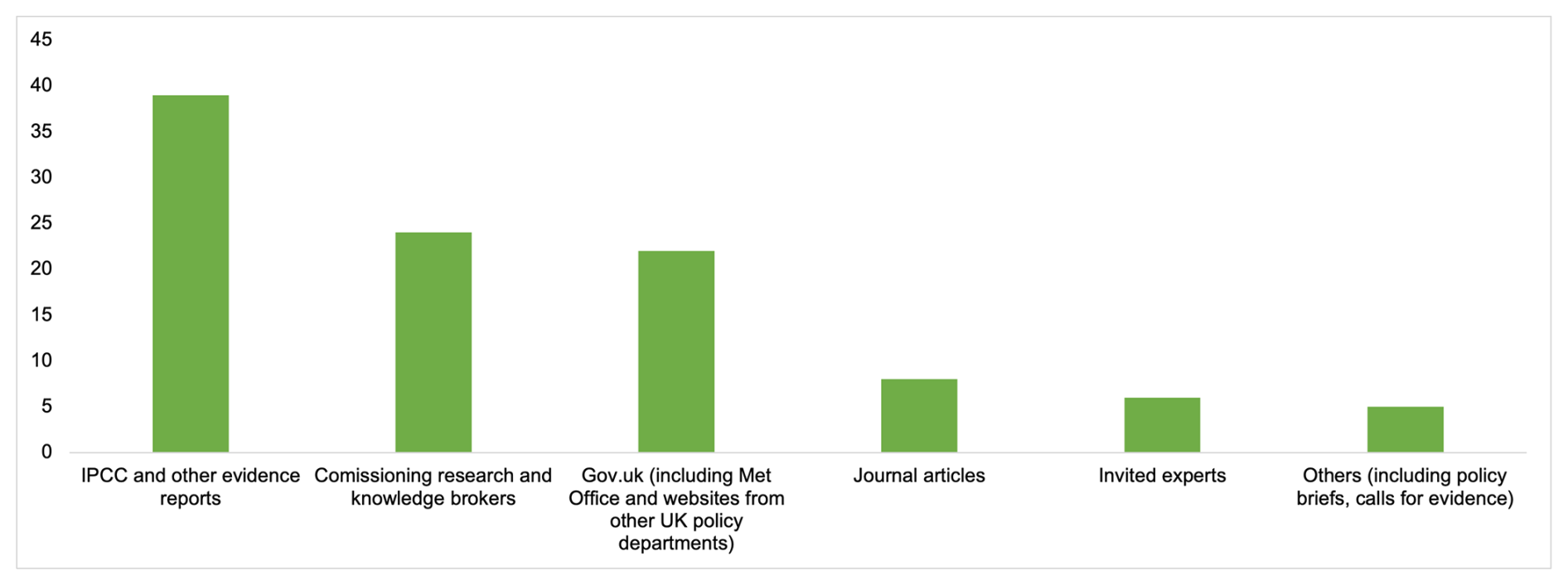
Figure 1Bar graph of the evidence sources mentioned by the decision makers summarised into the main themes.
Whilst there was a varied response in terms of the evidence sources listed, there was a unanimous preference of the IPCC reports (Fig. 1). The decision makers mentioned several reasons behind this, including the advantage that it is a single source of thousands of peer-reviewed literatures, as well as being renowned for having such a robust review process which assures scientific integrity (DM-2, 3). In addition, one of the decision makers who works in the FCDO, and thus working on international policies, mentioned that an advantage of the IPCC is that it has international acceptance:
…the preferred initial source of any information is the IPCC and that's because the IPCC information from each of the various assessment reports has international acceptance. (DM-4)
The interviews also highlighted the role that boundary organisations (i.e., intermediary organisations which sit at the interface between decision making and scientific evidence production, Kirchoff et al., 2015; Kass et al., 2022), knowledge brokers, and commissioning research plays in providing evidence to decision makers. The Met Office, World Meteorological Organisation (WMO), World Weather Attribution (WWW), CS-N0W (Climate Services for a Net Zero resilient World), and the Climate Change Committee (CCC), were all mentioned as being used to provide relevant evidence to the decision makers and to summarise and check the reliability of new scientific articles and is listed as the second-highest used source of evidence amongst the decision makers (Fig. 1).
And another source we're increasingly using is bodies like the World Weather Attribution and some other academic centres who are doing like rapid assessments and things like that. (DM-4)
For the case of the inventory, we commission an organization to deliver our inventory every year. And obviously that's a trusted data source. (DM-1)
Trust was also mentioned when describing other types of sources such as using the Gov.uk websites (DM-2, DM-5) and commissioning research was used as an approach to gain trustworthy and directly relevant evidence to fill specific knowledge gaps (DM-1, DM-4).
The decision makers explained that whilst scientific journal articles are used as a source of evidence sometimes (Fig. 1), their use is often dependent on the subject of the brief to which they are working towards. Some higher-impact journals were mentioned by name (the Nature and Science group journals), and a trust in the review process of these well-known journals was highlighted.
We go for Nature, they're trusted journals like Nature, Nature Climate Change, Nature Communication, Science and those kind of blockbuster journals and stuff. But we don't get our information purely from there. There's a lot of, like, geeky meteorological journals that we get information from. (DM-1)
And when asked whether there was a criterion to follow when choosing evidence from journals, most of the decision makers said there was no official criteria, but they would preferentially choose the latest evidence, less than a few years since publication (DM-1, 3, 5).
The final source of evidence used by the decision makers was direct conversations with scientists and inviting them to present a seminar or a piece of work considered useful for the decision makers (Fig. 1) – often invited after a recent publication. Two of the palaeoclimate scientists interviewed mentioned that they have previously been called into Civil Service departments to discuss their work. Both PS-1 and PS-2 were invited into the FCDO to present, with PS-1 specifically to talk about a recent publication, whereas PS-2 was invited in as an expert to provide some background information at the beginning of a new policy topic. In the interviews, the scientists were asked whether their presentations or discussions with the decision makers involved discussing palaeoclimate. Neither scientist said it was the focus, but that they did mention palaeoclimate to provide context for the topic that they were invited to speak about.
3.2 Context for climate change
When the decision makers and palaeoclimate scientists were asked what they believed were the most important uses for palaeoclimate evidence, there was a consensus that it provides a useful context for current and future climate change. When encouraged to provide examples, many of the decision makers said that it was good to provide information about the background climate system (DM-1, 2, 4, 5) and described the concept of uniformitarianism by which the past is viewed as the key to understanding the present and future (DM-3, 5). And despite DM-2 not knowing much about palaeoclimate ahead of the interview, once given the definition, they suggested that it could be useful to contextualise how much our climate system has changed due to anthropogenic activity.
The responses from the palaeoclimate scientists were similar, and they stated their belief that palaeoclimate plays a vital role in understanding the behaviour of the climate system:
…everything we know about the climate system is based on the past understanding. (PS-2)
The palaeoclimate scientists provided more specific examples of how they themselves or their research groups have contributed evidence useful for policy. This included providing summaries of ecosystem tipping points, and how sources of water have changed in the past and how they are likely to change in the future, with both examples aimed towards the FCDO.
A few responses from decision makers suggested that, whilst theoretically palaeoclimate is useful, in practical terms, its usefulness may be limited. For example:
The disadvantages are somewhat baked in from the outset of why is it relevant to the present? You're not going to have someone who informed something using palaeoclimate. For instance, if there is a disaster, and there is a need to do impact-based weather forecasting or trying to map potential flood risk from a quick onset rainfall event. It's [palaeoclimate] inherently not going to be used because it's got no relevance. (DM-3)
But we always hit that wall of not being able to give sufficient amount of granularity on how quickly something happened. (DM-1)
Several of the limitations related specifically to the temporal resolution of the palaeoclimate reconstructions, which we explore further below.
3.3 Temporal resolution
The temporal resolution of palaeoclimate reconstructions was a topic discussed in each interview. Some participants considered that the temporal resolution of palaeoclimate records leads to more uncertainty given that it cannot provide enough clarity to the timescales that decision makers are working on:
…if it [a graph] looks like a straight line, but you can't tell any more resolution than 100 years, then policy makers are just like, well yeah what can I do. (DM-1)
Considering the temporal resolution is important because policies and policymaking often focus on electoral or planning timescales of only a few years to a few decades (e.g., four-year political cycles), whereas many palaeoclimate reconstructions are much coarser, typically resolving change on centennial to millennial timescales (DM-1, 5; PS-2).
PS-2 also mentioned that it is hard to find overlap with policy when palaeoclimate scientists work in the past, whereas decision makers are working for the future. On visiting the FCDO to present findings, PS-2 recounted that they struggled to find overlap for the use of palaeoclimate for the type of information that was needed for future planning and policies. However, some of the responses from the decision makers indicated that it is not the temporal resolutions that are irrelevant, it is more that there is a lack of wider understanding how and why these longer timescales are relevant for decision making. For example,
I always felt palaeo as a community is terrible at comms at making these [long trajectories] relevant in any form to policy outside of just utilising very simplistic arguments of we can inform climate models. (DM-3)
And definitely the time resolution of reconstructions are important, like, why would I be interested in knowing about something 20 thousand or something years ago, why do I care for the future? (DM-5)
Not all decision makers interviewed were aware that palaeoclimate reconstructions can reach decadal or annual scale resolution and are not restricted to a coarse temporal resolution (e.g., DM-2), which has relevance across all three themes.
Overall, the interview responses from both the decision makers and palaeoclimate scientists demonstrated a general agreement that palaeoclimate can be useful for climate policy decision making in certain situations. The interviews highlighted that there are several barriers in place which can limit the uptake of palaeoclimate in policy (differences in the source, reliability, and the relevance of palaeoclimate evidence) and facilitators for palaeoclimate (e.g., the influence of boundary organisations, providing context for climate change, knowledge exchange around the potential of high-resolution palaeoclimate reconstructions).
Integrating palaeoclimate as a source of evidence for decision making holds value by providing insightful background information about the climate system and contextualising current and future warming. This phrase is commonly used by palaeoclimate scientists in journal publications (Kaufman et al., 2020; Tierney et al., 2020; Kiessling et al., 2023; Allen et al., 2025), and from the palaeoclimate scientists interviewed in this study to describe the importance of palaeoclimate and emphasise its policy relevance. However, the practicality of integrating palaeoclimate evidence into the decision making process is more challenging (Allen et al., 2025). Drawing on insights from science-policy theory and the findings from the interviews in this study, this discussion outlines the identified barriers which might limit the integration of palaeoclimate into decision making and provides recommendations on how to address these and promote closer integration between palaeoclimate research and climate policy.
4.1 Hierarchy of evidence
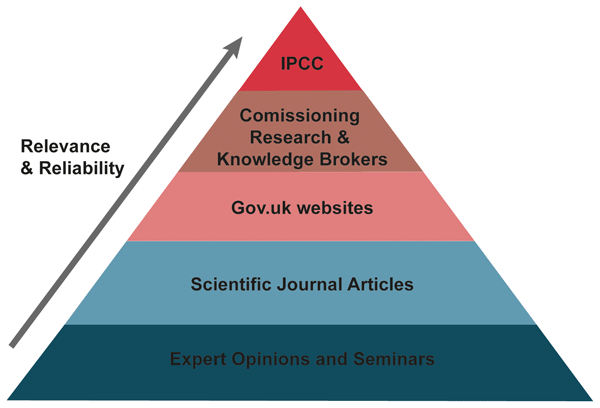
The assumption from many scientific researchers follows what is known as the “deficit model” by which there is a linear and unidirectional flow of knowledge from evidence directly into policy, and that simply publishing articles initiates this knowledge flow (Stocklmeyer, 2012; Cvitanovic et al., 2015; Horton and Brown, 2018). However, the knowledge exchange and decision making processes are more complex than this, with the deficit model rarely working due to political, personal, and institutional perceptions and biases about scientific evidence (Jennings and Hall, 2011; Suter and Armitage, 2011; Cvitanovic et al., 2015). One example of a political and institutional bias that was highlighted by DM-1 who explained that there tends to be a preference for using scientific evidence that is publicly funded. They explained that in the case of needing climate modelling results, they noted greater credence and trust would typically be given to outputs from publicly funded sources rather than from research funded by other bodies, likely as an approach to justify public expenditure. And therefore suggesting that in their case public funding can be seen as a safeguard against perceived biases in evidence produced. Beyond this, however, was a more structured view of the perception of evidence highlighted by the interviews in this study which can be placed into an “evidence hierarchy”, i.e., the preferences applied to certain types of evidence sources by decision makers (Galvão, 2006). The evidence hierarchy identified from the interviews in this study is summarised in Fig. 2.
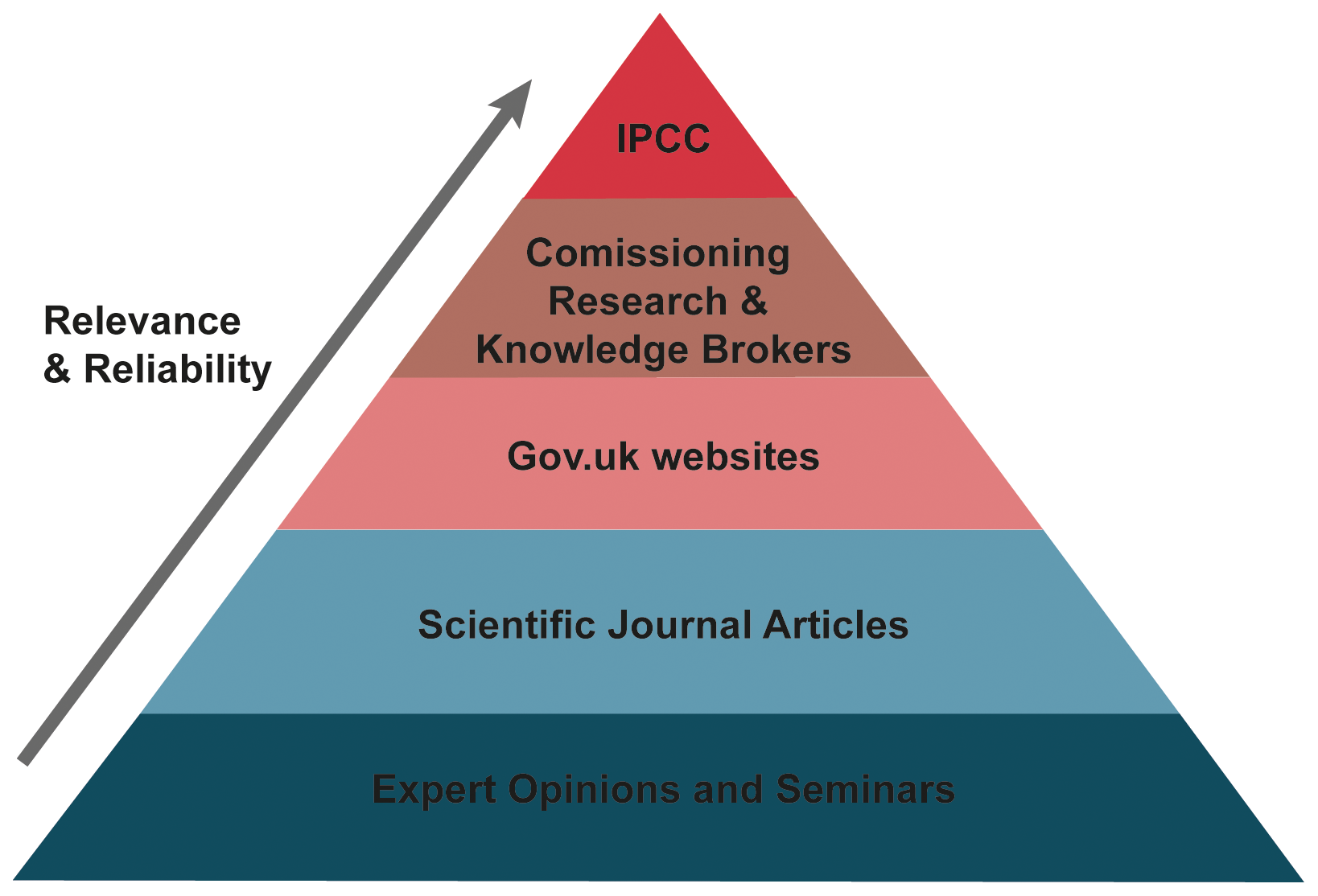
Figure 2Evidence hierarchy identified for this study based on the interviews with decision makers. The base of the pyramid reflecting the lowest priority source of evidence and increasing towards the top of the pyramid.
At the base of the hierarchy for this study is expert advice and seminars (Fig. 2). There was no explicit question in the interview with the decision makers on how they use expert advice in the policy making processes, however some of them raised the subject anyway. They mentioned that whilst they do consider these meetings and seminars directly with scientific researchers useful and effective, they are relatively rare and using other sources is more common. These reflections are different to other studies who tend to place expert advice higher up in evidence hierarchies (Oliver and de Vocht, 2017; Arnautu and Dagenais, 2021). For example, Oliver and de Vocht (2017) conducted a large survey aimed at decision makers to find their preferred evidence sources. Their results showed that expert advice was ranked fourth overall and sitting above journal articles, which was ranked higher than expert advice in our study (Fig. 2). Most of the UK Civil Service departments have scientific advisory boards and are often considered very useful for providing evidence and advice to decision makers, however the results from our study suggest that the usefulness and preference is likely context dependent.
Despite being the most common format of science dissemination, academic peer-reviewed journal articles are found towards the bottom of the evidence hierarchy framework (Fig. 2) (Galvão, 2006). Most of the reasons for this lower ranking are based on the style of evidence communication in most journal articles. Journal articles are typically written for scientists to enable them to build upon the findings of other studies, and ultimately advance scientific knowledge (Suter and Armitage, 2011; von Winterfeldt, 2013; Oliver and de Vocht, 2017). This therefore means that there is often a lot of background information for the broader scientific field, detailed methodological commentary that enables a study to be replicated by others, and an understanding of specialist terms and processes is assumed (von Winterfeldt, 2013; Khomsi et al., 2024). Given that decision makers are often working under tight time constraints, it can be challenging to quickly extract the evidence that has most relevance to their policy need (Oliver and de Vocht, 2017; Scott et al., 2021; Khomsi et al., 2024). Moreover, while reading an individual paper can be informative, its findings usually need to be interpreted alongside a wider body of literature, meaning that single studies are often less directly useful for decision making than syntheses or other types of “grey literature” that collate and weigh multiple studies and often have a broader base of information (MacDonald et al., 2015). And finally, a limitation expressed in the interviews was that many of the scientific articles of interest were often not open access, were behind paywalls, and inaccessible beyond the abstract. Often policy departments do not have the budgetary allowances to overcome these paywalls which ultimately results in them using alternative sources (Cvitanovic et al., 2015). Gov.uk websites also emerged as an important written source of evidence. These pages are often seen as useful because the information has already gone through government review and sign-off processes, which gives it a level of built-in credibility and makes it easy to use in policy settings (Jennings and Hall, 2011). In addition, the source of much of this evidence could be government funded and thus there is an automatic preference for this information, such as information from the Met Office.
The interview responses from this study found a preference in commissioning research and using knowledge brokers, and given that they were both viewed equally, they are placed at the same level of the evidence hierarchy. Commissioning evidence refers to when decision makers actively source new research and evidence from industry and/or academics or third parties with direct relevance to their decision making task (Institute for Government, 2025). Whereas knowledge brokering refers to intermediary organisations whose role it is to analyse, translate, validate scientific debates, and synthesise evidence on a topic relevant to the policy need and in a format that is most useful for decision makers (Gluckman et al., 2021). Both commissioning evidence and knowledge brokering are used frequently in decision making, and often can also be considered as a form of grey literature (Lawrence et al., 2019). Previous investigations into grey literature in decision making support our findings and suggest that these sources of evidence are often guaranteed to align to the policy tasks, and considered a trustworthy source, which are both factors which are rated highly by decision makers (Lawrence et al., 2019; Oliver and de Vocht, 2017; Cvitanovic et al., 2021). It was not clear from the interviews in this study whether palaeoclimate evidence is used by either boundary organisations or knowledge brokers to provide evidence to decision makers and this aspect would be a useful focus for further investigation.
And finally at the top of this hierarchical structure are IPCC reports (Fig. 1). All the decision makers emphasised their preference for the IPCC reports as their main source of climate information, or other similar evidence syntheses. It is not unusual for these types of knowledge syntheses and evidence reports to be placed at the top of these hierarchies as they are a single source of a large amount of up to date, unbiased, and relevant evidence and considered reliable given the extensive peer review process (Suter and Armitage, 2011; MacDonald et al., 2015; Oliver and de Vocht, 2017). Often knowledge syntheses are tailored specifically for decision makers, such as the IPCC summary for policy makers, and thus use the most relevant information and are communicated in a format which is favourable for decision makers (Suter and Armitage, 2011). Within the IPCC, palaeoclimate has been distributed in various formats, originally in standalone chapters, but in the latest AR6 report it has been distributed throughout (IPCC, 2023; Kaufman and Masson-Delmotte, 2024). Palaeoclimate in the IPCC is mostly used to contextualise the current and future trends in climate. This contextual use of palaeoclimate evidence may have advantages for palaeoclimate science because the decision makers and other stakeholders using the IPCC may be integrating palaeoclimate evidence naturally into their policy tasks without having to explicitly search for palaeoclimate evidence or have any background understanding in the discipline.
4.2 Palaeoclimate relevance for decision making
The more certain and relevant a piece of evidence is for decision making, the greater chance it has of being used (Cvitanovic et al., 2015; Lacey et al., 2018; Scott et al., 2021). The interview responses from the decision makers found that it is not always immediately clear how and why palaeoclimate evidence is relevant and how it can fill their knowledge gaps. Decision makers explained that whilst they do believe that palaeoclimate can be useful in certain contexts, it is often not communicated by palaeoclimate scientists how exactly it can be useful in a policy setting.
For example, many of the interview responses raised the topic of uncertainty around the timescale of palaeoclimate and the temporal resolution. Whilst climate change is a priority for governments (Briley et al., 2015; Lacey et al., 2018; Allen et al., 2025), their focus is on the impact of greenhouse gas emissions in the next decades until 2100 and thus it is not immediately clear to decision makers why studying past climates is important when these concentrations of emissions did not exist. This becomes especially challenging when the decision maker has no background in palaeoclimate and therefore may struggle to see the relevance. Differences in temporal resolution of the palaeoclimate evidence provided and the resolution of climate evidence needed for the policy tasks can also cause confusion around the relevance of palaeoclimate. For example, it is very common for the temporal resolution to be of a centennial scale or longer (Kaufman et al., 2020), whereas decision makers are typically working on immediate action (short-term policies) to action over the next few decades (medium term policies) and are therefore seeking climate information that matches these timescales (Caseldine, 2012; Buontempo et al., 2014; Wall et al., 2017; Done et al., 2021). A misalignment of the relevance between science and policy is a very common barrier observed in many other disciplines, making communication of the relevance (and limitations) of the scientific processes and findings particularly important (Lemos et al., 2012; Cvitanovic et al., 2021).
From the interviews it was also evident that the decision makers with a palaeoclimate background could more easily suggest areas where and when palaeoclimate information could be used as a source of evidence for decision making compared to those with no background (DM-1, 5, 6). This highlights that integrating a relatively specialist subject – such as palaeoclimate – often depends on the individuals who already understand both its relevance and its epistemic boundaries and provide effective routes for mainstreaming long-timescale climate knowledge into decision making (Grødem and Hippe, 2019).
The reliance on individuals who understand both the scientific and policy dimensions is reflected throughout the policy process and across its different levels. For example, scientists are often seconded into government departments to provide technical advice, and at the highest level, the Chief Scientific Advisors (CSAs) are themselves scientists who move into policy roles. CSAs can help determine what types of evidence are most useful for certain policies, and what it ultimately communicated to ministers (UK Government, 2025; Cooper, 2016). Although there were no CSAs interviewed in this current study, there have been past CSAs with training in palaeoclimate and Earth-system sciences such as Professor Gideon Henderson, who served as the CSA for Defra between 2019 and 2025. Individuals with such backgrounds may be more likely to recognise the importance and relevance of palaeoclimate information and to identify where it can be useful to inform environmental and climate policy, in comparison to other decision makers who have no previous experience with the subject.
4.3 Improving the uptake of palaeoclimate evidence in decision making
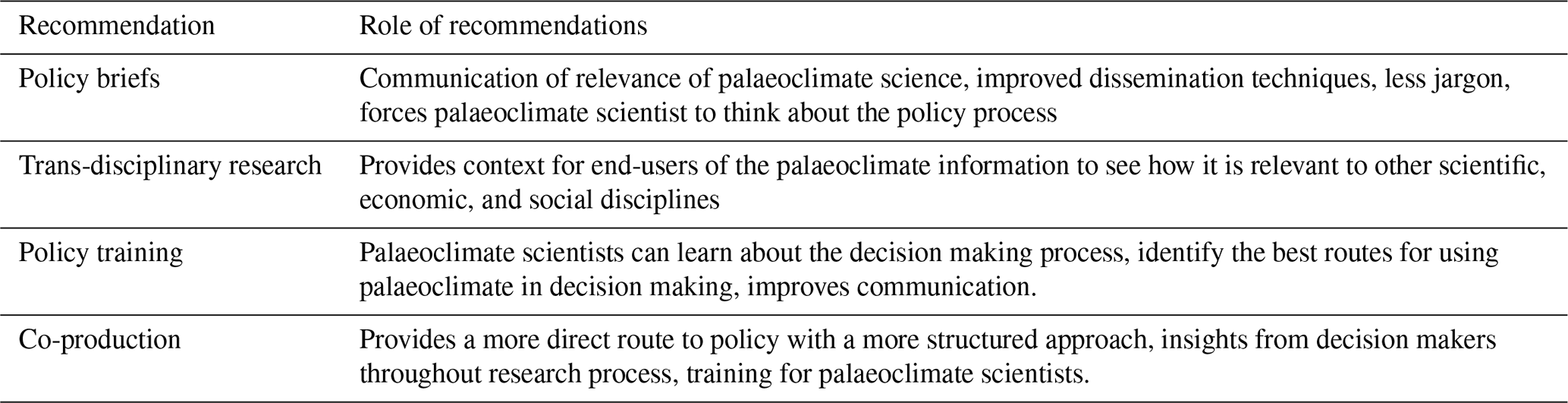
This study has identified the perceptions of the use of palaeoclimate evidence in decision making. The findings suggest that palaeoclimate can be useful in climate policy, particularly for contextualising long-term climate variability, but there are several barriers discussed during this article (such as the typical dissemination formats by academics which are not aligned with decision makers) that limit the effective transfer of knowledge, and there are inherent limits to how far palaeoclimate can inform policy decisions. However, these barriers are not fixed, and small changes can be made by both palaeoclimate scientists and decision makers to help improve the uptake of palaeoclimate evidence in decision making. Here we provide a series of recommendations aimed at palaeoclimate scientists to help maximise the policy impact of their research, summarised in Table 1 and expanded in the following section. These recommendations are grounded by the interview discussions conducted in this study and supported by findings from related research in other disciplines. Although perspectives from both palaeoclimate scientists and decision makers were examined, the recommendations are directed solely at palaeoclimate scientists because the interview data yielded actionable guidance in this direction, with decision makers offering advice to scientists rather than the reverse.
Table 1Table summarising the recommendations identified during this investigation to improve the uptake of palaeoclimate evidence in decision making in a UK science-policy setting.
4.3.1 Policy briefs
All the barriers found in this study had some relation to the communication of the relevance of palaeoclimate for decision making. Researchers from other scientific disciplines have found that producing short-format policy briefs that summarise, in language suitable for a non-expert, the policy-relevant parts of a scientific study and distributed to relevant stakeholders can be an effective strategy (Suter and Armitage, 2011; Choi et al., 2016; Oliver and de Vocht, 2017; Khomsi et al., 2024). For example, in an international investigation looking into bridging the science-policy gap in both Canada and China, Choi et al. (2016) found that almost 47 % of the 207 people surveyed found that policy briefs are one of the most effective dissemination strategies to communicate knowledge across the science-policy interface. Policy briefs tend to be successful amongst decision makers because when they are created effectively, they contain only the policy-relevant parts of a scientific study, absent of jargon, and tailored specifically to knowledge gaps or a policy issue (Oliver and Cairney, 2019; Arnautu and Dagenais, 2021). Therefore, palaeoclimate-focussed scientific articles with associated policy briefs are likely to have a higher chance of being read and considered, especially when they are tailored to a targeted audience to disseminate the findings effectively (Oliver and Cairney, 2019; Arnautu and Dagenais, 2021). One of the decision makers interviewed in this study highlighted the success that they had with creating policy briefs in a response to a government call for evidence, which in turn led them to being invited into government departments as a specialist to further disseminate evidence. Scientific researchers creating policy briefs brings the additional benefit of helping them think more critically about how and where their scientific evidence fits within the decision making process and current policy context and challenges the scientists to be both simple and concise without being too simplistic and careless (Suter and Armitage, 2011).
4.3.2 Trans-disciplinary research
When asked what palaeoclimate scientists could do to improve the relevance of their studies and findings for policy, several decision makers suggested a more collaborative trans-disciplinary approach to research. As discussed by Gandy (2026) and noted in many other studies (e.g. Fazey et al., 2014; Chapman et al., 2016; Oliver and Cairney, 2019; Gluckman et al., 2021) research makes only a small part of actionable policy with lived experience of the decision makers, socioeconomical evidence, politics, and public opinions are also included. Producing palaeoclimate evidence which already incorporates this holistic view of different priority areas for policy can help improve the uptake of it in policy decisions (Chapman et al., 2016).
4.3.3 Policy training
In most instances, palaeoclimate scientists, like many scientists from other fields, have received little (if any) training about the policy or decision making process. For a stronger bridge to be built between palaeoclimate scientists and decision making there is a need for more science-policy training (Oliver and Cairney, 2019; Khomsi et al., 2024; Pearson, 2024). Scott et al. (2021) emphasised the positive role that training has for researchers, specifically when demonstrating how decision makers use and view evidence. This type of training is likely the most effective when learnt in practice, e.g., through secondments or placement schemes in government and policy organisations. An increased awareness developed through secondments and placements can provide deeper insight into the science-policy relationship and provides the most effective ways of working and developing important networks (Scott et al., 2021). Opportunities exist for UK academics to gain experience in working with decision makers through secondments and exchange workshops, the UK Government Office for Science routinely updates the available opportunities on their website: https://www.gov.uk/government/publications/directory-of-academic-and-policy-exchange-schemes/directory-of-exchange-schemes-from-policy-to-academia (last access: 3 March 2026). Science-policy training could also be provided at palaeoclimate-focussed workshops and conferences to highlight the ways of working between research producers and research users and best practice approaches for science-policy activities. Conferences are gradually starting to integrate policy or outreach designated sessions into their agendas (e.g., EGU25 Science for Policy programme, or INQUA 2023 session on the best ways to communicate palaeoscience). These sessions provide the opportunity for those who have experience disseminating their evidence into decision making or to non-specialist audiences to share their experience and pass on advice to other scientists who want to do similar. Greater community focus on building and supporting the consideration of science-policy awareness and skills at all career levels is likely to open more pathways between palaeoclimate and climate policy. In addition, training could be given to palaeoclimate scientists on how to best communicate palaeoclimate research for a policy focus, including what key words to use in titles, what figure presentation is most appropriate for decision makers, or the journals targeted to publish the research. All of these factors were discussed in the interviews from this study, but also highlighted as important in other studies, such as Pearson (2024).
4.3.4 Co-production
Working co-productively is thought to be one of the most effective approaches to increasing the relevance of evidence produced, and the likelihood of evidence being used (Lacey et al., 2018; Khomsi et al., 2024). Co-production involves different stakeholders (e.g., scientists, policy- or practice-focussed decision makers, industries) coming together with a mutual goal of producing policy-relevant scientific knowledge and enables scientists to begin working directly at the science-policy interface (Cvitanovic et al., 2021; Kass et al., 2022). Working alongside the end-users of the evidence ensures that the studies undertaken are aligned with the priorities and needs of the decision makers and other stakeholders. Working co-productively should have benefits for all members involved, with decision makers having access to more knowledge as it is produced, and scientists working at this interface will be given insight into the decision making process (Lemos and Morehouse, 2005; Briley et al., 2015; Wall et al., 2017; Kass et al., 2022).
Based on the barriers and opportunities identified during this study, it is likely that palaeoclimate scientists would benefit from adopting a co-production approach. Such an approach enables a more direct route to policy engagement and provides indirect training about the science-policy interface (Lemos and Morehouse, 2005), while also helping to address several of the barriers identified within this study, including challenges around relevance, communication, and the alignment with policy priorities. It is likely that palaeoclimate scientists would benefit from collaboration and co-production not only directly with decision makers, but also with international and national boundary organisations in the meteorological realm (e.g., the Met Office in the UK) and use these links to influence policy decisions. One of the palaeoclimate scientists, who was also an author for the IPCC, mentioned that palaeoclimate evidence that is connected directly to the present and future is more likely used in the IPCC due to the increased relevance. Therefore, working with organisations at the boundary of the science-policy interface that are trusted by decision makers can help improve the relevance of palaeoclimate by contextualising it with other forms of evidence, such as present and future climate change, which is more familiar to the decision makers and aligned with their policy priorities (see above).
We therefore emphasise a co-production approach as the most important recommendation to follow. This is because each of the recommendations made (creating policy briefs, working trans-disciplinary, and increased training) should naturally become easier and be more effective when working in these co-production environments (Wall et al., 2017; Lacey et al., 2018; Fazey et al., 2014).
4.4 Study reflections
The interviews conducted for this study have provided useful and interesting insights into the nature of palaeoclimate research and its place in a policy-making context. To our knowledge, this is the first study that has taken this interview approach to explore this relationship between decision making and palaeoclimate. As noted in Sect. 2, recruitment for this study was challenging. Low recruitment for social science interviews is a relatively common limitation due to the time constraints, a lack of reward or immediate benefit to the participant and alternative priorities or commitments (Patel et al., 2003; Negrin et al., 2022). A comprehensive critical reflection on qualitative research in social sciences by Negrin et al. (2022) mentioned that in addition to these recruitment barriers outlined above, participants may also feel that they have little to contribute and thus decline interview invitations. This could have played a role in the low recruitment for this study as despite the recruitment emails clearly expressing that there was no requirement to know about policy processes (for palaeoclimate scientists) or have a background in palaeoclimate (for decision makers), several participants when agreeing to the interview felt the need to express that they have limited awareness in either decision making or palaeoclimate science. This may suggest that additional recipients of the interview invitation felt that they could not contribute knowledge and thus declined resulting in a lower recruitment.
This study was based on the UK climate science-policy landscape and therefore reflects the barriers and opportunities specific to that context, which may not be representative of those in other countries. Future research should extend this analysis to other national and supranational policy environments to assess whether similar barriers and opportunities exist. This is particularly important for academics seeking funding from international sources such as European Union programmes, where expectations for the use of palaeoclimate evidence in policy-relevant research may differ.
We recognise that the results reflect a small number of individuals, and it is unlikely that the full range of perceptions and experiences of using palaeoclimate in policy were captured. However, in the analysis, we found that the interview responses were similar within the two groups of participants, suggesting that we were approaching a point where limited additional information would be gained from further interviews (referred to as “saturated”, Guest et al., 2006). An interesting further investigation would be to conduct a similar study across all stakeholder groups connected with climate policy, and not just government departments. This future work could include boundary organisations, climate services, government policy, practice organisations, and in doing so could identify patterns in perspectives and experiences with palaeoclimate, and how this might change through time.
Studying past climates before the instrumental period began has long been recognised as an important approach to learn about the climate system. However, whilst palaeoclimate evidence many be useful for decision makers, its application in a policy context is limited. In this study we explored the role that palaeoclimate has in decision making and identified barriers and potential facilitators for its use by decision makers. Overall, palaeoclimate was considered useful in certain contexts, especially when discussing how much climates have changed as a result of human activity, and the use of palaeoclimate in the IPCC was considered a facilitator given the preference of these types of reports for decision making. However, a key barrier was the communication of the relevance of palaeoclimate for policy and how palaeoclimate evidence can align with decision makers needs and priorities. Identifying these barriers has enabled us to suggest a series of actionable recommendations for palaeoclimate scientists so that they can improve the potential of their research being used in decision making for UK climate policy. These recommendations include creating policy briefs to disseminate the palaeoclimate evidence in a more appropriate format, collaborating with researchers from other fields to show the wider relevance of palaeoclimate, undertaking science-policy training, and working co-productively throughout a research project with decision makers and climate services. Our hope is that if palaeoclimate scientists start adopting these recommendations, palaeoclimate scientists and the palaeoclimate community are likely to achieve more policy impact and increase the uptake of palaeoclimate evidence in decision making.
No additional data apart from the interview transcripts were collected for this study. Due to the nature of the interviews and the involvement of identifiable professional roles within the UK Government and academia, the full transcripts will not be published alongside this manuscript. However, upon reasonable request we can share anonymised versions of the transcripts ensuring that it aligns with the guidance of Royal Holloway Ethics Committee.
The supplement related to this article is available online at https://doi.org/10.5194/gc-9-275-2026-supplement.
LB co-conceptualised the study, conducted the research, analysed the results, and wrote the original manuscript. AM and CMP also co-conceptualised the study, assisted with data analysis and supervision and all authors were involved in discussions of the data and reviewing the manuscript.
The contact author has declared that none of the authors has any competing interests.
This research was granted ethical approval from the Royal Holloway Ethics Committee (Approval ID: 4195).
Publisher's note: Copernicus Publications remains neutral with regard to jurisdictional claims made in the text, published maps, institutional affiliations, or any other geographical representation in this paper. The authors bear the ultimate responsibility for providing appropriate place names. Views expressed in the text are those of the authors and do not necessarily reflect the views of the publisher.
The authors would like to thank Rachael Squire for advice on the interview questions, and all participants who generously gave their time to be interviewed. We thank all three reviewers for taking time to read our manuscript and make positive and constructive suggestions to improve our final article.
This research was carried out as part of the DECADAL: Rethinking Palaeoclimatology for Society project funded by a UKRI Medical Research Council through a Future Leaders Fellowship held by CMP (MR/W009641/1). Laura Boyall was funded by a Department of Geography Doctoral Fellowship.
This paper was edited by Caitlyn Hall and reviewed by Leila Gonzales and one anonymous referee.
Abu-Odah, H., Said, N. B., Nair, S. C., Allsop, M. J., Currow, D. C., Salah, M. S., Hamad, B. A., Elessi, K., Alkhatib, A., El Mokhallalati, Y., Bayuo, J., and Alkhadi, M.: Identifying barriers and facilitators of translating research evidence into clinical practice: A systematic review of reviews, Health and Social Care in the Community, 30, e3265–e3276, https://doi.org/10.1111/hsc.13898, 2022.
Allen, K. J., Gouramanis, C., and Sauchyn, D.: Paleo-data is policy relevant: How do we better incorporate it in policy and decision making?, Global Planet. Change, 246, 104707, https://doi.org/10.1016/j.gloplacha.2025.104707, 2025.
Allen, M. R., Dube, O. P., Solecki, W., Aragón-Durand, F., Cramer, W., Humphreys, S., Kainuma, M., Kala, J., Mahowald, N., Mulugetta, Y., Perez, R., Wairiu, M., and Zickfeld, K.: Framing and Context, in: Global Warming of 1.5 °C. An IPCC Special Report on the impacts of global warming of 1.5 °C above pre-industrial levels and related global greenhouse gas emission pathways, in the context of strengthening the global response to the threat of climate change, sustainable development, and efforts to eradicate poverty, edited by: Masson-Delmotte, V., Zhai, P., Pörtner, H.-O., Roberts, D., Skea, J., Shukla, P. R., Pirani, A., Moufouma-Okia, W., Péan, C., Pidcock, R., Connors, S., Matthews, J. B. R., Chen, Y., Zhou, X., Gomis, M. I., Lonnoy, E., Maycock, T., Tignor, M., and Waterfield, T., Cambridge University Press, Cambridge, UK and New York, NY, USA, 49–92, 2018.
Arnautu, D. and Dagenais, C.: Use and effectiveness of policy briefs as a knowledge transfer tool: a scoping review, Humanities and Social Sciences Communications, 8, https://doi.org/10.1057/s41599-021-00885-9, 2021.
Barreto, J. O. M., Crevelário de Melo, R., Bezerra da Silva, L. A., de Araúo, B. C., de Freitas Oliviera, C., Toma, T. S., Carla de Bortoli, M., Demaio, P. N., and Kuchenmüller, T.: Research evidence communication for policy-makers: a rapid scoping review on frameworks, guidance and tools, and barriers and facilitators, Health Res. Policy Sy., 22, https://doi.org/10.1186/s12961-024-01169-9, 2024.
Belotto, M.: Data analysis methods for qualitative research: managing the challenges of coding, interrater reliability, and thematic analysis, Qualitative Report, 23, 11, https://doi.org/10.46743/2160-3715/2018.3492, 2018.
Bourke, B.: Positionality: Reflecting on the research process, Qualitative Report, 19, 1–9, https://doi.org/10.1016/j.crm.2016.09.004, 2014.
Bradshaw, G. A. and Borchers, J. G.: Uncertainty as information: narrowing the science-policy gap, Conserv. Ecol., 4, 7, http://www.consecol.org/vol4/iss1/art7/ (last access: 22 June 2026), 2000.
Braun, V. and Clarke, V.: Using thematic analysis in psychology, Qual. Res. Psychol., 3, 77–101, https://doi.org/10.1191/1478088706qp063oa, 2008.
Briley, L., Brown, D., and Kalafatis, S. E.: Overcoming barriers during the co-production of climate information for decision-making, Climate Risk Management, 9, 41–49, https://doi.org/10.1016/j.crm.2015.04.004, 2015.
Bruno Soares, M., Alexander, M., and Dessai, S.: Sectoral use of climate information in Europe: A synoptic overview, Climate Services, 9, 5–20, https://doi.org/10.1016/j.cliser.2017.06.001, 2018.
Buontempo, C., Hewitt, C. D., Doblas-Reyes, F. J., and Dessai, S.: Climate service development, delivery and use in Europe at monthly to inter-annual timescales, Climate Risk Management, 6, 1–5, https://doi.org/10.1016/j.crm.2014.10.002, 2014.
Cahill, N., Croke, J., Campbell, M., Hughes, K., Vitkovsky, J., Kilgallen, J. E., and Parnell, A.: A Bayesian time series model for reconstructing hydroclimate from multiple proxies, Environmetrics, 34, E2786, https://doi.org/10.1002/env.2786, 2023.
Caseldine, C.: Conceptions of time in (paleo)climate science and some implications, WIREs Clim. Change, 3, 329–338, https://doi.org/10.1002/wcc.178, 2012.
Chapman, A., McLellan, B., and Tezuka, T.: Strengthening the Energy Policy Making Process and Sustainability Outcomes in the OECD through Policy Design, Administrative Sciences, 6, 9, https://doi.org/10.3390/admsci6030009, 2016.
Choi, B. C., Li, L., Lu, Y., Zhang, L. R., Zhu, Y., Pak, A. W., Chen, Y., and Little, J.: Bridging the gap between science and policy: an international survey of scientists and policy makers in China and Canada, Implement. Sci., 11, https://doi.org/10.1186/s13012-016-0377-7, 2016.
Cooper, A. C. G.: Exploring the scope of science advice: social sciences in the UK government, Humanities and Social Sciences Communications, 2, 16044, https://doi.org/10.1057/palcomms.2016.44, 2016.
Copernicus Climate Change Service: Copernicus: 2024 is the first year to exceed 1.5 °C above pre-industrial level, Copernicus Climate Change Service, https://climate.copernicus.eu/copernicus-2024-first-year-exceed-15degc-above-pre-industrial-level (last access: 22 June 2026), 2025.
Cvitanovic, C., Hobday, A. J., van Kerkhoff, L., Wilson, S. K., Dobbs, K., and Marshall, N. A.: Improving knowledge exchange among scientists and decision-makers to facilitate the adaptive governance of marine resources: A review of knowledge and research needs, Ocean and Coastal Management, 112, 25–35, https://doi.org/10.1016/j.ocecoaman.2015.05.002, 2015.
Cvitanovic, C., Shellock, R. J., Mackay, M., van Putten, E. I., Karcher, D. B., Dickey-Callas, M., and Ballesteros, M.: Strategies for building and managing “trust” to enable knowledge exchange at the interface of environmental science and policy, Environmental Science and Policy, 123, 179–189, https://doi.org/10.1016/j.envsci.2021.05.020, 2021.
Done, J. M., Morss, R. E., Lazrus, H., Towler, E., Tye, M. R., Ge, M., Das, T. Munévar, Hewitt, J., and Hoeting, J. A.: Toward usable predictive climate information at decadal timescales, One Earth, 4, 1297–1309, https://doi.org/10.1016/j.oneear.2021.08.013, 2021.
Fazey, I., Bunse, L., Msika, J., Pinke, M., Preedy, K., Everly, A. C., Lambert, E., Hastings, E., Morris, S., and Reed, M. S.: Evaluating knowledge exchange in interdisciplinary and multi-stakeholder research, Global Environ. Chang., 25, 204–220, https://doi.org/10.1016/j.gloenvcha.2013.12.012, 2014.
Galvão, C. M.: EDITORIAL – Evidence Hierarchies, Scielo, https://www.scielo.br/j/ape/a/JXrfXqCfD4vPztQFQBrkB7g/?format=pdf&lang=en (last access: 22 June 2026), 2006.
Gandy, K.: How can researchers have greater policy impact?, Political Studies Journal, e70120, https://doi.org/10.1111/psj.70120, 2026.
Gluckman, P. D., Bardsley, A., and Kaiser, M.: Brokerage at the science-policy interface: from conceptual framework to practical guidance, Humanities and Social Sciences Communications, 8, https://doi.org/10.1057/s41599-021-00756-3, 2021.
Grødem, A. S. and Hippe, J. M.: The expertise of politicians and their role in epistemic communities, Policy Polit., 47, 561–577, https://doi.org/10.1332/030557319X15662966019989, 2019.
Gudmundsson, L. and Seneviratne, S. I.: Anthropogenic climate change affects meteorological drought risk in Europe, Environ. Res. Lett., 11, 044005, https://doi.org/10.1088/1748-9326/11/4/044005, 2016.
Guest, G., Bunce, A., and Johnson, L.: How many interviews are enough?: An experiment with data saturation and variability, Field Method., 18, https://doi.org/10.1177/1525822X05279903, 2006.
Gurr, H., Oliver, L., Harvey, P., Subedi, M., and van Teijlingen, E.: The importance of Positionality for Qualitative Researchers, Dhaulagiri Journal of Sociology and Anthropology, 18, 48–54, https://doi.org/10.3126/dsaj.v18i01.67553, 2024.
Horton, P. and Brown, G. W.: Integrating evidence, politics and society: a methodology for the science–policy interface, Palgrave Communications, 4, https://doi.org/10.1057/s41599-018-0099-3, 2018.
Huckel Schneider, C., Milat, A. J., and Moore, G.: Barriers and facilitators of health policies and programs: Policymaker and researcher perspectives, Eval. Program Plann., 58, 208–215, https://doi.org/10.1016/j.evalprogplan.2016.06.011, 2016.
Institute for Government: Using and commissioning research in government, https://www.instituteforgovernment.org.uk/publication/using-and-commissioning-research-government, last access: 13 November 2025.
IPCC: Climate Change 2022: Impacts, Adaptation, and Vulnerability. Contribution of Working Group II to the Sixth Assessment Report of the Intergovernmental Panel on Climate Change, edited by: Pörtner, H.-O., Roberts, D. C., Tignor, M., Poloczanska, E. S., Mintenbeck, K., Alegría, A., Craig, M., Langsdorf, S., Löschke, S., Möller, V., Okem, A., and Rama, B., Cambridge University Press, Cambridge University Press, Cambridge, UK and New York, NY, USA, 3056, https://doi.org/10.1017/9781009325844, 2022.
IPCC: Climate Change 2023: Synthesis Report. Contribution of Working Groups I, II and III to the Sixth Assessment Report of the Intergovernmental Panel on Climate Change, edited by: Core Writing Team, Lee, H., and Romero, J., IPCC, Geneva, Switzerland, 35–115, https://doi.org/10.59327/IPCC/AR6-9789291691647.001, 2023.
Jensen, E. A., Wong, P., and Reed, M. S.: How research data deliver non-academic impacts: A secondary analysis of UK Research Excellence Framework impact case studies, PLoS ONE, 17, e0264914, https://doi.org/10.1371/journal.pone.0264914, 2022.
Jennings, E. T. and Hall, J. L.: Evidence-based practice and the use of information in state-agency decision making, J. Publ. Adm. Res. Theor., 22, 245–266, https://doi.org/10.1093/jopart/mur040, 2011.
Kass, G., Milner, A. M., and Dodds, K.: The “borderlands” of the science-policy interface, Geogr. J., 188, 591–599, https://doi.org/10.1111/geoj.12469, 2022.
Kaufman, D. and Masson-Delmotte, V.: Opinion: Distribute paleoscience information across the next Intergovernmental Panel on Climate Change reports, Clim. Past, 20, 2587–2594, https://doi.org/10.5194/cp-20-2587-2024, 2024.
Kaufman, D. S. and McKay, N. P.: Technical Note: Past and future warming – direct comparison on multi-century timescales, Clim. Past, 18, 911–917, https://doi.org/10.5194/cp-18-911-2022, 2022.
Kaufman, D. S., McKay, N., Rouston, C., Erb, M., Dätwyler, C., Sommer, P. S., Heiri, O., and Davis, B.: Holocene global mean surface temperature, a multi-method reconstruction approach, Sci. Data, 7, https://doi.org/10.1038/s41597-020-0530-7, 2020.
Keleman, E., Pataki, G., Konstantinou, Z., Varumo, L., Paloniemi, R., Pereira, T. R., Sousa-Pinto, I., Vandewalle, M., and Young, J.: Networks at the science-policy interface: Challenges, opportunities and the viability of the “networks-of-networks” approach, Environ. Sci. Policy, 123, 91–98, https://doi.org/10.1016/j.envsci.2021.05.008, 2021.
Khomsi, K., Bouzghiba, H., Mendyl, A., Al-Delaimy, A. K., Dahri, A., Saad-Hussein, A., Balaw, G., El Marouani, I., Sekmoudi, I., Adarbaz, M., Khanjani, N., and Abbas, N.: Bridging research-policy gaps: An integrated Approach, Environmental Epidemiology, 17, E281, https://doi.org/10.1097/EE9.0000000000000281, 2024.
Kiessling, W., Smith, J. A., and Raja, N. B.: Improving the relevance of paleontology to climate change policy, Perspective, 120, e2201926119, https://doi.org/10.1073/pnas.2201926119, 2023.
Kirchoff, C. J., Lemos, M. C., and Kalafatis, S.: Narrowing the gap between climate science and adaptation action: The role of boundary chains, Clim. Risk Manage., 9, 1–5, https://doi.org/10.1016/j.crm.2015.06.002, 2015.
Knott, E., Rao, A. H., Summers, K., and Teeger, C.: Interviews in the social sciences, Nature Reviews Methods Primers, 2, https://doi.org/10.1038/s43586-022-00150-6, 2022.
Lacey, J., Howden, M., Cvianovic, C., and Colvin, R. M.: Understanding and managing trust at the climate science – policy interface, Nat. Clim. Change, 8, 22–28, https://doi.org/10.1038/s41558-017-0010-z,2018.
Larcom, S., She, P.-W., and van Gevelt, T.: The UK summer heatwave of 2018 and public concern over energy security, Nat. Clim. Change, 3, 370–373, https://doi.org/10.1038/s41558-019-0460-6, 2019.
Lawrence, L. M., Bishop, A., and Curran, J.: Integrated knowledge translation with public health policy makers: A scoping review, Healthc Policy, 14, 55–77, https://doi.org/10.12927/hcpol.2019.25792, 2019.
Lear, C. H., Anand, P., Blenkinsop, T., Foster, G. L., Gagen, M., Hoogakker, B., Larter, R. D., Lunt, D. J., McCave, N. I., McClymont, E., Pandcost, R. D., Rickaby, R. E. M., Shultz, D. M., Summerhayes, C., Williams, C. J. R., and Zalasiewicz, J.: Geological Society of London Scientific Statement: what the geological record tells us about our present and future climate, J. Geol. Soc., 178, https://doi.org/10.1144/jgs2020-239, 2021.
Lemos, M. C. and Morehouse, C. J.: The co-production of science and policy in integrated climate assessments, Global Environ. Change, 15, 57–68, https://doi.org/10.1016/j.gloenvcha.2004.09.004, 2005.
Lemos, M. C., Kirchhoff, C. J., and Ramprasad, V.: Narrowing the climate information usability gap, Nat. Clim. Change, 2, 789–794, https://doi.org/10.1038/nclimate1614, 2012.
Lemos, M. C., Arnott, J. C., Ardoin, N. M., et al.: To co-produce or not to co-produce, Nature Sustain., 1, 722–724, https://doi.org/10.1038/s41893-018-0191-0, 2018.
Lhotka, O. and Kysleý, J.: The 2021 European heat wave in the context of past major heat waves, Earth Space Sci., 9, e2022EA002567, https://doi.org/10.1029/2022EA002567, 2022.
MacDonald, B. H., Ross, J. D., Soomai, S. S., and Wells, P. G.: How information in grey literature informs policy and decision making: A perspective on the need to understand the process, Grey Journal, 11, https://doi.org/10.26069/greynet-2025-000.542-tgj, 2015.
Negrin, K. A., Slaughter, S. E., Dahlke, S., and Olson, J.: Successful recruitment to qualitative research: A critical reflection, Int. J. Qual. Meth., 21, https://doi.org/10.1177/16094069221119576, 2022.
Noy, C.: Sampling knowledge: The hermeneutics of snowball sampling in qualitative research, Int. J. Soc. Res. Method., 327–344, https://doi.org/10.1080/13645570701401305, 2008.
Oliver, K. E. and Cairney, P.: The dos and don'ts of influencing policy: a systematic review of advice to academics, Palgrave Communications, 5, https://doi.org/10.1057/s41599-019-0232-y, 2019.
Oliver, K. E. and de Vocht, F.: Defining “evidence” in public health: a survey of policymakers' uses and preferences, Eur. J. Public Health, 27, 112–117, https://doi.org/10.1093/eurpub/ckv082, 2017.
Oliver, K., Lorenc, T., and Innvaer, S.: New directions in evidence-based policy research: a critical analysis of the literature, Health and Policy Systems, 12, 34, https://doi.org/10.1186/1478-4505-12-34, 2014.
Osman, M. B., Tierney, J. E., Zhu, J., Tardif, R., Hakim, G. J., King, J., and Poulsen, C. J.: Globally resolved surface temperatures since the Last Glacial Maximum, Nature, 599, 239–244, https://doi.org/10.1038/s41586-021-03984-4, 2021.
Palinkas, L. A., Horwitz, S. M., Green, C. A., Wisdom, J. P., Duan, N., and Hoagwood, K.: Purposeful Sampling for Qualitative Data Collection and Analysis in Mixed Method Implementation Research, Policy Mental Health, 42, 533–544, https://doi.org/10.1007/s10488-013-0528-y, 2015.
Patel, M. X., Doku, V., and Tennakoon, L.: Challenges in recruitment of research participants, Advances in Psychiatric Treatment, 9, 229–238, https://doi.org/10.1192/apt.9.3.229, 2003.
Pearson, H.: Science could solve some of the wold's biggest problems. Why aren't governments using it?, Nature, 26–30, https://doi.org/10.1038/d41586-024-03906-0, 2024.
Porter, J. J. and Dessai, S.: Mini-me: Why do climate scientists' misunderstand users and their needs?, Environ. Sci. Policy, 77, 9–14, https://doi.org/10.1016/j.envsci.2017.07.004, 2017.
Scott, J. T., Larson, J., Buckingham, S. L., Maton, K. I., and Crowley, M.: Bridging the Research-Policy Divide: Pathways to Engagement and Skill Development, Am. J. Orthopsychiat., 84, 434–441, https://doi.org/10.1037/ort0000389, 2021.
Seth, A., Giannini, A., Rojas, M., Rauscher, S. A., Bordoni, S., Singh, D., and Camargo, S.: Monsoon responses to climate change – Connecting past, present and future, Current Climate Change Reports, 5, 63–79, https://doi.org/10.1007/s40641-019-00125-y, 2019.
Siggery, B., Bennion, H., Morse, S., Murphy, R., and Waite, M.: Practitioner perspectives on the application of palaeoecology in nature conservations, Frontiers Ecology and Evolution, 11, https://doi.org/10.3389/fevo.2023.1304510, 2023.
Snyder, C. W.: The value of paleoclimate research in our changing climate, Climate Change, 100, 407–418, https://doi.org/10.1007/s10584-010-9842-5, 2010.
Stocklmeyer, S.: Engagement with science: Models of science communication, in: Communication and engagement with science and technology, Routledge, Taylor and Francis, 19–38, ISBN 9780203807521, 2012.
Suter, E. and Armitage, G. D.: Use of a knowledge synthesis by decision makers and planners to facilitate system level integration in a large Canadian provincial health authority, Int. J. Integr. Care, 11, E011, https://doi.org/10.5334/ijic.576, 2011.
Sutton, E.: The increasing significance of impact within the Research Excellence Framework (REF), Radiography, 26, 17–19, https://doi.org/10.1016/j.radi.2020.02.004, 2020.
Tardif, R., Hakim, G. J., Perkins, W. A., Horlick, K. A., Erb, M. P., Emile-Geay, J., Anderson, D. M., Steig, E. J., and Noone, D.: Last Millennium Reanalysis with an expanded proxy database and seasonal proxy modeling, Clim. Past, 15, 1251–1273, https://doi.org/10.5194/cp-15-1251-2019, 2019.
Tierney, J. E., Poulsen, C. J., Montañez, I. P., Bhattacharya, T., Feng, R., Ford, H. L., Hönisch, B., Inglis, G. N., Petersen, S. V., Sagoo, N., Tabor, C. R., Thirumalai, K., Zhu, J., Burls, N. J., Foster, G. L., Goddéris, Y., Huber, B. T., Ivany, L. C., Turner, K. S., Lunt, D. J., McElwain, J. C., Mills, B. J. W., Otto-Bliesner, B. L., Ridgewell, A., and Zhang, Y. G.: Past climates inform our future, Science, 370, Eaay3701, https://doi.org/10.1126/science.aay3701, 2020.
UK Government: Chief Scientific Advisers, https://www.gov.uk/government/groups/chief-scientific-advisers, last access: 13 November 2025.
van der Arend, J.: Bridging the research/policy gap: policy officials' perspectives on the barriers and facilitators to effective links between academic and policy worlds, Policy Stud., 35, 611–630, https://doi.org/10.1080/01442872.2014.971731, 2014.
von Winterfeldt, D.: Bridging the gap between science and decision making, P. Natl. Acad. Sci., 12, 14055–14061, https://doi.org/10.1073/pnas.1213532110, 2013.
Wall, T. U., Meadow, A. M., and Horganic, A.: Developing evaluation indicators to improve the process of coproducing usable climate science, Weather, Clim. Soc., 9, 95–107, https://doi.org/10.1175/WCAS-D-16-0008.1, 2017.
Yule, E. L., Hegerl, G., Schurer, A., and Hawkins, E.: Using early extremes to place the 2022 UK heat waves into historical context, Atmos. Sci. Lett., 24, E1159, https://doi.org/10.1002/asl.1159, 2023.