
Articles | Volume 9, issue 2
https://doi.org/10.5194/gc-9-275-2026
© Author(s) 2026. This work is distributed under
the Creative Commons Attribution 4.0 License.
the Creative Commons Attribution 4.0 License.
https://doi.org/10.5194/gc-9-275-2026
© Author(s) 2026. This work is distributed under
the Creative Commons Attribution 4.0 License.
the Creative Commons Attribution 4.0 License.
Research article
| 
30 Jun 2026
Research article |
| 30 Jun 2026
| 30 Jun 2026
Barriers and facilitators for using palaeoclimate evidence in UK climate decision making

Department of Geography, Royal Holloway University of London, London, TW20 0EW, UK
School of Ocean Science, Bangor University, Menai Bridge, LL59 5AB, UK
Alice Mary Milner
Department of Geography, Royal Holloway University of London, London, TW20 0EW, UK
Klaus Dodds
Middlesex University, The Burroughs, Hendon, London, NW4 4BT, UK
Celia Martin-Puertas
Department of Geography, Royal Holloway University of London, London, TW20 0EW, UK
Related authors
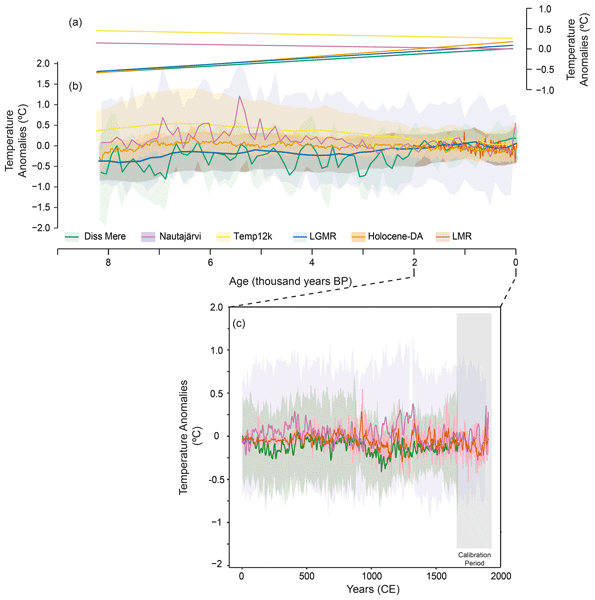
Laura Boyall, Andrew C. Parnell, Paul Lincoln, Antti Ojala, Armand Hernández, and Celia Martin-Puertas
Clim. Past, 21, 1465–1480, https://doi.org/10.5194/cp-21-1465-2025, https://doi.org/10.5194/cp-21-1465-2025, 2025
Short summary
Short summary
We present a new approach to reconstructing annual mean temperature using geochemical data from lake sediments. This paper uses Bayesian inference, a type of statistical approach, and creates a model called Simulating Climate Using Bayesian Inference with proxy Data Observations (SCUBIDO), which takes the high-resolution geochemical data and transforms them into quantitative climate information at an annual resolution. We show the results from two lakes in England and Finland to produce temperature reconstructions for the past 8000 years with data every year.
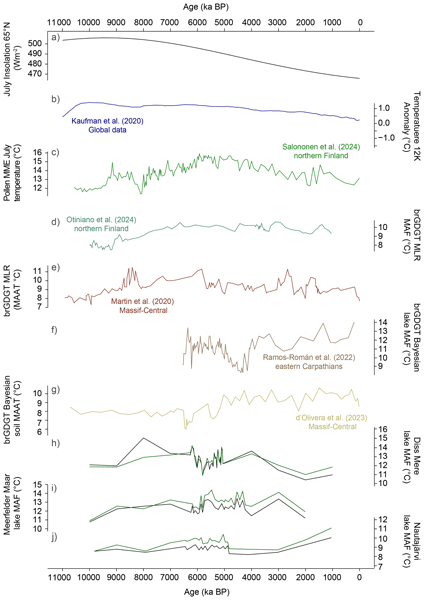
Ashley M. Abrook, Gordon N. Inglis, Peter G. Langdon, McKenzie R. Bentley, Achim Brauer, Ian Bull, Daisy Fallows, Paul Lincoln, Antti E. K. Ojala, Helen L. Whelton, and Celia Martin-Puertas
Biogeosciences, 23, 1809–1832, https://doi.org/10.5194/bg-23-1809-2026, https://doi.org/10.5194/bg-23-1809-2026, 2026
Short summary
Short summary
We present lipid-based environmental and temperature reconstructions spanning the Holocene from three European varved lakes. At each site archaea are impacted by methane which influence lake water temperature reconstructions, and bacteria appear to respond to oxygen conditions and specific lake and environmental processes. Nonetheless, bacterial temperature reconstructions are comparable to regional climate data, showing the potential of varve archives for high resolution reconstructions.
Laura Boyall, Andrew C. Parnell, Paul Lincoln, Antti Ojala, Armand Hernández, and Celia Martin-Puertas
Clim. Past, 21, 1465–1480, https://doi.org/10.5194/cp-21-1465-2025, https://doi.org/10.5194/cp-21-1465-2025, 2025
Short summary
Short summary
We present a new approach to reconstructing annual mean temperature using geochemical data from lake sediments. This paper uses Bayesian inference, a type of statistical approach, and creates a model called Simulating Climate Using Bayesian Inference with proxy Data Observations (SCUBIDO), which takes the high-resolution geochemical data and transforms them into quantitative climate information at an annual resolution. We show the results from two lakes in England and Finland to produce temperature reconstructions for the past 8000 years with data every year.
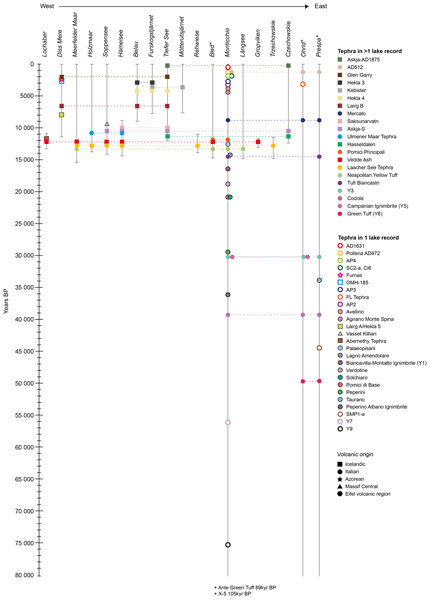
Anna Beckett, Cecile Blanchet, Alexander Brauser, Rebecca Kearney, Celia Martin-Puertas, Ian Matthews, Konstantin Mittelbach, Adrian Palmer, Arne Ramisch, and Achim Brauer
Earth Syst. Sci. Data, 16, 595–604, https://doi.org/10.5194/essd-16-595-2024, https://doi.org/10.5194/essd-16-595-2024, 2024
Short summary
Short summary
This paper focuses on volcanic ash (tephra) in European annually laminated (varve) lake records from the period 25 to 8 ka. Tephra enables the synchronisation of these lake records and their proxy reconstructions to absolute timescales. The data incorporate geochemical data from tephra layers across 19 varve lake records. We highlight the potential for synchronising multiple records using tephra layers across continental scales whilst supporting reproducibility through accessible data.
Cited articles
Abu-Odah, H., Said, N. B., Nair, S. C., Allsop, M. J., Currow, D. C., Salah, M. S., Hamad, B. A., Elessi, K., Alkhatib, A., El Mokhallalati, Y., Bayuo, J., and Alkhadi, M.: Identifying barriers and facilitators of translating research evidence into clinical practice: A systematic review of reviews, Health and Social Care in the Community, 30, e3265–e3276, https://doi.org/10.1111/hsc.13898, 2022.
Allen, K. J., Gouramanis, C., and Sauchyn, D.: Paleo-data is policy relevant: How do we better incorporate it in policy and decision making?, Global Planet. Change, 246, 104707, https://doi.org/10.1016/j.gloplacha.2025.104707, 2025.
Allen, M. R., Dube, O. P., Solecki, W., Aragón-Durand, F., Cramer, W., Humphreys, S., Kainuma, M., Kala, J., Mahowald, N., Mulugetta, Y., Perez, R., Wairiu, M., and Zickfeld, K.: Framing and Context, in: Global Warming of 1.5 °C. An IPCC Special Report on the impacts of global warming of 1.5 °C above pre-industrial levels and related global greenhouse gas emission pathways, in the context of strengthening the global response to the threat of climate change, sustainable development, and efforts to eradicate poverty, edited by: Masson-Delmotte, V., Zhai, P., Pörtner, H.-O., Roberts, D., Skea, J., Shukla, P. R., Pirani, A., Moufouma-Okia, W., Péan, C., Pidcock, R., Connors, S., Matthews, J. B. R., Chen, Y., Zhou, X., Gomis, M. I., Lonnoy, E., Maycock, T., Tignor, M., and Waterfield, T., Cambridge University Press, Cambridge, UK and New York, NY, USA, 49–92, 2018.
Arnautu, D. and Dagenais, C.: Use and effectiveness of policy briefs as a knowledge transfer tool: a scoping review, Humanities and Social Sciences Communications, 8, https://doi.org/10.1057/s41599-021-00885-9, 2021.
Barreto, J. O. M., Crevelário de Melo, R., Bezerra da Silva, L. A., de Araúo, B. C., de Freitas Oliviera, C., Toma, T. S., Carla de Bortoli, M., Demaio, P. N., and Kuchenmüller, T.: Research evidence communication for policy-makers: a rapid scoping review on frameworks, guidance and tools, and barriers and facilitators, Health Res. Policy Sy., 22, https://doi.org/10.1186/s12961-024-01169-9, 2024.
Belotto, M.: Data analysis methods for qualitative research: managing the challenges of coding, interrater reliability, and thematic analysis, Qualitative Report, 23, 11, https://doi.org/10.46743/2160-3715/2018.3492, 2018.
Bourke, B.: Positionality: Reflecting on the research process, Qualitative Report, 19, 1–9, https://doi.org/10.1016/j.crm.2016.09.004, 2014.
Bradshaw, G. A. and Borchers, J. G.: Uncertainty as information: narrowing the science-policy gap, Conserv. Ecol., 4, 7, http://www.consecol.org/vol4/iss1/art7/ (last access: 22 June 2026), 2000.
Braun, V. and Clarke, V.: Using thematic analysis in psychology, Qual. Res. Psychol., 3, 77–101, https://doi.org/10.1191/1478088706qp063oa, 2008.
Briley, L., Brown, D., and Kalafatis, S. E.: Overcoming barriers during the co-production of climate information for decision-making, Climate Risk Management, 9, 41–49, https://doi.org/10.1016/j.crm.2015.04.004, 2015.
Bruno Soares, M., Alexander, M., and Dessai, S.: Sectoral use of climate information in Europe: A synoptic overview, Climate Services, 9, 5–20, https://doi.org/10.1016/j.cliser.2017.06.001, 2018.
Buontempo, C., Hewitt, C. D., Doblas-Reyes, F. J., and Dessai, S.: Climate service development, delivery and use in Europe at monthly to inter-annual timescales, Climate Risk Management, 6, 1–5, https://doi.org/10.1016/j.crm.2014.10.002, 2014.
Cahill, N., Croke, J., Campbell, M., Hughes, K., Vitkovsky, J., Kilgallen, J. E., and Parnell, A.: A Bayesian time series model for reconstructing hydroclimate from multiple proxies, Environmetrics, 34, E2786, https://doi.org/10.1002/env.2786, 2023.
Caseldine, C.: Conceptions of time in (paleo)climate science and some implications, WIREs Clim. Change, 3, 329–338, https://doi.org/10.1002/wcc.178, 2012.
Chapman, A., McLellan, B., and Tezuka, T.: Strengthening the Energy Policy Making Process and Sustainability Outcomes in the OECD through Policy Design, Administrative Sciences, 6, 9, https://doi.org/10.3390/admsci6030009, 2016.
Choi, B. C., Li, L., Lu, Y., Zhang, L. R., Zhu, Y., Pak, A. W., Chen, Y., and Little, J.: Bridging the gap between science and policy: an international survey of scientists and policy makers in China and Canada, Implement. Sci., 11, https://doi.org/10.1186/s13012-016-0377-7, 2016.
Cooper, A. C. G.: Exploring the scope of science advice: social sciences in the UK government, Humanities and Social Sciences Communications, 2, 16044, https://doi.org/10.1057/palcomms.2016.44, 2016.
Copernicus Climate Change Service: Copernicus: 2024 is the first year to exceed 1.5 °C above pre-industrial level, Copernicus Climate Change Service, https://climate.copernicus.eu/copernicus-2024-first-year-exceed-15degc-above-pre-industrial-level (last access: 22 June 2026), 2025.
Cvitanovic, C., Hobday, A. J., van Kerkhoff, L., Wilson, S. K., Dobbs, K., and Marshall, N. A.: Improving knowledge exchange among scientists and decision-makers to facilitate the adaptive governance of marine resources: A review of knowledge and research needs, Ocean and Coastal Management, 112, 25–35, https://doi.org/10.1016/j.ocecoaman.2015.05.002, 2015.
Cvitanovic, C., Shellock, R. J., Mackay, M., van Putten, E. I., Karcher, D. B., Dickey-Callas, M., and Ballesteros, M.: Strategies for building and managing “trust” to enable knowledge exchange at the interface of environmental science and policy, Environmental Science and Policy, 123, 179–189, https://doi.org/10.1016/j.envsci.2021.05.020, 2021.
Done, J. M., Morss, R. E., Lazrus, H., Towler, E., Tye, M. R., Ge, M., Das, T. Munévar, Hewitt, J., and Hoeting, J. A.: Toward usable predictive climate information at decadal timescales, One Earth, 4, 1297–1309, https://doi.org/10.1016/j.oneear.2021.08.013, 2021.
Fazey, I., Bunse, L., Msika, J., Pinke, M., Preedy, K., Everly, A. C., Lambert, E., Hastings, E., Morris, S., and Reed, M. S.: Evaluating knowledge exchange in interdisciplinary and multi-stakeholder research, Global Environ. Chang., 25, 204–220, https://doi.org/10.1016/j.gloenvcha.2013.12.012, 2014.
Galvão, C. M.: EDITORIAL – Evidence Hierarchies, Scielo, https://www.scielo.br/j/ape/a/JXrfXqCfD4vPztQFQBrkB7g/?format=pdf&lang=en (last access: 22 June 2026), 2006.
Gandy, K.: How can researchers have greater policy impact?, Political Studies Journal, e70120, https://doi.org/10.1111/psj.70120, 2026.
Gluckman, P. D., Bardsley, A., and Kaiser, M.: Brokerage at the science-policy interface: from conceptual framework to practical guidance, Humanities and Social Sciences Communications, 8, https://doi.org/10.1057/s41599-021-00756-3, 2021.
Grødem, A. S. and Hippe, J. M.: The expertise of politicians and their role in epistemic communities, Policy Polit., 47, 561–577, https://doi.org/10.1332/030557319X15662966019989, 2019.
Gudmundsson, L. and Seneviratne, S. I.: Anthropogenic climate change affects meteorological drought risk in Europe, Environ. Res. Lett., 11, 044005, https://doi.org/10.1088/1748-9326/11/4/044005, 2016.
Guest, G., Bunce, A., and Johnson, L.: How many interviews are enough?: An experiment with data saturation and variability, Field Method., 18, https://doi.org/10.1177/1525822X05279903, 2006.
Gurr, H., Oliver, L., Harvey, P., Subedi, M., and van Teijlingen, E.: The importance of Positionality for Qualitative Researchers, Dhaulagiri Journal of Sociology and Anthropology, 18, 48–54, https://doi.org/10.3126/dsaj.v18i01.67553, 2024.
Horton, P. and Brown, G. W.: Integrating evidence, politics and society: a methodology for the science–policy interface, Palgrave Communications, 4, https://doi.org/10.1057/s41599-018-0099-3, 2018.
Huckel Schneider, C., Milat, A. J., and Moore, G.: Barriers and facilitators of health policies and programs: Policymaker and researcher perspectives, Eval. Program Plann., 58, 208–215, https://doi.org/10.1016/j.evalprogplan.2016.06.011, 2016.
Institute for Government: Using and commissioning research in government, https://www.instituteforgovernment.org.uk/publication/using-and-commissioning-research-government, last access: 13 November 2025.
IPCC: Climate Change 2022: Impacts, Adaptation, and Vulnerability. Contribution of Working Group II to the Sixth Assessment Report of the Intergovernmental Panel on Climate Change, edited by: Pörtner, H.-O., Roberts, D. C., Tignor, M., Poloczanska, E. S., Mintenbeck, K., Alegría, A., Craig, M., Langsdorf, S., Löschke, S., Möller, V., Okem, A., and Rama, B., Cambridge University Press, Cambridge University Press, Cambridge, UK and New York, NY, USA, 3056, https://doi.org/10.1017/9781009325844, 2022.
IPCC: Climate Change 2023: Synthesis Report. Contribution of Working Groups I, II and III to the Sixth Assessment Report of the Intergovernmental Panel on Climate Change, edited by: Core Writing Team, Lee, H., and Romero, J., IPCC, Geneva, Switzerland, 35–115, https://doi.org/10.59327/IPCC/AR6-9789291691647.001, 2023.
Jensen, E. A., Wong, P., and Reed, M. S.: How research data deliver non-academic impacts: A secondary analysis of UK Research Excellence Framework impact case studies, PLoS ONE, 17, e0264914, https://doi.org/10.1371/journal.pone.0264914, 2022.
Jennings, E. T. and Hall, J. L.: Evidence-based practice and the use of information in state-agency decision making, J. Publ. Adm. Res. Theor., 22, 245–266, https://doi.org/10.1093/jopart/mur040, 2011.
Kass, G., Milner, A. M., and Dodds, K.: The “borderlands” of the science-policy interface, Geogr. J., 188, 591–599, https://doi.org/10.1111/geoj.12469, 2022.
Kaufman, D. and Masson-Delmotte, V.: Opinion: Distribute paleoscience information across the next Intergovernmental Panel on Climate Change reports, Clim. Past, 20, 2587–2594, https://doi.org/10.5194/cp-20-2587-2024, 2024.
Kaufman, D. S. and McKay, N. P.: Technical Note: Past and future warming – direct comparison on multi-century timescales, Clim. Past, 18, 911–917, https://doi.org/10.5194/cp-18-911-2022, 2022.
Kaufman, D. S., McKay, N., Rouston, C., Erb, M., Dätwyler, C., Sommer, P. S., Heiri, O., and Davis, B.: Holocene global mean surface temperature, a multi-method reconstruction approach, Sci. Data, 7, https://doi.org/10.1038/s41597-020-0530-7, 2020.
Keleman, E., Pataki, G., Konstantinou, Z., Varumo, L., Paloniemi, R., Pereira, T. R., Sousa-Pinto, I., Vandewalle, M., and Young, J.: Networks at the science-policy interface: Challenges, opportunities and the viability of the “networks-of-networks” approach, Environ. Sci. Policy, 123, 91–98, https://doi.org/10.1016/j.envsci.2021.05.008, 2021.
Khomsi, K., Bouzghiba, H., Mendyl, A., Al-Delaimy, A. K., Dahri, A., Saad-Hussein, A., Balaw, G., El Marouani, I., Sekmoudi, I., Adarbaz, M., Khanjani, N., and Abbas, N.: Bridging research-policy gaps: An integrated Approach, Environmental Epidemiology, 17, E281, https://doi.org/10.1097/EE9.0000000000000281, 2024.
Kiessling, W., Smith, J. A., and Raja, N. B.: Improving the relevance of paleontology to climate change policy, Perspective, 120, e2201926119, https://doi.org/10.1073/pnas.2201926119, 2023.
Kirchoff, C. J., Lemos, M. C., and Kalafatis, S.: Narrowing the gap between climate science and adaptation action: The role of boundary chains, Clim. Risk Manage., 9, 1–5, https://doi.org/10.1016/j.crm.2015.06.002, 2015.
Knott, E., Rao, A. H., Summers, K., and Teeger, C.: Interviews in the social sciences, Nature Reviews Methods Primers, 2, https://doi.org/10.1038/s43586-022-00150-6, 2022.
Lacey, J., Howden, M., Cvianovic, C., and Colvin, R. M.: Understanding and managing trust at the climate science – policy interface, Nat. Clim. Change, 8, 22–28, https://doi.org/10.1038/s41558-017-0010-z,2018.
Larcom, S., She, P.-W., and van Gevelt, T.: The UK summer heatwave of 2018 and public concern over energy security, Nat. Clim. Change, 3, 370–373, https://doi.org/10.1038/s41558-019-0460-6, 2019.
Lawrence, L. M., Bishop, A., and Curran, J.: Integrated knowledge translation with public health policy makers: A scoping review, Healthc Policy, 14, 55–77, https://doi.org/10.12927/hcpol.2019.25792, 2019.
Lear, C. H., Anand, P., Blenkinsop, T., Foster, G. L., Gagen, M., Hoogakker, B., Larter, R. D., Lunt, D. J., McCave, N. I., McClymont, E., Pandcost, R. D., Rickaby, R. E. M., Shultz, D. M., Summerhayes, C., Williams, C. J. R., and Zalasiewicz, J.: Geological Society of London Scientific Statement: what the geological record tells us about our present and future climate, J. Geol. Soc., 178, https://doi.org/10.1144/jgs2020-239, 2021.
Lemos, M. C. and Morehouse, C. J.: The co-production of science and policy in integrated climate assessments, Global Environ. Change, 15, 57–68, https://doi.org/10.1016/j.gloenvcha.2004.09.004, 2005.
Lemos, M. C., Kirchhoff, C. J., and Ramprasad, V.: Narrowing the climate information usability gap, Nat. Clim. Change, 2, 789–794, https://doi.org/10.1038/nclimate1614, 2012.
Lemos, M. C., Arnott, J. C., Ardoin, N. M., et al.: To co-produce or not to co-produce, Nature Sustain., 1, 722–724, https://doi.org/10.1038/s41893-018-0191-0, 2018.
Lhotka, O. and Kysleý, J.: The 2021 European heat wave in the context of past major heat waves, Earth Space Sci., 9, e2022EA002567, https://doi.org/10.1029/2022EA002567, 2022.
MacDonald, B. H., Ross, J. D., Soomai, S. S., and Wells, P. G.: How information in grey literature informs policy and decision making: A perspective on the need to understand the process, Grey Journal, 11, https://doi.org/10.26069/greynet-2025-000.542-tgj, 2015.
Negrin, K. A., Slaughter, S. E., Dahlke, S., and Olson, J.: Successful recruitment to qualitative research: A critical reflection, Int. J. Qual. Meth., 21, https://doi.org/10.1177/16094069221119576, 2022.
Noy, C.: Sampling knowledge: The hermeneutics of snowball sampling in qualitative research, Int. J. Soc. Res. Method., 327–344, https://doi.org/10.1080/13645570701401305, 2008.
Oliver, K. E. and Cairney, P.: The dos and don'ts of influencing policy: a systematic review of advice to academics, Palgrave Communications, 5, https://doi.org/10.1057/s41599-019-0232-y, 2019.
Oliver, K. E. and de Vocht, F.: Defining “evidence” in public health: a survey of policymakers' uses and preferences, Eur. J. Public Health, 27, 112–117, https://doi.org/10.1093/eurpub/ckv082, 2017.
Oliver, K., Lorenc, T., and Innvaer, S.: New directions in evidence-based policy research: a critical analysis of the literature, Health and Policy Systems, 12, 34, https://doi.org/10.1186/1478-4505-12-34, 2014.
Osman, M. B., Tierney, J. E., Zhu, J., Tardif, R., Hakim, G. J., King, J., and Poulsen, C. J.: Globally resolved surface temperatures since the Last Glacial Maximum, Nature, 599, 239–244, https://doi.org/10.1038/s41586-021-03984-4, 2021.
Palinkas, L. A., Horwitz, S. M., Green, C. A., Wisdom, J. P., Duan, N., and Hoagwood, K.: Purposeful Sampling for Qualitative Data Collection and Analysis in Mixed Method Implementation Research, Policy Mental Health, 42, 533–544, https://doi.org/10.1007/s10488-013-0528-y, 2015.
Patel, M. X., Doku, V., and Tennakoon, L.: Challenges in recruitment of research participants, Advances in Psychiatric Treatment, 9, 229–238, https://doi.org/10.1192/apt.9.3.229, 2003.
Pearson, H.: Science could solve some of the wold's biggest problems. Why aren't governments using it?, Nature, 26–30, https://doi.org/10.1038/d41586-024-03906-0, 2024.
Porter, J. J. and Dessai, S.: Mini-me: Why do climate scientists' misunderstand users and their needs?, Environ. Sci. Policy, 77, 9–14, https://doi.org/10.1016/j.envsci.2017.07.004, 2017.
Scott, J. T., Larson, J., Buckingham, S. L., Maton, K. I., and Crowley, M.: Bridging the Research-Policy Divide: Pathways to Engagement and Skill Development, Am. J. Orthopsychiat., 84, 434–441, https://doi.org/10.1037/ort0000389, 2021.
Seth, A., Giannini, A., Rojas, M., Rauscher, S. A., Bordoni, S., Singh, D., and Camargo, S.: Monsoon responses to climate change – Connecting past, present and future, Current Climate Change Reports, 5, 63–79, https://doi.org/10.1007/s40641-019-00125-y, 2019.
Siggery, B., Bennion, H., Morse, S., Murphy, R., and Waite, M.: Practitioner perspectives on the application of palaeoecology in nature conservations, Frontiers Ecology and Evolution, 11, https://doi.org/10.3389/fevo.2023.1304510, 2023.
Snyder, C. W.: The value of paleoclimate research in our changing climate, Climate Change, 100, 407–418, https://doi.org/10.1007/s10584-010-9842-5, 2010.
Stocklmeyer, S.: Engagement with science: Models of science communication, in: Communication and engagement with science and technology, Routledge, Taylor and Francis, 19–38, ISBN 9780203807521, 2012.
Suter, E. and Armitage, G. D.: Use of a knowledge synthesis by decision makers and planners to facilitate system level integration in a large Canadian provincial health authority, Int. J. Integr. Care, 11, E011, https://doi.org/10.5334/ijic.576, 2011.
Sutton, E.: The increasing significance of impact within the Research Excellence Framework (REF), Radiography, 26, 17–19, https://doi.org/10.1016/j.radi.2020.02.004, 2020.
Tardif, R., Hakim, G. J., Perkins, W. A., Horlick, K. A., Erb, M. P., Emile-Geay, J., Anderson, D. M., Steig, E. J., and Noone, D.: Last Millennium Reanalysis with an expanded proxy database and seasonal proxy modeling, Clim. Past, 15, 1251–1273, https://doi.org/10.5194/cp-15-1251-2019, 2019.
Tierney, J. E., Poulsen, C. J., Montañez, I. P., Bhattacharya, T., Feng, R., Ford, H. L., Hönisch, B., Inglis, G. N., Petersen, S. V., Sagoo, N., Tabor, C. R., Thirumalai, K., Zhu, J., Burls, N. J., Foster, G. L., Goddéris, Y., Huber, B. T., Ivany, L. C., Turner, K. S., Lunt, D. J., McElwain, J. C., Mills, B. J. W., Otto-Bliesner, B. L., Ridgewell, A., and Zhang, Y. G.: Past climates inform our future, Science, 370, Eaay3701, https://doi.org/10.1126/science.aay3701, 2020.
UK Government: Chief Scientific Advisers, https://www.gov.uk/government/groups/chief-scientific-advisers, last access: 13 November 2025.
van der Arend, J.: Bridging the research/policy gap: policy officials' perspectives on the barriers and facilitators to effective links between academic and policy worlds, Policy Stud., 35, 611–630, https://doi.org/10.1080/01442872.2014.971731, 2014.
von Winterfeldt, D.: Bridging the gap between science and decision making, P. Natl. Acad. Sci., 12, 14055–14061, https://doi.org/10.1073/pnas.1213532110, 2013.
Wall, T. U., Meadow, A. M., and Horganic, A.: Developing evaluation indicators to improve the process of coproducing usable climate science, Weather, Clim. Soc., 9, 95–107, https://doi.org/10.1175/WCAS-D-16-0008.1, 2017.
Yule, E. L., Hegerl, G., Schurer, A., and Hawkins, E.: Using early extremes to place the 2022 UK heat waves into historical context, Atmos. Sci. Lett., 24, E1159, https://doi.org/10.1002/asl.1159, 2023.
Short summary
Climate decisions are often based on recent measurements, but records of past climates can show how the climate system act over longer periods. This study explored how information about past climates is currently used in UK policy decisions and its limitations in policy. Interviews with policy advisors and climate scientists showed strong interest in using past climate evidence, but poor communication was a limitation. Improving how evidence is shared will help strengthen climate decisions
Climate decisions are often based on recent measurements, but records of past climates can show...


Altmetrics
Final-revised paper
Preprint