
the Creative Commons Attribution 4.0 License.
the Creative Commons Attribution 4.0 License.
 | 20 Apr 2026
Development of GreenDealz: a public engagement toolkit addressing critical raw materials and the EU Green Deal at informal education settings
Lucy C. Blennerhassett
Geertje Schuitema
Fergus McAuliffe
One of the most important challenges Europe faces to date is the need for a drastic increase in the extraction, production, and recycling of critical raw materials to meet the demands of renewable energy technologies, as specified in the European Union's climate targets. However, this topic is not widely discussed amongst publics and is underrepresented within the field of informal education and public engagement. This pilot study describes the development of a public engagement toolkit called “GreenDealz” that aims to address this gap. We focus specifically on the festival environment as an informal education setting. GreenDealz was created via an iterative process informed by in-situ data collection across six cultural/arts and science festivals in Ireland. GreenDealz engages informal audiences through a supermarket experience, where participants must choose key critical raw materials to build essential renewable energy technologies and achieve EU climate goals. Evaluation is integrated into the tactile experience of GreenDealz. Embedded assessment measures yield quantitative data that show GreenDealz may significantly enhance audience knowledge of the topic.
- Article
(7202 KB) - Full-text XML
- BibTeX
- EndNote


1.1 Public engagement with critical raw materials and the European Union Green Deal
The European Union's (EU) Green Deal is the primary strategy that sets out the legally binding climate goals of the EU member states. The two main goals are (i) to have 55 % less greenhouse gas emissions by 2030 and (ii) to be climate neutral by 2050 (European Commission, 2019). One of the key pathways to achieving these targets is the scaling up of renewable energy and battery technologies as fossil fuels are phased out. However, the increase in renewable energy and battery/electrical power implies a steep increase in the demand for critical raw materials (CRMs) (Vidal et al., 2013; Calvo and Valero, 2022; International Energy Agency, 2025). As per the Critical Raw Materials Act, CRMs include metals and minerals (e.g., copper, cobalt, lithium) that are economically important but have significant supply risks and/or non-sustainable supply chains (European Parliament and Council of the European Union, 2024; Grohol et al., 2023). By 2030, the EU aims to increase domestic CRM extraction, production and recycling to at least 10 %, 40 % and 25 % of European annual consumption, respectively, with none of the CRMs at any stage of processing to be more than 65 % sourced from a non-EU country (European Parliament and Council of the European Union, 2024). While recycling will be an increasingly important source of CRMs, it is not expected to keep up with growing global demands in the short-term (Vidal et al., 2013; Troll and Arndt, 2022; Granvik et al., 2025). Therefore, primary extraction of CRMs will be an important part of the EU's policy strategy.
CRMs are inextricably linked to the mining industry, which is often associated with poor environmental standards and ethics in the public conscious (Agusdinata and Liu, 2023; Niranjan, 2023; Petitjean and Verheecke, 2023; Rogers et al., 2024). In general, levels of social acceptance of mining projects are often relatively low due to distrust between publics and mining corporations, stemming largely from legacies of environmental degradation (Moffat and Zhang, 2014). However, the increasing demand for CRMs for the green transition, and notably, the digital economy, is potentially causing society to “turn a blind eye” to poor environmental and/or working regulations in mines outside of Europe (Troll and Arndt, 2022), thus presenting an ethical dilemma (Sovacool et al., 2020). Moreover, there is limited public dialogue around the need for CRMs to transition to a decarbonised economy (Richter et al., 2018; Stewart, 2023; Rogers et al., 2024), despite evidence that suggests 87 % of adult EU citizens believe the EU should take greater action to increase renewable energy, with 86 % believing the EU should take greater action to enhance energy efficiency (European Commission and Directorate-General for Climate Action, 2023).
Public engagement (PE) is a broad term that describes the different flows of information between practitioners (e.g., scientists or science communicators) and publics, ranging from one-way communication to participatory approaches, usually with the goal of enhancing public awareness of, or involvement in research and decision-making (Rowe and Frewer, 2005). Best practice PE for societally challenging topics includes free-flowing dialogue and listening (Pidgeon and Fischhoff, 2011). There have been some PE efforts aimed at raising public awareness about CRMs, their supply chains and uses in society or the circular economy (e.g., Whalen, 2013; Richter et al., 2018; BGS Press, 2023), some of which target children and teenagers (e.g., Baek et al., 2020). However, in the context of the green transition, most PE efforts have been focused on engaging audiences with sustainable energy science (e.g., Jellema and Mulder, 2016; Pellizzone et al., 2017; Parkins et al., 2018; Benitz and Yang, 2020). Thus, with the 2030 and 2050 targets of the EU Green Deal nearing, it is important to develop PE experiences/toolkits that may stimulate public dialogue about the need for CRMs to meet the EU's decarbonisation targets. As such, this pilot study describes the iterative development of such a PE toolkit known as “GreenDealz”.
1.2 Public engagement at informal education settings: impact and evaluation
Of particular importance in engagement with geoscience is the need to create PE experiences that are relevant, meaningful, and aligned with the expectations of the target audience (Ford, 2019). This is especially the case when learning is not defined by an assumed knowledge deficit of the audience but rather as an open dialogue (Bucchi, 2008; Rodrigues et al., 2023). This dialogue model is synonymous with informal education settings (Riise, 2008). Festivals (e.g., art, cultural, science-based) represent such settings, offering dynamic environments to engage leisurely audiences with technical concepts in a fun and informal manner (Sardo and Grand, 2016). In this way, informal learning refers to the sometimes-unexpected knowledge gain that audiences may experience through PE in these kinds of settings (Stocklmayer and Rennie, 2017). Hence, the festival environment offers an ideal space for developing a PE toolkit that engages informal audiences with CRMs and green energy, whereby dialogue can be sparked and publics can learn about this complex subject in a digestible way. Previous research at informal education settings has shown that when engaging with science concepts, audiences value high levels of interactivity, hands-on participation and relaxed conversations with experts (Bultitude and Sardo, 2012; Jensen and Buckley, 2014; Roche et al., 2016a; Sardo and Grand, 2016). For a PE experience to be impactful, especially in the fast-paced, time-restrictive setting of a festival, the interaction needs to consume as little of the audience's time as possible, all while being attractive, informative, stimulating and fun (Bultitude and Sardo, 2012; Sardo and Grand, 2016; Grand and Sardo, 2017; Vergunst et al., 2025).
The creation of effective PE toolkits is best achieved through systematic, formative and summative evaluation (Abrahamse, 2016). Many festival-based PE experiences with science and research have successfully involved traditional evaluation approaches such as surveys at pre- and post-engagement stages or simply as a post-engagement assessment (Williams and Bowdin, 2007; Jensen and Buckley, 2014; Rose et al., 2017; Jensen et al., 2021; Başaran and Topal, 2022; Martin et al., 2022). Surveys commonly employ self-reported or “subjective” evaluation measures such as Likert-type scales, whereby participants respond to a series of statements using scales that capture levels of agreement (Arnold et al., 1967). However, self-reported measures have been criticised as being ineffective for assessing knowledge during a PE interaction (Jensen, 2014). Audiences may display subjective response biases such as social desirability or evaluation apprehension bias (Rosenberg, 1969; Nederhof, 1985; Grimm, 2010). Furthermore, it has been suggested that traditional evaluation approaches are unsuitable for informal education settings, and that assessment within these environments should not disrupt the natural flow of an engagement but rather integrate into the experience (e.g., Fenichel and Schweingruber, 2010; Becker-Klein et al., 2016; Grand and Sardo, 2017). Such integrated examples include field observations, short form interviews, or casual discussions with participants (Sardo and Grand, 2016; Grand and Sardo, 2017). Some authors highlight the high engagement value of festival-based evaluation tools such as live mobile-phone polling (e.g., Roche et al., 2016a, b), “graffiti walls” and suggestion boxes (e.g., Grand and Sardo, 2017; Archer et al., 2021), or brainstorming and idea mapping (Varner, 2014). In line with this, “embedded assessment” has been suggested as a suitable alternative to survey or test-based evaluation, wherein activities that closely match the learning tasks of an engagement can serve as assessment tools (Fenichel and Schweingruber, 2010). Thus, embedded assessment approaches act as “authentic” forms of evaluation, specific to the PE interaction, and have proven successful in measuring learning in both informal and formal science education settings (e.g., Wilson and Sloane, 2000; Becker-Klein et al., 2016).
1.3 Aims and objectives
The aim of this developmental pilot study is to design a novel PE toolkit that may help enhance public engagement with CRMs and their links to the EU Green Deal at informal education settings, where learning can occur in a leisurely environment. Our toolkit development has three objectives. The first objective is to create an experience that is eye-catching, stimulating, and attractive to potentially incidental audiences, and thus suitable for informal education settings like festivals. The second objective is to ensure that the experience promotes learning, specifically, to increase knowledge of the link between CRMs, decarbonisation and supply risks. The final objective is to design an evaluation strategy that is “festival-friendly”, i.e., concise for the audience while capturing enough information to assess whether learning has occurred in-situ. Thus, we consider a PE “toolkit” as representing the whole package of the experience; a PE activity or interaction designed to engage the audience, and a “festival-friendly” evaluation strategy. To achieve this, we set up an iterative process that included three phases: scoping, testing, and refinement. In each of these phases we collected empirical evidence to help develop the toolkit.
2.1 Process overview
Our process of iterative phases (Figs. 1, 2) highlights the systematic approach to developing a PE toolkit for the festival setting (Fig. 1), in which each iteration across the three phases, builds on the previous one until a final PE toolkit is developed (Fig. 2). We used existing festivals for data collection, as this provides real-world feedback and testing conditions. The scoping phase was designed to scope out festival audience awareness of and interest in the topic and preferences for engagement, then to design a prototype toolkit and gather feedback to inform further iteration (Figs. 1, 2). The testing phase involved testing the performance of the next iteration in a large-scale festival setting (Figs. 1, 2). The refinement phase involved a festival-based quasi-experimental design (i.e., control vs. intervention) to measure the effectiveness of the final iteration at enhancing knowledge and thus draw conclusions about its future use (Figs. 1, 2). The result is a PE toolkit that has been piloted for use at informal education settings to start conversations about CRMs. It is ready for the next step, that is to rigorously test its effectiveness at engaging the public. However, this falls beyond the scope of this paper. We report this toolkit development as methods and results collectively due to its iterative process.
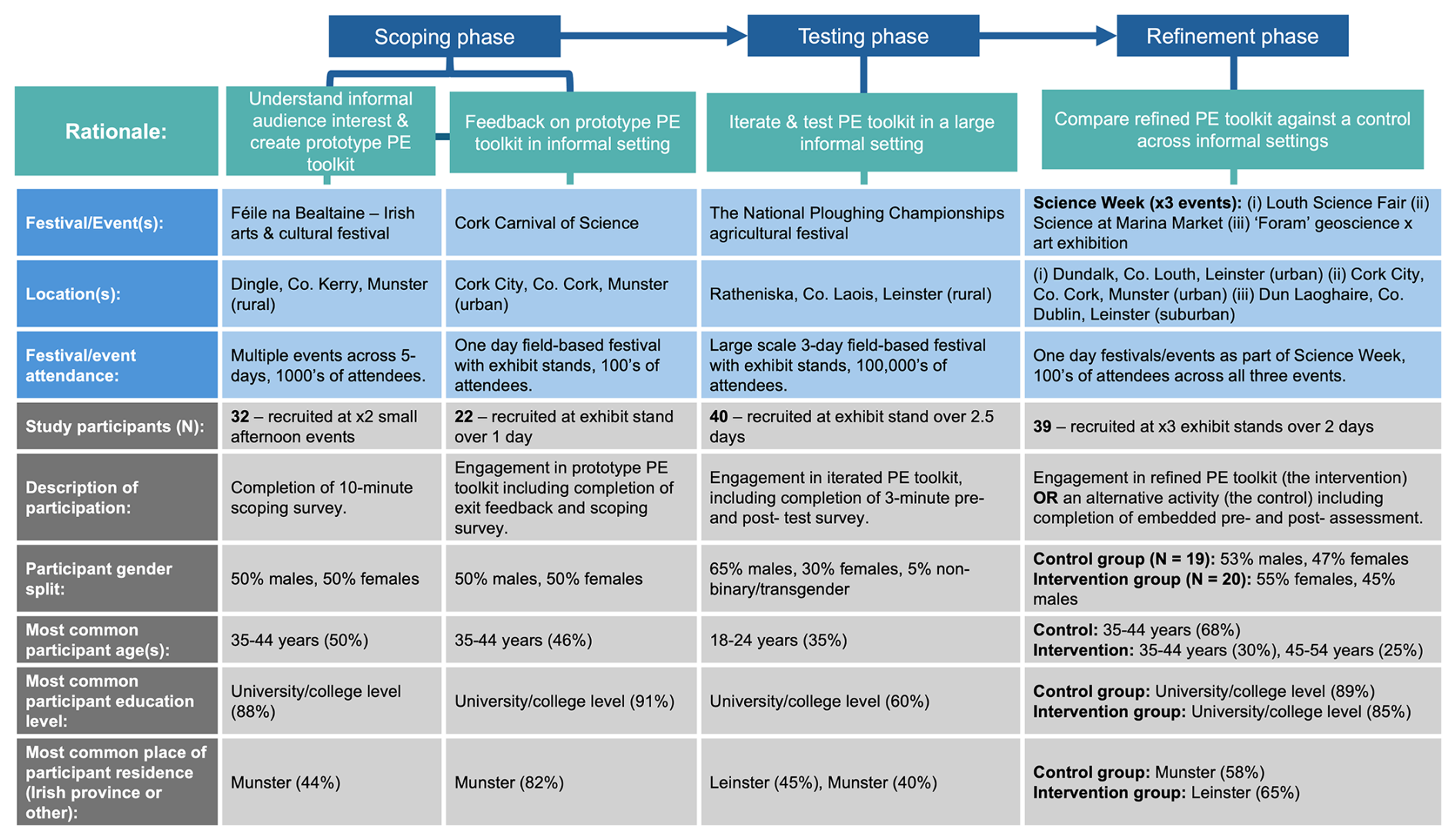
Figure 1Outline of the rationale behind each of the phases during PE toolkit development and associated settings and festivals/events. Information on study samples for each phase are also provided.
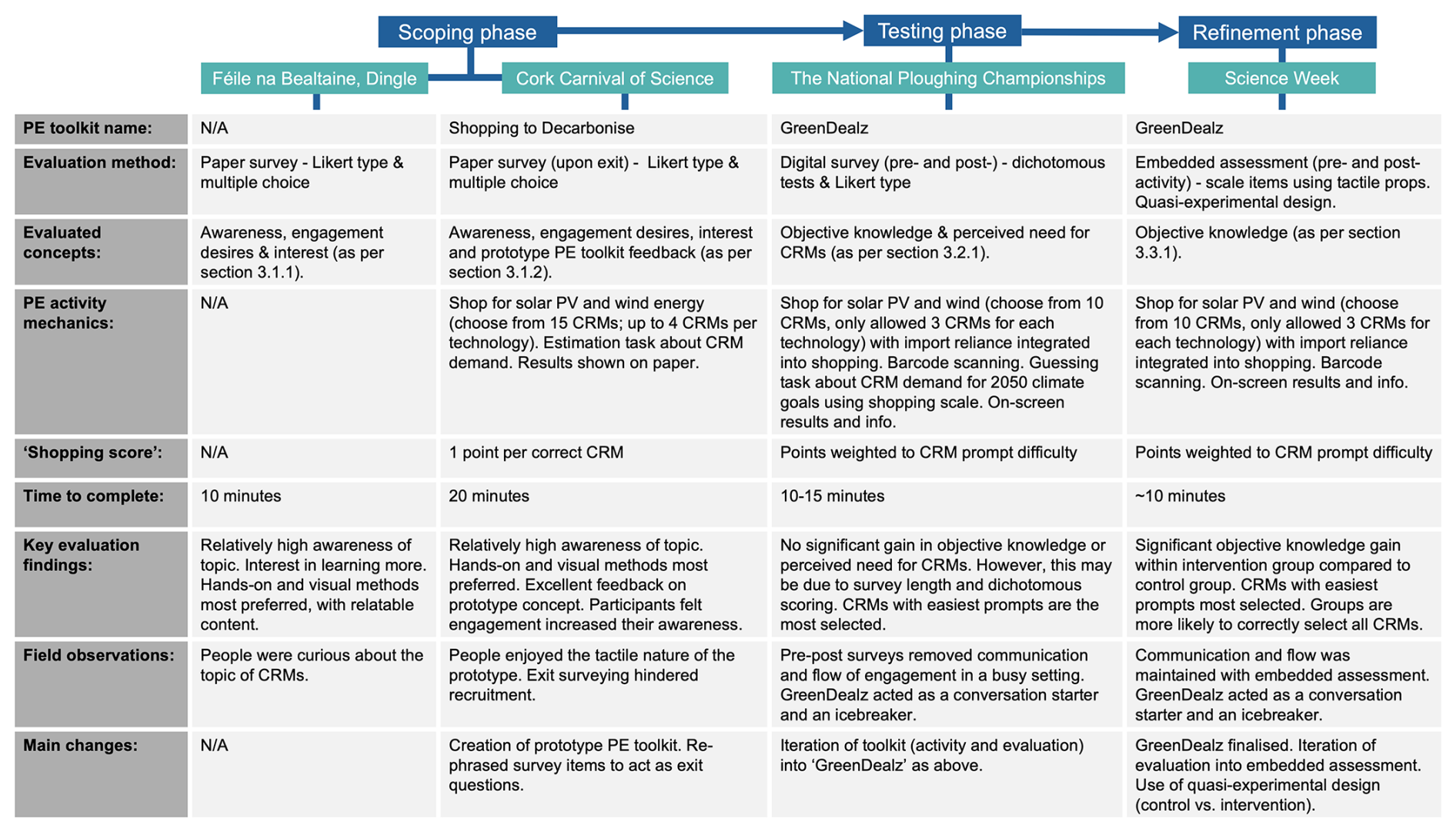
Figure 2Summary of the iteration process including methods, design, field observations, evaluation findings and changes.
2.2 Toolkit data and information
Data on CRMs and green technologies used within the PE toolkit were collated from European Union reports and databases and literature addressing CRMs and strategic technologies (European Commission et al., 2020; Carrara et al., 2020; Calvo and Valero, 2022; Troll and Arndt, 2022; Carrara et al., 2023; Grohol et al., 2023; European Commission et al., 2024). Exact content and sources are reported within each phase section. Expert geoscientists were also consulted in the creation of the toolkit content.
2.3 Participation and recruitment
Recruitment in all three phases reflected the free-flowing nature of the festival environment. Convenience and snowballing sampling were the primary methods used, as participants were often those drawn to our festival exhibit(s). The only core strategy devised ahead of each event was to achieve the maximum possible sample size, with a minimum sample size in mind as well. These target sample ranges were based on several factors. First and foremost, they were linked to the estimated interaction time per participant(s) calculated across the total time we spent recruiting at an event. For example, with an interaction time of 15 min per participant (e.g., to complete an activity and evaluation), we can expect a maximum possible sample size of 20 if we are stationed at a festival exhibit for five hours continuously recruiting. Secondly, target ranges are subject to change in busy festival environments, therefore estimates also account for peaks and troughs in energy levels among audiences and crucially, practitioners leading the interaction. Lastly, participation was based on informed consent to be part of a research study. Therefore, sample sizes within each phase also represent the number of audience members we engaged with that provided consent. In summary, the above parameters significantly constrained the number of participants available per phase to gain enough information to iterate.
Socio-demographic information was collected across all samples within each phase: gender, age, education level and place of residence (Fig. 1). All participant answers were kept anonymous through unique participant IDs. These IDs were used to link evaluation and activity items. Importantly, as festival attendees are often in social or familial groups, our PE toolkit within each phase allowed recruitment of those attending alone and those attending in groups. Sample sizes (N) refer to the number of individual responses recorded, as evaluation was done on an individual basis. However, participant IDs flagged if they were part of a group. All participants were adults (18 years or over). Any given event may attract certain age groups, genders, ethnicities or socioeconomic groups more than others. Due to this, and the nature of recruitment, it is important to remember that we do not claim samples to be representative of wider populations. However, developing the toolkit across a range of different festival types (science, art/cultural and agricultural) allows us to speak to how our intended audience, i.e., festival attendees, experienced the toolkit.
2.4 Analysis strategy
Qualitative and quantitative research methods were used during the iteration process. Quantitative analysis and data reduction (e.g., scoring, coding and collating) were carried out in Microsoft Excel. For surveys in the scoping and testing phases, new and pre-existing survey scales were used (e.g., overall awareness and objective knowledge of the topic, perceived need for CRMs), when appropriate, with reverse scoring. The reliability of scales was conventionally analysed using Cronbach's alpha (Cronbach, 1951). All statistical analyses were carried out in IBM SPSS Statistics (version 29.0.0.0 (241)). Before each statistical test, data were assessed for key assumptions (e.g., normality, linearity), and when assumptions were violated, alternative or non-parametric tests were used. When the assumption of normality was violated in scored survey responses, central tendency was reported as median values rather than the mean. Short, qualitative, open feedback sections were analysed thematically by identifying recurring response themes and sub-themes (e.g., Braun and Clarke, 2006).
3.1 Scoping phase
The aim of this phase was to probe festival audiences about their awareness of and interest in learning about CRMs in relation to the EU Green Deal, to understand their engagement preferences, then to build and evaluate a prototype PE toolkit (Fig. 1). This research was conducted at two Irish festivals. The first festival was Féile na Bealtaine, in Dingle, Co. Kerry, Ireland, an annual five-day arts and cultural festival in a rural location that celebrates Celtic summer through live performances, excursions, and exhibitions. Féile na Bealtaine attracts thousands of visitors across multiple small events and includes audiences such as young families, retirees, artists, scientists, business owners, tourists, among many others. The second festival was the Cork Carnival of Science, an urban, science-focused, one-day event based in Cork City, Ireland, that celebrates science and technology. Cork Carnival of Science attracts hundreds of visitors to a field of over fifty interactive exhibits. Common visitors include young families, young adults, industry professionals, scientists, students, business owners and local council members.
3.1.1 Féile na Bealtaine festival, Dingle: methods and results
A 10 min scoping survey was developed for use at two small afternoon events in Dingle which aimed to understand how best to build a prototype PE toolkit (Fig. 2). This survey was conducted amongst 32 consenting participants. The most common age bracket was 35–44 years, and gender was evenly split between males and females. There was a high level of university/college qualification (88 %), and 44 % were local to the province of the festival (Munster).
The survey included a 5-point Likert-type scale with two answer styles (A and B). This scale assessed broad awareness about CRMs and their links to the EU Green Deal (Table 1). Style A was answered as “strongly disagree” (1) to “strongly agree” (5). Style B was answered as “very unfamiliar” (1) to “very familiar” (5). These items were analysed as one variable to provide an overall “awareness” score of the topic, after concluding that they together formed a reliable scale (α=0.70). The overall median score indicated that the Dingle audience had a high level of self-reported awareness (4 ± 0.87). The weaker points of awareness centred on the definition of critical raw materials and on how they link to the EU Green Deal, hinting at the value of developing a toolkit to emphasise this (Table 1).
Table 1Scoping phase surveys addressing awareness of the topic (median ±median absolute deviation). * Indicates an item used at only one event and therefore is not included in the comparative overall awareness score. From 1 to 5 on the Likert scale, items A1 to A4 followed the answering style of “strongly disagree” to “strongly agree”, while items B1 to B2 followed the answering style of “very unfamiliar” to “very familiar”. Overall “awareness” scores were calculated as the sum of item medians/N items, where higher values indicate higher awareness.
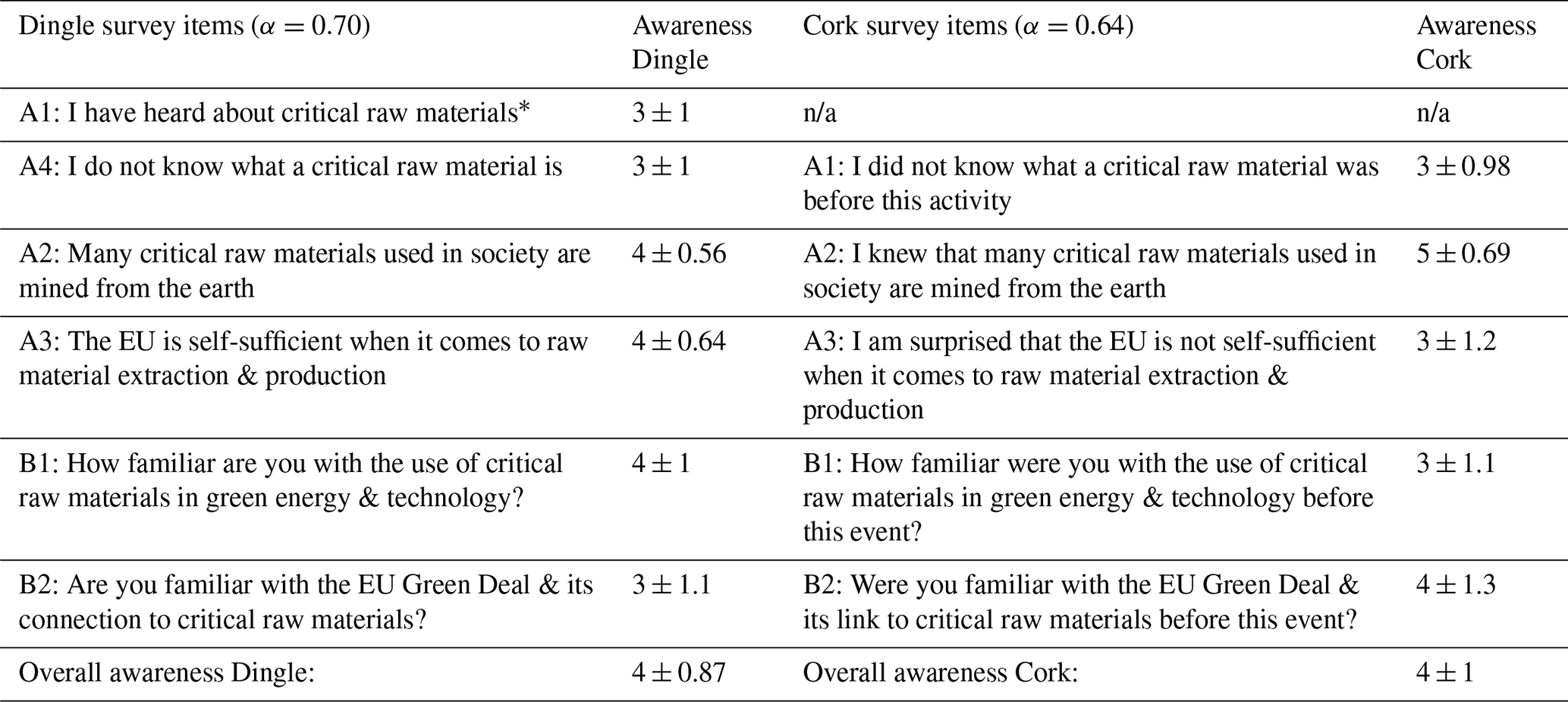
n/a – not applicable.
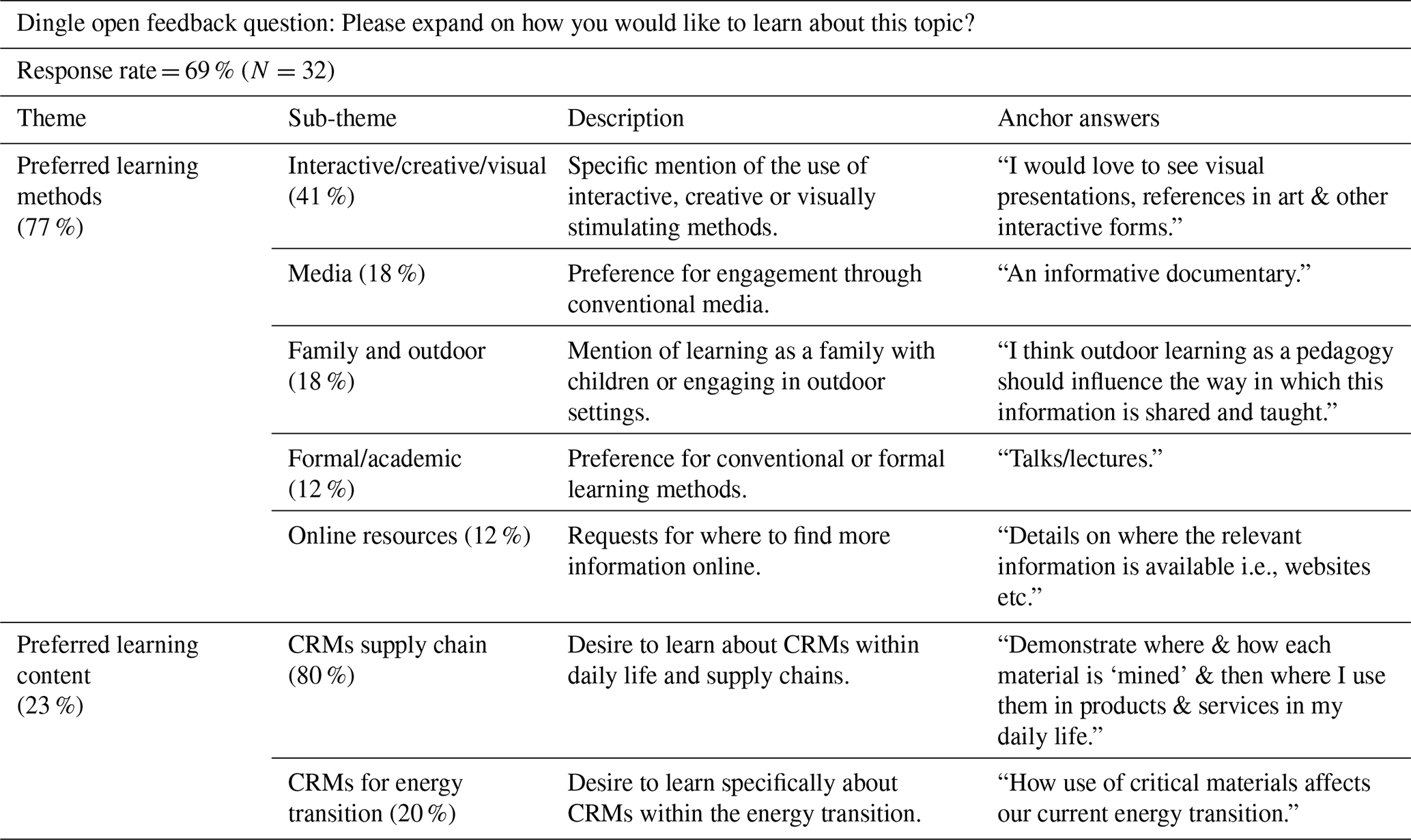
The survey also included “yes/maybe/no” and multiple-choice questions about audience interest and engagement preferences, respectively (Fig. 3). When asked if they wanted to learn more about CRMs and the EU Green Deal, 56 % of respondents said “yes” and 38 % said “maybe”. The most popular multiple-choice responses for engagement preferences across all age groups were “hands-on tasks” (76 %) and “visual examples of CRMs” (66 %) (Fig. 3). This was echoed when we asked Dingle participants to elaborate on how they would like to learn through an open feedback question (Table 2). From the short answers, we classified two answering themes: “preferred learning methods” and “preferred learning content”. The first theme accounts for most responses (77 %) and includes those that expanded on preferred kinds of PE methodologies, with specific mentions of interactivity, creativity, or visual stimulation representing the most dominant sub-theme. The second theme accounts for a smaller fraction of responses (23 %) and relates to the kind of content preferred, with desires to learn about the CRM supply chain and how CRMs link to daily life representing the most dominant sub-theme (Table 2).
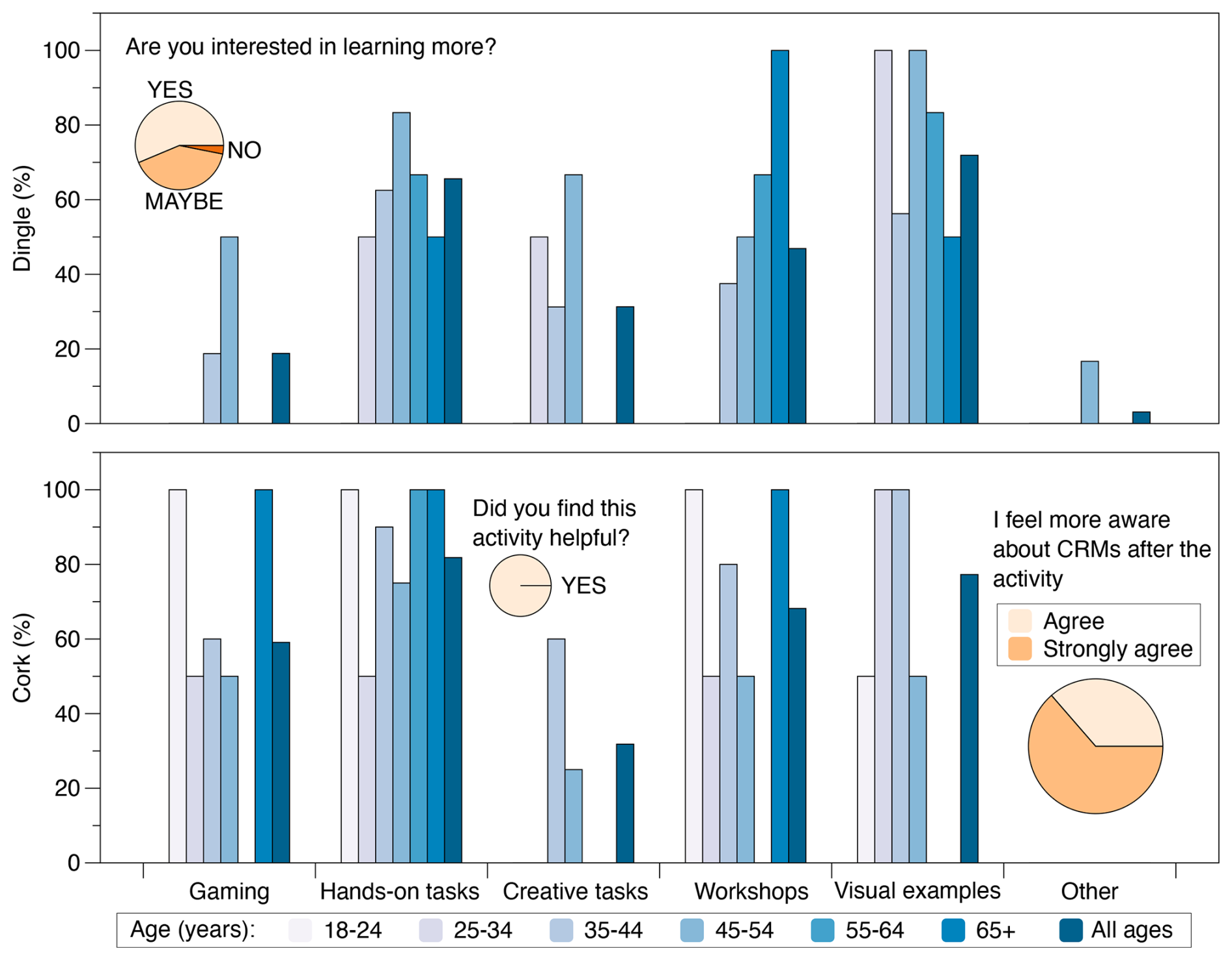
Figure 3Scoping phase responses, grouped by age, from Dingle (N=32) and Cork (N=22) to a multiple-choice question on engagement preferences: “How would you like to learn about critical raw materials and the EU Green Deal with geoscience experts? Tick all that apply”. Engagement preference options were divided into “Gaming (e.g., board games or online games)”, “Hands-on tasks (e.g., experiments, interactive activities)”, “Creative tasks (e.g., painting, drawing)”, “Workshops (e.g., lectures and activities/games combined)”, “Visual examples (e.g., critical raw material examples)” and “Other” for any other engagement preferences not listed. Pie charts show responses to a “yes/maybe/no” question about interest in learning more (Dingle), a Likert-type question about participant awareness of CRMs after the prototype PE activity (Cork), and a “yes/maybe/no” question about whether they found the prototype helpful (Cork).
Table 2Overview of qualitative response themes and sub-themes to a short open feedback survey question at Féile na Bealtaine, Dingle. Anchor answers represent example answers from participants within a given sub-theme.
The preferences for interactive/hands-on tasks, visual examples and relatability recorded via Dingle surveys, subsequently influenced the development of a prototype PE toolkit called “Shopping to Decarbonise”; a hands-on, tabletop activity that asked participants to “shop” for up to four key CRMs to build a solar panel and a wind-turbine (Fig. 2). We chose solar photovoltaic (PV) and wind energy as they represent two publicly familiar green technologies. Crucially, the idea of “shopping” as a theme was landed on due to its links to daily life and the notion of supply chains. To ensure the science link was clear, a selection of 15 CRM “cubes” were displayed on top of a periodic table in their corresponding elemental position (e.g., Fig. 4), with all classified CRMs (and strategic raw materials), as per the Critical Raw Materials Act highlighted in green (European Parliament and Council of the European Union, 2024). The 15 CRM cubes reflected a mix of potentially familiar names (e.g., aluminium, lithium, copper) and less familiar (e.g., neodymium, bismuth, dysprosium). To aid visual stimulation, these cubes contained CRM images (“pure” metals i.e., elemental metals, and common ores). The cubes also displayed prompts about their uses and properties, as highlighted in European Union reports and databases (European Commission et al., 2020, 2024), to help participants choose which CRMs to place in their solar PV and wind turbine “shopping baskets” (Fig. 2). These were short, plain language clues, some harder than others. For example, neodymium, as a key CRM for wind energy, displayed “spinning magnets = electricity”, while dysprosium, also a key CRM for wind, displayed “maintains magnetic abilities”. Additional materials (e.g., paper graphs, diagrams) were used to engage participants deeper with the topic (i.e., discussing import reliance levels and CRM demand to meet the EU Green Deal goals).
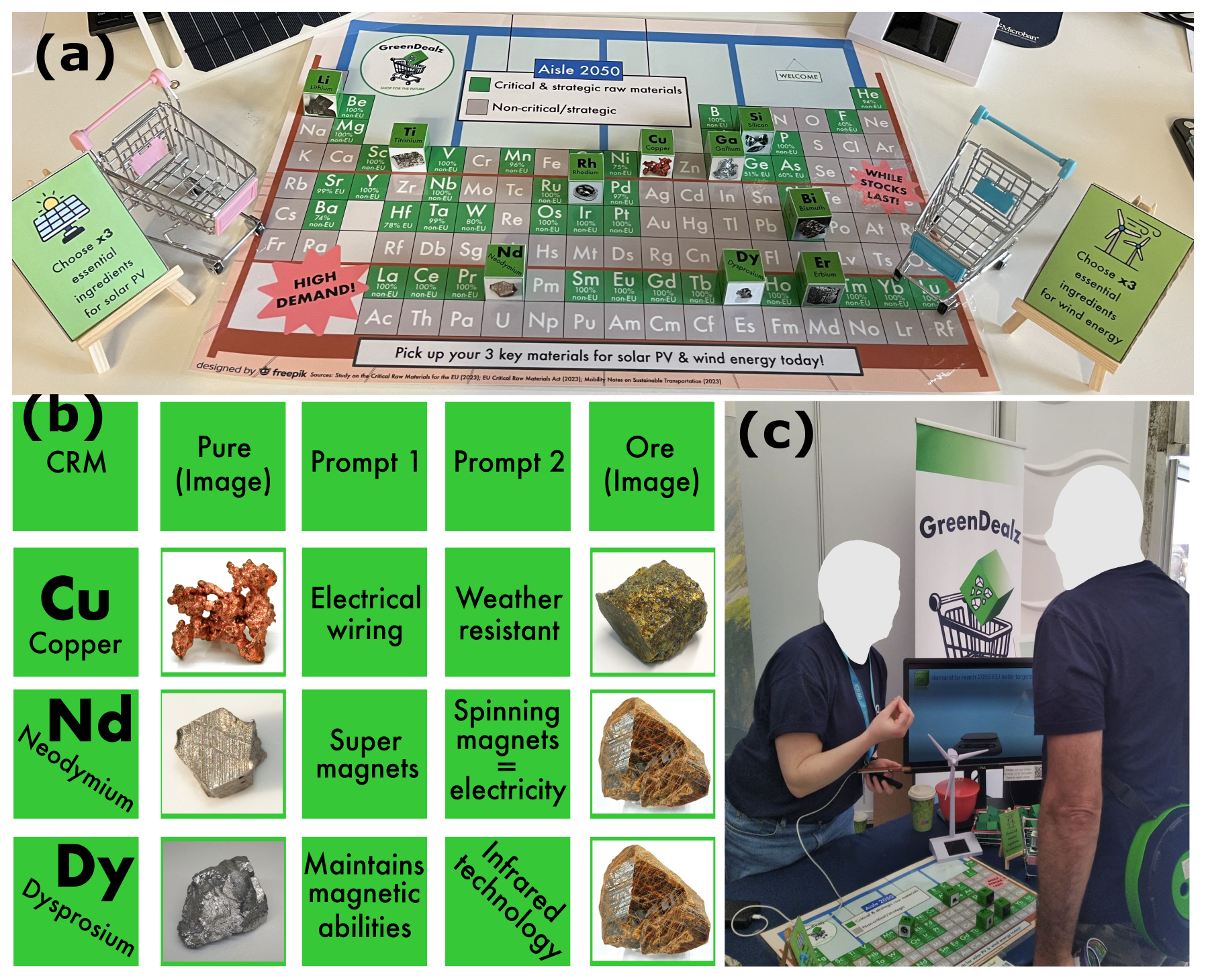
Figure 4(a) GreenDealz tabletop set-up (illustrations sourced and adapted from Freepik, 2025); (b) CRM cube example labels for copper (image sources: Schwen, 2006 and Zander, 2007), neodymium (image sources: Lavinsky, 2010; Chemical Elements, 2016a) and dysprosium (image sources: Lavinsky, 2010; Oelen, 2005). For a full list of image sources for all CRM cubes see Fig. A1 (Appendix A); (c) field engagement with GreenDealz at The National Ploughing Championships exhibit (consent was given for photography but faces are covered for privacy).
3.1.2 Cork Carnival of Science: methods and results
The prototype PE toolkit “Shopping to Decarbonise” was displayed at an exhibit stand at Cork Carnival of Science, where 22 of the exhibit attendees consented to participation in our study. Gender was split 50 : 50 male and female, with 46 % of participants aged 35–44 years, 82 % residing in Munster. As with Dingle, there was a high level of university/college education (91 %) (Fig. 1).
Our focus at this festival was trialling “Shopping to Decarbonise” as a concept and gathering key post-engagement feedback. Therefore, evaluation included an exit survey. This survey included similar Likert-type items to those used in Dingle but re-phrased to account for participant awareness before engaging with “Shopping to Decarbonise” (Table 1). This survey also asked the same multiple-choice question about engagement preferences but included additional questions to gather more targeted feedback (Fig. 3; Table 3). It took 20 min of participants time in total to complete “Shopping to Decarbonise” and the exit survey (Fig. 2).
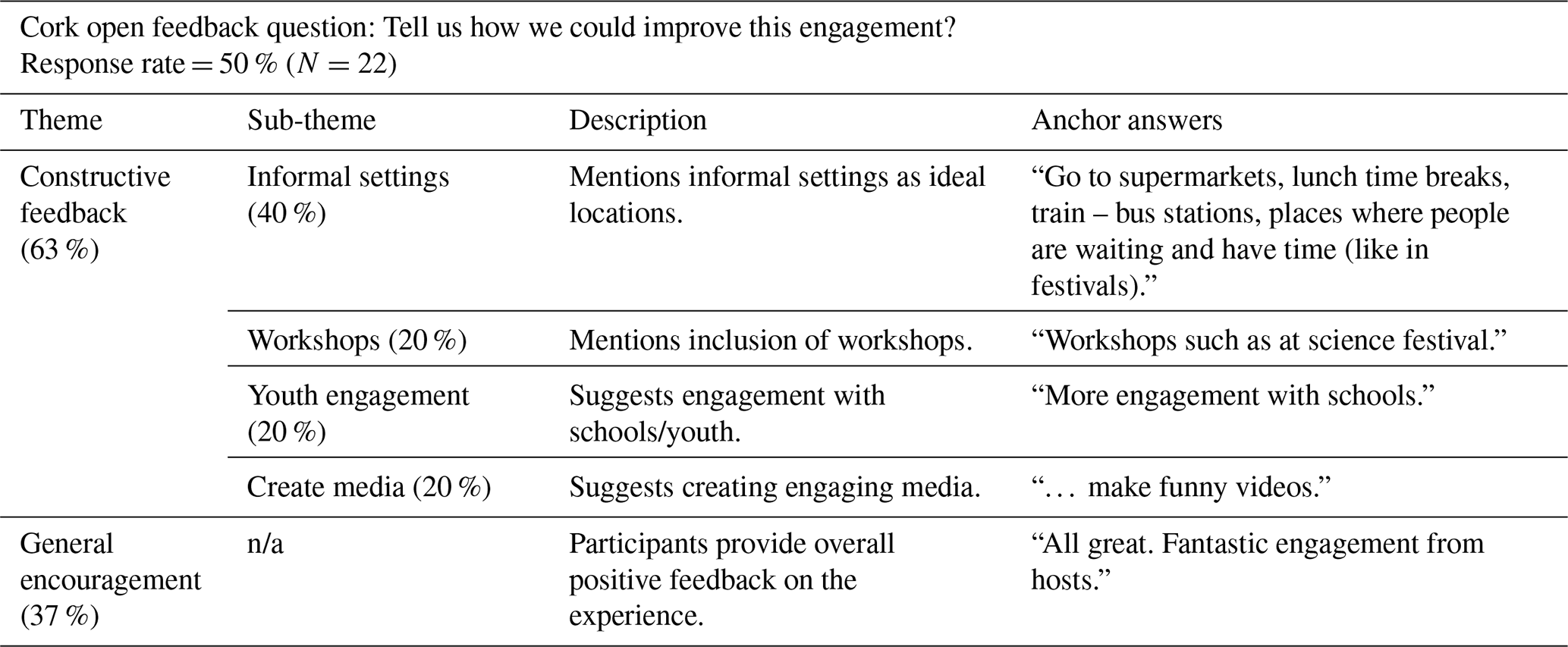
Table 3Overview of qualitative response themes and sub-themes to a short open feedback survey question at Cork Carnival of Science.
n/a – not applicable.
The iterated awareness scale used in Cork had a somewhat low reliability (α = 0.64; Table 1), perhaps due to the smaller sample size relative to Dingle. As with Dingle, the median score indicated that Cork participants had relatively high overall self-reported awareness (4 ± 1) about the topic before engaging with Shopping to Decarbonise but showed similar weakness in awareness on the definition of CRMs (Table 1). Since the Cork exit survey was a post-engagement evaluation, there were in-built differences in answering styles between Cork and Dingle, making statistical comparison unjustified. Nonetheless, Cork participants had a noticeably lower self-reported awareness about the levels of EU import reliance (3 ± 1.2) compared to Dingle participants (4 ± 0.64). This could relate to the comparatively greater live engagement with the concept of EU import reliance via “Shopping to Decarbonise” in Cork, whereas Dingle participants were given a survey without any intervention. Hence, it is possible that people may overestimate their awareness of this topic in the absence of deeper engagement.
Finally, we asked Cork participants for open feedback on how to improve the toolkit (Table 3). Two main answer themes were identified: “Constructive feedback” and “General encouragement”. Most responses (63 %) fell within the former, with the dominant sub-theme reflecting support for continued engagement in informal settings (Table 3). “General encouragement” accounted for 37 % of responses and simply reflected statements of positive feedback, without any clear sub-themes (Table 3). This was the last question asked on the exit survey and notably, the response rate to this question was only 50 %. Therefore, half of participants dropped out before the evaluation was complete. This suggested that the entire engagement took too long.
3.1.3 Scoping phase: summary, limitations and iteration implications
The scoping phase first aimed to scope out informal audience interest in the topic of CRMs and green energy, engagement preferences and self-reported awareness. It then aimed to trial the prototype PE toolkit “Shopping to Decarbonise” as a concept, gathering key post-engagement feedback. It must be noted that results are only indicative, due to the relatively small sample sizes, the potential differences in audience engagement with science generally (i.e., cultural festival vs. science festival) and because Dingle and Cork responses are not wholly comparable due to slight differences in phrasing between the survey items. Further, upon reflection, the use of “I am surprised” on the Cork survey (item A3; Table 1) may have steered responses in a certain direction.
Nonetheless, this phase provided us with a starting point, allowing key insights on how to continue the PE toolkit development. Engagement preferences, recorded quantitatively and qualitatively, pointed most strongly towards relatability, hands-on/interactive tasks, visual examples of CRMs and support for informal settings. This, along with positive feedback on “Shopping to Decarbonise”, inspired us to continue developing this idea into a more concrete interactive task for the testing phase. Therefore, the theme of “shopping” was further explored, and the toolkit evaluation method was iterated to be shorter and more integrated (Figs. 1, 2).
3.2 Testing phase
The testing phase aimed to iterate “Shopping to Decarbonise” into a test PE toolkit for the festival space and to assess the pre-post survey format for evaluation. We tested this iteration at an exhibit stand at the National Ploughing Championships in Ratheniska, Co. Laois, Ireland (Figs. 1, 2). This is a large annual agricultural festival, with over 1500 exhibits, ploughing competitions, concerts and markets, attracting approximately 250 000 visitors over three days. Therefore, it posed as a prime opportunity to engage a festival audience travelling to attend from across the country. Common visitor groups include farmers, agricultural and industry professionals, machinery enthusiasts, young families, young adults, tourists and retirees.
3.2.1 The National Ploughing Championships, Co. Laois: methods
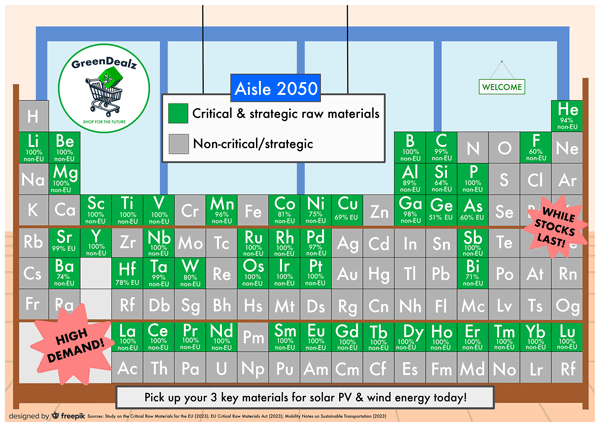
To further explore the supermarket theme as a relatable concept, this iteration of the PE toolkit was renamed as “GreenDealz” with a supermarket style logo to match (Figs. 4 and A2 in Appendix A). The periodic table display was made to look like a supermarket shelf labelled as “Aisle 2050” (Figs. 4, A2). The CRM cubes were given barcodes, so that practitioners could act as “cashiers” and collect “shopping” answers via mobile barcode scanning (Fig. A1). Information about import reliance levels became integrated into the experience as “country of origin” style labels per CRM (i.e., “100 % non-EU or 64 % EU”; Fig. A2), using data from European Union reports (Grohol et al., 2023; European Commission et al., 2024). These visual additions were all part of efforts to attract audience attention in the festival space (Bultitude and Sardo, 2012; Grand and Sardo, 2017). Time-sensitivity within the shopping activity was accounted for by reducing the number of CRM cubes to 10 (Fig. 2).
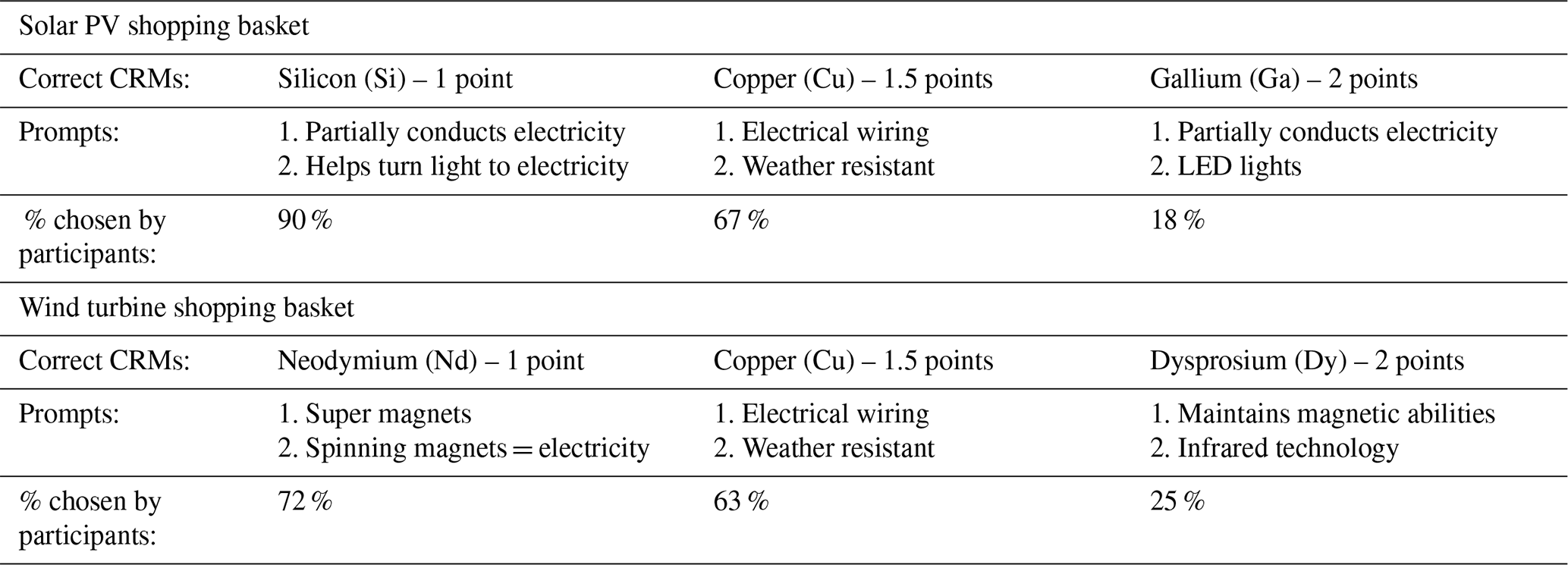
Separately to pre-post evaluation, we wanted to measure the level of interaction with GreenDealz material. To do this, the shopping activity mechanics were updated by creating a difficulty-based “shopping score” derived from the CRM prompts. Each technology (solar PV and wind energy) had exactly three “correct” answers from the CRM cubes available i.e., participants had to select only three key functional CRMs to build (1) a solar panel and (2) a wind turbine. These “correct” answers were gleaned from European Union reports discussing key CRMs for green technologies (Carrara et al., 2020, 2023; European Commission et al., 2020, 2024). Every CRM cube had two prompts to read (Figs. 4, A1). Of these two prompts, one would be considered either “easy” (1 point), “moderate” (1.5 points) or “hard” (2 points) based their technology links. “Easy” prompts were highly leading clues about a given CRM's use, “hard” prompts were less obvious, requiring participants to make connections with other prompts and CRMs, while “moderate” prompts were somewhere in the middle (see Table 5). Thus, to connect these CRMs with the technologies and each other, participants would presumably need to interact strongly with the material and use critical thinking to score higher (Bailin, 2002). All other CRM cubes on display (i.e., those that are not key functional CRMs for solar PV and wind energy) were assigned a score of zero if chosen, with their prompts also showing a mix of difficulties (e.g., lithium: “Ceramics” and “Batteries”; or titanium: “Industrial equipment” and “Aerospace”; Fig. A1). Shopping scores were reported as a ratio (score achieved/maximum possible score). We also incorporated an interactive task that asked participants to use blank cubes to estimate the 2050 demand for specific CRMs per technology. For example, 30 times more gallium would be needed for 2050 EU solar targets compared to current levels (Carrara et al., 2020, 2023; European Commission et al., 2020) and this was represented by 30 blocks on a supermarket weighing scales. All steps of GreenDealz and correct “shopping” answers were revealed to participants through visually stimulating animations on a computer screen.
To assess in-situ learning, pre- and post-quantitative evaluation was employed. We used an objective knowledge assessment, a measure of what participants objectively know, rather than subjective knowledge, referring to what they think they know (Vicente-Molina et al., 2013). True, or, false and multiple-choice questions have been successfully used to asses objective knowledge (Gronlund, 1998; Burton, 2005; Vicente-Molina et al., 2013; Zhou et al., 2017; Kuehl et al., 2023). Such tests are common in pre-post evaluation across different disciplines of education and PE and involve dichotomous scoring, where correct answers receive 1 point and incorrect answers receive 0 points (e.g., Cottone and Byrd-Bredbenner, 2007; Huang et al., 2020; Leitão et al., 2022; Lemos et al., 2023). To tailor towards the festival space, we used true, or false statements because of their fast-paced format. We designed three items that captured the main concepts of interest: knowledge of CRMs, supply risk, and links to green energy (Table 4). We also wanted to assess if perceptions on CRMs could be gauged. Due to the required quick-paced format, one item was included from the previously validated three-item “perceived need for CRMs” scale, scored as strongly disagree (1) to strongly agree (7) (Table 4) (Schuitema and Olomo, 2024). This short, on-the-spot survey (∼ 3 min) was provided as a “quiz-like” online form, scannable by QR code. Thus, we aimed to strike a balance between including traditional survey items and integrating pre-post evaluation into the activity similar to embedded assessment measures (Fenichel and Schweingruber, 2010). Those working in groups completed GreenDealz shopping tasks together but completed evaluation as individuals. Hence, shopping scores were recorded as a repeated response for each evaluated group participant, linked by the same ID.
Table 4Survey items used during the testing phase of the PE toolkit at the National Ploughing Championships. * Overall score results are given as median ± median absolute deviation (due to violation of normality).
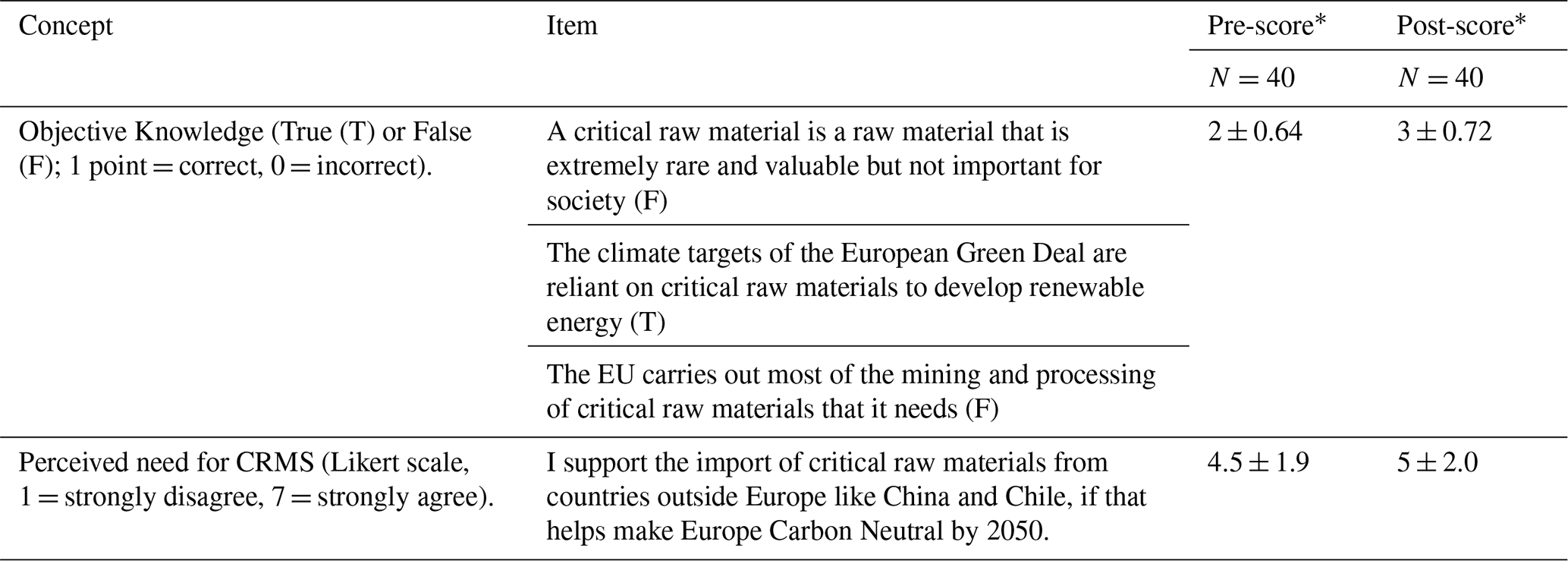
Table 5GreenDealz shopping scoring system, prompts and compiled results from the testing and refinement phases. Prompts are designed to be easy, moderate and hard. High scores can be achieved with greater analysis by matching relevant CRM prompts together. All other CRM cubes chosen (not shown in table) were scored as zero.
3.2.2 The National Ploughing Championships, Co. Laois: results
A total of 40 people consented to study participation. Notably, the sample size did not reflect the number of interactions at our exhibit, with many more visitors stopping by to ask questions and/or interact with GreenDealz materials. Participant age was spread across age groups, however most (35 %) were 18–24 years. In the sample, 65 % identified as male, 30 % as female, and 5 % as non-binary/transgender; 60 % had a university or college qualification. Participants were nearly evenly split between Leinster (45 %) and Munster (40 %), with the remaining 15 % coming from outside these provinces (Fig. 1). Of these participants, 12 were engaging as part of a group and 28 were alone as single participants.
We observed that despite a quick completion time (∼ 3 min), the pre-post online surveys detracted from participant experience at the National Ploughing Championships. Taking three minutes outside of GreenDealz to fill out an online survey felt incongruent with the surroundings and experience, removing communication between the practitioner and participant. However, reactions to GreenDealz itself were encouraging. Many participants mentioned their enjoyment of the activity and/or engaged in further conversation about the topic. Participants working in groups also appeared to engage more naturally with GreenDealz, whereby “shopping” for CRMs sparked discussion about a given CRM's uses and properties. It is also notable that no dropouts were observed: those who started the activity engaged till the end. This was an indication that GreenDealz was holding participant(s) attention.
The three-item objective knowledge scale was introduced as a quick-paced alternative to classic Likert-type items. However, the reliability of the three items fell well below the acceptable threshold (α<0.10) (Cronbach, 1951). Previous research employing dichotomously-scored objective knowledge tests with as much as ten items has shown that Cronbach's α can easily fall below the acceptable limit of 0.7 (e.g., Kuehl et al., 2023). Therefore, while there was a small, insignificant increase from prior objective knowledge (2.0 ± 0.64) to post objective knowledge (3.0 ± 0.72) (Table 4), these items together did not sufficiently measure knowledge and are therefore not suitable to measure change over the duration of the engagement. Furthermore, there was no significant change in knowledge found when analysing single items. Lastly, there was no statistically significant difference in the perceived need for CRMs before (4.5 ± 1.90) and after (5.0 ± 2.00) engagement with GreenDealz. However, it is interesting that perceived need for CRMs was already relatively high. Speculatively, this could relate to some of the audience present, i.e., machinery enthusiasts, business and industry professionals, but this would require deeper evaluation to assess.
3.2.3 Testing phase: summary, limitations and iteration implications
GreenDealz was well received. This was particularly highlighted by continuous engagement from participants and interest in discussing the topic further. Therefore, we concluded that the iteration of “Shopping to Decarbonise” into GreenDealz was successful in terms of attracting festival goers. Reducing the length of the evaluation time was also successful, as the dropout rate substantially decreased.
It was concluded that the GreenDealz evaluation technique for quantitatively assessing changes in knowledge and perceptions needed improvement. However, given the festival-linked time limitations and observed disruption of engagement flow, survey expansion was not practical for the final iteration. Hence, it was clear that the final iteration would need to focus on more fully implementing an “embedded assessment” strategy. From the findings during this phase, we deduced that a “festival-friendly”, embedded assessment may require scoring systems with continuous data if subtle levels of pre-post change are to be detected, especially where only three items are used for timesaving. Our toolkit focus is on understanding actual knowledge gains. Therefore, we centred on objective knowledge for developing this embedded assessment strategy.
3.3 Refinement phase
The aim of this phase was to refine the GreenDealz evaluation strategy into a more integrated pre- and post- assessment (Figs. 1, 2). We carried out this phase across three Irish science and arts festivals/events during national Science Week in Ireland: (i) Science at Marina Market, Co. Cork; (ii) Louth Science Fair, Co. Louth; (iii) “Foram”, a geoscience art exhibition in Co. Dublin. The two former events drew crowds in their hundreds, while “Foram” attracted approximately 40 people (Fig. 1). Common visitors to the former two events include young families, retirees, students, local business owners, local council members, and science professionals. “Foram” was a once-off arts-science event which drew a mix of artists, activists, scientists, young adults, and retirees.
3.3.1 Science Week: methods
The concept of embedded assessment, hereafter referred to as “EA”, offered a unique solution to better integrate evaluation into the GreenDealz experience (Fenichel and Schweingruber, 2010). To formulate the toolkit's EA, three tasks were created that used existing GreenDealz props, i.e., weighing scales, cubes, shopping baskets, on-screen visuals and information. These tasks were displayed on screen and read aloud by the practitioner and participants had to complete them using the props in front of them. The tasks reflected an understanding of the core principles previously covered in the objective knowledge items during the testing phase. Hence, this EA was a more interactive and task-based method of assessing objective knowledge pre- and post- GreenDealz intervention. The GreenDealz shopping activity tasks were unchanged (Fig. 2). The three EA tasks, with (a) their props, (b) correct answers, and (c) rationale were as follows:
- 1.
Place any item(s) that contains a critical raw material in the shopping basket.
- a.
Props: Participant(s) are provided with a shopping basket and 7 cubes that each represent a random item/object (Figs. A3, A4).
- b.
Correct answer: All 7 items (i.e., 7 cubes).
- c.
Rationale: This task relates to understanding the definition of a CRM, i.e., a material that is important for society and thus is present not just in green and digital technologies but also everyday items.
- a.
- 2.
Compared to a gas-fired power plant, how many times less OR more mineral resources are needed (on average) for an onshore wind farm? Place cubes in the shopping basket to illustrate (1 cube = 1 times, 2 cubes = 2 times and so on).
- a.
Props: Participant(s) are provided with a shopping basket and 9 cubes (Fig. A4). Therefore, they are told they can choose up to 9 cubes. They are then asked to say whether they believe the answer is less (–) that number of cubes or more (+). This negative to positive scale allows greater levels of change between pre and post scores to be detected.
- b.
Correct answer: 9 times more (i.e., +9 cubes)
- c.
Rationale: This task relates to the demand for CRMs in developing renewable energy.
- a.
- 3.
Of the 49 EU critical (and strategic) raw materials, how many have an import reliance greater than 75 %? Choose a number of CRMs between 0 and 49.
- a.
Props: Participant(s) are directed to the 49 green coloured CRM cubes indicated on the periodic table or “Aisle 2050” and asked to choose a number between 0 and 49.
- b.
Correct answer: 37 (however, as this import reliance % can change year on year, the highest possible score of 49 is what indicates the best knowledge/awareness of supply risk).
- c.
Rationale: This task relates to the concept of supply risk and how most CRMs are highly sourced from imports therefore making them susceptible to supply chain disruptions.
- a.
Total participant scores were calculated as a ratio: the sum of scores/max possible score (where max possible score = 7 + 9 + 49 = 65). Hereafter, this assessment is referred to as objective knowledge-EA.
To ensure robustness of this assessment, this phase incorporated a quasi-experimental design, which is appropriate for field-based settings, by inclusion of a “control” activity to test against GreenDealz, i.e., the “intervention” (Abrahamse, 2016). This control activity was a “match-up” task that required participants to examine rock and ore samples and match them to corresponding images on a geological map of Ireland, thereby learning about the origin of some CRMs and their uses. Thus, the same objective knowledge-EA was used for pre-post assessment in the control activity. Control and intervention groups were mixed across festivals/events, with total participant counts in each group monitored to ensure equal or near equal sample sizes. Those working in groups completed GreenDealz shopping tasks together but completed EA as individuals. Hence, shopping scores were recorded as a repeated response for each evaluated group participant, linked by the same ID.
3.3.2 Science Week: results
The total number of participants recruited between the control and intervention groups during this phase was 39. The control group (N = 19) were predominantly aged 35–44 years (68 %), with 58 % residing in Munster and two of these participants were engaging in GreenDealz together as a couple. The participants in the intervention group (N = 20) were slightly more diverse in age, although mostly (55 %) spread between 35–54 years and 65 % residing in Leinster. All intervention participants were engaging alone as single participants. Gender was split close to 50 50 between females and males across both groups. Nearly all participants had a university/college qualification (control 89 %, intervention 85 %).
In both groups, pre-post objective knowledge-EA scores were normally distributed (Shapiro-Wilk p>0.05), allowing comparison by parametric means. Firstly, results from an independent samples t-test showed that pre- scores between the control (0.54 ± 0.17) and intervention (0.58 ± 0.23) groups were not significantly different (, p=0.591, ). This indicated that the groups had the same baseline knowledge level, which was relatively moderate. Next, results from a paired t-test show that the mean difference of 0.266 (95 % CI 0.159 to 0.373) between pre-post objective knowledge-EA scores was significant for the intervention group (t(19)=5.204, p<0.001, d=1.16) but not for the control group (mean difference: −0.006; 95 % CI −0.080 to 0.067; , p=0.086, ) (Fig. 5). This implies that knowledge was significantly more enhanced for those who engaged with GreenDealz compared to those who engaged in the “match-up” control activity.
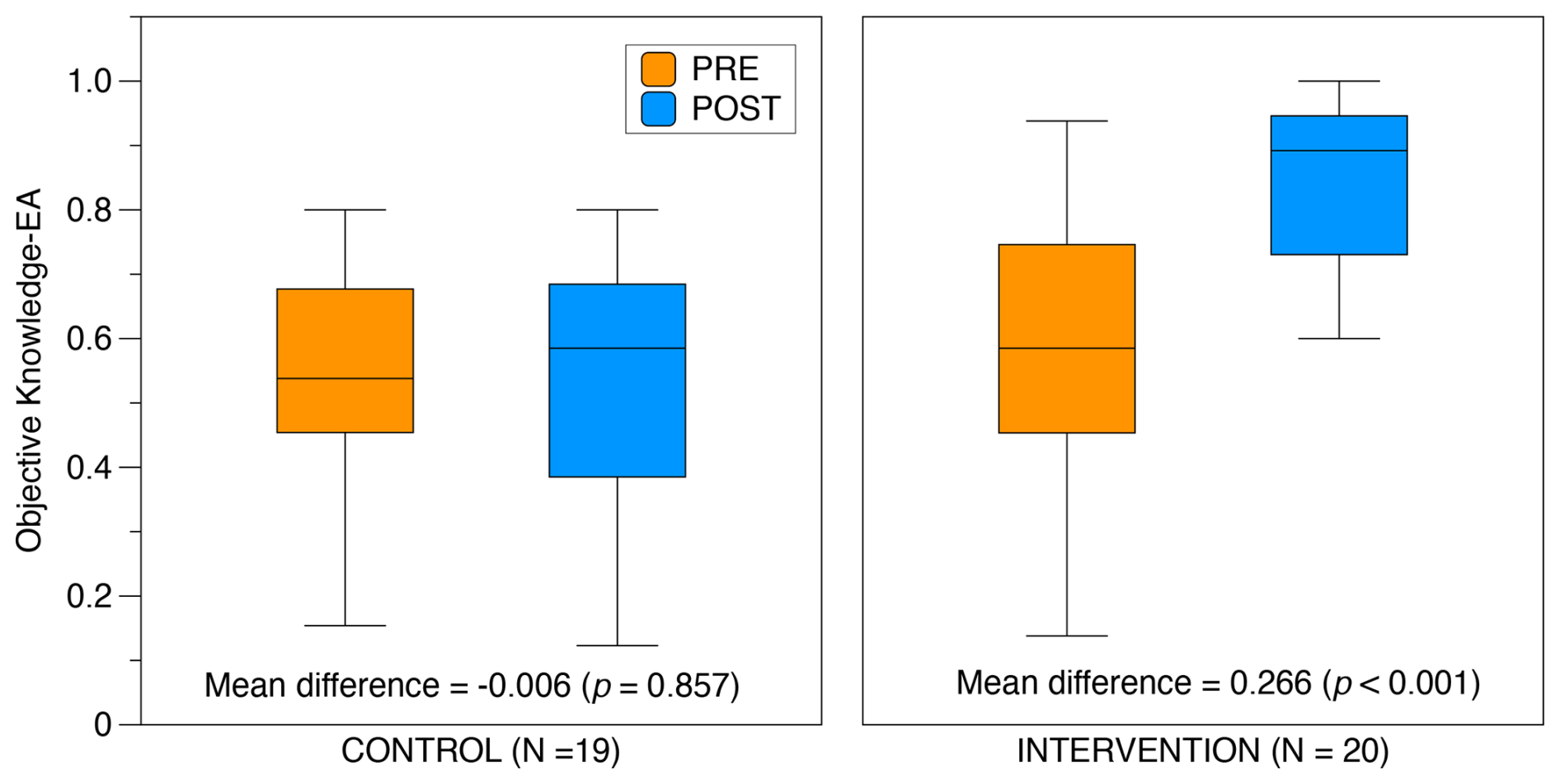
Figure 5Pre-post distributions of objective knowledge-embedded assessment (EA) scores within the control (match-up activity) and intervention (GreenDealz) groups, with results of paired t-tests. Control = 0.54 ± 0.17 (pre), 0.54 ± 0.19 (post). Intervention = 0.58 ± 0.23 (pre), 0.84 ± 0.13 (post).
In addition, field observations indicated that with the EA tasks, communication was maintained, the interaction was more streamlined than evaluation in prior phases, and EA appeared to evoke a sense of playfulness in participants. Thus, according to the pre-post scores achieved between the control and intervention samples combined with observations, this method of objective knowledge assessment appears more successful in capturing change than testing phase evaluation while maintaining interactivity.
3.3.3 Science Week: summary and limitations
The EA for this toolkit is a unique form of evaluation. Furthermore, its ability to maintain interactivity provides key insight into new evaluation methodologies for the festival space. However, our assessment of changes in knowledge is limited by the tasks presented to participants and because it is unique to the engagement, it cannot be compared with conventional scales. Nonetheless, our quasi-environmental design has demonstrated significant differences between control and intervention group learning. As such, the refined PE toolkit is represented by the interactive GreenDealz shopping activity and its embedded assessment of objective knowledge.
3.4 GreenDealz “shopping” score results: overall interaction insights
To aid final conclusions about GreenDealz as a PE activity, we wanted to quantitatively assess how participants interacted with GreenDealz “shopping” tasks overall. Separately to the evaluation of knowledge changes, the GreenDealz “shopping” score aimed to measure this interaction (Sect. 3.2.1). GreenDealz shopping task mechanics remained unchanged between the testing and refinement phases (Fig. 2), therefore we pooled the shopping scores from these phases for an overall analysis of interaction (N = 60). For both technologies, most participants correctly chose the CRMs that had the easiest prompts (90 % chose silicon for solar PV and 72 % chose neodymium for wind turbines; Table 5). Most participants also correctly chose the CRM that is shared between each technology and had a moderate prompt: copper (67 % chosen for solar PV and 63 % chosen for wind turbines, Table 5). However, for each technology, a much smaller fraction of participants correctly chose the CRMs with the most difficult prompts (i.e., 18 % chose gallium for solar PV and 25 % chose dysprosium for wind turbines; Table 5). Instead, participants mostly chose lithium as their third CRM for solar PV (62 %) and titanium as their third CRM for wind turbines (50 %). As a result, the average overall “shopping” score was 0.49 out of 1 (Fig. 6, Table 5). Therefore, on average, festival participants showed moderate interaction with the information on the CRM cubes while loading their shopping baskets, with a greater likelihood to rely on easy/moderate CRM prompts than to also apply greater analysis in completion of the task.
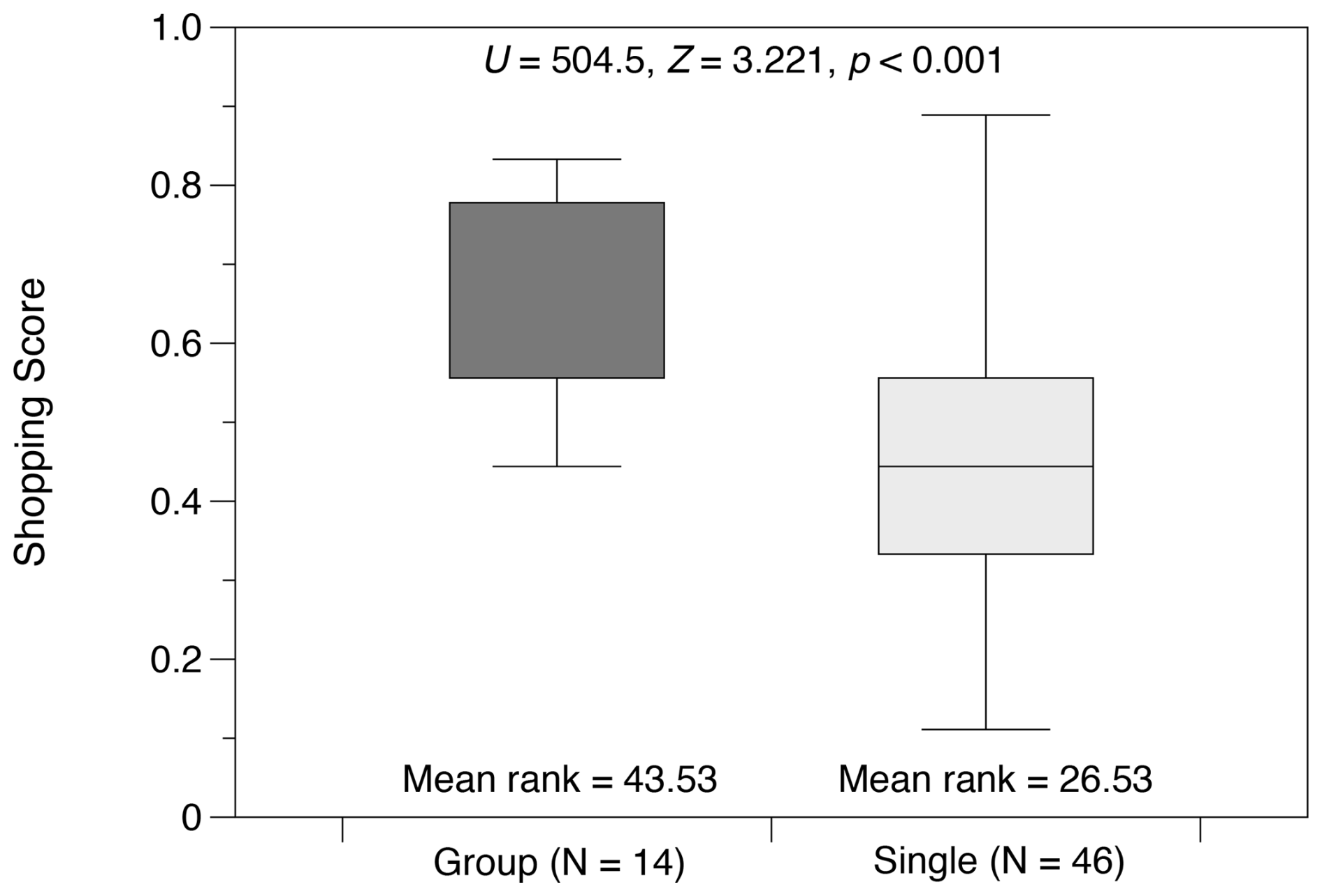
Figure 6Distribution of GreenDealz shopping score between groups and single participants and results of a Mann-Whitney U-test.
During GreenDealz “shopping”, people appeared to enjoy the tactile nature of the cubes and often seemed most enthusiastic about getting higher shopping scores when working in groups rather than alone. It was also observed that the optimal group size was about three, beyond which it became difficult to manage. Therefore, overall shopping scores were statistically compared between group and single participants. These samples were compared by mean rank using the non-parametric Mann-Whitney U-test due to uneven sample sizes, violation of normality (Shapiro-Wilk p<0.001) and differing distribution shape. Group participants tended to achieve a higher shopping score (mean rank = 43.54) than single participants (mean rank = 26.53) and this difference was found to be significant (U=504.5, Z=3.221, p<0.001) (Fig. 6). Hence, interaction with the GreenDealz CRM cubes appears to be higher when working together, perhaps indicating stronger discussion during decision making. This suggests that the moderate, average shopping score of 0.49 may be skewed by the higher proportion of single participants (46 60). Thus, we may expect a higher average shopping score if more participants were in groups. There was no indication that the shopping score differed significantly by any demographic measure.
4.1 Key limitations of GreenDealz development
In this paper we describe the iterative development of the GreenDealz PE toolkit. GreenDealz is novel, offering a unique activity to help engage publics with the role of CRMs in achieving the EU's Green Deal targets. However, our work presents some key limitations. Firstly, the sample sizes recruited were useful for iteration. However, they were not sufficient to make claims about the broader effectiveness and impact of GreenDealz. Festivals represent popular informal education environments where dialogue can be fostered (Sardo and Grand, 2016). Therefore, our study was conducted across a range of arts, cultural and science festivals to test how applicable the toolkit was in the informal education context. As such, we believe that this makes the toolkit promising. The downside of focusing on the festival space is that we cannot generalise our results to a wider population. Relatedly, it is worth mentioning the high education levels captured in this study. In 2025, Ireland was ranked the most educated country globally (Conte, 2025). Being the largest event we attended, it is the National Ploughing Championships sample that most closely reflects Irish education levels, especially for those between the ages of 25 and 44 years (Central Statistics Office, 2024). The education levels captured within samples at both the arts/cultural and science-based events are much higher again, but this reflects similar findings in these types of settings within and outside Europe (Quinn, 2006; Jensen and Buckley, 2014; Kennedy et al., 2018; McCartney and Ip Si Kei, 2018; Jensen et al., 2021). Therefore, in attending festivals to develop a toolkit for informal settings, and further, when these festivals are in Ireland, it is difficult to avoid a skew towards higher education.
In a similar vein, we carried out this pilot study in an Irish context, and as such, our findings or indeed people's engagement with GreenDealz may be entirely different in a different country. Lastly, the scope of our evaluation was constrained by what was suitable and practical to the festival space. As such, our assessment of GreenDealz strengths is limited to the current observational and embedded assessment results.
4.2 Strengths and broader implications of GreenDealz development
GreenDealz has the potential to enhance informal audience knowledge on the topic of CRMs and their link to the EU Green Deal and is particularly designed for informal education settings like festivals. To ensure its success in this setting, the engagement could not take longer than 15 min, including the evaluation (e.g., Vergunst et al., 2025). From the scoping to the refinement phase, development has been driven by informal audience responses and field observations, all of which pointed towards a desire for a quick, interactive, hands-on, and relatable format. The interactive nature of the toolkit was essential to engage participants until the end, which is in line with earlier research on what informal audiences value most in science communication (Bultitude and Sardo, 2012; Jensen and Buckley, 2014; Roche et al., 2016b; Sardo and Grand, 2016).
A core feature of GreenDealz is the EA of objective knowledge. Its integrative nature enhanced the GreenDealz experience while simultaneously measuring changes in knowledge as part of the activity. Our findings indicate that this appears to be a more appropriate method to quantitatively measure the effects of PE activities in festival settings than traditional survey techniques. This builds on previous research highlighting embedded assessment as a more suitable evaluation approach in the informal educational space (e.g., Fenichel and Schweingruber, 2010; Becker-Klein et al., 2016). In future research, the results should be compared with more conventional research methods, such as classic surveys, to validate the effectiveness of the EA. Other work could incorporate a more rich and qualitative approach to understanding the participant experience of GreenDealz, such as pre-existing knowledge and perceptions, and whether the toolkit has the power to effect this meaningfully.
Prior research suggests that when it comes to issues related to the green economy, public opinion is likely biased by the first piece of information received (Poluektova et al., 2024). Notably, through many interactions with GreenDealz, it was clear that it served as a springboard for wider conversations on the topic, with many participants continuing to discuss CRMs and green energy after completion. This is a key observation, given that one of the great goals of science communication is to stimulate public dialogue and introduce new ways to facilitate conversation between scientists and public audiences (Illingworth, 2020, 2023).
As per the “shopping” scores (i.e., difficulty-based score of CRM “correctness”), it appeared that GreenDealz resulted in significantly higher interaction when participants were working in groups. This could imply higher levels of critical thinking or informed decision making (Bailin, 2002). This is a promising result, especially for settings like festivals, where people often attend in groups and are more inclined to engage in activities together. Moreover, it could mean that the discussions that start during the activity may continue in social groups and thus spread to wider social networks. Similarly, the greater tendency of single participants to rely on easier and more leading clues when choosing CRMs is testament to the quick and easy interaction desired by festival participants (Grand and Sardo, 2017), perhaps especially when engaging alone. Importantly, it is often the aim of practitioners to be able to reach the uninterested or “residual” public (Miller, 1983; Miller et al., 2024). In this regard, it is encouraging that the National Ploughing Championship participants appeared engaged during GreenDealz, because this suggests an appeal to audiences that are less likely to know they will encounter science. To test this claim, future analysis could include a wider spread of festivals across different countries over a prolonged period, collecting larger sample sizes and more diverse audience samples.
It is noteworthy that people's third most popular choices for solar PV and wind turbine CRMs were lithium and titanium respectively. Lithium is an increasingly well-known CRM by the public, as society advances into the technological and battery age (Agusdinata and Liu, 2023; Lee, 2024), while titanium is also prevalent in popular culture for being a metal of great strength and durability, such as in “Marvel Universe” (Robinson, 2012; Nelson et al., 2013). It is possible, although speculative, that this had some impact on participant choices for these technologies. If this were the case, it would further indicate the importance of relevance and meaning in geoscience communication (Stewart and Lewis, 2017; Ford, 2019). This sentiment is echoed in the formative, qualitative feedback during the scoping phase, where participants describe a much greater desire to learn about CRMs in their daily life rather than specifically learning about the role of CRMs in the energy transition.
Overall, GreenDealz, in its current form, represents a budget-friendly toolkit suitable for use in informal educational settings, as suggested by this study. Therefore, it can be used by most practitioners who wish to engage with publics on this topic, they need only use the material information and guidelines (appendices). However, GreenDealz may also act as a template on which to build. One such example (budget-dependent) might include the upscaling of GreenDealz into a “real-life” shopping experience at a larger festival exhibit, involving stronger gamification with players racing to fill their renewable energy baskets, learning about CRM supply risk in the process. Alternatively, GreenDealz could be brought into the online space, whereby players “shop” for CRMs within a digital world, learning the same key concepts. Furthermore, this toolkit is highly practitioner-dependent and requires practitioners to be well-versed in the content, with consistent participant direction required. Therefore, the development of a digital version of GreenDealz could allow more self-paced learning. Thus, this pilot study potentially represents a first step in expanding an idea for engaging with audiences on this topic.
The need for a sustainable and secure supply of CRMs to decarbonise the EU economy is a surmounting challenge facing European society. It is imperative that publics are engaged on this matter and that public awareness of the issue is increased. The informal educational space provides ample opportunity to address this public engagement challenge, and as such, we have developed a toolkit built on this need. Firstly, to approach this complex subject in a digestible manner, our goal was to create a novel experience that engages publics with CRMs and the EU Green Deal in informal settings such as festivals. Secondly, we wanted to create a suitable evaluation methodology that measures in-situ changes in knowledge. We have achieved this through in-field public engagement pilot research and development. This study highlights the usefulness of iterative toolkit building and the need to develop and test a public engagement toolkit live. Our findings support the need for fast-paced and interactive forms of evaluation without interruption of participant experience, with an acceptance of the loss of more rigorous survey techniques in favour of human experience. GreenDealz provides a template to build on. Future iterations of this simple concept could take many forms, all with the goal of better engaging publics with the important and timely subject of CRMs in the green transition.
The full GreenDealz toolkit with materials, set-up and instructions can also be found online at: https://www.icrag-centre.org/greendealz/ (last access: 15 April 2026).
Embedded assessment materials
-
16 wooden cubes (3 cm3), 9 painted green and 7 used for CRM item labels (Figs. A3 and A4).
-
CRM item label/sticker template – change to any of choice but for scoring, all items must contain CRMs (Fig. A1).
-
Mini shopping baskets (Fig. A4).
GreenDealz shopping materials
-
10 wooden cubes (3 cm3), all painted green and covered by CRM stickers (Figs. 4 and A1).
-
CRM sticker template – change to any of your choice but must be arranged so that only three available CRMs (per technology) are key functional components (Fig. A1).
-
Mini shopping trolleys (Fig. 4).
-
GreenDealz “supermarket aisle 2050” as an A2 laminated sheet (Fig. A2) – update import reliance labels as necessary.
General materials and items
-
Data recording sheet OR a number/barcode scanning mobile app.
-
Participant ID tokens or any label types for anonymous IDs.
-
Monitor or laptop and presentation showing visuals, information and results.
-
Sticker paper and cutting tools (sticker maker or scissors).
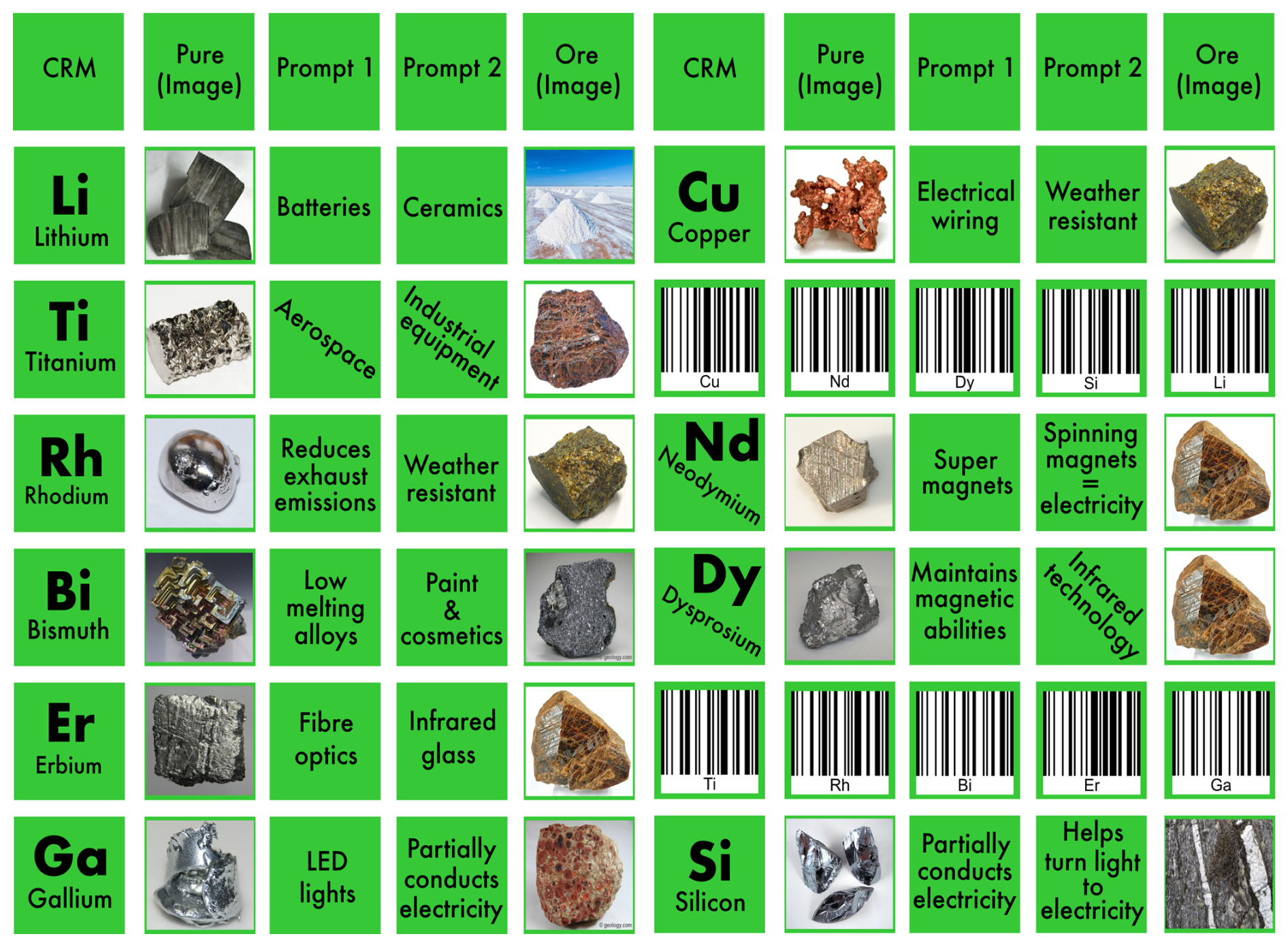
Figure A1The 10 GreenDealz critical raw material (CRM) shopping cube labels which include: CRM names, images of “pure” CRMs, i.e., elemental metals, their primary ores/extractive material, shopping clues/prompts and barcodes. CRM cubes include lithium (image sources: Encyclopaedia Britannica 2025; Lundberg, 2017), titanium (image sources: Chemical Elements, 2016b; Sepp, 2013), rhodium (image sources: Chemical Elements, 2016c; Schwen, 2006), bismuth (image sources: Chemical Elements, 2016d; King, 2025a), erbium (image sources: Chemical Elements, 2016e; Lavinsky, 2010), gallium (image sources: Chemical Elements, 2016f; King, 2025b), copper (image sources: Zander, 2007; Schwen, 2006), neodymium (image sources: Chemical Elements, 2016a; Lavinsky, 2010), dysprosium (image sources: Oelen, 2005; Lavinsky, 2010) and silicon (image sources: Chemistry Learner, 2025; Wilkins, 2015).
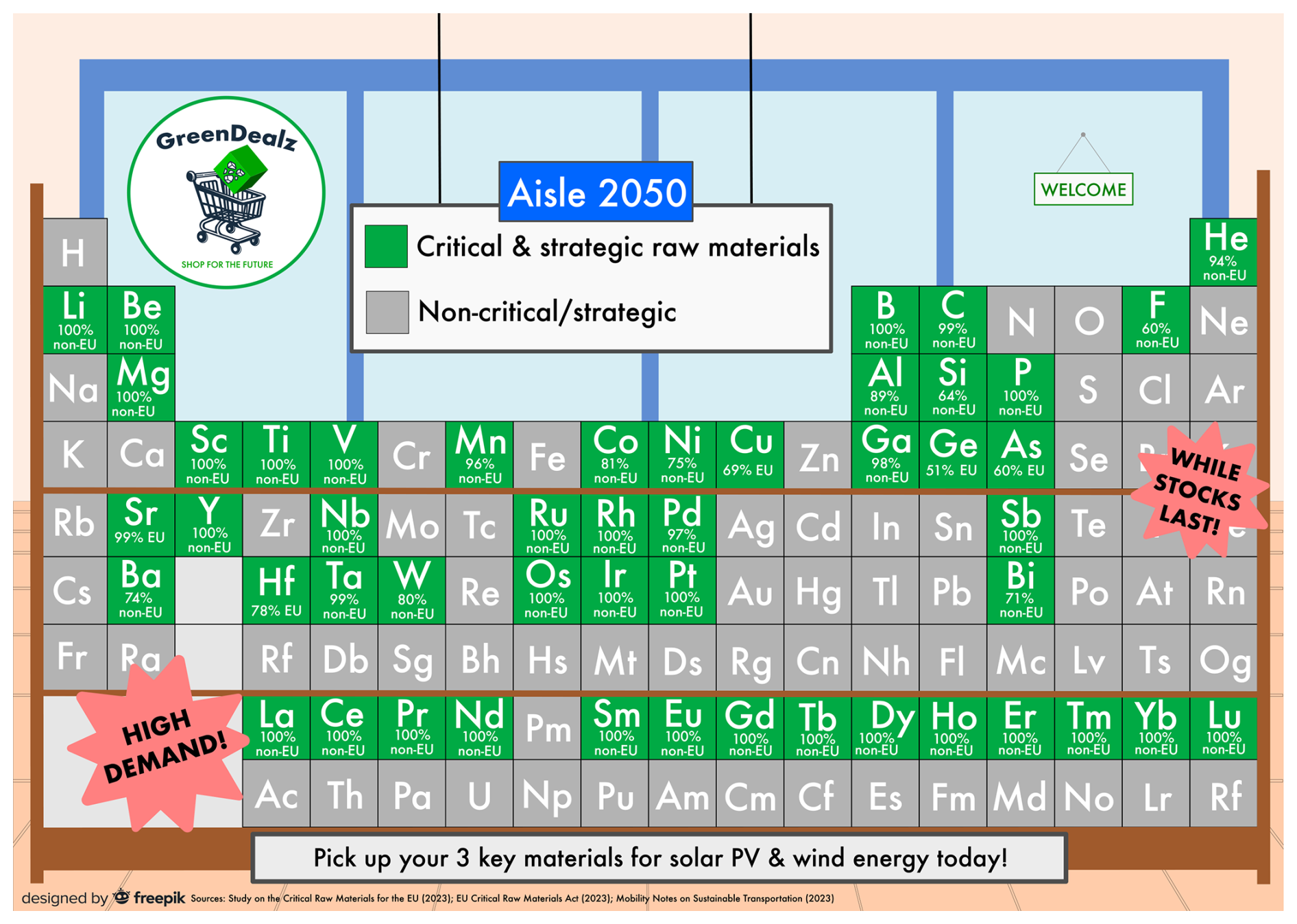
Figure A2GreenDealz “supermarket aisle 2050” (to be used in A2 format with 3 cm3 cubes). Supermarket aisle background (except for logo) is adapted from Freepik (2025).
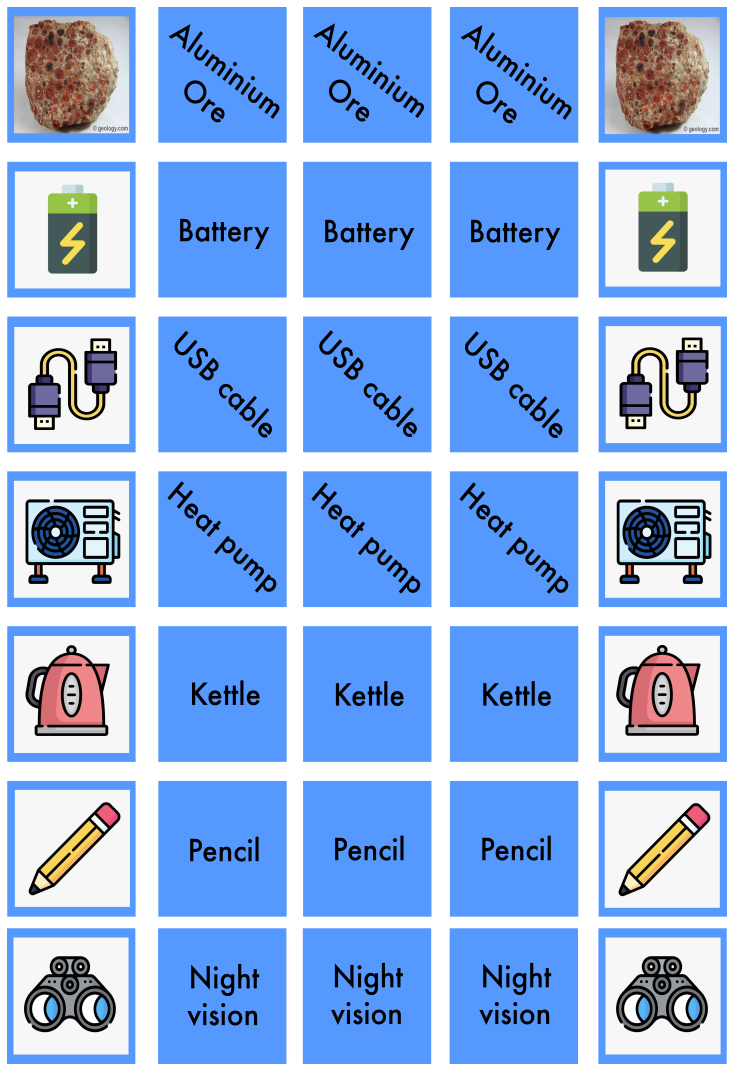
Figure A3Item cube labels for task 1 of the embedded assessment. Cubes include aluminium ore (image source: King, 2025b), a battery, USB cable, heat pump, kettle, pencil and night vision goggles (images sourced from Freepik, 2025).
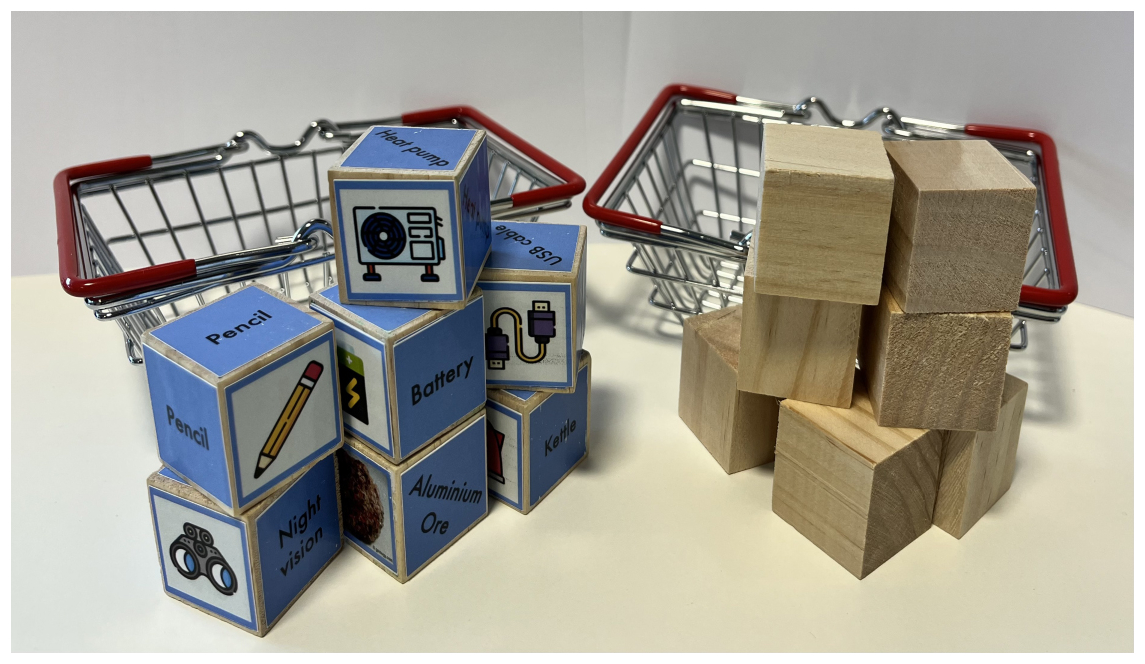
Figure A4Embedded assessment props; nine plain cubes, CRM item cubes (image sources: Freepik, 2025; King, 2025b) and shopping baskets.
Key learnings (and engagement moments)
-
CRMs come from the Earth and are important for renewable energy systems & society (assessing cubes for properties and pictures).
-
CRMs can have supply risk due to import reliance and/or demand (i.e., both wind and solar energy systems need a copper cube, import reliance labels on cube places within Aisle 2050).
-
The EU Green Deal cannot be achieved without CRMs (provide information and visuals on screen throughout engagement).
The data collected from participants for this study is not available for sharing as per ethical considerations.
LB and FM developed and designed the iterative phases of toolkit development. LB created the toolkit and conducted all analyses and data processing. GS was consulted for data collection and assessment techniques. LB was first author of the manuscript text. GS and FM gave constructive and on-going editorial feedback and critique.
The contact author has declared that none of the authors has any competing interests.
This research study received ethical approval from the University College Dublin Office of Research Ethics (LS-LR-24-188-McAuliffe). All participant data was kept anonymous. All data is securely held within University College Dublin. Analysis and interpretation reflect the authors' conclusions and hypothesis based on the data.
Publisher's note: Copernicus Publications remains neutral with regard to jurisdictional claims made in the text, published maps, institutional affiliations, or any other geographical representation in this paper. The authors bear the ultimate responsibility for providing appropriate place names. Views expressed in the text are those of the authors and do not necessarily reflect the views of the publisher.
We would like to extend our gratitude to Horizon Europe and all partners on the VECTOR project who made this research possible. We would also like to acknowledge University College Dublin and iCRAG Research Ireland Centre for Applied Geosciences where most of the research was carried out from. In addition, a warm thanks goes to all the festival and event facilitators who made it possible for us to attend and lastly to all the participants who completed our evaluations and activities.
This research has received funding from the European Union's Horizon Europe research and innovation programme as part of the VECTOR project under grant agreement no. 101058483.
This paper was edited by Stephany Mazon and reviewed by Antje Wittenberg, Courtney Onstad, and one anonymous referee.
Abrahamse, W.: Research Designs for Measuring the Effectiveness of Interventions, in: Research Methods for Environmental Psychology, John Wiley & Sons, Ltd, 291–306, https://doi.org/10.1002/9781119162124.ch15, 2016.
Agusdinata, D. B. and Liu, W.: Global sustainability of electric vehicles minerals: A critical review of news media, Extr. Ind. Soc., 13, 101231, https://doi.org/10.1016/j.exis.2023.101231, 2023.
Archer, M. O., Day, N., and Barnes, S.: Demonstrating change from a drop-in space soundscape exhibit by using graffiti walls both before and after, Geosci. Commun., 4, 57–67, https://doi.org/10.5194/gc-4-57-2021, 2021.
Arnold, W. E., McCroskey, J. C., and Prichard, S. V. O.: The Likert-type scale, Todays Speech, 15, 31–33, https://doi.org/10.1080/01463376709368825, 1967.
Baek, Y., Min, E., and Yun, S.: Mining Educational Implications of Minecraft, Comput. Sch., 37, 1–16, https://doi.org/10.1080/07380569.2020.1719802, 2020.
Bailin, S.: Critical Thinking and Science Education, Sci. Educ., 11, 361–375, https://doi.org/10.1023/A:1016042608621, 2002.
Başaran, H. and Topal, Ö. K.: Evaluation of the change in the scientific attitudes of the students participating in the science festival, Balıkesir Üniversitesi Fen Bilim. Enstitüsü Derg., 24, 645–671, https://izlik.org/JA67LS42PC (last access: 15 April 2026), 2022.
Becker-Klein, R., Peterman, K., and Stylinski, C.: Embedded Assessment as an Essential Method for Understanding Public Engagement in Citizen Science, Citiz. Sci. Theory Pract., 1, 8–8, https://doi.org/10.5334/cstp.15, 2016.
Benitz, M. A. and Yang, L.-L.: Teaching Wind Energy to Engineering and Education Undergraduates Through Community Engagement, J. Phys. Conf. Ser., 1452, 012020, https://doi.org/10.1088/1742-6596/1452/1/012020, 2020.
BGS Press: BGS unveils #TheCommoditree at Glastonbury 2023, Br. Geol. Surv., https://www.bgs.ac.uk/news/bgs-unveils-thecommoditree-at-glastonbury/ (last access: 17 January 2025), 2023.
Braun, V. and Clarke, V.: Using thematic analysis in psychology, Qual. Res. Psychol., 3, 77–101, https://doi.org/10.1191/1478088706qp063oa, 2006.
Bucchi, M.: Of deficits, deviations and dialogues: Theories of public communication of science, in: Handbook of Public Communication of Science and Technology, edited by: Bucchi, M. and Trench, B., Routledge, https://doi.org/10.4324/9780203928240-11, 2008.
Bultitude, K. and Sardo, A. M.: Leisure and Pleasure: Science events in unusual locations, Int. J. Sci. Educ., 34, 2775–2795, https://doi.org/10.1080/09500693.2012.664293, 2012.
Burton, R. F.: Multiple-choice and true/false tests: myths and misapprehensions, Assess. Eval. High. Edu., 30, 65–72, https://doi.org/10.1080/0260293042003243904, 2005.
Calvo, G. and Valero, A.: Strategic mineral resources: Availability and future estimations for the renewable energy sector, Environ. Dev., 41, 100640, https://doi.org/10.1016/j.envdev.2021.100640, 2022.
Carrara, S., Alves Dias, P., Plazzotta, B., and Pavel, C.: Raw materials demand for wind and solar PV technologies in the transition towards a decarbonised energy system, Publications Office of the European Union, Luxembourg, https://doi.org/10.2760/160859, 2020.
Carrara, S., Bobba, S., Blagoeva, S., Alves Dias, P., Cavalli, A., Georgitzikis, K., Grohol, M., Itul, A., Kuzov, T., Latunussa, C., Lyons, L., Malano, G., Maury, T., Prior Arce, A., Somers, J., Telsnig, T., Veeh, C., Wittmer, D., Black, C., Pennington, D., and Christou, M.: Supply chain analysis and material demand forecast in strategic technologies and sectors in the EU – A foresight study, Publications Office of the European Union, Luxembourg, https://doi.org/10.2760/386650, 2023.
Central Statistics Office: Educational Attainment Thematic Report 2024, Central Statistics Office, https://www.cso.ie/en/releasesandpublications/ep/p-eda/educationalattainmentthematicreport2024/keyfindings/ (last access: 30 March 2026), 2024.
Chemical Elements: A Virtual Museum: Neodymium, https://images-of-elements.com/neodymium.php (last access: 16 June 2025), 2016a.
Chemical Elements: A Virtual Museum: Titanium, https://images-of-elements.com/titanium.php (last access: 27 August 2025), 2016b.
Chemical Elements: A Virtual Museum: Rhodium, https://images-of-elements.com/rhodium.php (last access: 15 June 2025), 2016c.
Chemical Elements: A Virtual Museum: Bismuth, https://images-of-elements.com/bismuth.php (last access: 16 June 2025), 2016d.
Chemical Elements: A Virtual Museum: Erbium, https://images-of-elements.com/erbium.php (last access: 16 June 2025), 2016e.
Chemical Elements: A Virtual Museum: Gallium, https://images-of-elements.com/gallium.php (last access: 27 August 2025), 2016f.
Chemistry Learner: Silicon, https://www.chemistrylearner.com/silicon.html, last access: 16 June 2025.
Conte, N.: Charted: The World's Most Educated Countries, Vis. Capital., https://www.visualcapitalist.com/charted-the-worlds-most-educated-countries/ (last access: 30 January 2026), 2025.
Cottone, E. and Byrd-Bredbenner, C.: Knowledge and Psychosocial Effects of the Film Super Size Me on Young Adults, J. Am. Diet. Assoc., 107, 1197–1203, https://doi.org/10.1016/j.jada.2007.04.005, 2007.
Cronbach, L. J.: Coefficient alpha and the internal structure of tests, Psychometrika, 16, 297–334, https://doi.org/10.1007/BF02310555, 1951.
Encyclopaedia Britannica: Lithium, https://www.britannica.com/science/lithium-chemical-element, last access: 25 January 2025.
European Commission: Communication from the Commission to the European Parliament, The European Council, The Council, The European Economic and Social Committee and the Committee of the Regions – The European Green Deal, COM(2019) 640 final, https://eur-lex.europa.eu/legal-content/EN/ALL/?uri=CELEX:52019DC0640 (last access: 17 January 2025), 2019.
European Commission and Directorate-General for Climate Action: Special Eurobarometer 538 Climate change – Report, Publications Office of the European Union, https://doi.org/10.2834/653431, 2023.
European Commission, Directorate-General for Internal Market, Industry, Entrepreneurship and SMEs, Bobba, S., Carrara, S., Huisman, J., Mathieux, F., and Pavel, C.: Critical Raw Materials for Strategic Technologies and Sectors in the EU – A Foresight Study, Publications Office of the European Union, Luxembourg, https://doi.org/10.2873/58081, 2020.
European Commission, Joint Research Centre, and Georgitzikis, K.: Data collection for the Raw Materials Information System (RMIS), Publications Office of the European Union, Luxembourg, https://doi.org/10.2760/015132, 2024.
European Parliament and Council of the European Union: Regulation (EU) 2024/1252 of the European Parliament and of the Council of 11 April 2024 establishing a framework for ensuring a secure and sustainable supply of critical raw materials and amending Regulations (EU) No 168/2013, (EU) 2018/858, (EU) 2018/1724 and (EU) 2019/1020 (Text with EEA relevance), OJ L, 2024/1252, 3.5.2024, http://data.europa.eu/eli/reg/2024/1252/oj/eng (last access: 17 January 2025), 2024.
Fenichel, M. and Schweingruber, H. A.: Surrounded by Science: Learning Science in Informal Environments, National Academies Press, Washington, D.C., https://doi.org/10.17226/12614, 2010.
Freepik: https://www.flaticon.com/authors/freepik, last access: 27 August 2025.
Ford, A. K.: Resonance in rocks: Building a sustainable learning and engagement programme for the Jurassic Coast, Proc. Geol. Assoc., 130, 507–521, https://doi.org/10.1016/j.pgeola.2018.10.003, 2019.
Grand, A. and Sardo, A. M.: What Works in the Field? Evaluating Informal Science Events, Front. Commun., 2, https://doi.org/10.3389/fcomm.2017.00022, 2017.
Granvik, P., Hanski, J., Lähdesmäki, S., Jokilaakso, A., and Huttunen-Saarivirta, E.: Critical raw materials for green transition: Key parameters and feasibility index for sufficiency, Resour. Conserv. Recy., 218, 108197, https://doi.org/10.1016/j.resconrec.2025.108197, 2025.
Grimm, P.: Social Desirability Bias, in: Wiley International Encyclopedia of Marketing, John Wiley & Sons, Ltd, https://doi.org/10.1002/9781444316568.wiem02057, 2010.
Grohol, M., Veeh, C., Directorate-General for Internal Market, Industry, Entrepreneurship and SMEs, and European Commission: Study on the critical raw materials for the EU 2023: final report, Publications Office of the European Union, Luxembourg, https://data.europa.eu/doi/10.2873/725585, 2023.
Gronlund, N. E.: Assessment of Student Achievement, 6th edn., Allyn & Bacon Publishing, Longwood Division, Needham Heights, MA, ISBN 0-205-26858-7, 1998.
Huang, H.-L., Lu, W.-R., Liu, C.-L., and Chang, H.-J.: Advance care planning information intervention for persons with mild dementia and their family caregivers: Impact on end-of-life care decision conflicts, PLOS ONE, 15, e0240684, https://doi.org/10.1371/journal.pone.0240684, 2020.
Illingworth, S.: Creative communication – using poetry and games to generate dialogue between scientists and nonscientists, FEBS Lett., 594, 2333–2338, https://doi.org/10.1002/1873-3468.13891, 2020.
Illingworth, S.: A spectrum of geoscience communication: from dissemination to participation, Geosci. Commun., 6, 131–139, https://doi.org/10.5194/gc-6-131-2023, 2023.
International Energy Agency: Global Critical Minerals Outlook 2025, International Energy Agency (IEA), Paris, https://www.iea.org/reports/global-critical-minerals-outlook-2025 (last access: 18 January 2026), 2025.
Jellema, J. and Mulder, H. A. J.: Public Engagement in Energy Research, Energies, 9, 125, https://doi.org/10.3390/en9030125, 2016.
Jensen, A. M., Jensen, E. A., Duca, E., and Roche, J.: Investigating diversity in European audiences for public engagement with research: Who attends European Researchers' Night in Ireland, the UK and Malta?, PLOS ONE, 16, e0252854, https://doi.org/10.1371/journal.pone.0252854, 2021.
Jensen, E. and Buckley, N.: Why people attend science festivals: Interests, motivations and self-reported benefits of public engagement with research, Public Underst. Sci., 23, 557–573, https://doi.org/10.1177/0963662512458624, 2014.
Jensen, E. A.: The problems with science communication evaluation, J. Sci. Commun., 13, C04, https://doi.org/10.22323/2.13010304, 2014.
Kennedy, E. B., Jensen, E. A., and Verbeke, M.: Preaching to the scientifically converted: evaluating inclusivity in science festival audiences, Int. J. Sci. Educ. Part B, 8, 14–21, https://doi.org/10.1080/21548455.2017.1371356, 2018.
King, H. M.: Galena, https://geology.com/minerals/galena.shtml (last access: 16 June 2025), 2025a.
King, H. M.: Bauxite, https://geology.com/minerals/bauxite.shtml (last access: 16 June 2025), 2025b.
Kuehl, C., Sparks, A. C., Hodges, H., and Smith, E. R. A. N.: Exploring sustainability literacy: developing and assessing a bottom-up measure of what students know about sustainability, Front. Sustain., 4, https://doi.org/10.3389/frsus.2023.1167041, 2023.
Lavinsky, R.: Wikimedia Commons, https://commons.wikimedia.org/wiki/File:Monazite-169954.jpg (last access: 16 June 2025), 2010.
Lee, C.: We rely heavily on lithium batteries – but there's a growing array of alternatives, BBC News, 20 March, https://www.bbc.com/future/article/20240319-the-most-sustainable-alternatives-to-lithium-batteries (last access: 11 March 2025), 2024.
Leitão, R., Maguire, M., Turner, S., Arenas, F., and Guimarães, L.: Ocean literacy gamified: A systematic evaluation of the effect of game elements on students' learning experience, Environ. Educ. Res., 28, 276–294, https://doi.org/10.1080/13504622.2021.1986469, 2022.
Lemos, M., Wolfart, S., and Rittich, A. B.: Assessment and evaluation of a serious game for teaching factual knowledge in dental education, BMC Med. Educ., 23, 521, https://doi.org/10.1186/s12909-023-04498-5, 2023.
Lundberg, D.: Wikimedia Commons, https://commons.wikimedia.org/wiki/File:20170809_Bolivia_1505_crop_Uyuni_sRGB_(37980063931).jpg (last access: 25 January 2025), 2017.
Martin, S., Chamberlain, C., Rivett, A., and Selman, L. E.: How are public engagement health festivals evaluated? A systematic review with narrative synthesis, PLOS ONE, 17, e0267158, https://doi.org/10.1371/journal.pone.0267158, 2022.
McCartney, G. and Ip Si Kei, D.: Art festival attendance: Who attends and why with implications on developing future festival attractiveness, J. Conv. Event Tour., 19, 268–285, https://doi.org/10.1080/15470148.2018.1460887, 2018.
Miller, J. D.: Scientific Literacy: A Conceptual and Empirical Review, Daedalus, 112, 29–48, 1983.
Miller, J. D., Laspra, B., Polino, C., Branch, G., Ackerman, M. S., and Pennock, R. T.: Citizen attitudes toward science and technology, 1957–2020: measurement, stability, and the Trump challenge, Sci. Publ. Policy, 51, 526–542, https://doi.org/10.1093/scipol/scad086, 2024.
Moffat, K. and Zhang, A.: The paths to social licence to operate: An integrative model explaining community acceptance of mining, Resour. Policy, 39, 61–70, https://doi.org/10.1016/j.resourpol.2013.11.003, 2014.
Nederhof, A. J.: Methods of coping with social desirability bias: a review, Eur. J. Soc. Psychol., 15, 263–280, https://doi.org/10.1002/ejsp.2420150303, 1985.
Nelson, D. J., Grazier, K. R., Paglia, J., and Perkowitz, S. (Eds.): Hollywood Chemistry: When Science Met Entertainment, American Chemical Society, https://doi.org/10.1021/bk-2013-1139, 2013.
Niranjan, A.: EU moves to cut dependency on China for battery and solar panel materials, The Guardian, 14 September, https://www.theguardian.com/world/2023/sep/14/eu-diversify-materials-car-battery-solar-panels-vote-parliament (last access: 4 April 2024), 2023.
Oelen, W.: Wikimedia Commons, https://commons.wikimedia.org/wiki/File:Dysprosium2.jpg (last access: 4 February 2026), 2005.
Parkins, J. R., Rollins, C., Anders, S., and Comeau, L.: Predicting intention to adopt solar technology in Canada: The role of knowledge, public engagement, and visibility, Energ. Policy, 114, 114–122, https://doi.org/10.1016/j.enpol.2017.11.050, 2018.
Pellizzone, A., Allansdottir, A., De Franco, R., Muttoni, G., and Manzella, A.: Geothermal energy and the public: A case study on deliberative citizens' engagement in central Italy, Energ. Policy, 101, 561–570, https://doi.org/10.1016/j.enpol.2016.11.013, 2017.
Petitjean, O. and Verheecke, L.: Blood on the Green Deal – How the EU is boosting the mining and defence industries in the name of climate action, Corporate Europe Observatory and Observatoire des Multinationales, https://corporateeurope.org/en/2023/11/blood-green-deal (last access: 4 April 2024), 2023.
Pidgeon, N. and Fischhoff, B.: The role of social and decision sciences in communicating uncertain climate risks, Nat. Clim. Change, 1, 35–41, https://doi.org/10.1038/nclimate1080, 2011.
Poluektova, O., Julienne, H., Robertson, D. A., Braiden, A. K., and Lunn, P. D.: Primacy effects in the formation of environmental attitudes: The case of mineral exploration, J. Environ. Psychol., 94, 102248, https://doi.org/10.1016/j.jenvp.2024.102248, 2024.
Quinn, B.: Problematising “Festival Tourism”: Arts Festivals and Sustainable Development in Ireland, J. Sustain. Tour., 14, 288–306, https://doi.org/10.1080/09669580608669060, 2006.
Richter, J. L., Johnson, M., Schepper, K. D., Fitzpatrick, C., Gunter, J., and Peeters, J.: More Aware Through Repair: Educating about Critical Raw Materials, in: CARE Innovations Conference Proceedings, The International Institute for Industrial Environmental Economics at Lund University, Sweden, https://portal.research.lu.se/en/publications/more-aware-through-repair-educating-about-critical-raw-materials/ (last access: 27 March 2024), 2018.
Riise, J.: Bringing Science to the Public, in: Communicating Science in Social Contexts: New models, new practices, edited by: Cheng, D., Claessens, M., Gascoigne, T., Metcalfe, J., Schiele, B., and Shi, S., Springer Netherlands, Dordrecht, 301–309, https://doi.org/10.1007/978-1-4020-8598-7_18, 2008.
Robinson, L.: The Super Materials of the Super Heroes, JOM, 64, 13–19, https://doi.org/10.1007/s11837-012-0256-x, 2012.
Roche, J., Stanley, J., and Davis, N.: Engagement with physics across diverse festival audiences, Phys. Educ., 51, 045007, https://doi.org/10.1088/0031-9120/51/4/045007, 2016a.
Roche, J., Cullen, R., and Ball, S.-L.: The Educational Opportunity of a Modern Science Show, Int. J. Sci. Soc., 8, 21–30, https://doi.org/10.18848/1836-6236/CGP/v08i03/21-30, 2016b.
Rodrigues, J., Costa E Silva, E., and Pereira, D. I.: How Can Geoscience Communication Foster Public Engagement with Geoconservation?, Geoheritage, 15, 32, https://doi.org/10.1007/s12371-023-00800-5, 2023.
Rogers, S. L., Giles, S., Dowey, N., Greene, S. E., Bhatia, R., Van Landeghem, K., and King, C.: “you just look at rocks, and have beards” Perceptions of Geology From the United Kingdom: A Qualitative Analysis From an Online Survey, Earth Sci. Syst. Soc., 4, 10078, https://doi.org/10.3389/esss.2024.10078, 2024.
Rose, K. M., Korzekwa, K., Brossard, D., Scheufele, D. A., and Heisler, L.: Engaging the Public at a Science Festival: Findings From a Panel on Human Gene Editing, Sci. Commun., 39, 250–277, https://doi.org/10.1177/1075547017697981, 2017.
Rosenberg, M. J.: The conditions and consequences of evaluation apprehension, in: Artifacts in Behavioral Research: Robert Rosenthal and Ralph L. Rosnow's Classic Books, edited by: Rosenthal, R., Rosnow, R., and Kazdin, A. E., Oxford University Press, New York, NY, US, 211–263, https://doi.org/10.1093/acprof:oso/9780195385540.001.0001, 1969.
Rowe, G. and Frewer, L. J.: A Typology of Public Engagement Mechanisms, Sci. Technol. Hum. Val., 30, 251–290, https://doi.org/10.1177/0162243904271724, 2005.
Sardo, A. M. and Grand, A.: Science in Culture: Audiences' Perspective on Engaging With Science at a Summer Festival, Sci. Commun., 38, 251–260, https://doi.org/10.1177/1075547016632537, 2016.
Schuitema, G. and Olomo, O.: VECTOR Deliverable 3.3 – How values shape the perceived needs for Critical Raw Materials: Results of a pilot study, 10.6084/m9.figshare.25101944, 2024.
Schwen, D.: Wikimedia Commons, https://commons.wikimedia.org/wiki/File:Min_chalcopyrite.jpg (last access: 27 August 2025), 2006.
Sepp, S.: Rutile (ore of titanium), alamy, https://www.alamy.com/stock-photo-rutile-ore-of-titanium-57728713.html?imageid=D341F780-41EB-4954-813E-30717B8B0FDD&pn=1&searchId=6c58954f9cfd75d2f54884f9f374c443&searchtype=0 (last access: 25 January 2025), 2013.
Sovacool, B. K., Ali, S. H., Bazilian, M., Radley, B., Nemery, B., Okatz, J., and Mulvaney, D.: Sustainable minerals and metals for a low-carbon future, Science, 367, 30–33, https://doi.org/10.1126/science.aaz6003, 2020.
Stewart, I.: Geology for the wellbeing economy, Nat. Geosci., 16, 106–107, https://doi.org/10.1038/s41561-022-01110-1, 2023.
Stewart, I. S. and Lewis, D.: Communicating contested geoscience to the public: Moving from “matters of fact” to “matters of concern”, Earth-Sci. Rev., 174, 122–133, https://doi.org/10.1016/j.earscirev.2017.09.003, 2017.
Stocklmayer, S. M. and Rennie, L. J.: The Attributes of Informal Science Education: A Science Communication Perspective, in: Preparing Informal Science Educators: Perspectives from Science Communication and Education, edited by: Patrick, P. G., Springer International Publishing, Cham, 527–544, https://doi.org/10.1007/978-3-319-50398-1_26, 2017.
Troll, V. R. and Arndt, N. T.: European Raw Materials Resilience – Turning a Blind Eye, Earth Sci. Syst. Soc., 2, 10058, https://doi.org/10.3389/esss.2022.10058, 2022.
Varner, J.: Scientific Outreach: Toward Effective Public Engagement with Biological Science, BioScience, 64, 333–340, https://doi.org/10.1093/biosci/biu021, 2014.
Vergunst, N., Varol, T., and van Sebille, E.: Designing and evaluating a public engagement activity about sea level rise, Geosci. Commun., 8, 67–80, https://doi.org/10.5194/gc-8-67-2025, 2025.
Vicente-Molina, M. A., Fernández-Sáinz, A., and Izagirre-Olaizola, J.: Environmental knowledge and other variables affecting pro-environmental behaviour: comparison of university students from emerging and advanced countries, J. Clean. Prod., 61, 130–138, https://doi.org/10.1016/j.jclepro.2013.05.015, 2013.
Vidal, O., Goffé, B., and Arndt, N.: Metals for a low-carbon society, Nat. Geosci., 6, 894–896, https://doi.org/10.1038/ngeo1993, 2013.
Whalen, K. A.: In the Loop: Design of a Serious Game to Create Awareness about Critical Raw Materials, Master's Thesis, TU Delft, https://resolver.tudelft.nl/uuid:6aa33047-65b7-4f8f-bc07-b629f52bddbe (last access: 3 April 2024), 2013.
Wilkins, J.: Quartz vein cutting schist, https://www.geograph.ie/photo/4618367 (last access: 27 August 2025), 2015.
Williams, M. and Bowdin, G. A.: Festival evaluation: An exploration of seven UK arts festivals, Manag. Leis., 12, 187–203, https://doi.org/10.1080/13606710701339520, 2007.
Wilson, M. and Sloane, K.: From Principles to Practice: An Embedded Assessment System, Appl. Meas. Educ., 13, 181–208, https://doi.org/10.1207/S15324818AME1302_4, 2000.
Zander, J.: Wikimedia Commons, https://commons.wikimedia.org/wiki/File:Natural_Copper_Ore_Macro_1.JPG (last access: 16 June 2025), 2007.
Zhou, L., Zeng, Q., Jin, S., and Cheng, G.: The impact of changes in dietary knowledge on adult overweight and obesity in China, PLOS ONE, 12, e0179551, https://doi.org/10.1371/journal.pone.0179551, 2017.
- Abstract
- Introduction
- Process of toolkit development
- Toolkit development
- Discussion
- Conclusion
- Appendix A: GreenDealz Kit and Materials
- Appendix B: GreenDealz user guidance
- Data availability
- Author contributions
- Competing interests
- Ethical statement
- Disclaimer
- Acknowledgements
- Financial support
- Review statement
- References
- Abstract
- Introduction
- Process of toolkit development
- Toolkit development
- Discussion
- Conclusion
- Appendix A: GreenDealz Kit and Materials
- Appendix B: GreenDealz user guidance
- Data availability
- Author contributions
- Competing interests
- Ethical statement
- Disclaimer
- Acknowledgements
- Financial support
- Review statement
- References