
the Creative Commons Attribution 4.0 License.
the Creative Commons Attribution 4.0 License.
 | 25 Mar 2026
Development and Iterative Design of an educational game “Magma Pop” to teach undergraduate fractional crystallization concepts
Sriparna Saha
Ben Kennedy
Alexander R. L. Nichols
Erik Brogt
Nikita Harris
Simon Hoermann
Fractional crystallization and mineralogy are foundational yet challenging topics in undergraduate geoscience education. The M&M's® magma chamber lab is a widely used hands-on activity to illustrate these concepts, but students often focus on procedural tasks over conceptual understanding. To address this, Magma Pop, a serious educational game, was developed for a third-year volcanology course at the University of Canterbury, New Zealand. The game reinforces key concepts such as mineral formulae, the role of fractional crystallization, and the relationship between temperature and magma composition through interactive, visual gameplay. In this paper, we document the iterative development of Magma Pop and aim to emphasize the role of games in advancing geoscience pedagogy and highlight how Magma Pop can be used in a geoscience curriculum.
- Article
(5132 KB) - Full-text XML
-
Supplement
(401 KB) - BibTeX
- EndNote


Geoscience education at tertiary level traditionally teaches in a format of lectures, hands on practical laboratories, and fieldwork (e.g. Dohaney, 2013). Volcanology and igneous petrology lecturers need increasingly more diverse pedagogies to embrace teaching computational skills and utilise virtual environments (e.g. Jolley et al., 2022; Dohaney et al., 2023). Game-based learning is becoming increasingly prevalent in higher education as it fosters critical thinking and creative problem-solving and ensures cognitive development and social learning (Kleinman et al., 2021; Pivec, 2007). Educational or serious games are interactive digital applications that go beyond entertainment and incorporate educational, informational, or training objectives as the goal of the game (Laamarti et al., 2014).
Locally situated serious games are handy for understanding geological processes (such as earthquakes, volcanic eruptions) as they enable learners to understand complex topics and decision-making that can translate into real-world preparedness (Arnold et al., 2013; Mani et al., 2016). For example, the serious game St. Vincent's Volcano aims to enable people of all ages to recognize the signs of an eruption and what to do if such situations arise in the Caribbean Island of St. Vincent (Mani et al., 2016). Another game, Earth Girl Volcano (Kerlow et al., 2020), targets regions around the Ring of Fire, such as the Philippines, Indonesia, and Vanuatu. Earth Girl volcano allows players to prepare for emergency evacuations and respond during volcanic hazards, providing a platform for informal learning about volcanic risk, disaster management, and preparedness. Games based in places of volcanic activity can simulate elements of decision-making and provide insights into understanding potential risks. The use of serious games as a pedagogical tool builds on this momentum, however, their use is relatively new in geoscience education (e.g. McGowan and Alcott, 2022) and their potential is just beginning to be explored for a range of concepts and topics.
Fractional crystallization and mineral chemistry are foundational concepts in geoscience degree programs but remain challenging for all students to grasp (Wirth, 2003). Minerals with specific chemical compositions crystallize from magma to form igneous rocks over a range of temperatures in a sequence that is known as the Bowen's Reaction Series. As the minerals sequentially crystallize within a cooling magma chamber, the remaining melt changes chemical composition, a process known as fractional crystallization. Students often struggle to fully understand Bowen's Reaction Series and fractional crystallization process (Wirth, 2003). To overcome this, Karl Wirth designed the M&M's® magma chamber lab activity at Macalester College to facilitate comprehension of fractional crystallization processes. By the end of the M&M's® lab, students are expected to explain how the chemistry of minerals and remaining melt changes as crystallization proceeds (i.e., as the magma chamber cools). In the context of this paper, the M&M's® lab is part of an intermediate-level undergraduate course on volcanology and magmatic systems at the University of Canterbury in New Zealand. In this course, students examine the nature, origin, and interpretation of igneous rocks and mineral assemblages and the magmatic processes that have produced these materials.
During the M&M's® lab students work in groups and calculate changes in the chemistry of the minerals being removed and the remaining melt that occur as the magma gradually cools over time using different coloured M&M's® (Wirth, 2003). Major elements in the magma are generally expressed as oxides and each major element – silicon (Si), titanium (Ti), aluminium (Al), iron (Fe), magnesium (Mg), calcium (Ca), sodium (Na) potassium (K) – is represented by different coloured M&M's®. During the lab exercise, students model the process of crystallizing a magma chamber in a series of steps, simulating changes in the chemistry of the minerals removed and the remaining liquid that occur as the magma gradually cools and solidifies over time. However, over the years, the course instructors noticed that students become too focused on filling in the excel spreadsheet and counting M&M's® rather than grappling with the conceptual aspects and implications of fractional crystallization. Therefore, Magma Pop was developed to keep track of the major element oxide percentages and reinforce the conceptual and knowledge goals of the M&M's® magma chamber lab using a serious game.
Magma Pop was thus created with the intention of supporting the hands-on M&M's® lab and providing students with the ability to visualize fractional crystallization concepts and practice mineral formulae. Magma Pop aims to improve students' (1) knowledge of mineral formulae, (2) tighten understanding of the role of fractional crystallization in igneous rock compositions, and (3) understanding of the interplay between temperature and composition of solid solution minerals, crystallization, and residual magmas. The game also reduces the cognitive load of counting M&M's® and filling in the spreadsheet (Schnotz and Kürschner, 2007).
Magma Pop requires no prior experience and can be played on a PC with a mouse. The first two levels of Magma Pop are designed to re-enforce the learning of mineral formulae by repetition. The first level of Magma Pop v.1 is called “The Magma Neophyte” (Fig. 1) and has three sublevels. In this level, students practice different mineral formulae by generating specific minerals at each sublevel (forsterite, fayalite and diopside at level 1-1; anorthite, albite, diopside at level 1-2 and quartz, ilmenite and magnetite at level 1-3).
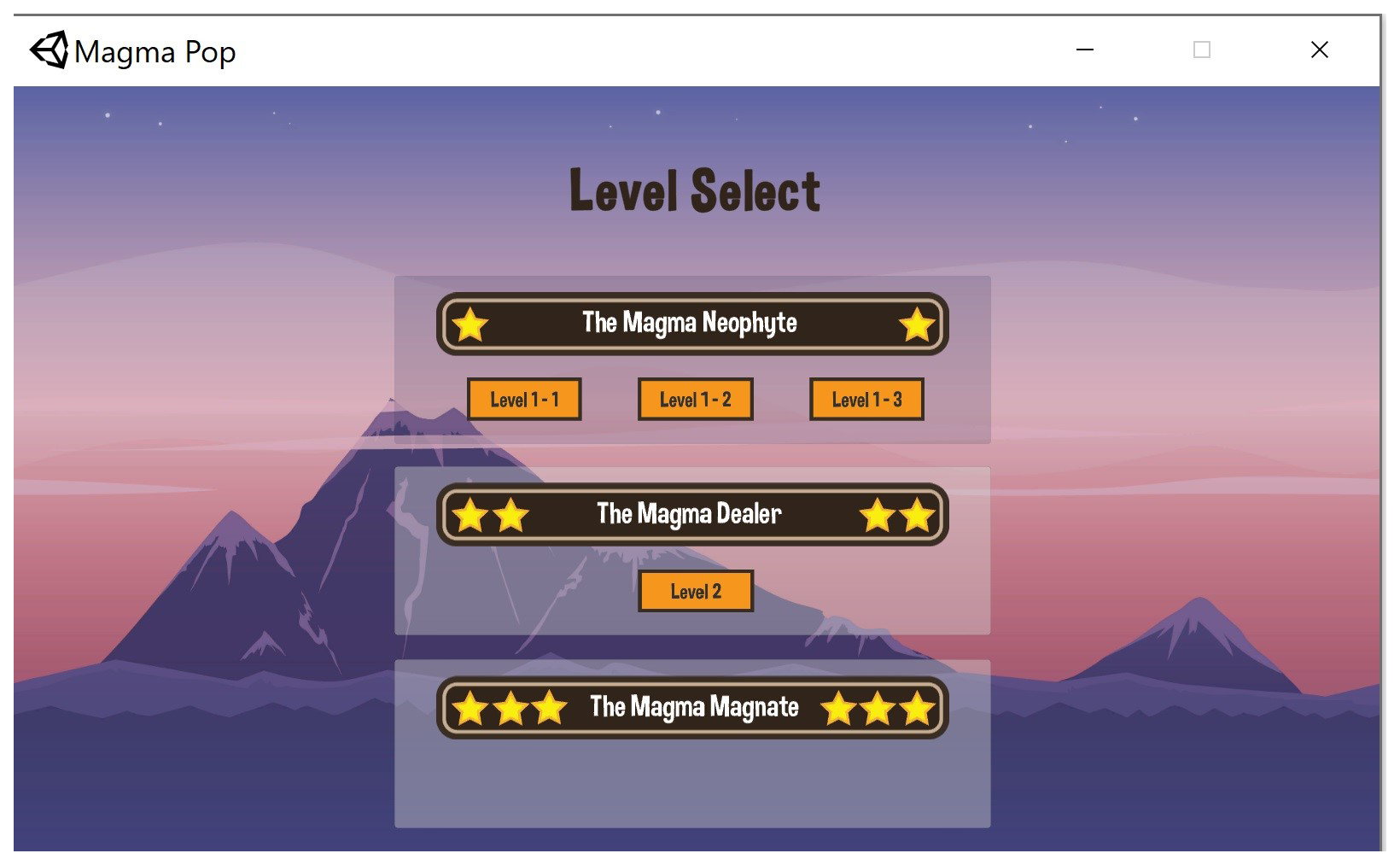
Figure 1Home screen of Magma Pop v.1 which shows the three levels – the Magma Neophyte, the Magma Dealer and the Magma Magnate.
The gameplay screen (Fig. 2) represents a magma chamber filled with various elements (ions), Si, Ti, Al, Fe, Mg, Ca, Na and K like in the M&M's® lab, and additionally oxygen (O) to complete the mineral formulae. To create particular minerals, players must select the specific ions in its chemical formula. For example, to make the mineral forsterite, players must select two Mg, one Si and four O ions. After the mineral is successfully created, it sinks to the bottom of the magma chamber simulating the process of gravitational settling. The minerals to be collected for each level are listed in an objective panel (on the bottom left corner of the gameplay screen) and the mineral formulae are available on the formula panel (at the bottom right corner of the gameplay screen; see Fig. 2).
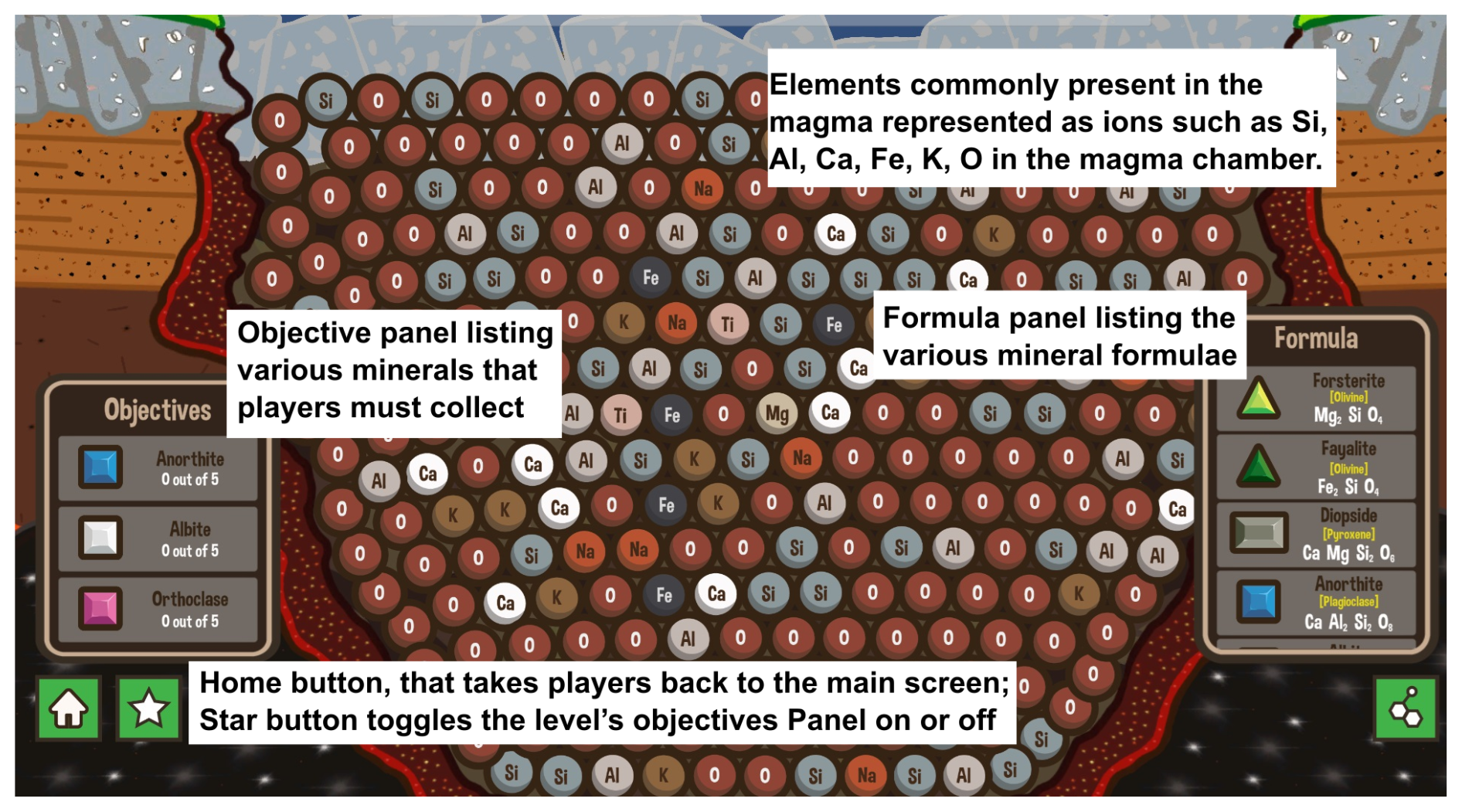
Figure 2The magma neophyte screen where players have to collect specific number of minerals by combining the different constituent elements (ions) that are present within the magma chamber. The formula panel on the right helps players with the mineral formula. The various text boxes highlight the features of the game screen.
Every time a level is loaded, the magma chamber receives a fresh set of 200 element (ions) that are generated based on the level design. Each level has three green icons located at the bottom of the screen (Fig. 2). The Home button (on the left bottom corner of the screen) takes players back to the Level Select screen. The Formula button on the right (i.e., button with with hexagons) shows the list of mineral formulae that players are required to create during gameplay. Players can then scroll through this list to look up the mineral formula that needs to be made (as listed in the objective window located on the bottom left side of the gameplay screen). The Star button on the left toggles the level's Objectives Panel on or off. When players collect all the minerals that are listed in the Objectives Panel, the panel turns green, and players can proceed to the next level. Upon completing the three sublevels, Level 2 “The Magma Dealer” is unlocked (Fig. 1).
The Magma Dealer level differs from the Magma Neophyte in that there is a temperature panel and the objectives keep changing as the temperature drops (i.e., an increasing number of minerals need to be crystallized). This leads to the increasingly rapid nature of the game play (as described by the students, see Sect. 4.2, Challenges with Pacing and Cognitive Load). In this level oxygen is ignored and players are required to combine only the right constituent cations (i.e. Si, Ti, Al etc.) to form the minerals listed in the objective panel. In addition, the element gold (Au) and compound water (H2O) are added to the constituents of the magma chamber to emphasize the behaviour of “incompatible elements” during fractional crystallization. Au and H2O remain in the melt as they do not fit into any crystallizing mineral – i.e. they are incompatible during the fractional crystallization. As crystallization proceeds, Au and H2O concentrations in the remaining melt increase, ultimately enriching late-stage melts or fluids. In this way, Au acts as an analogue for ore-forming trace elements that can reach economically significant concentrations in evolved magmas, while H2O exemplifies volatile enrichment in evolved magmas, affecting melt viscosity, mineral stability, and promoting more explosive eruptive behavior.
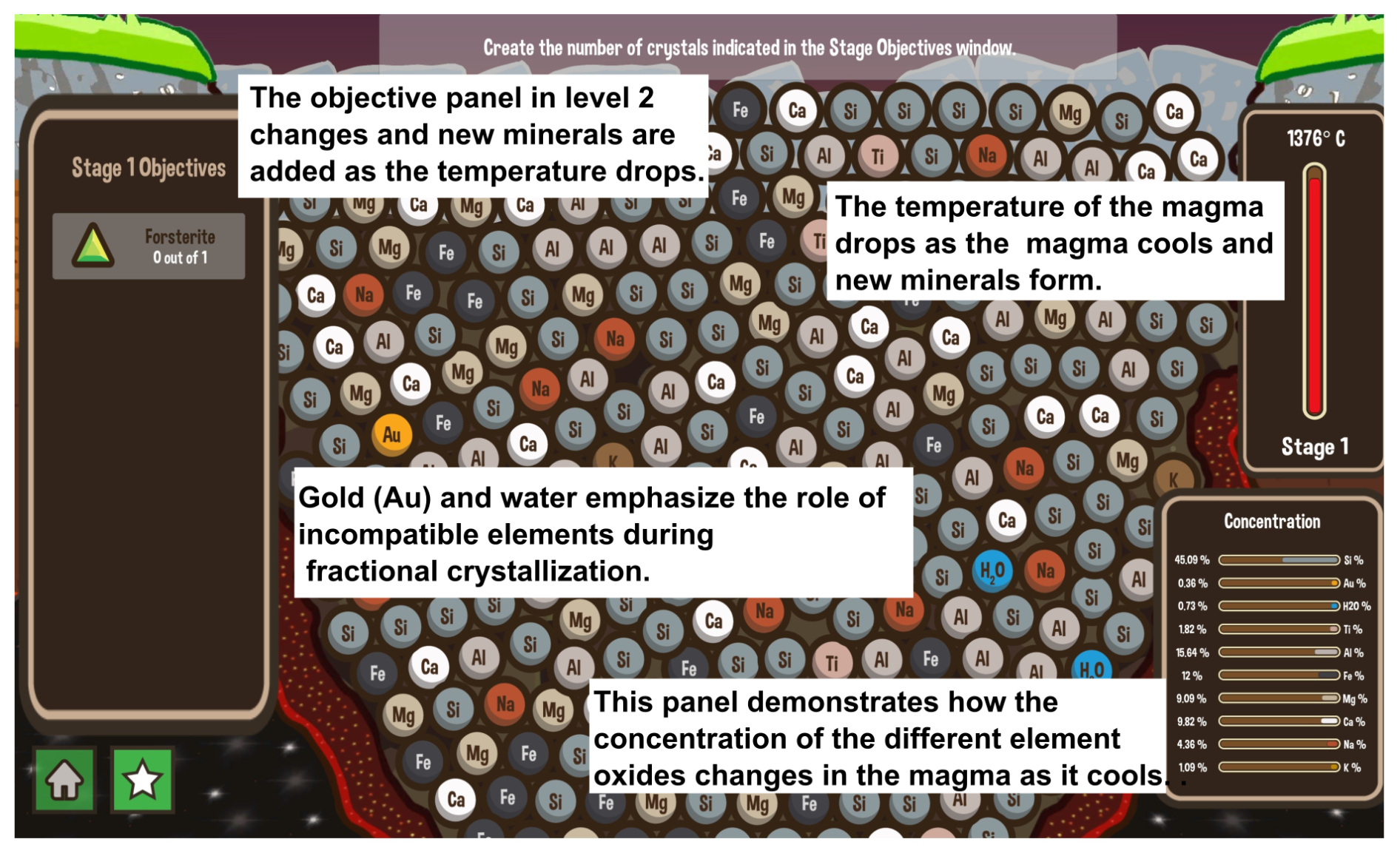
Figure 3Magma Dealer (Level 2) of Magma Pop v.1.
In Fig. 3, we note that when the temperature bar on the right side is at 1376 °C, the objective (for stage 1) is to crystallize forsterite and more minerals are added to the objective panel as the temperature continues to drop. The Objectives panel on the bottom left shows the minerals that need to be created by matching different ions. Players can look up the mineral formulae by scrolling through the Formula panel at the bottom right corner of the screen. Once ions have been matched correctly, the specific mineral is formed. Importantly for learning compositional changes, a panel box at the bottom right corner shows the changing concentration of the magma chamber because of the crystallization process (Fig. 3). In this level, the mineral formula list is no longer available, and players are required to remember them to make progress while keeping pace with the changing temperatures.
This research focused on the use of a serious game, Magma Pop, in undergraduate geology classrooms. The research specifically aims to (a) document the iterative process of game development in designing Magma Pop, highlighting how feedback and revisions shaped the final product; (b) outline specific geoscience concepts and cognitive skills that Magma Pop can enhance in undergraduate geology classrooms – particularly mechanistic understanding of fractional crystallization, meaningful application of Bowen's Reaction Series, and improved recall of mineral formulae; and (c) explore how Magma Pop enhances or reinforces learning when used alongside the original hands-on M&M's® fractional crystallization lab.
3.1 Lab context
M&M's® fractional crystallization lab and Magma Pop playtesting: This hands-on activity uses color-coded M&M's® candies – or a digital equivalent – to simulate magmatic differentiation by fractional crystallization. Students physically remove “crystals” in iterative steps, collect data on changing melt composition, and analyze trends using Excel and chemical plots. The exercise combines conceptual understanding of Bowen's Reaction Series and geochemical evolution with practical skills in data analysis, visualization, and mineral classification.
We play-tested Magma Pop v.1 at the University of Canterbury in July 2020 after they had completed the hands-on M&M's® lab on fractional crystallization. Ethical approval was obtained from the Human Ethics Committee at the University of Canterbury prior to conducting this study. The playtest was announced through multiple channels, such as lectures prior to lab sessions, prior lab sessions and on the university's learning management platform. The information sheets and consent forms were handed out to the students prior to the lab sessions and collected prior to the playtesting. Both play-test sessions took place in a computer room normally used for regular computer lab sessions with approximately 25 students and three teachers in the room. This evaluation of Magma Pop v.1 involved two different areas, i.e., user experience with the game, and its efficacy as a learning tool. In this paper, we describe the efficacy of Magma Pop as a learning tool. Prior to the playtesting in the geology classroom, we also conducted a feedback session with 10–12 volcanology experts to identify potential bugs in the game and see if there were any glitches that affected gameplay.
3.2 Methods and data collection
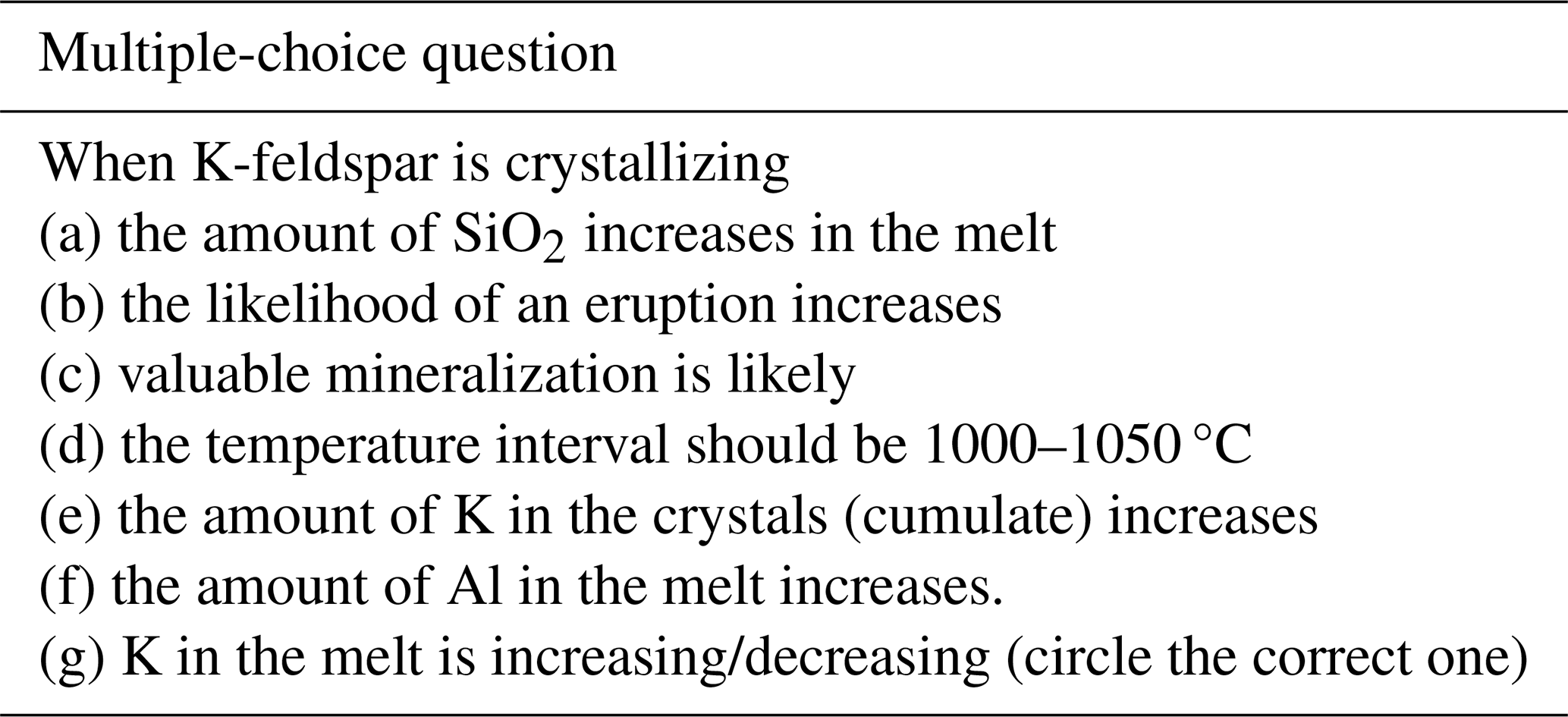
Magma Pop was pre-installed on lab computers, and before the lab sessions, participants were also asked to fill out a multiple-choice concept question on fractional crystallization. The game was then explained to the class, and students were asked to play the game on the computers for 30 min during which researchers evaluated the user experience with the game (reported in Hoermann et al., 2022). To support evaluation of the user experience with the game, four researchers observed the gameplay while students played Magma Pop and took notes on bugs encountered, or the questions that the students had while navigating the game play screen. Prior to the playtesting session, students had completed the traditional M&M's® lab using coloured M&Ms to calculate the process of fractional crystallization. We also asked the students to fill out the multiple-choice concept question before and after the play-testing session to understand if Magma Pop was meeting its intended learning goals. The concept question had six possible correct statements and one incorrect statement (Table 1).
Table 1Concept question which has six possible correct statements and one incorrect statement administered to students after completion of the M&M's® lab (before playing Magma Pop) and after they played Magma Pop.
To further understand how the game was received by the students we conducted five focus group sessions. In total, 27 students participated in these sessions to discuss their experience of using Magma Pop and the discussions were guided by the following discussion questions:
-
How did Magma Pop allow you to use geology concepts?
-
What were the challenging aspects of Magma Pop? Did this challenge or other challenges lead to learning?
-
Did you learn any new geology concepts while playing Magma Pop?
-
Did Magma Pop affect your understanding of the M&M's® Magma Chamber lab?
-
What were some aspects of game design that worked well/did not work well.
4.1 Evaluations through the concept question
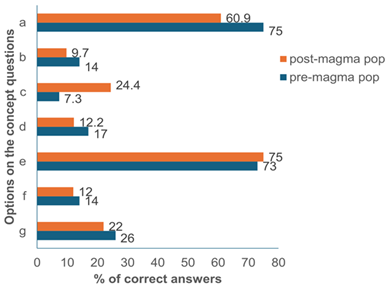
The concept question (Table 1) was a multiple-choice question with six possible correct statements and one incorrect statement. Of the seven statements, option (g), highlighting the behavior of K in the melt when K-feldspar is crystallizing, can demonstrate a higher level of understanding in students. In total, 41 students returned the completed concept question after completion of the M&M's® lab (before playing Magma Pop) and after playing Magma Pop. Findings from the concept question (summarized in Fig. 4) indicate that there was no increase in conceptual learning after using Magma Pop and/or our survey design instrument was not an appropriate way to assess this.
4.2 Evaluation through focus group
During the focus group sessions, students shared a range of responses that highlighted both the strengths and areas for development in the Magma Pop game. Several clear themes emerged from their feedback, reflecting on the pedagogical potential and experiential challenges of the game. These themes are described below along with some student quotes that support them.
Learning through visual and interactive representation: one of the most prominent findings was that students found Magma Pop to be a compelling and visually effective tool for learning about melt composition and crystallization processes. Participants consistently remarked on the clarity of the game's visual metaphor, such as how “the crystals drop to the bottom once they crystallize”, which served as “a good visual representation of the melt changing in composition”. The interactive nature of the game helped reinforce learning, with one participant noting, “I felt like it really, if I kept playing it, I would get to remembering more formulas than I had differently”.
Enhancing learning through multimodal design in Magma Pop: Magma Pop can support multiple learning modalities, enriching player comprehension by layering visual, verbal, and interactive cues. One group emphasized the desire for the game to be “brighter” or include “a pop-up, sort of explaining more of the calculation side of things” highlighting the need for combined visual and verbal cues to make the content more accessible. Another participant suggested that “a character that says, oh, this is what happens next” would make the experience feel “more personal”, moving beyond static instruction boxes and fostering deeper learner connection. The game's vivid visuals and bright design can draw players' attention, while optional explanatory pop-ups articulate the calculation logic in clear language. Adding a character who narrates “this is what happens next” transforms passive instruction boxes into personal, spoken guidance, enhancing engagement.
Enhancing reflection and learning retention: several students proposed that Magma Pop could be improved by incorporating reflective moments throughout gameplay. One suggestion included using prompts between different phases of the gameplay: “a pop-up that comes up and asks you to drag and drop the formulas in a multi-choice thing for each of the minerals to confirm learning from the previous round rather than, you know, the student who's just been sitting there on the cheat sheet”. This type of intervention can consolidate learning and reduce passive gameplay.
Challenges with pacing and cognitive load: while the fast pace of the game added excitement, many participants reported difficulties in processing information due to rapid progression through levels. One student explained, “I was going too fast when you get to level three … and you didn't have time to finish that stage completely.” Others echoed this sentiment, describing that in the timed levels, “you didn't really have time to think about anything”, which detracted from their ability to engage with the educational content, including important features like the “composition sort of chart down in the bottom corner” which went largely unnoticed.
Suggestions for gameplay improvements: during these focus groups, students offered practical suggestions to improve both user experience and learning outcomes. Many emphasized the need for the mineral formula panel to remain visible throughout gameplay, and for better guidance in early levels. For instance, one student remarked, “it might also be nice to know that, in the second level, you're not going to get the formulas”, which can prompt players to review earlier content more thoroughly. Additionally, incorporating differentiated visuals e.g. representing ions or crystals with “different sizes” – and adding characters to personalize the game were recurrent themes.
The insubstantial conceptual learning gains (Fig. 5) and focus group feedback indicated a need for game improvements to meet the instructors' intended learning outcomes. Student feedback highlighted that gameplay progressed “too rapidly”, inhibiting players from noticing the changing magma composition as minerals crystallized.
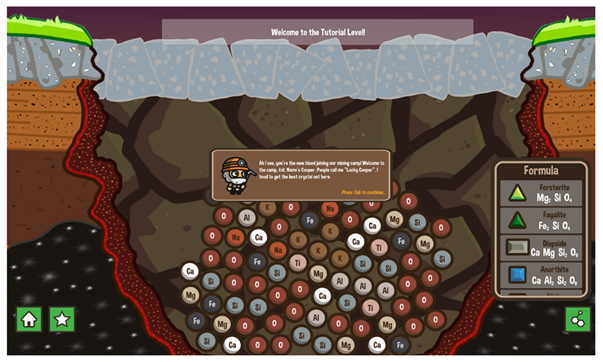
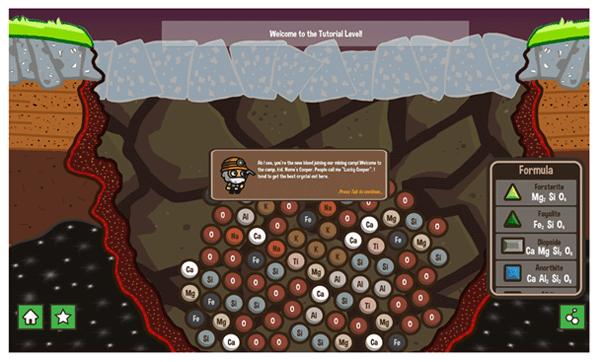
Figure 5The tutorial level in Magma Pop v.2 where a character Rua introduces the gameplay and workspace to the players.
The concept question results indicate a need to include explicit aspects to guide making connections between gameplay actions and changing magma composition. A possible reason for the lack of significant learning gains is that although it was a multiple-choice question with multiple correct answers, this was not clearly stated on the question sheet. As a result, some students may have selected only the answers they were most familiar with (based on their understanding from the hands-on M&M's® lab), rather than all correct options. Instructors also noted that students tend to gravitate toward answers related to silicon (Si), a topic emphasized in lectures, regardless of its relevance to the specific context of the game. This tendency may have introduced bias and failed to capture shifts in student understanding brought about by gameplay.
Consequently, the question may not have been an effective standalone tool for diagnosing misconceptions or measuring nuanced conceptual shifts. This misalignment between the game mechanics, user experience, and learning assessment suggests that elements of Magma Pop v.1's design may have inadvertently negated some of its educational potential. In particular, the lack of built-in mechanisms for reflection and explanation – such as visual or interactive prompts to slow down and analyse changing melt compositions – meant that players often proceeded through levels without consolidating their understanding. The focus group feedback also revealed a desire for more consistent access to formula panels, clearer indications of conceptual transitions, and scaffolded opportunities to revisit earlier levels for reinforcement. Most students in the focus group suggested that a tutorial level with some specific character could enhance the audio-visual appeal of the game and enhance its meaningfulness.
Keeping this in mind, a tutorial level titled “Magma Academy” was introduced in Magma Pop v.2 where an animated character introduced the gameplay and critical conceptual learning to the players (Fig. 6). This character explained key aspects of the game's objectives, guided players through initial actions, and provided conceptual explanations to support the transition from visual gameplay to scientific understanding (see Fig. 5). This character-driven tutorial was designed to foster cognitive engagement and reduce the initial learning curve. In response to the user feedback, several additional changes were implemented in Magma Pop v.2 to further support student learning. For example, the mineral formula panel, which had previously appeared only intermittently, was made persistently visible across all levels, ensuring that students could refer to it at any point during gameplay. This change directly addressed earlier feedback indicating that the panel often disappeared too quickly or was missed all together during time-constrained stages. Additionally, a point system was introduced to provide clearer performance feedback and encourage replayability. By linking point accumulation to correct decision-making and attention to mineral formation processes, the updated system aimed to reinforce learning outcomes through gamified reinforcement. The other two gameplay levels were re-named “Crystal Collector” and “Crystal Builder” to be reflective of the game related objectives.
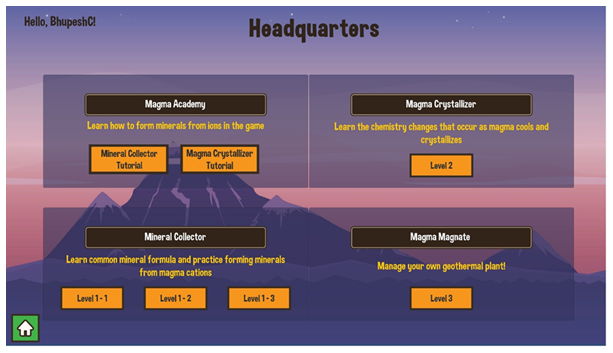
Figure 6The different levels of Magma Pop v.3. Magma Academy with the two tutorials for Mineral Collector (Level 1 of gameplay) and Magma Crystallizer (Level 2 of gameplay). The Magma Magnate development is in progress.
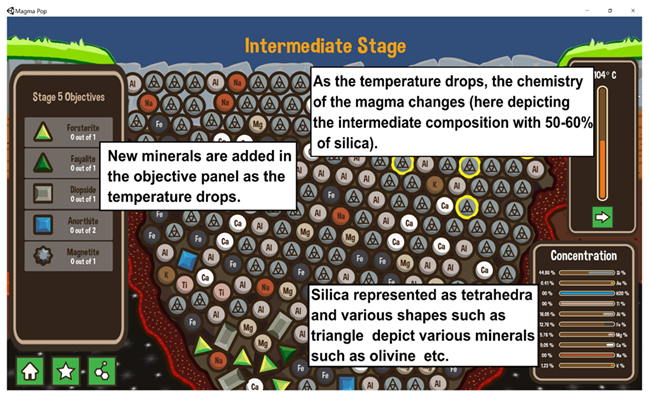
Figure 7The gameplay screen for level 2 tutorial with the specific type of magma composition.
Magma Pop v.2 was used in the UC volcanology classrooms in 2021, but no playtest was conducted after students had completed the traditional M&M's® lab. Instead, we used this opportunity to fix any existing bugs and streamline the gameplay so that it aligned with the intended learning goals of the M&M's® lab. No additional changes were made to address the feedback related to changing magma composition that indicated that students were unable to track the changes in concentration as crystallization progressed as the game progressed too rapidly (as referenced in Fig. 2).
While Magma Pop v.2 addressed several issues raised in the initial round of focus group feedback, particularly in terms of enhancing user engagement through audiovisual elements and guided instruction, it did not fully respond to concerns regarding the tracking of magma composition changes during crystallization. Students consistently reported that the pace of the game, especially in the more advanced levels, made it difficult to observe and reflect on how the magma's chemical composition evolved as different minerals crystallized out of the melt (in contrast to the M&M's® lab which afforded the students an opportunity see minerals of similar colours crystallizing out at each step). This limited the students' ability to engage with one of the core scientific concepts the game was intended to reinforce: the principles of fractional crystallization and dynamic melt evolution. There was thus a need to align the gameplay more closely to the M&M's® lab. To bridge this gap, it was essential that the game not only visually simulate changing melt chemistry but also explicitly articulate these compositional changes in a way that supports learning and complements classroom instruction.
In response, our team implemented several key updates in Magma Pop v.3 designed to enhance conceptual clarity and improve instructional alignment. First, a significantly expanded tutorial level, retaining the name “Magma Academy”, was introduced. Unlike earlier iterations, this version of the tutorial included dedicated instruction for both Level 1 (“Magma Collector”) and Level 2 (“Magma Crystallizer”), allowing players to build familiarity with game mechanics while simultaneously being introduced to the relevant scientific objectives of each stage. By clearly delineating how each phase of the game related to the processes of magma collection and crystallization, the tutorial aimed to support students in making stronger connections between gameplay and geologic principles.The Magma Dealer level is replaced by Magma Crystallizer, where students explore how chemistry changes as magma cools and minerals crystallize, i.e., exploring how the magma composition changes from mafic to intermediate towards felsic (e.g., Fig. 7).
Second, the home screen was updated to include game objectives, giving players an overview of the conceptual learning goals they should aim to achieve during gameplay (see Fig. 6). This change was motivated by the recognition that students needed more upfront guidance on what to focus on as they navigated through different levels. Clearly stating the objectives provided an additional scaffold, reinforcing the scientific themes at the heart of the gameplay and helping students better anticipate the kinds of decisions and observations they would need to make.
Although the gameplay mechanics in Magma Pop v.3 still progressed at a relatively rapid pace, these structural and instructional enhancements were designed to address the previous version's shortcoming namely, the lack of clear, accessible information about how the magma composition was changing in real time. By providing more contextual framing and conceptual guidance at key points in the user journey, Magma Pop v.3 represented a meaningful step toward ensuring that the game functioned not only as an engaging activity but also as an effective tool for reinforcing the concepts of fractional crystallization.
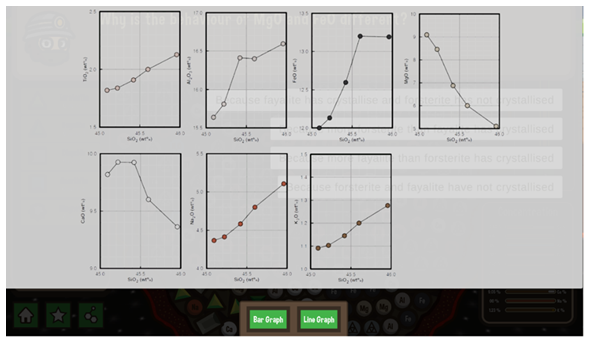
Figure 8Changes in various element oxides appear as a popup during game play that help scaffold the link between changing chemical composition of the magma and fractional crystallization. This in part supports the lab questions that students have to discuss as part of the M&M's® lab.
Furthermore, to make the connection between change in magma composition (based on % of SiO2 in the remaining magma) as fractional crystallization progressed more explicit, the gameplay screen was labelled to indicate the different magma types such as intermediate, silicic etc. (Fig. 7). To further ensure that students were making the links between the changing temperature and mineral crystallization, the Magma Crystallizer tutorial has built-in quizzes with graphs (Fig. 8) depicting the variation of different elemental oxides (that are represented by the cations and also depicted as bars in Magma Pop gameplay).
To gain insights into how Magma Pop v.3 supported learning objectives, we conducted 5 min individual student interviews instead of relying on focus group sessions. The primary objective of this evaluation was to capture conceptual shifts in students' understanding of geological processes as a result of gameplay.
To investigate these conceptual changes, 5 min semi-structured interviews were conducted, with each student, both, before and after they played Magma Pop v.3. These interviews were designed to elicit students' current understanding of key geoscience concepts featured in the game, such as magma viscosity, volcanic eruption styles, and plate tectonics. The semi-structured format allowed for consistency in core questions while also providing flexibility to probe student responses in greater depth, enabling the researcher to identify nuanced shifts in understanding. The sample consisted of around 15 undergraduate students who volunteered to participate in the evaluation during a scheduled lab session.
6.1 Methodology for analysis
All the 5 min interviews – conducted both before and after students played Magma Pop – were audio-recorded and transcribed. All these interviews were conducted after students completed the M&M's® lab. To ensure accuracy and context, the lead researcher (Sriparna Saha) did a manual review against the original audio to correct misheard phrases and incorporated annotations such as tone, pauses, or other cues that could inform interpretation. We then analyzed the interviews to identify emergent themes both in the pre-Magma Pop interviews and the post-Magma Pop interviews. For example, in the pre-Magma Pop interviews several students discussed the benefit of additional support, such as visual aids, to better understand the chemistry of the changing magma and the overall steps involved in fractional crystallization and the need for remembering the details of the Bowen Reaction Series and mineral formulae. Similarly, in the post-Magma Pop interviews, students often describe the usefulness of Magma Pop in visualizing and understanding fractional crystallization concepts, and the benefits of the repetition of chemical formulae in Magma Pop. We then used selective coding to integrate the most salient themes into a coherent narrative, supported with illustrative quotes from participants (Strauss and Corbin, 1990). The selective codes along with some supporting quotes from students are described in the next section.
Overall, our analysis suggests shifts in students' conceptual understanding of fractional crystallization after engaging with Magma Pop. We also recognized that the M&M's® lab led to some understanding of basic fractional crystallization concepts even before the students engaged with Magma Pop. While students entered the activity with a general grasp of foundational principles, their post-activity reflections suggest a marked improvement in depth of understanding, confidence with terminology, and application of knowledge to more nuanced geochemical processes.
6.1.1 From general recognition to improved mechanistic clarity
Before using Magma Pop (i.e., after the M&M's® lab), most students could describe the general sequence of mineral formation (e.g., “olivine crystallizes first, then pyroxene”) and understood that compatible ions are removed from the melt early. However, their explanations were typically surficial, with little reference to the underlying reasons why specific ions crystallize earlier or how this influences the evolution of the melt. As one student explained, “Compatible elements [ions] fractionate or crystallize from the liquid melt … the incompatible elements [ions] end up staying in the melt because they don't like forming into anything.” After engaging with the simulation, students demonstrated a more nuanced understanding of the dynamic nature of the removal ions and its impact on magma chemistry. Their responses showed increased clarity around patterns of ion depletion and enrichment and how these changes affect subsequent mineral formation. For example, one student shared, “I noticed how olivine formed first and changed the melt … so there's less iron later. That makes sense now.” This shift suggests that Magma Pop supported students in moving beyond memorization, helping them develop a mechanistic understanding of crystallization sequences and the causal relationships that govern magmatic processes.
6.1.2 From memorization of Bowen's reaction series to improved visual integration
Before using Magma Pop, students frequently referred to Bowen's Reaction Series but struggled to apply it to practical course tasks such as lab data analysis or geochemical modeling. While they were familiar with the general order of mineral crystallization, connecting this framework to quantitative or unfamiliar contexts proved challenging. As one student noted, “I'm pretty confident with Bowen's reaction series in general, but learning this part of the course and incorporating it with Bowens is a bit of a struggle …”. After completing the Magma Pop activity, student feedback indicated a stronger integration of visual and conceptual learning. The simulation's interactive design helped students observe the Bowen's Reaction Series in action, reinforcing both the sequence of mineral formation and its chemical consequences. As one student shared, “It just reinforced the fact that this is what usually happens within a magma chamber”, while another remarked, “Playing the game did help me clarify those questions I had in mind.” This suggests a shift from rote memorization to experiential understanding, enabling students to better visualize and apply Bowen's Reaction Series within dynamic magmatic systems.
6.1.3 From uncertainty to reinforced recall of mineral formulae
Before using Magma Pop, many students consistently struggled with recalling accurate mineral formulae, even though they could often name the minerals themselves. This challenge was especially pronounced under pressure or when dealing with less familiar minerals. One student admitted, “I think my mineral formula memorization could use a little bit of work …”. After using the simulation, many students reported that the game's repetitive mechanics – specifically, selecting ions to build mineral structures – helped reinforce the composition of minerals and improved their ability to recall formulae. The interactive format supported both pattern recognition and memory retention. As one student noted, “Having to choose all your different elements [ions] and remembering the numbers … I'm very much someone that will not remember the chemical composition otherwise.” This change underscores how active engagement through gameplay can enhance retrieval fluency, an essential skill for success in exams and practical applications.
Table 2Summary of various features of Magma Pop introduced in the different versions of the game.
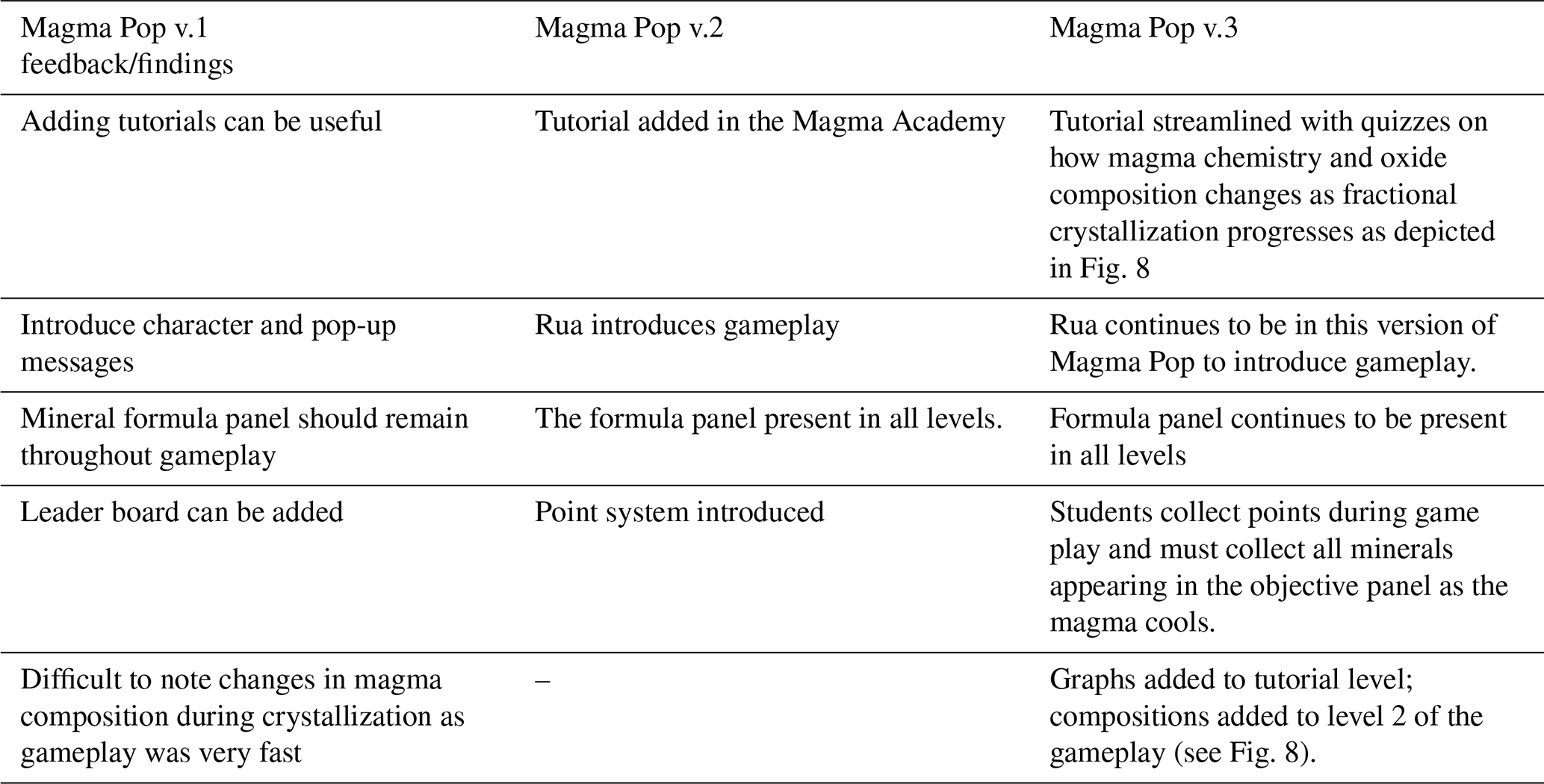
This paper describes the design and development of a serious game Magma Pop to support an undergraduate geology classroom and teach concepts related to fractional crystallization in combination with traditional labs. Various changes were made considering the feedback and game evaluations. For example, a tutorial was added in the Magma Academy (Magma Pop v.2) and was streamlined with quizzes on compositional changes (Magma Pop v.3). Similarly, a character Rua was added (in Magma Pop v.2 and v.3) to introduce gameplay. Another change that was made was to keep the formula panel in all levels (Magma Pop v.2 and v.3). In the later versions of the game, a point system was added, and graphs were added to the tutorial level (Magma Pop v.3). A summary of the various changes introduced in the different versions of Magma Pop is summarized in Table 2. Overall, our findings indicate that a serious game like Magma Pop can scaffold hands-on lab activities like the M&M's® lab to enhance an understanding of fractional crystallization processes. Magma Pop provides dynamic visualization that complements the M&M's® lab's quantitative data collection. Where the lab emphasizes data trends (such as change in the concentration of the various element oxides with increasing fractional crystallization), the game offers real-time conceptual feedback and pattern reinforcement. The game's ion-mineral matching practice builds formula recall fluency that can then transfer to the stoichiometric and spreadsheet analysis required in the M&M's® lab activity.
We found that the combination of the M&M's® lab and Magma Pop enabled students to move from a descriptive understanding of fractional crystallization to a mechanistic insight aided by the visualization of fractional crystallization through Magma Pop. Students not only stated the order of mineral formation but could also articulate why compatible ions like Fe are removed early and how that reshapes the evolving melt. We also found that students transitioned from memorizing Bowen's Reaction Series as abstract sequence to visually integrated, applied knowledge (i.e., changing composition of the magma). Lastly, the game's design drove reinforced recall of mineral formulae. By selecting ions and building minerals through repeated gameplay, students internalized compositions more effectively gaining confidence even under exam conditions or with unfamiliar minerals.
At the time of writing, the public can play Magma Pop v.3 online using modern internet browsers (e.g., Google Chrome or any chromium browsers) at https://pocatella.itch.io/magmapop-webgl?secret=sEOX2k52zHgetDsDTeY1SV77I (last access: 23 March 2026).
The supplement related to this article is available online at https://doi.org/10.5194/gc-9-127-2026-supplement.
SrS: conceptualization (supporting), data curation (lead), formal analysis (lead), investigation (lead), methodology (lead), visualization (lead), writing – original draft (lead), writing – review and editing (lead). BK: conceptualization (lead), formal analysis (supporting), methodology (lead), supervision (lead), writing – review and editing (lead). AN: conceptualization (lead), writing- review and editing; EB: conceptualization (supporting), supervision (co-lead), writing – review and editing, NH: conceptualization (support), game development (lead), SH: conceptualization (supporting), game development (lead), writing-review.
The contact author has declared that none of the authors has any competing interests.
Ethical approval was obtained from the Human Ethics Committee at the University of Canterbury prior to conducting this study (2020/24/ERHEC Amendment 2).
Publisher's note: Copernicus Publications remains neutral with regard to jurisdictional claims made in the text, published maps, institutional affiliations, or any other geographical representation in this paper. The authors bear the ultimate responsibility for providing appropriate place names. Views expressed in the text are those of the authors and do not necessarily reflect the views of the publisher.
We would like to express thanks to everyone who playtested the various versions of Magma Pop and supported the evaluation of this educational resource.
This research has been supported by the Ministry for Business Innovation and Employment (grant no. 2017 ENDEAVOUR).
This paper was edited by Leslie Almberg and reviewed by Fred Jourdan and one anonymous referee.
Arnold, S., Fujima, J., Jantke, K. P., Karsten, A., and Simeit, H.: Game-Based Training of Executive Staff of Professional Disaster Management: Storyboarding Adaptivity of Game Play, Icaicte, 68–73, https://doi.org/10.2991/icaicte.2013.14, 2013.
Dohaney, J.: Educational theory & practice for skill development in the geosciences, PhD thesis, University of Canterbury, Canterbury, https://doi.org/10.26021/7149, 2013.
Dohaney, J., Jolley, A., Kennedy, B., and Watson, A.: A systematic review of volcanology learning and teaching in higher education, Volcanica, 6, 221–252, 2023.
Hoermann, S., Saha, S., Harris, N., Davidson, J., Brogt, E., Nichols, A., and Kennedy, B.: Evaluating the Expectations and Motivational Drivers in an Undergraduate Geology Classroom Using the Magma Pop Serious Game, in: Games and Learning Alliance, GALA 2022, Lecture Notes in Computer Science, vol. 13647, edited by: Kiili, K., Antti, K., de Rosa, F., Dindar, M., Kickmeier-Rust, M., and Bellotti, F., Springer, Cham, https://doi.org/10.1007/978-3-031-22124-8_10, 2022.
Jolley, A., Dohaney, J., and Kennedy, B.: Teaching about volcanoes: Practices, perceptions, and implications for professional development, Volcanica, 5, 11–32, 2022.
Kerlow, I., Pedreros, G., and Albert, H.: Earth Girl Volcano: characterizing and conveying volcanic hazard complexity in an interactive casual game of disaster preparedness and response, Geosci. Commun., 3, 343–364, https://doi.org/10.5194/gc-3-343-2020, 2020.
Kleinman, E., Gayle, C., and Seif El-Nasr, M.: “Because I'm Bad at the Game!” A Microanalytic Study of Self Regulated Learning in League of Legends, Front. Psychol., 12, https://doi.org/10.3389/fpsyg.2021.780234, 2021.
Laamarti, F., Eid, M., and El Saddik, A.: An Overview of Serious Games, Int. J. Comput. Games Technol., 2014, 358152, https://doi.org/10.1155/2014/358152, 2014.
Mani, L., Cole, P. D., and Stewart, I.: Using video games for volcanic hazard education and communication: An assessment of the method and preliminary results, Nat. Hazards Earth Syst. Sci., 16, 1673–1689, https://doi.org/10.5194/nhess-16-1673-2016, 2016.
McGowan, E. G. and Alcott, L. J.: The potential for using video games to teach geoscience: learning about the geology and geomorphology of Hokkaido (Japan) from playing Pokémon Legends: Arceus, Geosci. Commun., 5, 325–337, https://doi.org/10.5194/gc-5-325-2022, 2022.
Pivec, M.: Editorial: Play and learn: Potentials of game-based learning, Brit. J. Educ. Technol., 38, 387–393, https://doi.org/10.1111/j.1467-8535.2007.00722.x, 2007.
Schnotz, W. and Kürschner, C.: A reconsideration of cognitive load theory, Educ. Psychol. Rev., 19, 469–508, 2007.
Strauss, A. and Corbin, J. M.: Basics of qualitative research: Grounded theory procedures and techniques, Sage Publications, Inc., ISBN 10:0803932502, 1990.
Wirth, K.: Using an M&M® Magma chamber to illustrate magmatic differentiation, GSA Poster, https://serc.carleton.edu/NAGTWorkshops/gsa03/activities/2028.html (last access: 23 March 2026), 2003.
- Abstract
- Introduction: purposes and learning goals
- Resource and implementation: game description Magma Pop v.1
- Methodology: evaluation and research objectives
- Findings
- Iterative game development and Magma Pop v.2 and v.3
- Evaluations with students for Magma Pop v.3
- Conclusions: complementarity with the M&M's® lab
- Data availability
- Author contributions
- Competing interests
- Ethical statement
- Disclaimer
- Acknowledgements
- Financial support
- Review statement
- References
- Supplement
- Abstract
- Introduction: purposes and learning goals
- Resource and implementation: game description Magma Pop v.1
- Methodology: evaluation and research objectives
- Findings
- Iterative game development and Magma Pop v.2 and v.3
- Evaluations with students for Magma Pop v.3
- Conclusions: complementarity with the M&M's® lab
- Data availability
- Author contributions
- Competing interests
- Ethical statement
- Disclaimer
- Acknowledgements
- Financial support
- Review statement
- References
- Supplement