Articles | Volume 9, issue 4
https://doi.org/10.5194/gc-9-525-2026
© Author(s) 2026. This work is distributed under
the Creative Commons Attribution 4.0 License.
https://doi.org/10.5194/gc-9-525-2026
© Author(s) 2026. This work is distributed under
the Creative Commons Attribution 4.0 License.
Exploring advocacy of Dutch government climate researchers: an interview study

Niels Koppelaar
Freudenthal Institute, Utrecht University, Utrecht, 3584CC, the Netherlands
Christel van Eck
Amsterdam School of Communication Research, University of Amsterdam, Amsterdam, the Netherlands
Freudenthal Institute, Utrecht University, Utrecht, 3584CC, the Netherlands
Related authors
No articles found.
Yente M. J. te Koppele and Erik van Sebille
EGUsphere, https://doi.org/10.5194/egusphere-2026-6433, https://doi.org/10.5194/egusphere-2026-6433, 2026
This preprint is open for discussion and under review for Geoscience Communication (GC).
Short summary
Short summary
Media extensively cover the environmental and societal consequences of a possible collapse of the Atlantic Meridional Overturning Current (AMOC). But are the media reports accurate, and do they adopt the framing of the original scientific articles? We find that, while Dutch news articles often omit scientific uncertainties and emphasize the timing and consequences of an AMOC collapse, they accurately convey the core concepts of AMOC-related scientific research papers.
Elena Gianotten, Meike F. Bos, Darshika Manral, Fabio Nauer, Erik Zettler, Lina A. Amaral-Zettler, and Erik van Sebille
EGUsphere, https://doi.org/10.5194/egusphere-2026-3097, https://doi.org/10.5194/egusphere-2026-3097, 2026
Short summary
Short summary
Widespread blooms of the seaweed Sargassum have caused large-scale inundation events in coastal Caribbean and African regions since 2011. Predicting the where these blooms appear, and how the Sargassum moves, depends on the interaction between ocean flow and biological growth. Here, we present a new computational framework for quick and easy simulation of Sargassum. The framework is particularly useful for testing the dependency of different growth models on the Sargassum fate.
Issufo Halo, Tarron Lamont, Michael Hart-Davis, Pierrick Penven, Isabelle Ansorge, Chris Reason, Bjorn Backeberg, Siren Rühs, Erik van Sebille, Christo Whittle, Annette Samuelsen, Johnny Johannessen, Tamaryn Morris, Marjolaine Krug, Juliet Hermes, Marek Ostrowski, Sheveenah Taukoor, and Babatunde Abiodun
EGUsphere, https://doi.org/10.5194/egusphere-2025-6573, https://doi.org/10.5194/egusphere-2025-6573, 2026
Short summary
Short summary
This review synthesizes two decades of research on the Greater Agulhas Current System, a major ocean current influencing climate, weather and marine life around southern Africa and beyond. Using improved observations, satellites, and computer models, we show how this system transports properties between oceans, affects rainfall and climate patterns, and marine ecosystems. The findings highlight its global climate importance and the need for sustained monitoring to better predict future change.
Meike F. Bos, Irina I. Rypina, Larry J. Pratt, and Erik van Sebille
EGUsphere, https://doi.org/10.5194/egusphere-2026-64, https://doi.org/10.5194/egusphere-2026-64, 2026
Short summary
Short summary
Macroplastic items in the ocean can move differently than the water surrounding them, because their size and density are different than that of water. We investigate how to implement this effect for macroplastic items in simulations in the North West European Shelf region. For this region we find that the large drag force makes the macroplastics trajectories very closely follow the water itself, meaning that simulating macroplastic is simpler than previously expected.
Erik van Sebille, Celine Weel, Rens Vliegenthart, and Mark Bos
Geosci. Commun., 9, 69–86, https://doi.org/10.5194/gc-9-69-2026, https://doi.org/10.5194/gc-9-69-2026, 2026
Short summary
Short summary
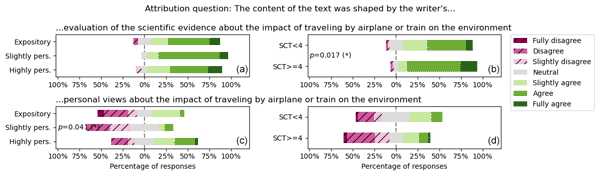
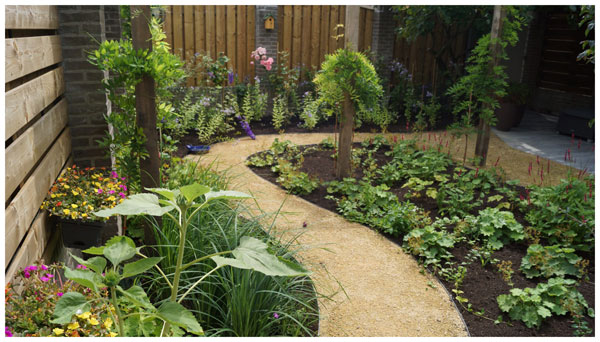
Many climate scientists intuitively fear their credibility decreases when they engage in advocacy. We find that the opposite is the case. By surveying almost 1000 Dutch adults, we found that the credibility of a fictional climate scientists who wrote an article about the greening of gardens was higher when that text included advocacy statements, compared to when it was
neutral. This is because personalization increases the goodwill of readers for the academic who writes a text.
Jimena Medina-Rubio, Madlene Nussbaum, Ton S. van den Bremer, and Erik van Sebille
Ocean Sci., 22, 49–74, https://doi.org/10.5194/os-22-49-2026, https://doi.org/10.5194/os-22-49-2026, 2026
Short summary
Short summary
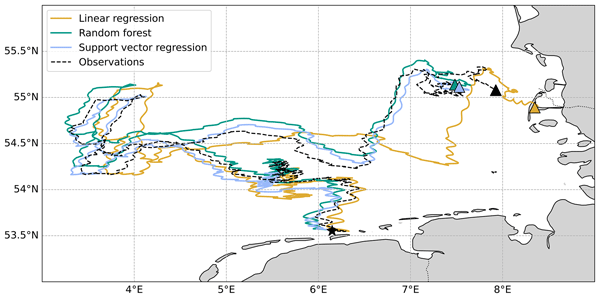
We study how tides, wind, and waves interact at the ocean surface by tracking ultra-thin drifters released in the southern North Sea for two months. Using model data together with data-driven machine learning models, we determine the relative contribution of each forcing mechanism in driving the drifters' velocity and improve the prediction of their trajectories. We also test the generalisability of this method by applying it to the same drifters in the Tyrrhenian Sea.
Marc Emanuel Schneiter, Rolf Hut, and Erik Van Sebille
EGUsphere, https://doi.org/10.5194/egusphere-2025-6170, https://doi.org/10.5194/egusphere-2025-6170, 2025
Short summary
Short summary
We study land-water transitions of 24 small floating position-trackers that approximately mimic floating plastic litter. We describe how to automatically identify such transitions from recorded tracks, and we characterize our observations with respect to sea and wind conditions. The insights can be integrated in model simulations and used for the planning of beach cleanups. We released the trackers in the Wadden Sea, a shallow body of water that is strongly influenced by tides and wind.
Claudio M. Pierard, Siren Rühs, Laura Gómez-Navarro, Michael Charles Denes, Florian Meirer, Thierry Penduff, and Erik van Sebille
Nonlin. Processes Geophys., 32, 411–438, https://doi.org/10.5194/npg-32-411-2025, https://doi.org/10.5194/npg-32-411-2025, 2025
Short summary
Short summary
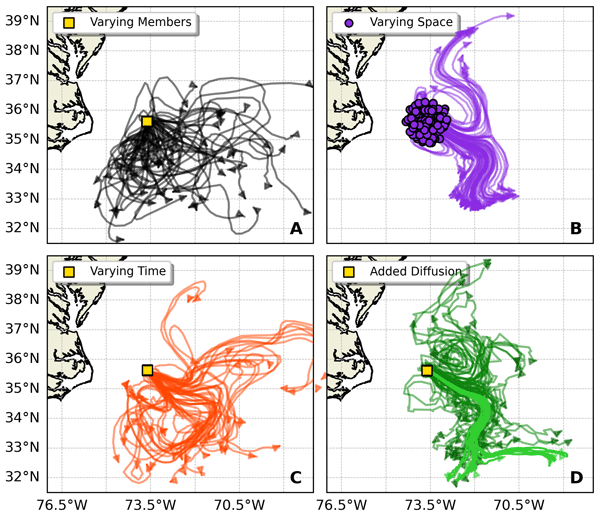
Particle-tracking simulations compute how ocean currents transport material. However, initializing these simulations is often ad hoc. Here, we explore how two different strategies (releasing particles over space or over time) compare. Specifically, we compare the variability in particle trajectories to the variability of particles computed in a 50-member ensemble simulation. We find that releasing the particles over 20 weeks gives variability that is most like that in the ensemble.
Aike Vonk, Mark Bos, and Erik van Sebille
Geosci. Commun., 8, 297–317, https://doi.org/10.5194/gc-8-297-2025, https://doi.org/10.5194/gc-8-297-2025, 2025
Short summary
Short summary
Research institutes communicate scientific findings through press releases, which journalists use to write news articles. We examined how journalists use content from press releases about ocean plastic research. Our findings show that they closely follow the press releases story, primarily quoting involved scientists without seeking external perspectives. Causing the focus to stay on researchers, personalizing science rather than addressing the broader societal dimensions of plastic pollution.
Vesna Bertoncelj, Furu Mienis, Paolo Stocchi, and Erik van Sebille
Ocean Sci., 21, 945–964, https://doi.org/10.5194/os-21-945-2025, https://doi.org/10.5194/os-21-945-2025, 2025
Short summary
Short summary
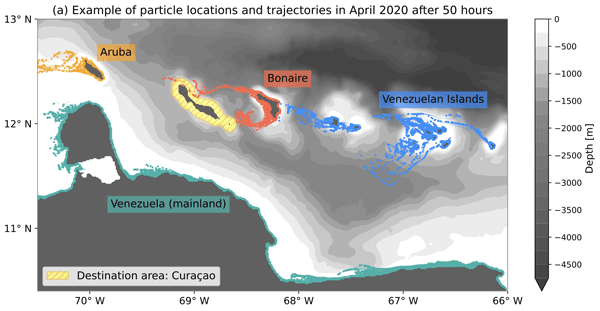
This study explores ocean currents around Curaçao and how land-derived substances like pollutants and nutrients travel in the water. Most substances move northwest, following the main current, but at times, ocean eddies spread them in other directions. This movement may link polluted areas to pristine coral reefs, impacting marine ecosystems. Understanding these patterns helps inform conservation and pollution management around Curaçao.
Nieske Vergunst, Tugce Varol, and Erik van Sebille
Geosci. Commun., 8, 67–80, https://doi.org/10.5194/gc-8-67-2025, https://doi.org/10.5194/gc-8-67-2025, 2025
Short summary
Short summary
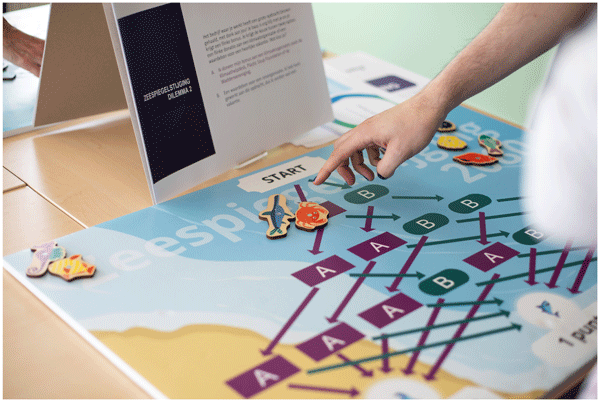
We developed and evaluated a board game about sea level rise to engage young adults. We found that the game positively influenced participants' perceptions of their impact on sea level rise, regardless of their prior familiarity with science. This study suggests that interactive and relatable activities can effectively engage audiences on climate issues, highlighting the potential for similar approaches in public science communication.
Mark V. Elbertsen, Erik van Sebille, and Peter K. Bijl
Clim. Past, 21, 441–464, https://doi.org/10.5194/cp-21-441-2025, https://doi.org/10.5194/cp-21-441-2025, 2025
Short summary
Short summary
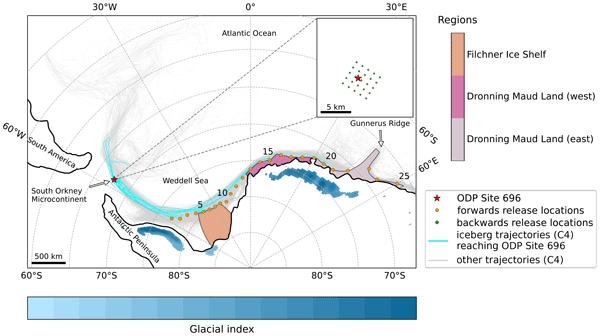
This work verifies the remarkable finds of late Eocene Antarctic-sourced iceberg-rafted debris on the South Orkney Microcontinent. We find that these icebergs must have been on the larger end of the size scale compared to today’s icebergs due to faster melting in the warmer Eocene climate. The study was performed using a high-resolution model in which individual icebergs were followed through time.
Siren Rühs, Ton van den Bremer, Emanuela Clementi, Michael C. Denes, Aimie Moulin, and Erik van Sebille
Ocean Sci., 21, 217–240, https://doi.org/10.5194/os-21-217-2025, https://doi.org/10.5194/os-21-217-2025, 2025
Short summary
Short summary
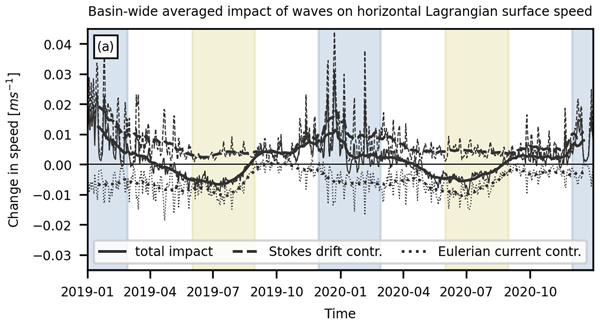
Simulating the transport of floating particles on the ocean surface is crucial for solving many societal issues. Here, we investigate how the representation of wind-generated surface waves impacts particle transport simulations. We find that different wave-driven processes can alter transport patterns and that commonly adopted approximations are not always adequate. This suggests that ideally coupled ocean–wave models should be used for surface particle transport simulations.
Anna Leerink, Mark Bos, Daan Reijnders, and Erik van Sebille
Geosci. Commun., 7, 201–214, https://doi.org/10.5194/gc-7-201-2024, https://doi.org/10.5194/gc-7-201-2024, 2024
Short summary
Short summary
Climate scientists who communicate to a broad audience may be reluctant to write in a more personal style, as they assume that it hurts their credibility. To test this assumption, we asked 100 Dutch people to rate the credibility of a climate scientist. We varied how the author of the article addressed the reader and found that the degree of personalization did not have a measurable impact on the credibility of the author. Thus, we conclude that personalization may not hurt credibility.
Frances Wijnen, Madelijn Strick, Mark Bos, and Erik van Sebille
Geosci. Commun., 7, 91–100, https://doi.org/10.5194/gc-7-91-2024, https://doi.org/10.5194/gc-7-91-2024, 2024
Short summary
Short summary
Climate scientists are urged to communicate climate science; there is very little evidence about what types of communication work well for which audiences. We have performed a systematic literature review to analyze what is known about the efficacy of climate communication by scientists. While we have found more than 60 articles in the last 10 years about climate communication activities by scientists, only 7 of these included some form of evaluation of the impact of the activity.
Philippe F. V. W. Frankemölle, Peter D. Nooteboom, Joe Scutt Phillips, Lauriane Escalle, Simon Nicol, and Erik van Sebille
Ocean Sci., 20, 31–41, https://doi.org/10.5194/os-20-31-2024, https://doi.org/10.5194/os-20-31-2024, 2024
Short summary
Short summary
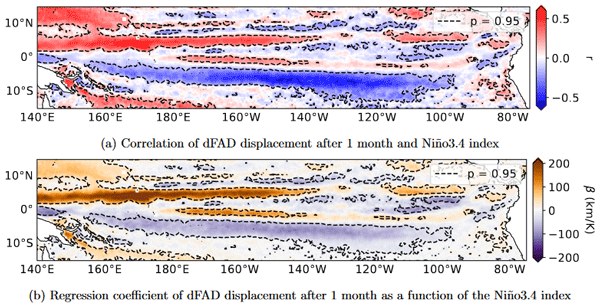
Tuna fisheries in the Pacific often use drifting fish aggregating devices (dFADs) to attract fish that are advected by subsurface flow through underwater appendages. Using a particle advection model, we find that virtual particles advected by surface flow are displaced farther than virtual dFADs. We find a relation between El Niño–Southern Oscillation and circular motion in some areas, influencing dFAD densities. This information helps us to understand processes that drive dFAD distribution.
Tor Nordam, Ruben Kristiansen, Raymond Nepstad, Erik van Sebille, and Andy M. Booth
Geosci. Model Dev., 16, 5339–5363, https://doi.org/10.5194/gmd-16-5339-2023, https://doi.org/10.5194/gmd-16-5339-2023, 2023
Short summary
Short summary
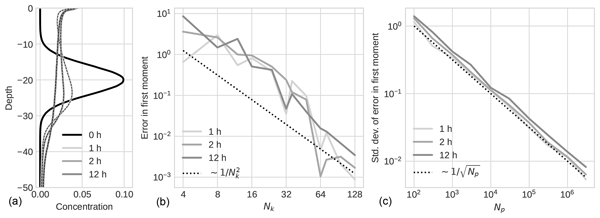
We describe and compare two common methods, Eulerian and Lagrangian models, used to simulate the vertical transport of material in the ocean. They both solve the same transport problems but use different approaches for representing the underlying equations on the computer. The main focus of our study is on the numerical accuracy of the two approaches. Our results should be useful for other researchers creating or using these types of transport models.
Stefanie L. Ypma, Quinten Bohte, Alexander Forryan, Alberto C. Naveira Garabato, Andy Donnelly, and Erik van Sebille
Ocean Sci., 18, 1477–1490, https://doi.org/10.5194/os-18-1477-2022, https://doi.org/10.5194/os-18-1477-2022, 2022
Short summary
Short summary
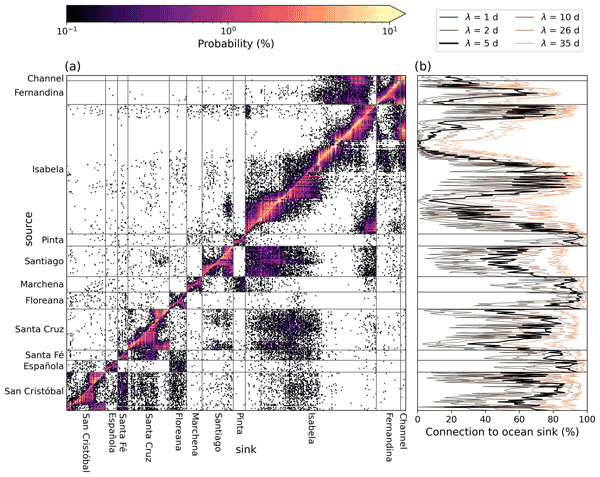
In this research we aim to improve cleanup efforts on the Galapagos Islands of marine plastic debris when resources are limited and the distribution of the plastic on shorelines is unknown. Using a network that describes the flow of macroplastic between the islands we have identified the most efficient cleanup locations, quantified the impact of targeting these locations and showed that shorelines where the plastic is unlikely to leave are likely efficient cleanup locations.
Reint Fischer, Delphine Lobelle, Merel Kooi, Albert Koelmans, Victor Onink, Charlotte Laufkötter, Linda Amaral-Zettler, Andrew Yool, and Erik van Sebille
Biogeosciences, 19, 2211–2234, https://doi.org/10.5194/bg-19-2211-2022, https://doi.org/10.5194/bg-19-2211-2022, 2022
Short summary
Short summary
Since current estimates show that only about 1 % of the all plastic that enters the ocean is floating at the surface, we look at subsurface processes that can cause vertical movement of (micro)plastic. We investigate how modelled algal attachment and the ocean's vertical movement can cause particles to sink and oscillate in the open ocean. Particles can sink to depths of > 5000 m in regions with high wind intensity and mainly remain close to the surface with low winds and biological activity.
Victor Onink, Erik van Sebille, and Charlotte Laufkötter
Geosci. Model Dev., 15, 1995–2012, https://doi.org/10.5194/gmd-15-1995-2022, https://doi.org/10.5194/gmd-15-1995-2022, 2022
Short summary
Short summary
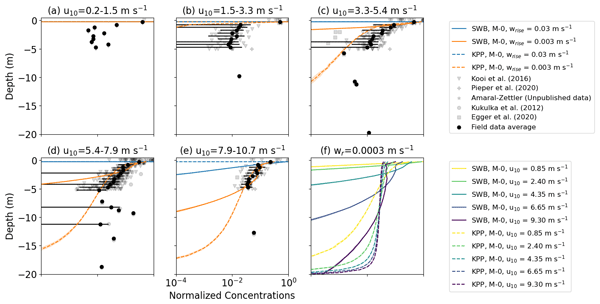
Turbulent mixing is a vital process in 3D modeling of particle transport in the ocean. However, since turbulence occurs on very short spatial scales and timescales, large-scale ocean models generally have highly simplified turbulence representations. We have developed parametrizations for the vertical turbulent transport of buoyant particles that can be easily applied in a large-scale particle tracking model. The predicted vertical concentration profiles match microplastic observations well.
Mikael L. A. Kaandorp, Stefanie L. Ypma, Marijke Boonstra, Henk A. Dijkstra, and Erik van Sebille
Ocean Sci., 18, 269–293, https://doi.org/10.5194/os-18-269-2022, https://doi.org/10.5194/os-18-269-2022, 2022
Short summary
Short summary
A large amount of marine litter, such as plastics, is located on or around beaches. Both the total amount of this litter and its transport are poorly understood. We investigate this by training a machine learning model with data of cleanup efforts on Dutch beaches between 2014 and 2019, obtained by about 14 000 volunteers. We find that Dutch beaches contain up to 30 000 kg of litter, largely depending on tides, oceanic transport, and how exposed the beaches are.
Peter D. Nooteboom, Peter K. Bijl, Christian Kehl, Erik van Sebille, Martin Ziegler, Anna S. von der Heydt, and Henk A. Dijkstra
Earth Syst. Dynam., 13, 357–371, https://doi.org/10.5194/esd-13-357-2022, https://doi.org/10.5194/esd-13-357-2022, 2022
Short summary
Short summary
Having descended through the water column, microplankton in ocean sediments represents the ocean surface environment and is used as an archive of past and present surface oceanographic conditions. However, this microplankton is advected by turbulent ocean currents during its sinking journey. We use simulations of sinking particles to define ocean bottom provinces and detect these provinces in datasets of sedimentary microplankton, which has implications for palaeoclimate reconstructions.
Cited articles
Agostini, M. and Van Zomeren, M.: Toward a comprehensive and potentially cross-cultural model of why people engage in collective action: A quantitative research synthesis of four motivations and structural constraints, Psychol. Bull., 147, 667–700, https://doi.org/10.1037/bul0000256, 2021.
Biernacki, P. and Waldorf, D.: Snowball Sampling: Problems and Techniques of Chain Referral Sampling, Sociol. Meth. Res., 10, 141–163, https://doi.org/10.1177/004912418101000205, 1981.
Bird, C. M.: How I Stopped Dreading and Learned to Love Transcription, Qual. Inq., 11, 226–248, https://doi.org/10.1177/1077800404273413, 2005.
Calvin, K., Dasgupta, D., Krinner, G., Mukherji, A., Thorne, P. W., Trisos, C., Romero, J., Aldunce, P., Barrett, K., Blanco, G., Cheung, W. W. L., Connors, S., Denton, F., Diongue-Niang, A., Dodman, D., Garschagen, M., Geden, O., Hayward, B., Jones, C., Jotzo, F., Krug, T., Lasco, R., Lee, Y.-Y., Masson-Delmotte, V., Meinshausen, M., Mintenbeck, K., Mokssit, A., Otto, F. E. L., Pathak, M., Pirani, A., Poloczanska, E., Pörtner, H.-O., Revi, A., Roberts, D. C., Roy, J., Ruane, A. C., Skea, J., Shukla, P. R., Slade, R., Slangen, A., Sokona, Y., Sörensson, A. A., Tignor, M., Van Vuuren, D., Wei, Y.-M., Winkler, H., Zhai, P., Zommers, Z., Hourcade, J.-C., Johnson, F. X., Pachauri, S., Simpson, N. P., Singh, C., Thomas, A., Totin, E., Alegría, A., Armour, K., Bednar-Friedl, B., Blok, K., Cissé, G., Dentener, F., Eriksen, S., Fischer, E., Garner, G., Guivarch, C., Haasnoot, M., Hansen, G., Hauser, M., Hawkins, E., Hermans, T., Kopp, R., Leprince-Ringuet, N., Lewis, J., Ley, D., Ludden, C., Niamir, L., Nicholls, Z., Some, S., Szopa, S., Trewin, B., Van Der Wijst, K.-I., Winter, G., Witting, M., Birt, A., and Ha, M.: IPCC, 2023: Climate Change 2023: Synthesis Report. Contribution of Working Groups I, II and III to the Sixth Assessment Report of the Intergovernmental Panel on Climate Change, edited by: Lee, H. and Romero, J., IPCC, Geneva, Switzerland, Intergovernmental Panel on Climate Change (IPCC), https://doi.org/10.59327/IPCC/AR6-9789291691647, 2023.
Cologna, V., Knutti, R., Oreskes, N., and Siegrist, M.: Majority of German citizens, US citizens and climate scientists support policy advocacy by climate researchers and expect greater political engagement, Environ. Res. Lett., 16, https://doi.org/10.1088/1748-9326/abd4ac, 2021.
Dablander, F., Sachisthal, M. S. M., Cologna, V., Strahm, N., Bosshard, A., Grüning, N.-M., Green, A. J. K., Brick, C., Aron, A. R., and Haslbeck, J. M. B.: Climate change engagement of scientists, Nat. Clim. Change, 14, 1033–1039, https://doi.org/10.1038/s41558-024-02091-2, 2024.
Diercks, G. and Diederen, P.: Rijkskennisinstellingen op gepaste afstand, Justitiële Verkenningen, 45, 9, https://doi.org/10.5553/JV/016758502019045002002, 2019.
Douglas, H.: Values in Science, edited by: Humphreys, P., Oxford University Press, https://doi.org/10.1093/oxfordhb/9780199368815.013.28, 2015.
Finnerty, S., Piazza, J., and Levine, M.: Between two worlds: the scientist's dilemma in climate activism, npj Clim. Action, 3, 77, https://doi.org/10.1038/s44168-024-00161-x, 2024a.
Finnerty, S., Piazza, J., and Levine, M.: Scientists' identities shape engagement with environmental activism, Commun. Earth Environ., 5, 240, https://doi.org/10.1038/s43247-024-01412-9, 2024b.
Finnerty, S., Sachisthal, M. S. M., Cologna, V., Dablander, F., Messling, L., and Van Eck, C.: Climate Advocacy and Activism by Scientists: A Narrative Review, PLOS Clim., 5, e0000942, https://doi.org/10.1371/journal.pclm.0000942, 2026.
Hallström, K. T. and Larsson, O. S.: Promoting an image of independence: An institutional perspective on nonprofit organizational strategies, J. Ideol., 40, 1–21, 2019.
Hayes, A. F. and Krippendorff, K.: Answering the Call for a Standard Reliability Measure for Coding Data, Communication Methods and Measures, 1, 77–89, https://doi.org/10.1080/19312450709336664, 2007.
Kotcher, J. E., Myers, T. A., Vraga, E. K., Stenhouse, N., and Maibach, E. W.: Does Engagement in Advocacy Hurt the Credibility of Scientists? Results from a Randomized National Survey Experiment, Environ. Commun., 11, 415–429, https://doi.org/10.1080/17524032.2016.1275736, 2017.
Messling, L., Lu, Y., and van Eck, C. W.: Advocacy – defending science or destroying it? Interviews with 47 climate scientists about their fundamental concerns, Public Underst. Sci., 09636625251314164, https://doi.org/10.1177/09636625251314164, 2025.
Ministerie van Algemene Zaken: Civil servants' legal status, https://www.government.nl/topics/public-administration/civil-servants-legal-status (last access: 15 December 2025), 2025.
O'Connor, C. and Joffe, H.: Intercoder Reliability in Qualitative Research: Debates and Practical Guidelines, Int. J. Qual. Meth., 19, 1609406919899220, https://doi.org/10.1177/1609406919899220, 2020.
Pezzullo, P. C. and Cox, J. R.: Environmental communication and the public sphere, 6th Edn., SAGE Publications, Inc, Los Angeles, 358 pp., ISBN 978-1-5443-8703-1, 2022.
Philipp, D. A., Szczech, K., Hanson, N. L., O'Hara, G., and Puckett, J.: Virtual care delivery of whole family assessment and intervention with infants and preschoolers: a thematic analysis of clinician and family experiences, Aust. NZ. J. Fam. Ther., 44, 521–536, https://doi.org/10.1002/anzf.1557, 2023.
Pielke Jr., R. A.: The Honest Broker: Making Sense of Science in Policy and Politics, Cambridge University Press, Cambridge, https://doi.org/10.1017/CBO9780511818110, 2007.
Post, S. and Bienzeisler, N.: The Honest Broker versus the Epistocrat: Attenuating Distrust in Science by Disentangling Science from Politics, Polit. Commun., 41, 763–785, https://doi.org/10.1080/10584609.2024.2317274, 2024.
Rubin, H. J. and Rubin, I. S.: Qualitative Interviewing (2nd Edn.): The Art of Hearing Data, SAGE Publications, Inc., https://doi.org/10.4135/9781452226651, 2005.
Saunders, B., Sim, J., Kingstone, T., Baker, S., Waterfield, J., Bartlam, B., Burroughs, H., and Jinks, C.: Saturation in qualitative research: exploring its conceptualization and operationalization, Qual. Quant., 52, 1893–1907, https://doi.org/10.1007/s11135-017-0574-8, 2018.
van Eck, C. W.: The next generation of climate scientists as science communicators, Public Underst. Sci., 32, 969–984, https://doi.org/10.1177/09636625231176382, 2023.
van Eck, C. W. and van der Meer, T. G. L. A.: Narratives of hope and concern? Examining the impact of climate scientists' communication on credibility and engagement, Public Underst. Sci., 34, 734–751, https://doi.org/10.1177/09636625251314159, 2025.
van Eck, C. W., Messling, L., and Hayhoe, K.: Challenging the neutrality myth in climate science and activism, npj Clim. Action, 3, 1–3, https://doi.org/10.1038/s44168-024-00171-9, 2024.
van Sebille, E., Weel, C., Vliegenthart, R., and Bos, M.: The effect of advocacy on perceived credibility of climate scientists in a Dutch text on greening of gardens, Geosci. Commun., 9, 69–86, https://doi.org/10.5194/gc-9-69-2026, 2026.
Editorial statement
I fully agree with both the justification of the handling editor and the comment by referee Kate Donovan, and I think the focus on the concerns of government climate researches is a valuable contribution to the discussion of same-but-different concerns of non-government researchers.
I fully agree with both the justification of the handling editor and the comment by referee Kate...
Short summary
Climate researchers are key in communicating the climate crisis, but most studies focus on university scientists. Little is known about those working in government organisations. We interviewed 14 Dutch climate scientists at government-funded institutes about opportunities and barriers to advocacy, including concerns about civil servant roles, independence, institutional identity, and unclear rules.
Climate researchers are key in communicating the climate crisis, but most studies focus on...
Altmetrics
Final-revised paper
Preprint