
Articles | Volume 9, issue 4
https://doi.org/10.5194/gc-9-461-2026
© Author(s) 2026. This work is distributed under
the Creative Commons Attribution 4.0 License.
the Creative Commons Attribution 4.0 License.
https://doi.org/10.5194/gc-9-461-2026
© Author(s) 2026. This work is distributed under
the Creative Commons Attribution 4.0 License.
the Creative Commons Attribution 4.0 License.
Research article
| 
13 Oct 2026
Research article |
| 13 Oct 2026
| 13 Oct 2026
Interdisciplinary research in the Geosciences: a view from early career scientists
Inge Wiekenkamp
GFZ Helmholtz Centre for Geosciences, Potsdam, 14473, Germany
Valby van Schijndel
GFZ Helmholtz Centre for Geosciences, Potsdam, 14473, Germany

Department of Earth Sciences, Physical Geography, Freie Universität Berlin, Berlin, 12249, Germany
Jonas Kuppler
GFZ Helmholtz Centre for Geosciences, Potsdam, 14473, Germany
Ramesh Glückler
Polar Terrestrial Environmental Systems, Alfred Wegener Institute Helmholtz Centre for Polar and Marine Research, Potsdam, 14473, Germany
Izabella Baisheva
Polar Terrestrial Environmental Systems, Alfred Wegener Institute Helmholtz Centre for Polar and Marine Research, Potsdam, 14473, Germany
Patricio Yeste
GFZ Helmholtz Centre for Geosciences, Potsdam, 14473, Germany
Institute of Environmental Science and Geography, University of Potsdam, Potsdam, 14473, Germany
Department of Applied Physics, University of Granada, Granada, 18071, Spain
Paul Einhäupl
RIFS Research Institute for Sustainability at GFZ Helmholtz Centre for Geosciences, Potsdam, 14467, Germany
Maria Rosa Scicchitano
GFZ Helmholtz Centre for Geosciences, Potsdam, 14473, Germany
Simeon Lisovski
Polar Terrestrial Environmental Systems, Alfred Wegener Institute Helmholtz Centre for Polar and Marine Research, Potsdam, 14473, Germany
Related authors
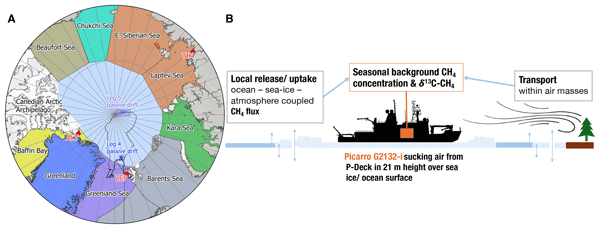
Amanda Sellmaier, Ellen Damm, Torsten Sachs, Benjamin Kirbus, Inge Wiekenkamp, Annette Rinke, Falk Pätzold, Daiki Nomura, Astrid Lampert, and Markus Rex
Atmos. Chem. Phys., 25, 17685–17700, https://doi.org/10.5194/acp-25-17685-2025, https://doi.org/10.5194/acp-25-17685-2025, 2025
Short summary
Short summary
This study presents continuous ship-borne measurements of methane (CH4) concentration and isotopic composition monitored during an ice drift expedition in 2020. Using trajectory analysis, we linked atmospheric CH4 variabilities to air mass pathways transported over open water or sea-ice. The study highlights the potential of ship-borne observations to fill significant data gaps in the high Arctic.
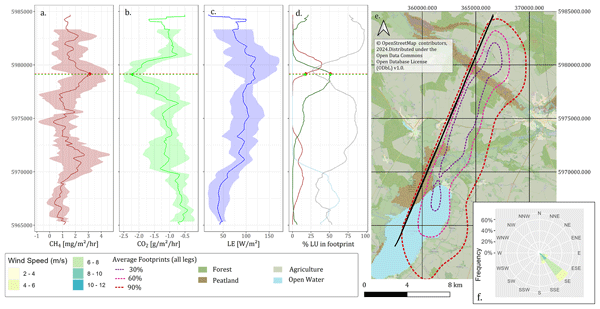
Inge Wiekenkamp, Anna Katharina Lehmann, Alexander Bütow, Jörg Hartmann, Stefan Metzger, Thomas Ruhtz, Christian Wille, Mathias Zöllner, and Torsten Sachs
Atmos. Meas. Tech., 18, 749–772, https://doi.org/10.5194/amt-18-749-2025, https://doi.org/10.5194/amt-18-749-2025, 2025
Short summary
Short summary
Airborne eddy covariance platforms are crucial to measure three-dimensional wind and turbulent matter and energy transport between the surface and the atmosphere at larger scales. In this study, we introduce a new airborne eddy covariance platform (Schleicher ASK-16) and demonstrate that this platform is able to accurately measure turbulent fluxes and wind vectors. Data from this platform can help to build bridges between local tower measurements and remote-sensing-based products.
Marina J. Vergotti, Diego K. Kersting, Thomas C. Brachert, Steeve Comeau, Daniel A. Frick, Ed C. Hathorne, Michael J. Henehan, Josefine Holtz, Nuria Teixidó, Valby van Schijndel, and Juan Pablo D'Olivo
EGUsphere, https://doi.org/10.5194/egusphere-2026-2720, https://doi.org/10.5194/egusphere-2026-2720, 2026
Short summary
Short summary
We studied how the Mediterranean coral Cladocora caespitosa regulates skeletal growth by reconstructing seasonal changes in its internal chemistry over 7 years using boron-based geochemical proxies. We show that C. caespitosa increases its internal pH and dissolved inorganic carbon similarly to tropical corals, in order to boost the calcification of its skeleton. Comparisons with environmental data indicate temperature as the dominant external influence on the internal chemistry of the coral.
Patricio Yeste, Lieke A. Melsen, João Paulo L. F. Brêda, Nicolás Tacoronte, Andrea Saltelli, Giulia Vannucci, Roberta Siciliano, and Axel Bronstert
EGUsphere, https://doi.org/10.5194/egusphere-2026-1787, https://doi.org/10.5194/egusphere-2026-1787, 2026
Short summary
Short summary
Understanding which factors most influence streamflow is key for accurate hydrologic modelling. This study shows that machine learning methods, like random forests and neural networks, can efficiently identify the most important model inputs, producing results similar to traditional sensitivity analysis but with far less computation. This approach helps scientists explore complex models faster and more reliably, improving insights into how catchments respond to changing conditions.
Amanda Sellmaier, Ellen Damm, Torsten Sachs, Benjamin Kirbus, Inge Wiekenkamp, Annette Rinke, Falk Pätzold, Daiki Nomura, Astrid Lampert, and Markus Rex
Atmos. Chem. Phys., 25, 17685–17700, https://doi.org/10.5194/acp-25-17685-2025, https://doi.org/10.5194/acp-25-17685-2025, 2025
Short summary
Short summary
This study presents continuous ship-borne measurements of methane (CH4) concentration and isotopic composition monitored during an ice drift expedition in 2020. Using trajectory analysis, we linked atmospheric CH4 variabilities to air mass pathways transported over open water or sea-ice. The study highlights the potential of ship-borne observations to fill significant data gaps in the high Arctic.
Izabella A. Baisheva, Birgit Heim, Jorge García Molinos, Amelie Stieg, Hanno Meyer, Ramesh Glückler, Kathleen R. Stoof-Leichsenring, Antje Eulenburg, Pier Paul Overduin, Evgenii S. Zakharov, Aital V. Egorov, Paraskovya V. Davydova, Lena A. Ushnitskaya, Sardana N. Levina, Ruslan M. Gorodnichev, Robert Jackisch, Antonie Haas, Stefan Kruse, Luidmila A. Pestryakova, and Ulrike Herzschuh
EGUsphere, https://doi.org/10.5194/egusphere-2025-4114, https://doi.org/10.5194/egusphere-2025-4114, 2025
Short summary
Short summary
Our study provides a new comprehensive assessment of the limnological state of 66 lakes in the Central Yakutian alaas landscapes and the Verkhoyansk mountain range. Our analyses suggest that specific lake-type properties within the thermokarst lake sequence seem to drive inorganic, organic, and isotopic lake hydrochemistry. Future warming may lead to less diversification within lake macrophyte assemblages in old alaas lakes.
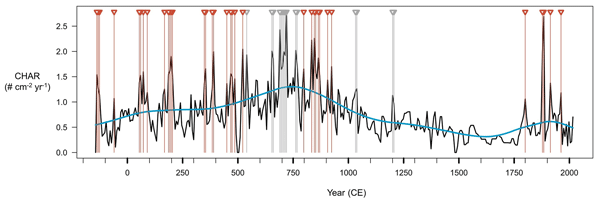
Ramesh Glückler
E&G Quaternary Sci. J., 74, 101–103, https://doi.org/10.5194/egqsj-74-101-2025, https://doi.org/10.5194/egqsj-74-101-2025, 2025
Short summary
Short summary
This dissertation evaluates long-term wildfire dynamics in eastern Siberia. A total of 11 new records of Holocene wildfire activity, based on charcoal particles in lake sediments, show past trends of biomass burning in a region that was previously strongly under-represented. A newly fire-enabled forest model is used alongside the charcoal-based reconstructions to further refine interpretations of climate, vegetation, and humans as potential drivers behind past fire regime changes.
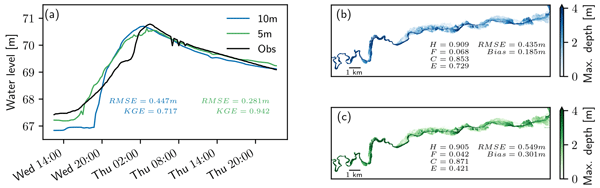
Shahin Khosh Bin Ghomash, Patricio Yeste, Heiko Apel, and Viet Dung Nguyen
Nat. Hazards Earth Syst. Sci., 25, 975–990, https://doi.org/10.5194/nhess-25-975-2025, https://doi.org/10.5194/nhess-25-975-2025, 2025
Short summary
Short summary
Hydrodynamic models are vital for predicting floods, like those in Germany's Ahr region in July 2021. We refine the RIM2D model for the Ahr region, analyzing the impact of various factors using Monte Carlo simulations. Accurate parameter assignment is crucial, with channel roughness and resolution playing key roles. Coarser resolutions are suitable for flood extent predictions, aiding early-warning systems. Our work provides guidelines for optimizing hydrodynamic models in the Ahr region.
Inge Wiekenkamp, Anna Katharina Lehmann, Alexander Bütow, Jörg Hartmann, Stefan Metzger, Thomas Ruhtz, Christian Wille, Mathias Zöllner, and Torsten Sachs
Atmos. Meas. Tech., 18, 749–772, https://doi.org/10.5194/amt-18-749-2025, https://doi.org/10.5194/amt-18-749-2025, 2025
Short summary
Short summary
Airborne eddy covariance platforms are crucial to measure three-dimensional wind and turbulent matter and energy transport between the surface and the atmosphere at larger scales. In this study, we introduce a new airborne eddy covariance platform (Schleicher ASK-16) and demonstrate that this platform is able to accurately measure turbulent fluxes and wind vectors. Data from this platform can help to build bridges between local tower measurements and remote-sensing-based products.
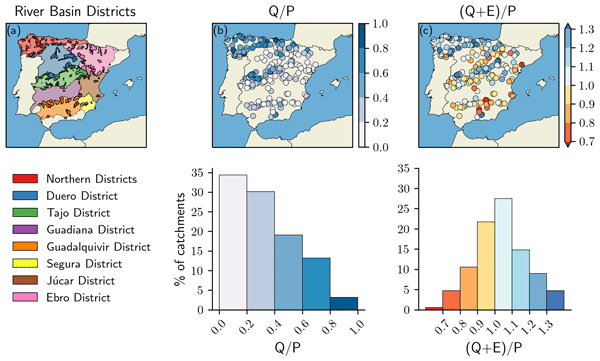
Patricio Yeste, Matilde García-Valdecasas Ojeda, Sonia R. Gámiz-Fortis, Yolanda Castro-Díez, Axel Bronstert, and María Jesús Esteban-Parra
Hydrol. Earth Syst. Sci., 28, 5331–5352, https://doi.org/10.5194/hess-28-5331-2024, https://doi.org/10.5194/hess-28-5331-2024, 2024
Short summary
Short summary
Integrating streamflow and evaporation data can help improve the physical realism of hydrologic models. We investigate the capabilities of the Variable Infiltration Capacity (VIC) to reproduce both hydrologic variables for 189 headwater located in Spain. Results from sensitivity analyses indicate that adding two vegetation parameters is enough to improve the representation of evaporation and that the performance of VIC exceeded that of the largest modelling effort currently available in Spain.
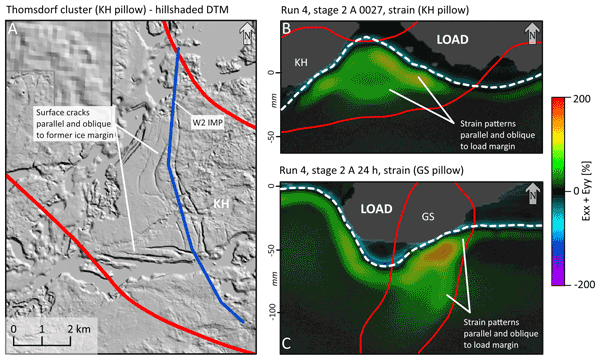
Jacob Hardt, Tim P. Dooley, and Michael R. Hudec
Earth Surf. Dynam., 12, 559–579, https://doi.org/10.5194/esurf-12-559-2024, https://doi.org/10.5194/esurf-12-559-2024, 2024
Short summary
Short summary
We investigate the reaction of salt structures on ice sheet transgressions. We used a series of sandbox models that enabled us to experiment with scaled-down versions of salt bodies from northern Germany. The strongest reactions occurred when large salt pillows were partly covered by the ice load. Subsurface salt structures may play an important role in the energy transition, e.g., as energy storage. Thus, it is important to understand all processes that affect their stability.
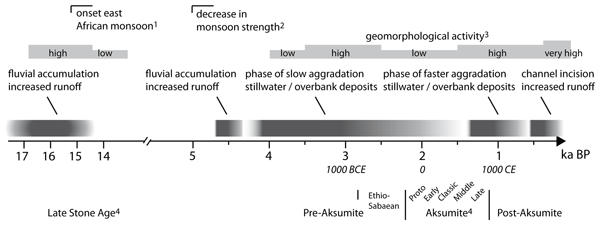
Jacob Hardt, Nadav Nir, Christopher Lüthgens, Thomas M. Menn, and Brigitta Schütt
E&G Quaternary Sci. J., 72, 37–55, https://doi.org/10.5194/egqsj-72-37-2023, https://doi.org/10.5194/egqsj-72-37-2023, 2023
Short summary
Short summary
We investigated the geomorphological and geological characteristics of the archaeological sites Hawelti–Melazo and the surroundings. We performed sedimentological analyses, as well as direct (luminescence) and indirect (radiocarbon) sediment dating, to reconstruct the palaeoenvironmental conditions, which we integrated into the wider context of Tigray.

Christopher Lüthgens and Jacob Hardt
DEUQUA Spec. Pub., 4, 29–39, https://doi.org/10.5194/deuquasp-4-29-2022, https://doi.org/10.5194/deuquasp-4-29-2022, 2022
Ramesh Glückler, Rongwei Geng, Lennart Grimm, Izabella Baisheva, Ulrike Herzschuh, Kathleen R. Stoof-Leichsenring, Stefan Kruse, Andrei Andreev, Luidmila Pestryakova, and Elisabeth Dietze
EGUsphere, https://doi.org/10.5194/egusphere-2022-395, https://doi.org/10.5194/egusphere-2022-395, 2022
Preprint archived
Short summary
Short summary
Despite rapidly intensifying wildfire seasons in Siberian boreal forests, little is known about long-term relationships between changes in vegetation and shifts in wildfire activity. Using lake sediment proxies, we reconstruct such environmental changes over the past 10,800 years in Central Yakutia. We find that a more open forest may facilitate increased amounts of vegetation burning. The present-day dense larch forest might yet be mediating the current climate-driven wildfire intensification.
Cited articles
Acocella, V.: Grand challenges in Earth science: research toward a sustainable environment, Front. Earth Sci., 3, https://doi.org/10.3389/feart.2015.00068, 2015.
Allen, D. C., Cardinale, B. J., and Wynn-Thompson, T.: Toward a Better Integration of Ecological Principles into Ecogeoscience Research, BioScience, 64, 444–454, https://doi.org/10.1093/biosci/biu046, 2014.
Baatz, R., Ghazaryan, G., Hagenlocher, M., Nendel, C., Toreti, A., and Rezaei, E. E.: Drought research priorities, trends, and geographic patterns, Hydrol. Earth Syst. Sci., 29, 1379–1393, https://doi.org/10.5194/hess-29-1379-2025, 2025.
Barrett, P., Hunter, J., Miller, J. T., Hsu, J. C., and Greenfield, P.: matplotlib–A Portable Python Plotting Package, Astr. Soc. P. XIV, 347, 91–95, 2005.
Camps-Valls, G., Fernández-Torres, M.-Á., Cohrs, K.-H., Höhl, A., Castelletti, A., Pacal, A., Robin, C., Martinuzzi, F., Papoutsis, I., Prapas, I., Pérez-Aracil, J., Weigel, K., Gonzalez-Calabuig, M., Reichstein, M., Rabel, M., Giuliani, M., Mahecha, M. D., Popescu, O.-I., Pellicer-Valero, O. J., Ouala, S., Salcedo-Sanz, S., Sippel, S., Kondylatos, S., Happé, T., and Williams, T.: Artificial intelligence for modeling and understanding extreme weather and climate events, Nat. Commun., 16, 1919, https://doi.org/10.1038/s41467-025-56573-8, 2025.
Clark, W. C. and Dickson, N. M.: Sustainability science: The emerging research program, P. Natl. Acad. Sci., 100, 8059–8061, https://doi.org/10.1073/pnas.1231333100, 2003.
Cooke, S. J., Nguyen, V. M., Anastakis, D., et al.: Diverse perspectives on interdisciplinarity from Members of the College of the Royal Society of Canada, FACETS, 5, 138–165, https://doi.org/10.1139/facets-2019-0044, 2020.
Drüke, M., Lucht, W., von Bloh, W., Petri, S., Sakschewski, B., Tobian, A., Loriani, S., Schaphoff, S., Feulner, G., and Thonicke, K.: The long-term impact of transgressing planetary boundaries on biophysical atmosphere–land interactions, Earth Syst. Dynam., 15, 467–483, https://doi.org/10.5194/esd-15-467-2024, 2024.
Fanzo, J., Carducci, B., Louis-Jean, J., Herrero, M., Karl, K., and Rosenzweig, C.: Climate Change, Extreme Weather Events, Food Security, and Nutrition: Evolving Relationships and Critical Challenges, Annu. Rev. Nutr., 45, 335–360, https://doi.org/10.1146/annurev-nutr-111324-111252, 2025.
Foerster, S., Brosinsky, A., Koch, K., and Eckardt, R.: Hyperedu online learning program for hyperspectral remote sensing: Concept, implementation and lessons learned, Int. J. Appl. Earth Obs., 131, 103983, https://doi.org/10.1016/j.jag.2024.103983, 2024.
Gazni, A., Sugimoto, C. R., and Didegah, F.: Mapping world scientific collaboration: Authors, institutions, and countries, J. Am. Soc. Inf. Sci. Tec., 63, 323–335, https://doi.org/10.1002/asi.21688, 2012.
German National Academy of Sciences Leopoldina: Report on Tomorrow's Science. Earth System Science – Discovery, Diagnosis, and Solutions in Times of Global Change, German National Academy of Sciences Leopoldina [Deutsche Akademie der Naturforscher Leopoldina e.V.], https://doi.org/10.26164/leopoldina_03_00591, 2022.
Guo, H.: Big Earth data: A new frontier in Earth and information sciences, Big Earth Data, 1, 4–20, https://doi.org/10.1080/20964471.2017.1403062, 2017.
Hägerstrand, T.: The domain of human geography, in: Directions in geography, Methuen & Co., London, 67–88, https://doi.org/10.4324/9780429273292-4, 2019.
Hanson, M. A., Barreiro, P. G., Crosetto, P., and Brockington, D.: The strain on scientific publishing, Quantitative Science Studies, 5, 823–843, https://doi.org/10.1162/qss_a_00327, 2024.
Harrison, C.: Tip sheet on question wording, Harvard University Program on survey research, 17, https://psr.iq.harvard.edu/sites/g/files/omnuum11131/files/psr/files/PSRQuestionnaireTipSheet_0.pdf (last access: 1 April 2026), 2007.
Hauer, M. E., Fussell, E., Mueller, V., Burkett, M., Call, M., Abel, K., McLeman, R., and Wrathall, D.: Sea-level rise and human migration, Nat. Rev. Earth Environ., 1, 28–39, https://doi.org/10.1038/s43017-019-0002-9, 2020.
Hofmann, B., Reber, U., Ammann, P., Dötzer, J., Mark, J., McCallum, C., Wiget, M., and Zachmann, L.: A typology of interdisciplinary collaborations: insights from agri-food transformation research, Sustain. Sci., 20, 1791–1808, https://doi.org/10.1007/s11625-025-01702-x, 2025.
Honeybun-Arnolda, E.: Science in the trading zone: interdisciplinarity and the “environment”, Sociology Lens, 36, 414–428, 2023.
Huutoniemi, K., Klein, J. T., Bruun, H., and Hukkinen, J.: Analyzing interdisciplinarity: Typology and indicators, Res. Policy, 39, 79–88, https://doi.org/10.1016/j.respol.2009.09.011, 2010.
Huutoniemi, K. I. and Rafols, I.: Interdisciplinarity in research evaluation, in: The Oxford Handbook of Interdisciplinarity, edited by: Frodeman, R., Klein, J. T., and Pacheco, R. C. D. S., 2nd edn., 498–512, Oxford University Press, https://doi.org/10.1093/oxfordhb/9780198733522.013.40, 2017.
Jones, P., Selby, D., and Sterling, S.: More than the sum of their parts? Interdisciplinarity and sustainability, in: Sustainability education, Routledge, 17–37, ISBN 978-1-84407-877-6, 2010.
Kim, R. E. and Kotzé, L. J.: Planetary boundaries at the intersection of Earth system law, science and governance: A state-of-the-art review, Review of European, Comparative & International Environmental Law, 30, 3–15, https://doi.org/10.1111/reel.12383, 2021.
Klein, J. T.: A taxonomy of interdisciplinarity, The Oxford handbook of interdisciplinarity, Oxford University Press, 15, ISBN 9780199643967, 2010.
Klein, J. T.: Interdisciplinarity, Oxford University Press, https://doi.org/10.1093/acrefore/9780190201098.013.988, 2019.
Kleinhans, M. G.: Down to Earth: History and philosophy of geoscience in practice for undergraduate education, Eur. J. Philos. Sci., 11, 81, https://doi.org/10.1007/s13194-021-00402-4, 2021.
Kothari, D. P., Ranjan, R., and Singal, K.: Renewable energy sources and emerging technologies, PHI Learning Pvt. Ltd. (Prentice Hall of India Learning), ISBN 9789389347890, 2021.
Lyall, C., Bruce, A., Marsden, W., and Meagher, L.: The role of funding agencies in creating interdisciplinary knowledge, Sci. Publ. Policy, 40, 62–71, https://doi.org/10.1093/scipol/scs121, 2013.
MacLeod, M.: What makes interdisciplinarity difficult? Some consequences of domain specificity in interdisciplinary practice, Synthese, 195, 697–720, https://doi.org/10.1007/s11229-016-1236-4, 2018.
Madsen, D.: Epistemological or Political? Unpacking Ambiguities in the Field of Interdisciplinarity Studies, Minerva, 56, 453–477, https://doi.org/10.1007/s11024-018-9353-5, 2018.
McKinney, W.: Pandas: a foundational Python library for data analysis and statistics, Python for high performance and scientific computing, Taylor and Francis, 1–9, https://doi.org/10.1080/09537287.2024.2320790, 2011.
Morton, L. W., Eigenbrode, S. D., and Martin, T. A.: Architectures of adaptive integration in large collaborative projects, Ecol. Soc., 20, https://doi.org/10.5751/ES-07788-200405, 2015.
Mueller, A. C.: Wordcloud, Zenodo, https://doi.org/10.5281/zenodo.18332568, 2026.
Orion, N.: The future challenge of Earth science education research, Disciplinary and Interdisciplinary Science Education Research, 1, 3, https://doi.org/10.1186/s43031-019-0003-z, 2019.
Orion, N. and Libarkin, J.: Earth Science Education, Routledge, 692–716, https://doi.org/10.4324/9780367855758-26, 2023.
Pennington, D., Ebert-Uphoff, I., Freed, N., Martin, J., and Pierce, S.: Bridging sustainability science, earth science, and data science through interdisciplinary education, Sustain. Sci., 15, https://doi.org/10.1007/s11625-019-00735-3, 2020.
Plotly Technologies Inc.: Plotly PY, Zenodo, https://doi.org/10.5281/zenodo.14503524, 2024.
Prăvălie, R.: Exploring the multiple land degradation pathways across the planet, Earth-Sci. Rev., 220, 103689, https://doi.org/10.1016/j.earscirev.2021.103689, 2021.
Repko, A. F. and Szostak, R.: Interdisciplinary research: Process and theory, Sage publications, ISBN 978-1544398600, 2020.
Schellnhuber, H.-J. and Wenzel, V.: Earth system analysis: Integrating science for sustainability, Springer Science & Business Media, https://doi.org/10.1007/978-3-642-52354-0, 2012.
Schmitt, J. B., Goldmann, A., Simon, S. T., and Bieber, C.: Conception and Interpretation of Interdisciplinarity in Research Practice: Findings from Group Discussions in the Emerging Field of Digital Transformation, Minerva, 61, 199–220, https://doi.org/10.1007/s11024-023-09489-w, 2023.
Steffen, W., Richardson, K., Rockström, J., Schellnhuber, H., Dube, O. P., Dutreuil, S., Lenton, T., and Lubchenco, J.: The emergence and evolution of Earth System Science, Nat. Rev. Earth Environ., 1, 54–63, https://doi.org/10.1038/s43017-019-0005-6, 2020.
Sun, Y., Livan, G., Ma, A., and Latora, V.: Interdisciplinary researchers attain better long-term funding performance, Commun. Phys., 4, 263, https://doi.org/10.1038/s42005-021-00769-z, 2021.
Teichler, U.: Teaching and Research in Germany: Narrowing the Gaps between Institutional Types and Staff Categories?, Research Institute for Higher Education (RIHE), Hiroshima University, 41–60, ISBN 978-4-9028-0860-5, 2010.
The Research Network for Geosciences in Berlin and Potsdam: Geo.X Early Career Scientists (ECS) Section, https://www.geo-x.net/ecs/ (last access: 27 January 2026), 2026a.
Thomas, J. A., Williams, M., and Zalasiewicz, J.: The anthropocene: A multidisciplinary approach, John Wiley & Sons, ISBN 978-1-5095-3460-9, 2020.
Tress, G., Tress, B., and Fry, G.: Clarifying Integrative Research Concepts in Landscape Ecology, Landscape Ecol., 20, 479–493, https://doi.org/10.1007/s10980-004-3290-4, 2005.
Tress, G., Tress, B., and Fry, G.: Analysis of the barriers to integration in landscape research projects, Land Use Policy, 24, 374–385, https://doi.org/10.1016/j.landusepol.2006.05.001, 2007.
Vantard, M., Galland, C., and Knoop, M.: Interdisciplinary research: Motivations and challenges for researcher careers, Quantitative Science Studies, 4, 711–727, https://doi.org/10.1162/qss_a_00265, 2023.
Vladova, G., Haase, J., and Friesike, S.: Why, with whom, and how to conduct interdisciplinary research? A review from a researcher's perspective, Sci. Publ. Policy, 52, 165–180, https://doi.org/10.1093/scipol/scae070, 2024.
Wuchty, S., Jones, B. F., and Uzzi, B.: The Increasing Dominance of Teams in Production of Knowledge, Science, 316, 1036–1039, https://doi.org/10.1126/science.1136099, 2007.
Yeste, P., Wiekenkamp, I., van Schijndel, V., Hardt , J., Kuppler, J., Glückler, R., Baisheva, I., Einhäupl, P., Scicchitano, M. R., and Lisovski, S.: Survey Data and Code on Interdisciplinary Research in Geosciences for Early Career Scientists, GFZ Data Services [data set, code], https://doi.org/10.5880/GFZ.RDOQ.2026.001, 2026.
Short summary
We conducted a survey on the topic of “interdisciplinarity” among early-career researchers in order to learn about their experiences. There are very different views on what interdisciplinarity means and many positive aspects are cited that enhance research, but there are also a few obstacles when it comes to communication, time management, and publication. It is precisely these obstacles that should be given greater consideration in education and research funding.
We conducted a survey on the topic of “interdisciplinarity” among early-career researchers in...


Altmetrics
Final-revised paper
Preprint