Articles | Volume 9, issue 1
https://doi.org/10.5194/gc-9-115-2026
© Author(s) 2026. This work is distributed under
the Creative Commons Attribution 4.0 License.
https://doi.org/10.5194/gc-9-115-2026
© Author(s) 2026. This work is distributed under
the Creative Commons Attribution 4.0 License.
ClimarisQ: What can we learn from playing a game for climate education?

Davide Faranda
CORRESPONDING AUTHOR
Laboratoire des Sciences du Climat et de l'Environnement, UMR 8212 CEA-CNRS-UVSQ, Université Paris-Saclay and IPSL, CEA Saclay l'Orme des Merisiers, 91191 Gif-sur-Yvette, France
London Mathematical Laboratory, 8 Margravine Gardens, London W6 8RH, UK
LMD/IPSL, ENS, Université PSL, École Polytechnique, Institut Polytechnique de Paris, Sorbonne Université, CNRS, 75005, Paris, France
Lucas Taligrot
London Mathematical Laboratory, 8 Margravine Gardens, London W6 8RH, UK
Pascal Yiou
Laboratoire des Sciences du Climat et de l'Environnement, UMR 8212 CEA-CNRS-UVSQ, Université Paris-Saclay and IPSL, CEA Saclay l'Orme des Merisiers, 91191 Gif-sur-Yvette, France
Nada Caud
Laboratoire des Sciences du Climat et de l'Environnement, UMR 8212 CEA-CNRS-UVSQ, Université Paris-Saclay and IPSL, CEA Saclay l'Orme des Merisiers, 91191 Gif-sur-Yvette, France
Related authors
Davide Faranda, Thibault Guinaldo, Francisco Pastor, Tommaso Alberti, and Samira Khodayar
EGUsphere, https://hal.science/hal-05289765v1, https://hal.science/hal-05289765v1, 2026
This preprint is open for discussion and under review for Natural Hazards and Earth System Sciences (NHESS).
Short summary
Short summary
The Mediterranean Sea experienced a record-breaking heatwave in summer 2025. We compared this event to similar patterns from past decades to see how a warmer climate changed its strength. We found that today's warmer background added about 1.5 °C to the sea surface, making the heatwave far more intense and widespread. This shows how climate change is turning ordinary weather patterns into extreme events, with major impacts on marine life, coastal communities, and economies.
Emmanouil Flaounas, Stavros Dafis, Silvio Davolio, Davide Faranda, Christian Ferrarin, Katharina Hartmuth, Assaf Hochman, Aristeidis Koutroulis, Samira Khodayar, Mario Marcello Miglietta, Florian Pantillon, Platon Patlakas, Michael Sprenger, and Iris Thurnherr
Weather Clim. Dynam., 6, 1515–1538, https://doi.org/10.5194/wcd-6-1515-2025, https://doi.org/10.5194/wcd-6-1515-2025, 2025
Short summary
Short summary
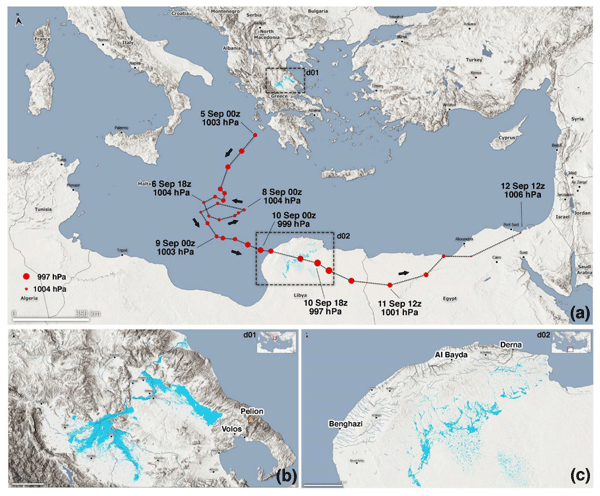
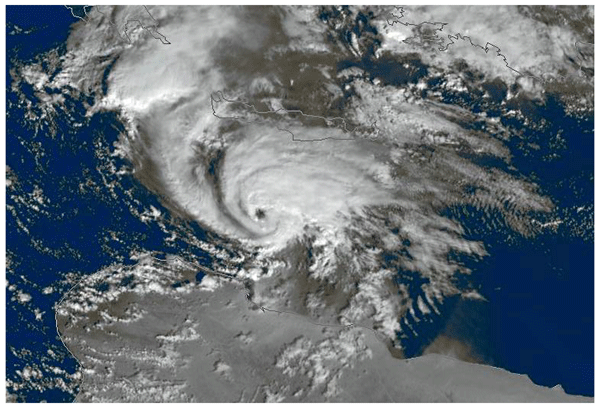
Storm Daniel (2023) is one of the most catastrophic storms ever documented in the Mediterranean. Our results highlight the different dynamics and therefore the different predictability skill of precipitation, its extremes and impacts that have been produced in Greece and Libya, the two most affected countries. Our approach concerns an analysis of the storm by articulating dynamics, weather prediction, hydrological and oceanographic implications, climate extremes, and attribution theory.
Pradeebane Vaittinada Ayar, Stella Bourdin, Davide Faranda, and Mathieu Vrac
Nat. Hazards Earth Syst. Sci., 25, 4655–4672, https://doi.org/10.5194/nhess-25-4655-2025, https://doi.org/10.5194/nhess-25-4655-2025, 2025
Short summary
Short summary
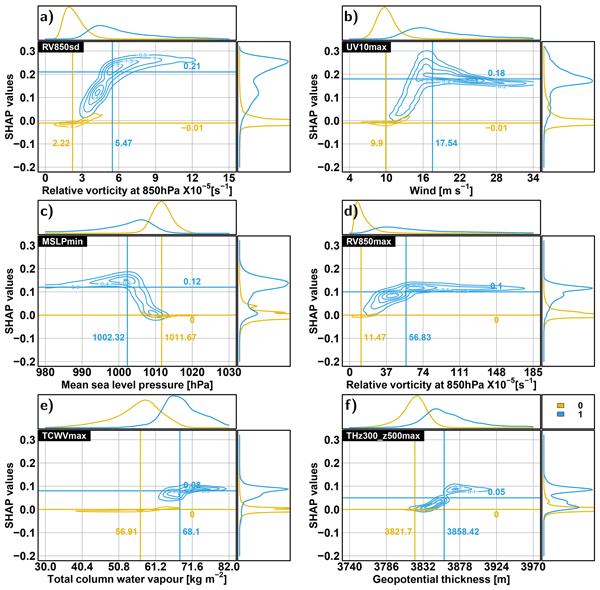
Tracking tropical cyclones (TCs) remains a matter of interest for investigating observed and simulated tropical cyclones. In this study, Random Forest (RF), a machine learning approach, is considered to track TCs. RF associates the TC occurrence or absence with different atmospheric configurations. Compared to trackers found in the literature, it shows similar performance for tracking TCs, better control over false alarms, more flexibility, and reveals key variables for TCs' detection.
Lia Rapella, Tommaso Alberti, Davide Faranda, and Philippe Drobinski
Weather Clim. Dynam., 6, 1339–1363, https://doi.org/10.5194/wcd-6-1339-2025, https://doi.org/10.5194/wcd-6-1339-2025, 2025
Short summary
Short summary
Extreme weather events pose increasing challenges for aviation, including flight disruptions and infrastructure damage. This study examines the influence of anthropogenic climate change on four recent major storms across Europe, the USA, and East Asia. Our research underscores the growing intensity of extreme storms, driven by human-induced climate change, stressing the need to adapt aviation strategies to an increasingly hazardous environment.
Kerry Emanuel, Tommaso Alberti, Stella Bourdin, Suzana J. Camargo, Davide Faranda, Emmanouil Flaounas, Juan Jesus Gonzalez-Aleman, Chia-Ying Lee, Mario Marcello Miglietta, Claudia Pasquero, Alice Portal, Hamish Ramsay, Marco Reale, and Romualdo Romero
Weather Clim. Dynam., 6, 901–926, https://doi.org/10.5194/wcd-6-901-2025, https://doi.org/10.5194/wcd-6-901-2025, 2025
Short summary
Short summary
Storms strongly resembling hurricanes are sometimes observed to form well outside the tropics, even in polar latitudes. They behave capriciously, developing very rapidly and then dying just as quickly. We show that strong dynamical processes in the atmosphere can sometimes cause it to become much colder locally than the underlying ocean, creating the conditions for hurricanes to form but only over small areas and for short times. We call the resulting storms "CYCLOPs".
Robin Noyelle, Davide Faranda, Yoann Robin, Mathieu Vrac, and Pascal Yiou
Weather Clim. Dynam., 6, 817–839, https://doi.org/10.5194/wcd-6-817-2025, https://doi.org/10.5194/wcd-6-817-2025, 2025
Short summary
Short summary
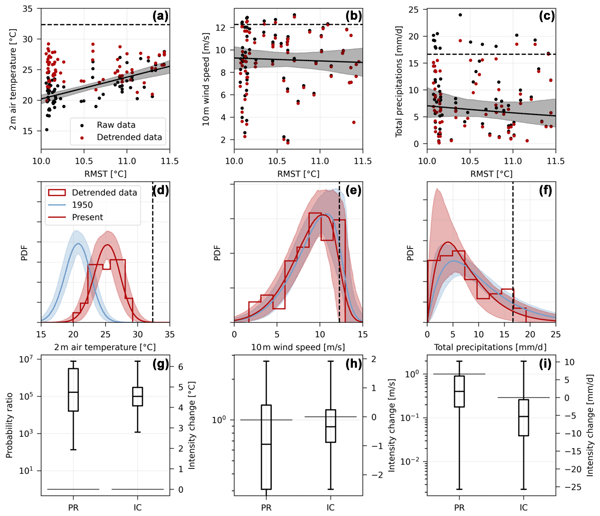
Properties of extreme meteorological and climatological events are changing under human-caused climate change. Extreme event attribution methods seek to estimate the contribution of global warming in the probability and intensity changes of extreme events. Here we propose a procedure to estimate these quantities for the flow analogue method, which compares the observed event to similar events in the past.
Valerio Lembo, Gabriele Messori, Davide Faranda, Vera Melinda Galfi, Rune Grand Graversen, and Flavio Emanuele Pons
EGUsphere, https://doi.org/10.5194/egusphere-2025-2189, https://doi.org/10.5194/egusphere-2025-2189, 2025
Short summary
Short summary
Hemispheric heatwaves have fundamental implications for ecosystems and societies. They are studied together with the large-scale atmospheric dynamics, through the lens of the poleward heat transports by planetary-scale waves. Extremely weak transports of heat towards the Poles are found to be associated with hemispheric heatwaves in the Northern Hemisphere mid-latitudes. Therefore, we conclude that heat transports are a clear indicator, and possibly a precursor of hemispehric heatwaves.
Ferran Lopez-Marti, Mireia Ginesta, Davide Faranda, Anna Rutgersson, Pascal Yiou, Lichuan Wu, and Gabriele Messori
Earth Syst. Dynam., 16, 169–187, https://doi.org/10.5194/esd-16-169-2025, https://doi.org/10.5194/esd-16-169-2025, 2025
Short summary
Short summary
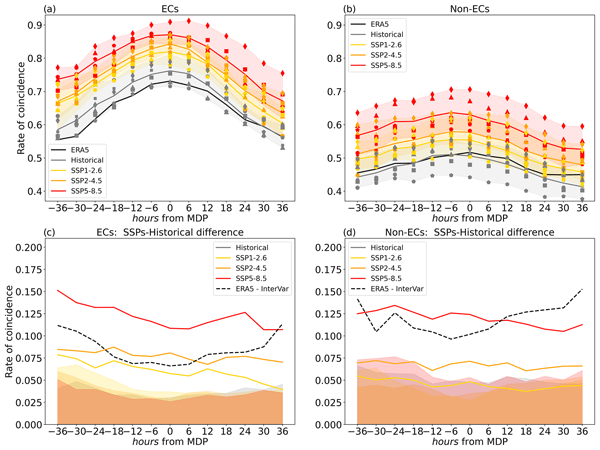
Explosive cyclones and atmospheric rivers are two main drivers of extreme weather in Europe. In this study, we investigate their joint changes in future climates over the North Atlantic. Our results show that both the concurrence of these events and the intensity of atmospheric rivers increase by the end of the century across different future scenarios. Furthermore, explosive cyclones associated with atmospheric rivers last longer and are deeper than those without atmospheric rivers.
Davide Faranda, Gabriele Messori, Erika Coppola, Tommaso Alberti, Mathieu Vrac, Flavio Pons, Pascal Yiou, Marion Saint Lu, Andreia N. S. Hisi, Patrick Brockmann, Stavros Dafis, Gianmarco Mengaldo, and Robert Vautard
Weather Clim. Dynam., 5, 959–983, https://doi.org/10.5194/wcd-5-959-2024, https://doi.org/10.5194/wcd-5-959-2024, 2024
Short summary
Short summary
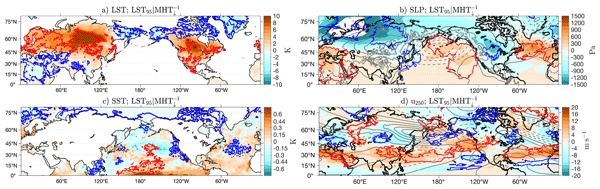
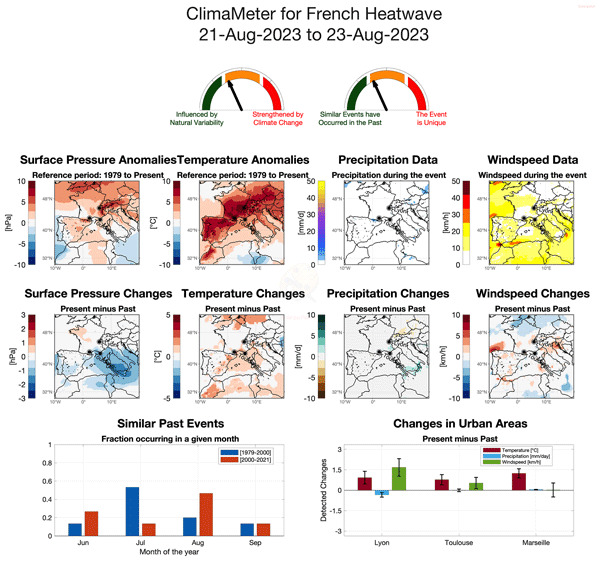
We introduce ClimaMeter, a tool offering real-time insights into extreme-weather events. Our tool unveils how climate change and natural variability affect these events, affecting communities worldwide. Our research equips policymakers and the public with essential knowledge, fostering informed decisions and enhancing climate resilience. We analysed two distinct events, showcasing ClimaMeter's global relevance.
Lucas Fery and Davide Faranda
Weather Clim. Dynam., 5, 439–461, https://doi.org/10.5194/wcd-5-439-2024, https://doi.org/10.5194/wcd-5-439-2024, 2024
Short summary
Short summary
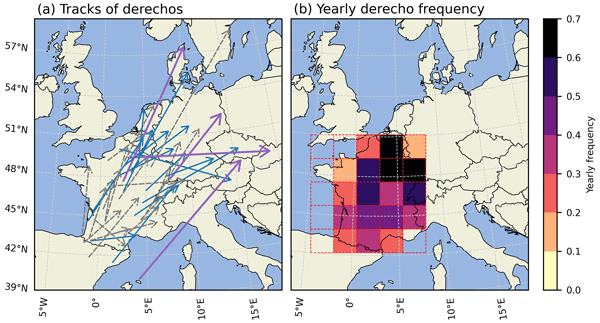
In this study, we analyse warm-season derechos – a type of severe convective windstorm – in France between 2000 and 2022, identifying 38 events. We compare their frequency and features with other countries. We also examine changes in the associated large-scale patterns. We find that convective instability has increased in southern Europe. However, the attribution of these changes to natural climate variability, human-induced climate change or a combination of both remains unclear.
Emma Holmberg, Gabriele Messori, Rodrigo Caballero, and Davide Faranda
Earth Syst. Dynam., 14, 737–765, https://doi.org/10.5194/esd-14-737-2023, https://doi.org/10.5194/esd-14-737-2023, 2023
Short summary
Short summary
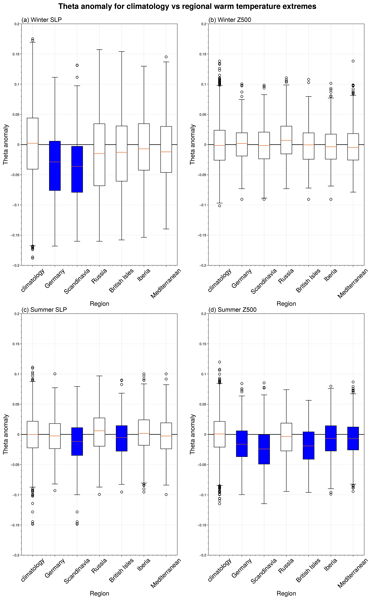
We analyse the duration of large-scale patterns of air movement in the atmosphere, referred to as persistence, and whether unusually persistent patterns favour warm-temperature extremes in Europe. We see no clear relationship between summertime heatwaves and unusually persistent patterns. This suggests that heatwaves do not necessarily require the continued flow of warm air over a region and that local effects could be important for their occurrence.
Davide Faranda, Stella Bourdin, Mireia Ginesta, Meriem Krouma, Robin Noyelle, Flavio Pons, Pascal Yiou, and Gabriele Messori
Weather Clim. Dynam., 3, 1311–1340, https://doi.org/10.5194/wcd-3-1311-2022, https://doi.org/10.5194/wcd-3-1311-2022, 2022
Short summary
Short summary
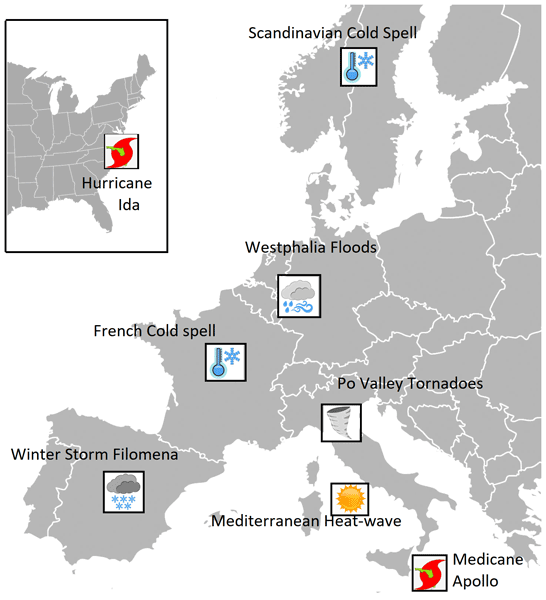
We analyze the atmospheric circulation leading to impactful extreme events for the calendar year 2021 such as the Storm Filomena, Westphalia floods, Hurricane Ida and Medicane Apollo. For some of the events, we find that climate change has contributed to their occurrence or enhanced their intensity; for other events, we find that they are unprecedented. Our approach underscores the importance of considering changes in the atmospheric circulation when performing attribution studies.
Flavio Maria Emanuele Pons and Davide Faranda
Adv. Stat. Clim. Meteorol. Oceanogr., 8, 155–186, https://doi.org/10.5194/ascmo-8-155-2022, https://doi.org/10.5194/ascmo-8-155-2022, 2022
Short summary
Short summary
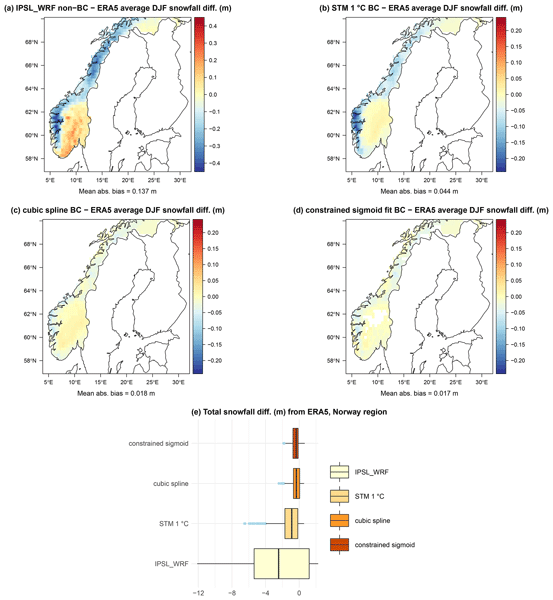
The objective motivating this study is the assessment of the impacts of winter climate extremes, which requires accurate simulation of snowfall. However, climate simulation models contain physical approximations, which result in biases that must be corrected using past data as a reference. We show how to exploit simulated temperature and precipitation to estimate snowfall from already bias-corrected variables, without requiring the elaboration of complex, multivariate bias adjustment techniques.
Miriam D'Errico, Flavio Pons, Pascal Yiou, Soulivanh Tao, Cesare Nardini, Frank Lunkeit, and Davide Faranda
Earth Syst. Dynam., 13, 961–992, https://doi.org/10.5194/esd-13-961-2022, https://doi.org/10.5194/esd-13-961-2022, 2022
Short summary
Short summary
Climate change is already affecting weather extremes. In a warming climate, we will expect the cold spells to decrease in frequency and intensity. Our analysis shows that the frequency of circulation patterns leading to snowy cold-spell events over Italy will not decrease under business-as-usual emission scenarios, although the associated events may not lead to cold conditions in the warmer scenarios.
Bérengère Dubrulle, François Daviaud, Davide Faranda, Louis Marié, and Brice Saint-Michel
Nonlin. Processes Geophys., 29, 17–35, https://doi.org/10.5194/npg-29-17-2022, https://doi.org/10.5194/npg-29-17-2022, 2022
Short summary
Short summary
Present climate models discuss climate change but show no sign of bifurcation in the future. Is this because there is none or because they are in essence too simplified to be able to capture them? To get elements of an answer, we ran a laboratory experiment and discovered that the answer is not so simple.
Davide Faranda, Mathieu Vrac, Pascal Yiou, Flavio Maria Emanuele Pons, Adnane Hamid, Giulia Carella, Cedric Ngoungue Langue, Soulivanh Thao, and Valerie Gautard
Nonlin. Processes Geophys., 28, 423–443, https://doi.org/10.5194/npg-28-423-2021, https://doi.org/10.5194/npg-28-423-2021, 2021
Short summary
Short summary
Machine learning approaches are spreading rapidly in climate sciences. They are of great help in many practical situations where using the underlying equations is difficult because of the limitation in computational power. Here we use a systematic approach to investigate the limitations of the popular echo state network algorithms used to forecast the long-term behaviour of chaotic systems, such as the weather. Our results show that noise and intermittency greatly affect the performances.
Gabriele Messori and Davide Faranda
Clim. Past, 17, 545–563, https://doi.org/10.5194/cp-17-545-2021, https://doi.org/10.5194/cp-17-545-2021, 2021
Short summary
Short summary
The palaeoclimate community must both analyse large amounts of model data and compare very different climates. Here, we present a seemingly very abstract analysis approach that may be fruitfully applied to palaeoclimate numerical simulations. This approach characterises the dynamics of a given climate through a small number of metrics and is thus suited to face the above challenges.
Davide Faranda, Thibault Guinaldo, Francisco Pastor, Tommaso Alberti, and Samira Khodayar
EGUsphere, https://hal.science/hal-05289765v1, https://hal.science/hal-05289765v1, 2026
This preprint is open for discussion and under review for Natural Hazards and Earth System Sciences (NHESS).
Short summary
Short summary
The Mediterranean Sea experienced a record-breaking heatwave in summer 2025. We compared this event to similar patterns from past decades to see how a warmer climate changed its strength. We found that today's warmer background added about 1.5 °C to the sea surface, making the heatwave far more intense and widespread. This shows how climate change is turning ordinary weather patterns into extreme events, with major impacts on marine life, coastal communities, and economies.
Emmanouil Flaounas, Stavros Dafis, Silvio Davolio, Davide Faranda, Christian Ferrarin, Katharina Hartmuth, Assaf Hochman, Aristeidis Koutroulis, Samira Khodayar, Mario Marcello Miglietta, Florian Pantillon, Platon Patlakas, Michael Sprenger, and Iris Thurnherr
Weather Clim. Dynam., 6, 1515–1538, https://doi.org/10.5194/wcd-6-1515-2025, https://doi.org/10.5194/wcd-6-1515-2025, 2025
Short summary
Short summary
Storm Daniel (2023) is one of the most catastrophic storms ever documented in the Mediterranean. Our results highlight the different dynamics and therefore the different predictability skill of precipitation, its extremes and impacts that have been produced in Greece and Libya, the two most affected countries. Our approach concerns an analysis of the storm by articulating dynamics, weather prediction, hydrological and oceanographic implications, climate extremes, and attribution theory.
Pradeebane Vaittinada Ayar, Stella Bourdin, Davide Faranda, and Mathieu Vrac
Nat. Hazards Earth Syst. Sci., 25, 4655–4672, https://doi.org/10.5194/nhess-25-4655-2025, https://doi.org/10.5194/nhess-25-4655-2025, 2025
Short summary
Short summary
Tracking tropical cyclones (TCs) remains a matter of interest for investigating observed and simulated tropical cyclones. In this study, Random Forest (RF), a machine learning approach, is considered to track TCs. RF associates the TC occurrence or absence with different atmospheric configurations. Compared to trackers found in the literature, it shows similar performance for tracking TCs, better control over false alarms, more flexibility, and reveals key variables for TCs' detection.
Lia Rapella, Tommaso Alberti, Davide Faranda, and Philippe Drobinski
Weather Clim. Dynam., 6, 1339–1363, https://doi.org/10.5194/wcd-6-1339-2025, https://doi.org/10.5194/wcd-6-1339-2025, 2025
Short summary
Short summary
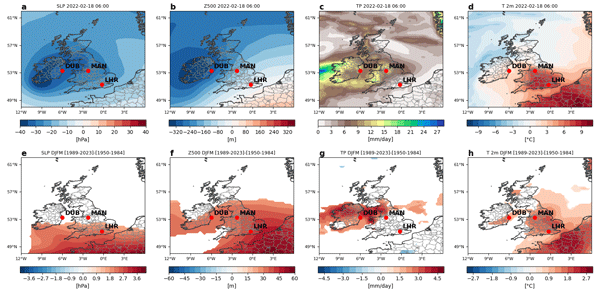
Extreme weather events pose increasing challenges for aviation, including flight disruptions and infrastructure damage. This study examines the influence of anthropogenic climate change on four recent major storms across Europe, the USA, and East Asia. Our research underscores the growing intensity of extreme storms, driven by human-induced climate change, stressing the need to adapt aviation strategies to an increasingly hazardous environment.
Camille Cadiou and Pascal Yiou
Earth Syst. Dynam., 16, 1759–1778, https://doi.org/10.5194/esd-16-1759-2025, https://doi.org/10.5194/esd-16-1759-2025, 2025
Short summary
Short summary
Cold spells affect healthcare and energy systems. Global warming is expected to reduce the amplitude and frequency of these climate extremes. We show that the intense cold spells of the 20th century will become nearly impossible in France by the end of the 21st century for high warming levels. We also demonstrate that events in France as intense as that in 1985 may still occur in the near future. These events are linked to specific atmospheric patterns that bring cold air from high latitudes into Europe.
Kerry Emanuel, Tommaso Alberti, Stella Bourdin, Suzana J. Camargo, Davide Faranda, Emmanouil Flaounas, Juan Jesus Gonzalez-Aleman, Chia-Ying Lee, Mario Marcello Miglietta, Claudia Pasquero, Alice Portal, Hamish Ramsay, Marco Reale, and Romualdo Romero
Weather Clim. Dynam., 6, 901–926, https://doi.org/10.5194/wcd-6-901-2025, https://doi.org/10.5194/wcd-6-901-2025, 2025
Short summary
Short summary
Storms strongly resembling hurricanes are sometimes observed to form well outside the tropics, even in polar latitudes. They behave capriciously, developing very rapidly and then dying just as quickly. We show that strong dynamical processes in the atmosphere can sometimes cause it to become much colder locally than the underlying ocean, creating the conditions for hurricanes to form but only over small areas and for short times. We call the resulting storms "CYCLOPs".
Robin Noyelle, Davide Faranda, Yoann Robin, Mathieu Vrac, and Pascal Yiou
Weather Clim. Dynam., 6, 817–839, https://doi.org/10.5194/wcd-6-817-2025, https://doi.org/10.5194/wcd-6-817-2025, 2025
Short summary
Short summary
Properties of extreme meteorological and climatological events are changing under human-caused climate change. Extreme event attribution methods seek to estimate the contribution of global warming in the probability and intensity changes of extreme events. Here we propose a procedure to estimate these quantities for the flow analogue method, which compares the observed event to similar events in the past.
Laura Hasbini, Pascal Yiou, Laurent Boissier, and Arthur Perringaux
EGUsphere, https://doi.org/10.5194/egusphere-2025-3138, https://doi.org/10.5194/egusphere-2025-3138, 2025
Short summary
Short summary
Winter windstorms are the main natural hazard for Generali France. We present a method linking storm events to insurance claims, with a focus on clustered events (multiple storms hitting the same region within 96 h). These account for 85 % of losses since 1998 and include major events like Lothar and Klaus. Damaging storms are twice as likely to occur in clusters, underlining the need to account for their impact in risk, loss, and reinsurance modelling.
Valerio Lembo, Gabriele Messori, Davide Faranda, Vera Melinda Galfi, Rune Grand Graversen, and Flavio Emanuele Pons
EGUsphere, https://doi.org/10.5194/egusphere-2025-2189, https://doi.org/10.5194/egusphere-2025-2189, 2025
Short summary
Short summary
Hemispheric heatwaves have fundamental implications for ecosystems and societies. They are studied together with the large-scale atmospheric dynamics, through the lens of the poleward heat transports by planetary-scale waves. Extremely weak transports of heat towards the Poles are found to be associated with hemispheric heatwaves in the Northern Hemisphere mid-latitudes. Therefore, we conclude that heat transports are a clear indicator, and possibly a precursor of hemispehric heatwaves.
Ferran Lopez-Marti, Mireia Ginesta, Davide Faranda, Anna Rutgersson, Pascal Yiou, Lichuan Wu, and Gabriele Messori
Earth Syst. Dynam., 16, 169–187, https://doi.org/10.5194/esd-16-169-2025, https://doi.org/10.5194/esd-16-169-2025, 2025
Short summary
Short summary
Explosive cyclones and atmospheric rivers are two main drivers of extreme weather in Europe. In this study, we investigate their joint changes in future climates over the North Atlantic. Our results show that both the concurrence of these events and the intensity of atmospheric rivers increase by the end of the century across different future scenarios. Furthermore, explosive cyclones associated with atmospheric rivers last longer and are deeper than those without atmospheric rivers.
Camille Cadiou and Pascal Yiou
Weather Clim. Dynam., 6, 1–15, https://doi.org/10.5194/wcd-6-1-2025, https://doi.org/10.5194/wcd-6-1-2025, 2025
Short summary
Short summary
Extreme cold winter temperatures in Europe have huge societal impacts. This study focuses on extreme cold events, such as the winter of 1963 in France, which are expected to become rarer due to climate change. We use a light and efficient rare-event algorithm to simulate a large number of extreme cold winters over France to analyse their characteristics. We find that despite fewer occurrences, their intensity remains steady. We analyse prevailing atmospheric circulation during these events.
Sebastian Sippel, Clair Barnes, Camille Cadiou, Erich Fischer, Sarah Kew, Marlene Kretschmer, Sjoukje Philip, Theodore G. Shepherd, Jitendra Singh, Robert Vautard, and Pascal Yiou
Weather Clim. Dynam., 5, 943–957, https://doi.org/10.5194/wcd-5-943-2024, https://doi.org/10.5194/wcd-5-943-2024, 2024
Short summary
Short summary
Winter temperatures in central Europe have increased. But cold winters can still cause problems for energy systems, infrastructure, or human health. Here we tested whether a record-cold winter, such as the one observed in 1963 over central Europe, could still occur despite climate change. The answer is yes: it is possible, but it is very unlikely. Our results rely on climate model simulations and statistical rare event analysis. In conclusion, society must be prepared for such cold winters.
Davide Faranda, Gabriele Messori, Erika Coppola, Tommaso Alberti, Mathieu Vrac, Flavio Pons, Pascal Yiou, Marion Saint Lu, Andreia N. S. Hisi, Patrick Brockmann, Stavros Dafis, Gianmarco Mengaldo, and Robert Vautard
Weather Clim. Dynam., 5, 959–983, https://doi.org/10.5194/wcd-5-959-2024, https://doi.org/10.5194/wcd-5-959-2024, 2024
Short summary
Short summary
We introduce ClimaMeter, a tool offering real-time insights into extreme-weather events. Our tool unveils how climate change and natural variability affect these events, affecting communities worldwide. Our research equips policymakers and the public with essential knowledge, fostering informed decisions and enhancing climate resilience. We analysed two distinct events, showcasing ClimaMeter's global relevance.
Lucas Fery and Davide Faranda
Weather Clim. Dynam., 5, 439–461, https://doi.org/10.5194/wcd-5-439-2024, https://doi.org/10.5194/wcd-5-439-2024, 2024
Short summary
Short summary
In this study, we analyse warm-season derechos – a type of severe convective windstorm – in France between 2000 and 2022, identifying 38 events. We compare their frequency and features with other countries. We also examine changes in the associated large-scale patterns. We find that convective instability has increased in southern Europe. However, the attribution of these changes to natural climate variability, human-induced climate change or a combination of both remains unclear.
Emma Holmberg, Gabriele Messori, Rodrigo Caballero, and Davide Faranda
Earth Syst. Dynam., 14, 737–765, https://doi.org/10.5194/esd-14-737-2023, https://doi.org/10.5194/esd-14-737-2023, 2023
Short summary
Short summary
We analyse the duration of large-scale patterns of air movement in the atmosphere, referred to as persistence, and whether unusually persistent patterns favour warm-temperature extremes in Europe. We see no clear relationship between summertime heatwaves and unusually persistent patterns. This suggests that heatwaves do not necessarily require the continued flow of warm air over a region and that local effects could be important for their occurrence.
Meriem Krouma, Riccardo Silini, and Pascal Yiou
Earth Syst. Dynam., 14, 273–290, https://doi.org/10.5194/esd-14-273-2023, https://doi.org/10.5194/esd-14-273-2023, 2023
Short summary
Short summary
We present a simple system to forecast the Madden–Julian Oscillation (MJO). We use atmospheric circulation as input to our system. We found a good-skill forecast of the MJO amplitude within 40 d using this methodology. Comparing our results with ECMWF and machine learning forecasts confirmed the good skill of our system.
Davide Faranda, Stella Bourdin, Mireia Ginesta, Meriem Krouma, Robin Noyelle, Flavio Pons, Pascal Yiou, and Gabriele Messori
Weather Clim. Dynam., 3, 1311–1340, https://doi.org/10.5194/wcd-3-1311-2022, https://doi.org/10.5194/wcd-3-1311-2022, 2022
Short summary
Short summary
We analyze the atmospheric circulation leading to impactful extreme events for the calendar year 2021 such as the Storm Filomena, Westphalia floods, Hurricane Ida and Medicane Apollo. For some of the events, we find that climate change has contributed to their occurrence or enhanced their intensity; for other events, we find that they are unprecedented. Our approach underscores the importance of considering changes in the atmospheric circulation when performing attribution studies.
Flavio Maria Emanuele Pons and Davide Faranda
Adv. Stat. Clim. Meteorol. Oceanogr., 8, 155–186, https://doi.org/10.5194/ascmo-8-155-2022, https://doi.org/10.5194/ascmo-8-155-2022, 2022
Short summary
Short summary
The objective motivating this study is the assessment of the impacts of winter climate extremes, which requires accurate simulation of snowfall. However, climate simulation models contain physical approximations, which result in biases that must be corrected using past data as a reference. We show how to exploit simulated temperature and precipitation to estimate snowfall from already bias-corrected variables, without requiring the elaboration of complex, multivariate bias adjustment techniques.
Meriem Krouma, Pascal Yiou, Céline Déandreis, and Soulivanh Thao
Geosci. Model Dev., 15, 4941–4958, https://doi.org/10.5194/gmd-15-4941-2022, https://doi.org/10.5194/gmd-15-4941-2022, 2022
Short summary
Short summary
We evaluated the skill of a stochastic weather generator (SWG) to forecast precipitation at different time scales and in different areas of western Europe from analogs of Z500 hPa. The SWG has the skill to simulate precipitation for 5 and 10 d. We found that forecast weaknesses can be associated with specific weather patterns. The comparison with ECMWF forecasts confirms the skill of our model. This work is important because it provides information about weather forecasts over specific areas.
Miriam D'Errico, Flavio Pons, Pascal Yiou, Soulivanh Tao, Cesare Nardini, Frank Lunkeit, and Davide Faranda
Earth Syst. Dynam., 13, 961–992, https://doi.org/10.5194/esd-13-961-2022, https://doi.org/10.5194/esd-13-961-2022, 2022
Short summary
Short summary
Climate change is already affecting weather extremes. In a warming climate, we will expect the cold spells to decrease in frequency and intensity. Our analysis shows that the frequency of circulation patterns leading to snowy cold-spell events over Italy will not decrease under business-as-usual emission scenarios, although the associated events may not lead to cold conditions in the warmer scenarios.
Linh N. Luu, Robert Vautard, Pascal Yiou, and Jean-Michel Soubeyroux
Earth Syst. Dynam., 13, 687–702, https://doi.org/10.5194/esd-13-687-2022, https://doi.org/10.5194/esd-13-687-2022, 2022
Short summary
Short summary
This study downscales climate information from EURO-CORDEX (approx. 12 km) output to a higher horizontal resolution (approx. 3 km) for the south of France. We also propose a matrix of different indices to evaluate the high-resolution precipitation output. We find that a higher resolution reproduces more realistic extreme precipitation events at both daily and sub-daily timescales. Our results and approach are promising to apply to other Mediterranean regions and climate impact studies.
Bérengère Dubrulle, François Daviaud, Davide Faranda, Louis Marié, and Brice Saint-Michel
Nonlin. Processes Geophys., 29, 17–35, https://doi.org/10.5194/npg-29-17-2022, https://doi.org/10.5194/npg-29-17-2022, 2022
Short summary
Short summary
Present climate models discuss climate change but show no sign of bifurcation in the future. Is this because there is none or because they are in essence too simplified to be able to capture them? To get elements of an answer, we ran a laboratory experiment and discovered that the answer is not so simple.
Pascal Yiou and Nicolas Viovy
Earth Syst. Dynam., 12, 997–1013, https://doi.org/10.5194/esd-12-997-2021, https://doi.org/10.5194/esd-12-997-2021, 2021
Short summary
Short summary
This paper presents a model of tree ruin as a response to drought hazards. This model is inspired by a standard model of ruin in the insurance industry. We illustrate how ruin can occur in present-day conditions and the sensitivity of ruin and time to ruin to hazard statistical properties. We also show how tree strategies to cope with hazards can affect their long-term reserves and the probability of ruin.
Davide Faranda, Mathieu Vrac, Pascal Yiou, Flavio Maria Emanuele Pons, Adnane Hamid, Giulia Carella, Cedric Ngoungue Langue, Soulivanh Thao, and Valerie Gautard
Nonlin. Processes Geophys., 28, 423–443, https://doi.org/10.5194/npg-28-423-2021, https://doi.org/10.5194/npg-28-423-2021, 2021
Short summary
Short summary
Machine learning approaches are spreading rapidly in climate sciences. They are of great help in many practical situations where using the underlying equations is difficult because of the limitation in computational power. Here we use a systematic approach to investigate the limitations of the popular echo state network algorithms used to forecast the long-term behaviour of chaotic systems, such as the weather. Our results show that noise and intermittency greatly affect the performances.
Gabriele Messori and Davide Faranda
Clim. Past, 17, 545–563, https://doi.org/10.5194/cp-17-545-2021, https://doi.org/10.5194/cp-17-545-2021, 2021
Short summary
Short summary
The palaeoclimate community must both analyse large amounts of model data and compare very different climates. Here, we present a seemingly very abstract analysis approach that may be fruitfully applied to palaeoclimate numerical simulations. This approach characterises the dynamics of a given climate through a small number of metrics and is thus suited to face the above challenges.
Cited articles
Ahmadov, T., Karimov, A., Durst, S., Saarela, M., Gerstlberger, W., Wahl, M. F., and Kärkkäinen, T.: A two-phase systematic literature review on the use of serious games for sustainable environmental education, Interactive Learning Environments, 1–22, https://doi.org/10.1080/10494820.2024.2414429, 2024.
Asplund, T., Neset, T.-S., Käyhkö, J., Wiréhn, L., and Juhola, S.: Benefits and challenges of serious gaming – The case of “The Maladaptation Game”, Open Agriculture, 4, 107–117, https://doi.org/10.1515/opag-2019-0010, 2019.
Ballew, M. T., Goldberg, M. H., Rosenthal, S. A., Gustafson, A., and Leiserowitz, A.: Systems thinking as a pathway to global warming beliefs and attitudes through an ecological worldview, Proceedings of the National Academy of Sciences, 116, 8214–8219, https://doi.org/10.1073/pnas.1819310116, 2019.
Fisher, R. A.: On the interpretation of χ2 from contingency tables, and the calculation of P, Journal of the Royal Statistical Society, 85, 87–94, https://doi.org/10.2307/2340521, 1922.
Flood, S., Cradock-Henry, N. A., Blackett, P., and Edwards, P.: Adaptive and interactive climate futures: systematic review of “serious games” for engagement and decision-making, Environmental Research Letters, 13, 063005, https://doi.org/10.1088/1748-9326/aac1c6, 2018.
Hickman, C., Marks, E., Pihkala, P., Clayton, S., Lewandowski, R. E., Mayall, E. E., Wray, B., Mellor, C., and van Susteren, L.: Climate anxiety in children and young people and their beliefs about government responses to climate change: a global survey, The Lancet Planetary Health, 5, e863–e873, https://doi.org/10.1016/S2542-5196(21)00278-3, 2021.
Kolb, D. A.: Experiential learning: Experience as the source of learning and development, Prentice-Hall, Englewood Cliffs, NJ, ISBN 9780132952613, 1984.
Kwok, R.: Can climate change games boost public understanding?, Proceedings of the National Academy of Sciences, 116, 7602–7604, https://doi.org/10.1073/pnas.1903508116, 2019.
Levin, K., Cashore, B., Bernstein, S., and Auld, G.: Overcoming the tragedy of super wicked problems: constraining our future selves to address climate change, Policy Sciences, 45, 123–152, https://doi.org/10.1007/s11077-012-9151-0, 2012.
Mann, H. B. and Whitney, D. R.: On a test of whether one of two random variables is stochastically larger than the other, The Annals of Mathematical Statistics, 18, 50–60, https://doi.org/10.1214/aoms/1177730491, 1947.
Marlon, J. R., Bloodhart, B., Ballew, M. T., Rolfe-Redding, J., Roser-Renouf, C., Leiserowitz, A., and Maibach, E.: How hope and doubt affect climate change mobilization, Frontiers in Communication, 4, 20, https://doi.org/10.3389/fcomm.2019.00020, 2019.
Meya, J. N. and Eisenack, K.: Effectiveness of gaming for communicating and teaching climate change, Climatic Change, 149, 319–333, https://doi.org/10.1007/s10584-018-2254-7, 2018.
Monroe, M. C., Plate, R. R., Oxarart, A., Bowers, A. W., and Chaves, W. A.: Identifying effective climate change education strategies: a systematic review of the research, Environmental Education Research, 25, 791–812, https://doi.org/10.1080/13504622.2017.1360842, 2019.
Moser, S. C.: Communicating climate change adaptation and resilience, Oxford Research Encyclopedia of Climate Science, https://doi.org/10.1093/acrefore/9780190228620.013.436, 2017.
O'Neill, S. and Nicholson-Cole, S.: “Fear Won't Do It”: Promoting positive engagement with climate change through visual and iconic representations, Science Communication, 30, 355–379, https://doi.org/10.1177/1075547008329201, 2009.
Parker, H. R., Cornforth, R. J., Suarez, P., Allen, M. R., Boyd, E., James, R., Jones, R. G., Otto, F. E. L., and Walton, P.: Using a game to engage stakeholders in extreme event attribution science, International Journal of Disaster Risk Science, 7, 353–365, https://doi.org/10.1007/s13753-016-0105-6, 2016.
Reckien, D. and Eisenack, K.: Climate change gaming on board and screen: A review, Simulation and Gaming, 44, 253–271, https://doi.org/10.1177/1046878113480867, 2013.
Rooney-Varga, J. N., Sterman, J. D., Fracassi, E., Franck, T., Kapmeier, F., Kurker, V., Johnston, E., Jones, A. P., and Rath, K.: Combining role-play with interactive simulation to motivate informed climate action: Evidence from the World Climate simulation, PLOS ONE, 13, e0202877, https://doi.org/10.1371/journal.pone.0202877, 2018.
Rumore, D., Schenk, T., and Susskind, L.: Role-play simulations for climate change adaptation education and engagement, Nature Climate Change, 6, 745–750, https://doi.org/10.1038/nclimate3084, 2016.
Spence, A., Poortinga, W., Butler, C., and Pidgeon, N. F.: Perceptions of climate change and willingness to save energy related to flood experience, Nature Climate Change, 1, 46–49, https://doi.org/10.1038/nclimate1059, 2011.
Steffen, W., Crutzen, P. J., and McNeill, J. R.: The Anthropocene: Are Humans Now Overwhelming the Great Forces of Nature?, Ambio, 36, 614–621, http://www.jstor.org/stable/25547826 (last access: 18 February 2026), 2007.
Sterman, J. D., Franck, T., Fiddaman, T., Jones, A., McCauley, S., Rice, P., Sawin, E., Siegel, L., and Rooney-Varga, J. N.: World Climate: A role-play simulation of climate negotiations, Simulation and Gaming, 46, 348–382, 2015.
van Beek, L., Milkoreit, M., Prokopy, L. S., Reed, J., Vervoort, J., Wardekker, A., and Weiner, R.: The effects of serious gaming on risk perceptions of climate tipping points, Climatic Change, 170, 31, https://doi.org/10.1007/s10584-022-03318-x, 2022.
Waddington, D. I. and Fennewald, T.: Grim FATE: Learning about systems thinking in an in-depth climate change simulation, Simulation and Gaming, 49, 168–194, https://doi.org/10.1177/1046878117753498, 2018.
Whitmarsh, L., Poortinga, W., and Capstick, S.: Behaviour change to address climate change: Factors influencing uptake of policy interventions, Current Opinion in Psychology, 42, 76–81, https://doi.org/10.1016/j.copsyc.2021.04.002, 2021.
Wilks, D.: “The stippling shows statistically significant grid points”: How research results are routinely overstated and overinterpreted, and what to do about it, Bulletin of the American Meteorological Society, 97, 2263–2273, 2016.
Short summary
We developed a free online game called ClimarisQ to help people better understand climate change and extreme weather. By playing the game, users learn how decisions about the environment, money, and public opinion affect future risks. We studied how players reacted and found that the game makes climate issues easier to grasp and encourages discussion. This shows that interactive tools like games can support learning and action on climate and environmental challenges.
We developed a free online game called ClimarisQ to help people better understand climate change...
Altmetrics
Final-revised paper
Preprint